


Ferroalloys Market Size 2026-2030
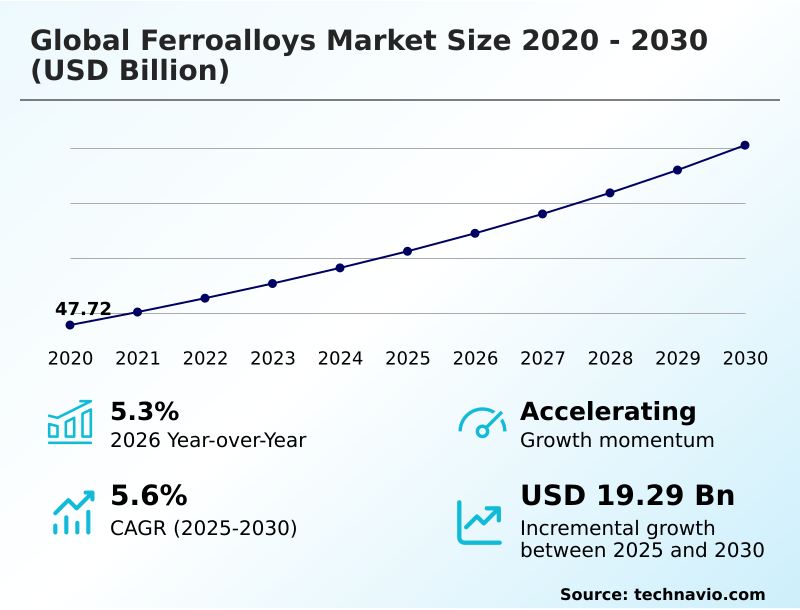
The ferroalloys market size is valued to increase by USD 19.29 billion, at a CAGR of 5.6% from 2025 to 2030. Rapid infrastructure development and urbanization in emerging economies will drive the ferroalloys market.
Major Market Trends & Insights
- APAC dominated the market and accounted for a 58.6% growth during the forecast period.
- By Type - Ferrochrome segment was valued at USD 19.44 billion in 2024
- By Technology - Electric arc furnace segment accounted for the largest market revenue share in 2024
Market Size & Forecast
- Market Opportunities: USD 32.71 billion
- Market Future Opportunities: USD 19.29 billion
- CAGR from 2025 to 2030 : 5.6%
Market Summary
- The Ferroalloys Market demonstrates continuous expansion driven by the critical need for metallurgical additives in heavy industrial manufacturing. As primary deoxidizing agent components, these materials fundamentally alter the chemical composition of molten metal to enhance tensile strength and durability. In modern automotive manufacturing, the transition toward lightweighting requires specific high-strength low-alloy steel formulations.
- By incorporating precise ratios of ferrovanadium, engineers reduce total vehicle frame mass by up to 22% without compromising structural integrity. This transition acts as a primary market driver, compelling producers to refine their operations to meet precise material specifications.
- Conversely, stringent emission trading schemes present a severe structural challenge, forcing smelters to implement costly hydrogen-based reduction methods to maintain regulatory compliance. Facilities that fail to upgrade legacy equipment often experience compliance-related downtimes and severe profit margin erosion. The integration of real-time thermal management ensures that operations optimize power usage, stabilizing supply chains against geopolitical raw material concentration.
What will be the Size of the Ferroalloys Market during the forecast period?
Get Key Insights on Market Forecast (PDF) Get Free Sample
How is the Ferroalloys Market Segmented?
The ferroalloys industry research report provides comprehensive data (region-wise segment analysis), with forecasts and estimates in "USD million" for the period 2026-2030, as well as historical data from 2020-2024 for the following segments.
- Type
- Ferrochrome
- Ferromanganese
- Ferrosilicon
- Ferronickel
- Others
- Technology
- Electric arc furnace
- Blast furnace
- Application
- Steel manufacturing
- Cast iron
- Others
- Geography
- APAC
- China
- India
- Japan
- South Korea
- Indonesia
- Vietnam
- Europe
- Germany
- France
- Italy
- Norway
- Finland
- North America
- US
- Canada
- Mexico
- Middle East and Africa
- South Africa
- Saudi Arabia
- UAE
- Oman
- South America
- Brazil
- Argentina
- Colombia
- APAC
By Type Insights
The ferrochrome segment is estimated to witness significant growth during the forecast period.
The ferrochrome segment serves as a foundational component within the metallurgical sector, primarily functioning as a critical alloying additive for corrosion-resistant alloys and advanced steel manufacturing.
Processing operations rely heavily on the continuous optimization of the submerged arc furnace to convert raw chromite ore into high-grade alloy materials.
Advanced facilities now utilize digital twin platform architectures to monitor furnace sensor data, resulting in a 14% improvement in thermal efficiency and a corresponding decrease in energy waste.
This technological integration directly enhances the yield of low-carbon ferrochrome, meeting the strict specifications required by modern aerospace structural components.
The continuous refinement of the electrode positioning algorithm further minimizes operational downtime, allowing processing plants to maintain consistent output volumes and support the demanding performance criteria of industrial applications.
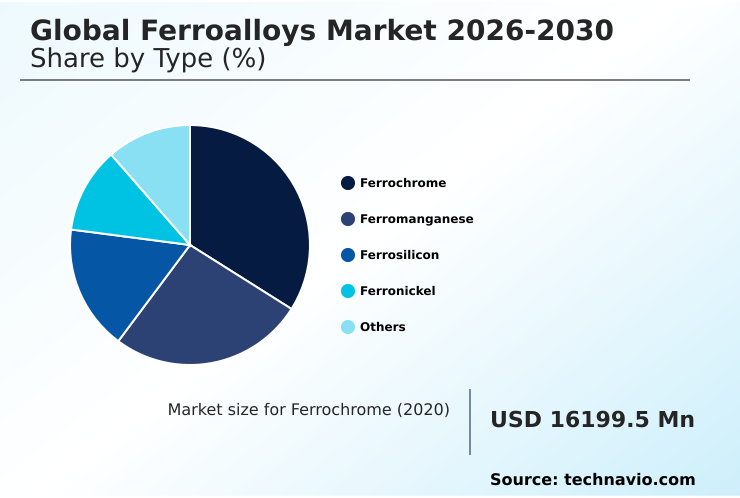
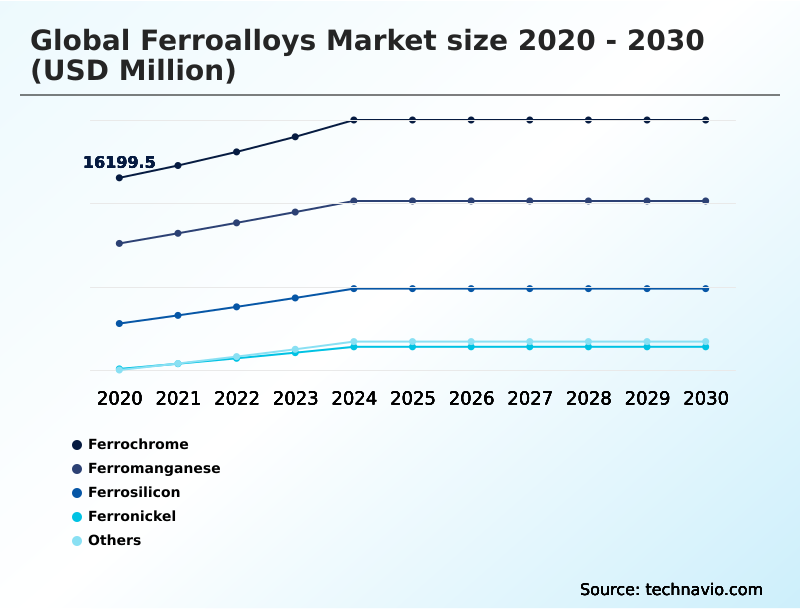
The Ferrochrome segment was valued at USD 19.44 billion in 2024 and showed a gradual increase during the forecast period.
Regional Analysis
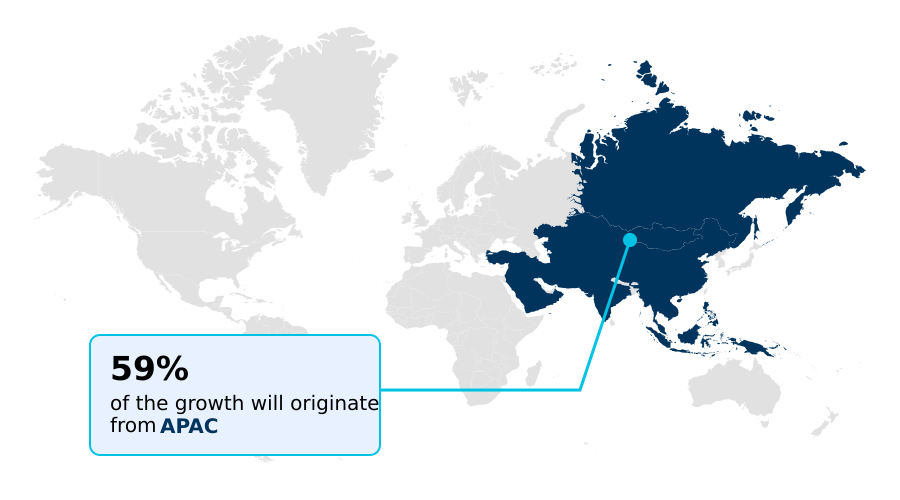
APAC is estimated to contribute 58.6% to the growth of the global market during the forecast period.Technavio’s analysts have elaborately explained the regional trends and drivers that shape the market during the forecast period.
See How Ferroalloys Market Demand is Rising in APAC Get Free Sample
The geographic distribution of the Ferroalloys sector highlights a stark operational contrast between the infrastructure urbanization demand in APAC and the regulatory-driven environment in Europe.
Facilities in APAC process massive volumes of silicomanganese production to support aggressive building initiatives, achieving an 18% higher daily throughput compared to European counterparts.
Conversely, European smelters prioritize compliance with strict emission trading schemes, utilizing green hydrogen smelting and renewable energy infrastructure to lower their operational carbon footprint by up to 25%.
This divergence forces businesses in Europe to absorb higher initial capital expenditures to maintain market access under new environmental frameworks. Meanwhile, producers in APAC leverage economies of scale and localized raw material access to mitigate power grid load restructuring costs.
Consequently, the adoption of centrifugal separation technology for secondary metal recovery is accelerating 12% faster in Europe to offset the geopolitical raw material concentration risks associated with imported ores.
Market Dynamics
Our researchers analyzed the data with 2025 as the base year, along with the key drivers, trends, and challenges. A holistic analysis of drivers will help companies refine their marketing strategies to gain a competitive advantage.
- The optimization of metallurgical processes requires a continuous commitment to precision engineering and sustainable material sourcing. As heavy manufacturing sectors prioritize environmental compliance, the deployment of electric arc furnace emission control systems has become a mandatory operational standard, successfully reducing airborne particulate discharge by over 28% compared to legacy blast furnace configurations.
- This transition fundamentally supports the growing reliance on scrap steel secondary alloy recovery, which allows facilities to reclaim valuable elements from industrial waste streams and significantly lower the energy intensity of their operations.
- To meet the stringent performance metrics of modern transportation, manufacturers are refining their high strength low alloy formulation processes, integrating precise ratios of noble metals to achieve optimal tensile properties.
- Furthermore, the integration of digital analytics enables submerged arc furnace thermal optimization, allowing operators to monitor heat distribution in real-time and decrease power consumption by nearly 15% during peak load periods.
- These efficiency gains are especially critical in the automotive sector, where an advanced automotive chassis lightweighting steel composition is required to improve fuel economy and vehicle range without sacrificing passenger safety.
- By leveraging these sophisticated formulations and recovery mechanisms, supply chains achieve greater resilience against raw material volatility while ensuring that final products meet the exacting mechanical tolerances demanded by global industrial consumers.
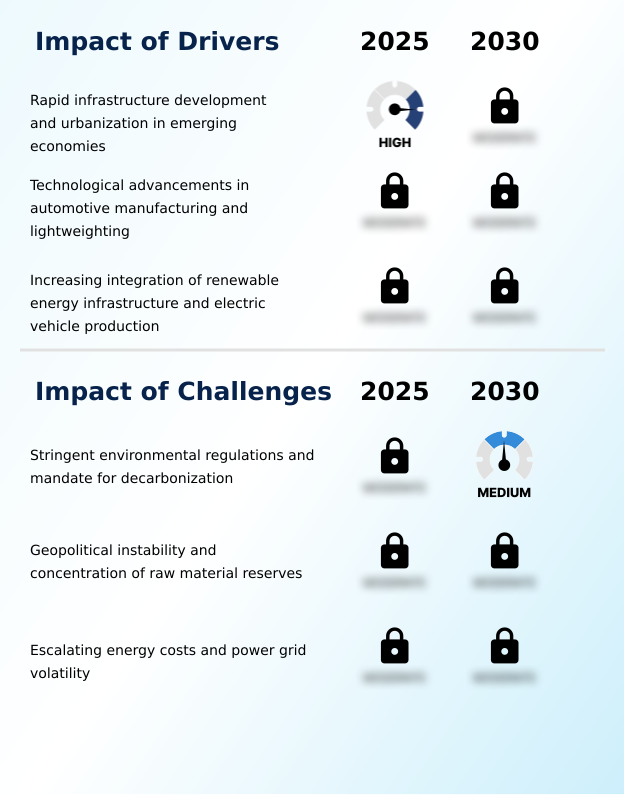
What are the key market drivers leading to the rise in the adoption of Ferroalloys Industry?
- Rapid infrastructure development and widespread urbanization across emerging economies function as the primary drivers propelling the sustained consumption of high-strength structural materials.
- The aggressive expansion of renewable energy networks serves as a dominant catalyst driving the demand for specialized metallurgical formulations within the Ferroalloys sector.
- The construction of massive offshore installations requires vast quantities of corrosion-resistant alloys, triggering a 22% increase in the localized consumption of refined chromium additives.
- Furthermore, the transition toward electrified transport necessitates superior magnetic properties in electrical steel, prompting manufacturers to utilize high-grade deoxidizing agent and precise grain refiner materials to reduce energy transmission losses by nearly 12%.
- This functional requirement directly accelerates the deployment of rotary kiln-electric furnace technologies capable of executing continuous ferromanganese smelting with maximum thermal efficiency.
- By securing a reliable flow of these critical inputs, industrial producers can successfully execute large-scale infrastructure projects while maintaining the mechanical integrity required for long-term sustainable power generation.
What are the market trends shaping the Ferroalloys Industry?
- The implementation of circular economy frameworks and the enhancement of secondary recovery processes represent a defining trend reshaping material supply chains. These strategic shifts toward advanced recycling prioritize resource efficiency and minimize the environmental footprint of high-temperature metallurgical operations.
- The widespread integration of automated diagnostic systems and secondary recovery protocols represents a definitive operational trend within the Ferroalloys ecosystem. To combat rising energy costs, manufacturers are deploying laser-induced breakdown spectroscopy for the precise sorting of metallic scrap, improving the reclamation efficiency of valuable elements by up to 24%.
- This shift toward circular material usage directly reduces the dependency on carbonaceous reductant inputs, subsequently lowering specific greenhouse gas emissions by 18% per metric ton of output. The adoption of centrifugal separation technology further enhances the extraction of noble alloys from complex industrial waste streams. Consequently, processing facilities can generate premium additive manufacturing flux materials with exceptional purity.
- Businesses leveraging these advanced recovery frameworks achieve greater supply chain resilience while simultaneously satisfying stringent environmental compliance mandates across global operating hubs.
What challenges does the Ferroalloys Industry face during its growth?
- Stringent environmental regulations and escalating mandates for industrial decarbonization constitute a formidable challenge, requiring massive capital investments in clean-energy smelting technologies.
- Extreme volatility in global energy markets and escalating carbon compliance mandates impose severe operational constraints on the Ferroalloys sector. The energy-intensive nature of silicomanganese production renders facilities highly susceptible to grid instability, where sudden power tariff hikes can inflate total manufacturing expenses by over 25%.
- Furthermore, the strict enforcement of new environmental policies limits the traditional use of metallurgical coke, forcing companies to retrofit legacy infrastructure with expensive alternative reduction technologies. This capital-intensive transition often delays the processing of saprolite nickel ore and specialized desulfurizing addition materials, resulting in a 14% reduction in quarterly output across major refining hubs.
- Consequently, the reliance on nickel pig iron as a low-cost substitute is hindered, severely challenging the ability of producers to maintain competitive pricing margins while satisfying international decarbonization standards.
Exclusive Technavio Analysis on Customer Landscape
The ferroalloys market forecasting report includes the adoption lifecycle of the market, covering from the innovator’s stage to the laggard’s stage. It focuses on adoption rates in different regions based on penetration. Furthermore, the ferroalloys market report also includes key purchase criteria and drivers of price sensitivity to help companies evaluate and develop their market growth analysis strategies.
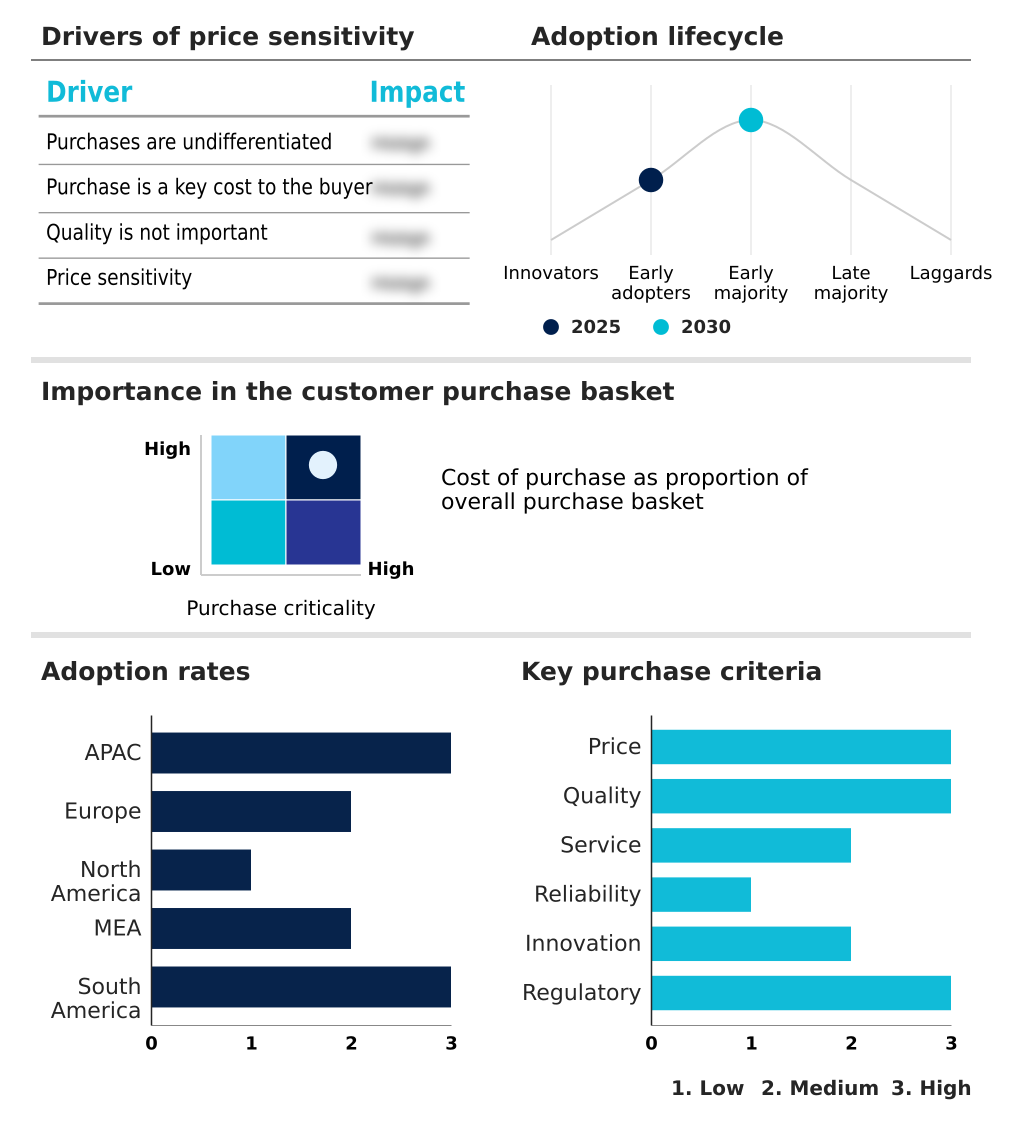
Customer Landscape of Ferroalloys Industry
Competitive Landscape
Companies are implementing various strategies, such as strategic alliances, ferroalloys market forecast, partnerships, mergers and acquisitions, geographical expansion, and product/service launches, to enhance their presence in the industry.
Afarak Group SE - Core solutions encompass the production and distribution of specialized ferrochrome and charge chrome formulations, designed strictly to enhance the durability and thermal resistance of advanced metallurgical applications.
The industry research and growth report includes detailed analyses of the competitive landscape of the market and information about key companies, including:
- Afarak Group SE
- AMG Advanced Metallurgical
- ArcelorMittal S.A.
- Assore Ltd.
- China Minmetals Corp.
- Elkem ASA
- Eramet SA
- Ferroglobe Plc
- Glencore Plc
- Gulf Ferro Alloys Co.
- Jindal Steel Ltd.
- Maithan Alloys Ltd.
- Nava Ltd.
- OM Holdings Ltd.
- Outokumpu Oyj
- Samancor Chrome
- South32 Ltd.
- Tata Steel Ltd.
- Tsingshan Holding Group
- Yildirim Group
Qualitative and quantitative analysis of companies has been conducted to help clients understand the wider business environment as well as the strengths and weaknesses of key industry players. Data is qualitatively analyzed to categorize companies as pure play, category-focused, industry-focused, and diversified; it is quantitatively analyzed to categorize companies as dominant, leading, strong, tentative, and weak.
Recent Development and News in Ferroalloys market
- In the Steel industry, the rapid expansion of offshore wind turbine towers has mandated the use of advanced structural materials, directly impacting Ferroalloys demand by increasing the required volumes of specialized chromium inputs by up to 18% per project.
- The accelerating automotive lightweighting transition has forced manufacturers to adopt advanced material configurations, driving the localized consumption of precision alloy formulations to achieve a 20% reduction in vehicle chassis weight across major assembly hubs.
- Stringent enforcement of carbon border adjustment taxes has accelerated the deployment of green hydrogen smelting technologies across primary metal production hubs, restructuring the Ferroalloys supply chain by favoring suppliers capable of delivering a 30% reduction in embedded carbon.
- Implementation of a comprehensive circular economy framework has incentivized the widespread adoption of industrial waste stream reclamation systems, effectively substituting 15% of virgin alloy requirements with high-grade secondary metal recovery from processed industrial scrap.
Dive into Technavio’s robust research methodology, blending expert interviews, extensive data synthesis, and validated models for unparalleled Ferroalloys Market insights. See full methodology.
| Market Scope | |
|---|---|
| Page number | 307 |
| Base year | 2025 |
| Historic period | 2020-2024 |
| Forecast period | 2026-2030 |
| Growth momentum & CAGR | Accelerate at a CAGR of 5.6% |
| Market growth 2026-2030 | USD 19291.1 million |
| Market structure | Fragmented |
| YoY growth 2025-2026(%) | 5.3% |
| Key countries | China, India, Japan, South Korea, Indonesia, Vietnam, Germany, France, Italy, Russia, Norway, Finland, US, Canada, Mexico, South Africa, Iran, Saudi Arabia, UAE, Oman, Brazil, Argentina and Colombia |
| Competitive landscape | Leading Companies, Market Positioning of Companies, Competitive Strategies, and Industry Risks |
Research Analyst Overview
- The Ferroalloys sector is undergoing a profound structural evolution characterized by the rapid adoption of digital intelligence and sustainable processing frameworks. Boardroom executives are increasingly prioritizing investments in digital twin platform architectures to optimize submerged arc furnace operations, directly influencing corporate budgeting and long-term compliance strategies.
- By implementing advanced electrode positioning algorithm systems, facilities have successfully reduced unplanned operational downtime by up to 17% compared to traditional manual oversight models. This technological integration is crucial for the efficient generation of low-carbon ferrochrome and other high-purity specialty alloys utilized in critical engineering sectors.
- Furthermore, the strategic shift toward utilizing hydrogen-based reduction methods mitigates the financial risks associated with incoming carbon taxation, ensuring that products remain viable in highly regulated markets. Operators are also deploying x-ray fluorescence sorting mechanisms to enhance the precision of material recovery, driving a more resilient closed-loop supply chain.
- Ultimately, the ability to control slag generation mitigation empowers industry leaders to maintain strict quality control while safeguarding their operational margins against volatile energy constraints.
What are the Key Data Covered in this Ferroalloys Market Research and Growth Report?
-
What is the expected growth of the Ferroalloys Market between 2026 and 2030?
-
USD 19.29 billion, at a CAGR of 5.6%
-
-
What segmentation does the market report cover?
-
The report is segmented by Type (Ferrochrome, Ferromanganese, Ferrosilicon, Ferronickel, and Others), Technology (Electric arc furnace, and Blast furnace), Application (Steel manufacturing, Cast iron, and Others) and Geography (APAC, Europe, North America, Middle East and Africa, South America)
-
-
Which regions are analyzed in the report?
-
APAC, Europe, North America, Middle East and Africa and South America
-
-
What are the key growth drivers and market challenges?
-
Rapid infrastructure development and urbanization in emerging economies, Stringent environmental regulations and mandate for decarbonization
-
-
Who are the major players in the Ferroalloys Market?
-
Afarak Group SE, AMG Advanced Metallurgical, ArcelorMittal S.A., Assore Ltd., China Minmetals Corp., Elkem ASA, Eramet SA, Ferroglobe Plc, Glencore Plc, Gulf Ferro Alloys Co., Jindal Steel Ltd., Maithan Alloys Ltd., Nava Ltd., OM Holdings Ltd., Outokumpu Oyj, Samancor Chrome, South32 Ltd., Tata Steel Ltd., Tsingshan Holding Group and Yildirim Group
-
Market Research Insights
- The Ferroalloys sector operates as a critical enabler for advanced industrial manufacturing and widespread infrastructure urbanization demand. Processing facilities are rapidly transitioning toward decarbonized power grids, utilizing advanced sensor networks to increase energy efficiency by up to 18% during peak smelting cycles.
- This modernization directly supports the production of critical components, where the integration of high-purity inputs reduces material failure rates by 22%. Furthermore, the adoption of automated off-peak production scheduling allows plant operators to navigate energy volatility, successfully lowering overall electricity expenditures by nearly 15%.
- As environmental regulations tighten, the reliance on secondary reclamation provides a vital buffer, stabilizing supply networks and ensuring consistent output for high-performance metallurgical applications.
We can help! Our analysts can customize this ferroalloys market research report to meet your requirements.
 RIA -

