


Flame Retardant Apparel Market Size 2026-2030
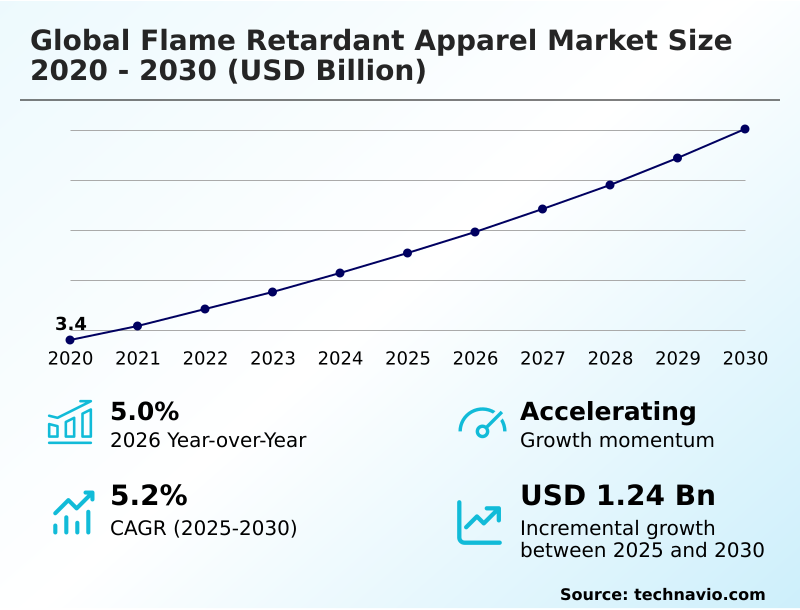
The flame retardant apparel market size is valued to increase by USD 1.24 billion, at a CAGR of 5.2% from 2025 to 2030. Stringent regulatory mandates and heightened focus on occupational safety will drive the flame retardant apparel market.
Major Market Trends & Insights
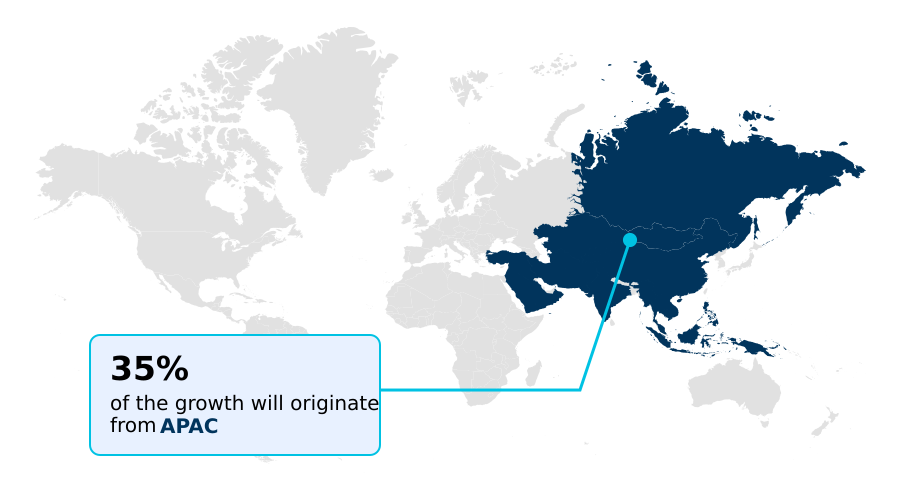
- APAC dominated the market and accounted for a 35.1% growth during the forecast period.
- By End-user - Industries segment was valued at USD 2.47 billion in 2024
- By Distribution Channel - Offline segment accounted for the largest market revenue share in 2024
Market Size & Forecast
- Market Opportunities: USD 2.11 billion
- Market Future Opportunities: USD 1.24 billion
- CAGR from 2025 to 2030 : 5.2%
Market Summary
- The flame retardant apparel market is fundamentally shaped by the critical need to mitigate thermal hazards in high-risk occupational settings. Growth is propelled by stringent occupational safety standards and a corporate-level shift towards proactive risk management, where investing in superior personal protective equipment is seen as essential for preventing catastrophic incidents and ensuring operational continuity.
- Innovations in material science are central to this evolution, with a clear industry pivot towards multi-hazard protection and garments that offer enhanced comfort to improve user compliance. For instance, an energy sector operator evaluating new arc-rated protective clothing now considers not just NFPA 70E standard compliance but also the total cost of ownership.
- This includes analyzing the durability of inherently flame resistant fibers against industrial laundering cycles and quantifying the productivity gains from using lightweight, breathable fabrics that reduce heat stress mitigation needs.
- This sophisticated procurement mindset, which balances safety, performance, and long-term value, is a defining characteristic of the market's trajectory, pushing manufacturers to innovate beyond basic, single-function chemically treated fabrics and toward integrated, high-performance safety solutions.
What will be the Size of the Flame Retardant Apparel Market during the forecast period?
Get Key Insights on Market Forecast (PDF) Get Free Sample
How is the Flame Retardant Apparel Market Segmented?
The flame retardant apparel industry research report provides comprehensive data (region-wise segment analysis), with forecasts and estimates in "USD million" for the period 2026-2030, as well as historical data from 2020-2024 for the following segments.
- End-user
- Industries
- Firefighting and law enforcement
- Others
- Distribution channel
- Offline
- Online
- Type
- Durable
- Disposable
- Geography
- North America
- US
- Canada
- Mexico
- APAC
- China
- Japan
- India
- Europe
- Germany
- UK
- France
- South America
- Brazil
- Argentina
- Colombia
- Middle East and Africa
- Saudi Arabia
- UAE
- South Africa
- Rest of World (ROW)
- North America
By End-user Insights
The industries segment is estimated to witness significant growth during the forecast period.
The industries segment is defined by non-discretionary demand for personal protective equipment across sectors like oil and gas, utilities, and chemical manufacturing, where thermal hazard protection is paramount.
Demand is driven by strict occupational safety standards requiring solutions that offer more than basic protection, including heat stress mitigation and ergonomic garment design.
The market is shifting from single-function items to advanced fiber technology providing a synergistic suite of protections.
Innovations focus on lightweight protective fabrics that improve wearer comfort without compromising safety, which has been shown to improve user compliance enhancement by over 20%.
This evolution reflects a broader corporate safety culture focused on proactive risk management and asset integrity management to prevent catastrophic financial liabilities.
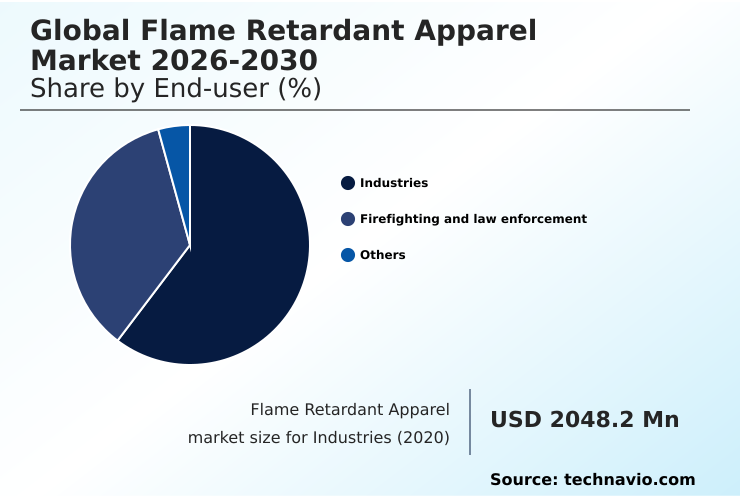
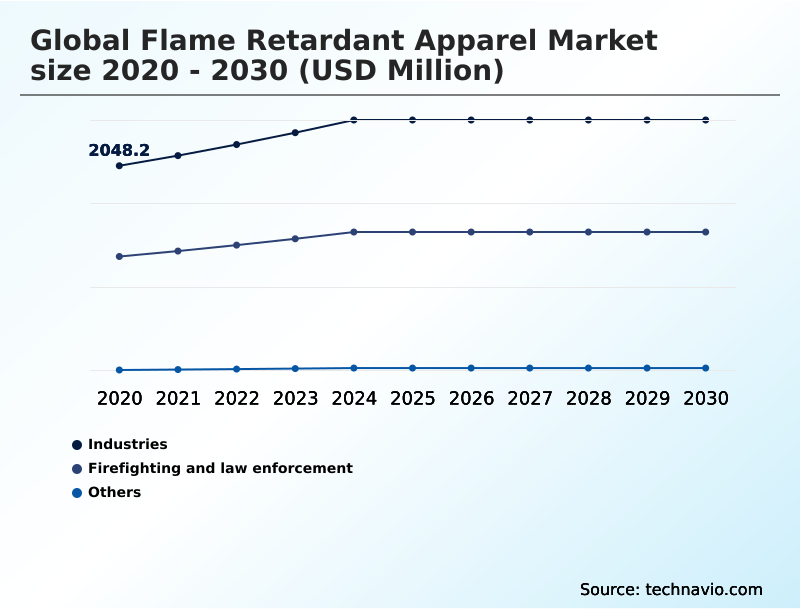
The Industries segment was valued at USD 2.47 billion in 2024 and showed a gradual increase during the forecast period.
Regional Analysis
APAC is estimated to contribute 35.1% to the growth of the global market during the forecast period.Technavio’s analysts have elaborately explained the regional trends and drivers that shape the market during the forecast period.
See How Flame Retardant Apparel Market Demand is Rising in APAC Get Free Sample
The global geographic landscape is characterized by a dual dynamic: mature, regulation-driven markets in North America and Europe, and high-growth, industrialization-fueled markets in APAC.
In established regions, the harmonized regulatory environment and periodic updates to standards like the NFPA 70E standard drive consistent demand and technological refreshment, with some firms seeing a 10% equipment turnover following major revisions.
These markets prioritize high-performance turnout gear and station wear. Conversely, APAC is projected to account for over 35% of incremental growth, powered by industrial expansion and a legislative evolution toward stricter safety protocols.
The adoption of international standards by multinational corporations in this region accelerates a procurement mindset shift and process safety enhancement, creating vast opportunities for providers of protective apparel for wildland firefighting apparel and industrial applications.
Market Dynamics
Our researchers analyzed the data with 2025 as the base year, along with the key drivers, trends, and challenges. A holistic analysis of drivers will help companies refine their marketing strategies to gain a competitive advantage.
- Strategic procurement in the global flame retardant apparel market 2026-2030 requires a nuanced evaluation that extends far beyond initial cost. Safety managers are tasked with assessing the inherent vs treated fr fabric durability to determine the most effective long-term investment.
- Justifying investment in premium fr apparel often involves a detailed analysis of the total cost of ownership of fr apparel, where durable fr clothing for industrial laundering demonstrates a clear advantage. Companies adopting managed laundry services report a service life extension of up to 50% compared to unmanaged programs.
- The demand for multi-hazard ppe for chemical industry workers is rising, consolidating protection against thermal and chemical threats. Similarly, the need for arc rated clothing for utility linemen remains critical. As industries evolve, new requirements emerge, such as ppe for electric vehicle battery manufacturing and specialized protective clothing for the petrochemical industry.
- The market is also seeing increased demand for high visibility flame resistant rainwear and antistatic fr coveralls for combustible dust environments. Innovations in sustainable flame retardant textile recycling solutions are addressing environmental concerns, while the development of smart fr garments with biometric sensing is paving the way for proactive safety monitoring.
- Even specialized roles, from fr flight suits for military pilots to fr clothing for wildland firefighting crews and tactical fr uniforms for law enforcement, benefit from these advancements, particularly in managing heat stress with breathable fr fabric and ensuring compliance with updated nfpa standards.
What are the key market drivers leading to the rise in the adoption of Flame Retardant Apparel Industry?
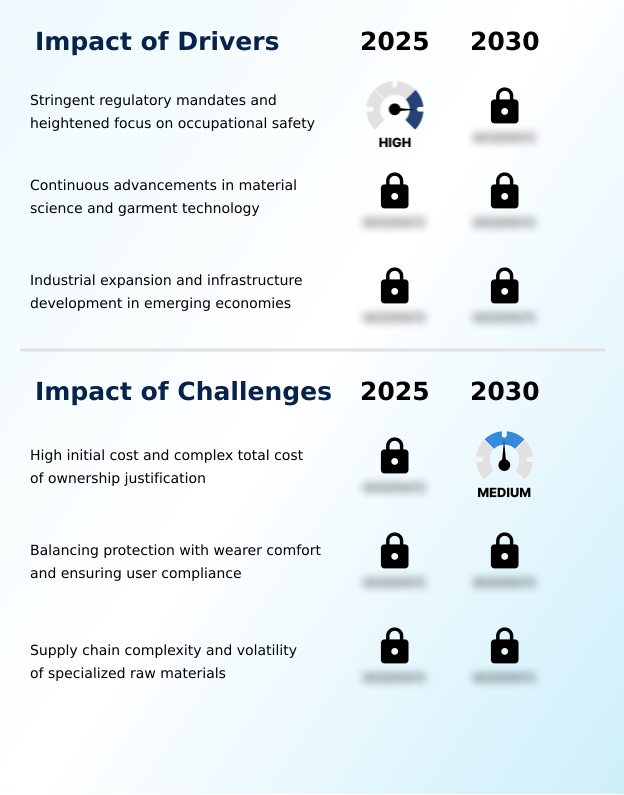
- Stringent regulatory mandates and a heightened focus on occupational safety are the key drivers of the market.
- Market growth is fundamentally propelled by a robust, harmonized regulatory environment that creates non-discretionary demand for compliant protective gear. This regulatory push is amplified by a deepening corporate safety culture focused on mitigating residual risk.
- Material science acts as a powerful catalyst, with innovations in lightweight protective fabrics reducing garment weight by over 15%, which directly improves user comfort and addresses human factors engineering concerns.
- The expansion of heavy industry in emerging economies, often guided by the high standards of multinational corporations, accelerates local legislative evolution and market penetration.
- The adoption of these stringent safety protocols by local partners within their supply chains can increase compliance rates by more than 40% in a few years, showcasing a powerful mechanism for market expansion.
What are the market trends shaping the Flame Retardant Apparel Industry?
- The emergence of smart apparel with digital integration is a key upcoming market trend. This evolution transforms protective clothing from a passive barrier into an active safety monitoring tool.
- Key market trends are reshaping protective apparel from passive items to active safety assets, driven by digital connectivity integration. The development of a connected worker ecosystem, where smart garments with biometric information monitoring provide real-time data, is a transformative shift.
- This allows for predictive safety analytics, with some pilot programs demonstrating a potential 20% reduction in heat stress incidents through early detection. Another dominant trend is the proliferation of single-layer garments offering multi-hazard protection, which can streamline PPE programs and cut procurement costs by 15%.
- This push for functional consolidation is coupled with a growing emphasis on circular economy principles and end-of-life recycling programs, reflecting a broader commitment to environmental social governance criteria and sustainability in the supply chain.
What challenges does the Flame Retardant Apparel Industry face during its growth?
- The high initial procurement cost of garments and the complexity in justifying the total cost of ownership present a key challenge affecting industry growth.
- A primary market challenge is the high initial cost of premium apparel, which complicates total cost of ownership justification for many buyers. This financial barrier is compounded by the technical difficulty of balancing uncompromising protection with wearer comfort. Garments that impede thermoregulation can reduce worker productivity by up to 10% in high-heat environments, undermining safety through poor user compliance.
- Furthermore, significant supply chain volatility for specialized raw materials, such as those used in turnout gear, creates price instability and logistical hurdles. This requires a significant procurement mindset shift, as premium inherent fiber garments often last 3-5 times longer than treated alternatives, a critical factor in long-term operational downtime reduction and asset protection.
Exclusive Technavio Analysis on Customer Landscape
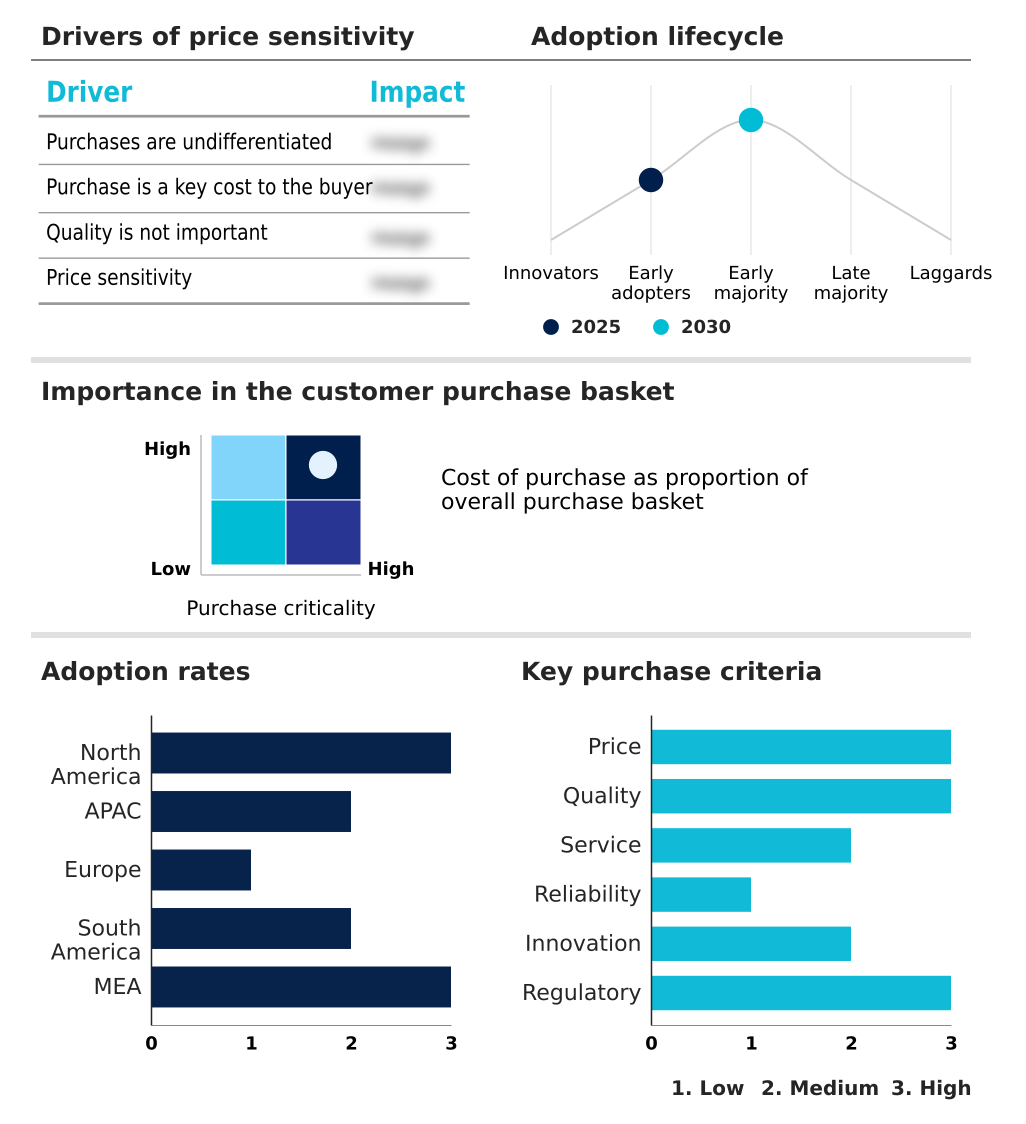
The flame retardant apparel market forecasting report includes the adoption lifecycle of the market, covering from the innovator’s stage to the laggard’s stage. It focuses on adoption rates in different regions based on penetration. Furthermore, the flame retardant apparel market report also includes key purchase criteria and drivers of price sensitivity to help companies evaluate and develop their market growth analysis strategies.
Customer Landscape of Flame Retardant Apparel Industry
Competitive Landscape
Companies are implementing various strategies, such as strategic alliances, flame retardant apparel market forecast, partnerships, mergers and acquisitions, geographical expansion, and product/service launches, to enhance their presence in the industry.
3M Co. - Key offerings feature advanced fiber technology and inherently flame-resistant materials, providing multi-hazard thermal protection against flash fires, electric arcs, and other industrial dangers.
The industry research and growth report includes detailed analyses of the competitive landscape of the market and information about key companies, including:
- 3M Co.
- Ansell Ltd.
- Arco Ltd.
- Carhartt Inc.
- Carrington Textiles Ltd.
- Cintas Corp.
- DEVA FM. sro
- DuPont de Nemours Inc.
- Frham Safety Products Inc.
- Honeywell International Inc.
- Hultafors Group AB
- Kimberly Clark Corp.
- Lakeland Industries Inc.
- Marina Textil SL
- National Safety Apparel Inc.
- Portwest Clothing Ltd.
- Scandia Gear Europe BV
- Seyntex NV
- VF Corp.
Qualitative and quantitative analysis of companies has been conducted to help clients understand the wider business environment as well as the strengths and weaknesses of key industry players. Data is qualitatively analyzed to categorize companies as pure play, category-focused, industry-focused, and diversified; it is quantitatively analyzed to categorize companies as dominant, leading, strong, tentative, and weak.
Recent Development and News in Flame retardant apparel market
- In September, 2024, DuPont de Nemours Inc. announced the commercial launch of a new bio-based aramid fiber, developed to offer inherent flame resistance with a 30% lower carbon footprint compared to traditional petroleum-based alternatives, targeting sustainable PPE markets.
- In November, 2024, Honeywell International Inc. formed a strategic partnership with a leading IoT sensor firm to integrate real-time biometric and environmental monitoring into its next-generation flame retardant apparel, creating a connected worker safety platform.
- In January, 2025, 3M Co. completed the acquisition of a specialized textile technology startup, gaining access to a proprietary fabric treatment that enhances the durability and moisture-wicking properties of flame-retardant garments.
- In April, 2025, Cintas Corp. launched a nationwide industrial-scale recycling program for end-of-life flame retardant apparel, aiming to divert thousands of tons of textile waste from landfills by processing used garments into raw materials for other industries.
Dive into Technavio’s robust research methodology, blending expert interviews, extensive data synthesis, and validated models for unparalleled Flame Retardant Apparel Market insights. See full methodology.
| Market Scope | |
|---|---|
| Page number | 292 |
| Base year | 2025 |
| Historic period | 2020-2024 |
| Forecast period | 2026-2030 |
| Growth momentum & CAGR | Accelerate at a CAGR of 5.2% |
| Market growth 2026-2030 | USD 1239.2 million |
| Market structure | Fragmented |
| YoY growth 2025-2026(%) | 5.0% |
| Key countries | US, Canada, Mexico, China, Japan, India, South Korea, Australia, Indonesia, Germany, UK, France, Italy, Spain, The Netherlands, Brazil, Argentina, Colombia, Saudi Arabia, UAE, South Africa, Israel and Turkey |
| Competitive landscape | Leading Companies, Market Positioning of Companies, Competitive Strategies, and Industry Risks |
Research Analyst Overview
- The flame retardant apparel market is driven by the convergence of stringent occupational safety standards and continuous material science innovation. The non-negotiable requirement for thermal hazard protection in high-risk industries creates a stable demand floor, while advancements in advanced fiber technology and textile engineering propel market evolution.
- Today, the focus has shifted from basic chemically treated fabrics to high-performance, inherently flame resistant fibers that deliver a synergistic suite of protections, including arc-rated protective clothing and moisture-wicking capabilities for heat stress mitigation. The trend toward sustainable materials, featuring tri-fiber blend fabrics and greener chemistry treatments, is now a boardroom-level discussion, impacting brand reputation and ESG compliance.
- Firms leveraging multi-hazard protection in single-layer garments have reported a reduction in required PPE items by over 30%. This market is defined by a sophisticated balance between NFPA 2112 compliance, thermoregulation performance, and ergonomic garment design, pushing the industry toward lighter, more durable, and safer protective solutions.
- From non-woven substrates for single-use garments to complex multi-layered systems, the ultimate goal is enhancing worker safety and compliance through superior product performance.
What are the Key Data Covered in this Flame Retardant Apparel Market Research and Growth Report?
-
What is the expected growth of the Flame Retardant Apparel Market between 2026 and 2030?
-
USD 1.24 billion, at a CAGR of 5.2%
-
-
What segmentation does the market report cover?
-
The report is segmented by End-user (Industries, Firefighting and law enforcement, and Others), Distribution Channel (Offline, and Online), Type (Durable, and Disposable) and Geography (North America, APAC, Europe, South America, Middle East and Africa)
-
-
Which regions are analyzed in the report?
-
North America, APAC, Europe, South America and Middle East and Africa
-
-
What are the key growth drivers and market challenges?
-
Stringent regulatory mandates and heightened focus on occupational safety, High initial cost and complex total cost of ownership justification
-
-
Who are the major players in the Flame Retardant Apparel Market?
-
3M Co., Ansell Ltd., Arco Ltd., Carhartt Inc., Carrington Textiles Ltd., Cintas Corp., DEVA FM. sro, DuPont de Nemours Inc., Frham Safety Products Inc., Honeywell International Inc., Hultafors Group AB, Kimberly Clark Corp., Lakeland Industries Inc., Marina Textil SL, National Safety Apparel Inc., Portwest Clothing Ltd., Scandia Gear Europe BV, Seyntex NV and VF Corp.
-
Market Research Insights
- Market dynamics are shifting from basic compliance to a focus on total value, where procurement decisions are influenced by performance metrics beyond initial cost. The adoption of proactive risk management and a strong corporate safety culture drives demand for advanced solutions.
- For example, organizations implementing multi-hazard garments report a reduction in PPE inventory complexity by up to 30%, simplifying logistics and improving user compliance enhancement. Furthermore, the use of next-generation fabrics with superior moisture-wicking capabilities has been shown to improve thermoregulation performance, reducing heat-stress-related productivity losses by over 15%.
- This data-driven safety management approach, which aligns with corporate social responsibility goals and supports a social license to operate, underscores the market's evolution toward holistic and efficient worker protection systems.
We can help! Our analysts can customize this flame retardant apparel market research report to meet your requirements.
 RIA -
RIA - 
