
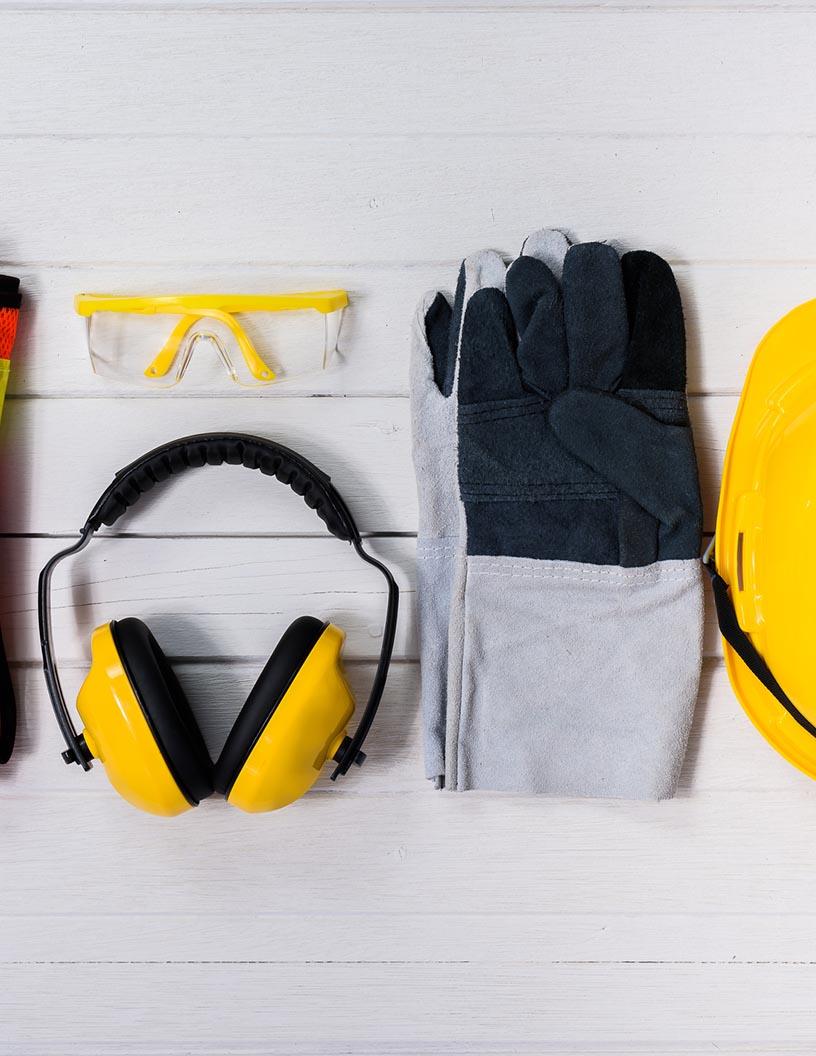


Protective Workwear Market Size 2024-2028
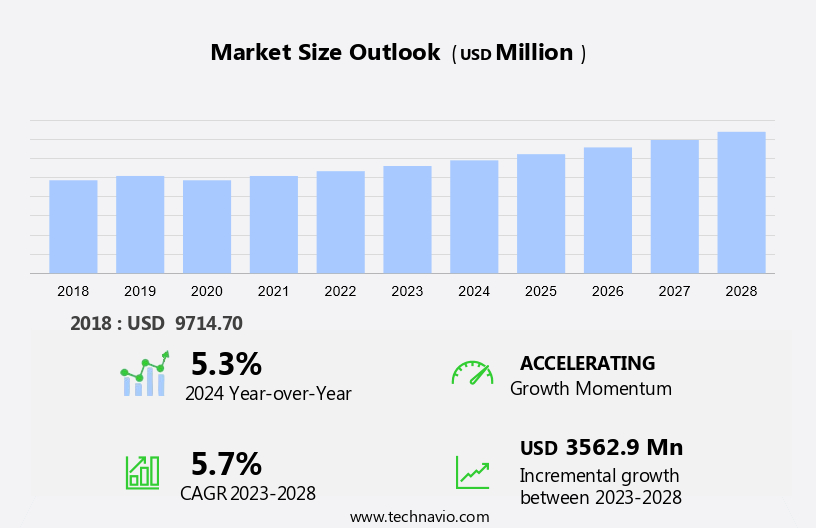
The protective workwear market size is forecast to increase by USD 3.56 billion, at a CAGR of 5.7% between 2023 and 2028.
- The market is experiencing significant growth due to the increasing prioritization of worker safety and the integration of advanced technologies. One trend influencing this market is the adoption of circular production principles, which focus on the reuse and recycling of materials to reduce waste and minimize environmental impact. Additionally, there is a growing demand for protective clothing with integrated vital signs monitoring capabilities, allowing for real-time health monitoring and improved safety for athletes and workers. Eco-consciousness is another key trend, with an increasing preference for protective clothing made from eco-friendly materials and adjustable components for personalized comfort. Designers are focusing on creating stylish and functional protective clothing to appeal to a wider audience. The integration of IoT features, such as asset tracking, is also gaining traction in the market, enabling better management of protective clothing inventory and improving overall operational efficiency. However, challenges remain, including the poor or inadequate implementation of workplace safety norms in some developing countries, which can limit market growth.
What will be the Size of the Market During the Forecast Period?
- The market is a significant sector in the industrial landscape, catering to the needs of various industries for clothing that ensures worker safety. This market encompasses a wide range of products, including chemical-resistant clothing, flame-resistant clothing, high-visibility clothing, and safety apparel, among others. Safety remains the primary concern for industries, leading to the continuous evolution of protective workwear. Workwear customization is gaining traction, allowing organizations to tailor their protective clothing to specific job requirements and worker preferences. This customization can include branding, ergonomic design, and fabric advancements to enhance comfort and productivity. Sustainability is another trend influencing the market. The use of recyclable materials in protective clothing solutions is becoming increasingly popular. These materials offer the same level of protection as traditional materials while reducing the environmental impact. Fabric advancements continue to shape the protective workwear industry. For instance, the development of cut-resistant and abrasion-resistant fabrics has significantly enhanced the protective capabilities of workwear.
- Similarly, the integration of technology into protective clothing, such as flame-retardant and high-visibility features, has improved safety and efficiency in various industries. Certifications play a crucial role in the market. Compliance with industry standards and regulations, such as OSHA and NFPA, is essential for ensuring the effectiveness and safety of protective clothing. Workwear distribution and supply chain management are also critical aspects of the market, with organizations focusing on streamlining their processes to meet the growing demand for protective workwear. The market is diverse, catering to various industries, including construction, pharmaceuticals, and hazardous materials handling. Each industry has unique safety requirements, leading to the development of specialized protective clothing and equipment. For example, construction sites require high-visibility workwear to ensure worker safety, while pharmaceutical facilities may prioritize flame-retardant clothing to mitigate the risk of fires. In conclusion, the market is a dynamic and essential sector, driven by the need for worker safety and innovation.
How is this market segmented and which is the largest segment?
The market research report provides comprehensive data (region-wise segment analysis), with forecasts and estimates in "USD billion" for the period 2024-2028, as well as historical data from 2018-2022 for the following segments.
- Application
- Chemical
- Fire and thermal
- Biological
- Visibility
- End-user
- Manufacturing
- Oil and gas
- Healthcare
- Construction
- Others
- Geography
- North America
- Canada
- US
- Europe
- Germany
- UK
- France
- Italy
- APAC
- China
- India
- Japan
- South Korea
- Middle East and Africa
- South America
- North America
By Application Insights
- The chemical segment is estimated to witness significant growth during the forecast period.
The manufacturing industries rely heavily on chemicals for producing a wide range of products, including plastics, packaging materials, fertilizers and pesticides, medicines, and construction materials. However, the use of chemicals presents considerable health and safety risks, such as inhalation of mist, accidental spills, or splashes during handling. Workers can suffer from severe burns and irritation if they come into contact with leaked chemicals, and in some cases, chemical leakages may even lead to explosions. To mitigate these risks, chemical plants require protective workwear that shields industrial workers from accidental exposure. Workers in plants handling flammable chemicals need multifunctional protective clothing that offers both chemical protection and fire resistance. Ensuring worker safety is of paramount importance, and the use of recyclable protective workwear is a step towards sustainability in this industry. Protective workwear is an essential component of safety equipment in the manufacturing sector, safeguarding workers from hazardous substances and ensuring their comfort while they perform their duties.
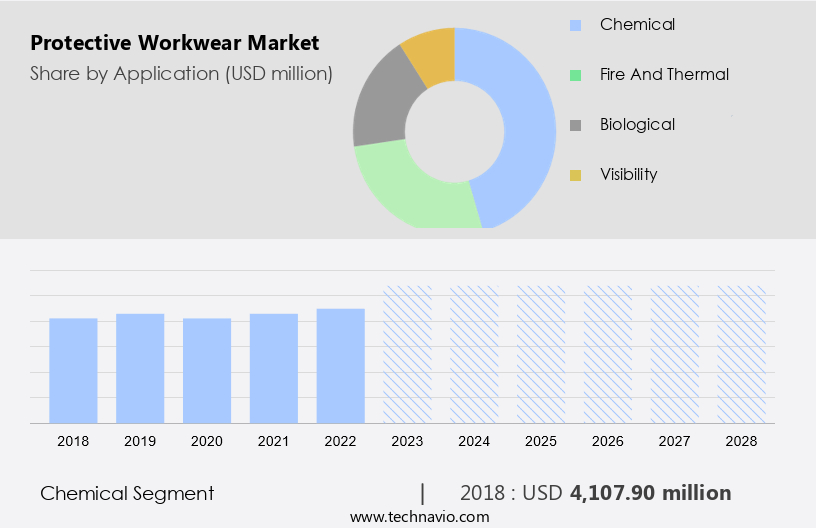
Get a glance at the market report of share of various segments Request Free Sample
The chemical segment was valued at USD 4.11 billion in 2018 and showed a gradual increase during the forecast period.
Regional Analysis
- North America is estimated to contribute 36% to the growth of the global market during the forecast period.
Technavio's analysts have elaborately explained the regional trends and drivers that shape the market during the forecast period.
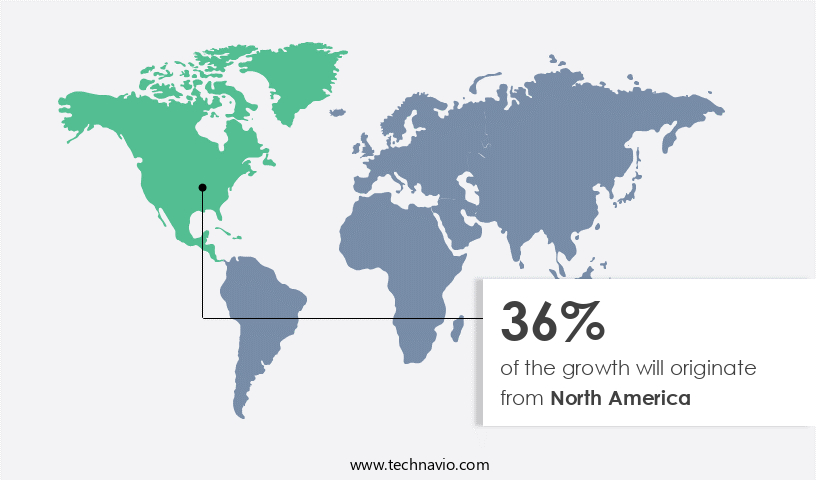
For more insights on the market share of various regions Request Free Sample
In North America, the market is experiencing significant growth due to the large presence of industries requiring protective apparel, such as oil and gas, healthcare, and public safety departments. Strict regulations enforced by organizations like OSHA in the US have led to increased penalties for workplace safety violations, making it essential for businesses to invest in protective workwear. Furthermore, the expansion of natural gas processing facilities, distribution networks, and petrochemical complexes in the US, Canada, and Mexico is creating a demand for protective workwear, particularly in sectors involving heat protection, slash hazards, and firefighting industries. Sustainability is also becoming a key consideration in the market, with an increasing focus on eco-friendly materials and data-monitoring technologies to ensure worker safety and efficiency.
Market Dynamics
Our researchers analyzed the data with 2023 as the base year, along with the key drivers, trends, and challenges. A holistic analysis of drivers will help companies refine their marketing strategies to gain a competitive advantage.
What are the key market drivers leading to the rise in the adoption of Protective Workwear Market?
Strict implementation of workplace safety standards is the key driver of the market.
- In the digital age, the significance of safeguarding workers from various hazards, such as thermal and fire, chemical, and biological risks, has gained increasing importance. This trend is driven by stringent workplace safety regulations and their rigorous enforcement, particularly in advanced economies. In these nations, regulatory bodies oversee and enforce adherence to safety guidelines, leading to a heightened demand for protective workwear. For example, the Occupational Safety and Health Administration (OSHA) in the United States sets the standard for personal protective equipment (PPE), as outlined in the Code of Federal Regulations (CFR) under 29 CFR 1910.
- This mandate necessitates the use of custom-fitted gear, incorporating advanced technologies like predictive analytics, microchips, sensors, and smart textiles. These innovations cater to the needs of various industries and adventure enthusiasts alike. Fabricators and biologists collaborate to create protective workwear with advanced features, such as temperature regulation, moisture management, and fall protection. By integrating digital technologies, these garments offer enhanced safety, comfort, and efficiency. This fusion of technology and safety gear is a testament to the evolving landscape of industrial sectors and their commitment to ensuring a secure work environment.
What are the market trends shaping the Protective Workwear Market?
The introduction of asset tracking and internet of things (IoT) features is the upcoming trend in the market.
- In the realm of worksite safety, ensuring the continuous functionality and proper usage of personal protective equipment, including protective workwear, is of paramount importance. This is achieved through regular inspections and asset tracking. The implementation of these practices enhances worker safety and optimizes inventory management. To tackle these concerns, prominent market players have introduced advanced technological features.
- For instance, Honeywell and Intel Corporation showcased an IoT-enabled wearable equipment prototype for industrial workers and first responders. Equipped with a microcontroller chip, this connected equipment gathers data on the worker and environment, thereby improving the overall performance and accountability of personal protective equipment.
What challenges does the Protective Workwear Market face during the growth?
Poor or inadequate implementation of workplace safety norms in developing countries is a key challenge affecting market growth.
- In numerous developing countries, workplace safety regulations and their enforcement leave much to be desired. Unlike established organizations such as the Occupational Safety and Health Administration (OSHA) in the US and the Health and Safety Executive (HSE) in the UK, which set regulations, oversee their implementation, and impose penalties for violations, many developing countries lack a consistent approach to workplace safety. In some instances, multiple regulatory bodies exist, each with ambiguous roles. For example, in Kenya, there are three agencies responsible for health and safety in the oil and gas sector. This fragmented oversight results in a lack of accountability for organizations regarding workplace safety infractions.
- As the global workforce becomes increasingly eco-conscious and athletes prioritize personalized protective clothing, the market is evolving. Designers are focusing on wear patterns and adjustable components to cater to individual needs. Furthermore, the industry is shifting towards eco-friendly materials, aligning with the growing demand for circular production. This trend is not limited to developed economies but is gaining traction in developing countries as well. By embracing these changes, organizations can not only ensure the safety of their workforce but also contribute to a more sustainable future. In the realm of professional workwear, the focus is no longer solely on strong protection.
Exclusive Customer Landscape
The market forecasting report includes the adoption lifecycle of the market, covering from the innovator's stage to the laggard's stage. It focuses on adoption rates in different regions based on penetration. Furthermore, the market report also includes key purchase criteria and drivers of price sensitivity to help companies evaluate and develop their market growth analysis strategies.
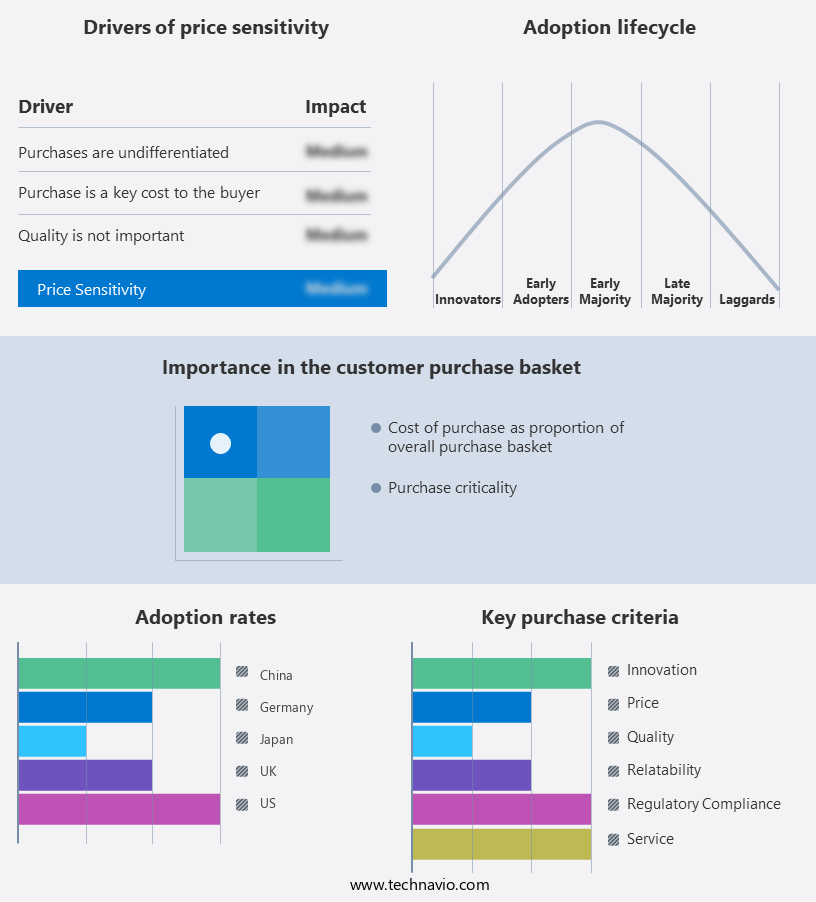
Customer Landscape
Key Companies & Market Insights
Companies are implementing various strategies, such as strategic alliances, market forecasts, partnerships, mergers and acquisitions, geographical expansion, and product/service launches, to enhance their presence in the market.
The market research and growth report includes detailed analyses of the competitive landscape of the market and information about key companies, including:
- 3M Co.
- Alpha Pro Tech Ltd.
- Alsico Laucuba Ltd
- Ansell Ltd.
- California Industrial Rubber Co
- COFRA Srl
- Dragerwerk AG and Co. KGaA
- DuPont de Nemours Inc.
- Honeywell International Inc.
- International Enviroguard
- Jayco Safety Products Pvt. Ltd.
- KARAM
- Kimberly Clark Corp.
- Lakeland Industries Inc.
- SafetyQuip Australia Pty Ltd
- Sioen Industries NV
- Stanley Black and Decker Inc.
- UVEX WINTER HOLDING GmbH and Co. KG
- W. L. Gore and Associates Inc.
- Wearwell Ltd.
Qualitative and quantitative analysis of companies has been conducted to help clients understand the wider business environment as well as the strengths and weaknesses of key market players. Data is qualitatively analyzed to categorize companies as pure play, category-focused, industry-focused, and diversified; it is quantitatively analyzed to categorize companies as dominant, leading, strong, tentative, and weak.
Research Analyst Overview
Protective workwear plays a crucial role in ensuring workplace safety across various industries, including construction, oil and gas, mining, and manufacturing. With the increasing number of accidents and injuries caused by physical hazards such as sharp objects, cuts, and high temperatures, the demand for protective workwear is on the rise. Safety regulations mandate the use of protective clothing and equipment to shield employees from hazardous substances, biological agents, and chemical protection. In the digital age, protective workwear is evolving with the use of cutting-edge materials, ergonomics, and sustainability. The industry is focusing on creating comfortable and cost-effective solutions for cost-sensitive industries.
Moreover, these solutions include recyclable materials, mobility, and environmental friendliness. Mechanical protective clothing is designed to defend against high-pressure liquids, aerosols, and chemicals. The use of smart textiles, sensors, and microchips is becoming increasingly common in protective apparel. These advancements provide vital signs monitoring, predictive analytics, and custom-fitted gear, enhancing employee satisfaction and productivity. Furthermore, protective workwear is not limited to industrial sectors alone. It is also essential for adventure enthusiasts, firefighting industries, and even athletes, who face unique hazards. With a focus on sustainability, fashion, and personalization, protective clothing is becoming an integral part of everyday life.
|
Market Scope |
|
|
Report Coverage |
Details |
|
Page number |
205 |
|
Base year |
2023 |
|
Historic period |
2018-2022 |
|
Forecast period |
2024-2028 |
|
Growth momentum & CAGR |
Accelerate at a CAGR of 5.7% |
|
Market Growth 2024-2028 |
USD 3.56 billion |
|
Market structure |
Fragmented |
|
YoY growth 2023-2024(%) |
5.3 |
|
Key countries |
US, Germany, UK, China, Japan, Canada, France, India, South Korea, and Italy |
|
Competitive landscape |
Leading Companies, Market Positioning of Companies, Competitive Strategies, and Industry Risks |
What are the Key Data Covered in this Market Research and Growth Report?
- CAGR of the market during the forecast period
- Detailed information on factors that will drive the market growth and forecasting between 2024 and 2028
- Precise estimation of the size of the market and its contribution of the market in focus to the parent market
- Accurate predictions about upcoming market growth and trends and changes in consumer behaviour
- Growth of the market across North America, Europe, APAC, Middle East and Africa, and South America
- Thorough analysis of the market's competitive landscape and detailed information about companies
- Comprehensive analysis of factors that will challenge the growth of market companies
We can help! Our analysts can customize this market research report to meet your requirements.
 RIA -
RIA - 
