



Fraud Detection And Prevention Market Size 2026-2030
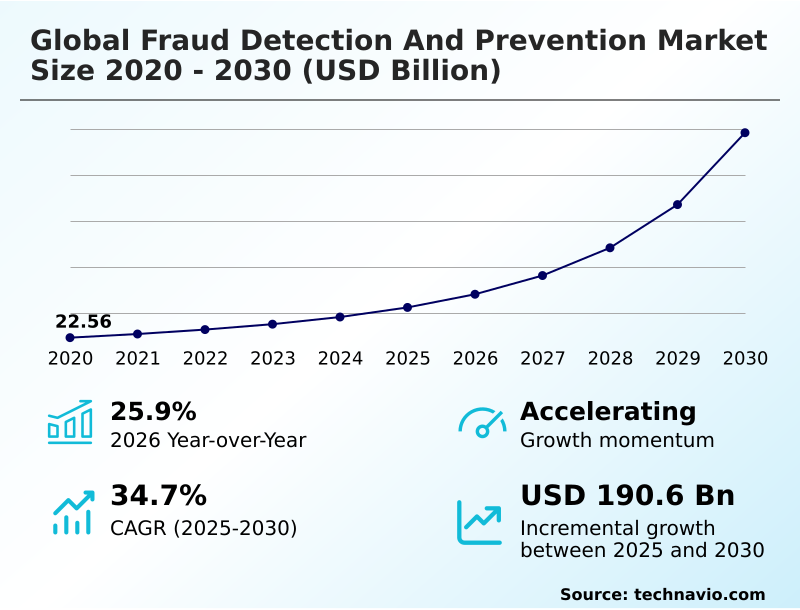
The fraud detection and prevention market size is valued to increase by USD 190.60 billion, at a CAGR of 34.7% from 2025 to 2030. Increase in adoption of cloud-based services will drive the fraud detection and prevention market.
Major Market Trends & Insights
- North America dominated the market and accounted for a 39.9% growth during the forecast period.
- By Component - Solutions segment was valued at USD 30.27 billion in 2024
- By End-user - Large enterprise segment accounted for the largest market revenue share in 2024
Market Size & Forecast
- Market Opportunities: USD 223.56 billion
- Market Future Opportunities: USD 190.60 billion
- CAGR from 2025 to 2030 : 34.7%
Market Summary
- The fraud detection and prevention market is rapidly evolving as organizations combat increasingly sophisticated threats in the digital economy. Growth is fueled by the surge in online transactions and the adoption of cloud-based services, which expand the attack surface for fraudulent activities.
- A dominant trend is the shift from reactive, rule-based systems to proactive defense mechanisms leveraging artificial intelligence and machine learning. These advanced solutions utilize behavioral biometrics, anomaly detection, and predictive analytics to identify and neutralize threats in real time.
- For instance, a financial institution can deploy AI-driven transaction monitoring to analyze millions of data points instantly, flagging suspicious patterns indicative of money laundering or account takeovers before significant losses occur. However, the market faces challenges from complex legacy IT infrastructure, which can create data silos and hinder the implementation of modern, integrated security protocols.
- The high cost of deployment and the threat from open-source alternatives also temper market expansion. As cybercriminals continuously refine their tactics, the demand for innovative, adaptive, and scalable fraud prevention technologies remains a critical business imperative across all industries.
What will be the Size of the Fraud Detection And Prevention Market during the forecast period?
Get Key Insights on Market Forecast (PDF) Get Free Sample
How is the Fraud Detection And Prevention Market Segmented?
The fraud detection and prevention industry research report provides comprehensive data (region-wise segment analysis), with forecasts and estimates in "USD million" for the period 2026-2030, as well as historical data from 2020-2024 for the following segments.
- Component
- Solutions
- Services
- End-user
- Large enterprise
- SMEs
- Application
- Transaction monitoring
- Compliance and risk management
- Identity verification
- Behavioral analytics
- Others
- Geography
- North America
- US
- Canada
- Mexico
- Europe
- Germany
- UK
- France
- APAC
- China
- Japan
- India
- South America
- Brazil
- Argentina
- Middle East and Africa
- Saudi Arabia
- UAE
- South Africa
- Rest of World (ROW)
- North America
By Component Insights
The solutions segment is estimated to witness significant growth during the forecast period.
The solutions segment is defined by platforms using deep learning models and risk scoring algorithms for proactive security. These systems incorporate predictive analytics and behavioral biometrics, moving beyond static rule-based engines.
A key aspect is cloud-based fraud management, enabling real-time threat detection and anomaly detection across vast datasets. These fraud prevention platforms deliver digital payment security that can reduce false positives by over 15%, enhancing user experience without compromising safety.
Utilizing machine learning algorithms and advanced authentication technologies, these solutions are critical for modern financial crime solutions and account takeover prevention in an increasingly digital economy.
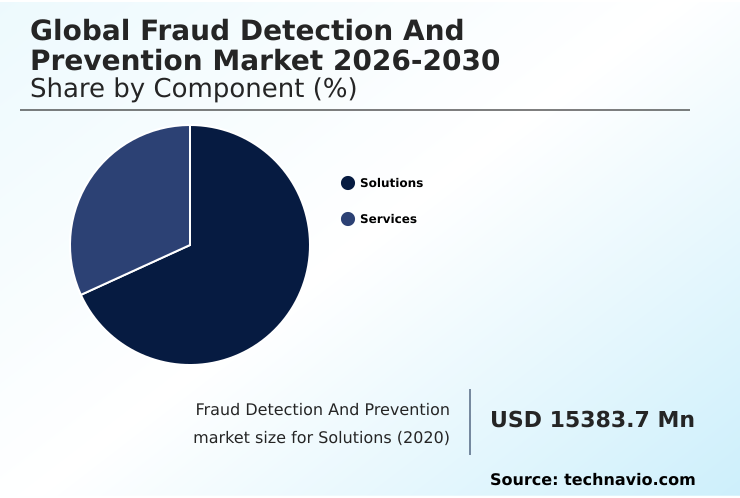
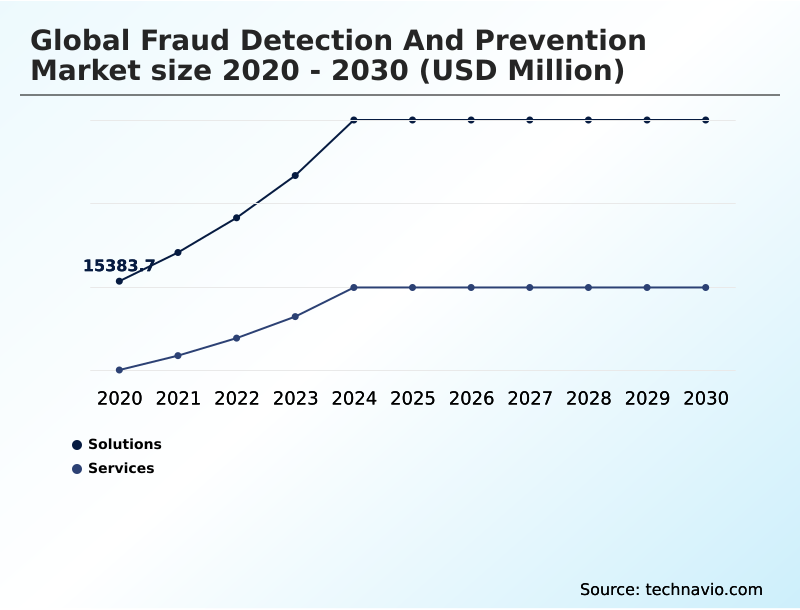
The Solutions segment was valued at USD 30.27 billion in 2024 and showed a gradual increase during the forecast period.
Regional Analysis
North America is estimated to contribute 39.9% to the growth of the global market during the forecast period.Technavio’s analysts have elaborately explained the regional trends and drivers that shape the market during the forecast period.
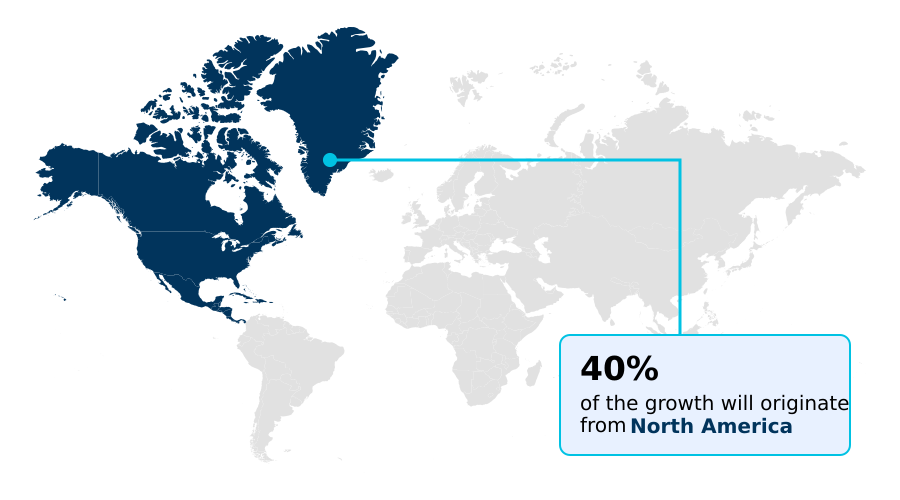
See How Fraud Detection And Prevention Market Demand is Rising in North America Get Free Sample
The geographic landscape reveals North America as the most technologically advanced market, with a growth rate of 35.3%, driven by stringent regulations and high investment in ai-powered fraud detection.
Europe follows closely with a 34.9% growth rate, focusing on compliance management software to adhere to strict data privacy laws.
Meanwhile, the APAC region, with a growth rate of 33.8%, is rapidly adopting mobile fraud prevention and payment gateway security to support its booming e-commerce sector.
This regional divergence underscores the varying priorities, from open banking security in mature markets to securing digital onboarding verification in emerging economies.
The use of ip intelligence and customer due diligence practices is becoming a global standard across these diverse regions.
Market Dynamics
Our researchers analyzed the data with 2025 as the base year, along with the key drivers, trends, and challenges. A holistic analysis of drivers will help companies refine their marketing strategies to gain a competitive advantage.
- A comprehensive strategy for fraud mitigation begins with robust identity verification for digital onboarding, using advanced analytics for insurance fraud claims to vet new applicants. As customers interact with services, implementing a zero trust security model becomes essential. This is supported by real-time transaction monitoring for aml and the use of multi-factor authentication in mobile banking to secure every interaction.
- Behind the scenes, ai models for detecting account takeover work continuously, bolstered by deep learning for financial crime patterns. Organizations are increasingly using device fingerprinting to stop bots and leveraging ip intelligence for blocking malicious traffic. The core of this defense is machine learning for payment fraud detection, which uses sophisticated risk scoring models for credit applications.
- This approach significantly reduces false positives in fraud alerts, with some systems improving accuracy by over 40% compared to legacy rules. When an incident does occur, kyc and customer due diligence automation, alongside threat intelligence integration for cybersecurity, ensure a swift and compliant response.
- This entire framework helps in preventing synthetic identity fraud in banking and managing chargeback fraud, creating a resilient security posture.
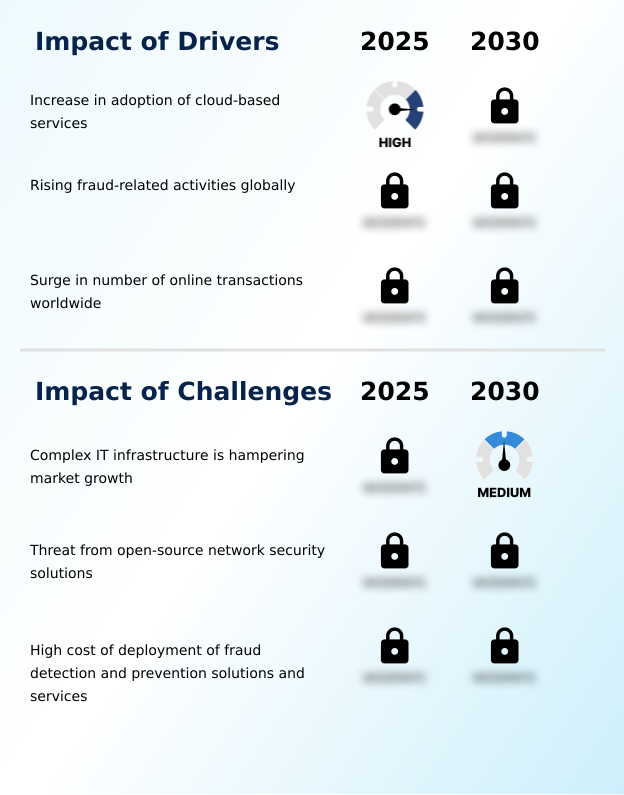
What are the key market drivers leading to the rise in the adoption of Fraud Detection And Prevention Industry?
- The increasing adoption of cloud-based services is a key driver for the market, providing organizations with scalable and powerful analytics capabilities.
- The increasing adoption of cloud-based services is a primary market driver, democratizing access to high-level security tools.
- This shift enables organizations to deploy sophisticated machine learning algorithms and real-time fraud detection without the high capital expenditure of on-premise data centers, lowering the barrier to entry for robust security by up to 50%.
- Cloud platforms facilitate the real-time analysis of vast datasets, essential for identifying emerging fraudulent patterns. This agility is vital, as evidenced by firms reporting a 70% faster deployment of security updates.
- The integration of digital identity intelligence and account protection services within cloud environments provides a scalable and cost-effective method for organizations to meet evolving security demands.
What are the market trends shaping the Fraud Detection And Prevention Industry?
- Technological advancements in fraud detection and prevention solutions are a dominant trend, driving the industry toward more autonomous and proactive defense mechanisms.
- Technological advancement is reshaping the market with a strong emphasis on autonomous defense. The integration of artificial intelligence and deep learning is moving the industry from rigid, rules-based engines toward adaptive models that recognize subtle behavioral anomalies.
- Key innovations include behavioral biometrics, which analyze user interaction patterns, improving security against account takeovers with a 40% higher accuracy rate than traditional methods. Firms leveraging these ai-driven risk analytics report a 25% reduction in false positives, enhancing customer experience.
- The adoption of security information and event management (siem) systems coupled with cloud security services enables nearly instantaneous transaction verification, a critical capability in high-volume e-commerce environments.
What challenges does the Fraud Detection And Prevention Industry face during its growth?
- The complexity of existing IT infrastructure presents a significant challenge, hampering the growth and integration of advanced fraud prevention systems.
- Complex IT infrastructure is a significant challenge, hampering the integration of modern security protocols with legacy systems. Fragmented environments create data silos, making it difficult to deploy comprehensive monitoring tools like biometric security systems and fraud investigation tools, which can lead to a 30% increase in undetected cross-channel fraud.
- This complexity often results in a high volume of false positives from endpoint security solutions, overwhelming analysts and increasing operational costs by 20%. The technical expertise required to overhaul these systems is often prohibitive, causing many firms to delay essential security upgrades, thereby slowing the adoption of advanced risk management solutions and cybersecurity services.
Exclusive Technavio Analysis on Customer Landscape
The fraud detection and prevention market forecasting report includes the adoption lifecycle of the market, covering from the innovator’s stage to the laggard’s stage. It focuses on adoption rates in different regions based on penetration. Furthermore, the fraud detection and prevention market report also includes key purchase criteria and drivers of price sensitivity to help companies evaluate and develop their market growth analysis strategies.
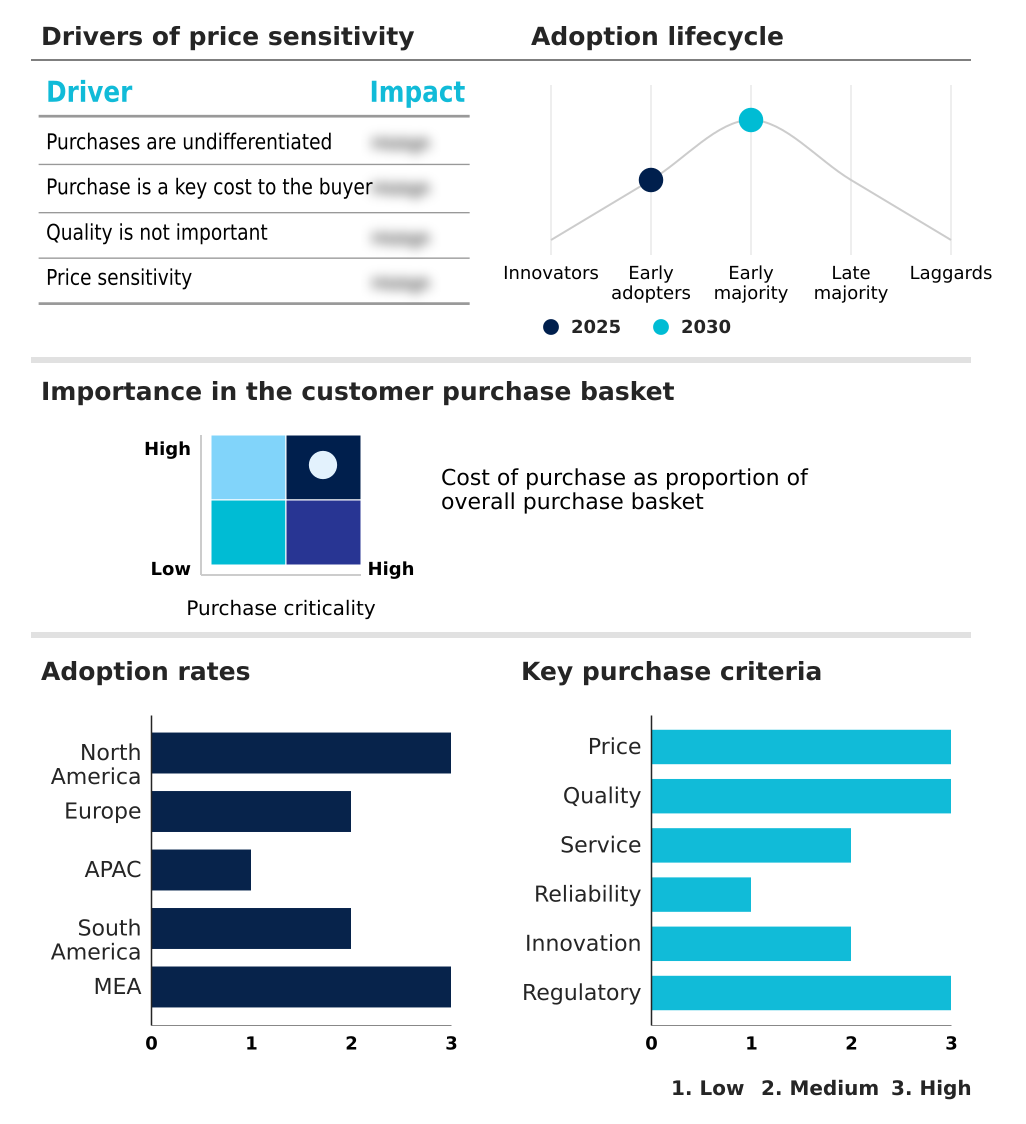
Customer Landscape of Fraud Detection And Prevention Industry
Competitive Landscape
Companies are implementing various strategies, such as strategic alliances, fraud detection and prevention market forecast, partnerships, mergers and acquisitions, geographical expansion, and product/service launches, to enhance their presence in the industry.
ACI Worldwide Inc. - Analytical solutions provide real-time fraud management, leveraging AI for enhanced risk scoring and identity verification across digital transactions.
The industry research and growth report includes detailed analyses of the competitive landscape of the market and information about key companies, including:
- ACI Worldwide Inc.
- Amazon Web Services Inc.
- DataVisor Inc.
- Equifax Inc.
- Experian Plc
- Fair Isaac Corp.
- Feedzai
- Fidelity National Information
- Fiserv Inc.
- IBM Corp.
- LexisNexis Legal and Professional
- Microsoft Corp.
- NICE Ltd.
- OneSpan Inc.
- Quantexa Ltd.
- SAP SE
- SAS Institute Inc.
- Signifyd Inc.
- Software AG
- TransUnion
Qualitative and quantitative analysis of companies has been conducted to help clients understand the wider business environment as well as the strengths and weaknesses of key industry players. Data is qualitatively analyzed to categorize companies as pure play, category-focused, industry-focused, and diversified; it is quantitatively analyzed to categorize companies as dominant, leading, strong, tentative, and weak.
Recent Development and News in Fraud detection and prevention market
- In September 2024, a leading financial technology company launched a new suite of AI-powered tools focused on preventing synthetic identity fraud, a growing concern for digital lenders.
- In January 2025, PayPal announced a major upgrade to its proprietary risk management solutions, utilizing a new generation of generative artificial intelligence to predict fraudulent patterns before transactions are even initiated.
- In February 2025, Mastercard unveiled an advanced security framework specifically designed for large enterprise clients, combining quantum-resistant encryption with real-time threat intelligence to secure global supply chain payments.
- In March 2025, Visa reported a significant reduction in false positives across its network following the implementation of a new transaction monitoring engine that uses neural networks to better distinguish between legitimate cross-border travel and fraudulent activity.
Dive into Technavio’s robust research methodology, blending expert interviews, extensive data synthesis, and validated models for unparalleled Fraud Detection And Prevention Market insights. See full methodology.
| Market Scope | |
|---|---|
| Page number | 295 |
| Base year | 2025 |
| Historic period | 2020-2024 |
| Forecast period | 2026-2030 |
| Growth momentum & CAGR | Accelerate at a CAGR of 34.7% |
| Market growth 2026-2030 | USD 190599.6 million |
| Market structure | Fragmented |
| YoY growth 2025-2026(%) | 25.9% |
| Key countries | US, Canada, Mexico, Germany, UK, France, Italy, Spain, The Netherlands, China, Japan, India, South Korea, Australia, Indonesia, Brazil, Argentina, Chile, Saudi Arabia, UAE, South Africa, Israel and Turkey |
| Competitive landscape | Leading Companies, Market Positioning of Companies, Competitive Strategies, and Industry Risks |
Research Analyst Overview
- The market's evolution is driven by the sophisticated interplay of ai-powered fraud detection, behavioral biometrics, and deep learning models. Boardroom decisions increasingly focus on investing in a holistic security posture that includes robust transaction monitoring and stringent anti-money laundering (aml) protocols, which can reduce compliance-related fines by up to 30%.
- Core technologies such as machine learning algorithms and predictive analytics are fundamental for real-time fraud detection and effective anomaly detection. The integration of risk scoring algorithms, identity verification, and multi-factor authentication is critical for account takeover prevention and securing digital identity intelligence.
- As enterprises migrate to the cloud, cloud-based fraud management, fortified by device fingerprinting, ip intelligence, and threat intelligence feeds, becomes paramount. Addressing challenges like synthetic identity fraud and chargeback fraud prevention requires advanced tools like graph analytics and a focus on financial crime compliance.
- The entire ecosystem, from e-commerce fraud prevention to open banking security, relies on seamless data orchestration, feature engineering, and customer authentication methods to stay ahead of threats.
What are the Key Data Covered in this Fraud Detection And Prevention Market Research and Growth Report?
-
What is the expected growth of the Fraud Detection And Prevention Market between 2026 and 2030?
-
USD 190.60 billion, at a CAGR of 34.7%
-
-
What segmentation does the market report cover?
-
The report is segmented by Component (Solutions, and Services), End-user (Large enterprise, and SMEs), Application (Transaction monitoring, Compliance and risk management, Identity verification, Behavioral analytics, and Others) and Geography (North America, Europe, APAC, South America, Middle East and Africa)
-
-
Which regions are analyzed in the report?
-
North America, Europe, APAC, South America and Middle East and Africa
-
-
What are the key growth drivers and market challenges?
-
Increase in adoption of cloud-based services, Complex IT infrastructure is hampering market growth
-
-
Who are the major players in the Fraud Detection And Prevention Market?
-
ACI Worldwide Inc., Amazon Web Services Inc., DataVisor Inc., Equifax Inc., Experian Plc, Fair Isaac Corp., Feedzai, Fidelity National Information, Fiserv Inc., IBM Corp., LexisNexis Legal and Professional, Microsoft Corp., NICE Ltd., OneSpan Inc., Quantexa Ltd., SAP SE, SAS Institute Inc., Signifyd Inc., Software AG and TransUnion
-
Market Research Insights
- Market dynamics are shaped by the need for robust risk management solutions and advanced identity verification services to combat sophisticated digital threats. The adoption of real-time threat detection capabilities is now standard, with firms reporting up to a 60% faster response time compared to manual investigation methods.
- Furthermore, integrated fraud prevention platforms that combine network security monitoring with automated fraud alerts can reduce false positives by over 25%, significantly improving operational efficiency. Enterprises leveraging these e-commerce security solutions find that strengthening transaction security systems not only mitigates losses but also enhances customer trust, with some seeing a 10% improvement in customer retention in high-risk sectors.
We can help! Our analysts can customize this fraud detection and prevention market research report to meet your requirements.
 RIA -
RIA - 
