



Generative Ai Governance Platforms Market Size and Growth Forecast 2026-2030
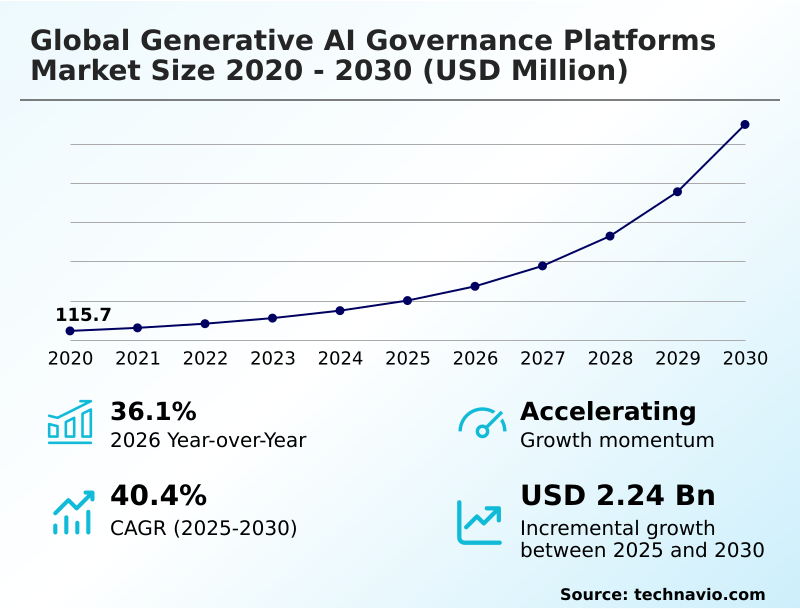
The Generative Ai Governance Platforms Market size was valued at USD 502 million in 2025 growing at a CAGR of 40.4% during the forecast period 2026-2030.
North America accounts for 39.3% of incremental growth during the forecast period. The Solutions segment by Component was valued at USD 262.1 million in 2024, while the Cloud based segment holds the largest revenue share by Deployment.
The market is projected to grow by USD 2.63 billion from 2020 to 2030, with USD 2.24 billion of the growth expected during the forecast period of 2025 to 2030.
Get Key Insights on Market Forecast (PDF) Request Free Sample
Generative Ai Governance Platforms Market Overview
The generative AI governance platforms market is defined by the critical need for enterprises to manage the risks inherent in deploying large-scale models. As organizations move from experimentation to production, the focus shifts to ensuring regulatory compliance automation and maintaining data sovereignty controls. This requires sophisticated platforms that provide real-time content filtering, bias detection algorithms, and robust intellectual property safeguards. For example, a global financial services firm deploying a customer service chatbot must use a governance platform to perform automated red-teaming and establish an immutable audit trail, ensuring every interaction complies with financial regulations and data privacy laws. This oversight prevents model hallucinations that could provide incorrect financial advice, thereby mitigating legal and reputational risk. With North America poised to account for nearly 40% of incremental market growth, the demand for such platforms, which support model lifecycle management and ethical AI alignment, is intensifying across high-stakes industries.
Drivers, Trends, and Challenges in the Generative Ai Governance Platforms Market
The increasing deployment of generative AI across regulated sectors is creating a significant need for specialized governance solutions. For financial services, robust generative AI governance is essential to meet strict compliance mandates and prevent costly errors. This involves implementing comprehensive AI model risk assessment tools and ensuring that the outputs of fine-tuned language models are accurate and auditable.
As organizations navigate diverse international laws, ensuring compliance with the EU AI Act has become a benchmark for responsible AI deployment, requiring platforms that offer deep data lineage tracking and transparency. A critical aspect of this is securing LLMs from data exfiltration, as the leakage of proprietary or customer data can have severe consequences.
The market's growth, with North America contributing almost 40% of the incremental expansion, highlights the significant investment in these technologies. Platforms must provide robust governance of fine-tuned language models to ensure that customizations do not introduce new biases or vulnerabilities. Ultimately, the effective implementation of these platforms is a key differentiator for enterprises looking to leverage AI responsibly.
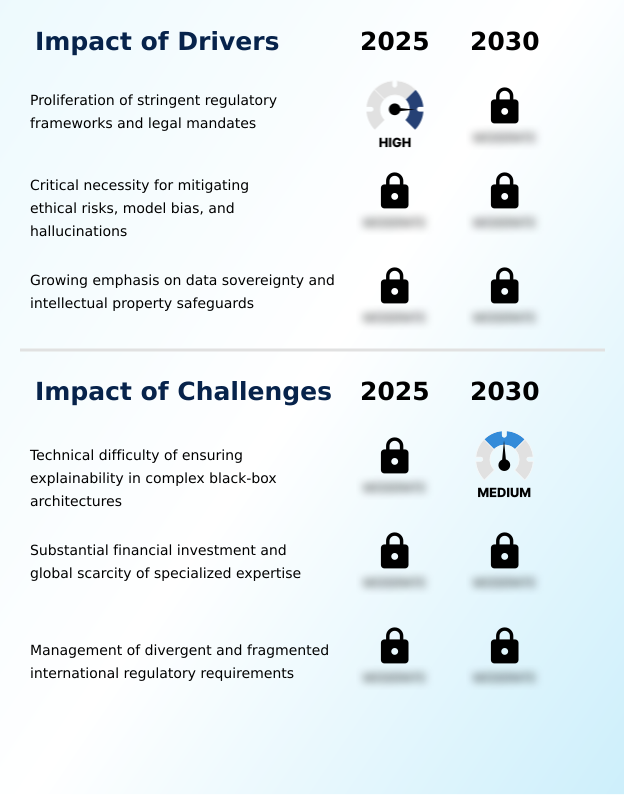
Primary Growth Driver: The proliferation of stringent regulatory frameworks and legal mandates is a primary driver for the market's expansion.
The market's 36.1% year-over-year growth is propelled by a convergence of non-negotiable business requirements.
The primary driver is the global proliferation of stringent legal frameworks, such as the European Union Artificial Intelligence Act, compelling organizations to adopt platforms for regulatory compliance automation.
Secondly, there is a critical need to mitigate the inherent risks of generative models, including hallucinations and biases, through tools providing bias detection algorithms and hallucination detection systems. This ensures responsible AI deployment.
Finally, the imperative to protect corporate assets drives adoption of platforms with robust intellectual property safeguards and data sovereignty controls, preventing the leakage of sensitive information through large language models and ensuring ethical AI alignment.
Emerging Market Trend: A key trend is the convergence of traditional cybersecurity protocols with specialized generative AI governance frameworks. This integration addresses new attack vectors and unifies security with ethical oversight.
The market is defined by three converging trends that are reshaping enterprise AI strategy. First, the fusion of cybersecurity with AI governance is creating demand for platforms that offer prompt injection defense and model vulnerability scanning as core features.
Second, the shift toward automated, real-time auditing, or Regulatory-as-a-Service, is making periodic manual reviews obsolete, driven by the need for an immutable audit trail. This is particularly crucial for maintaining compliance with dynamic regulations like the European Union Artificial Intelligence Act.
Third, the rise of sovereign AI frameworks, especially in the fast-growing APAC region, is pushing demand for platforms that support on-premises deployment and robust data sovereignty controls, ensuring that generative model oversight aligns with national interests.
Key Industry Challenge: A key challenge affecting industry growth is the technical difficulty of ensuring explainability within complex, black-box model architectures.
Enterprises face significant headwinds in deploying effective generative AI governance, impeding broader adoption. A primary challenge is the technical complexity of achieving algorithmic transparency and explainable AI (XAI) in inherently opaque models.
This is compounded by a global scarcity of skilled professionals, with over 60% of enterprises citing a lack of internal expertise as a key barrier to implementing robust generative model oversight. Furthermore, the substantial financial investment required for licensing and infrastructure, coupled with fragmented international regulations, forces organizations to navigate a difficult landscape.
This environment makes it challenging to implement a unified strategy for multi-cloud governance and data sovereignty controls, creating uncertainty and slowing deployment.
Explore Full Market Dynamics Analysis Request Free Sample
Generative Ai Governance Platforms Market Segmentation
The generative ai governance platforms industry research report provides comprehensive data including region-wise segment analysis, with forecasts and analysis for the period 2026-2030, as well as historical data from 2020-2024 for the following segments.
Component Segment Analysis
The solutions segment is estimated to witness significant growth during the forecast period.
The solutions segment is foundational to the generative AI governance platforms market, providing the technical frameworks for managing large-scale models. These platforms are critical for implementing automated policy enforcement and ensuring regulatory compliance automation.
Key features include bias detection algorithms and hallucination monitoring to maintain output integrity, which is essential for compliance with standards like the EU AI Act.
Enterprises deploy these tools for real-time content filtering and to establish an immutable audit trail, a non-negotiable for sectors under stringent oversight. This software integrates directly into development workflows, enabling continuous oversight and AI model risk assessment.
In 2025, this segment is forecast to constitute over 71% of the total market, underscoring its importance for responsible AI deployment.
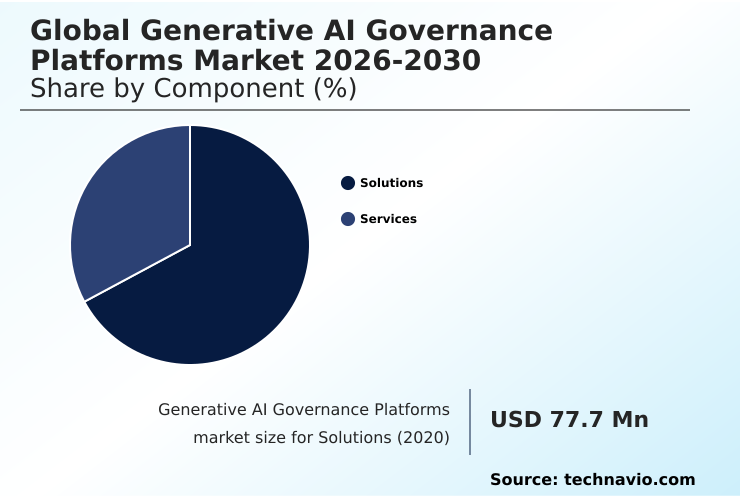
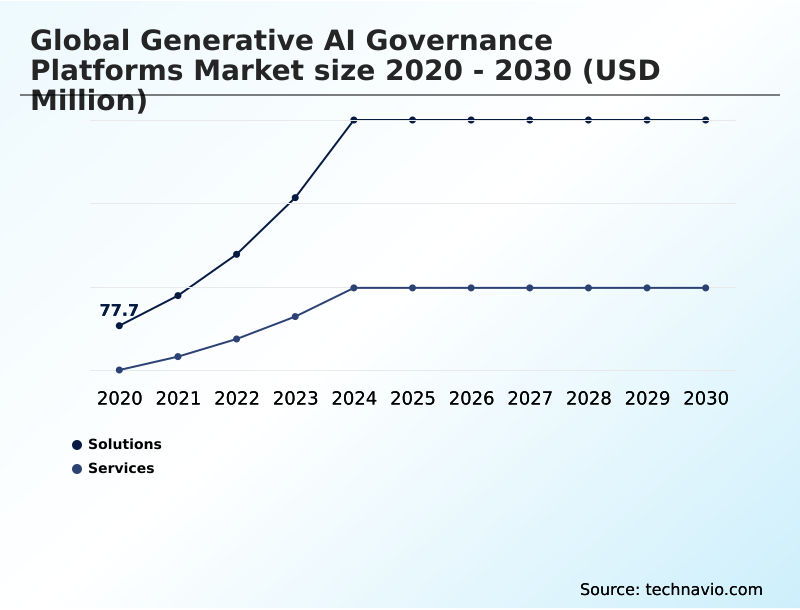
The Solutions segment was valued at USD 262.1 million in 2024 and showed a gradual increase during the forecast period.
Generative Ai Governance Platforms Market by Region: North America Leads with 39.3% Growth Share
North America is estimated to contribute 39.3% to the growth of the global market during the forecast period.
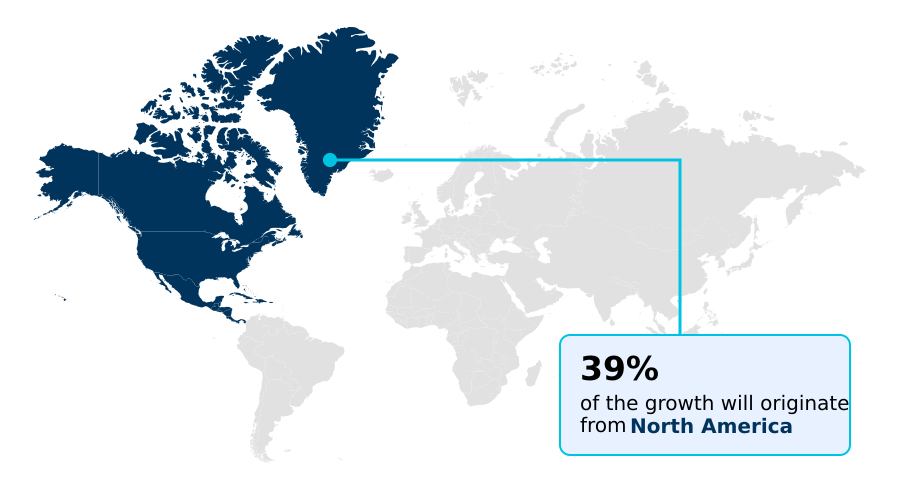
The geographic landscape is led by North America, which is projected to contribute over 39% of the market's incremental growth, driven by early adoption and a high concentration of model developers.
This region emphasizes intellectual property safeguards and defense against prompt injection.
In contrast, the APAC region, forecast to have the highest CAGR at 42.1%, shows a strong push toward sovereign AI frameworks and localized data sovereignty controls to meet diverse regulatory and cultural requirements.
This divergence creates demand for modular platforms capable of multi-cloud governance. Europe's market is shaped by stringent regulations like the GDPR and AI Act, prioritizing ethical AI alignment and regulatory compliance automation.
Customer Landscape Analysis for the Generative Ai Governance Platforms Market
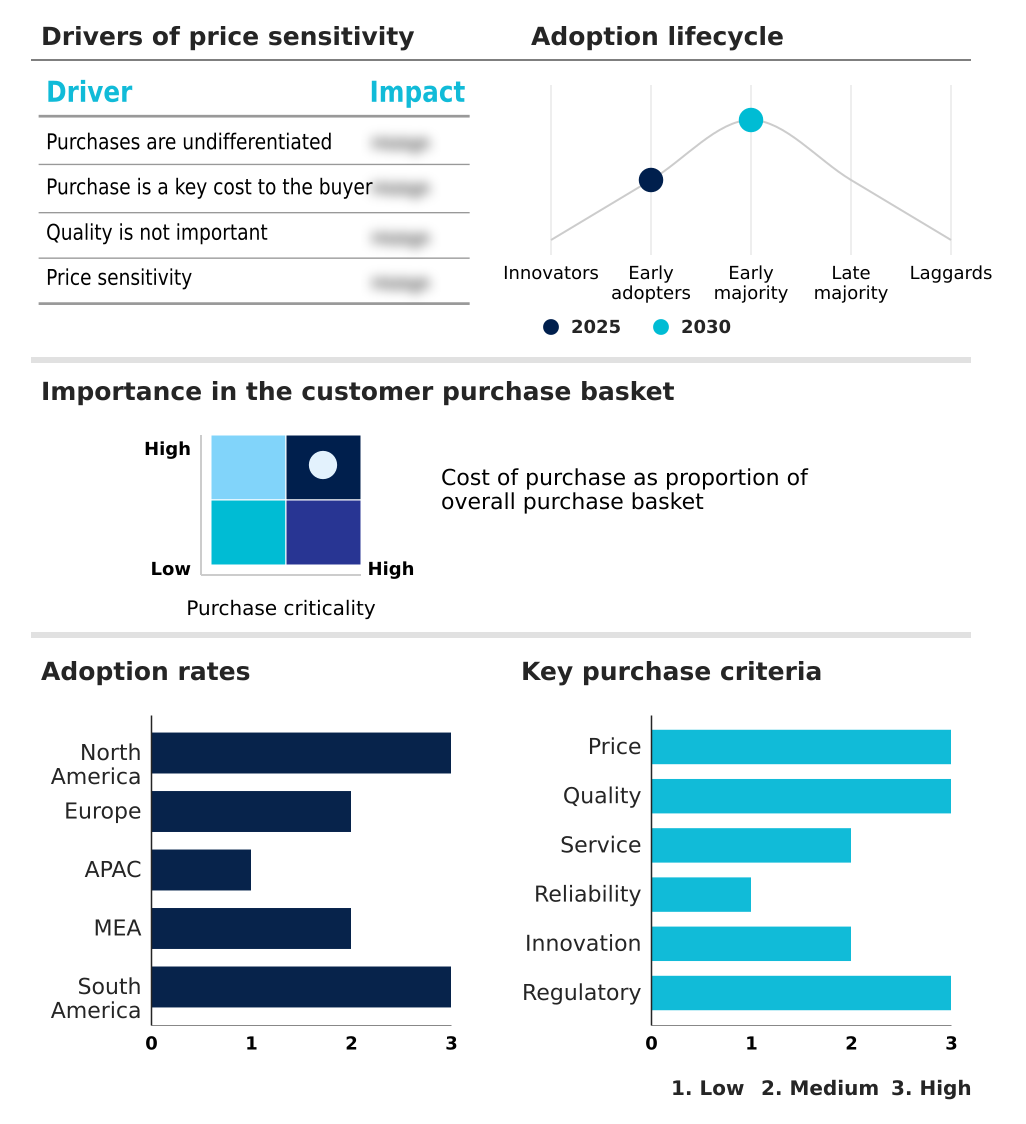
The generative ai governance platforms market forecasting report includes the adoption lifecycle of the market, covering from the innovator’s stage to the laggard’s stage. It focuses on adoption rates in different regions based on penetration. Furthermore, the generative ai governance platforms market report also includes key purchase criteria and drivers of price sensitivity to help companies evaluate and develop their market growth analysis strategies.
Competitive Landscape of the Generative Ai Governance Platforms Market
Companies are implementing various strategies, such as strategic alliances, partnerships, mergers and acquisitions, geographical expansion, and product/service launches, to enhance their presence in the generative ai governance platforms market industry.
Amazon.com Inc. - Offerings provide platforms for comprehensive lifecycle management, risk mitigation, and automated compliance for enterprise-grade generative AI, ensuring security and ethical alignment.
The industry research and growth report includes detailed analyses of the competitive landscape of the market and information about key companies, including:
- Amazon.com Inc.
- ArthurAI Inc.
- BigID Inc.
- Cisco Systems Inc.
- Collibra
- Credo AI
- DataRobot Inc.
- F5 Inc.
- Fiddler AI
- Google LLC
- IBM Corp.
- Informatica Inc.
- Microsoft Corp.
- Monitaur Inc.
- OneTrust LLC
- Patronus AI Inc.
- Salesforce Inc.
- SAP SE
- ServiceNow Inc.
- Snowflake Inc.
Qualitative and quantitative analysis of companies has been conducted to help clients understand the wider business environment as well as the strengths and weaknesses of key industry players. Data is qualitatively analyzed to categorize companies as pure play, category-focused, industry-focused, and diversified; it is quantitatively analyzed to categorize companies as dominant, leading, strong, tentative, and weak.
Recent Developments in the Generative Ai Governance Platforms Market
- In August 2025, a coalition of international labor organizations published a report on the digital skills gap, noting that over 60% of surveyed enterprises identified the lack of internal expertise as the primary reason for delaying advanced AI oversight mechanisms.
- In October 2025, ServiceNow announced the general availability of its Guardian Architecture, a specialized governance layer designed to prevent proprietary enterprise data from being used in the training of external foundational models.
- In November 2025, the G7 Digital Ministers convened to discuss the lack of interoperability between national AI safety standards, acknowledging the significant compliance hurdles created by the fragmented regulatory landscape for multinational corporations.
- In February 2025, the European Artificial Intelligence Office officially released standardized compliance reporting templates for developers of general-purpose models under the European Union Artificial Intelligence Act, compelling organizations to adopt sophisticated governance platforms.
- In March 2025, the United States Department of Commerce released an updated technical framework for stress-testing frontier generative models, emphasizing the need for automated red-teaming and bias detection.
- In April 2025, Cisco Systems announced an expansion of its security cloud services, introducing a dedicated oversight layer that integrates automated model vulnerability scanning with governance reporting.
- In May 2025, the National Institute of Standards and Technology released an updated technical bulletin highlighting the ongoing difficulty of establishing reliable metrics for measuring emergent behaviors in frontier models.
Research Analyst Overview: Generative Ai Governance Platforms Market
Enterprises are shifting their focus from AI model creation to lifecycle management and governance, a pivot driven by regulatory pressures and operational risk. Boardroom decisions increasingly center on the total cost of ownership for compliance, weighing the investment in platforms offering regulatory compliance automation against the steep penalties for non-adherence to frameworks like the NIST AI Risk Management Framework.
The solutions segment, which encompasses these platforms, is expected to represent over 71% of the market in 2025, indicating that core software is the primary expenditure. Within these solutions, features like automated red-teaming, bias detection algorithms, and real-time content filtering are becoming standard requirements.
Effective governance now demands explainable AI (XAI) and digital watermarking to ensure transparency and an immutable audit trail, moving beyond basic monitoring to proactive AI risk management and model vulnerability scanning.
Dive into Technavio’s robust research methodology, blending expert interviews, extensive data synthesis, and validated models for unparalleled Generative Ai Governance Platforms Market insights. See full methodology.
| Market Scope | |
|---|---|
| Page number | 300 |
| Base year | 2025 |
| Historic period | 2020-2024 |
| Forecast period | 2026-2030 |
| Growth momentum & CAGR | Accelerate at a CAGR of 40.4% |
| Market growth 2026-2030 | USD 2241.1 million |
| Market structure | Fragmented |
| YoY growth 2025-2026(%) | 36.1% |
| Key countries | US, Canada, Mexico, Germany, UK, France, Italy, The Netherlands, Spain, China, Japan, India, South Korea, Australia, Indonesia, Saudi Arabia, UAE, South Africa, Israel, Turkey, Brazil, Argentina and Colombia |
| Competitive landscape | Leading Companies, Market Positioning of Companies, Competitive Strategies, and Industry Risks |
Generative Ai Governance Platforms Market: Key Questions Answered in This Report
-
What is the expected growth of the Generative Ai Governance Platforms Market between 2026 and 2030?
-
The Generative Ai Governance Platforms Market is expected to grow by USD 2.24 billion during 2026-2030, registering a CAGR of 40.4%. Year-over-year growth in 2026 is estimated at 36.1%%. This acceleration is shaped by proliferation of stringent regulatory frameworks and legal mandates, which is intensifying demand across multiple end-use verticals covered in the report.
-
-
What segmentation does the market report cover?
-
The report is segmented by Component (Solutions, and Services), Deployment (Cloud based, and On premises), Application (Monitoring and auditing, Risk management and compliance, Transparency and explainability, Model lifecycle management, and Others) and Geography (North America, Europe, APAC, Middle East and Africa, South America). Among these, the Solutions segment is estimated to witness significant growth during the forecast period, driven by rising adoption across key application areas. Each segment includes detailed qualitative and quantitative analysis, along with historical data from 2020-2024 and forecasts through 2030 with year-over-year growth rates.
-
-
Which regions are analyzed in the report?
-
The report covers North America, Europe, APAC, Middle East and Africa and South America. North America is estimated to contribute 39.3% to market growth during the forecast period. Country-level analysis includes US, Canada, Mexico, Germany, UK, France, Italy, The Netherlands, Spain, China, Japan, India, South Korea, Australia, Indonesia, Saudi Arabia, UAE, South Africa, Israel, Turkey, Brazil, Argentina and Colombia, with dedicated market size tables and year-over-year growth for each.
-
-
What are the key growth drivers and market challenges?
-
The primary driver is proliferation of stringent regulatory frameworks and legal mandates, which is accelerating investment and industry demand. The main challenge is technical difficulty of ensuring explainability in complex black-box architectures, creating operational barriers for key market participants. The report quantifies the impact of each driver and challenge across 2026 and 2030 with comparative analysis.
-
-
Who are the major players in the Generative Ai Governance Platforms Market?
-
Key vendors include Amazon.com Inc., ArthurAI Inc., BigID Inc., Cisco Systems Inc., Collibra, Credo AI, DataRobot Inc., F5 Inc., Fiddler AI, Google LLC, IBM Corp., Informatica Inc., Microsoft Corp., Monitaur Inc., OneTrust LLC, Patronus AI Inc., Salesforce Inc., SAP SE, ServiceNow Inc. and Snowflake Inc.. The report provides qualitative and quantitative analysis categorizing companies as dominant, leading, strong, tentative, and weak based on their market positioning. Company profiles include business segment analysis, SWOT assessment, key offerings, and recent strategic developments.
-
Generative Ai Governance Platforms Market Research Insights
Market dynamics are shaped by the dual pressures of regulatory enforcement and the escalating technical complexity of generative models. The year-over-year market growth of 36.1% is largely a response to mandates like the European Union Artificial Intelligence Act, which necessitates investments in automated policy enforcement and data lineage tracking.
Organizations are prioritizing generative model oversight to mitigate risks associated with algorithmic transparency and potential security vulnerabilities. This has made intellectual property safeguards and responsible AI deployment core criteria in procurement decisions, shifting focus from pure capability to verifiable safety and compliance.
We can help! Our analysts can customize this generative ai governance platforms market research report to meet your requirements.
 RIA -
RIA - 
