



Generative Design Market Size 2024-2028
The generative design market size is forecast to increase by USD 195.2 million, at a CAGR of 18.54% between 2023 and 2028.
- The market is experiencing significant growth, driven by the increasing availability of trial versions and free tools that enable businesses to experiment with the technology. This trend is particularly prominent in industries such as architecture, engineering, and manufacturing, where generative design is being adopted to optimize complex designs and streamline the product development process. Artificial intelligence (AI) is a key enabler of generative design, allowing systems to learn from data and generate innovative solutions. For instance, Autodesk Dreamcatcher uses machine learning algorithms to generate design alternatives, while Frustum's generative design software uses AI to optimize product designs based on specific performance requirements.
- However, the adoption of generative design is not without challenges. Interoperability issues with other software and legacy systems pose a significant obstacle, preventing seamless integration and collaboration between teams. Additionally, the complexity of generative design solutions can make it difficult for organizations to implement and manage the technology effectively. Despite these challenges, the potential benefits of generative design are significant. By automating the design process and enabling the exploration of multiple design options, companies can reduce development time, improve product performance, and gain a competitive edge. As such, it is essential for organizations to invest in the necessary resources and expertise to effectively implement and leverage generative design technologies.
What will be the Size of the Generative Design Market during the forecast period?
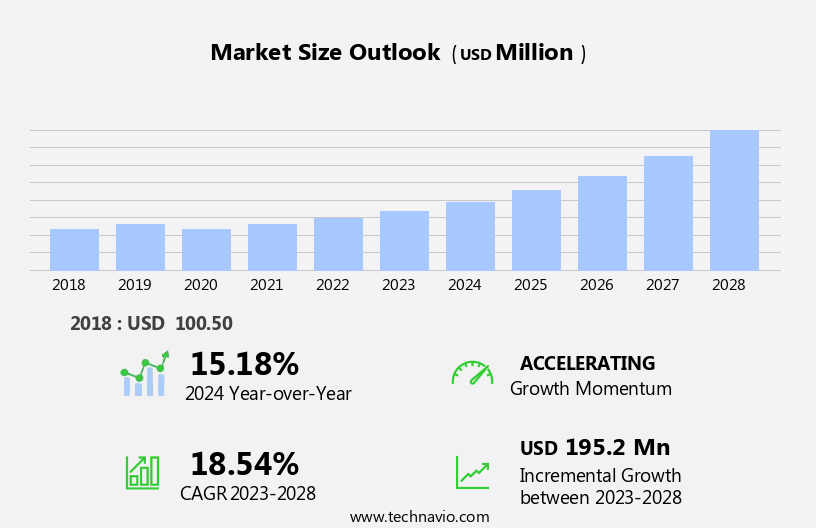
The market continues to evolve, integrating various design disciplines and technologies to streamline processes and enhance innovation. Entities such as engineering design, structural analysis, finite element analysis, and computational fluid dynamics seamlessly collaborate to optimize product design and manufacturing. Design for reuse and recycling gain momentum with the integration of cloud computing and digital twins, enabling real-time data analytics and efficient product lifecycle management. Design exploration and optimization are revolutionized through artificial intelligence and machine learning, allowing for iterative design and design decision making. Design collaboration tools facilitate seamless communication and collaboration among teams, enabling faster prototyping and design validation.
Design standards and regulations adapt to accommodate emerging technologies, with parametric modeling and topology optimization becoming essential design tools. Design for assembly and disassembly, as well as design sustainability, are increasingly prioritized to minimize waste and promote circular economy principles. Design ethics and user experience design gain importance in the generative design landscape, with human-centered design approaches becoming the norm. Design for repair and reverse engineering also gain traction, as companies seek to extend the life cycle of their products and reduce waste. The market continues to unfold, with ongoing innovation in automotive, aerospace, industrial, fashion, and architectural design sectors, among others.
Design licenses and design space exploration enable designers to access a vast array of design options and optimize their designs for specific applications. Design objectives are continuously redefined, with lattice structures, material selection, and design constraints shaping the design process. Design verification and validation tools ensure that designs meet the required standards and specifications, while design sensitivity analysis provides valuable insights into design performance. The market is a dynamic and ever-evolving landscape, with continuous innovation and integration of technologies and design disciplines shaping its future.
How is this Generative Design Industry segmented?
The generative design industry research report provides comprehensive data (region-wise segment analysis), with forecasts and estimates in "USD million" for the period 2024-2028, as well as historical data from 2018-2022 for the following segments.
- Component
- Software
- Service
- Geography
- North America
- US
- Europe
- Germany
- UK
- APAC
- China
- Japan
- Rest of World (ROW)
- North America
By Component Insights
The software segment is estimated to witness significant growth during the forecast period.
Generative design software is a cutting-edge technology that enables enterprises to automate and optimize product design processes. The software utilizes artificial intelligence, machine learning, and computational fluid dynamics to generate designs based on specific design objectives and constraints. Design exploration and optimization are facilitated through the software's ability to analyze vast design spaces and generate multiple design options. Cloud computing and digital twins are integral to the software, allowing for real-time collaboration and design evaluation. Design for reuse and recycling are also prioritized, aligning with the growing trend towards sustainable design practices. Additive manufacturing and parametric modeling enable the creation of complex lattice structures and lightweight designs, while material selection and stress analysis ensure product durability and efficiency.
Design regulations and standards are integrated into the software, ensuring compliance with industry requirements. Topology optimization and design for assembly are also essential features, streamlining the design process and reducing production costs. Design collaboration and evaluation are facilitated through the software's interface, enabling teams to work together in real-time. The market for generative design software is dynamic, with cloud-based solutions gaining popularity due to their flexibility and ease of use. However, on-premise generative design remains a viable option for enterprises seeking greater control and security. The software's capabilities extend to various industries, including automotive, aerospace, industrial, fashion, and architectural design, among others.
Design ethics and sustainability are increasingly important considerations in the design process, and generative design software enables enterprises to address these concerns through its optimization and simulation capabilities. Product lifecycle management and design validation are also facilitated through the software, ensuring that products meet the highest standards of quality and performance.
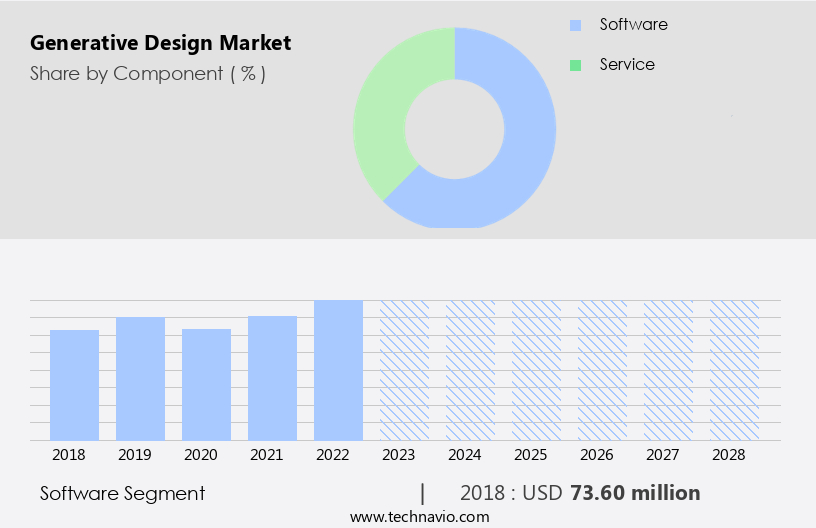
The Software segment was valued at USD 73.60 million in 2018 and showed a gradual increase during the forecast period.
Regional Analysis
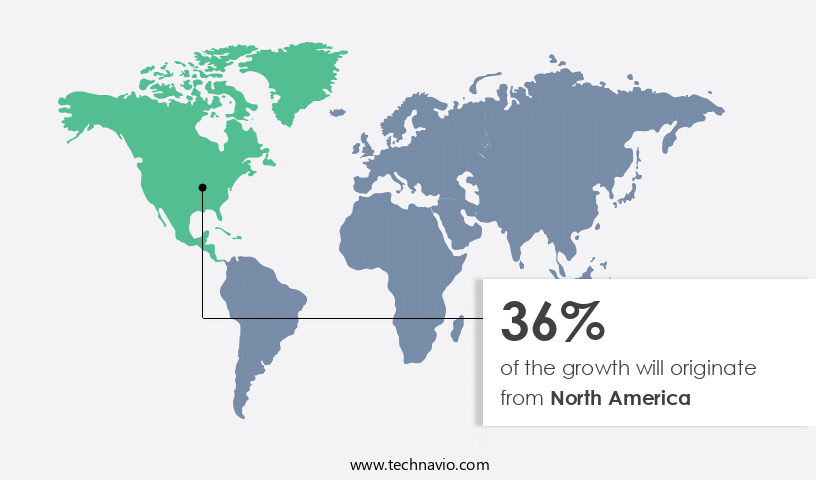
North America is estimated to contribute 36% to the growth of the global market during the forecast period. Technavio's analysts have elaborately explained the regional trends and drivers that shape the market during the forecast period.
The market is experiencing significant growth due to the integration of advanced technologies such as artificial intelligence, cloud computing, and the Internet of Things. Design documentation is becoming more streamlined with the help of generative design software, allowing for increased design exploration and optimization. In the automotive industry, generative design is being used for topology optimization and lattice structures, leading to lighter and more efficient vehicles. Fashion design is also embracing generative design for material selection and parametric modeling, resulting in innovative and sustainable designs. Design for reuse and recycling is a key trend in the market, with digital twins and design collaboration enabling efficient product lifecycle management.
Additive manufacturing and design for assembly are also driving the market, allowing for faster prototyping and production. Design regulations are being addressed through generative design, with design validation and verification ensuring compliance with industry standards. Deep learning and machine learning are being used for design decision making and design sensitivity analysis, leading to more accurate and efficient designs. Design ethics and sustainability are also becoming important considerations, with generative design enabling human-centered and eco-friendly designs. The market is also seeing the integration of computational fluid dynamics and finite element analysis for structural analysis and stress analysis. Design for repair and disassembly are key aspects of product design, with generative design enabling more efficient and cost-effective solutions.
Design for manufacturing and engineering design are also being optimized through generative design, leading to more efficient and cost-effective production processes. In the architectural and urban design sectors, generative design is being used for design exploration and optimization, enabling the creation of innovative and sustainable designs. Design patents and trademarks are also being used to protect intellectual property in the generative design space. Overall, the market is experiencing significant growth due to the integration of advanced technologies and the increasing importance of design efficiency, sustainability, and innovation. The market is expected to continue growing as more industries adopt generative design for product and building design.
Market Dynamics
Our researchers analyzed the data with 2023 as the base year, along with the key drivers, trends, and challenges. A holistic analysis of drivers will help companies refine their marketing strategies to gain a competitive advantage.
What are the key market drivers leading to the rise in the adoption of Generative Design Industry?
- The availability of trial or free versions of generative design software is a significant market driver, enabling professionals to experiment with the technology before committing to a purchase.
- The market is experiencing significant growth due to the increasing adoption of generative design software among businesses. Companies offer trial or free versions of this technology, enabling Small and Medium Enterprises (SMEs) to experiment with it and expand their offerings at minimal cost. These versions come with limited features, attracting new customers and boosting market penetration. Enterprises, including SMEs, are given the opportunity to evaluate the software's capabilities before making a purchase decision. Top industries, such as automotive design and fashion, are leveraging generative design for design constraints exploration in their design space. Technological advancements, including deep learning, data analytics, and material selection, are enhancing the capabilities of generative design software.
- Furthermore, design standardization, design for assembly, design sensitivity analysis, and 3D printing are also driving the market's growth. Parametric modeling and lightweight design are essential features of generative design software, which are essential for industries like automotive and aerospace. Machine learning and design licenses are other factors contributing to the market's expansion. Overall, The market is expected to continue its growth trajectory due to its numerous benefits and increasing industry adoption.
What are the market trends shaping the Generative Design Industry?
- The use of artificial intelligence in generative design is currently a significant market trend. This innovative approach combines AI technologies with design processes to automate and optimize the creation of complex designs.
- Generative design, an advanced technology, is revolutionizing various industries by offering design solutions through AI algorithms. Engineers input basic parameters such as weight, height, strength, and material options to generate a multitude of design alternatives. This technology is increasingly being adopted for design for manufacturing, structural analysis, and design collaboration in industries like engineering design, architectural design, interior design, and urban design. Design sustainability is another area benefiting from generative design, with solutions for design for recycling, design for disassembly, and product lifecycle management.
- Design evaluation and validation are streamlined through finite element analysis and cam software. The use of generative design enhances the design process, ensuring harmonious and immersive results, while also emphasizing design collaboration and design patents. Businesses are investing in this technology to gain a competitive edge and stay abreast of industry advancements.
What challenges does the Generative Design Industry face during its growth?
- The lack of interoperability between software and legacy systems poses a significant challenge to industry growth, hindering the seamless exchange and integration of data and functionality among different systems.
- Generative design, a revolutionary approach to product development, is gaining traction in various industries such as aerospace, industrial, biomedical, and consumer goods. This technology uses algorithms to create design solutions based on specific design objectives, such as stress analysis, geometric modeling, and design for repair. CAD and CAE software are essential tools for generative design, enabling iterative design processes and human-centered design. However, interoperability issues pose a significant challenge in the market. Compatibility problems between different software applications hinder efficient information sharing and collaboration, leading to errors and unsatisfactory end results. For instance, in the construction industry, Building Information Modeling (BIM) has become a standard for effective information sharing and collaboration.
- In the context of generative design, the lack of interoperability may hinder its widespread adoption, despite its potential benefits in creating harmonious, immersive, and harmonious designs. To address this challenge, industry players must prioritize interoperability and ensure seamless integration of generative design solutions with existing design and manufacturing workflows.
Exclusive Customer Landscape
The generative design market forecasting report includes the adoption lifecycle of the market, covering from the innovator's stage to the laggard's stage. It focuses on adoption rates in different regions based on penetration. Furthermore, the generative design market report also includes key purchase criteria and drivers of price sensitivity to help companies evaluate and develop their market growth analysis strategies.
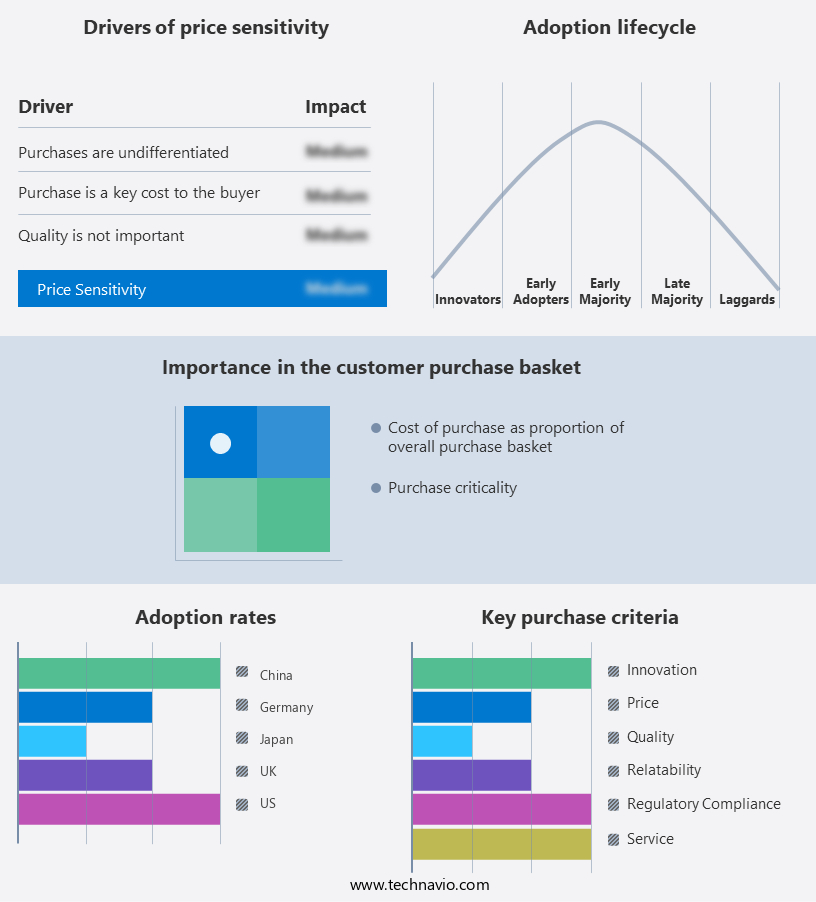
Customer Landscape
Key Companies & Market Insights
Companies are implementing various strategies, such as strategic alliances, generative design market forecast, partnerships, mergers and acquisitions, geographical expansion, and product/service launches, to enhance their presence in the industry.
Altair Engineering Inc.- The company delivers innovative design solutions through its comprehensive suite of software offerings.
The industry research and growth report includes detailed analyses of the competitive landscape of the market and information about key companies, including:
- 3DVerkstan AB
- A2K Technologies
- Altair Engineering Inc.
- AMFG
- ANSYS Inc.
- Autodesk Inc.
- Bentley Systems Inc.
- CIDEON Software & Services GmbH & Co. KG
- Dassault Systemes SE
- Desktop Metal Inc.
- Diabatix NV
- DIGITAL DESIGN SOLUTIONS
- GEO - Design Engineering Services INC.
- Hexagon AB
- nTopology Inc.
- ParaMatters Inc.
- Sculpteo Inc.
- Siemens AG
- Simufact Engineering GmbH
Qualitative and quantitative analysis of companies has been conducted to help clients understand the wider business environment as well as the strengths and weaknesses of key industry players. Data is qualitatively analyzed to categorize companies as pure play, category-focused, industry-focused, and diversified; it is quantitatively analyzed to categorize companies as dominant, leading, strong, tentative, and weak.
Recent Development and News in Generative Design Market
- In February 2024, Autodesk, a leading design software company, launched Dreamcatcher, an AI-driven generative design tool, enabling designers to explore multiple design solutions in a short time frame. This innovation significantly streamlined the design process and increased efficiency (Autodesk Press Release, 2024).
- In May 2024, Porsche and Adidas announced a strategic partnership to apply generative design in creating high-performance sports shoes. This collaboration marked a significant step towards integrating generative design in the manufacturing sector (Porsche Press Release, 2024).
Research Analyst Overview
- In the dynamic world of product design, generative design algorithms have emerged as a game-changer, enabling design exploration techniques that push the boundaries of innovation. With a focus on design for sustainability and circularity, history and leadership in design are redefining industry standards. Design sensitivity analysis and optimization methods facilitate better design decision-making, while constraint handling and simulation streamline the design process. Design knowledge management and collaboration tools foster a culture of innovation, allowing for real-time design exploration and feedback. Design competitions and awards showcase the latest design trends and inspire the next generation of designers. Design thinking, theory, and philosophy continue to shape design strategy, with a growing emphasis on accessibility and inclusion.
- Design data management and parameterization ensure that design innovation is grounded in reality, while design research and exploration techniques drive progress. Design competitions, strategy, and collaboration tools create opportunities for designers to learn from each other and push the envelope of what's possible. As design innovation continues to evolve, design optimization methods, simulation, and design process automation will play increasingly important roles in creating products that meet the needs of businesses and consumers alike.
Dive into Technavio's robust research methodology, blending expert interviews, extensive data synthesis, and validated models for unparalleled Generative Design Market insights. See full methodology.
|
Market Scope |
|
|
Report Coverage |
Details |
|
Page number |
147 |
|
Base year |
2023 |
|
Historic period |
2018-2022 |
|
Forecast period |
2024-2028 |
|
Growth momentum & CAGR |
Accelerate at a CAGR of 18.54% |
|
Market growth 2024-2028 |
USD 195.2 million |
|
Market structure |
Fragmented |
|
YoY growth 2023-2024(%) |
15.18 |
|
Key countries |
US, Germany, China, UK, and Japan |
|
Competitive landscape |
Leading Companies, Market Positioning of Companies, Competitive Strategies, and Industry Risks |
What are the Key Data Covered in this Generative Design Market Research and Growth Report?
- CAGR of the Generative Design industry during the forecast period
- Detailed information on factors that will drive the growth and forecasting between 2024 and 2028
- Precise estimation of the size of the market and its contribution of the industry in focus to the parent market
- Accurate predictions about upcoming growth and trends and changes in consumer behaviour
- Growth of the market across North America, Europe, APAC, South America, and Middle East and Africa
- Thorough analysis of the market's competitive landscape and detailed information about companies
- Comprehensive analysis of factors that will challenge the generative design market growth of industry companies
We can help! Our analysts can customize this generative design market research report to meet your requirements.
 RIA -
RIA - 
