



Ginseng Market Size 2025-2029
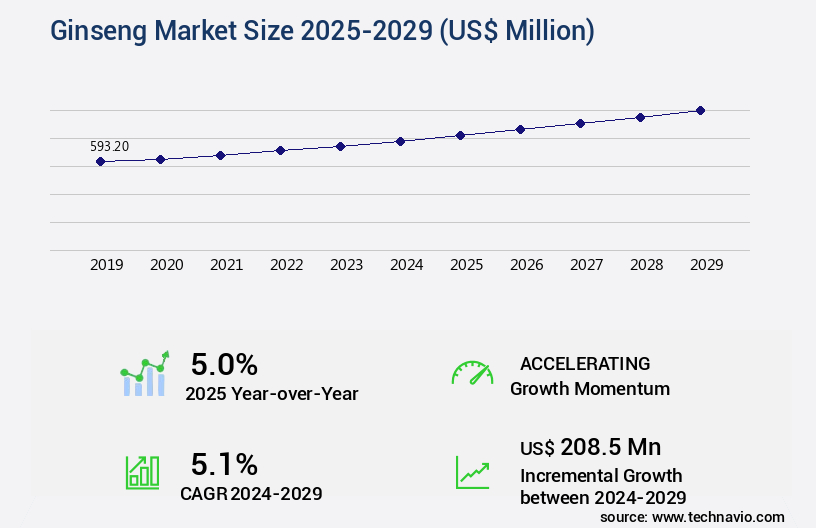
The ginseng market size is valued to increase by USD 208.5 million, at a CAGR of 5.1% from 2024 to 2029. Rising awareness of health benefits of ginseng will drive the ginseng market.
Major Market Trends & Insights
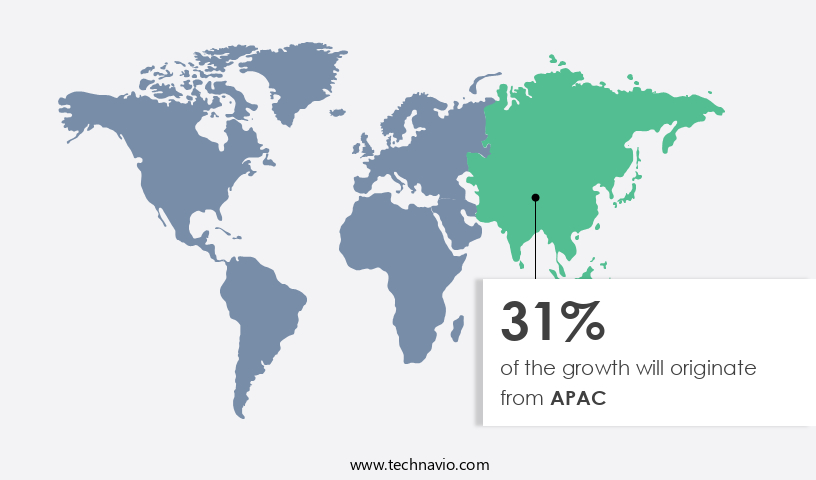
- APAC dominated the market and accounted for a 31% growth during the forecast period.
- By Distribution Channel - RSC segment was valued at USD 338.10 million in 2023
- By Application - Dietary supplements segment accounted for the largest market revenue share in 2023
Market Size & Forecast
- Market Opportunities: USD 58.63 million
- Market Future Opportunities: USD 208.50 million
- CAGR from 2024 to 2029 : 5.1%
Market Summary
- Ginseng, a slow-growing plant with fleshy roots, has long been revered for its medicinal properties. The market is driven by increasing consumer awareness of its health benefits, which include enhancing cognitive function, boosting energy levels, and reducing inflammation. This demand extends beyond traditional Asian markets to a global audience, leading to a significant expansion of the market. Organic ginseng products are gaining popularity due to growing consumer preference for natural and sustainable options. However, the market faces challenges, primarily due to the high susceptibility of ginseng plants to pests and diseases. Sustainable farming practices and advanced cultivation techniques are being explored to mitigate these challenges.
- The market's evolution is influenced by various trends, including the integration of technology in farming and the increasing demand for functional foods and beverages. As research continues to uncover new health benefits, the market's potential for growth remains robust. Despite these opportunities, the market's expansion is not without challenges, including regulatory compliance and competition from synthetic alternatives. Expertise in ginseng cultivation and processing is crucial for market success. Companies must ensure the highest standards of quality and sustainability to meet consumer expectations and maintain market share. The future direction of the market lies in innovation, with a focus on developing new products and exploring new applications for this versatile plant.
What will be the Size of the Ginseng Market during the forecast period?
Get Key Insights on Market Forecast (PDF) Request Free Sample
How is the Ginseng Market Segmented ?
The ginseng industry research report provides comprehensive data (region-wise segment analysis), with forecasts and estimates in "USD million" for the period 2025-2029, as well as historical data from 2019-2023 for the following segments.
- Distribution Channel
- RSC
- Online
- Application
- Dietary supplements
- Pharmaceutical products
- Functional food and beverage processing
- Source
- Fresh
- Processed
- End-user
- Asian ginseng
- American ginseng
- Siberian ginseng
- Others
- Geography
- North America
- US
- Canada
- Europe
- France
- Germany
- Italy
- UK
- APAC
- China
- India
- Japan
- South Korea
- Rest of World (ROW)
- North America
By Distribution Channel Insights
The rsc segment is estimated to witness significant growth during the forecast period.
In the dynamic and evolving the market, retail channels, particularly supermarkets and convenience stores, play a significant role in driving accessibility and demand for these valued health supplements. Supermarkets, such as Walmart Inc., Tesco PLC, and Carrefour S.A., offer a diverse range of ginseng products, including supplements, teas, and more, providing consumers with a one-stop shopping experience. Convenience stores, including 7-Eleven, Circle K, and Wawa, contribute substantially to the market's distribution network, offering on-the-go access to ginseng-infused beverages and other items. The market is continuously adapting to advancements in natural product chemistry, functional food ingredients, and precision agriculture technologies.
These innovations influence economic viability assessments, cultivation techniques optimization, root morphology analysis, soil health improvement, and genetic diversity assessment. For instance, recent research has shown that optimizing irrigation scheduling can increase ginseng yield by up to 20%. Furthermore, the integration of sustainable agriculture practices, such as crop rotation strategies, weed control measures, and plant protection strategies, enhances the overall market value. The market's focus on improving quality control parameters, secondary metabolite production, and value-added product development underlines its commitment to delivering high-quality ginseng products to consumers.
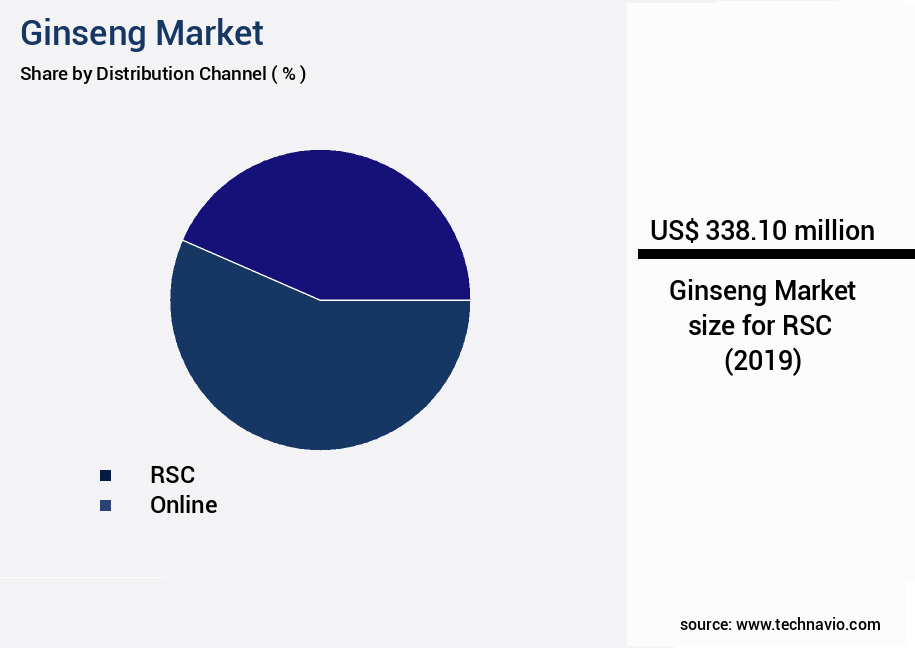
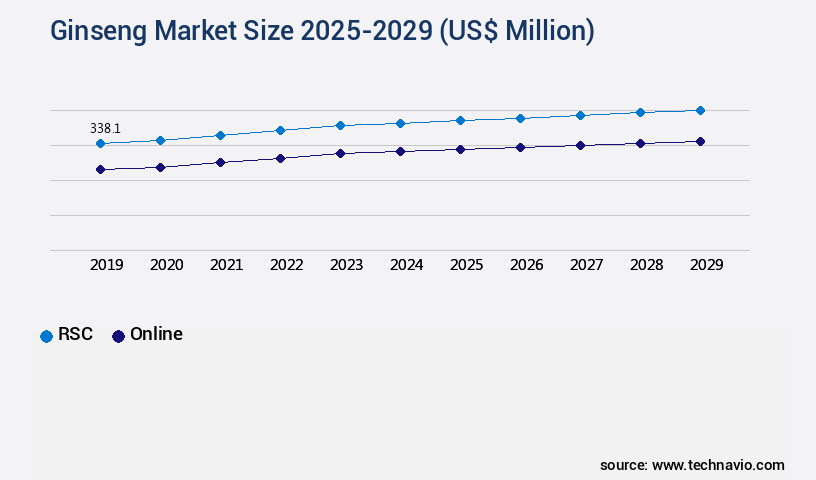
The RSC segment was valued at USD 338.10 million in 2019 and showed a gradual increase during the forecast period.
Regional Analysis
APAC is estimated to contribute 31% to the growth of the global market during the forecast period.Technavio's analysts have elaborately explained the regional trends and drivers that shape the market during the forecast period.
See How Ginseng Market Demand is Rising in APAC Request Free Sample
The market in the Asia-Pacific (APAC) region is experiencing notable growth, driven by the deep-rooted cultural and historical significance of ginseng in countries like China, South Korea, and Japan. This traditional medicinal herb has been a cornerstone of Asian medicine for centuries, leading to its widespread popularity and recognition. According to recent data, China was the world's leading exporter of ginseng root in 2023, with a total export value of USD84 million. The APAC market's evolution is further highlighted by strategic investments, such as KT and G's production hub development in Indonesia in October 2024, aimed at catering to the Asia-Pacific and Middle Eastern markets.
China's prominent role in the market is evident, as it is both a significant producer and consumer in the region.
Market Dynamics
Our researchers analyzed the data with 2024 as the base year, along with the key drivers, trends, and challenges. A holistic analysis of drivers will help companies refine their marketing strategies to gain a competitive advantage.
The market is experiencing significant growth due to increasing consumer awareness and demand for natural health products. This herb, native to Asia, is renowned for its medicinal properties, primarily attributed to its ginsenoside content. To optimize ginsenoside production, cultivation practices are being continually refined. Soil properties play a crucial role in ginseng growth and ginsenoside concentration, with optimal conditions including proper pH levels, nutrient availability, and moisture content. Microbial communities also significantly impact ginseng growth, with certain beneficial bacteria enhancing the herb's yield and quality. Evaluation of different ginseng cultivars is essential for identifying those with the highest yield and desirable ginsenoside profiles, which in turn influence medicinal properties. Understanding the molecular mechanisms of ginsenoside biosynthesis and their correlation with medicinal properties is crucial for developing sustainable cultivation practices. Comparison of various extraction methods for ginsenosides ensures efficient and cost-effective production. Environmental factors, including temperature, humidity, and sunlight, significantly impact ginseng quality. HPLC analysis is used to determine ginsenoside composition, while assessment of ginseng's bioactivity using in vitro models provides valuable insights into its therapeutic potential. Tissue culture is applied for high-quality ginseng production, while genetic improvement strategies aim to enhance ginsenoside content. Sustainable strategies for ginseng supply chain management, including determination of heavy metal content and monitoring of soil health indicators, are essential for maintaining consumer trust. Value-added products derived from ginseng waste offer economic feasibility and environmental sustainability. Exploration of ginseng's therapeutic potential in various diseases and assessment of consumer perception and demand further fuel market growth.
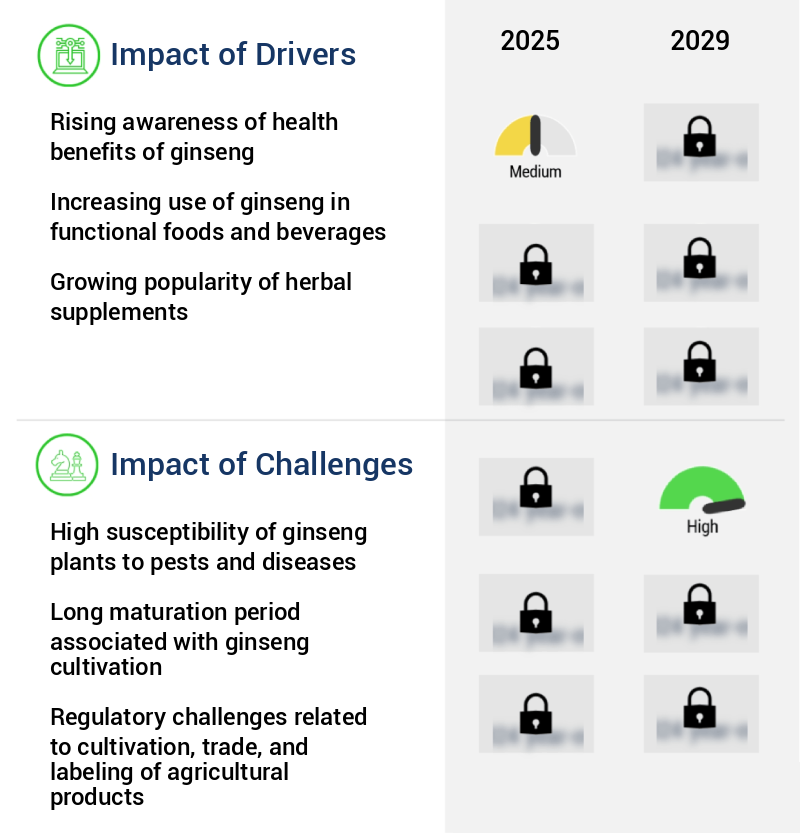
What are the key market drivers leading to the rise in the adoption of Ginseng Industry?
- The significant rise in consumer awareness regarding the health benefits associated with ginseng is the primary factor fueling market growth.
- The market is experiencing significant growth due to increasing consumer awareness and the perceived health benefits of this ancient root. Ginseng, renowned for its adaptogenic properties, is increasingly being used to help the body cope with stress and promote overall well-being. As consumers prioritize natural remedies and holistic approaches to health and wellness, ginseng has become a popular ingredient in various wellness products. For example, ginseng supplements are being incorporated into daily routines to combat fatigue, boost energy levels, and enhance cognitive function. The adaptogenic properties of ginseng resonate with modern lifestyles, where individuals seek solutions to manage high stress levels and maintain optimal health.
- According to recent studies, The market is projected to reach a value of over USD3 billion by 2026, representing a substantial increase from its current market size. Another study indicates that the market for ginseng-based food and beverages is expected to grow at a steady pace, driven by the increasing popularity of functional foods and beverages.
What are the market trends shaping the Ginseng Industry?
- Organic ginseng products are experiencing heightened demand, representing an emerging market trend.
- The market is witnessing a significant evolution, driven by the increasing demand for organic ginseng products. Consumers' shifting preferences prioritize health consciousness, environmental sustainability, and natural, organic offerings. Organic ginseng is grown without synthetic pesticides, herbicides, or chemical fertilizers, addressing concerns over potential health and environmental risks associated with conventional farming methods. This trend underscores the growing importance of transparency and eco-friendly practices in consumer goods.
- The organic the market's expansion signifies a robust response to the rising consumer awareness and demand for cleaner, sustainable alternatives.
What challenges does the Ginseng Industry face during its growth?
- The ginseng industry faces significant challenges due to the high susceptibility of ginseng plants to pests and diseases, which can impede growth and productivity.
- Ginseng, a prized medicinal herb, faces challenges from pests and diseases in its cultivation process. The root-knot nematode (Meloidogyne spp.), a microscopic roundworm, is a primary pest, infesting ginseng roots and causing damage that negatively influences growth. This nematode infestation can lead to reduced yields and lower-quality ginseng roots. Fungal diseases, such as Alternaria blight (caused by Alternaria panax) and root rot (often caused by various Phytophthora species), are also prevalent in ginseng cultivation. Alternaria blight manifests as dark lesions on the leaves, adversely affecting photosynthesis and overall plant health. Despite these challenges, the market continues to evolve, with applications spanning various sectors, including pharmaceuticals, food and beverage, and cosmetics.
- For instance, ginseng extracts are used in energy drinks, while its roots are used in traditional Chinese medicine and modern pharmaceuticals. The market was valued at approximately USD2.5 billion in 2020, with an estimated 10% of the production coming from China. This underscores the importance of addressing pests and diseases to maintain a robust ginseng supply chain and meet the growing market demand.
Exclusive Technavio Analysis on Customer Landscape
The ginseng market forecasting report includes the adoption lifecycle of the market, covering from the innovator's stage to the laggard's stage. It focuses on adoption rates in different regions based on penetration. Furthermore, the ginseng market report also includes key purchase criteria and drivers of price sensitivity to help companies evaluate and develop their market growth analysis strategies.
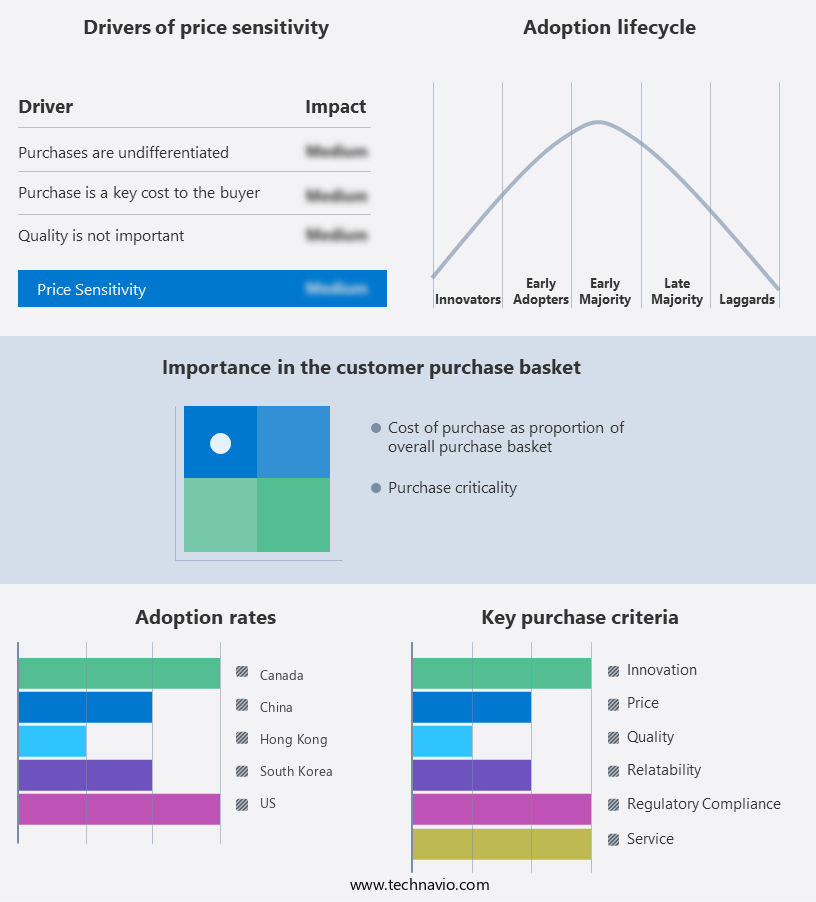
Customer Landscape of Ginseng Industry
Competitive Landscape
Companies are implementing various strategies, such as strategic alliances, ginseng market forecast, partnerships, mergers and acquisitions, geographical expansion, and product/service launches, to enhance their presence in the industry.
The industry research and growth report includes detailed analyses of the competitive landscape of the market and information about key companies, including:
- AOS Products Pvt. Ltd.
- Auragin LLC
- Bio Botanica Inc.
- Bob Ginseng
- Botalys SA
- Ethical Naturals Inc.
- Frederic M
- G and G Century M. Sdn Bhd.
- Herbal Creations
- KAVYA PHARMA
- Korea Ginseng Corp.
- MotherTree Nutra Pvt. Ltd.
- Natures Way Brands LLC
- Nestle SA
- Royal Enoch Phytomedicine Ltd.
- Uniray Lifesciences
- Velnex Medicare India Pvt. Ltd.
- Zoic Pharmaceuticals Pvt. Ltd.
Qualitative and quantitative analysis of companies has been conducted to help clients understand the wider business environment as well as the strengths and weaknesses of key industry players. Data is qualitatively analyzed to categorize companies as pure play, category-focused, industry-focused, and diversified; it is quantitatively analyzed to categorize companies as dominant, leading, strong, tentative, and weak.
Recent Development and News in Ginseng Market
- In August 2024, leading ginseng supplier, Sunten Natural Products, announced the launch of its new line of organic ginseng products, targeting the growing demand for organic and sustainable health supplements (Sunten Press Release, 2024).
- In November 2024, the market leader, Jiangxi Fufeng Biotech, entered into a strategic partnership with South Korean pharmaceutical company, Daewoong Pharmaceutical, to expand its market presence in Asia and explore new product development opportunities (Reuters, 2024).
- In January 2025, Canadian ginseng producer, Norland International, completed a USD15 million Series B funding round, led by Sustainable Agriculture Ventures, to scale up its production capacity and accelerate research and development efforts (GlobeNewswire, 2025).
- In May 2025, the European Commission approved the use of ginseng as a functional ingredient in food supplements, opening up a significant new market for ginseng suppliers and manufacturers (European Commission Press Release, 2025).
Dive into Technavio's robust research methodology, blending expert interviews, extensive data synthesis, and validated models for unparalleled Ginseng Market insights. See full methodology.
|
Market Scope |
|
|
Report Coverage |
Details |
|
Page number |
223 |
|
Base year |
2024 |
|
Historic period |
2019-2023 |
|
Forecast period |
2025-2029 |
|
Growth momentum & CAGR |
Accelerate at a CAGR of 5.1% |
|
Market growth 2025-2029 |
USD 208.5 million |
|
Market structure |
Fragmented |
|
YoY growth 2024-2025(%) |
5.0 |
|
Key countries |
US, China, Japan, India, Canada, Germany, UK, South Korea, France, and Italy |
|
Competitive landscape |
Leading Companies, Market Positioning of Companies, Competitive Strategies, and Industry Risks |
Research Analyst Overview
- The market continues to evolve, driven by the expanding applications of this versatile plant across various sectors. Pharmaceutical companies are increasingly focusing on the economic viability assessment of ginseng, recognizing its potential in treating various health conditions. In the agricultural sector, pest management strategies are being optimized through the analysis of root morphology and the identification of disease resistance pathways. Cultivation techniques are also being refined to enhance soil health and improve nutrient uptake efficiency. Saponin biosynthesis, a key aspect of ginseng's pharmaceutical applications, is a subject of ongoing research. Soil fertility management and irrigation scheduling optimization are crucial for maximizing yield improvement.
- The environmental impact assessment of ginseng cultivation is also gaining importance, with a focus on sustainable agriculture practices and climate change adaptation. Functional food ingredients derived from ginseng are in high demand, with a projected industry growth of 8% annually. For instance, a leading food company reported a 15% increase in sales due to the introduction of a new ginseng-infused beverage. The natural product chemistry of ginseng continues to be explored, with a focus on secondary metabolite production and value-added product development. Integrated pest management and stress tolerance mechanisms are essential for maintaining ginseng plant health.
- Quality control parameters and quality assurance methods are being implemented to ensure the production of high-quality ginseng products. Precision agriculture technologies, such as tissue culture propagation and root growth enhancement, are being adopted to improve crop yield and reduce production costs. The market for ginseng is dynamic, with ongoing research and development in areas such as plant hormone regulation, ginsenoside content, fertilizer application methods, and microbial community composition. The market's continuous evolution reflects the plant's diverse applications and the ongoing efforts to optimize its production and utilization.
What are the Key Data Covered in this Ginseng Market Research and Growth Report?
-
What is the expected growth of the Ginseng Market between 2025 and 2029?
-
USD 208.5 million, at a CAGR of 5.1%
-
-
What segmentation does the market report cover?
-
The report is segmented by Distribution Channel (RSC and Online), Application (Dietary supplements, Pharmaceutical products, and Functional food and beverage processing), Source (Fresh and Processed), End-user (Asian ginseng, American ginseng, Siberian ginseng, and Others), and Geography (APAC, North America, Europe, South America, and Middle East and Africa)
-
-
Which regions are analyzed in the report?
-
APAC, North America, Europe, South America, and Middle East and Africa
-
-
What are the key growth drivers and market challenges?
-
Rising awareness of health benefits of ginseng, High susceptibility of ginseng plants to pests and diseases
-
-
Who are the major players in the Ginseng Market?
-
AOS Products Pvt. Ltd., Auragin LLC, Bio Botanica Inc., Bob Ginseng, Botalys SA, Ethical Naturals Inc., Frederic M, G and G Century M. Sdn Bhd., Herbal Creations, KAVYA PHARMA, Korea Ginseng Corp., MotherTree Nutra Pvt. Ltd., Natures Way Brands LLC, Nestle SA, Royal Enoch Phytomedicine Ltd., Uniray Lifesciences, Velnex Medicare India Pvt. Ltd., and Zoic Pharmaceuticals Pvt. Ltd.
-
Market Research Insights
- The market for ginseng, a widely used traditional medicinal plant, continues to evolve with ongoing research and development. According to industry reports, global ginseng production reached approximately 30,000 metric tons in 2020, with an expected annual growth rate of around 5%. One notable example of market dynamics comes from the Asian market, where sales of ginseng-based products increased by 12% in the past year due to growing consumer awareness and demand for natural health supplements.
- Furthermore, the industry anticipates continued growth, driven by increasing research into the plant's potential health benefits and expanding applications.
We can help! Our analysts can customize this ginseng market research report to meet your requirements.
 RIA -
RIA - 
