



Glass Fiber Market Size 2026-2030
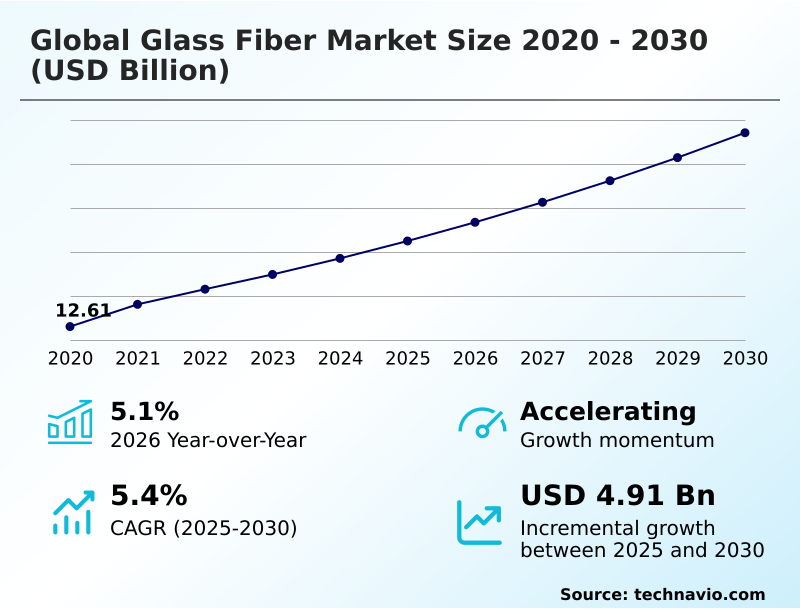
The glass fiber market size is valued to increase by USD 4.91 billion, at a CAGR of 5.4% from 2025 to 2030. Construction and infrastructure development will drive the glass fiber market.
Major Market Trends & Insights
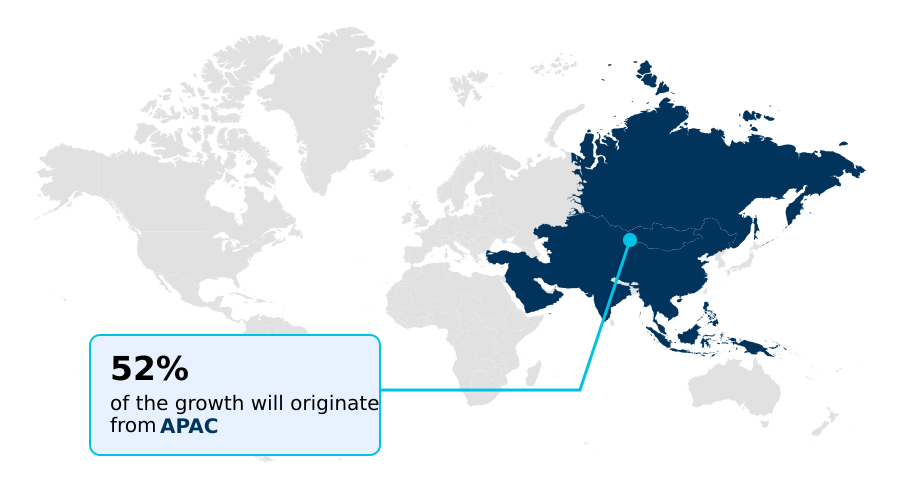
- APAC dominated the market and accounted for a 51.7% growth during the forecast period.
- By Application - Composites segment was valued at USD 11.86 billion in 2024
- By End-user - Construction segment accounted for the largest market revenue share in 2024
Market Size & Forecast
- Market Opportunities: USD 8.80 billion
- Market Future Opportunities: USD 4.91 billion
- CAGR from 2025 to 2030 : 5.4%
Market Summary
- The Glass Fiber Market is undergoing a significant transformation driven by the escalating demand for lightweight, high-strength, and corrosion-resistant materials across multiple sectors.
- Key drivers include the automotive industry's push for vehicle lightweighting to meet stringent emission standards and the rapid expansion of the renewable energy sector, particularly wind power, which relies on glass fiber for the manufacturing of large turbine blades.
- For instance, an automotive OEM might leverage glass fiber reinforced plastics to replace steel in vehicle body panels, achieving a significant weight reduction that enhances the range of its electric vehicle lineup without compromising safety.
- Concurrently, the market is shaped by trends such as the adoption of intelligent manufacturing to improve production efficiency and the development of high-performance fibers for specialized applications.
- However, challenges such as high energy consumption during production and the complexities of recycling end-of-life thermoset composites persist, prompting a strategic industry-wide focus on sustainable manufacturing practices and the development of more recyclable thermoplastic composite solutions.
What will be the Size of the Glass Fiber Market during the forecast period?
Get Key Insights on Market Forecast (PDF) Get Free Sample
How is the Glass Fiber Market Segmented?
The glass fiber industry research report provides comprehensive data (region-wise segment analysis), with forecasts and estimates in "USD million" for the period 2026-2030, as well as historical data from 2020-2024 for the following segments.
- Application
- Composites
- Insulation
- End-user
- Construction
- Transportation
- Consumer products
- Wind turbines
- Others
- Type
- E-glass
- E-CR glass
- S-glass
- Others
- Geography
- APAC
- China
- India
- Japan
- North America
- US
- Canada
- Mexico
- Europe
- Germany
- France
- UK
- Middle East and Africa
- Saudi Arabia
- UAE
- South Africa
- South America
- Brazil
- Argentina
- Rest of World (ROW)
- APAC
By Application Insights
The composites segment is estimated to witness significant growth during the forecast period.
The composites segment is expanding due to a rising need for high-performance materials with superior strength-to-weight ratios. glass fiber reinforced plastics are fundamental for structural applications across automotive and construction sectors.
In the automotive industry, manufacturers use these lightweighting materials in components like bumper beams and instrument panels to improve fuel efficiency and extend electric vehicle range. The energy sector utilizes them for high-pressure vessel reinforcement.
Advancements in resin matrices and fiber sizing continue to enhance mechanical properties, with some thermoplastic composites enabling a 50% reduction in molding cycle times compared to traditional thermosets.
This shift in advanced engineering applications facilitates mass production and material efficiency in demanding sectors, including aerospace structural components and automotive lightweighting composites.
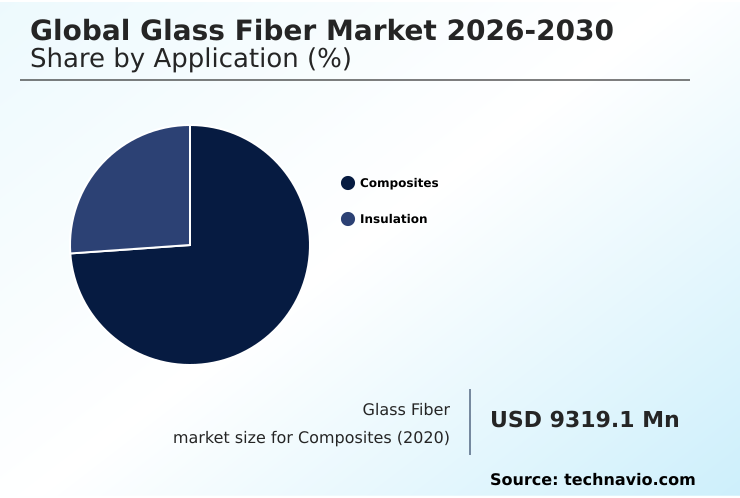
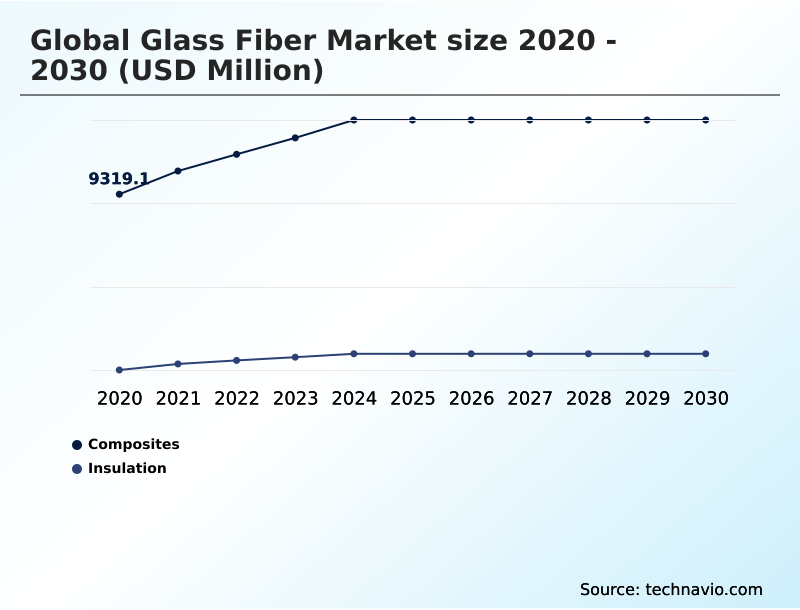
The Composites segment was valued at USD 11.86 billion in 2024 and showed a gradual increase during the forecast period.
Regional Analysis
APAC is estimated to contribute 51.7% to the growth of the global market during the forecast period.Technavio’s analysts have elaborately explained the regional trends and drivers that shape the market during the forecast period.
See How Glass Fiber Market Demand is Rising in APAC Get Free Sample
The market's geographic landscape is dominated by the APAC region, which accounts for over 51% of the incremental growth, largely due to its robust industrial base in China.
This region is the epicenter for manufacturing, with massive end-user demand in construction, electronics, and wind energy. Demand for electronic-grade yarns for printed circuit board substrates and concrete reinforcement fibers is particularly strong.
North America follows, contributing approximately 22% to growth, driven by residential construction using glass mineral wool and aerospace applications.
Europe's market is heavily influenced by stringent environmental policies promoting energy efficiency, creating demand for industrial insulation solutions and high-strength rovings for wind turbines.
The Middle East focuses on infrastructure, utilizing corrosion-resistant piping for large-scale water and oil and gas projects.
Market Dynamics
Our researchers analyzed the data with 2025 as the base year, along with the key drivers, trends, and challenges. A holistic analysis of drivers will help companies refine their marketing strategies to gain a competitive advantage.
- The global glass fiber market is undergoing a strategic evolution, driven by technological progress and shifting industrial demands. Key discussions center on the advances in high-modulus glass fiber technology, which are critical for applications requiring superior stiffness. The ongoing debate of glass fiber versus carbon fiber cost performance continues to influence material selection, especially in aerospace and high-end automotive sectors.
- The adoption of thermoplastic composites for automotive parts production is accelerating due to their recyclability and fast processing times. However, the industry grapples with glass fiber recycling process and challenges, a key sustainability concern.
- For specific applications, the focus is precise: e-glass fiber applications for electronic substrates remain a high-volume segment, while s-glass fiber utilization in aerospace applications is driven by its exceptional strength. The corrosion resistance benefits of e-cr glass make it ideal for harsh chemical environments. In construction, the use of alkali-resistant glass for concrete reinforcement systems is growing.
- The fundamental role of glass fiber in wind turbine blades is undisputed, as is its importance in automotive lightweighting with glass fiber composites. To address production costs, companies are focused on intelligent manufacturing in glass fiber production and reducing energy consumption in glass fiber manufacturing. The rising natural fiber competition for glass fiber materials is also a factor.
- Overall, key glass fiber applications in construction industry and the thermal insulation properties of glass mineral wool continue to be major demand drivers. Meanwhile, high-performance glass fiber for defense applications and glass fiber reinforced polymer pipes for infrastructure highlight the material's versatility.
- The impact of digitalization on glass fiber market and sustainability challenges in glass fiber composites are shaping future strategies, alongside the role of glass fiber in electric vehicle design. Implementing intelligent manufacturing has been shown to improve yield by over 10% compared to traditional methods, directly impacting supply chain reliability.
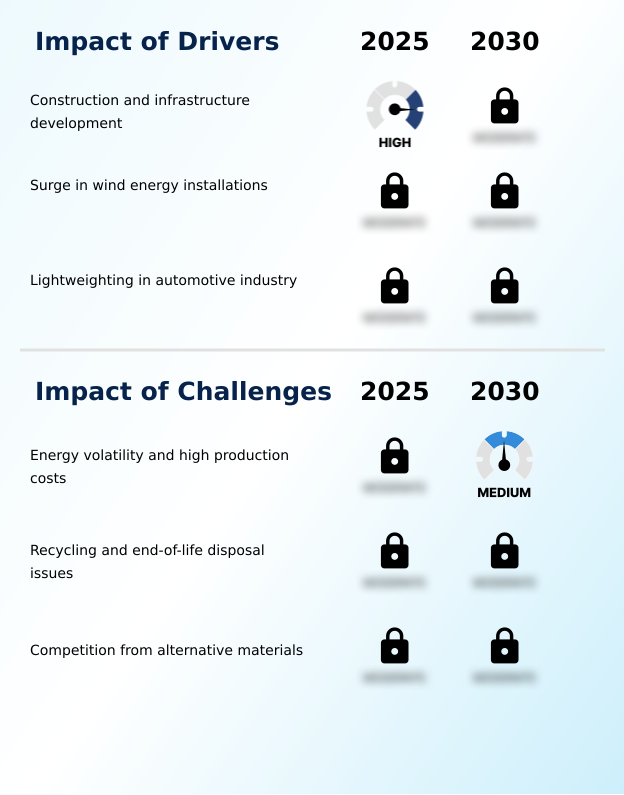
What are the key market drivers leading to the rise in the adoption of Glass Fiber Industry?
- The expansion of construction and infrastructure development serves as a primary driver for the market.
- Market growth is propelled by demand for lightweighting materials in the transportation sector, where glass fiber reinforced plastics replace heavier metals, improving fuel economy by up to 5% in certain applications.
- The proliferation of electric vehicles intensifies this need, with composites used for next-generation battery enclosures and structural reinforcement. The global transition toward renewable energy also acts as a powerful driver, especially for wind turbine blade reinforcement.
- Longer blades, essential for increasing energy capture, rely on glass fiber composites for their exceptional stiffness-to-weight ratio.
- Furthermore, the expansion of construction and infrastructure, driven by mandates for energy-efficient buildings, creates sustained demand for glass fiber as insulation and structural reinforcement, positioning it as a key component in sustainable building materials.
What are the market trends shaping the Glass Fiber Industry?
- The market is witnessing a significant shift toward high-modulus and high-performance glass fibers. This evolution is driven by the increasing technical demands of advanced applications.
- A significant trend is the technological shift from standard e-glass to high-modulus glass fiber variants, essential for advanced engineering applications like next-generation turbine blades. These materials bridge the performance gap between e-glass and carbon fiber, allowing designers to reduce laminate thickness. Concurrently, the industry is adopting intelligent manufacturing systems, integrating AI and IoT to monitor the pultrusion process in real-time.
- This digitalization has led to a 15% reduction in defect rates for some producers. Another key movement is the transition to thermoplastic composites, which offer superior recyclability and processing speeds, reducing manufacturing cycles from hours to seconds. These advancements in advanced material science are reshaping production and enabling circular economy solutions.
What challenges does the Glass Fiber Industry face during its growth?
- Energy price volatility and high production costs present a key challenge affecting industry growth.
- The industry faces a significant challenge from energy-intensive production processes, where furnace melting technology operates at extremely high temperatures. This makes manufacturers susceptible to energy price volatility, which can increase production costs by over 20% in certain regions. Another persistent issue is the difficulty of composite recycling, particularly for thermoset composites.
- The lack of scalable circular economy solutions for end-of-life products like wind turbine blades threatens the long-term sustainability of glass fiber compared to fully recyclable alternatives. Additionally, intensifying competition from other advanced composite materials, such as carbon fiber and natural fibers, forces producers to innovate continuously to maintain their cost-performance advantage.
Exclusive Technavio Analysis on Customer Landscape
The glass fiber market forecasting report includes the adoption lifecycle of the market, covering from the innovator’s stage to the laggard’s stage. It focuses on adoption rates in different regions based on penetration. Furthermore, the glass fiber market report also includes key purchase criteria and drivers of price sensitivity to help companies evaluate and develop their market growth analysis strategies.
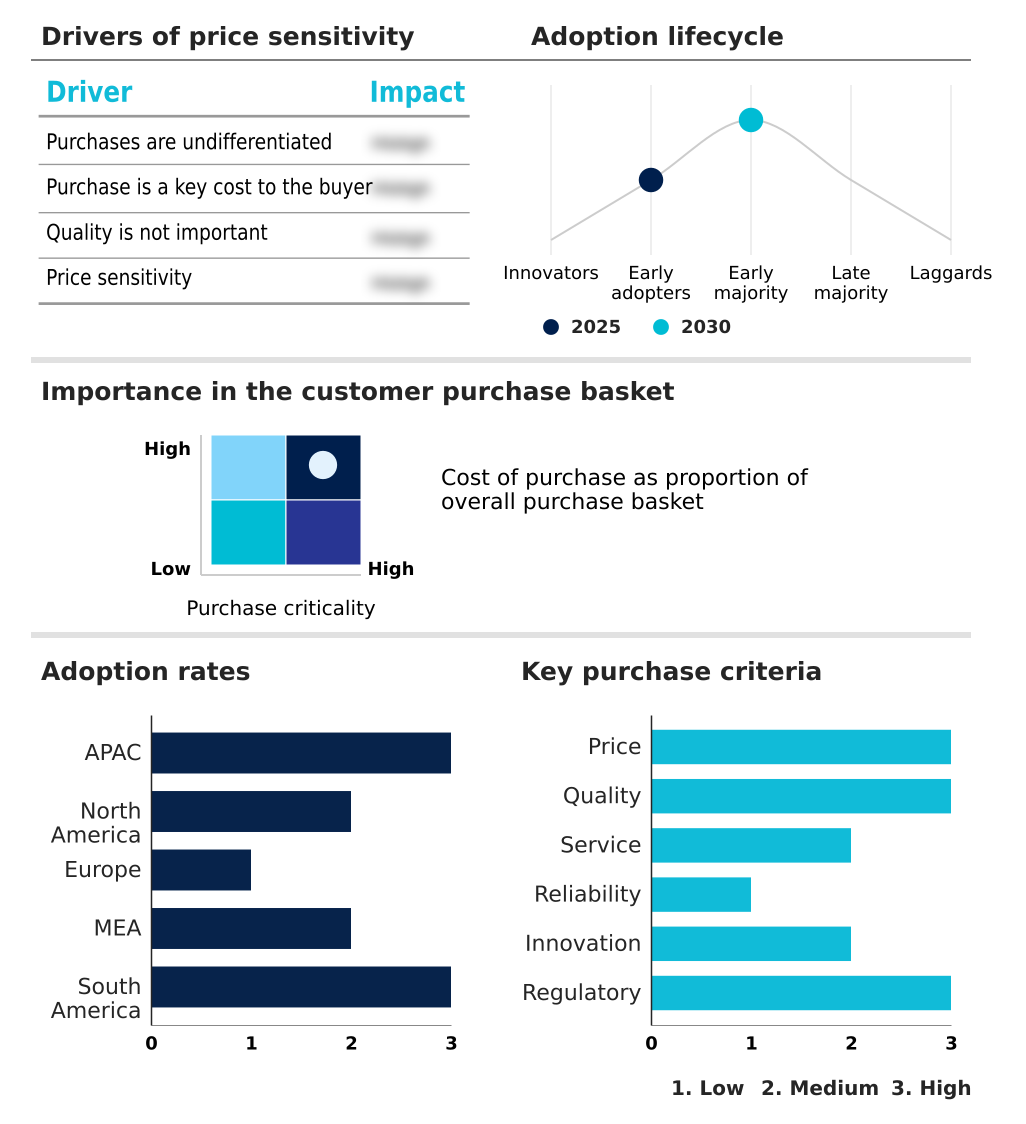
Customer Landscape of Glass Fiber Industry
Competitive Landscape
Companies are implementing various strategies, such as strategic alliances, glass fiber market forecast, partnerships, mergers and acquisitions, geographical expansion, and product/service launches, to enhance their presence in the industry.
3B the fiberglass Co. - Provides Advantex ECR-glass rovings and HiPer-Tex high-modulus fibers, along with chopped strands engineered for advanced marine and transportation composite applications.
The industry research and growth report includes detailed analyses of the competitive landscape of the market and information about key companies, including:
- 3B the fiberglass Co.
- AGY Holding Corp.
- Ahlstrom Oyj
- China Jushi Co. Ltd.
- Chongqing Polycomp International Corp.
- Compagnie Chomarat
- Compagnie de Saint Gobain SA
- Johns Manville Corp.
- Knauf Insulation
- Lanxess AG
- Nippon Electric Glass Co. Ltd.
- Nitto Boseki Co. Ltd.
- Owens Corning
- SAERTEX GmbH and Co. KG
- Shandong Fiberglass Co. Ltd.
- Sichuan Weibo Co. Ltd.
- Taishan Fiberglass Inc.
- Taiwan Glass Ind. Corp.
- Xingtai Jinniu Fiberglass Co. Ltd.
Qualitative and quantitative analysis of companies has been conducted to help clients understand the wider business environment as well as the strengths and weaknesses of key industry players. Data is qualitatively analyzed to categorize companies as pure play, category-focused, industry-focused, and diversified; it is quantitatively analyzed to categorize companies as dominant, leading, strong, tentative, and weak.
Recent Development and News in Glass fiber market
- In May, 2024, Owens Corning completed its acquisition of Masonite International Corp., a move designed to integrate glass fiber technologies into comprehensive residential building solutions.
- In January, 2025, China Jushi Co. Ltd. commissioned a new intelligent manufacturing production line to produce high-modulus glass fiber rovings for the wind energy and electronics industries.
- In February, 2025, Lanxess AG introduced a new grade of high-strength glass fiber reinforced polyamide engineered for electric vehicle structural components, offering superior crash resistance.
- In March, 2025, a partnership between Sinoma Science and Technology and a major automotive manufacturer was announced to develop next-generation lightweight battery packs using advanced glass fiber composite materials.
Dive into Technavio’s robust research methodology, blending expert interviews, extensive data synthesis, and validated models for unparalleled Glass Fiber Market insights. See full methodology.
| Market Scope | |
|---|---|
| Page number | 303 |
| Base year | 2025 |
| Historic period | 2020-2024 |
| Forecast period | 2026-2030 |
| Growth momentum & CAGR | Accelerate at a CAGR of 5.4% |
| Market growth 2026-2030 | USD 4914.9 million |
| Market structure | Fragmented |
| YoY growth 2025-2026(%) | 5.1% |
| Key countries | China, India, Japan, South Korea, Australia, Indonesia, US, Canada, Mexico, Germany, France, UK, Italy, Spain, The Netherlands, Saudi Arabia, UAE, South Africa, Israel, Turkey, Brazil, Argentina and Chile |
| Competitive landscape | Leading Companies, Market Positioning of Companies, Competitive Strategies, and Industry Risks |
Research Analyst Overview
- The glass fiber market is defined by a continuous push toward higher performance and sustainability. The use of e-glass fiber and e-cr glass remains foundational, but the industry is seeing a decisive shift toward high-modulus glass fiber and s-glass fiber, especially for demanding applications.
- Innovations in fiber sizing chemistry and interfacial bonding are improving the performance of glass fiber reinforced plastics and glass fiber reinforced thermoplastics. Boardroom decisions are increasingly focused on the transition from thermoset composites to recyclable thermoplastic composites, which can reduce manufacturing cycle times by over 90% in some cases. This shift addresses both operational efficiency and circular economy mandates.
- Production methods like filament winding and the pultrusion process are being optimized, while materials such as chopped strands, direct rovings, and woven fabrics see continuous refinement. From alkali-resistant glass in construction to electronic-grade yarns in tech, the market's trajectory is toward specialized, high-value solutions.
What are the Key Data Covered in this Glass Fiber Market Research and Growth Report?
-
What is the expected growth of the Glass Fiber Market between 2026 and 2030?
-
USD 4.91 billion, at a CAGR of 5.4%
-
-
What segmentation does the market report cover?
-
The report is segmented by Application (Composites, and Insulation), End-user (Construction, Transportation, Consumer products, Wind turbines, and Others), Type (E-glass, E-CR glass, S-glass, and Others) and Geography (APAC, North America, Europe, Middle East and Africa, South America)
-
-
Which regions are analyzed in the report?
-
APAC, North America, Europe, Middle East and Africa and South America
-
-
What are the key growth drivers and market challenges?
-
Construction and infrastructure development, Energy volatility and high production costs
-
-
Who are the major players in the Glass Fiber Market?
-
3B the fiberglass Co., AGY Holding Corp., Ahlstrom Oyj, China Jushi Co. Ltd., Chongqing Polycomp International Corp., Compagnie Chomarat, Compagnie de Saint Gobain SA, Johns Manville Corp., Knauf Insulation, Lanxess AG, Nippon Electric Glass Co. Ltd., Nitto Boseki Co. Ltd., Owens Corning, SAERTEX GmbH and Co. KG, Shandong Fiberglass Co. Ltd., Sichuan Weibo Co. Ltd., Taishan Fiberglass Inc., Taiwan Glass Ind. Corp. and Xingtai Jinniu Fiberglass Co. Ltd.
-
Market Research Insights
- The market is evolving through innovations in material science and manufacturing. The use of automotive lightweighting composites is crucial for automakers, contributing to vehicle weight reductions of up to 30% and improved fuel efficiency. In electronics, demand for advanced printed circuit board substrates has grown with the expansion of 5G infrastructure.
- Aerospace structural components and marine composite hulls benefit from the high strength-to-weight ratio of these materials. In infrastructure, applications range from concrete reinforcement fibers enhancing durability to high-voltage electrical insulators ensuring grid stability. Intelligent manufacturing adoption is improving output consistency, with some facilities reporting a 15% increase in production efficiency.
- This highlights a strategic shift toward specialized, high-value applications across key industrial sectors.
We can help! Our analysts can customize this glass fiber market research report to meet your requirements.
 RIA -
RIA - 
