



Gluten Free Bakery Market Size 2024-2028
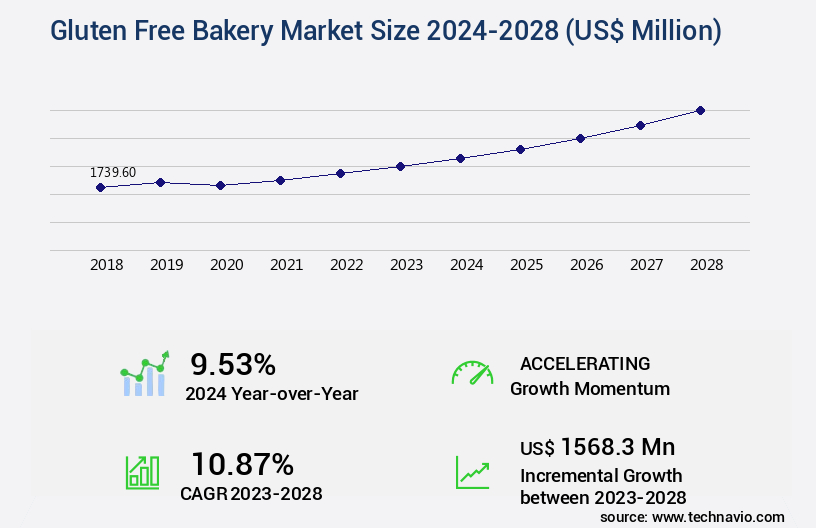
The gluten free bakery market size is valued to increase USD 1.57 billion, at a CAGR of 10.87% from 2023 to 2028. Rising awareness about health benefits of gluten-free food will drive the gluten free bakery market.
Major Market Trends & Insights
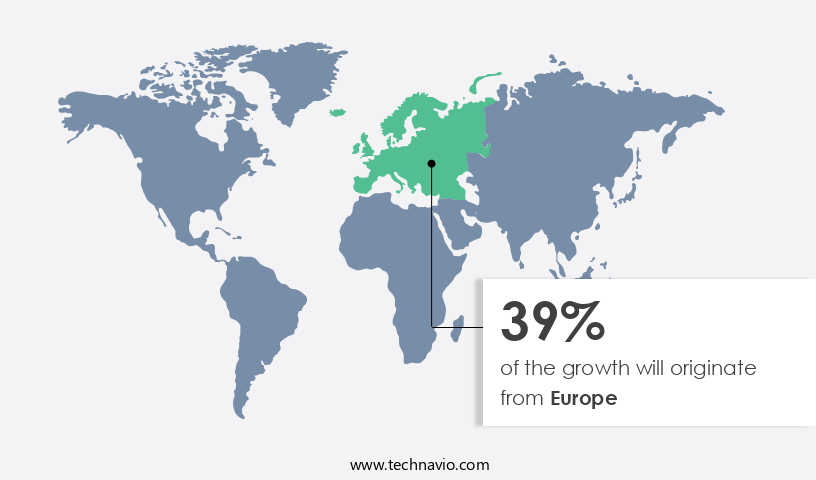
- Europe dominated the market and accounted for a 39% growth during the forecast period.
- By Product - Bread segment was valued at USD 860.40 billion in 2022
- By Distribution Channel - Offline stores segment accounted for the largest market revenue share in 2022
Market Size & Forecast
- Market Opportunities: USD 123.69 million
- Market Future Opportunities: USD 1568.30 million
- CAGR : 10.87%
- Europe: Largest market in 2022
Market Summary
- The market represents a significant and continually evolving sector within the global food industry. With rising awareness about the health benefits of gluten-free food, this market experiences substantial growth, particularly in the realm of online retailing. According to recent studies, the global gluten-free bakery products market is projected to reach a value of 12.2% market share by 2027, underscoring its increasing popularity. However, the high price point associated with these products poses a challenge for both consumers and manufacturers. Core technologies, such as alternative flours and innovative baking techniques, are crucial in addressing this challenge and expanding the market's reach.
- Regions like North America and Europe lead the way in gluten-free bakery market growth, driven by stringent regulations and a growing consumer base. Despite these opportunities, the market faces challenges from regulatory complexities and the need for consistent product quality.
What will be the Size of the Gluten Free Bakery Market during the forecast period?
Get Key Insights on Market Forecast (PDF) Request Free Sample
How is the Gluten Free Bakery Market Segmented and what are the key trends of market segmentation?
The gluten free bakery industry research report provides comprehensive data (region-wise segment analysis), with forecasts and estimates in "USD million" for the period 2024-2028, as well as historical data from 2018-2022 for the following segments.
- Product
- Bread
- Biscuits and cookies
- Others
- Distribution Channel
- Offline stores
- Online stores
- Type
- Gluten-Free Bakery
- Gluten-Free Snacks
- Gluten-Free Pasta
- Gluten-Free Ready Meals
- Others
- Consumer Segment
- Celiac Disease Patients
- Gluten-Sensitive Consumers
- Health-Conscious Consumers
- Geography
- North America
- US
- Canada
- Mexico
- Europe
- France
- Germany
- UK
- Middle East and Africa
- UAE
- APAC
- China
- India
- Indonesia
- Japan
- Malaysia
- South Korea
- Thailand
- South America
- Brazil
- Rest of World (ROW)
- North America
By Product Insights
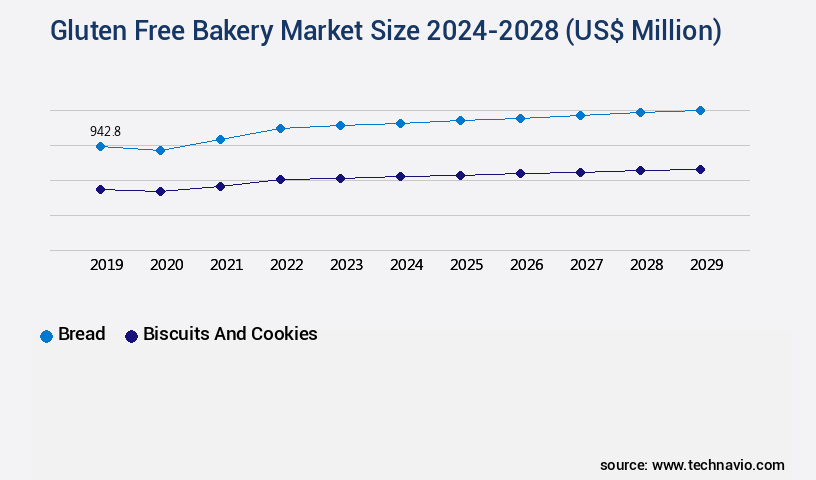
The bread segment is estimated to witness significant growth during the forecast period.
In the dynamic and evolving gluten-free bakery market, the bread segment dominates with a significant market share. This trend is driven by the increasing awareness of gluten intolerance, celiac disease, and the belief that gluten-free diets offer health benefits. Approximately 2 million people in the US and 1% of the global population have celiac disease, a digestive disorder that harms the small intestine upon gluten consumption, causing uncomfortable symptoms and long-term health complications. To cater to this growing consumer base, bakeries are focusing on various strategies. Ingredient labeling regulations and food allergen management are crucial for ensuring product safety and transparency.
Gluten-free cookie recipes, starch-based thickeners, and waste reduction strategies are employed to enhance product offerings and minimize costs. Quality control metrics, texture modification techniques, and cost-effective formulations are essential for maintaining consistency and competitiveness in the market. In the realm of gluten-free pastry production, flavor enhancer selection, high-protein gluten-free flours, and gluten-free flour blends are key considerations. Packaging material selection, leavening agent selection, dough conditioning agents, bread volume optimization, and cross-contamination prevention are vital for maintaining product quality and shelf life. Consumer preference research, emulsifier functionality, nutritional content analysis, bakery sanitation protocols, microbial spoilage prevention, and enzyme applications in baking are all essential aspects of market evolution.
Future industry growth expectations are promising, with a projected increase in demand for gluten-free baked goods. For instance, the demand for gluten-free bread is projected to grow by 25%, while the demand for gluten-free cakes is expected to expand by 20%. These trends underscore the continuous unfolding of market activities and the evolving patterns in the gluten-free bakery sector.
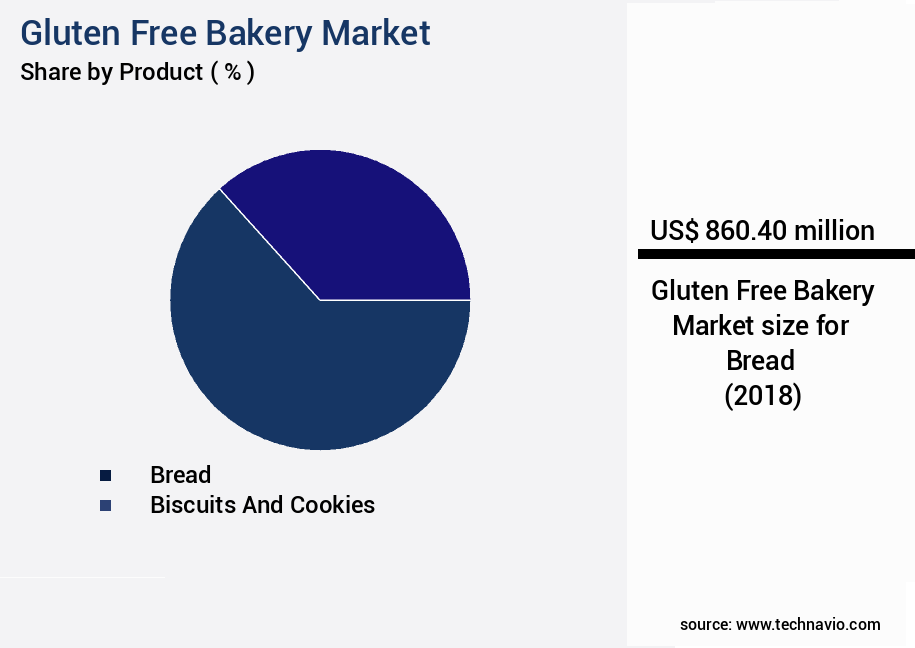
The Bread segment was valued at USD 860.40 billion in 2018 and showed a gradual increase during the forecast period.
Regional Analysis
Europe is estimated to contribute 39% to the growth of the global market during the forecast period.Technavio’s analysts have elaborately explained the regional trends and drivers that shape the market during the forecast period.
See How Gluten Free Bakery Market Demand is Rising in Europe Request Free Sample
The market in North America is projected to experience significant expansion in 2023, making it the largest contributor to the global market. Factors fueling this growth include the increasing prevalence of celiac disease and the growing availability of gluten-free bakery products. The US, Mexico, and Canada are major contributors to the market in the region due to high incidences of celiac disease. Celiac disease, a medical condition that affects digestion, can lead to complications like diabetes, Downs syndrome, and infertility.
To increase awareness about the condition and its associated health risks, organizations like the University of Chicago Celiac Disease Center conduct educational programs. With the rising demand for gluten-free options, the market is poised for continuous evolution and expansion.
Market Dynamics
Our researchers analyzed the data with 2023 as the base year, along with the key drivers, trends, and challenges. A holistic analysis of drivers will help companies refine their marketing strategies to gain a competitive advantage.
The global gluten-free bakery market is witnessing significant growth due to the increasing consumer preference for healthier food options and the rising number of individuals diagnosed with celiac disease or gluten intolerance. This market faces unique challenges in improving the texture of gluten-free bread, optimizing cake volume, and reducing staling. Xanthan gum plays a crucial role in enhancing dough elasticity and improving the texture of gluten-free bread. The effect of emulsifiers on texture and the analysis of gluten-free flour blends are essential in developing innovative gluten-free products. Moreover, managing cross-contamination risks and implementing stringent sanitation practices are critical in the gluten-free bakery industry.
The role of starch in gluten-free baking and the efficient use of leavening agents are essential for enhancing the flavor profile and minimizing waste in gluten-free production. New strategies for gluten-free formulation, such as the incorporation of alternative proteins and fibers, are gaining popularity. The market is highly competitive, with a minority of players accounting for a significant share. For instance, adoption rates of gluten-free bakery products in Europe are nearly double those in Asia Pacific. This disparity can be attributed to the higher prevalence of celiac disease in Europe and the increasing awareness of gluten-free diets in the region.
Improving the production process through best practices for allergen control and reducing production costs through minimizing waste are key focus areas for players in the market. In conclusion, the gluten-free bakery market presents numerous opportunities for innovation and growth, with a strong emphasis on improving product texture, optimizing production processes, and addressing consumer preferences. The market's dynamics are shaped by various factors, including consumer trends, regulatory requirements, and technological advancements. Understanding these trends and implementing effective strategies can help players gain a competitive edge in this rapidly evolving market.
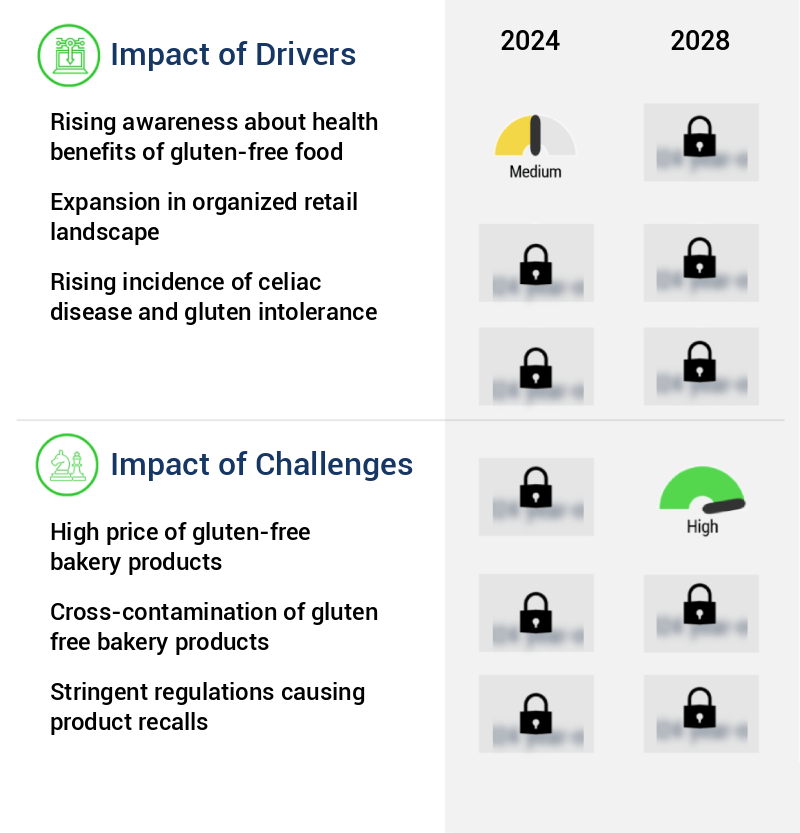
What are the key market drivers leading to the rise in the adoption of Gluten Free Bakery Industry?
- The significant rise in consumer awareness regarding the health advantages of gluten-free food serves as the primary market driver.
- Gluten-free food consumption has gained significant traction in recent years due to the health benefits it offers, particularly for individuals with celiac disease and those sensitive to gluten. Celiac disease, the final stage of gluten intolerance, necessitates a strict gluten-free diet to prevent digestive issues and other related side effects. Beyond celiac disease, gluten-free foods offer advantages to a broader population. For instance, these foods contribute to improved cholesterol levels, enhanced digestion, and reduced intestinal inflammation. Moreover, research suggests that gluten-free diets may benefit children with autism, as they often struggle with processing certain peptides and proteins found in gluten and casein-containing foods.
- The market for gluten-free food has experienced substantial growth in the last five years. This expansion can be attributed to the increasing awareness of the health benefits associated with gluten-free diets. As a result, various industries, including food manufacturing and retail, have responded by introducing a wide array of gluten-free products to cater to the growing demand. In summary, the gluten-free food market continues to evolve, driven by the health advantages it offers to a diverse population. Its increasing popularity is a testament to the ongoing shift towards healthier, more inclusive food options.
What are the market trends shaping the Gluten Free Bakery Industry?
- Global online retailing is experiencing significant growth and represents the emerging market trend.
- In the ever-evolving business landscape, e-commerce has emerged as a significant driver of growth for companies worldwide. In 2023, e-commerce represented approximately 19% of global retail trade, enabling seamless business-to-business (B2B) and business-to-consumer (B2C) transactions. The proliferation of the Internet and smartphones has made online shopping increasingly convenient, leading to the surge in demand for gluten-free bakery products. Factors such as enhanced Internet penetration, growing consumer trust in online retailing, quick shipping, and diverse consumer choices have fueled the expansion of the e-commerce sector.
- E-commerce platforms like Amazon offer consumers the freedom to explore a multitude of brands and make purchases without leaving their homes. The convenience and accessibility of e-commerce have transformed the way businesses operate and cater to their customers.
What challenges does the Gluten Free Bakery Industry face during its growth?
- The escalating cost of producing gluten-free bakery items poses a significant challenge and hinders the growth of the industry.
- The gluten-free bakery market faces higher manufacturing costs compared to its gluten-containing counterpart, resulting in a premium pricing structure. This disparity can be attributed to the complexity of the manufacturing process, which utilizes more expensive prime ingredients, such as rice and corn, in place of wheat. Additional costs include certifications, specialized carriers to prevent cross-contamination, and logistics, all of which contribute to the increased cost structure. For instance, the price of gluten-free bread is approximately ten times higher than its regular counterpart.
- Despite these challenges, the market continues to evolve, with consumers increasingly seeking gluten-free options due to dietary requirements and health concerns. This trend is expected to drive growth in the market, making it a significant player in the broader food industry.
Exclusive Customer Landscape
The gluten free bakery market forecasting report includes the adoption lifecycle of the market, covering from the innovator’s stage to the laggard’s stage. It focuses on adoption rates in different regions based on penetration. Furthermore, the gluten free bakery market report also includes key purchase criteria and drivers of price sensitivity to help companies evaluate and develop their market growth analysis strategies.
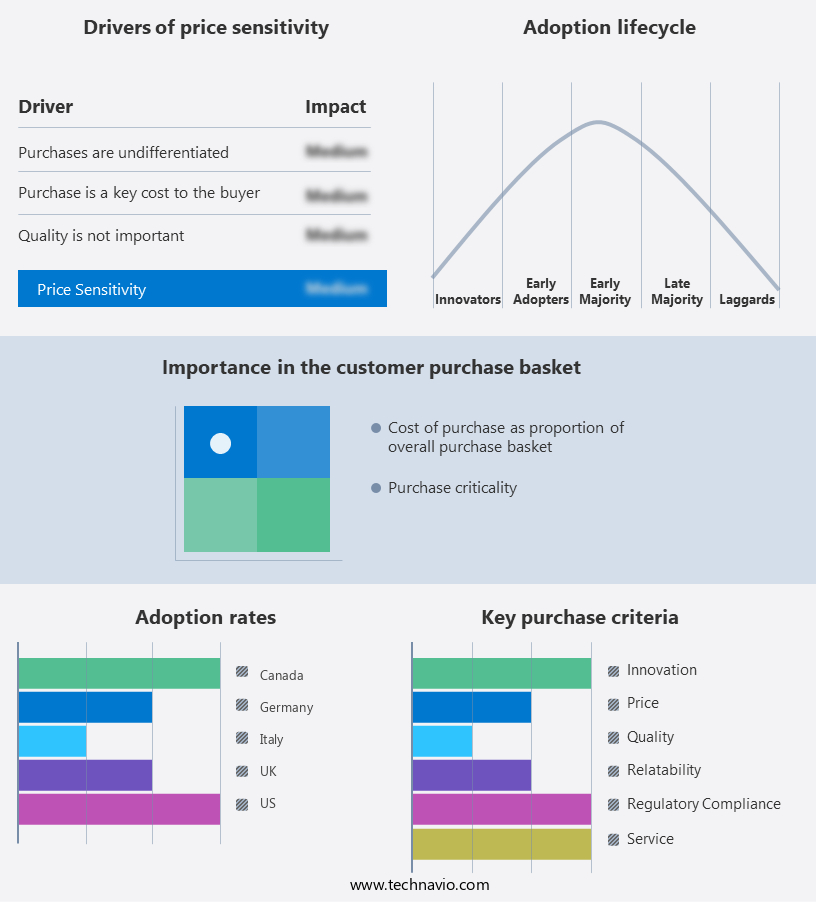
Customer Landscape of Gluten Free Bakery Industry
Competitive Landscape & Market Insights
Companies are implementing various strategies, such as strategic alliances, gluten free bakery market forecast, partnerships, mergers and acquisitions, geographical expansion, and product/service launches, to enhance their presence in the industry.
Alara Wholefoods Ltd. - This company specializes in a gluten-free bakery brand named Rice Mac and Cheese, providing innovative, high-quality baked goods for consumers adhering to gluten-free diets. The brand's offerings cater to the growing demand for delicious, inclusive food options.
The industry research and growth report includes detailed analyses of the competitive landscape of the market and information about key companies, including:
- Alara Wholefoods Ltd.
- Amys Kitchen Inc.
- Barilla G. e R. Fratelli Spa
- Bobs Red Mill Natural Foods Inc.
- Campbell Soup Co.
- Conagra Brands Inc.
- Dawn Food Products Inc.
- Dr. Schar AG Spa
- ECOTONE
- Enjoy Life Natural Brands
- EUROPASTRY SA
- Farmo Spa
- Freedom Gluten Free
- General Mills Inc.
- Hero AG
- Quinoa Corp.
- Raisio plc
- The Hain Celestial Group Inc.
- Valeo Foods Ltd.
- WGF Bakery Products
Qualitative and quantitative analysis of companies has been conducted to help clients understand the wider business environment as well as the strengths and weaknesses of key industry players. Data is qualitatively analyzed to categorize companies as pure play, category-focused, industry-focused, and diversified; it is quantitatively analyzed to categorize companies as dominant, leading, strong, tentative, and weak.
Recent Development and News in Gluten Free Bakery Market
- In January 2024, General Mills, a leading food manufacturer, announced the launch of its new line of gluten-free baking mixes under the Betty Crocker brand (General Mills Press Release, 2024). This expansion aimed to cater to the growing demand for gluten-free products.
- In March 2024, Schär, a major European gluten-free bakery company, entered into a strategic partnership with Tesco, the UK's largest retailer, to expand its market presence and distribution network (Tesco Press Release, 2024). This collaboration enabled Schär to reach a broader consumer base in the UK.
- In April 2025, Dr. Schär AG & Co. KG, a leading international gluten-free food group, completed the acquisition of the US-based gluten-free bakery company, Canyon Bakehouse (Dr. Schär AG & Co. KG Press Release, 2025). This acquisition strengthened Dr. Schär's position in the US market and expanded its product portfolio.
- In May 2025, the European Commission approved the use of the term "gluten-free" for products containing up to 10 ppm of gluten (European Commission Press Release, 2025). This regulatory approval allowed manufacturers to label their products as gluten-free even if they contained trace amounts of gluten, expanding the market for gluten-free bakery products.
Dive into Technavio’s robust research methodology, blending expert interviews, extensive data synthesis, and validated models for unparalleled Gluten Free Bakery Market insights. See full methodology.
|
Market Scope |
|
|
Report Coverage |
Details |
|
Page number |
158 |
|
Base year |
2023 |
|
Historic period |
2018-2022 |
|
Forecast period |
2024-2028 |
|
Growth momentum & CAGR |
Accelerate at a CAGR of 10.87% |
|
Market growth 2024-2028 |
USD 1568.3 million |
|
Market structure |
Fragmented |
|
YoY growth 2023-2024(%) |
9.53 |
|
Key countries |
US, Malaysia, Indonesia, Germany, UK, South Korea, France, Canada, Brazil, Thailand, UAE, Mexico, China, Japan, and India |
|
Competitive landscape |
Leading Companies, Market Positioning of Companies, Competitive Strategies, and Industry Risks |
Research Analyst Overview
- In the dynamic and evolving gluten-free bakery market, ingredient labeling regulations and food allergen management continue to shape industry practices. Bakery operators increasingly focus on refining gluten-free cookie recipes, employing starch-based thickeners and high-protein gluten-free flours to enhance texture and reduce processing time. Quality control metrics are a top priority, with bakers implementing texture modification techniques and cost-effective formulations to optimize gluten-free bread volume. Gluten-free pastry production sees advancements in flavor enhancer selection and the use of specialized baking equipment to prevent cross-contamination. Leavening agent selection and dough conditioning agents are crucial for achieving the desired bread texture and consistency.
- Bakery sanitation protocols and microbial spoilage prevention are essential for ensuring product shelf-life extension. The market is also witnessing significant strides in baking process automation and baking ingredient sourcing for production efficiency improvement. Consumer preference research plays a pivotal role in the development of gluten-free cake formulations and the selection of emulsifiers for optimal functionality. Nutritional content analysis and enzyme applications in baking further contribute to the industry's progress. As the gluten-free bakery market continues to unfold, waste reduction strategies and baking ingredient sourcing are becoming increasingly important for businesses seeking to reduce costs and improve sustainability.
- Allergen control systems and the adoption of specialized baking equipment are key areas of investment for bakeries aiming to enhance their offerings and cater to the growing demand for gluten-free products.
What are the Key Data Covered in this Gluten Free Bakery Market Research and Growth Report?
-
What is the expected growth of the Gluten Free Bakery Market between 2024 and 2028?
-
USD 1.57 billion, at a CAGR of 10.87%
-
-
What segmentation does the market report cover?
-
The report segmented by Product (Bread, Biscuits and cookies, and Others), Distribution Channel (Offline stores and Online stores), Geography (North America, Europe, APAC, South America, and Middle East and Africa), Type (Gluten-Free Bakery, Gluten-Free Snacks, Gluten-Free Pasta, Gluten-Free Ready Meals, and Others), and Consumer Segment (Celiac Disease Patients, Gluten-Sensitive Consumers, and Health-Conscious Consumers)
-
-
Which regions are analyzed in the report?
-
North America, Europe, APAC, South America, and Middle East and Africa
-
-
What are the key growth drivers and market challenges?
-
Rising awareness about health benefits of gluten-free food, High price of gluten-free bakery products
-
-
Who are the major players in the Gluten Free Bakery Market?
-
Key Companies Alara Wholefoods Ltd., Amys Kitchen Inc., Barilla G. e R. Fratelli Spa, Bobs Red Mill Natural Foods Inc., Campbell Soup Co., Conagra Brands Inc., Dawn Food Products Inc., Dr. Schar AG Spa, ECOTONE, Enjoy Life Natural Brands, EUROPASTRY SA, Farmo Spa, Freedom Gluten Free, General Mills Inc., Hero AG, Quinoa Corp., Raisio plc, The Hain Celestial Group Inc., Valeo Foods Ltd., and WGF Bakery Products
-
Market Research Insights
- The gluten-free bakery market exhibits significant growth, with an estimated 7% annual expansion rate. This expansion is driven by the increasing prevalence of celiac disease and gluten intolerance, as well as consumer preferences for clean label and healthier food options. According to industry estimates, the market value surpassed USD5 billion in 2020 and is projected to reach USD8 billion by 2025. To meet the growing demand, bakeries are implementing various strategies to optimize their operations. For instance, they are exploring packaging design solutions to extend the shelf life of gluten-free bread and reduce energy consumption.
- Additionally, process validation techniques and production line efficiency improvements are being employed to ensure consistent product quality. Ingredient functionality and modified starch applications are also under investigation to enhance product formulation design and minimize waste. Food safety certification, new product development, and ingredient cost analysis are crucial aspects of the market, with emulsifier selection and dough rheology analysis playing essential roles in baking process optimization. Despite these advancements, challenges persist, including maintaining product taste and texture, adhering to food safety standards, and navigating nutritional labeling laws.
We can help! Our analysts can customize this gluten free bakery market research report to meet your requirements.
 RIA -
RIA - 
