
Grain Handling Market Analysis, Size, and Forecast 2026-2030: APAC (China, India, and Japan), North America (US, Canada, and Mexico), Europe (Germany, France, and UK), South America (Brazil, Argentina, and Colombia), Middle East and Africa (South Africa, Turkey, and Saudi Arabia), and Rest of World (ROW)

Grain Handling Market Analysis, Size, and Forecast 2026-2030:
APAC (China, India, and Japan), North America (US, Canada, and Mexico), Europe (Germany, France, and UK), South America (Brazil, Argentina, and Colombia), Middle East and Africa (South Africa, Turkey, and Saudi Arabia), and Rest of World (ROW)

Published: Apr 2026 311 Pages SKU: IRTNTR81403

Market Overview at a Glance

$3.19 B
Market Opportunity
6%
CAGR 2025 - 2030
42.8%
APAC Growth
$3.06 B
Conveyors segment 2024

Grain Handling Market Size 2026-2030

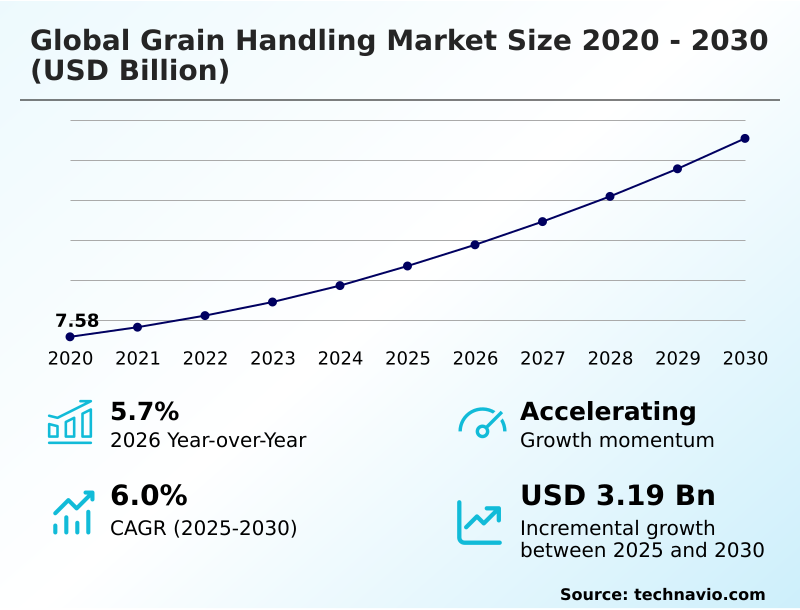
The grain handling market size is valued to increase by USD 3.19 billion, at a CAGR of 6% from 2025 to 2030. Rapid expansion of global agricultural production to meet surging food demand will drive the grain handling market.

Major Market Trends & Insights

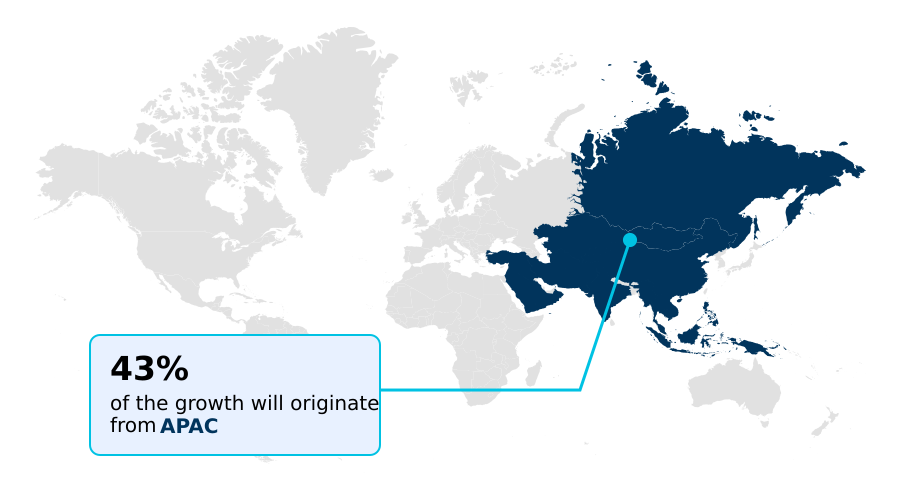
  • APAC dominated the market and accounted for a 42.8% growth during the forecast period.
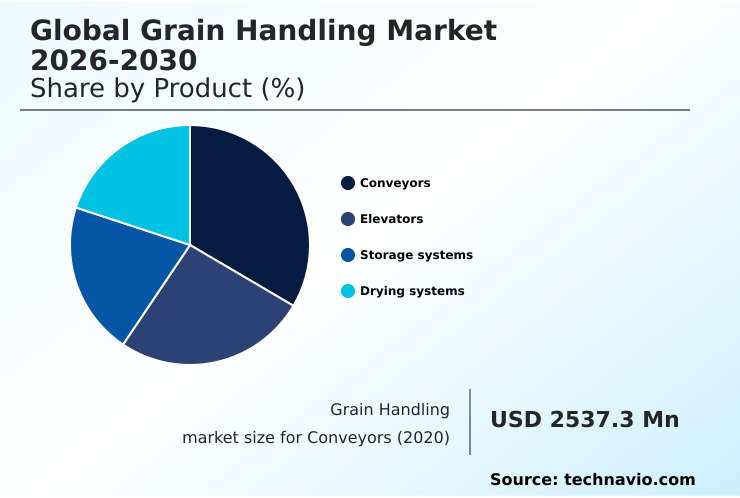
  • By Product - Conveyors segment was valued at USD 3.06 billion in 2024
  • By End-user - Farmers segment accounted for the largest market revenue share in 2024

Market Size & Forecast

  • Market Opportunities: USD 4.96 billion
  • Market Future Opportunities: USD 3.19 billion
  • CAGR from 2025 to 2030 : 6%

Market Summary

  • The grain handling market is foundational to global food security, encompassing the systems essential for the efficient transport, storage, and processing of agricultural commodities. Growth is driven by the industrialization of agriculture and the critical need to reduce significant post-harvest losses through better commodity preservation.
  • A key trend involves the integration of automation and IIoT, enabling centralized command centers to remotely manage operations, which enhances both worker safety standards and overall supply chain efficiency.
  • For instance, a large export terminal can use predictive maintenance technologies on its bucket elevators and ship loaders to preemptively address mechanical issues, preventing costly operational downtime during peak season and ensuring throughput velocity. This shift towards smart infrastructure with components like automated fumigation systems and moisture sensors is transforming bulk material management.
  • However, the industry faces challenges from high capital expenditure for equipment such as grain storage silos and pneumatic conveying systems. Furthermore, stringent environmental regulations on dust suppression and energy consumption optimization add complexity and increase maintenance expenditures.
  • The market's evolution is defined by a balance between technological adoption for asset integrity and navigating the financial and regulatory hurdles of infrastructure modernization, with a growing focus on sustainable agriculture practices.

What will be the Size of the Grain Handling Market during the forecast period?

Get Key Insights on Market Forecast (PDF) Request Free Sample

How is the Grain Handling Market Segmented?

The grain handling industry research report provides comprehensive data (region-wise segment analysis), with forecasts and estimates in "USD million" for the period 2026-2030, as well as historical data from 2020-2024 for the following segments.

  • Product
    • Conveyors
    • Elevators
    • Storage systems
    • Drying systems
  • End-user
    • Farmers
    • Processing plants
    • Grain trading companies
    • Port terminals
    • Others
  • Application
    • Loading
    • Unloading
    • Storage
    • Drying
  • Geography
    • APAC
      • China
      • India
      • Japan
    • North America
      • US
      • Canada
      • Mexico
    • Europe
      • Germany
      • France
      • UK
    • South America
      • Brazil
      • Argentina
      • Colombia
    • Middle East and Africa
      • South Africa
      • Turkey
      • Saudi Arabia
    • Rest of World (ROW)

By Product Insights

The conveyors segment is estimated to witness significant growth during the forecast period.

Conveyors are the circulatory system of any bulk material management facility, responsible for horizontal and inclined transportation of commodities.

The demand for advanced systems like drag chain conveyors and enclosed belt conveyors is driven by the need for high throughput velocity and safe, swift transfers.

Key variations include belt conveyors, which offer gentle handling over long distances, and screw conveyors, effective for short-distance metering. The focus on reducing kernel degradation is paramount, as breakage leads to financial loss.

Modernization includes adopting automated systems with variable frequency drives, which optimize energy consumption.

The integration of predictive maintenance technologies, using sensors on bearings, has been shown to reduce unplanned operational downtime by over 15%, ensuring facilities maintain peak supply chain efficiency.

Request Free Sample

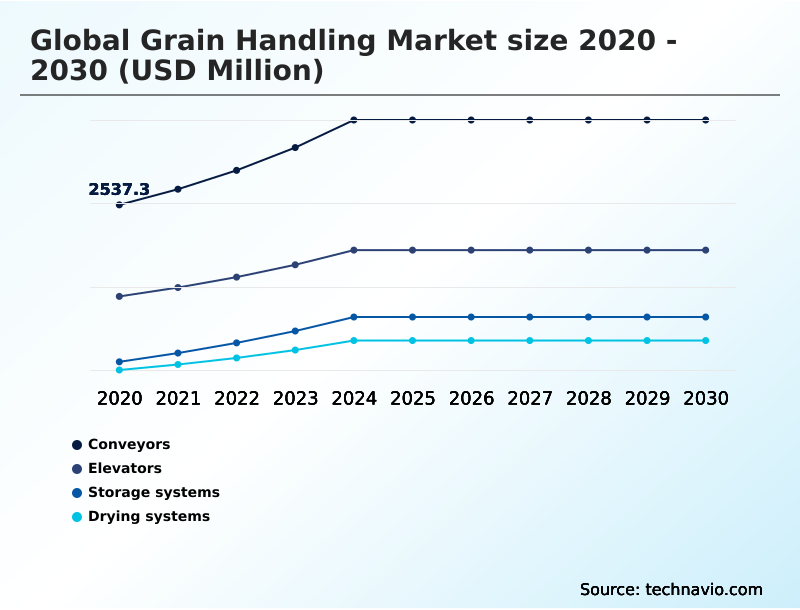
The Conveyors segment was valued at USD 3.06 billion in 2024 and showed a gradual increase during the forecast period.
Request Free Sample

Regional Analysis

APAC is estimated to contribute 42.8% to the growth of the global market during the forecast period.Technavio’s analysts have elaborately explained the regional trends and drivers that shape the market during the forecast period.

See How Grain Handling Market Demand is Rising in APAC Request Free Sample

The geographic landscape is characterized by diverse regional priorities. APAC is a significant growth hub, driven by infrastructure modernization in China and India to reduce post-harvest losses, which have historically been as high as 20% in some areas.

This region's focus is on building food security infrastructure, including new grain storage silos and grain cleaning equipment. In contrast, North America, a mature market, prioritizes upgrading existing facilities to improve agricultural logistics and supply chain efficiency.

European operators focus heavily on food safety compliance and sustainable agriculture practices, with new installations often mandated to achieve a 10% reduction in energy consumption.

South America is expanding export capacity, investing heavily in port terminal operations and inland terminal logistics to manage massive soybean and corn harvests.

Market Dynamics

Our researchers analyzed the data with 2025 as the base year, along with the key drivers, trends, and challenges. A holistic analysis of drivers will help companies refine their marketing strategies to gain a competitive advantage.

  • Strategic decisions in the grain handling market increasingly revolve around specialized operational goals. A primary focus is on optimizing grain drying energy consumption, which can account for a significant portion of a facility's operational budget. Concurrently, there is an emphasis on reducing kernel damage during conveying, as this directly impacts commodity value.
  • The adoption of automated temperature monitoring in silos has become standard for the cost of grain spoilage prevention. For facility safety, preventing dust explosions in elevators through advanced dust control systems for port terminals is a non-negotiable priority. When considering new infrastructure, comparing steel vs concrete silos often centers on long-term maintenance.
  • The benefits of integrating iiot in grain terminals are seen in enhanced predictive maintenance strategies for bucket elevators. The market is also heavily influenced by the need for compliance with food safety regulations and establishing traceability in the grain supply chain.
  • As such, the roi on automated grain handling is a critical metric, driving investment in high-capacity ship loading solutions and efficient grain unloading systems. Operators are seeing modular grain storage system benefits and the value of portable conveyors for on-farm use. Improving grain quality with optical sorters is another key investment area.
  • These trends are shaped by the impact of geopolitics on grain logistics, forcing a pivot towards more resilient operations. Facilities adopting energy-efficient grain aeration techniques report up to twice the shelf-life for stored commodities compared to those using older systems. Ultimately, managing mycotoxins in stored grain remains a crucial challenge.

What are the key market drivers leading to the rise in the adoption of Grain Handling Industry?

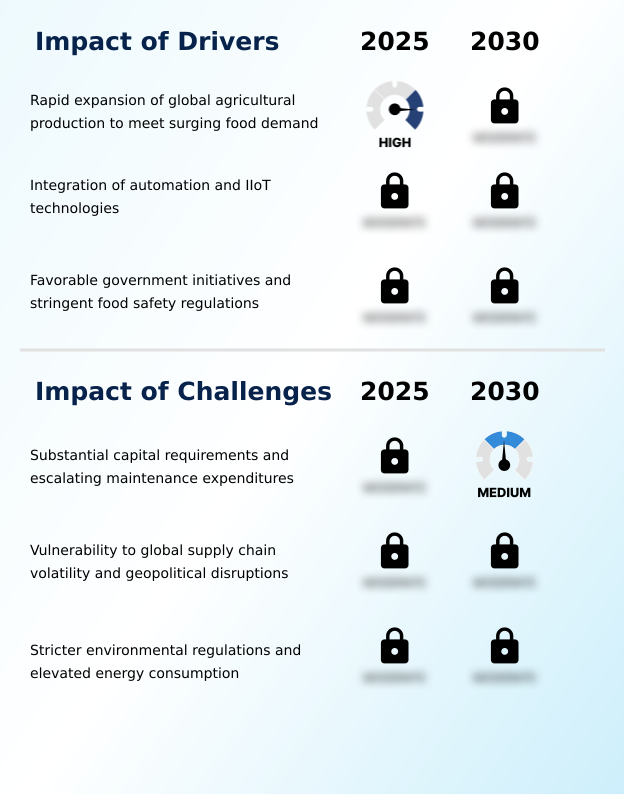
  • The key market driver is the rapid expansion of global agricultural production, necessitated by the need to meet surging global food demand.

  • Market growth is primarily driven by the need to secure the global food supply and the integration of digital technologies. Expanding agricultural production necessitates modern food security infrastructure, reducing post-harvest losses that can exceed 25% in regions with traditional storage.
  • The adoption of automation and IIoT is another major driver. Facilities using centralized command centers with predictive maintenance technologies have demonstrated up to a 20% reduction in operational downtime.
  • Moreover, favorable government initiatives and stringent food safety compliance rules compel investment in modern equipment. For instance, traceability mandates have led to a 60% increase in the deployment of sophisticated bin management systems and enclosed belt conveyors in export-focused facilities.

What are the market trends shaping the Grain Handling Industry?

  • A significant upcoming market trend is the rising demand for modular and portable grain handling solutions. These systems offer enhanced operational flexibility and scalability for agricultural stakeholders.

  • Key market trends are centered on flexibility, safety, and sustainability. There is a notable shift toward modular and portable conveyors, which offer rapid deployment and can reduce capital expenditure on fixed assets by up to 30%. This flexibility is crucial for adapting to shifting harvest locations.
  • Concurrently, an enhanced focus on safety is driving the adoption of advanced dust collection systems and explosion venting panels. Facilities with modern combustible dust mitigation technologies report 50% fewer safety incidents compared to those with legacy systems.
  • The push for energy-efficient operations is also accelerating the use of heat recovery in continuous flow dryers, which can lower fuel consumption by 18%.

What challenges does the Grain Handling Industry face during its growth?

  • Substantial capital requirements and escalating maintenance expenditures present a key challenge affecting industry growth.

  • Significant challenges constrain market growth, led by substantial capital expenditure and high maintenance expenditures. The initial investment for a modern facility with grain storage silos and bucket elevators can be prohibitive for smaller enterprises. Ongoing maintenance in harsh environments can increase operational costs by over 15% annually.
  • The market is also vulnerable to global supply chain volatility; disruptions have caused raw material costs for steel to fluctuate by as much as 40% in a single year. Furthermore, stricter environmental regulations present a challenge.
  • Complying with new dust suppression mandates can increase total project costs by 10%, while the high energy consumption of aeration systems and grain drying systems faces increased scrutiny.

Exclusive Technavio Analysis on Customer Landscape

The grain handling market forecasting report includes the adoption lifecycle of the market, covering from the innovator’s stage to the laggard’s stage. It focuses on adoption rates in different regions based on penetration. Furthermore, the grain handling market report also includes key purchase criteria and drivers of price sensitivity to help companies evaluate and develop their market growth analysis strategies.
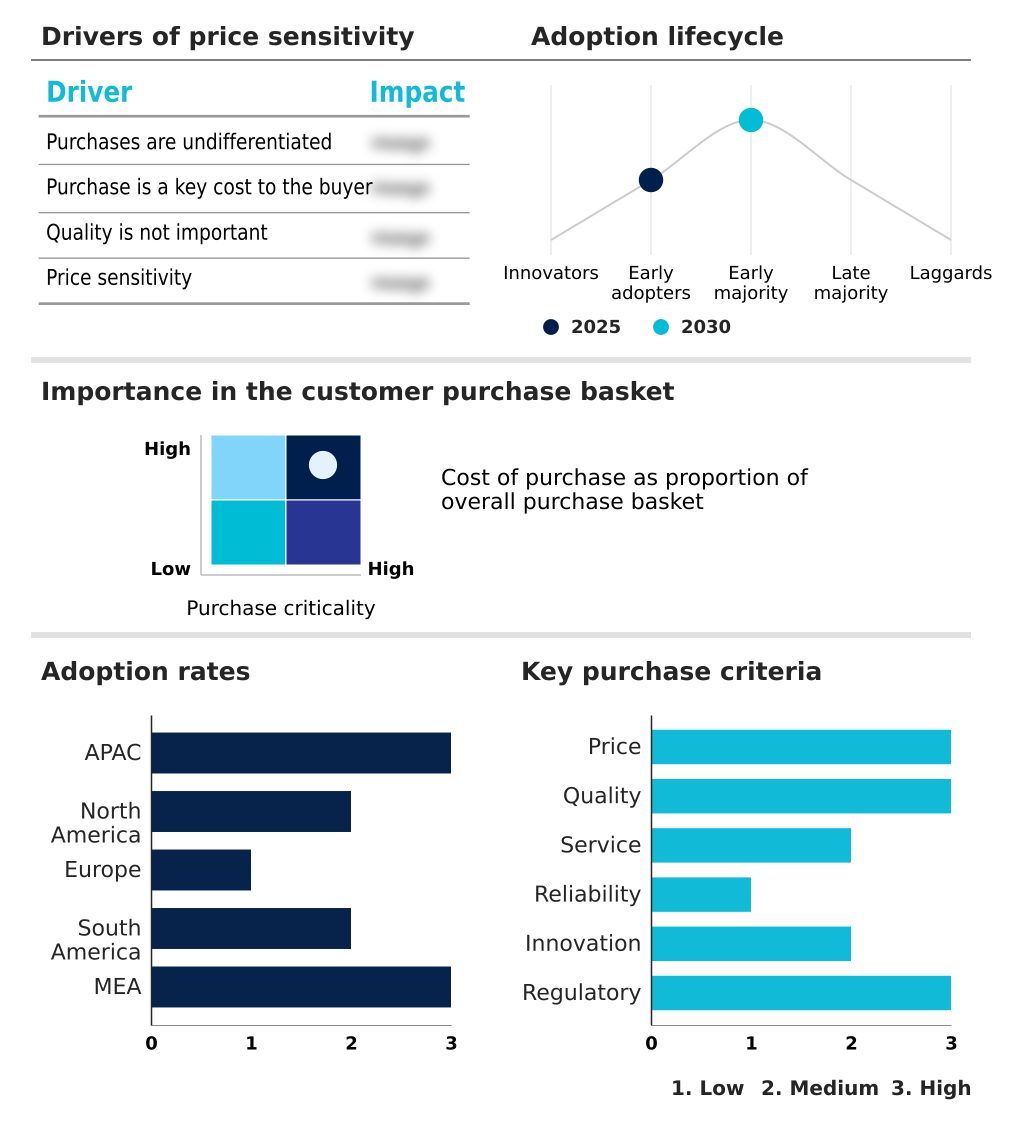
Customer Landscape of Grain Handling Industry

Competitive Landscape

Companies are implementing various strategies, such as strategic alliances, grain handling market forecast, partnerships, mergers and acquisitions, geographical expansion, and product/service launches, to enhance their presence in the industry.

Ag Growth International Inc. - Provides a comprehensive portfolio of portable and commercial grain conveyance, handling, and integrated storage infrastructure for diverse agricultural applications.

The industry research and growth report includes detailed analyses of the competitive landscape of the market and information about key companies, including:

  • Ag Growth International Inc.
  • AGCO Corp.
  • Bedeschi SpA
  • Behlen Mfg Co.
  • BROCK GRAIN SYSTEMS.
  • Buhler AG
  • Bunge Global SA
  • Cargill Inc.
  • Chief Agri Industrial Group
  • COFCO Engineering
  • Meridian Manufacturing Inc.
  • Mysilo Grain Storage Systems
  • PETKUS Technologie GmbH
  • Satake Corp.
  • Sioux Steel Co.
  • Skandia Elevator
  • Sukup Manufacturing Co.
  • Sweet Material Handling.
  • Symaga SA
  • Tornum AB.

Qualitative and quantitative analysis of companies has been conducted to help clients understand the wider business environment as well as the strengths and weaknesses of key industry players. Data is qualitatively analyzed to categorize companies as pure play, category-focused, industry-focused, and diversified; it is quantitatively analyzed to categorize companies as dominant, leading, strong, tentative, and weak.

Recent Development and News in Grain handling market

  • In September 2024, Buhler AG announced a strategic partnership to integrate predictive maintenance technologies into its industrial-scale grain terminal solutions, aiming to reduce operational downtime.
  • In November 2024, Sukup Manufacturing Co. completed the expansion of its primary production facility, increasing its capacity for manufacturing high-performance grain dryers and heavy-duty grain bins by 20%.
  • In February 2025, AGCO Corp. launched a new line of GSI brand automated storage bins featuring advanced temperature monitoring cables and remote aeration controls for enhanced commodity preservation.
  • In April 2025, Cargill Inc. acquired two key inland terminal logistics facilities, strengthening its supply chain efficiency and storage capacity in a critical agricultural region.

Dive into Technavio’s robust research methodology, blending expert interviews, extensive data synthesis, and validated models for unparalleled Grain Handling Market insights. See full methodology.

Market Scope
Page number 311
Base year 2025
Historic period 2020-2024
Forecast period 2026-2030
Growth momentum & CAGR Accelerate at a CAGR of 6%
Market growth 2026-2030 USD 3191.0 million
Market structure Fragmented
YoY growth 2025-2026(%) 5.7%
Key countries China, India, Japan, Australia, South Korea, Indonesia, US, Canada, Mexico, Germany, France, UK, Italy, Spain, The Netherlands, Brazil, Argentina, Colombia, South Africa, Turkey, Saudi Arabia, UAE and Israel
Competitive landscape Leading Companies, Market Positioning of Companies, Competitive Strategies, and Industry Risks

Request Free Sample

Research Analyst Overview

  • The grain handling market is undergoing a significant technological evolution, driven by the need for greater efficiency and safety. The core infrastructure, comprising grain storage silos, bucket elevators, and various conveyors like drag chain conveyors and screw conveyors, is being modernized. Advanced systems, including pneumatic conveying systems and enclosed belt conveyors, are becoming standard for mitigating dust.
  • At intake, receiving pits and hydraulic truck dumpers feed into the system, while at outload, ship loaders, ship unloaders, belt throwers, and telescopic loading spouts ensure rapid transfer. The focus on quality preservation is driving adoption of sophisticated grain drying systems, including continuous flow dryers and batch dryers, alongside grain chillers and aeration systems.
  • Safety is paramount, with dust collection systems and explosion venting panels now integral. On-farm equipment such as mobile grain augers and portable conveyors is also gaining sophistication. Inside facilities, grain cleaning equipment and optical sorters enhance commodity value, supported by grain grading systems.
  • Digitalization is key, with moisture sensors, temperature monitoring cables, and automated fumigation systems managed by centralized command centers. Upgrading to direct drive motors and variable frequency drives has shown to improve energy efficiency by over 20%.
  • The move toward predictive maintenance technologies, sophisticated bin management systems, and precise weigh hoppers with sweep augers illustrates a shift toward fully automated, data-driven operations.

What are the Key Data Covered in this Grain Handling Market Research and Growth Report?

  • What is the expected growth of the Grain Handling Market between 2026 and 2030?

    • USD 3.19 billion, at a CAGR of 6%

  • What segmentation does the market report cover?

    • The report is segmented by Product (Conveyors, Elevators, Storage systems, and Drying systems), End-user (Farmers, Processing plants, Grain trading companies, Port terminals, and Others), Application (Loading, Unloading, Storage, and Drying) and Geography (APAC, North America, Europe, South America, Middle East and Africa)

  • Which regions are analyzed in the report?

    • APAC, North America, Europe, South America and Middle East and Africa

  • What are the key growth drivers and market challenges?

    • Rapid expansion of global agricultural production to meet surging food demand, Substantial capital requirements and escalating maintenance expenditures

  • Who are the major players in the Grain Handling Market?

    • Ag Growth International Inc., AGCO Corp., Bedeschi SpA, Behlen Mfg Co., BROCK GRAIN SYSTEMS., Buhler AG, Bunge Global SA, Cargill Inc., Chief Agri Industrial Group, COFCO Engineering, Meridian Manufacturing Inc., Mysilo Grain Storage Systems, PETKUS Technologie GmbH, Satake Corp., Sioux Steel Co., Skandia Elevator, Sukup Manufacturing Co., Sweet Material Handling., Symaga SA and Tornum AB.

Market Research Insights

  • The dynamics of bulk material management are shifting as organizations prioritize supply chain efficiency and the reduction of post-harvest losses. Enhanced agricultural logistics and food security infrastructure are critical, with successful port terminal operations now achieving a 15% increase in throughput velocity.
  • A focus on grain quality management and commodity preservation drives the adoption of technologies for mycotoxin prevention and cross-contamination prevention. This push for asset integrity aligns with stricter food safety compliance and traceability mandates, where integrated inventory tracking can cut audit times by up to 40%.
  • Though high capital expenditure and maintenance expenditures remain concerns, the drive for energy consumption optimization and operational downtime reduction justifies investment in on-farm storage solutions and modern inland terminal logistics.
  • These efforts, crucial for feed milling processes and ethanol production intake, reflect a commitment to worker safety standards, sustainable agriculture practices, and managing strategic grain reserves, despite the need for careful environmental impact assessment.

We can help! Our analysts can customize this grain handling market research report to meet your requirements.

Get in touch

1. Executive Summary

1.1 Market overview

Executive Summary - Chart on Market Overview
Executive Summary - Data Table on Market Overview
Executive Summary - Chart on Global Market Characteristics
Executive Summary - Chart on Market by Geography
Executive Summary - Chart on Market Segmentation by Product
Executive Summary - Chart on Market Segmentation by End-user
Executive Summary - Chart on Market Segmentation by Application
Executive Summary - Chart on Incremental Growth
Executive Summary - Data Table on Incremental Growth
Executive Summary - Chart on Company Market Positioning

2. Technavio Analysis

2.1 Analysis of price sensitivity, lifecycle, customer purchase basket, adoption rates, and purchase criteria

2.2 Criticality of inputs and Factors of differentiation

Chart on Overview on criticality of inputs and factors of differentiation

2.3 Factors of disruption

Chart on Overview on factors of disruption

2.4 Impact of drivers and challenges

Chart on Impact of drivers and challenges in 2025 and 2030

3. Market Landscape

3.1 Market ecosystem

Chart on Parent Market
Data Table on - Parent Market

3.2 Market characteristics

Chart on Market characteristics analysis

3.3 Value chain analysis

Chart on Value chain analysis

4. Market Sizing

4.1 Market definition

Data Table on Offerings of companies included in the market definition

4.2 Market segment analysis

Market segments

4.3 Market size 2025

4.4 Market outlook: Forecast for 2025-2030

Chart on Global - Market size and forecast 2025-2030 ($ million)
Data Table on Global - Market size and forecast 2025-2030 ($ million)
Chart on Global Market: Year-over-year growth 2025-2030 (%)
Data Table on Global Market: Year-over-year growth 2025-2030 (%)

5. Historic Market Size

5.1 Global Grain Handling Market 2020 - 2024

Historic Market Size - Data Table on Global Grain Handling Market 2020 - 2024 ($ million)

5.2 Product segment analysis 2020 - 2024

Historic Market Size - Product Segment 2020 - 2024 ($ million)

5.3 End-user segment analysis 2020 - 2024

Historic Market Size - End-user Segment 2020 - 2024 ($ million)

5.4 Application segment analysis 2020 - 2024

Historic Market Size - Application Segment 2020 - 2024 ($ million)

5.5 Geography segment analysis 2020 - 2024

Historic Market Size - Geography Segment 2020 - 2024 ($ million)

5.6 Country segment analysis 2020 - 2024

Historic Market Size - Country Segment 2020 - 2024 ($ million)

6. Qualitative Analysis

6.1 Impact of AI on Global Grain Handling Market

6.2 Impact of Geopolitical Conflicts on Global Grain Handling Market

7. Five Forces Analysis

7.1 Five forces summary

Five forces analysis - Comparison between 2025 and 2030

7.2 Bargaining power of buyers

Bargaining power of buyers - Impact of key factors 2025 and 2030

7.3 Bargaining power of suppliers

Bargaining power of suppliers - Impact of key factors in 2025 and 2030

7.4 Threat of new entrants

Threat of new entrants - Impact of key factors in 2025 and 2030

7.5 Threat of substitutes

Threat of substitutes - Impact of key factors in 2025 and 2030

7.6 Threat of rivalry

Threat of rivalry - Impact of key factors in 2025 and 2030

7.7 Market condition

Chart on Market condition - Five forces 2025 and 2030

8. Market Segmentation by Product

8.1 Market segments

Chart on Product - Market share 2025-2030 (%)
Data Table on Product - Market share 2025-2030 (%)

8.2 Comparison by Product

Chart on Comparison by Product
Data Table on Comparison by Product

8.3 Conveyors - Market size and forecast 2025-2030

Chart on Conveyors - Market size and forecast 2025-2030 ($ million)
Data Table on Conveyors - Market size and forecast 2025-2030 ($ million)
Chart on Conveyors - Year-over-year growth 2025-2030 (%)
Data Table on Conveyors - Year-over-year growth 2025-2030 (%)

8.4 Elevators - Market size and forecast 2025-2030

Chart on Elevators - Market size and forecast 2025-2030 ($ million)
Data Table on Elevators - Market size and forecast 2025-2030 ($ million)
Chart on Elevators - Year-over-year growth 2025-2030 (%)
Data Table on Elevators - Year-over-year growth 2025-2030 (%)

8.5 Storage systems - Market size and forecast 2025-2030

Chart on Storage systems - Market size and forecast 2025-2030 ($ million)
Data Table on Storage systems - Market size and forecast 2025-2030 ($ million)
Chart on Storage systems - Year-over-year growth 2025-2030 (%)
Data Table on Storage systems - Year-over-year growth 2025-2030 (%)

8.6 Drying systems - Market size and forecast 2025-2030

Chart on Drying systems - Market size and forecast 2025-2030 ($ million)
Data Table on Drying systems - Market size and forecast 2025-2030 ($ million)
Chart on Drying systems - Year-over-year growth 2025-2030 (%)
Data Table on Drying systems - Year-over-year growth 2025-2030 (%)

8.7 Market opportunity by Product

Market opportunity by Product ($ million)
Data Table on Market opportunity by Product ($ million)

9. Market Segmentation by End-user

9.1 Market segments

Chart on End-user - Market share 2025-2030 (%)
Data Table on End-user - Market share 2025-2030 (%)

9.2 Comparison by End-user

Chart on Comparison by End-user
Data Table on Comparison by End-user

9.3 Farmers - Market size and forecast 2025-2030

Chart on Farmers - Market size and forecast 2025-2030 ($ million)
Data Table on Farmers - Market size and forecast 2025-2030 ($ million)
Chart on Farmers - Year-over-year growth 2025-2030 (%)
Data Table on Farmers - Year-over-year growth 2025-2030 (%)

9.4 Processing plants - Market size and forecast 2025-2030

Chart on Processing plants - Market size and forecast 2025-2030 ($ million)
Data Table on Processing plants - Market size and forecast 2025-2030 ($ million)
Chart on Processing plants - Year-over-year growth 2025-2030 (%)
Data Table on Processing plants - Year-over-year growth 2025-2030 (%)

9.5 Grain trading companies - Market size and forecast 2025-2030

Chart on Grain trading companies - Market size and forecast 2025-2030 ($ million)
Data Table on Grain trading companies - Market size and forecast 2025-2030 ($ million)
Chart on Grain trading companies - Year-over-year growth 2025-2030 (%)
Data Table on Grain trading companies - Year-over-year growth 2025-2030 (%)

9.6 Port terminals - Market size and forecast 2025-2030

Chart on Port terminals - Market size and forecast 2025-2030 ($ million)
Data Table on Port terminals - Market size and forecast 2025-2030 ($ million)
Chart on Port terminals - Year-over-year growth 2025-2030 (%)
Data Table on Port terminals - Year-over-year growth 2025-2030 (%)

9.7 Others - Market size and forecast 2025-2030

Chart on Others - Market size and forecast 2025-2030 ($ million)
Data Table on Others - Market size and forecast 2025-2030 ($ million)
Chart on Others - Year-over-year growth 2025-2030 (%)
Data Table on Others - Year-over-year growth 2025-2030 (%)

9.8 Market opportunity by End-user

Market opportunity by End-user ($ million)
Data Table on Market opportunity by End-user ($ million)

10. Market Segmentation by Application

10.1 Market segments

Chart on Application - Market share 2025-2030 (%)
Data Table on Application - Market share 2025-2030 (%)

10.2 Comparison by Application

Chart on Comparison by Application
Data Table on Comparison by Application

10.3 Loading - Market size and forecast 2025-2030

Chart on Loading - Market size and forecast 2025-2030 ($ million)
Data Table on Loading - Market size and forecast 2025-2030 ($ million)
Chart on Loading - Year-over-year growth 2025-2030 (%)
Data Table on Loading - Year-over-year growth 2025-2030 (%)

10.4 Unloading - Market size and forecast 2025-2030

Chart on Unloading - Market size and forecast 2025-2030 ($ million)
Data Table on Unloading - Market size and forecast 2025-2030 ($ million)
Chart on Unloading - Year-over-year growth 2025-2030 (%)
Data Table on Unloading - Year-over-year growth 2025-2030 (%)

10.5 Storage - Market size and forecast 2025-2030

Chart on Storage - Market size and forecast 2025-2030 ($ million)
Data Table on Storage - Market size and forecast 2025-2030 ($ million)
Chart on Storage - Year-over-year growth 2025-2030 (%)
Data Table on Storage - Year-over-year growth 2025-2030 (%)

10.6 Drying - Market size and forecast 2025-2030

Chart on Drying - Market size and forecast 2025-2030 ($ million)
Data Table on Drying - Market size and forecast 2025-2030 ($ million)
Chart on Drying - Year-over-year growth 2025-2030 (%)
Data Table on Drying - Year-over-year growth 2025-2030 (%)

10.7 Market opportunity by Application

Market opportunity by Application ($ million)
Data Table on Market opportunity by Application ($ million)

11. Customer Landscape

11.1 Customer landscape overview

Analysis of price sensitivity, lifecycle, customer purchase basket, adoption rates, and purchase criteria

12. Geographic Landscape

12.1 Geographic segmentation

Chart on Market share by geography 2025-2030 (%)
Data Table on Market share by geography 2025-2030 (%)

12.2 Geographic comparison

Chart on Geographic comparison
Data Table on Geographic comparison

12.3 APAC - Market size and forecast 2025-2030

Chart on APAC - Market size and forecast 2025-2030 ($ million)
Data Table on APAC - Market size and forecast 2025-2030 ($ million)
Chart on APAC - Year-over-year growth 2025-2030 (%)
Data Table on APAC - Year-over-year growth 2025-2030 (%)
Chart on Regional Comparison - APAC
Data Table on Regional Comparison - APAC

12.3.1 China - Market size and forecast 2025-2030

Chart on China - Market size and forecast 2025-2030 ($ million)
Data Table on China - Market size and forecast 2025-2030 ($ million)
Chart on China - Year-over-year growth 2025-2030 (%)
Data Table on China - Year-over-year growth 2025-2030 (%)

12.3.2 India - Market size and forecast 2025-2030

Chart on India - Market size and forecast 2025-2030 ($ million)
Data Table on India - Market size and forecast 2025-2030 ($ million)
Chart on India - Year-over-year growth 2025-2030 (%)
Data Table on India - Year-over-year growth 2025-2030 (%)

12.3.3 Japan - Market size and forecast 2025-2030

Chart on Japan - Market size and forecast 2025-2030 ($ million)
Data Table on Japan - Market size and forecast 2025-2030 ($ million)
Chart on Japan - Year-over-year growth 2025-2030 (%)
Data Table on Japan - Year-over-year growth 2025-2030 (%)

12.3.4 Australia - Market size and forecast 2025-2030

Chart on Australia - Market size and forecast 2025-2030 ($ million)
Data Table on Australia - Market size and forecast 2025-2030 ($ million)
Chart on Australia - Year-over-year growth 2025-2030 (%)
Data Table on Australia - Year-over-year growth 2025-2030 (%)

12.3.5 South Korea - Market size and forecast 2025-2030

Chart on South Korea - Market size and forecast 2025-2030 ($ million)
Data Table on South Korea - Market size and forecast 2025-2030 ($ million)
Chart on South Korea - Year-over-year growth 2025-2030 (%)
Data Table on South Korea - Year-over-year growth 2025-2030 (%)

12.3.6 Indonesia - Market size and forecast 2025-2030

Chart on Indonesia - Market size and forecast 2025-2030 ($ million)
Data Table on Indonesia - Market size and forecast 2025-2030 ($ million)
Chart on Indonesia - Year-over-year growth 2025-2030 (%)
Data Table on Indonesia - Year-over-year growth 2025-2030 (%)

12.4 North America - Market size and forecast 2025-2030

Chart on North America - Market size and forecast 2025-2030 ($ million)
Data Table on North America - Market size and forecast 2025-2030 ($ million)
Chart on North America - Year-over-year growth 2025-2030 (%)
Data Table on North America - Year-over-year growth 2025-2030 (%)
Chart on Regional Comparison - North America
Data Table on Regional Comparison - North America

12.4.1 US - Market size and forecast 2025-2030

Chart on US - Market size and forecast 2025-2030 ($ million)
Data Table on US - Market size and forecast 2025-2030 ($ million)
Chart on US - Year-over-year growth 2025-2030 (%)
Data Table on US - Year-over-year growth 2025-2030 (%)

12.4.2 Canada - Market size and forecast 2025-2030

Chart on Canada - Market size and forecast 2025-2030 ($ million)
Data Table on Canada - Market size and forecast 2025-2030 ($ million)
Chart on Canada - Year-over-year growth 2025-2030 (%)
Data Table on Canada - Year-over-year growth 2025-2030 (%)

12.4.3 Mexico - Market size and forecast 2025-2030

Chart on Mexico - Market size and forecast 2025-2030 ($ million)
Data Table on Mexico - Market size and forecast 2025-2030 ($ million)
Chart on Mexico - Year-over-year growth 2025-2030 (%)
Data Table on Mexico - Year-over-year growth 2025-2030 (%)

12.5 Europe - Market size and forecast 2025-2030

Chart on Europe - Market size and forecast 2025-2030 ($ million)
Data Table on Europe - Market size and forecast 2025-2030 ($ million)
Chart on Europe - Year-over-year growth 2025-2030 (%)
Data Table on Europe - Year-over-year growth 2025-2030 (%)
Chart on Regional Comparison - Europe
Data Table on Regional Comparison - Europe

12.5.1 Germany - Market size and forecast 2025-2030

Chart on Germany - Market size and forecast 2025-2030 ($ million)
Data Table on Germany - Market size and forecast 2025-2030 ($ million)
Chart on Germany - Year-over-year growth 2025-2030 (%)
Data Table on Germany - Year-over-year growth 2025-2030 (%)

12.5.2 France - Market size and forecast 2025-2030

Chart on France - Market size and forecast 2025-2030 ($ million)
Data Table on France - Market size and forecast 2025-2030 ($ million)
Chart on France - Year-over-year growth 2025-2030 (%)
Data Table on France - Year-over-year growth 2025-2030 (%)

12.5.3 UK - Market size and forecast 2025-2030

Chart on UK - Market size and forecast 2025-2030 ($ million)
Data Table on UK - Market size and forecast 2025-2030 ($ million)
Chart on UK - Year-over-year growth 2025-2030 (%)
Data Table on UK - Year-over-year growth 2025-2030 (%)

12.5.4 Italy - Market size and forecast 2025-2030

Chart on Italy - Market size and forecast 2025-2030 ($ million)
Data Table on Italy - Market size and forecast 2025-2030 ($ million)
Chart on Italy - Year-over-year growth 2025-2030 (%)
Data Table on Italy - Year-over-year growth 2025-2030 (%)

12.5.5 Spain - Market size and forecast 2025-2030

Chart on Spain - Market size and forecast 2025-2030 ($ million)
Data Table on Spain - Market size and forecast 2025-2030 ($ million)
Chart on Spain - Year-over-year growth 2025-2030 (%)
Data Table on Spain - Year-over-year growth 2025-2030 (%)

12.5.6 The Netherlands - Market size and forecast 2025-2030

Chart on The Netherlands - Market size and forecast 2025-2030 ($ million)
Data Table on The Netherlands - Market size and forecast 2025-2030 ($ million)
Chart on The Netherlands - Year-over-year growth 2025-2030 (%)
Data Table on The Netherlands - Year-over-year growth 2025-2030 (%)

12.6 South America - Market size and forecast 2025-2030

Chart on South America - Market size and forecast 2025-2030 ($ million)
Data Table on South America - Market size and forecast 2025-2030 ($ million)
Chart on South America - Year-over-year growth 2025-2030 (%)
Data Table on South America - Year-over-year growth 2025-2030 (%)
Chart on Regional Comparison - South America
Data Table on Regional Comparison - South America

12.6.1 Brazil - Market size and forecast 2025-2030

Chart on Brazil - Market size and forecast 2025-2030 ($ million)
Data Table on Brazil - Market size and forecast 2025-2030 ($ million)
Chart on Brazil - Year-over-year growth 2025-2030 (%)
Data Table on Brazil - Year-over-year growth 2025-2030 (%)

12.6.2 Argentina - Market size and forecast 2025-2030

Chart on Argentina - Market size and forecast 2025-2030 ($ million)
Data Table on Argentina - Market size and forecast 2025-2030 ($ million)
Chart on Argentina - Year-over-year growth 2025-2030 (%)
Data Table on Argentina - Year-over-year growth 2025-2030 (%)

12.6.3 Colombia - Market size and forecast 2025-2030

Chart on Colombia - Market size and forecast 2025-2030 ($ million)
Data Table on Colombia - Market size and forecast 2025-2030 ($ million)
Chart on Colombia - Year-over-year growth 2025-2030 (%)
Data Table on Colombia - Year-over-year growth 2025-2030 (%)

12.7 Middle East and Africa - Market size and forecast 2025-2030

Chart on Middle East and Africa - Market size and forecast 2025-2030 ($ million)
Data Table on Middle East and Africa - Market size and forecast 2025-2030 ($ million)
Chart on Middle East and Africa - Year-over-year growth 2025-2030 (%)
Data Table on Middle East and Africa - Year-over-year growth 2025-2030 (%)
Chart on Regional Comparison - Middle East and Africa
Data Table on Regional Comparison - Middle East and Africa

12.7.1 South Africa - Market size and forecast 2025-2030

Chart on South Africa - Market size and forecast 2025-2030 ($ million)
Data Table on South Africa - Market size and forecast 2025-2030 ($ million)
Chart on South Africa - Year-over-year growth 2025-2030 (%)
Data Table on South Africa - Year-over-year growth 2025-2030 (%)

12.7.2 Turkey - Market size and forecast 2025-2030

Chart on Turkey - Market size and forecast 2025-2030 ($ million)
Data Table on Turkey - Market size and forecast 2025-2030 ($ million)
Chart on Turkey - Year-over-year growth 2025-2030 (%)
Data Table on Turkey - Year-over-year growth 2025-2030 (%)

12.7.3 Saudi Arabia - Market size and forecast 2025-2030

Chart on Saudi Arabia - Market size and forecast 2025-2030 ($ million)
Data Table on Saudi Arabia - Market size and forecast 2025-2030 ($ million)
Chart on Saudi Arabia - Year-over-year growth 2025-2030 (%)
Data Table on Saudi Arabia - Year-over-year growth 2025-2030 (%)

12.7.4 UAE - Market size and forecast 2025-2030

Chart on UAE - Market size and forecast 2025-2030 ($ million)
Data Table on UAE - Market size and forecast 2025-2030 ($ million)
Chart on UAE - Year-over-year growth 2025-2030 (%)
Data Table on UAE - Year-over-year growth 2025-2030 (%)

12.7.5 Israel - Market size and forecast 2025-2030

Chart on Israel - Market size and forecast 2025-2030 ($ million)
Data Table on Israel - Market size and forecast 2025-2030 ($ million)
Chart on Israel - Year-over-year growth 2025-2030 (%)
Data Table on Israel - Year-over-year growth 2025-2030 (%)

12.8 Market opportunity by geography

Market opportunity by geography ($ million)
Data Tables on Market opportunity by geography ($ million)

13. Drivers, Challenges, and Opportunity

13.1 Market drivers

Rapid expansion of global agricultural production to meet surging food demand
Integration of automation and IIoT technologies
Favorable government initiatives and stringent food safety regulations

13.2 Market challenges

Substantial capital requirements and escalating maintenance expenditures
Vulnerability to global supply chain volatility and geopolitical disruptions
Stricter environmental regulations and elevated energy consumption

13.3 Impact of drivers and challenges

Impact of drivers and challenges in 2025 and 2030

13.4 Market opportunities

Rising demand for modular and portable grain handling solutions
Enhanced focus on dust control and explosion mitigation technologies
Adoption of renewable energy and energy efficient operations

14. Competitive Landscape

14.1 Overview

14.2

Overview on criticality of inputs and factors of differentiation

14.3 Landscape disruption

Overview on factors of disruption

14.4 Industry risks

Impact of key risks on business

15. Competitive Analysis

15.1 Companies profiled

Companies covered

15.2 Company ranking index

15.3 Market positioning of companies

Matrix on companies position and classification

15.4 Ag Growth International Inc.

Ag Growth International Inc. - Overview
Ag Growth International Inc. - Business segments
Ag Growth International Inc. - Key offerings
Ag Growth International Inc. - Segment focus
SWOT

15.5 AGCO Corp.

AGCO Corp. - Overview
AGCO Corp. - Product / Service
AGCO Corp. - Key offerings
SWOT

15.6 Bedeschi SpA

Bedeschi SpA - Overview
Bedeschi SpA - Product / Service
Bedeschi SpA - Key offerings
SWOT

15.7 Behlen Mfg Co.

Behlen Mfg Co. - Overview
Behlen Mfg Co. - Product / Service
Behlen Mfg Co. - Key offerings
SWOT

15.8 BROCK GRAIN SYSTEMS.

BROCK GRAIN SYSTEMS. - Overview
BROCK GRAIN SYSTEMS. - Product / Service
BROCK GRAIN SYSTEMS. - Key offerings
SWOT

15.9 Buhler AG

Buhler AG - Overview
Buhler AG - Product / Service
Buhler AG - Key offerings
SWOT

15.10 Chief Agri Industrial Group

Chief Agri Industrial Group - Overview
Chief Agri Industrial Group - Product / Service
Chief Agri Industrial Group - Key offerings
SWOT

15.11 Mysilo Grain Storage Systems

Mysilo Grain Storage Systems - Overview
Mysilo Grain Storage Systems - Product / Service
Mysilo Grain Storage Systems - Key offerings
SWOT

15.12 PETKUS Technologie GmbH

PETKUS Technologie GmbH - Overview
PETKUS Technologie GmbH - Product / Service
PETKUS Technologie GmbH - Key offerings
SWOT

15.13 Satake Corp.

Satake Corp. - Overview
Satake Corp. - Product / Service
Satake Corp. - Key offerings
SWOT

15.14 Sioux Steel Co.

Sioux Steel Co. - Overview
Sioux Steel Co. - Product / Service
Sioux Steel Co. - Key offerings
SWOT

15.15 Skandia Elevator

Skandia Elevator - Overview
Skandia Elevator - Product / Service
Skandia Elevator - Key offerings
SWOT

15.16 Sukup Manufacturing Co.

Sukup Manufacturing Co. - Overview
Sukup Manufacturing Co. - Product / Service
Sukup Manufacturing Co. - Key offerings
SWOT

15.17 Sweet Material Handling.

Sweet Material Handling. - Overview
Sweet Material Handling. - Product / Service
Sweet Material Handling. - Key offerings
SWOT

15.18 Tornum AB.

Tornum AB. - Overview
Tornum AB. - Product / Service
Tornum AB. - Key offerings
SWOT

16. Appendix

16.1 Scope of the report

Market definition
Objectives
Notes and caveats

16.2 Inclusions and exclusions checklist

Inclusions checklist
Exclusions checklist

16.3 Currency conversion rates for US$

16.4 Research methodology

16.5 Data procurement

Information sources

16.6 Data validation

16.7 Validation techniques employed for market sizing

16.8 Data synthesis

16.9 360 degree market analysis

16.10 List of abbreviations

Research Methodology

Technavio presents a detailed picture of the market by way of study, synthesis, and summation of data from multiple sources. The analysts have presented the various facets of the market with a particular focus on identifying the key industry influencers. The data thus presented is comprehensive, reliable, and the result of extensive research, both primary and secondary.

INFORMATION SOURCES

Primary sources

  • Manufacturers and suppliers
  • Channel partners
  • Industry experts
  • Strategic decision makers

Secondary sources

  • Industry journals and periodicals
  • Government data
  • Financial reports of key industry players
  • Historical data
  • Press releases

DATA ANALYSIS

Data Synthesis

  • Collation of data
  • Estimation of key figures
  • Analysis of derived insights

Data Validation

  • Triangulation with data models
  • Reference against proprietary databases
  • Corroboration with industry experts

REPORT WRITING

Qualitative

  • Market drivers
  • Market challenges
  • Market trends
  • Five forces analysis

Quantitative

  • Market size and forecast
  • Market segmentation
  • Geographical insights
  • Competitive landscape

Interested in this report?

Get your sample now to see our research methodology and insights!

Download Now

Frequently Asked Questions

Grain Handling market growth will increase by USD 3191.0 million during 2026-2030.

The Grain Handling market is expected to grow at a CAGR of 6% during 2026-2030.

Grain Handling market is segmented by Product (Conveyors, Elevators, Storage systems, Drying systems) End-user (Farmers, Processing plants, Grain trading companies, Port terminals, Others) Application (Loading, Unloading, Storage, Drying)

Ag Growth International Inc., AGCO Corp., Bedeschi SpA, Behlen Mfg Co., BROCK GRAIN SYSTEMS., Buhler AG, Bunge Global SA, Cargill Inc., Chief Agri Industrial Group, COFCO Engineering, Meridian Manufacturing Inc., Mysilo Grain Storage Systems, PETKUS Technologie GmbH, Satake Corp., Sioux Steel Co., Skandia Elevator, Sukup Manufacturing Co., Sweet Material Handling., Symaga SA, Tornum AB. are a few of the key vendors in the Grain Handling market.

APAC will register the highest growth rate of 42.8% among the other regions. Therefore, the Grain Handling market in APAC is expected to garner significant business opportunities for the vendors during the forecast period.

China, India, Japan, Australia, South Korea, Indonesia, US, Canada, Mexico, Germany, France, UK, Italy, Spain, The Netherlands, Brazil, Argentina, Colombia, South Africa, Turkey, Saudi Arabia, UAE, Israel

  • Rapid expansion of global agricultural production to meet surging food demand is the driving factor this market.

The Grain Handling market vendors should focus on grabbing business opportunities from the Product segment as it accounted for the largest market share in the base year.
RIA - Research AI Assistant
Ask RIA