


Grow Light Market Size 2026-2030
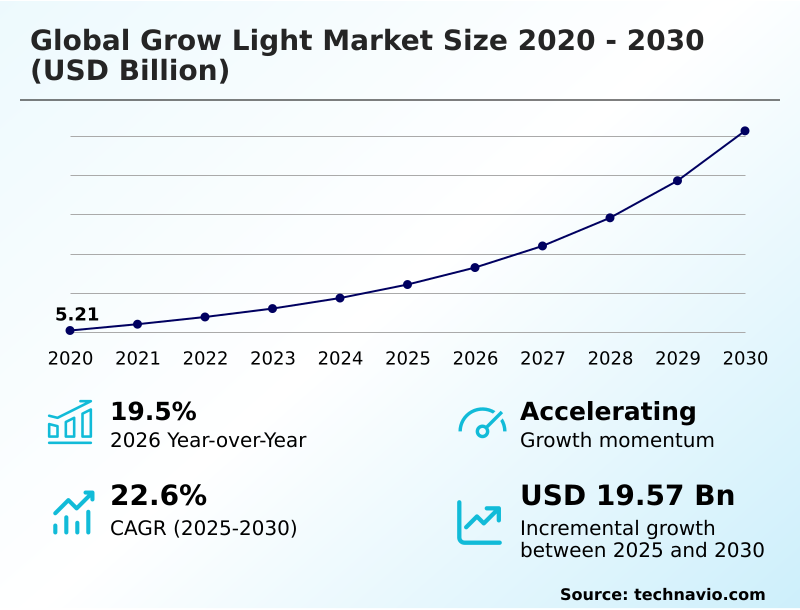
The grow light market size is valued to increase by USD 19.57 billion, at a CAGR of 22.6% from 2025 to 2030. Growing popularity of urban agriculture will drive the grow light market.
Major Market Trends & Insights
- Europe dominated the market and accounted for a 31.6% growth during the forecast period.
- By Application - Commercial green house segment was valued at USD 2.96 billion in 2024
- By Product - LED lights segment accounted for the largest market revenue share in 2024
Market Size & Forecast
- Market Opportunities: USD 25.41 billion
- Market Future Opportunities: USD 19.57 billion
- CAGR from 2025 to 2030 : 22.6%
Market Summary
- The grow light market is expanding rapidly, driven by the convergence of agricultural needs and technological innovation. At its core, the market provides critical illumination solutions for controlled environment agriculture, enabling year-round cultivation and bolstering food security solutions. Key drivers include the rise of urban agriculture lighting and indoor farming solutions, which depend on artificial light to operate.
- Trends are shifting toward intelligent systems that leverage IoT-enabled farming for precision agriculture, allowing for real-time adjustments to light conditions.
- For instance, a commercial vertical farm can implement dynamic spectrum tuning to align with the circadian rhythm lighting of its crops, automatically adjusting deep-red and blue LEDs to accelerate growth stages, thereby reducing the cultivation cycle by up to 10% and improving operational throughput.
- However, challenges such as the high initial cost and the technical complexity of light recipe optimization for various crops, from leafy green production to medicinal plant cultivation, persist. The ongoing development of LED grow light efficacy and better thermal management systems is crucial for addressing these hurdles and sustaining market momentum.
What will be the Size of the Grow Light Market during the forecast period?
Get Key Insights on Market Forecast (PDF) Get Free Sample
How is the Grow Light Market Segmented?
The grow light industry research report provides comprehensive data (region-wise segment analysis), with forecasts and estimates in "USD million" for the period 2026-2030, as well as historical data from 2020-2024 for the following segments.
- Application
- Commercial green house
- Vertical farming
- Indoor farming
- Research
- Product
- LED lights
- HID
- Fluorescent lights
- Others
- Power rating
- Less than 300 watt
- More than 300 watt
- Geography
- Europe
- Germany
- The Netherlands
- UK
- North America
- US
- Canada
- Mexico
- APAC
- China
- Japan
- India
- Middle East and Africa
- Saudi Arabia
- South Africa
- UAE
- South America
- Brazil
- Argentina
- Rest of World (ROW)
- Europe
By Application Insights
The commercial green house segment is estimated to witness significant growth during the forecast period.
The commercial greenhouse segment is a foundational component of the market, where greenhouse supplemental lighting is crucial for maintaining production schedules irrespective of seasonal variations. Operators are increasingly retrofitting older systems, evaluating ballast compatibility with modern fixtures.
While high-intensity discharge (HID) and compact fluorescent lamp (CFL) systems have been prevalent, the shift toward light-emitting diode (LED) technology is driven by significant gains in luminaire efficiency. This transition is pivotal for energy-efficient horticulture and sustainable agriculture technology.
Adopting advanced commercial greenhouse lighting directly impacts crop yield optimization and plant quality improvement, enabling consistent year-round cultivation. For instance, growers upgrading to high-efficiency LEDs have reported up to a 25% reduction in energy consumption per unit of produce.
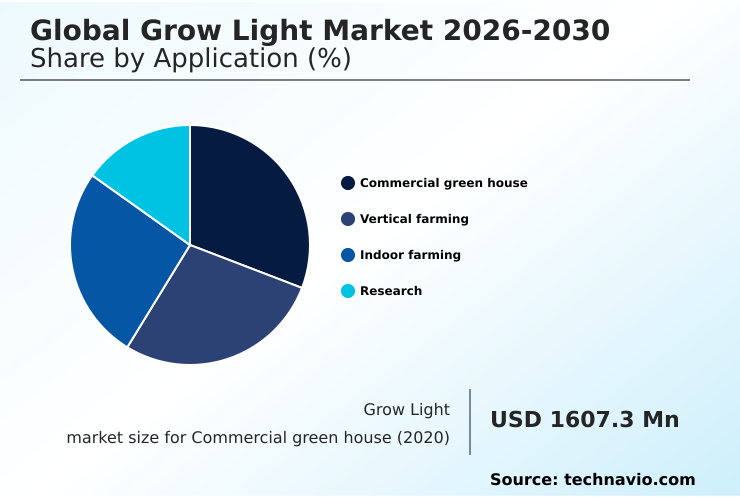
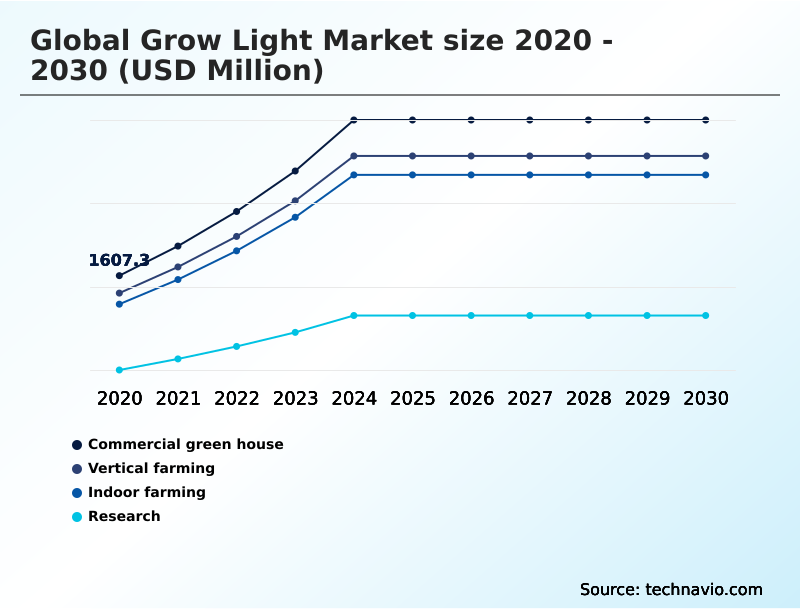
The Commercial green house segment was valued at USD 2.96 billion in 2024 and showed a gradual increase during the forecast period.
Regional Analysis
Europe is estimated to contribute 31.6% to the growth of the global market during the forecast period.Technavio’s analysts have elaborately explained the regional trends and drivers that shape the market during the forecast period.
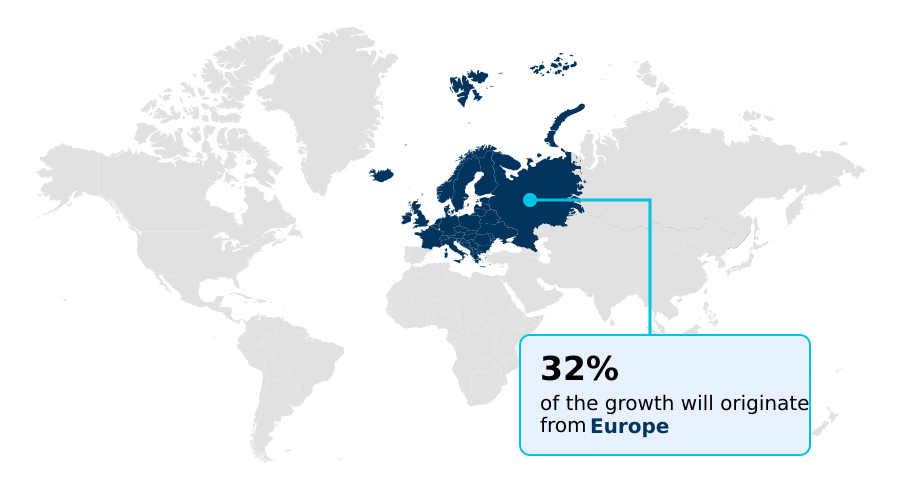
See How Grow Light Market Demand is Rising in Europe Get Free Sample
The geographic landscape for the global grow light market 2026-2030 is defined by varied adoption rates of advanced horticultural lighting technologies.
In developed regions, there is a strong focus on photomorphogenesis control and photoperiod manipulation using sophisticated systems that include far-red light spectrum capabilities to influence flowering.
Niche applications are emerging for light emitting plasma (LEP) and quantum dot LEDs within research-grade grow lights and plant factory technology.
Meanwhile, expanding markets are seeing growth in aquaponics integration and accessible solutions for rooftop gardening lights and consumer home grow kits. This diversification in application, from industrial ornamental horticulture to personal cultivation, highlights the market's adaptability.
Adoption of smart circadian rhythm lighting in advanced markets is over 50% higher than in emerging regions.
Market Dynamics
Our researchers analyzed the data with 2025 as the base year, along with the key drivers, trends, and challenges. A holistic analysis of drivers will help companies refine their marketing strategies to gain a competitive advantage.
- The global grow light market 2026-2030 is defined by a sophisticated interplay of technology and agricultural science, moving beyond simple illumination to precise environmental control. Strategic decisions now revolve around optimizing light spectrum for photosynthesis and understanding the impact of light quality on plants.
- The ongoing debate of LED versus HID for crop yield is increasingly settled by data, with a comprehensive cost-benefit analysis of LED grow lights often favoring the former due to lower long-term operational expenses. The complexity of spectral tuning for plant morphology is a key differentiator for manufacturers.
- Specialized grow light systems for vertical farms and full-spectrum lighting for cannabis have become distinct, high-value segments. Growers are also leveraging the UV light benefits in horticulture and using far-red light for flowering induction to manipulate crop cycles.
- The integration of smart controls for greenhouse lighting and grow light automation with IoT is becoming standard, allowing for precise management of environmental factors. For compliance, measuring PPFD for plant growth is essential for validating performance claims. Advanced systems now feature better thermal management in LED fixtures, addressing a key failure point.
- The customization of light recipes for leafy greens and other crops based on their specific DLI requirements for various crops is critical for improving crop quality with specific wavelengths.
- Furthermore, effective canopy penetration with different light sources and photoperiod control for plant development are central to maximizing yield, with automated systems showing a 20% greater consistency in harvest timing compared to manually managed environments. These advancements underscore the market's shift toward data-driven, high-efficiency lighting solutions for indoor farming.
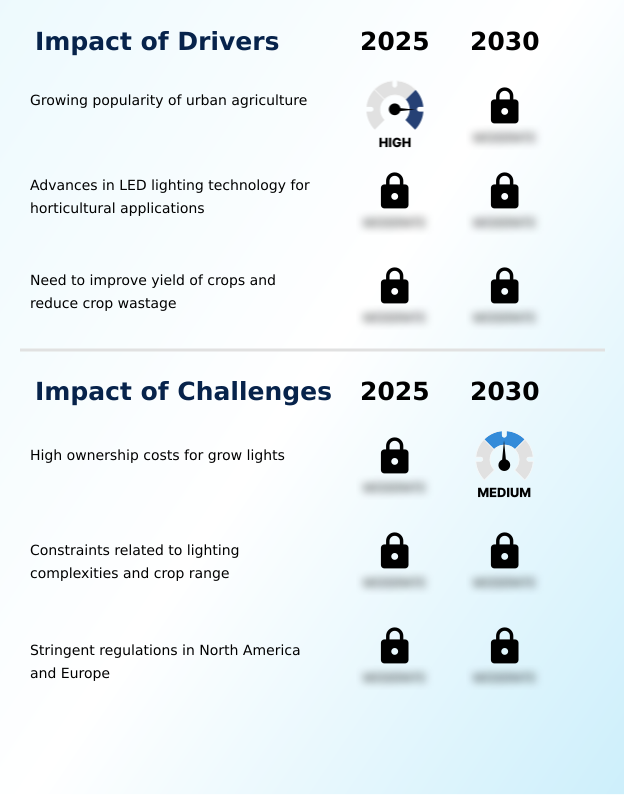
What are the key market drivers leading to the rise in the adoption of Grow Light Industry?
- The growing popularity of urban agriculture is a key driver for the market's expansion.
- The expansion of controlled environment agriculture is a primary driver for the global grow light market 2026-2030, fueling demand for specialized indoor farming solutions.
- The proliferation of urban agriculture lighting for multi-tier farming and soilless cultivation systems addresses the need for local food production and enhances food security solutions.
- In these setups, vertical farming lighting must deliver optimal photosynthetically active radiation (PAR) with high photon flux density.
- The focus is on maximizing LED grow light efficacy to achieve the target daily light integral (DLI) using precise combinations of deep-red and blue LEDs.
- Farms utilizing these advanced lighting systems report yield increases of over 40% per square meter compared to traditional methods, showcasing the technology's effectiveness.
What are the market trends shaping the Grow Light Industry?
- The application of grow lights for plant disease detection and monitoring is an upcoming market trend. This involves using advanced illumination systems for early stress signal identification in crops.
- A significant trend in the global grow light market 2026-2030 is the evolution of lighting systems into active diagnostic tools through IoT-enabled farming. The integration of sensors enables plant stress detection and facilitates data-driven horticulture and precision agriculture. Modern systems utilize smart lighting controls for dynamic spectrum tuning, adjusting wavelength-specific LEDs in real-time based on plant photobiology data.
- Some advanced setups even incorporate low levels of UV-A and UV-B radiation to enhance crop characteristics. This level of automated cultivation leads to significant operational gains; for example, automated systems have demonstrated a 30% improvement in early disease detection accuracy compared to manual inspection. These technologies are also applied in specialized areas like plant propagation lighting and tissue culture lighting.
What challenges does the Grow Light Industry face during its growth?
- The high ownership costs associated with grow lights present a key challenge affecting industry growth.
- Key operational challenges persist in the global grow light market 2026-2030, particularly concerning the longevity and performance of solid-state lighting. Effective thermal management systems are critical, as heat can accelerate lumen depreciation and impact system lifespan.
- The complexity of light recipe optimization for different crops, from leafy green production to fruiting crop lighting and high-value medicinal plant cultivation, requires significant expertise. Growers using hydroponic grow systems and aeroponic lighting also need fixtures with a high IP rating for grow lights to withstand humid environments.
- Furthermore, achieving uniform canopy penetration and implementing effective inter-canopy lighting strategies for dense crops, such as those in cannabis cultivation lighting, adds to the technical difficulty, increasing upfront costs by as much as 15%.
Exclusive Technavio Analysis on Customer Landscape
The grow light market forecasting report includes the adoption lifecycle of the market, covering from the innovator’s stage to the laggard’s stage. It focuses on adoption rates in different regions based on penetration. Furthermore, the grow light market report also includes key purchase criteria and drivers of price sensitivity to help companies evaluate and develop their market growth analysis strategies.
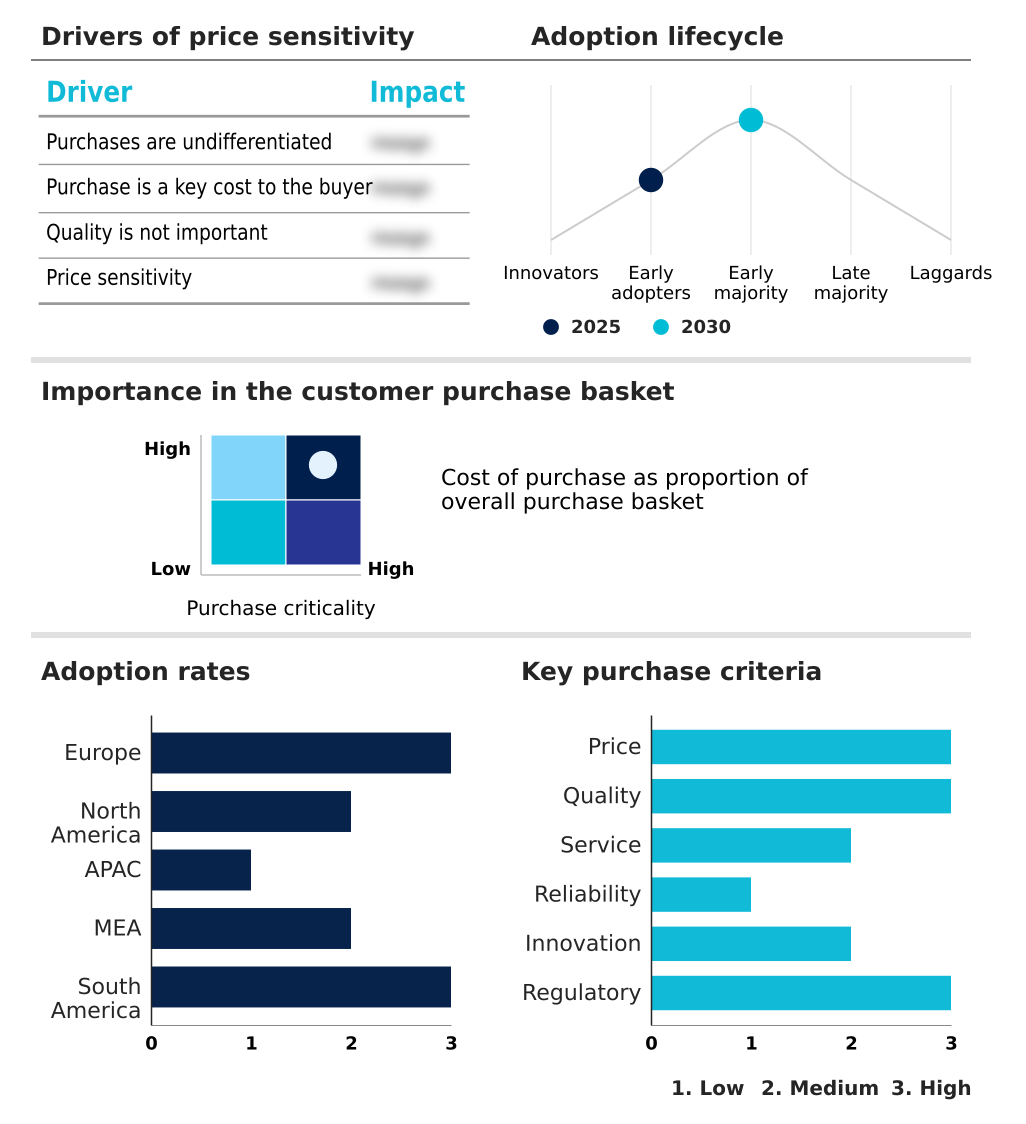
Customer Landscape of Grow Light Industry
Competitive Landscape
Companies are implementing various strategies, such as strategic alliances, grow light market forecast, partnerships, mergers and acquisitions, geographical expansion, and product/service launches, to enhance their presence in the industry.
Aerogrow International Inc. - Provides a range of specialized grow light solutions engineered to support various indoor and home-based cultivation applications, enhancing plant growth through optimized illumination.
The industry research and growth report includes detailed analyses of the competitive landscape of the market and information about key companies, including:
- Aerogrow International Inc.
- Agnetix
- Altos India Limited
- Black Dog Grow Technologies Inc.
- California LightWorks
- Crecer Lighting
- EconoLux Industries Ltd.
- EVERLIGHT ELECTRONICS CO. LTD.
- General Electric Co.
- Heliospectra AB
- Koninklijke Philips NV
- Lemnis Oreon BV
- OSRAM GmbH
- Sanan Optoelectronics Co. Ltd.
- SANANBIO
- Signify NV
- Thrive Agritech
- ViparSpectra
Qualitative and quantitative analysis of companies has been conducted to help clients understand the wider business environment as well as the strengths and weaknesses of key industry players. Data is qualitatively analyzed to categorize companies as pure play, category-focused, industry-focused, and diversified; it is quantitatively analyzed to categorize companies as dominant, leading, strong, tentative, and weak.
Recent Development and News in Grow light market
- In May 2025, ams OSRAM launched its OSCONIQ P 3737 GEN 2, a high-power LED engineered for vertical farming and rooftop agriculture applications to enhance photon flux and efficiency.
- In May 2025, Signify NV introduced a modular LED lighting system designed for cultivating leafy greens and berries in large-scale greenhouse operations across the Netherlands and Germany.
- In March 2025, Cultilux announced a new double-ended 1000W high-intensity discharge (HID) lamp optimized for modern greenhouse applications requiring high photon output and canopy penetration.
- In February 2025, California LightWorks unveiled its MegaDrive UnderCanopy LED system, a product designed to deliver high-intensity light to lower plant canopies to boost overall crop yield.
Dive into Technavio’s robust research methodology, blending expert interviews, extensive data synthesis, and validated models for unparalleled Grow Light Market insights. See full methodology.
| Market Scope | |
|---|---|
| Page number | 293 |
| Base year | 2025 |
| Historic period | 2020-2024 |
| Forecast period | 2026-2030 |
| Growth momentum & CAGR | Accelerate at a CAGR of 22.6% |
| Market growth 2026-2030 | USD 19565.8 million |
| Market structure | Fragmented |
| YoY growth 2025-2026(%) | 19.5% |
| Key countries | Germany, The Netherlands, UK, France, Italy, Spain, US, Canada, Mexico, China, Japan, India, South Korea, Australia, Indonesia, Saudi Arabia, South Africa, UAE, Israel, Turkey, Brazil, Argentina and Chile |
| Competitive landscape | Leading Companies, Market Positioning of Companies, Competitive Strategies, and Industry Risks |
Research Analyst Overview
- The grow light market is undergoing a significant transformation driven by advancements in solid-state lighting and plant photobiology. Innovations in quantum dot LEDs and wavelength-specific LEDs are enhancing LED grow light efficacy, allowing for precise photomorphogenesis control. The development of sophisticated light recipe optimization techniques enables growers to fine-tune spectral power distribution and daily light integral (DLI) for specific crops.
- This level of control, managed through smart lighting controls and dynamic spectrum tuning, is critical for controlled environment agriculture. A key boardroom consideration is the investment in superior thermal management systems to mitigate lumen depreciation and ensure long-term ROI. For example, systems with advanced cooling reduce premature failures by over 20%.
- The ability to manipulate the far-red light spectrum for photoperiod manipulation, along with strategies for deep canopy penetration and inter-canopy lighting, defines competitive horticultural lighting solutions. Achieving optimal photosynthetic photon flux (PPF) and photon flux density with high luminaire efficiency is the central goal.
- Technologies like high-intensity discharge (HID) and light emitting plasma (LEP) continue to serve niche applications, while the demand for fixtures with high IP rating for grow lights is standard.
- The market is also seeing specific applications of deep-red and blue LEDs, UV-A and UV-B radiation, compact fluorescent lamp (CFL), circadian rhythm lighting, plant stress detection, and ensuring ballast compatibility remains relevant for retrofitting.
What are the Key Data Covered in this Grow Light Market Research and Growth Report?
-
What is the expected growth of the Grow Light Market between 2026 and 2030?
-
USD 19.57 billion, at a CAGR of 22.6%
-
-
What segmentation does the market report cover?
-
The report is segmented by Application (Commercial green house, Vertical farming, Indoor farming, and Research), Product (LED lights, HID, Fluorescent lights, and Others), Power Rating (Less than 300 watt, and More than 300 watt) and Geography (Europe, North America, APAC, Middle East and Africa, South America)
-
-
Which regions are analyzed in the report?
-
Europe, North America, APAC, Middle East and Africa and South America
-
-
What are the key growth drivers and market challenges?
-
Growing popularity of urban agriculture, High ownership costs for grow lights
-
-
Who are the major players in the Grow Light Market?
-
Aerogrow International Inc., Agnetix, Altos India Limited, Black Dog Grow Technologies Inc., California LightWorks, Crecer Lighting, EconoLux Industries Ltd., EVERLIGHT ELECTRONICS CO. LTD., General Electric Co., Heliospectra AB, Koninklijke Philips NV, Lemnis Oreon BV, OSRAM GmbH, Sanan Optoelectronics Co. Ltd., SANANBIO, Signify NV, Thrive Agritech and ViparSpectra
-
Market Research Insights
- Market dynamics are increasingly shaped by the integration of IoT-enabled farming, which facilitates precision agriculture and automated cultivation. The adoption of data-driven horticulture allows operators to optimize inputs, with some farms reporting a 15% reduction in energy waste. This shift supports the expansion of indoor farming solutions, soilless cultivation systems, and hydroponic grow systems for enhanced local food production.
- The pursuit of sustainable agriculture technology and energy-efficient horticulture is a key factor, particularly as urban agriculture lighting becomes more widespread. The market also caters to high-value segments such as medicinal plant cultivation, including cannabis cultivation lighting, and specialized applications like plant propagation lighting, where controlled environments are critical.
- Efficient lighting directly impacts crop yield optimization, with advanced systems improving output by over 35% in some cases.
We can help! Our analysts can customize this grow light market research report to meet your requirements.
 RIA -
RIA - 
