


House Wraps Market Size 2026-2030
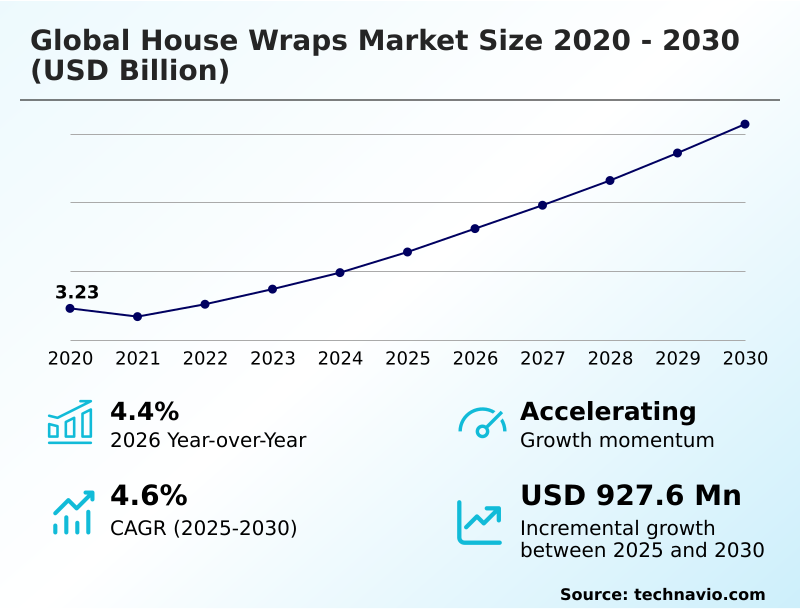
The house wraps market size is valued to increase by USD 927.6 million, at a CAGR of 4.6% from 2025 to 2030. Adoption of integrated drainage technologies and advanced vapor management will drive the house wraps market.
Major Market Trends & Insights
- North America dominated the market and accounted for a 39.5% growth during the forecast period.
- By Application - Residential segment was valued at USD 2.38 billion in 2024
- By Type - Non-perforated house wraps segment accounted for the largest market revenue share in 2024
Market Size & Forecast
- Market Opportunities: USD 1.34 billion
- Market Future Opportunities: USD 927.6 million
- CAGR from 2025 to 2030 : 4.6%
Market Summary
- The house wraps market is experiencing significant technical evolution, moving beyond simple moisture barriers to become critical components of high-performance building envelopes. This transformation is propelled by stringent energy codes mandating superior airtightness and the growing adoption of green building standards.
- Innovations in material science are central, with a clear shift from perforated films to advanced non-perforated and self-adhered membranes that offer enhanced protection against water intrusion while allowing for vapor permeability. These systems are crucial for preventing structural decay and improving indoor air quality.
- A key business scenario involves developers of large-scale residential projects specifying integrated weather-resistive barrier systems to streamline construction timelines and ensure compliance with blower-door testing requirements, thereby reducing long-term liability risks associated with envelope failure. The overall trajectory for the global house wraps market 2026-2030 is defined by this pursuit of performance, sustainability, and installation efficiency.
- However, the industry grapples with the volatility of polymer resin prices and a persistent shortage of skilled labor proficient in applying these advanced systems, which can impact project costs and timelines.
What will be the Size of the House Wraps Market during the forecast period?
Get Key Insights on Market Forecast (PDF) Get Free Sample
How is the House Wraps Market Segmented?
The house wraps industry research report provides comprehensive data (region-wise segment analysis), with forecasts and estimates in "USD million" for the period 2026-2030, as well as historical data from 2020-2024 for the following segments.
- Application
- Residential
- Commercial
- Type
- Non-perforated house wraps
- Perforated house wraps
- Product type
- Water-resistive barrier
- Air barrier
- Moisture barrier
- Radiant barrier
- Others
- Geography
- North America
- US
- Canada
- Mexico
- Europe
- Germany
- France
- UK
- APAC
- China
- India
- Japan
- South America
- Brazil
- Argentina
- Middle East and Africa
- Saudi Arabia
- UAE
- South Africa
- Rest of World (ROW)
- North America
By Application Insights
The residential segment is estimated to witness significant growth during the forecast period.
The residential segment is pivotal, driven by demand for enhanced building envelope integrity and r-value preservation. Homebuilders increasingly specify weather-resistive barrier (WRB) systems to prevent structural rot and mold growth.
There is a clear shift toward spun-bonded polyolefin materials and emerging bio-based polymers that contribute to LEED certification and BREEAM certification credits. These advanced wraps, which demonstrate superior performance in moisture control, are becoming standard in single-family and multi-family construction.
Technical analyses show that high-performance building wraps with integrated drainage can achieve drainage efficiencies exceeding 96%, underscoring the move toward solutions that ensure long-term durability and support end-of-life recyclability.
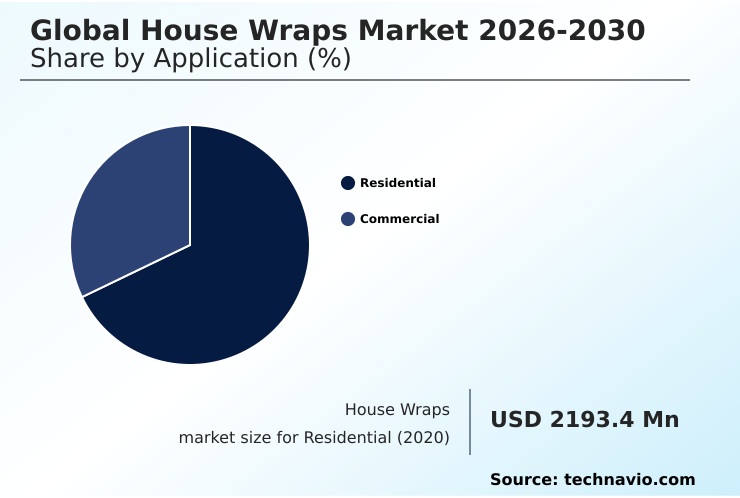
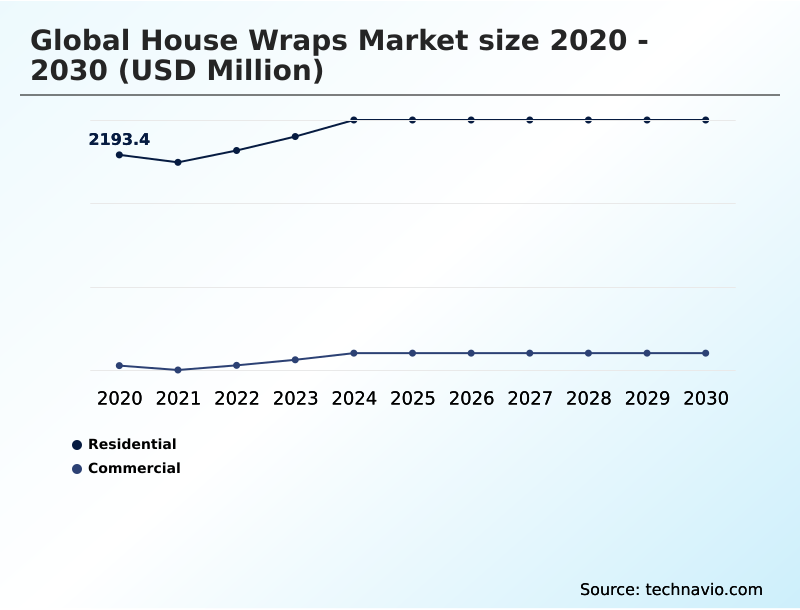
The Residential segment was valued at USD 2.38 billion in 2024 and showed a gradual increase during the forecast period.
Regional Analysis
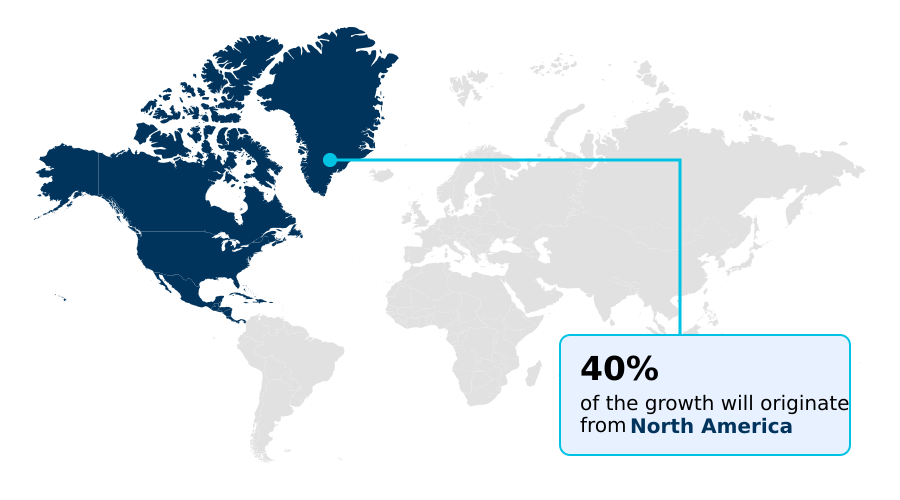
North America is estimated to contribute 39.5% to the growth of the global market during the forecast period.Technavio’s analysts have elaborately explained the regional trends and drivers that shape the market during the forecast period.
See How House Wraps Market Demand is Rising in North America Get Free Sample
The geographic landscape is marked by divergent growth drivers. North America, which accounts for 39.5% of incremental growth, is driven by stringent building codes and the retrofitting of existing structures to improve thermal performance.
Here, vapor-permeable membranes with advanced micro-porous coatings are standard. In contrast, APAC, representing over 24% of new growth, is fueled by large-scale new construction where demand for cost-effective yet durable wraps is high.
This has spurred adoption of specialized products like flame-retardant membranes in high-density urban projects.
Across all regions, there is a trend toward solutions that offer balanced perm ratings suitable for local climates, such as radiant barrier integration in warmer zones, reflecting a global move toward a more resilient and sustainable circular building economy.
Market Dynamics
Our researchers analyzed the data with 2025 as the base year, along with the key drivers, trends, and challenges. A holistic analysis of drivers will help companies refine their marketing strategies to gain a competitive advantage.
- Navigating the complexities of the global house wraps market 2026-2030 requires careful consideration of product specifications. For instance, builders must weigh the pros and cons in the self-adhered vs mechanically fastened wrap debate, where self-adhered options offer superior airtightness but at a higher initial cost.
- Critical air barrier vs vapor barrier considerations dictate product choice based on climate zone to prevent interstitial condensation. For projects in coastal regions, selecting the right house wrap for humid climates is essential for long-term durability. Similarly, specifying a drainable house wrap for stucco applications is non-negotiable to manage bulk water.
- The technical details, such as conforming to non-perforated wrap perm rating standards, are vital for compliance and performance. Choosing a high-performance system can lead to energy savings that are over 15% greater annually compared to basic wraps, justifying the upfront investment through lower operational costs over the building's lifecycle.
- These decisions reflect a market shift where long-term value and resilience are prioritized.
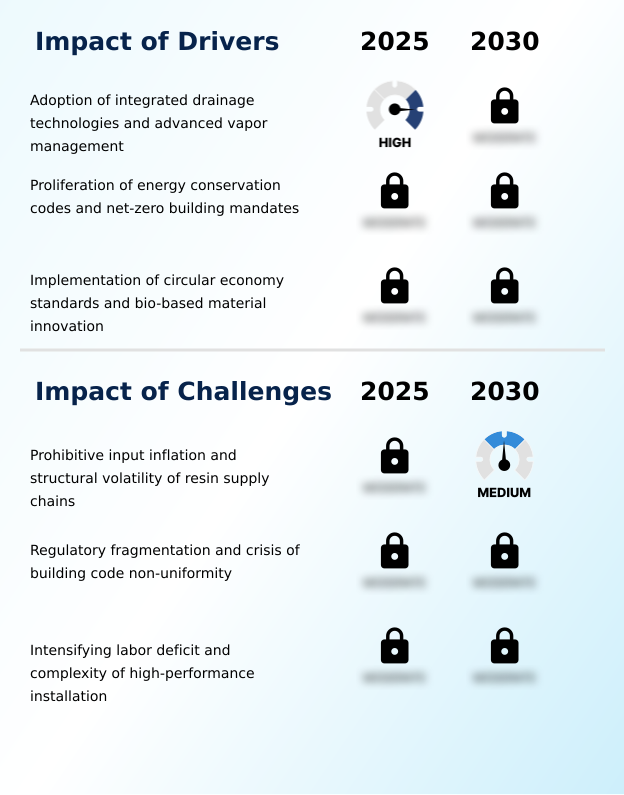
What are the key market drivers leading to the rise in the adoption of House Wraps Industry?
- The adoption of integrated drainage technologies and advanced vapor management systems is a key driver for growth in the house wraps market.
- Regulatory mandates are a primary market driver, with the international energy conservation code pushing for stricter airtightness requirements that necessitate high-performance materials.
- The emphasis on sustainability is also critical, spurring the creation of digital product passports to track material lifecycle and promote an embodied carbon reduction. This has accelerated the use of advanced high-density polyethylene and polypropylene films.
- Furthermore, the demand for enhanced building resilience against extreme weather fuels the adoption of integrated drainage systems that offer superior bulk water resistance and manage wind-driven rain more effectively than older technologies.
- Systems with engineered drainage gaps have demonstrated over 96% efficiency in water removal, ensuring long-term durability and allowing for consistent vapor permeability.
What are the market trends shaping the House Wraps Industry?
- The market is undergoing a structural transition toward high-performance non-perforated membranes. This shift is driven by stricter requirements for air and moisture control in modern building envelopes.
- A primary trend is the structural shift from traditional mechanically fastened rolls to integrated solutions like liquid-applied air barriers and self-adhered membranes. This evolution is driven by the need to eliminate thermal bridging and reduce air infiltration, with advanced systems improving airtightness by up to 50% over conventional methods.
- The market is also seeing broader adoption of water-resistive barrier sheathing, which streamlines construction by combining structural support and protection. These high-performance non-perforated membranes offer superior tear strength and low-temperature flexibility, ensuring envelope integrity during and after construction. The use of specialized liquid flashing at penetrations further enhances system reliability, reducing installation errors by over 25% in complex architectural designs.
What challenges does the House Wraps Industry face during its growth?
- Prohibitive input inflation and the structural volatility of resin supply chains represent a key challenge impacting the house wraps market's growth.
- The market faces significant challenges from the volatile cost of polyolefin fabrics and the structural instability of resin supply chains, which can increase input prices by over 20% in a single quarter. This financial pressure is compounded by the technical demands of ensuring proper moisture management and preventing interstitial condensation.
- The reliability of these systems is verified through rigorous blower-door testing and performance standards like ASTM E2178 and ASTM E2273 testing. The competition from alternatives like high-performance rigid foam and traditional asphalt felt adds another layer of complexity. This gap between material sophistication and installation proficiency remains a critical restraint, alongside competition from these alternatives.
Exclusive Technavio Analysis on Customer Landscape
The house wraps market forecasting report includes the adoption lifecycle of the market, covering from the innovator’s stage to the laggard’s stage. It focuses on adoption rates in different regions based on penetration. Furthermore, the house wraps market report also includes key purchase criteria and drivers of price sensitivity to help companies evaluate and develop their market growth analysis strategies.
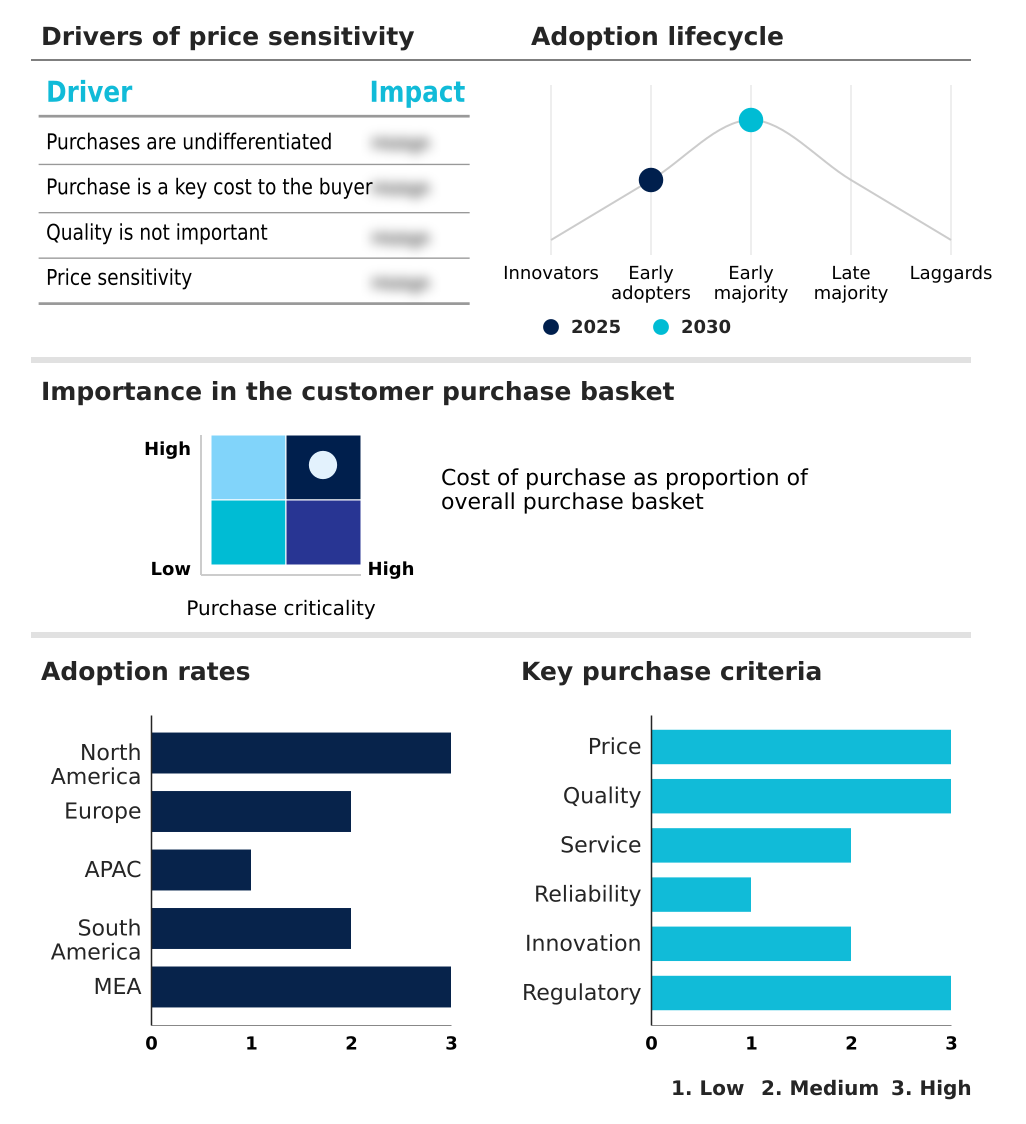
Customer Landscape of House Wraps Industry
Competitive Landscape
Companies are implementing various strategies, such as strategic alliances, house wraps market forecast, partnerships, mergers and acquisitions, geographical expansion, and product/service launches, to enhance their presence in the industry.
Benjamin Obdyke Inc. - Offerings include specialized weather-resistive barriers and integrated building envelope systems designed to improve structural durability, moisture management, and energy efficiency in modern construction projects.
The industry research and growth report includes detailed analyses of the competitive landscape of the market and information about key companies, including:
- Benjamin Obdyke Inc.
- CertainTeed
- CS Fabric International Corp.
- DuPont de Nemours Inc.
- GAF Materials LLC
- GCP Applied Technologies Inc.
- Henry Co.
- HomeGuard Building Products
- IKO Plc
- Intertape Polymer Group Inc.
- Kimberly Clark Corp.
- Kingspan Group Plc
- Owens Corning
- OX Engineered Products LLC
- Polyguard
- Protecto Wrap Co.
- R.H. Tamlyn and Sons LP
- Rmax
- TYPAR
Qualitative and quantitative analysis of companies has been conducted to help clients understand the wider business environment as well as the strengths and weaknesses of key industry players. Data is qualitatively analyzed to categorize companies as pure play, category-focused, industry-focused, and diversified; it is quantitatively analyzed to categorize companies as dominant, leading, strong, tentative, and weak.
Recent Development and News in House wraps market
- In October 2024, BuildSafe Membranes launched a new line of self-adhered, vapor-permeable house wraps featuring integrated drainage channels for high-humidity coastal regions.
- In January 2025, EcoWrap Solutions announced a strategic partnership with a leading polymer science institute to accelerate the development of a fully bio-based, compostable house wrap film.
- In April 2025, ConstructShield Technologies received full certification under the updated California Title 24 energy code for its portfolio of non-perforated air barrier systems.
- In May 2025, TYPAR Construction Products announced its high-performance building wraps with integrated drainage gaps achieved over 96% drainage efficiency in ASTM E2273 testing.
Dive into Technavio’s robust research methodology, blending expert interviews, extensive data synthesis, and validated models for unparalleled House Wraps Market insights. See full methodology.
| Market Scope | |
|---|---|
| Page number | 292 |
| Base year | 2025 |
| Historic period | 2020-2024 |
| Forecast period | 2026-2030 |
| Growth momentum & CAGR | Accelerate at a CAGR of 4.6% |
| Market growth 2026-2030 | USD 927.6 million |
| Market structure | Fragmented |
| YoY growth 2025-2026(%) | 4.4% |
| Key countries | US, Canada, Mexico, Germany, France, UK, Italy, Russia, Spain, China, India, Japan, South Korea, Australia, Indonesia, Brazil, Argentina, Chile, Saudi Arabia, UAE, South Africa, Turkey and Egypt |
| Competitive landscape | Leading Companies, Market Positioning of Companies, Competitive Strategies, and Industry Risks |
Research Analyst Overview
- The house wraps market is maturing from a commodity-driven space to one defined by specialized material science and system-level performance. The strategic pivot toward integrated drainage systems and self-adhered membranes reflects a direct response to stricter building codes and the financial risks of moisture-related structural failure.
- At the boardroom level, this translates to increased R&D investment in advanced spun-bonded polyolefin and bio-based polymers to gain a competitive edge. Manufacturers are navigating a complex landscape where the performance of a weather-resistive barrier (WRB) must be verifiable through methods like ASTM E2273 testing.
- The proliferation of digital product passports and demand for materials supporting LEED certification and BREEAM certification are forcing a re-evaluation of supply chains to prioritize sustainability and transparency. The move away from mechanically fastened rolls and traditional asphalt felt toward high-performance rigid foam and liquid-applied air barriers underscores this evolution.
- For instance, advanced non-perforated membranes can reduce air leakage by more than 50% compared to conventional perforated wraps, a metric that directly influences product strategy and marketing.
What are the Key Data Covered in this House Wraps Market Research and Growth Report?
-
What is the expected growth of the House Wraps Market between 2026 and 2030?
-
USD 927.6 million, at a CAGR of 4.6%
-
-
What segmentation does the market report cover?
-
The report is segmented by Application (Residential, and Commercial), Type (Non-perforated house wraps, and Perforated house wraps), Product Type (Water-resistive barrier, Air barrier, Moisture barrier, Radiant barrier, and Others) and Geography (North America, Europe, APAC, South America, Middle East and Africa)
-
-
Which regions are analyzed in the report?
-
North America, Europe, APAC, South America and Middle East and Africa
-
-
What are the key growth drivers and market challenges?
-
Adoption of integrated drainage technologies and advanced vapor management, Prohibitive input inflation and structural volatility of resin supply chains
-
-
Who are the major players in the House Wraps Market?
-
Benjamin Obdyke Inc., CertainTeed, CS Fabric International Corp., DuPont de Nemours Inc., GAF Materials LLC, GCP Applied Technologies Inc., Henry Co., HomeGuard Building Products, IKO Plc, Intertape Polymer Group Inc., Kimberly Clark Corp., Kingspan Group Plc, Owens Corning, OX Engineered Products LLC, Polyguard, Protecto Wrap Co., R.H. Tamlyn and Sons LP, Rmax and TYPAR
-
Market Research Insights
- Market dynamics are increasingly shaped by the need for enhanced building envelope integrity and operational efficiency. The adoption of advanced wraps reduces air infiltration by up to 40% compared to traditional materials, directly impacting HVAC efficiency. Systems featuring integrated drainage demonstrate over 96% effectiveness in bulk water resistance tests, mitigating risks of structural rot and costly remediation.
- This shift toward high-performance solutions addresses stringent airtightness requirements and the demand for better moisture management. Contractors prioritize solutions that reduce callbacks, with self-adhered products improving installation consistency. As blower-door testing becomes standard for verifying thermal performance, the reliability of the air barrier system is a primary factor in material selection, influencing both new construction and retrofitting projects.
We can help! Our analysts can customize this house wraps market research report to meet your requirements.
 RIA -
RIA - 
