
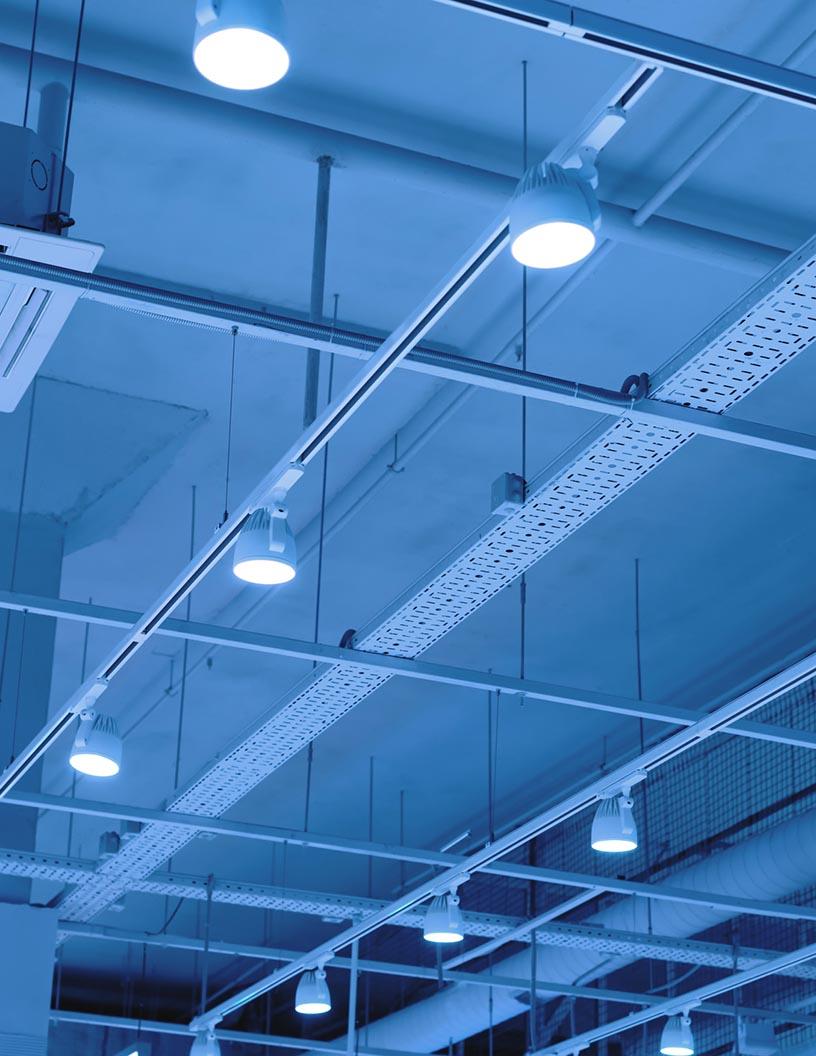


Industrial And Commercial LED Lighting Market Size 2025-2029
The industrial and commercial LED lighting market size is forecast to increase by USD 17.99 billion at a CAGR of 8.5% between 2024 and 2029.
- The market is experiencing significant growth, driven by the declining manufacturing costs of LED lighting and the increasing adoption of intelligent lighting systems. The global shift towards energy-efficient solutions and the implementation of regulatory norms promoting energy savings are key factors fueling market expansion. Intelligent lighting systems, which offer features such as occupancy sensing, dimming, and remote control, are gaining traction due to their ability to reduce energy consumption and improve operational efficiency. Another trend is the growing traction for intelligent lighting systems and smart lighting, which offer energy savings, improved functionality, and enhanced user experience. The integration of semiconductor technology has further accelerated the development of more efficient and durable lighting solutions. However, the market faces challenges, including the limited thermal tolerance of LEDs installed in industrial facilities, which can impact their lifespan and performance.
- Companies seeking to capitalize on market opportunities should focus on developing advanced thermal management solutions and offering customized lighting systems tailored to specific industrial applications. Additionally, strategic partnerships, collaborations, mergers, and acquisitions can help market players expand their reach and enhance their product offerings. Overall, the market presents significant growth potential for companies able to address the challenges and capitalize on the trends driving market expansion.
What will be the Size of the Industrial and Commercial LED Lighting Market during the forecast period?

- The market is experiencing significant growth due to the widespread adoption of energy-efficient lighting solutions. Traditional lighting technologies, such as incandescent light bulbs and Compact Fluorescent Lamps (CFLs), are being replaced by Light-Emitting Diodes (LEDs) in various sectors. LED lighting offers numerous advantages, including a longer lifespan, lower power consumption, and improved light quality. LED lamps and luminaires are increasingly being used in commercial offices, hospitality & leisure, retail outlets, healthcare facilities, factories, warehouses, and other commercial spaces. The market is driven by various factors, including the need for sustainable design, energy efficiency, and the availability of LED retrofit kits for existing lighting infrastructure. Moreover, traditional incandescent light bulbs, which consume large amounts of electrical energy and produce substantial heat energy, are being replaced by LED lamps.
- The LED lighting market encompasses a wide range of applications, including backlighting, indoor and outdoor lighting, and smart lighting solutions. LED fixtures are available in various forms, including semiconductor-based lamps and integrated LED luminaires. The market is served by direct sales, wholesalers, architects, integrators, and other stakeholders. The lighting industry has evolved significantly with innovations like the incandescent light bulb being replaced by more energy-efficient solutions such as light-emitting diode (LED) fixtures and compact fluorescent lamps (CFL). The rise of organic light-emitting diodes (OLEDs) and smart LED solutions has paved the way for a new era in lighting technology, with smarter, more energy-efficient systems for both indoor and outdoor lighting. Retrofit projects are increasingly popular, helping businesses and homeowners upgrade to energy-efficient lighting while minimizing environmental impact. These advancements in lighting not only meet the growing market demand for eco-friendly, durable luminaries but also improve the overall quality of outdoor fixtures and indoor lighting systems.
How is the Industrial And Commercial LED Lighting Industry segmented?
The industrial and commercial LED lighting industry research report provides comprehensive data (region-wise segment analysis), with forecasts and estimates in "USD million" for the period 2025-2029, as well as historical data from 2019-2023 for the following segments.
- Product Type
- LED lamps
- LED fixtures
- Application
- Indoor
- Outdoor
- End-user
- Commercial
- Industrial
- Geography
- Europe
- France
- Germany
- Italy
- The Netherlands
- UK
- APAC
- China
- India
- Japan
- North America
- US
- Canada
- Middle East and Africa
- South America
- Europe
By Product Type Insights
The LED lamps segment is estimated to witness significant growth during the forecast period. The market is experiencing significant growth due to the increasing adoption of energy-efficient lighting solutions. LED lamps, primarily used for decorative lighting in retail outlets, restaurants, hotels, and churches, accounted for the largest and fastest-growing product segment. In 2024, LED lamps emerged as the largest and fastest-growing product segment, driven by the declining demand for traditional lighting in industries and commercial establishments. LED lamps are widely used in indoor spaces such as retail outlets, commercial offices, hospitals, and hotels for decorative purposes. The introduction of smart LED lighting systems has further fueled the demand for LED lamps in regions like North America and Europe. Regulatory initiatives limiting the use of traditional lighting and promoting energy-efficient alternatives are also contributing to the market's expansion.
LED chips, fixtures, and components are essential components of LED lamps, and their advanced technology offers superior energy efficiency, longer lifespan, and lower maintenance costs compared to incandescent, halogen, and compact fluorescent lamps. The market for industrial and commercial LED lighting is expected to continue its growth trajectory, driven by the increasing focus on energy efficiency, government regulations, and the availability of incentives such as tax credits, subsidies, and rebates.

Get a glance at the market report of share of various segments Request Free Sample
The LED lamps segment was valued at USD 16.29 billion in 2019 and showed a gradual increase during the forecast period.
Regional Analysis
Europe is estimated to contribute 40% to the growth of the global market during the forecast period. Technavio's analysts have elaborately explained the regional trends and drivers that shape the market during the forecast period.

For more insights on the market size of various regions, Request Free Sample
The European market is driven by the presence of numerous manufacturing facilities in sectors such as automotive, power, construction, and mining. For instance, Volkswagen AG's new production factory in Poland uses LED lights from the Zumtobel Group. European countries are implementing initiatives to enhance energy efficiency, like Ireland's Green Line Infrastructure Upgrade Project, which extends LUAS platforms with LED lighting. The industrial and commercial sectors in Europe are transitioning from traditional lighting sources like incandescent bulbs and compact fluorescent lamps to energy-efficient LED solutions. LED chips, fixtures, and components are integral to this shift. LED lighting offers several advantages, including longer shelf life, energy savings, and reduced heat emission.
LED backlighting and organic light-emitting diodes are popular in displays and indoor lighting. LED fixtures are used extensively in outdoor lighting, industrial lighting, commercial lighting, and smart lighting systems. Energy consumption is reduced through retrofit kits and the use of LED retail outlets. The European market is expected to continue growing due to tax credits, subsidies, and rebates for energy-efficient lighting solutions. LED solutions offer superior color rendering index and are used in healthcare facilities, factories, warehouses, offices, retail spaces, and outdoor lighting. SiC power semiconductors and smart lighting controls are integral to the functionality of LED fixtures.
Market Dynamics
Our researchers analyzed the data with 2024 as the base year, along with the key drivers, trends, and challenges. A holistic analysis of drivers will help companies refine their marketing strategies to gain a competitive advantage.
What are the key market drivers leading to the rise in the adoption of Industrial And Commercial LED Lighting Industry?
- Declining manufacturing cost of LED is the key driver of the market. The manufacturing cost of Industrial and Commercial LED lighting has witnessed a significant decrease over the last decade, a trend that is expected to continue during the forecast period. This decline can be primarily attributed to the decreasing Average Selling Price (ASP) of chips and components used in the manufacturing process of LED devices. The reduction in the manufacturing cost of LEDs is also leading to a decrease in the initial installation cost of LED lamps and fixtures. This cost reduction is accelerating the adoption of new LED lamps and fixtures across various applications.
- The decline in the manufacturing cost of LEDs is due in part to government subsidies for the purchase of semiconductor equipment, such as metal-organic chemical vapor deposition (MOCVD), which is used for manufacturing LEDs. These subsidies have made the production of LEDs more economical, leading to a steady decline in their cost.
What are the market trends shaping the Industrial and Commercial LED Lighting Industry?
- Growing traction for intelligent lighting systems is the upcoming market trend. The digital transformation is propelling the lighting market forward with the emergence of intelligent LED lighting systems and controls. These advanced lighting solutions can adapt to evolving space requirements, particularly in commercial settings such as office buildings. A single controller can manage multiple lights, offering functionalities like dimming, timers, and color-changing capabilities. Smart LED bulbs enhance the room's atmosphere with energy efficiency and customizable color options.
- ControlLED via a hub, these bulbs can be managed through mobile applications and require an internet connection. Integrating sensors and controls, LED lights contribute to energy savings and improved functionality.
What challenges does the Industrial And Commercial LED Lighting Industry face during its growth?
- Limited thermal tolerance of LEDs installed in industrial facilities is a key challenge affecting the industry's growth. The markets face unique challenges due to the high operating temperatures and harsh environments common in these settings. LEDs are less energy-efficient when exposed to extreme temperatures and moisture, which can negatively impact their light output and lifespan.
- Furthermore, LED drivers, which are often external to the lamps, can overheat inside industrial facilities and manufacturing plants, leading to premature failure. This issue arises because the temperature inside these facilities tends to be high, causing the internal temperature of the LED driver to exceed its case temperature (TC) point. Consequently, it is essential to implement effective thermal management strategies to ensure the longevity and optimal performance of LED lighting systems in industrial and commercial applications.
Exclusive Customer Landscape
The industrial and commercial LED lighting market forecasting report includes the adoption lifecycle of the market, covering from the innovator's stage to the laggard's stage. It focuses on adoption rates in different regions based on penetration. Furthermore, the industrial and commercial LED lighting market report also includes key purchase criteria and drivers of price sensitivity to help companies evaluate and develop their market growth analysis strategies.

Customer Landscape
Key Companies & Market Insights
Companies are implementing various strategies, such as strategic alliances, industrial and commercial LED lighting market forecast, partnerships, mergers and acquisitions, geographical expansion, and product/service launches, to enhance their presence in the industry.
Advanced Lighting Technologies LLC: The company offers industrial and commercial LED lighting such as architectural lighting and industrial lighting.
The industry research and growth report includes detailed analyses of the competitive landscape of the market and information about key companies, including:
- Acuity Brands Inc.
- Cree LED
- DECO Lighting Inc.
- Dialight PLC
- Eaton Corp. plc
- Emerson Electric Co.
- General Electric Co.
- Halonix Technologies Pvt Ltd.
- Havells India Ltd.
- Hubbell Inc.
- Koninklijke Philips NV
- OSRAM GmbH
- Panasonic Holdings Corp.
- Savant Systems Inc.
- Signify NV
- Syska LED Lights Pvt. Ltd.
- Toshiba Corp.
- WAC Lighting
- Zumtobel Group AG
Qualitative and quantitative analysis of companies has been conducted to help clients understand the wider business environment as well as the strengths and weaknesses of key industry players. Data is qualitatively analyzed to categorize companies as pure play, category-focused, industry-focused, and diversified; it is quantitatively analyzed to categorize companies as dominant, leading, strong, tentative, and weak.
Research Analyst Overview
The industrial and commercial LED lighting market continues to evolve, driven by the ongoing shift towards energy-efficient solutions and the integration of smart technologies. As businesses seek to reduce energy consumption and operating costs, the demand for LED lighting systems has swelled. LED lighting, which utilizes light-emitting diodes, offers several advantages over traditional lighting technologies such as incandescent and compact fluorescent lamps. LEDs convert electrical energy more efficiently into light energy, with a significantly longer lifespan and lower heat emission. This makes LED lighting an attractive option for various industries, including commercial offices, hospitality & leisure, healthcare, retail outlets, and manufacturing production facilities.
Backlighting applications, such as in digital signage and LCD displays, have also benefited from the advancements in LED technology. Organic light-emitting diodes (OLEDs) have emerged as a promising alternative, offering improved color rendering index and greater flexibility in design. LED components, including LED chips and LED fixtures, have become increasingly sophisticated, enabling better performance and more customizable lighting solutions. The availability of retrofit kits allows businesses to easily upgrade their existing lighting systems, further driving market growth. Indoor and outdoor lighting applications have seen significant uptake of LED technology. Ceiling lights and access fixtures have become more energy-efficient and cost-effective, while smart lighting systems offer additional benefits such as energy savings, improved lighting quality, and enhanced control and automation.
The industrial and commercial LED lighting market is influenced by various factors, including capital budgets, tax credits, subsidies, and rebates. Wholesalers play a crucial role in the distribution and adoption of LED lighting solutions, providing businesses with access to a wide range of products and expertise. Factories, warehouses, and retail spaces have embraced LED lighting due to its energy efficiency and cost savings. LED lighting systems have also gained popularity in sectors such as healthcare facilities, where the importance of proper lighting for patient care and safety is paramount. The ongoing advancements in LED technology, coupled with the growing awareness of energy efficiency and the availability of incentives, are expected to continue driving the industrial and commercial lighting market. As businesses seek to optimize their energy usage and reduce costs, the demand for energy-efficient lighting solutions will remain strong.
|
Market Scope |
|
|
Report Coverage |
Details |
|
Page number |
204 |
|
Base year |
2024 |
|
Historic period |
2019-2023 |
|
Forecast period |
2025-2029 |
|
Growth momentum & CAGR |
Accelerate at a CAGR of 8.5% |
|
Market growth 2025-2029 |
USD 17.99 Billion |
|
Market structure |
Fragmented |
|
YoY growth 2024-2025(%) |
7.1 |
|
Key countries |
US, China, UK, Japan, Germany, India, France, The Netherlands, Canada, and Italy |
|
Competitive landscape |
Leading Companies, Market Positioning of Companies, Competitive Strategies, and Industry Risks |
What are the Key Data Covered in this Industrial And Commercial LED Lighting Market Research and Growth Report?
- CAGR of the Industrial and Commercial LED Lighting industry during the forecast period
- Detailed information on factors that will drive the growth and forecasting between 2025 and 2029
- Precise estimation of the size of the market and its contribution to the industry in focus to the parent market
- Accurate predictions about upcoming growth and trends, and changes in consumer behaviour
- Growth of the market across Europe, APAC, North America, the Middle East and Africa, and South America
- Thorough analysis of the market's competitive landscape and detailed information about companies
- Comprehensive analysis of factors that will challenge the industrial and commercial LED lighting market growth and forecasting
We can help! Our analysts can customize this industrial and commercial LED lighting market research report to meet your requirements.