


Industrial Enzymes Market Size 2026-2030
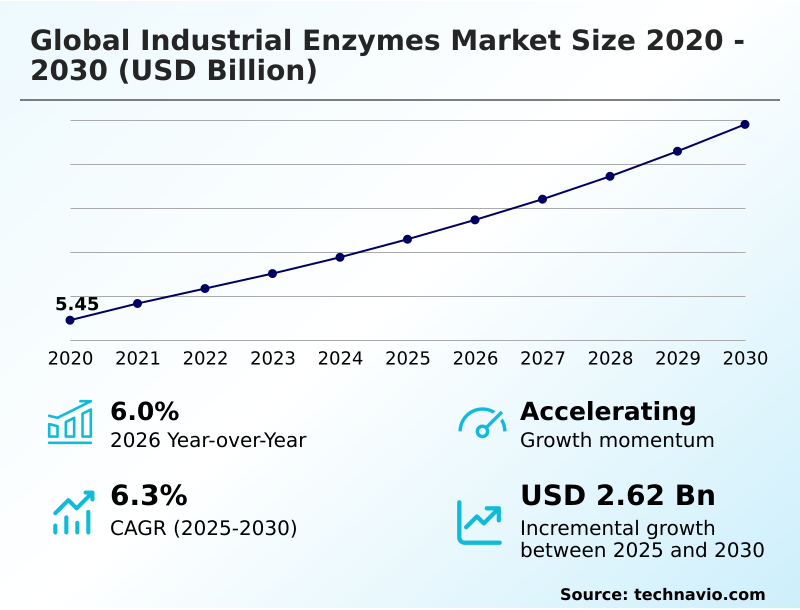
The industrial enzymes market size is valued to increase by USD 2.62 billion, at a CAGR of 6.3% from 2025 to 2030. Rising demand for biofuels and renewable energy sources will drive the industrial enzymes market.
Major Market Trends & Insights
- North America dominated the market and accounted for a 36.2% growth during the forecast period.
- By Application - Food and beverage segment was valued at USD 2.81 billion in 2024
- By Source - Microorganism segment accounted for the largest market revenue share in 2024
Market Size & Forecast
- Market Opportunities: USD 4.46 billion
- Market Future Opportunities: USD 2.62 billion
- CAGR from 2025 to 2030 : 6.3%
Market Summary
- The industrial enzymes market is undergoing a significant transformation, driven by a global shift toward sustainability and green chemistry. These biocatalysts are fundamental to modern manufacturing, enabling industries to reduce their environmental footprint while improving efficiency.
- Applications are diverse, spanning from the production of biofuels through the enzymatic hydrolysis of biomass to the creation of clean-label foods where enzymes replace synthetic additives. In the textile industry, for example, a manufacturer can transition from chemical-based fabric treatments to enzymatic bio-stoning, which not only meets stringent environmental regulations but also reduces water consumption and machinery wear.
- This pivot is supported by continuous advancements in protein engineering and microbial fermentation, which yield more robust and efficient enzymes. However, challenges related to the high sensitivity of enzymes to process conditions and competition from cheaper, established chemical catalysts temper the pace of adoption in some sectors.
- The market's trajectory is firmly tied to balancing these operational realities with the growing regulatory and consumer pressure for cleaner production methods.
What will be the Size of the Industrial Enzymes Market during the forecast period?
Get Key Insights on Market Forecast (PDF) Get Free Sample
How is the Industrial Enzymes Market Segmented?
The industrial enzymes industry research report provides comprehensive data (region-wise segment analysis), with forecasts and estimates in "USD million" for the period 2026-2030, as well as historical data from 2020-2024 for the following segments.
- Application
- Food and beverage
- Detergents
- Animal feed
- Bio fuel
- Others
- Source
- Microorganism
- Animals
- Plants
- Type
- Carbohydrases
- Proteases
- Lipases
- Others
- Geography
- North America
- US
- Canada
- Mexico
- APAC
- China
- Japan
- India
- Europe
- Germany
- UK
- France
- South America
- Brazil
- Argentina
- Middle East and Africa
- South Africa
- UAE
- Saudi Arabia
- Rest of World (ROW)
- North America
By Application Insights
The food and beverage segment is estimated to witness significant growth during the forecast period.
The food and beverage segment is a cornerstone of the industrial enzymes market, driven by consumer demand for clean-label products.
Key biocatalysts like proteases, lipases, and amylases are integral as clean label processing aids for applications ranging from cheese ripening to meat tenderization. These enzymes improve dough handling properties and are crucial for starch liquefaction in sweetener production.
Advanced enzymatic hydrolysis techniques also facilitate juice clarification, enhancing product quality and visual appeal. For instance, optimizing enzyme usage in baking can improve dough consistency by over 15%, reducing waste and ensuring uniform product quality.
This reliance on biological solutions underscores the industry's shift away from synthetic additives toward more natural and efficient manufacturing processes.
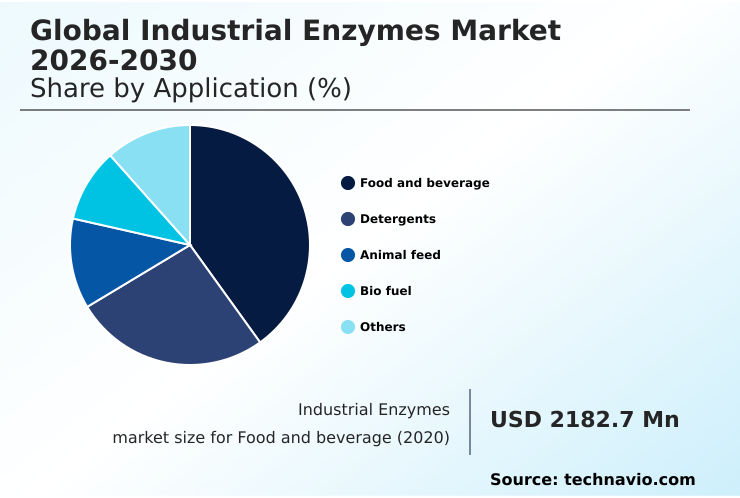
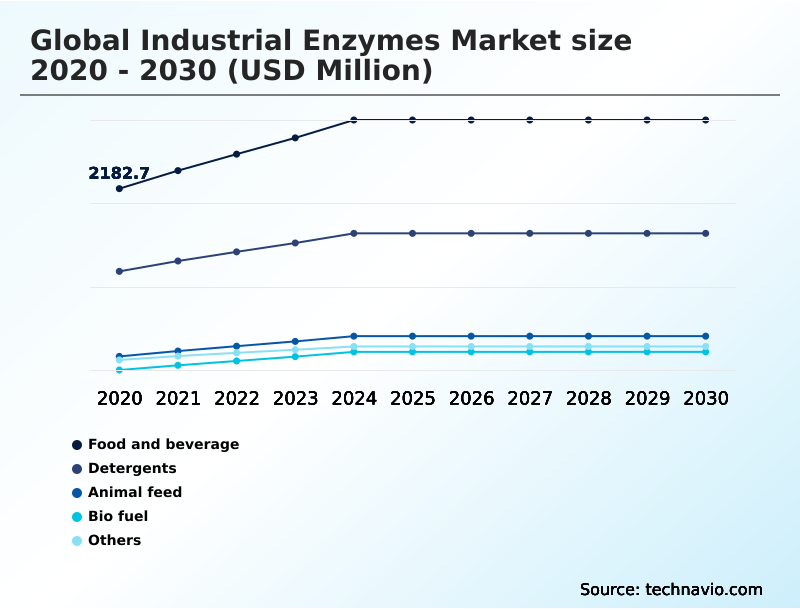
The Food and beverage segment was valued at USD 2.81 billion in 2024 and showed a gradual increase during the forecast period.
Regional Analysis
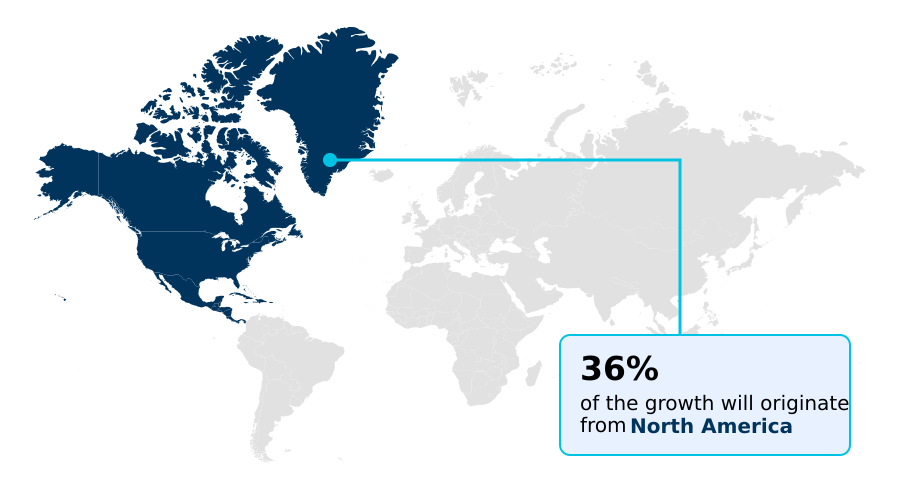
North America is estimated to contribute 36.2% to the growth of the global market during the forecast period.Technavio’s analysts have elaborately explained the regional trends and drivers that shape the market during the forecast period.
See How Industrial Enzymes Market Demand is Rising in North America Get Free Sample
The geographic landscape of the industrial enzymes market is diverse, with regional strengths defining growth trajectories. North America, which accounts for 36.2% of incremental growth, leverages its robust bio-economy infrastructure for biofuel production, heavily relying on microbial fermentation.
The region's focus on a renewable fuel standard drives innovation in enzymatic hydrolysis. In APAC, rapid industrialization makes it the fastest-growing market, with applications in textiles and food processing expanding.
Europe leads in sustainability, where strict regulations promote the use of enzymes to align with green chemistry principles.
Advanced recombinant dna technology and molecular genetics are enabling the development of specialized biocatalysts globally, including those for transesterification in biodiesel and pitch control in paper mills.
Enzymatic esterification is gaining traction for producing specialty chemicals with a lower carbon footprint, and a deep understanding of glycosidic bonds is critical for carbohydrase development.
Market Dynamics
Our researchers analyzed the data with 2025 as the base year, along with the key drivers, trends, and challenges. A holistic analysis of drivers will help companies refine their marketing strategies to gain a competitive advantage.
- The strategic implementation of industrial enzymes is reshaping manufacturing paradigms across multiple sectors. A primary focus is on advancing biofuel production via catalysis, where sophisticated enzyme cocktails are unlocking the potential of lignocellulosic feedstock. Simultaneously, the food industry is heavily invested in enzymatic solutions for plant-based foods, leveraging biotechnology to achieve desirable textures and flavors without synthetic additives.
- This trend toward decreasing chemical use in manufacturing extends to the textile industry, where enzymatic solutions for plant-based proteins are replacing harsh scouring agents. Furthermore, the agricultural sector sees significant benefits, using enzymes in animal nutrition to improve gut health and nutrient absorption.
- In consumer goods, cold water detergent enzyme applications are becoming standard, enabling energy savings without compromising cleaning efficacy. Companies focusing on enzymes for sustainable biofuel manufacturing report efficiency gains over 15% compared to conventional chemical methods, a compelling metric for supply chain and operational planning.
- This advantage is mirrored in other areas, such as plant-based protein texture improvement, textile processing with enzymatic solutions, and enhancing animal feed efficiency through enzymes. The development of enzymes for low-temperature laundry detergents continues to be a key innovation area, aligning with global sustainability goals.
What are the key market drivers leading to the rise in the adoption of Industrial Enzymes Industry?
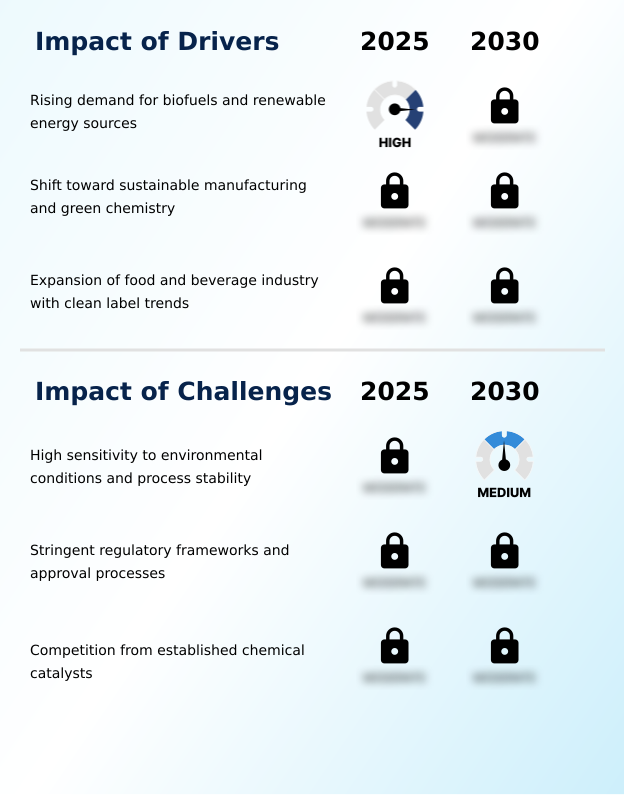
- The increasing global demand for biofuels and other renewable energy sources is a fundamental driver propelling growth in the industrial enzymes market.
- Market growth is fundamentally driven by the global push for sustainability and resource efficiency.
- The demand for biofuels has intensified the need for effective enzymatic hydrolysis of biomass conversion, with cellulases playing a key role in breaking down complex lignocellulosic structures.
- This aligns with a broader industry shift toward green chemistry principles and sustainable manufacturing. Companies adopting enzymatic processes report energy consumption reductions of up to 25% compared to traditional chemical methods.
- The bio-economy infrastructure is expanding to support this transition, governed by regulations like the renewable fuel standard.
- This creates a circular economy alignment, where enzymes are used for applications like pulp bio-bleaching, turning waste streams into valuable resources and minimizing environmental impact.
What are the market trends shaping the Industrial Enzymes Industry?
- Advancements in protein engineering and directed evolution are a key trend, revolutionizing the market by enabling the creation of novel biocatalysts with enhanced performance characteristics.
- Key market trends are centered on technological advancements and expanding applications into sustainable processes. The use of protein engineering and directed evolution is shortening R&D cycles for new biocatalysts by up to 30%, enabling the creation of enzymes with highly specific functions.
- In agriculture, the focus on antibiotic-free animal husbandry is driving the adoption of enzymes for their nutraceutical benefits, improving the feed conversion ratio and breaking down anti-nutritional factors. The textile industry is undergoing a green transformation with enzymatic bio-stoning, bio-polishing, dehairing, and degreasing techniques, which provide clear fabric care benefits.
- These processes can reduce water consumption by over 60% compared to traditional chemical methods, highlighting a significant operational and environmental advantage.
What challenges does the Industrial Enzymes Industry face during its growth?
- The inherent sensitivity of enzymes to environmental conditions, such as temperature and pH, presents a significant challenge to their process stability and broader industrial adoption.
- Navigating operational and regulatory complexities remains a primary challenge. The inherent sensitivity of enzymes limits their catalytic activity and substrate specificity, necessitating precise process controls that can increase operational costs by up to 20%. While protein engineering creates extremophiles, including psychrophilic enzymes and thermostable variants, their development is resource-intensive.
- The stability of peptide bonds under harsh industrial conditions is a constant focus of R&D. Furthermore, competition from established chemical catalysts and stringent regulatory frameworks for GMO-derived enzymes create significant hurdles. The approval process for a new enzyme can take over three years longer than for non-GMO alternatives, impacting market entry.
- These factors challenge the broader adoption of enzymatic solutions in applications requiring robust cold-water performance, such as enzymatic deinking or wastewater treatment.
Exclusive Technavio Analysis on Customer Landscape
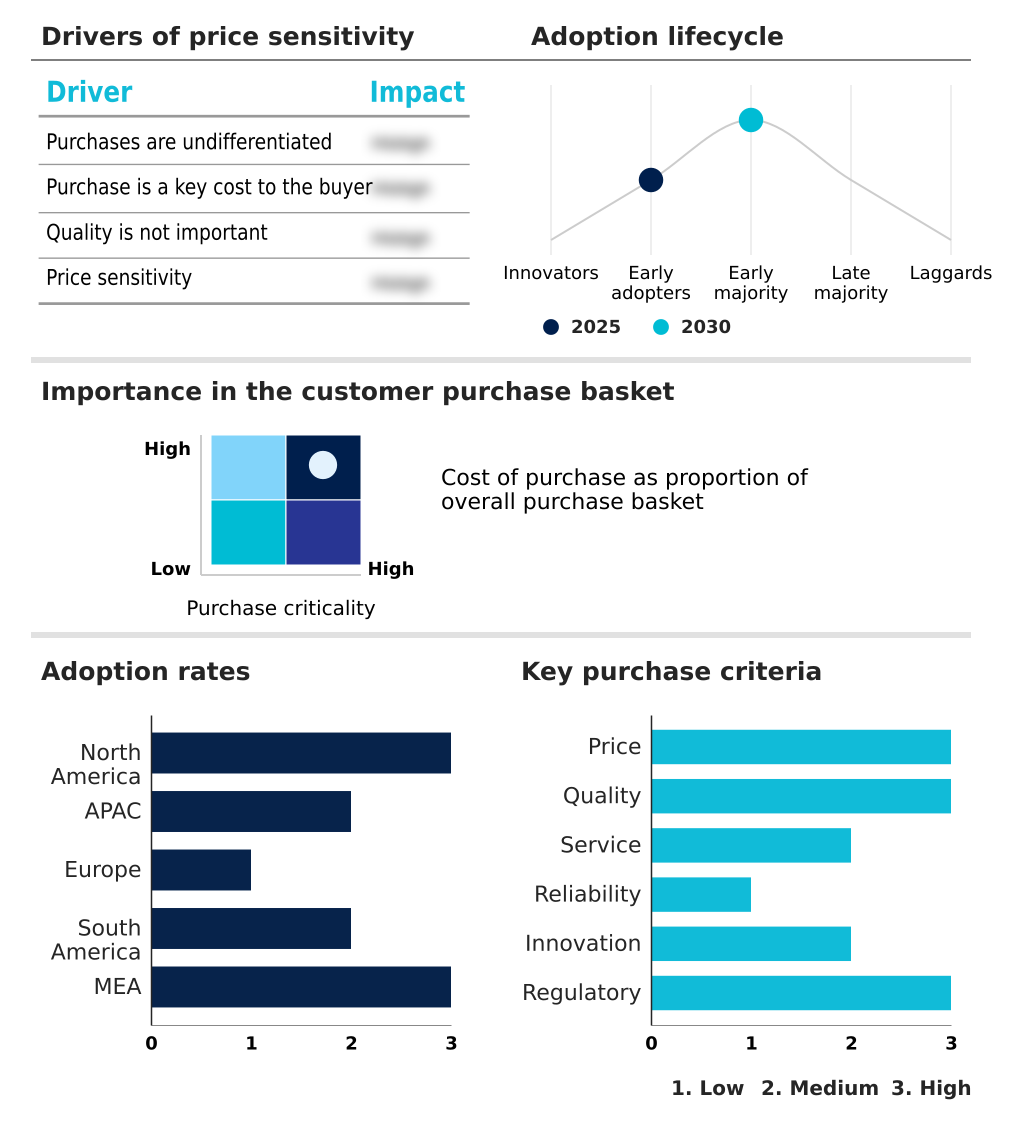
The industrial enzymes market forecasting report includes the adoption lifecycle of the market, covering from the innovator’s stage to the laggard’s stage. It focuses on adoption rates in different regions based on penetration. Furthermore, the industrial enzymes market report also includes key purchase criteria and drivers of price sensitivity to help companies evaluate and develop their market growth analysis strategies.
Customer Landscape of Industrial Enzymes Industry
Competitive Landscape
Companies are implementing various strategies, such as strategic alliances, industrial enzymes market forecast, partnerships, mergers and acquisitions, geographical expansion, and product/service launches, to enhance their presence in the industry.
Advanced Enzyme Technologies Ltd. - Key offerings include advanced biocatalytic solutions that enhance production efficiency and sustainability across food, feed, and industrial manufacturing sectors.
The industry research and growth report includes detailed analyses of the competitive landscape of the market and information about key companies, including:
- Advanced Enzyme Technologies Ltd.
- Amano Enzyme Inc.
- Associated British Foods Plc
- Aumgene Biosciences
- BASF SE
- Codexis Inc.
- DSM Firmenich AG
- DuPont de Nemours Inc.
- Enzymatic Deinking Technologies LLC
- F. Hoffmann La Roche Ltd.
- Jiangsu Boli Bioproducts Co. Ltd.
- Kerry Group Plc
- Merck KGaA
- Nature BioScience Pvt. Ltd.
- Neogen Corp.
- Novozymes AS
- Novus International Inc.
- The Soufflet Group
- Thermo Fisher Scientific Inc.
Qualitative and quantitative analysis of companies has been conducted to help clients understand the wider business environment as well as the strengths and weaknesses of key industry players. Data is qualitatively analyzed to categorize companies as pure play, category-focused, industry-focused, and diversified; it is quantitatively analyzed to categorize companies as dominant, leading, strong, tentative, and weak.
Recent Development and News in Industrial enzymes market
- In September, 2024, DSM-Firmenich AG announced positive trial results for its newest phytase generation, demonstrating significantly improved phosphorus release in poultry diets, which supports optimized feed formulations.
- In December, 2024, Novonesis entered a strategic partnership with a major bioenergy producer to deploy a new cellulase enzyme blend aimed at increasing the yield of sustainable aviation fuel (SAF) from agricultural waste.
- In January, 2025, Codexis Inc. revealed a strategic collaboration to deploy a newly engineered ligase enzyme, streamlining the manufacturing process for RNA-based therapeutics.
- In May, 2025, Novonesis launched an enzymatic solution leveraging a protein deamidase enzyme to improve foam quality, texture, and protein solubility in plant-based beverages for barista-style products.
Dive into Technavio’s robust research methodology, blending expert interviews, extensive data synthesis, and validated models for unparalleled Industrial Enzymes Market insights. See full methodology.
| Market Scope | |
|---|---|
| Page number | 310 |
| Base year | 2025 |
| Historic period | 2020-2024 |
| Forecast period | 2026-2030 |
| Growth momentum & CAGR | Accelerate at a CAGR of 6.3% |
| Market growth 2026-2030 | USD 2616.4 million |
| Market structure | Fragmented |
| YoY growth 2025-2026(%) | 6.0% |
| Key countries | US, Canada, Mexico, China, Japan, India, South Korea, Australia, Indonesia, Germany, UK, France, Italy, Spain, The Netherlands, Brazil, Argentina, Chile, South Africa, UAE, Saudi Arabia, Egypt and Morocco |
| Competitive landscape | Leading Companies, Market Positioning of Companies, Competitive Strategies, and Industry Risks |
Research Analyst Overview
- The industrial enzymes market is defined by rapid innovation in biotechnology, fundamentally altering industrial processes. The core of this evolution lies in protein engineering and directed evolution, which allow for the creation of novel biocatalysts with unparalleled specificity. For boardroom consideration, strategic investment in proprietary recombinant DNA technology is paramount, as it provides a distinct competitive advantage.
- Firms leveraging these techniques to develop thermostable variants or extremophiles can capture high-value applications where standard enzymes fail. For instance, businesses that master directed evolution have demonstrated a 40% reduction in development timelines for new enzymes. This acceleration in R&D, focused on enhancing catalytic activity and substrate specificity, is critical.
- Key processes like microbial fermentation, enzymatic hydrolysis, biomass conversion, and starch liquefaction are being continuously optimized. The development of advanced cellulases, amylases, proteases, and lipases is expanding the application scope, from biofuel production using lignocellulosic structures to specialized uses in food and detergents. This technological momentum is reshaping what is possible in industrial manufacturing.
What are the Key Data Covered in this Industrial Enzymes Market Research and Growth Report?
-
What is the expected growth of the Industrial Enzymes Market between 2026 and 2030?
-
USD 2.62 billion, at a CAGR of 6.3%
-
-
What segmentation does the market report cover?
-
The report is segmented by Application (Food and beverage, Detergents, Animal feed, Bio fuel, and Others), Source (Microorganism, Animals, and Plants), Type (Carbohydrases, Proteases, Lipases, and Others) and Geography (North America, APAC, Europe, South America, Middle East and Africa)
-
-
Which regions are analyzed in the report?
-
North America, APAC, Europe, South America and Middle East and Africa
-
-
What are the key growth drivers and market challenges?
-
Rising demand for biofuels and renewable energy sources, High sensitivity to environmental conditions and process stability
-
-
Who are the major players in the Industrial Enzymes Market?
-
Advanced Enzyme Technologies Ltd., Amano Enzyme Inc., Associated British Foods Plc, Aumgene Biosciences, BASF SE, Codexis Inc., DSM Firmenich AG, DuPont de Nemours Inc., Enzymatic Deinking Technologies LLC, F. Hoffmann La Roche Ltd., Jiangsu Boli Bioproducts Co. Ltd., Kerry Group Plc, Merck KGaA, Nature BioScience Pvt. Ltd., Neogen Corp., Novozymes AS, Novus International Inc., The Soufflet Group and Thermo Fisher Scientific Inc.
-
Market Research Insights
- The industrial enzymes market is shaped by a decisive move toward sustainable manufacturing and antibiotic-free animal husbandry. The adoption of enzymes as a clean label processing aid aligns with consumer demand for natural ingredients, with some food producers reporting a 30% increase in product preference scores after reformulating.
- In animal nutrition, the use of enzymes for nutraceutical benefits improves the feed conversion ratio by over 5%, reducing costs and environmental impact. This shift is a key component of circular economy alignment, where biological processes replace chemical ones.
- For instance, the application of specific enzymes for active pharmaceutical ingredient synthesis can reduce hazardous waste by up to 70% compared to traditional chemical routes, showcasing the broad impact of these biocatalysts on operational efficiency and regulatory compliance.
We can help! Our analysts can customize this industrial enzymes market research report to meet your requirements.
 RIA -
RIA - 
