


Land Based Smart Weapons Market Analysis North America, APAC, Europe, Middle East and Africa, South America - US, China, Germany, France, UK - Size and Forecast 2024-2028

Land Based Smart Weapons Market Analysis North America, APAC, Europe, Middle East and Africa, South America - US, China, Germany, France, UK - Size and Forecast 2024-2028

Published: Jul 2024 140 Pages SKU: IRTNTR74112

Market Overview at a Glance

$2.71 B
Market Opportunity
8.51%
CAGR
7.67
YoY growth 2023-2024(%)

Land Based Smart Weapons Market Size 2024-2028

The land based smart weapons market size is forecast to increase by USD 2.71 billion, at a CAGR of 8.51% between 2023 and 2028.

  • The market is witnessing significant growth due to several key factors. The development and procurement of advanced technologies are driving market growth as militaries worldwide invest in intelligent weapons systems to enhance their operational capabilities. Another trend influencing market growth is the increasing digitization of battlefields, which necessitates the use of smart weapons for precise and effective targeting. The integration of AI, machine learning, and sensor technologies in these weapons systems enables higher target accuracy and mission success rates, reducing collateral damage and increasing the effectiveness of precision strikes. Strict regulatory norms are also playing a role in market growth as governments prioritize the safety and security of their troops and civilians, leading to increased demand for smart weapons that minimize collateral damage.

What will be the Size of the Land Based Smart Weapons Market During the Forecast Period?
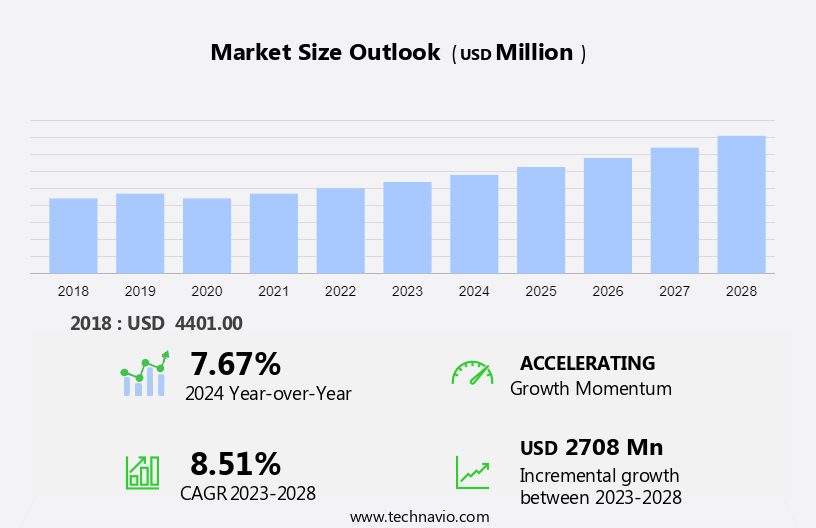
Land Based Smart Weapons Market Size

 Request Free Sample

  • The land-based smart weapons market encompasses the production and deployment of advanced weapon systems designed to enhance operational capabilities and minimize civilian casualties. These weapons, which include precision missiles and munitions, leverage sensor technologies to ensure target accuracy and mission success rates. The market's growth is driven by the increasing demand for conventional weapons with enhanced capabilities to counter evolving threats.
  • Sensor technologies continue to advance, enabling more precise strikes and improved defense systems. Regulations play a significant role in shaping the market, ensuring the ethical use of these advanced weapons. The market's size is substantial, with continuous investment in research and development to maintain a technological edge. Platforms such as artillery, multiple launch rocket systems, and surface-to-air missiles are key areas of focus within the land-based smart weapons market.

How is this Land Based Smart Weapons Industry segmented and which is the largest segment?

The land based smart weapons industry research report provides comprehensive data (region-wise segment analysis), with forecasts and estimates in "USD billion" for the period 2024-2028, as well as historical data from 2018-2022 for the following segments.

  • Product
    • Missiles
    • Ammunition
    • Others
  • Geography
    • North America
      • US
    • APAC
      • China
    • Europe
      • Germany
      • UK
      • France
    • Middle East and Africa
    • South America

By Product Insights

  • The missiles segment is estimated to witness significant growth during the forecast period.

The market is primarily driven by the missiles segment due to the increasing demand for advanced weapon systems in modern warfare. Technological advancements, such as radio-frequency identification (RFID) technology, are used In the production of smart land-based missiles, enhancing their precision and operational capabilities. However, the high cost of development, maintenance, and technology obsolescence pose challenges to market growth. Militaries worldwide are investing in land-based smart weapons to counteract maritime threats and enhance their defense systems. The market is expected to experience growth due to the increasing pressure to minimize civilian casualties and the need for conventional weapons to be replaced with more advanced systems. Navies and air forces are also integrating smart anti-airfield weapons into their arsenals to counteract adversaries' threats.
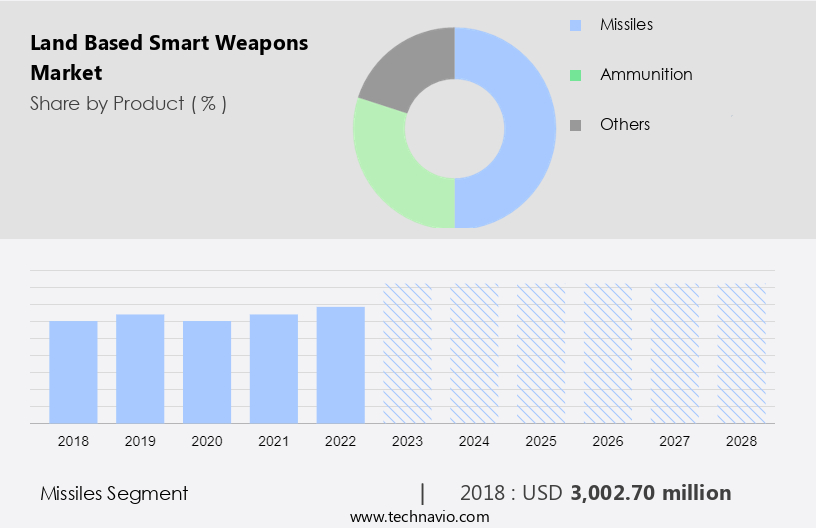
Land Based Smart Weapons Market Size

Get a glance at the Land Based Smart Weapons Industry report of share of various segments Request Free Sample

The missiles segment was valued at USD 3 billion in 2018 and showed a gradual increase during the forecast period.

Regional Analysis

  • APAC is estimated to contribute 39% to the growth of the global market during the forecast period.

Technavio's analysts have elaborately explained the regional trends and drivers that shape the market during the forecast period.
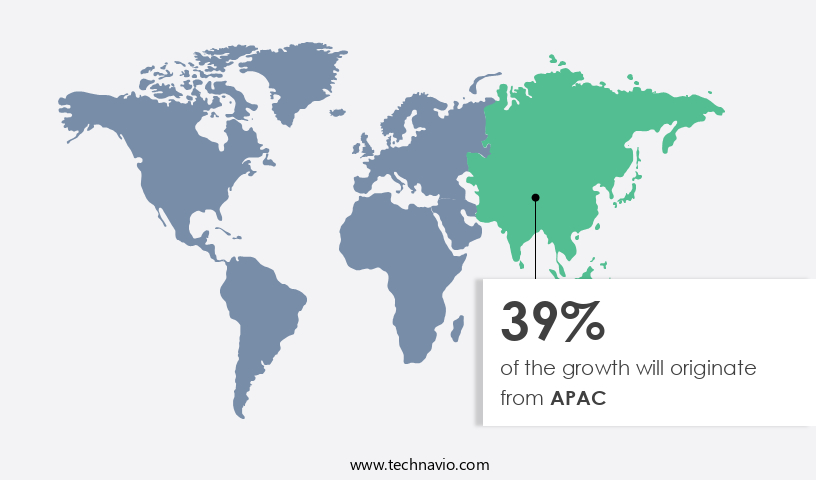
Land Based Smart Weapons Market Share by Geography

For more insights on the market share of various regions, Request Free Sample

The North American region is projected to lead the global land-based smart weapons market due to increased defense expenditures and advanced defense industry capabilities. The US, as the primary contributor, has significantly benefited from the adoption of smart weapons, revolutionizing military operations. Precision, operational capabilities, and mission success rates have improved, reducing collateral damage and civilian casualties. Militaries worldwide invest in cutting-edge technologies like artificial intelligence (AI), machine learning, and sensor technologies to enhance their defense systems. These advanced weapon systems include missiles, munitions, and guided projectiles such as smart anti-airfield weapons. Naval warfare and maritime threats also necessitate the use of land-based smart weapons. Despite high costs, development, maintenance, and technology obsolescence, the market's growth is driven by the need to counter adversaries and ensure mission success. Regulations and platform compatibility are essential considerations.

Market Dynamics

Our researchers analyzed the data with 2023 as the base year, along with the key drivers, trends, and challenges. A holistic analysis of drivers will help companies refine their marketing strategies to gain a competitive advantage.

What are the key market drivers leading to the rise In the adoption of Land Based Smart Weapons Industry?

Development and procurement of advanced technologies is the key driver of the market.

  • Land-based smart weapons have emerged as a critical component of military arsenals worldwide, with top defense spenders such as Russia, the US, and China leading the way in research and development. These advanced weapon systems offer precision, operational capabilities, and high mission success rates, making them valuable assets in various military applications. However, the high cost of development, maintenance, and technology obsolescence pose challenges to their widespread adoption. Advanced technologies like artificial intelligence (AI), machine learning, and sensor technologies are driving the evolution of land-based smart weapons. For instance, India's Defense Research and Development Organization (DRDO) is developing Energy directed weapons, while its Laser Science and Technology Center is working on a 25-kW laser weapon system for ballistic missile destruction.
  • The demand for precision strikes is increasing due to the need to minimize collateral damage and ensure target accuracy. This trend is applicable to various military branches, including air forces, which are investing in smart Anti-Airfield Weapons. Moreover, naval warfare and maritime threats necessitate the development of smart missiles, munitions, and guided projectiles. Defense systems are subject to regulations, and the integration of these advanced technologies requires a careful balance between military effectiveness and ethical considerations. The market for land-based smart weapons is dynamic, with constant advancements in technology and evolving adversaries. Contracts for these systems often involve cutting-edge technologies, including directed energy weapons.

What are the market trends shaping the Land Based Smart Weapons Industry?

Growth in battlefield digitalization is the upcoming market trend.

  • The market is witnessing significant growth due to the increasing demand for precision and operational capabilities in militaries worldwide. Militaries are investing in advanced weapon systems to minimize civilian casualties and improve mission success rates through precision strikes. Smart weapons, such as guided projectiles and munitions, offer superior target accuracy, reducing collateral damage. Technological advancements, including artificial intelligence (AI) and machine learning, are driving the development of cutting-edge technologies in smart weapons. Sensor technologies and defense systems are also playing a crucial role in enhancing the capabilities of these weapons. However, the high cost of development, maintenance, and technology obsolescence pose challenges to market growth.
  • Modern land-based weapon systems, such as smart anti-airfield weapons, are equipped with advanced technologies like electro-optic systems for tracking armored vehicles and low-observable missiles. These systems enable platoons to strategize their approach effectively. For instance, the latest versions of shoulder-fired weapons, such as Stinger, are integrated with dual-mode seekers and identification, friend, or foe (IFF) systems. These technologies enhance the targeting efficiency of Stinger, making it less susceptible to countermeasures like flares when targeting based on heat signatures. Naval warfare and maritime threats are also driving the adoption of smart weapons in various defense applications. Contracts for directed energy weapons and missiles are on the rise, further boosting the market growth.

What challenges does the Land Based Smart Weapons Industry face during its growth?

Stringent Regulatory norms is a key challenge affecting the industry growth.

  • The market is characterized by the integration of advanced technologies such as artificial intelligence (AI), machine learning, and sensor technologies into weapon systems. Precision is a key focus area for militaries to enhance operational capabilities and minimize collateral damage. companies in this market develop and manufacture a range of weapon systems, including guided projectiles, missiles, and munitions, for various defense applications. Strict regulations governing the use and storage of these high-cost weapons systems pose a challenge to market growth. Adherence to regulations related to development, maintenance, technology obsolescence, and safety is mandatory. Incidences of civilian casualties have further intensified regulatory scrutiny.
  • Countries such as India, New Zealand, Australia, and the UK have stringent rules regarding the use of land based smart weapons, which may hinder market expansion. Military organizations and defense departments worldwide are investing in cutting-edge technologies such as directed energy weapons to enhance their operational capabilities and counter maritime threats. Air forces and naval warfare applications are major end-users of land based smart weapons. The market also includes smart anti-airfield weapons and various types of guided rockets and missiles. companies in this market must navigate the complex regulatory landscape while ensuring mission success rates and minimizing target inaccuracy.

Exclusive Customer Landscape

The land based smart weapons market forecasting report includes the adoption lifecycle of the market, covering from the innovator's stage to the laggard's stage. It focuses on adoption rates in different regions based on penetration. Furthermore, the land based smart weapons market report also includes key purchase criteria and drivers of price sensitivity to help companies evaluate and develop their market growth analysis strategies.
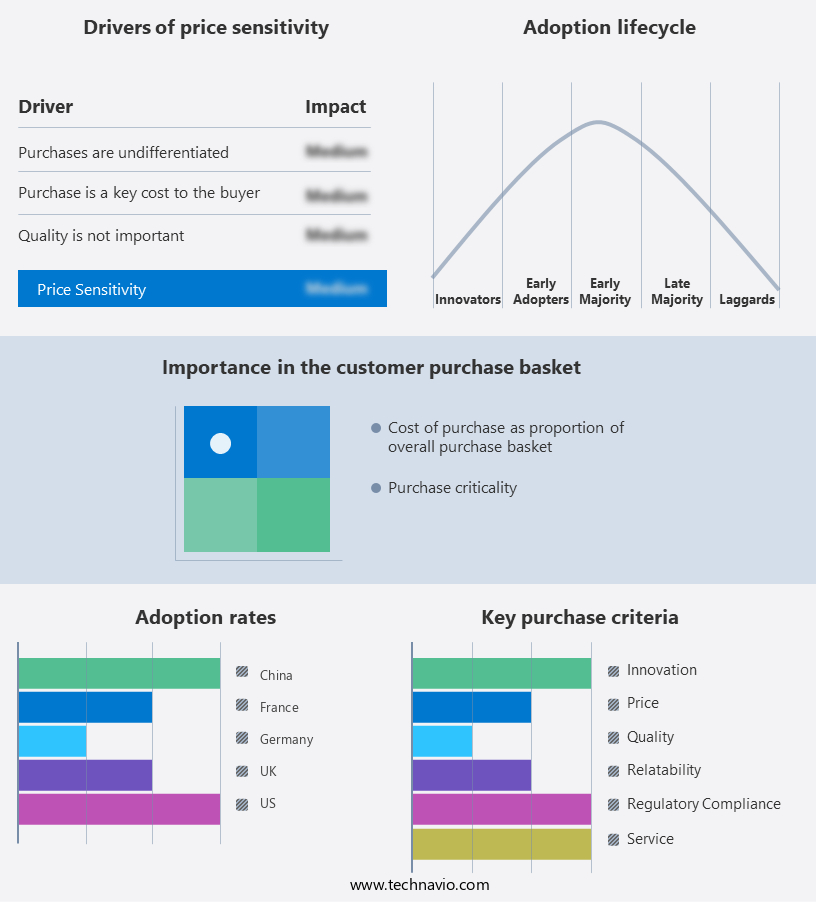
Land Based Smart Weapons Market Share by Geography

 Customer Landscape

Key Companies & Market Insights

Companies are implementing various strategies, such as strategic alliances, land based smart weapons market forecast, partnerships, mergers and acquisitions, geographical expansion, and product/service launches, to enhance their presence In the industry.

The industry research and growth report includes detailed analyses of the competitive landscape of the market and information about key companies, including:

  • ASELSAN AS
  • BAE Systems Plc
  • Diehl Stiftung and Co. KG
  • Hanwha Corp.
  • Israel Aerospace Industries Ltd.
  • Kongsberg Gruppen ASA
  • L3Harris Technologies Inc.
  • Lockheed Martin Corp.
  • MBDA
  • Northrop Grumman Corp.
  • Rafael Advanced Defense Systems Ltd.
  • Rheinmetall AG
  • RTX Corp.
  • Safran SA
  • Thales Group
  • The Boeing Co.

Qualitative and quantitative analysis of companies has been conducted to help clients understand the wider business environment as well as the strengths and weaknesses of key industry players. Data is qualitatively analyzed to categorize companies as pure play, category-focused, industry-focused, and diversified; it is quantitatively analyzed to categorize companies as dominant, leading, strong, tentative, and weak.

Research Analyst Overview

The market encompasses a range of advanced weapon systems designed to enhance operational capabilities and improve mission success rates. These systems, which include guided projectiles, missiles, and munitions, are characterized by their precision and ability to minimize collateral damage. The integration of artificial intelligence (AI) and machine learning technologies into land-based smart weapons has been a significant driver of market growth. These technologies enable advanced target recognition and identification, increasing the accuracy of strikes and reducing the risk of civilian casualties. However, the high cost of development and maintenance remains a challenge for market participants.

Additionally, the rapid advancement of technology and the threat of obsolescence necessitate continuous innovation and investment. Regulations play a crucial role in shaping the market dynamics. Stringent regulations governing the use of conventional weapons and the need for ethical and responsible deployment are key considerations for manufacturers and military forces. The adoption of smart weapons is not limited to military applications. Civilian industries, such as mining and construction, are also exploring the use of precision-guided munitions for site preparation and demolition. The integration of sensor technologies and AI in defense systems has expanded the capabilities of land-based smart weapons.

Further, these systems can now detect and respond to threats in real-time, enhancing operational readiness and effectiveness. Naval warfare and maritime threats have also spurred the development of smart anti-ship missiles and guided rockets. These systems offer increased range, accuracy, and survivability, making them valuable assets for defense forces. Contracts and collaborations between governments and private companies are driving innovation In the land-based smart weapons market. These partnerships facilitate the transfer of cutting-edge technologies and expertise, enabling the development of next-generation weapon systems. The market for land-based smart weapons is expected to continue growing as military forces seek to enhance their operational capabilities and minimize collateral damage.

Market Scope

Report Coverage

Details

Page number

140

Base year

2023

Historic period

2018-2022

Forecast period

2024-2028

Growth momentum & CAGR

Accelerate at a CAGR of 8.51%

Market Growth 2024-2028

USD 2.71 billion

Market structure

Concentrated

YoY growth 2023-2024(%)

7.67

Key countries

US, China, Germany, France, and UK

Competitive landscape

Leading Companies, Market Positioning of Companies, Competitive Strategies, and Industry Risks

Request Free Sample

What are the Key Data Covered in this Land Based Smart Weapons Market Research and Growth Report?

  • CAGR of the Land Based Smart Weapons industry during the forecast period
  • Detailed information on factors that will drive the market growth and forecasting between 2024 and 2028
  • Precise estimation of the size of the market and its contribution of the industry in focus to the parent market
  • Accurate predictions about upcoming growth and trends and changes in consumer behaviour
  • Growth of the market across North America, APAC, Europe, Middle East and Africa, and South America
  • Thorough analysis of the market's competitive landscape and detailed information about companies
  • Comprehensive analysis of factors that will challenge the land based smart weapons market growth of industry companies

We can help! Our analysts can customize this land based smart weapons market research report to meet your requirements.

Get in touch

1 Executive Summary

  • 1.1 Market overview
    • Executive Summary - Chart on Market Overview
    • Executive Summary - Data Table on Market Overview
    • Executive Summary - Chart on Global Market Characteristics
    • Executive Summary - Chart on Market by Geography
    • Executive Summary - Chart on Market Segmentation by Product
    • Executive Summary - Chart on Incremental Growth
    • Executive Summary - Data Table on Incremental Growth
    • Executive Summary - Chart on Company Market Positioning

2 Market Landscape

  • 2.1 Market ecosystem
    • Parent Market
    • Data Table on - Parent Market
  • 2.2 Market characteristics
    • Market characteristics analysis
  • 2.3 Value chain analysis
    • Value Chain Analysis

3 Market Sizing

  • 3.1 Market definition
    • Offerings of companies included in the market definition
  • 3.2 Market segment analysis
    • Market segments
  • 3.3 Market size 2023
    • 3.4 Market outlook: Forecast for 2023-2028
      • Chart on Global - Market size and forecast 2023-2028 ($ million)
      • Data Table on Global - Market size and forecast 2023-2028 ($ million)
      • Chart on Global Market: Year-over-year growth 2023-2028 (%)
      • Data Table on Global Market: Year-over-year growth 2023-2028 (%)

    4 Historic Market Size

    • 4.1 Global Land Based Smart Weapons Market 2018 - 2022
      • Historic Market Size - Data Table on Global Land Based Smart Weapons Market 2018 - 2022 ($ million)
    • 4.2 Product segment analysis 2018 - 2022
      • Historic Market Size - Product Segment 2018 - 2022 ($ million)
    • 4.3 Geography segment analysis 2018 - 2022
      • Historic Market Size - Geography Segment 2018 - 2022 ($ million)
    • 4.4 Country segment analysis 2018 - 2022
      • Historic Market Size - Country Segment 2018 - 2022 ($ million)

    5 Five Forces Analysis

    • 5.1 Five forces summary
      • Five forces analysis - Comparison between 2023 and 2028
    • 5.2 Bargaining power of buyers
      • Bargaining power of buyers - Impact of key factors 2023 and 2028
    • 5.3 Bargaining power of suppliers
      • Bargaining power of suppliers - Impact of key factors in 2023 and 2028
    • 5.4 Threat of new entrants
      • Threat of new entrants - Impact of key factors in 2023 and 2028
    • 5.5 Threat of substitutes
      • Threat of substitutes - Impact of key factors in 2023 and 2028
    • 5.6 Threat of rivalry
      • Threat of rivalry - Impact of key factors in 2023 and 2028
    • 5.7 Market condition
      • Chart on Market condition - Five forces 2023 and 2028

    6 Market Segmentation by Product

    • 6.1 Market segments
      • Chart on Product - Market share 2023-2028 (%)
      • Data Table on Product - Market share 2023-2028 (%)
    • 6.2 Comparison by Product
      • Chart on Comparison by Product
      • Data Table on Comparison by Product
    • 6.3 Missiles - Market size and forecast 2023-2028
      • Chart on Missiles - Market size and forecast 2023-2028 ($ million)
      • Data Table on Missiles - Market size and forecast 2023-2028 ($ million)
      • Chart on Missiles - Year-over-year growth 2023-2028 (%)
      • Data Table on Missiles - Year-over-year growth 2023-2028 (%)
    • 6.4 Ammunition - Market size and forecast 2023-2028
      • Chart on Ammunition - Market size and forecast 2023-2028 ($ million)
      • Data Table on Ammunition - Market size and forecast 2023-2028 ($ million)
      • Chart on Ammunition - Year-over-year growth 2023-2028 (%)
      • Data Table on Ammunition - Year-over-year growth 2023-2028 (%)
    • 6.5 Others - Market size and forecast 2023-2028
      • Chart on Others - Market size and forecast 2023-2028 ($ million)
      • Data Table on Others - Market size and forecast 2023-2028 ($ million)
      • Chart on Others - Year-over-year growth 2023-2028 (%)
      • Data Table on Others - Year-over-year growth 2023-2028 (%)
    • 6.6 Market opportunity by Product
      • Market opportunity by Product ($ million)
      • Data Table on Market opportunity by Product ($ million)

    7 Customer Landscape

    • 7.1 Customer landscape overview
      • Analysis of price sensitivity, lifecycle, customer purchase basket, adoption rates, and purchase criteria

    8 Geographic Landscape

    • 8.1 Geographic segmentation
      • Chart on Market share by geography 2023-2028 (%)
      • Data Table on Market share by geography 2023-2028 (%)
    • 8.2 Geographic comparison
      • Chart on Geographic comparison
      • Data Table on Geographic comparison
    • 8.3 North America - Market size and forecast 2023-2028
      • Chart on North America - Market size and forecast 2023-2028 ($ million)
      • Data Table on North America - Market size and forecast 2023-2028 ($ million)
      • Chart on North America - Year-over-year growth 2023-2028 (%)
      • Data Table on North America - Year-over-year growth 2023-2028 (%)
    • 8.4 APAC - Market size and forecast 2023-2028
      • Chart on APAC - Market size and forecast 2023-2028 ($ million)
      • Data Table on APAC - Market size and forecast 2023-2028 ($ million)
      • Chart on APAC - Year-over-year growth 2023-2028 (%)
      • Data Table on APAC - Year-over-year growth 2023-2028 (%)
    • 8.5 Europe - Market size and forecast 2023-2028
      • Chart on Europe - Market size and forecast 2023-2028 ($ million)
      • Data Table on Europe - Market size and forecast 2023-2028 ($ million)
      • Chart on Europe - Year-over-year growth 2023-2028 (%)
      • Data Table on Europe - Year-over-year growth 2023-2028 (%)
    • 8.6 Middle East and Africa - Market size and forecast 2023-2028
      • Chart on Middle East and Africa - Market size and forecast 2023-2028 ($ million)
      • Data Table on Middle East and Africa - Market size and forecast 2023-2028 ($ million)
      • Chart on Middle East and Africa - Year-over-year growth 2023-2028 (%)
      • Data Table on Middle East and Africa - Year-over-year growth 2023-2028 (%)
    • 8.7 South America - Market size and forecast 2023-2028
      • Chart on South America - Market size and forecast 2023-2028 ($ million)
      • Data Table on South America - Market size and forecast 2023-2028 ($ million)
      • Chart on South America - Year-over-year growth 2023-2028 (%)
      • Data Table on South America - Year-over-year growth 2023-2028 (%)
    • 8.8 US - Market size and forecast 2023-2028
      • Chart on US - Market size and forecast 2023-2028 ($ million)
      • Data Table on US - Market size and forecast 2023-2028 ($ million)
      • Chart on US - Year-over-year growth 2023-2028 (%)
      • Data Table on US - Year-over-year growth 2023-2028 (%)
    • 8.9 China - Market size and forecast 2023-2028
      • Chart on China - Market size and forecast 2023-2028 ($ million)
      • Data Table on China - Market size and forecast 2023-2028 ($ million)
      • Chart on China - Year-over-year growth 2023-2028 (%)
      • Data Table on China - Year-over-year growth 2023-2028 (%)
    • 8.10 Germany - Market size and forecast 2023-2028
      • Chart on Germany - Market size and forecast 2023-2028 ($ million)
      • Data Table on Germany - Market size and forecast 2023-2028 ($ million)
      • Chart on Germany - Year-over-year growth 2023-2028 (%)
      • Data Table on Germany - Year-over-year growth 2023-2028 (%)
    • 8.11 France - Market size and forecast 2023-2028
      • Chart on France - Market size and forecast 2023-2028 ($ million)
      • Data Table on France - Market size and forecast 2023-2028 ($ million)
      • Chart on France - Year-over-year growth 2023-2028 (%)
      • Data Table on France - Year-over-year growth 2023-2028 (%)
    • 8.12 UK - Market size and forecast 2023-2028
      • Chart on UK - Market size and forecast 2023-2028 ($ million)
      • Data Table on UK - Market size and forecast 2023-2028 ($ million)
      • Chart on UK - Year-over-year growth 2023-2028 (%)
      • Data Table on UK - Year-over-year growth 2023-2028 (%)
    • 8.13 Market opportunity by geography
      • Market opportunity by geography ($ million)
      • Data Tables on Market opportunity by geography ($ million)

    9 Drivers, Challenges, and Opportunity/Restraints

    • 9.1 Market drivers
      • 9.2 Market challenges
        • 9.3 Impact of drivers and challenges
          • Impact of drivers and challenges in 2023 and 2028
        • 9.4 Market opportunities/restraints

          10 Competitive Landscape

          • 10.1 Overview
            • 10.2 Competitive Landscape
              • Overview on criticality of inputs and factors of differentiation
            • 10.3 Landscape disruption
              • Overview on factors of disruption
            • 10.4 Industry risks
              • Impact of key risks on business

            11 Competitive Analysis

            • 11.1 Companies profiled
              • Companies covered
            • 11.2 Market positioning of companies
              • Matrix on companies position and classification
            • 11.3 ASELSAN AS
              • ASELSAN AS - Overview
              • ASELSAN AS - Product / Service
              • ASELSAN AS - Key offerings
            • 11.4 BAE Systems Plc
              • BAE Systems Plc - Overview
              • BAE Systems Plc - Business segments
              • BAE Systems Plc - Key news
              • BAE Systems Plc - Key offerings
              • BAE Systems Plc - Segment focus
            • 11.5 Israel Aerospace Industries Ltd.
              • Israel Aerospace Industries Ltd. - Overview
              • Israel Aerospace Industries Ltd. - Product / Service
              • Israel Aerospace Industries Ltd. - Key news
              • Israel Aerospace Industries Ltd. - Key offerings
            • 11.6 Lockheed Martin Corp.
              • Lockheed Martin Corp. - Overview
              • Lockheed Martin Corp. - Business segments
              • Lockheed Martin Corp. - Key news
              • Lockheed Martin Corp. - Key offerings
              • Lockheed Martin Corp. - Segment focus
            • 11.7 MBDA
              • MBDA - Overview
              • MBDA - Product / Service
              • MBDA - Key offerings
            • 11.8 Northrop Grumman Corp.
              • Northrop Grumman Corp. - Overview
              • Northrop Grumman Corp. - Business segments
              • Northrop Grumman Corp. - Key news
              • Northrop Grumman Corp. - Key offerings
              • Northrop Grumman Corp. - Segment focus
            • 11.9 Rafael Advanced Defense Systems Ltd.
              • Rafael Advanced Defense Systems Ltd. - Overview
              • Rafael Advanced Defense Systems Ltd. - Product / Service
              • Rafael Advanced Defense Systems Ltd. - Key offerings
            • 11.10 Rheinmetall AG
              • Rheinmetall AG - Overview
              • Rheinmetall AG - Business segments
              • Rheinmetall AG - Key news
              • Rheinmetall AG - Key offerings
              • Rheinmetall AG - Segment focus
            • 11.11 RTX Corp.
              • RTX Corp. - Overview
              • RTX Corp. - Business segments
              • RTX Corp. - Key news
              • RTX Corp. - Key offerings
              • RTX Corp. - Segment focus
            • 11.12 Safran SA
              • Safran SA - Overview
              • Safran SA - Business segments
              • Safran SA - Key news
              • Safran SA - Key offerings
              • Safran SA - Segment focus

            12 Appendix

            • 12.1 Scope of the report
              • 12.2 Inclusions and exclusions checklist
                • Inclusions checklist
                • Exclusions checklist
              • 12.3 Currency conversion rates for US$
                • Currency conversion rates for US$
              • 12.4 Research methodology
                • Research methodology
              • 12.5 Data procurement
                • Information sources
              • 12.6 Data validation
                • Data validation
              • 12.7 Validation techniques employed for market sizing
                • Validation techniques employed for market sizing
              • 12.8 Data synthesis
                • Data synthesis
              • 12.9 360 degree market analysis
                • 360 degree market analysis
              • 12.10 List of abbreviations
                • List of abbreviations

              Research Methodology

              Technavio presents a detailed picture of the market by way of study, synthesis, and summation of data from multiple sources. The analysts have presented the various facets of the market with a particular focus on identifying the key industry influencers. The data thus presented is comprehensive, reliable, and the result of extensive research, both primary and secondary.

              INFORMATION SOURCES

              Primary sources

              • Manufacturers and suppliers
              • Channel partners
              • Industry experts
              • Strategic decision makers

              Secondary sources

              • Industry journals and periodicals
              • Government data
              • Financial reports of key industry players
              • Historical data
              • Press releases

              DATA ANALYSIS

              Data Synthesis

              • Collation of data
              • Estimation of key figures
              • Analysis of derived insights

              Data Validation

              • Triangulation with data models
              • Reference against proprietary databases
              • Corroboration with industry experts

              REPORT WRITING

              Qualitative

              • Market drivers
              • Market challenges
              • Market trends
              • Five forces analysis

              Quantitative

              • Market size and forecast
              • Market segmentation
              • Geographical insights
              • Competitive landscape

              Interested in this report?

              Get your sample now to see our research methodology and insights!

              Download Now

              Frequently Asked Questions

              Land Based Smart Weapons market growth will increase by $ 2708 mn during 2024-2028.

              The Land Based Smart Weapons market is expected to grow at a CAGR of 8.51% during 2024-2028.

              Land Based Smart Weapons market is segmented by Product( Missiles, Ammunition, Others)

              ASELSAN AS, BAE Systems Plc, Diehl Stiftung and Co. KG, Hanwha Corp., Israel Aerospace Industries Ltd., Kongsberg Gruppen ASA, L3Harris Technologies Inc., Lockheed Martin Corp., MBDA, Northrop Grumman Corp., Rafael Advanced Defense Systems Ltd., Rheinmetall AG, RTX Corp., Safran SA, Thales Group, The Boeing Co. are a few of the key vendors in the Land Based Smart Weapons market.

              APAC will register the highest growth rate of 39% among the other regions. Therefore, the Land Based Smart Weapons market in APAC is expected to garner significant business opportunities for the vendors during the forecast period.

              US, China, Germany, France, UK

              • Development and procurement of advanced technologies?Top defense spenders globally is the driving factor this market.
              • such as Russia is the driving factor this market.
              • the US is the driving factor this market.
              • and China is the driving factor this market.
              • have already made significant advances in the research and development of land-based smart weapons. This is encouraging other countries to make investments in developing similar technologies to stay at par with their allies and adversaries. For instance is the driving factor this market.
              • India has been actively developing advanced directed-energy weapons. In 2020 is the driving factor this market.
              • the country's Defense Research and Development Organization (DRDO) confirmed that the country is developing Energy directed weapons. The country's Laser Science and Technology Center is also working on a 25-kW laser weapon system that can destroy ballistic missiles in their terminal phase at a range of more than five miles. Similarly is the driving factor this market.
              • in December 2021 is the driving factor this market.
              • India successfully tested a supersonic missile-assisted torpedo or SMART weapons system capable of attacking enemy submarines that move beyond the traditional range of torpedoes. Also is the driving factor this market.
              • in November 2021 is the driving factor this market.
              • the Indian Air Force (IAF) and DRDO tested smart ant-airfield weapons (SAAW) with a 100-km range. The weapon is equipped with imaging infra-red (IIR) technology to enhance the precision strike capability of the weapon. The US is continuously evolving new technologies for the development of land-based smart weapons. For instance is the driving factor this market.
              • in January 2022 is the driving factor this market.
              • the gun company LodeStar Works announced its plan to launch a smart gun with RFID technology. Such developments are expected to boost the growth of the global land based smart weapons system during the forecast period. is the driving factor this market.

              The Land Based Smart Weapons market vendors should focus on grabbing business opportunities from the Missiles segment as it accounted for the largest market share in the base year.
