
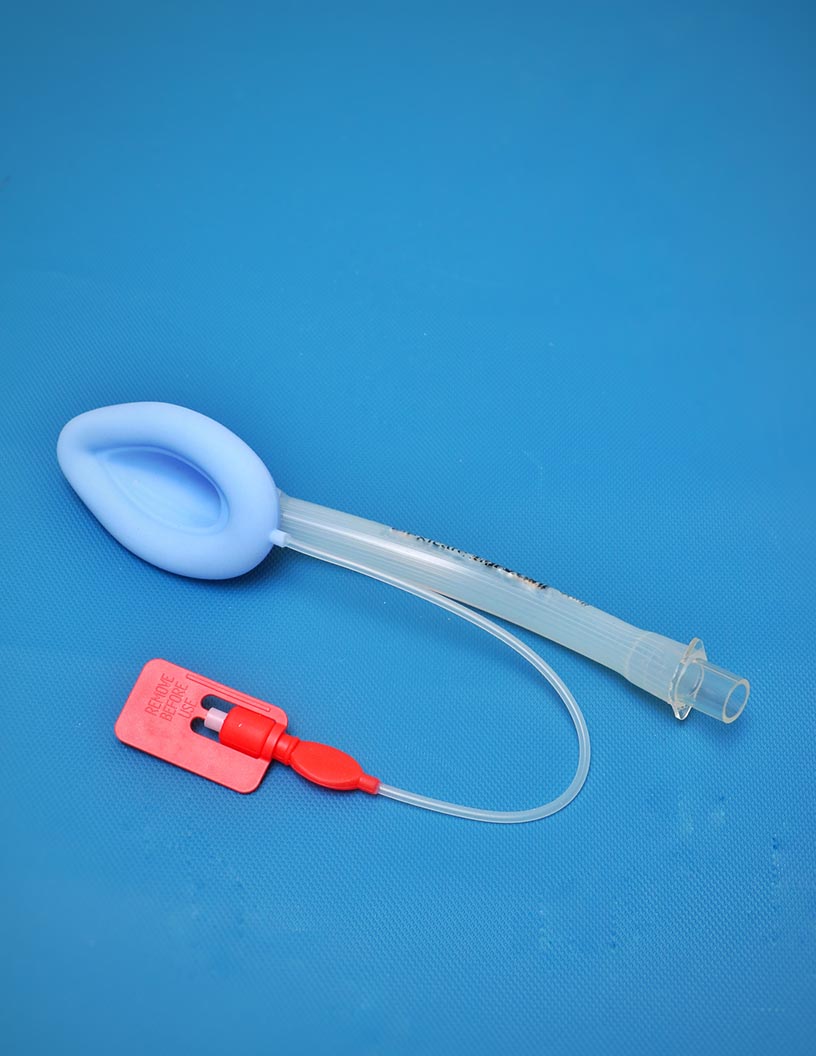


Laryngeal Airway Mask Market Size 2025-2029
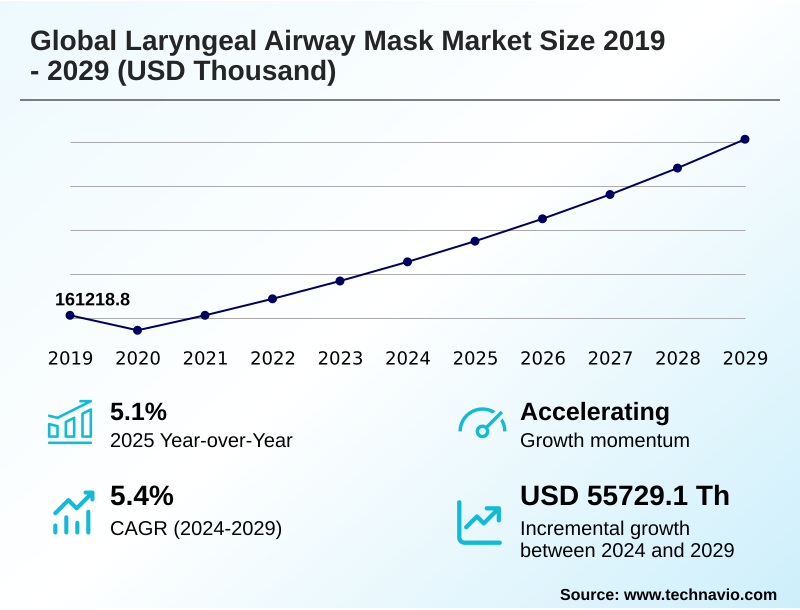
The laryngeal airway mask market size is valued to increase by USD 55.73 million, at a CAGR of 5.4% from 2024 to 2029. Increasing prevalence of chronic disorders will drive the laryngeal airway mask market.
Major Market Trends & Insights
- North America dominated the market and accounted for a 43.8% growth during the forecast period.
- By Product - Disposal segment was valued at USD 123.01 million in 2023
- By End-user - Hospitals segment accounted for the largest market revenue share in 2023
Market Size & Forecast
- Market Opportunities:
- Market Future Opportunities: USD 55.73 million
- CAGR from 2024 to 2029 : 5.4%
Market Summary
- The laryngeal airway mask market is characterized by continuous evolution, driven by the need for effective airway management solutions across a spectrum of clinical settings. Demand is underpinned by a rising volume of surgical procedures, many of which are now minimally invasive and performed in ambulatory surgical centers.
- In these environments, the adoption of single-use sterile packaging is critical for maintaining aseptic technique compliance and enhancing outpatient procedure efficiency. A key business scenario involves supply chain optimization, where hospitals balance the cost-effectiveness of reusable silicone masks, which require rigorous autoclaving sterilization, against the convenience of disposable polyvinyl chloride material devices.
- Innovations focus on improving perilaryngeal seal effectiveness and reducing airway trauma. However, navigating the complex regulatory compliance framework and varied reimbursement policy structures remains a persistent challenge for manufacturers.
- The integration of advanced features like gastric drainage channels and compatibility with video laryngoscopy integration reflects a broader trend toward enhancing patient safety and improving clinical outcomes in both routine and difficult airway management scenarios.
What will be the Size of the Laryngeal Airway Mask Market during the forecast period?
Get Key Insights on Market Forecast (PDF) Get Free Sample
How is the Laryngeal Airway Mask Market Segmented?
The laryngeal airway mask industry research report provides comprehensive data (region-wise segment analysis), with forecasts and estimates in "USD thousand" for the period 2025-2029, as well as historical data from 2019-2023 for the following segments.
- Product
- Disposal
- Resuable
- End-user
- Hospitals
- ASCs
- Clinics
- Material type
- Silicone
- PVC
- Latex
- Geography
- North America
- US
- Canada
- Mexico
- Europe
- Germany
- UK
- France
- Asia
- Rest of World (ROW)
- North America
By Product Insights
The disposal segment is estimated to witness significant growth during the forecast period.
The disposable segment is defined by its increasing adoption in settings that prioritize stringent infection control protocols and outpatient procedure efficiency.
These single-use products, often made from medical-grade PVC, are integral to maintaining airway patency and are favored in ambulatory surgical centers adhering to high care standards.
As a primary supraglottic airway device, the disposable format eliminates the risk of healthcare-associated infections and aligns with a strong cost-effectiveness analysis.
This focus on patient safety initiatives has driven adoption, with disposable masks accounting for over 65% of the total market volume.
The design ensures reliable esophageal sealing pressure and supports aseptic technique compliance, making it a cornerstone of modern anesthetic practice.
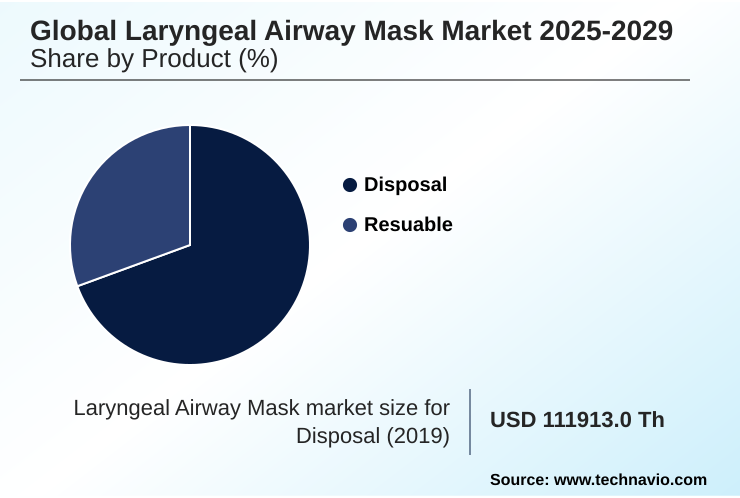
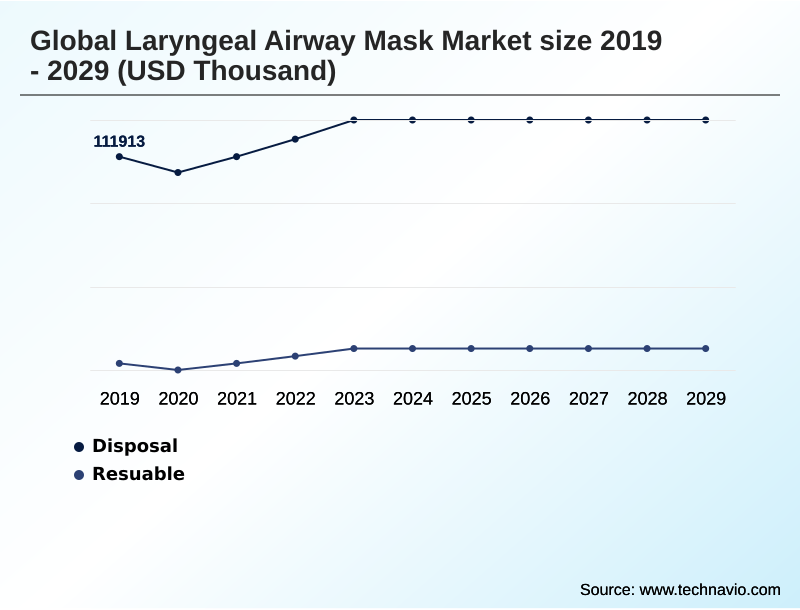
The Disposal segment was valued at USD 123.01 million in 2023 and showed a gradual increase during the forecast period.
Regional Analysis
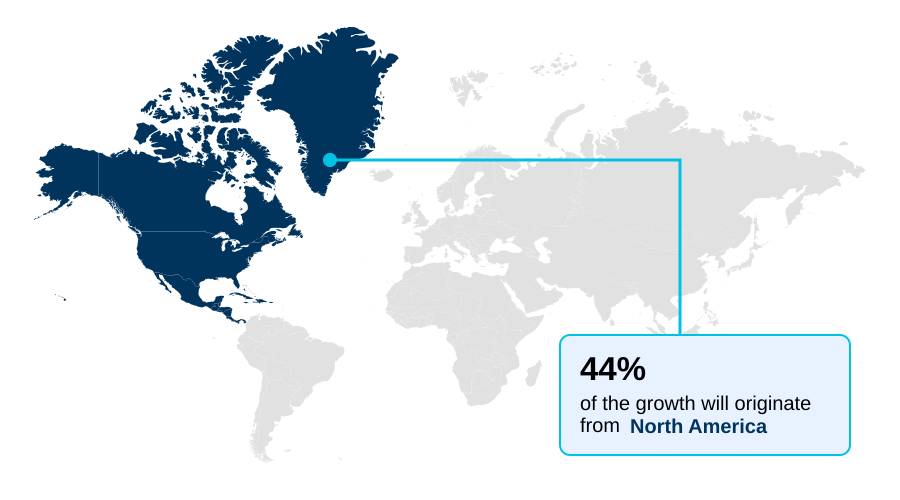
North America is estimated to contribute 43.8% to the growth of the global market during the forecast period.Technavio’s analysts have elaborately explained the regional trends and drivers that shape the market during the forecast period.
See How Laryngeal Airway Mask Market Demand is Rising in North America Get Free Sample
The market's geographic landscape is shaped by regional clinical practice guidelines and reimbursement policy structures.
North America represents the largest opportunity, contributing over 43% of the incremental growth, driven by high procedural volumes and a preference for devices that support airway trauma reduction.
In contrast, Asia is the fastest-growing region, with a growth rate exceeding 6%, fueled by technological innovation adoption and improving healthcare infrastructure. The adoption of the silicone laryngeal mask as an endotracheal intubation alternative varies, influenced by regional cost-effectiveness analysis.
Products with advanced features like a gastric drainage channel are gaining traction globally, supported by rigorous post-market surveillance to ensure perilaryngeal seal effectiveness and patient safety across diverse populations.
Market Dynamics
Our researchers analyzed the data with 2024 as the base year, along with the key drivers, trends, and challenges. A holistic analysis of drivers will help companies refine their marketing strategies to gain a competitive advantage.
- The global laryngeal airway mask market 2025-2029 continues to evolve, with a strong focus on both procedural efficacy and patient safety. A key discussion revolves around the choice between disposable vs reusable laryngeal masks, where operational workflows and infection control are paramount. The laryngeal mask role in anesthesia is solidified as a primary tool, not just a backup.
- For specialized cases, advancements in laryngeal mask design are crucial, particularly for managing the pediatric laryngeal mask airway sizing and its use for the laryngeal mask for obese patients. Understanding the anatomy for laryngeal mask placement is fundamental, and a comprehensive laryngeal mask insertion technique guide is essential for training.
- A major focus is on second generation supraglottic airway features, such as the laryngeal mask with gastric access, which mitigates risks. Clinicians are increasingly using laryngeal mask cuff pressure monitoring for preventing sore throat after laryngeal mask use, a common side effect.
- The debate over the laryngeal mask versus endotracheal tube continues, especially in the context of the laryngeal mask for difficult airways. Proper training helps mitigate the complications of laryngeal mask usage. In procedural contexts, the laryngeal mask use in bronchoscopy is expanding.
- The material science of a PVC laryngeal mask biocompatibility is constantly being improved, while the silicone laryngeal mask sterilization process is being optimized to enhance efficiency, in some cases improving turnaround times by a factor of two compared to older manual methods.
- The device's application in emergency medicine and for outpatient surgery underscores its versatility, making choosing the correct laryngeal mask a critical decision.
What are the key market drivers leading to the rise in the adoption of Laryngeal Airway Mask Industry?
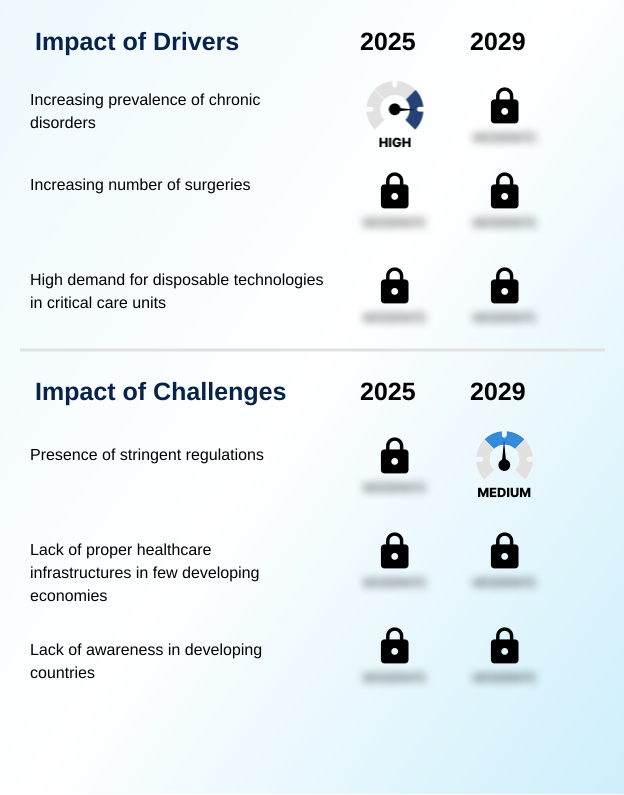
- The increasing prevalence of chronic disorders, which frequently necessitate surgical interventions and anesthesia, stands as a primary driver for the market.
- A primary driver is the rising surgical procedure volume, fueled by a high chronic disorder prevalence that necessitates minimally invasive procedures and extensive use of airway management solutions.
- This demand is prominent in both inpatient surgical settings and for elective surgery application. Hospital procurement process dynamics, influenced by group purchasing organizations and value analysis committees, prioritize devices that ensure perilaryngeal seal effectiveness.
- Innovations such as the low-pressure cuff seal and universal latex-free construction have become standard, enhancing safety.
- This has boosted the role of the emergency care airway device, with data showing their use can decrease airway securing time by up to 30% in critical scenarios compared to older methods.
What are the market trends shaping the Laryngeal Airway Mask Industry?
- The growing geriatric population represents a significant market trend. This demographic shift is poised to increase surgical volumes and influence healthcare spending patterns globally.
- The market is witnessing significant technological innovation adoption, with a notable shift toward the second-generation laryngeal mask. These advanced devices, often incorporating features like cuff pilot technology and video laryngoscopy integration, are central to improving clinical outcomes. A key product differentiation strategy involves enhancing anatomical airway conformity and using materials like advanced polyvinyl chloride to reduce trauma.
- In parallel, a focus on specialized applications such as pediatric airway management using a flexible reinforced tube is growing, driven by anesthetic practice advancements. This innovation is critical for the expanding geriatric patient population, with improved designs leading to a 15% reduction in insertion attempts and promoting greater procedural standardization.
What challenges does the Laryngeal Airway Mask Industry face during its growth?
- The existence of stringent and divergent regulatory frameworks across key geographic regions poses a significant challenge to global market expansion and product commercialization.
- Navigating a complex regulatory compliance framework remains a significant challenge, with stringent premarket testing requirements impacting time-to-market for respiratory care disposables. For products like the reusable silicone mask, the burdens of reprocessing and sterilization and device reprocessing validation are considerable, testing supply chain resilience and the efficiency of central sterile services. Proper autoclaving sterilization is critical but adds operational overhead.
- Furthermore, ensuring correct cuff inflation volume and effective supraglottic airway ventilation during difficult airway management requires extensive training. Inconsistency in applying the difficult airway algorithm for rapid sequence intubation can increase procedural risks by more than 20% without standardized protocols.
Exclusive Technavio Analysis on Customer Landscape
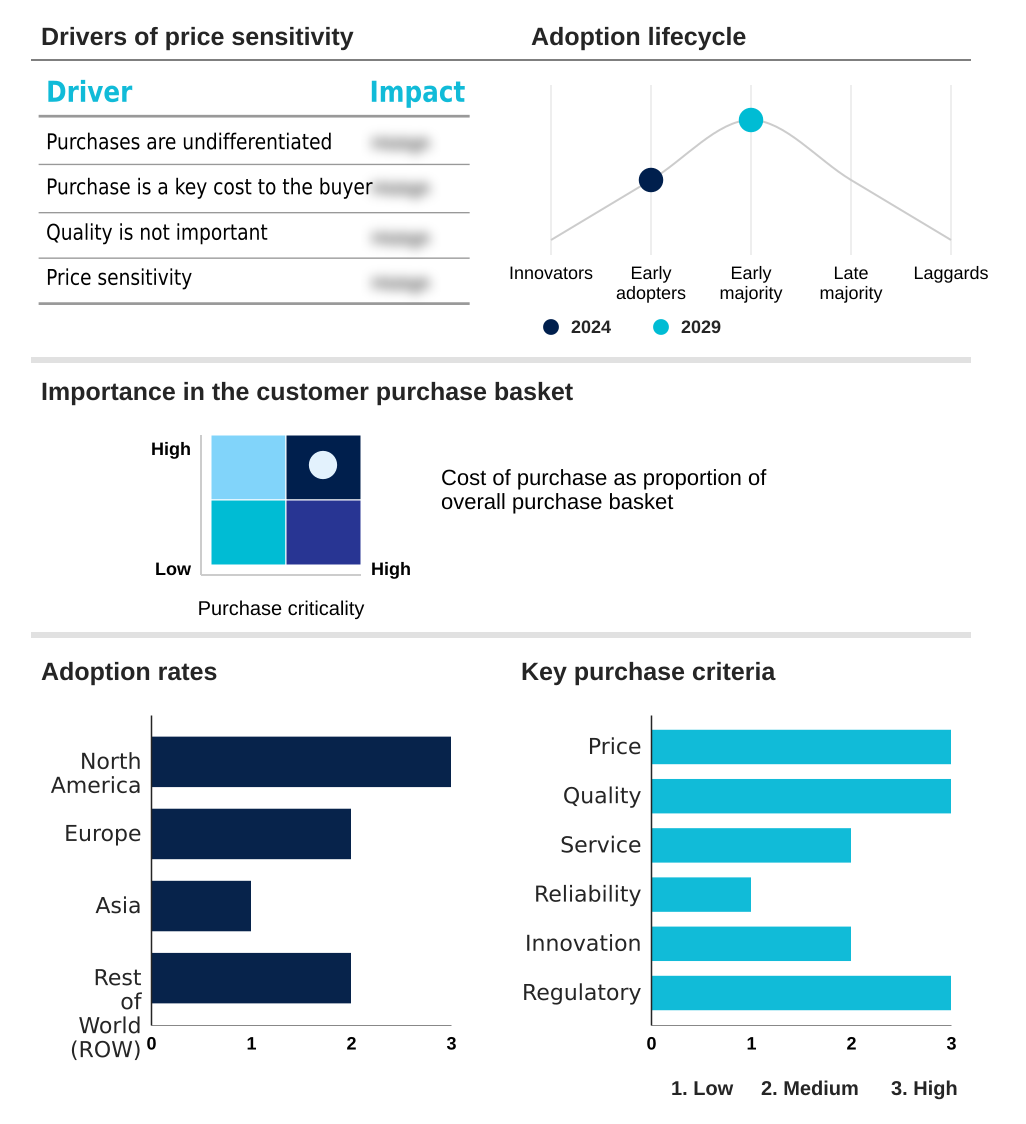
The laryngeal airway mask market forecasting report includes the adoption lifecycle of the market, covering from the innovator’s stage to the laggard’s stage. It focuses on adoption rates in different regions based on penetration. Furthermore, the laryngeal airway mask market report also includes key purchase criteria and drivers of price sensitivity to help companies evaluate and develop their market growth analysis strategies.
Customer Landscape of Laryngeal Airway Mask Industry
Competitive Landscape
Companies are implementing various strategies, such as strategic alliances, laryngeal airway mask market forecast, partnerships, mergers and acquisitions, geographical expansion, and product/service launches, to enhance their presence in the industry.
Ambu AS - Key offerings include a diverse portfolio of laryngeal airway masks, such as disposable and reusable models, designed for various airway management and anesthesia applications.
The industry research and growth report includes detailed analyses of the competitive landscape of the market and information about key companies, including:
- Ambu AS
- Besmed Health Business Corp.
- Dynarex Corp.
- Flexicare Group Ltd.
- General Electric Co.
- Genesis Airway Innovations Pty Ltd.
- Henso Medical Hangzhou Co. Ltd.
- Intersurgical Ltd.
- McKesson Corp.
- MedSource Labs
- Medtronic Plc
- Narang Medical Ltd.
- Poly Medicure Ltd.
- Smiths Group Plc
- Sterimed MD Pvt. Ltd.
- Teleflex Inc.
- Vogt Medical Vertrieb GmbH
Qualitative and quantitative analysis of companies has been conducted to help clients understand the wider business environment as well as the strengths and weaknesses of key industry players. Data is qualitatively analyzed to categorize companies as pure play, category-focused, industry-focused, and diversified; it is quantitatively analyzed to categorize companies as dominant, leading, strong, tentative, and weak.
Recent Development and News in Laryngeal airway mask market
- In September 2024, Airway Innovations Inc. launched its new line of single-use laryngeal masks featuring integrated cuff pressure monitoring technology, aimed at enhancing patient safety during anesthesia.
- In January 2025, Global Med-Devices Corp. announced its acquisition of Anesthesia Solutions Ltd. for approximately USD 150 million, expanding its portfolio in respiratory and critical care devices.
- In March 2025, SecureAir Medical received FDA 510(k) clearance for its second-generation laryngeal mask with a dedicated gastric drainage channel, designed for procedures with a higher risk of aspiration.
- In May 2025, Flexi-Tube Systems finalized the construction of a new manufacturing facility in Southeast Asia, increasing its production capacity for PVC-based airway products by 40% to meet growing regional demand.
Dive into Technavio’s robust research methodology, blending expert interviews, extensive data synthesis, and validated models for unparalleled Laryngeal Airway Mask Market insights. See full methodology.
| Market Scope | |
|---|---|
| Page number | 283 |
| Base year | 2024 |
| Historic period | 2019-2023 |
| Forecast period | 2025-2029 |
| Growth momentum & CAGR | Accelerate at a CAGR of 5.4% |
| Market growth 2025-2029 | USD 55729.1 thousand |
| Market structure | Fragmented |
| YoY growth 2024-2025(%) | 5.1% |
| Key countries | US, Canada, Mexico, Germany, UK, France, Italy, Spain, The Netherlands, China, India, Japan, South Korea, Indonesia, Thailand, Brazil, Argentina, Chile, Saudi Arabia, South Africa, UAE, Turkey and Egypt |
| Competitive landscape | Leading Companies, Market Positioning of Companies, Competitive Strategies, and Industry Risks |
Research Analyst Overview
- The market is advancing through a focus on specialized airway management solutions. The supraglottic airway device has become a cornerstone, serving as a primary endotracheal intubation alternative and a critical component of the difficult airway algorithm, especially for rapid sequence intubation. Innovations such as the second-generation laryngeal mask, featuring a gastric drainage channel and cuff pilot technology, are pivotal.
- Boardroom decisions are increasingly influenced by the long-term value of a reusable silicone mask versus the infection-control benefits of single-use sterile packaging made from polyvinyl chloride material. For example, adopting devices with proven airway trauma reduction capabilities can lower associated complication costs by up to 15%.
- This strategic focus extends to specialized applications like pediatric airway management and ensuring anatomical airway conformity. The emphasis is on enhancing perilaryngeal seal effectiveness with a low-pressure cuff seal and ensuring latex-free construction.
- Devices are also being designed for supraglottic airway ventilation in minimally invasive procedures across inpatient surgical settings and ambulatory surgical centers, driving demand for a wide range of respiratory care disposables.
What are the Key Data Covered in this Laryngeal Airway Mask Market Research and Growth Report?
-
What is the expected growth of the Laryngeal Airway Mask Market between 2025 and 2029?
-
USD 55.73 million, at a CAGR of 5.4%
-
-
What segmentation does the market report cover?
-
The report is segmented by Product (Disposal, Resuable), End-user (Hospitals, ASCs, Clinics), Material Type (Silicone, PVC, Latex) and Geography (North America, Europe, Asia, Rest of World (ROW))
-
-
Which regions are analyzed in the report?
-
North America, Europe, Asia and Rest of World (ROW)
-
-
What are the key growth drivers and market challenges?
-
Increasing prevalence of chronic disorders, Presence of stringent regulations
-
-
Who are the major players in the Laryngeal Airway Mask Market?
-
Ambu AS, Besmed Health Business Corp., Dynarex Corp., Flexicare Group Ltd., General Electric Co., Genesis Airway Innovations Pty Ltd., Henso Medical Hangzhou Co. Ltd., Intersurgical Ltd., McKesson Corp., MedSource Labs, Medtronic Plc, Narang Medical Ltd., Poly Medicure Ltd., Smiths Group Plc, Sterimed MD Pvt. Ltd., Teleflex Inc. and Vogt Medical Vertrieb GmbH
-
Market Research Insights
- The market's momentum is shaped by the interplay of clinical demands and operational efficiencies. Adherence to stringent infection control protocols is driving a shift in procurement, with some institutions reporting a 25% increase in single-use device adoption to align with ambulatory care standards. This move supports patient safety initiatives and streamlines workflows.
- Concurrently, technological innovation adoption is a key differentiator, as advancements in anesthetic practice lead to better clinical outcome improvement. For example, second-generation devices have been shown to reduce procedural complications by over 15% in certain elective surgery applications.
- The entire ecosystem, from the hospital procurement process to post-market surveillance, is geared toward enhancing performance and ensuring regulatory compliance, reflecting a mature and value-driven market.
We can help! Our analysts can customize this laryngeal airway mask market research report to meet your requirements.
 RIA -
RIA - 
