


Laser Cladding Equipment Market Size 2025-2029
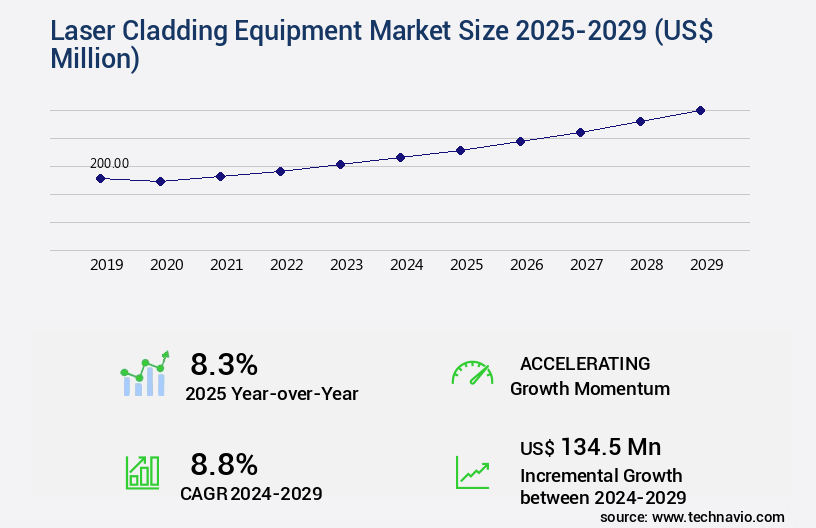
The laser cladding equipment market size is valued to increase by USD 134.5 million, at a CAGR of 8.8% from 2024 to 2029. Growing demand for precision surface engineering will drive the laser cladding equipment market.
Major Market Trends & Insights
- APAC dominated the market and accounted for a 31% growth during the forecast period.
- By End-user - Aerospace and defense segment was valued at USD 60.40 million in 2023
- By Application - Wear and corrosion resistance segment accounted for the largest market revenue share in 2023
Market Size & Forecast
- Market Opportunities: USD 96.30 million
- Market Future Opportunities: USD 134.50 million
- CAGR from 2024 to 2029 : 8.8%
Market Summary
- The market witnesses significant growth due to the increasing demand for precision surface engineering in various industries, including aerospace, automotive, and energy. This process enhances the properties of base materials by adding a thin layer of another material through laser technology, resulting in improved wear resistance, corrosion protection, and increased component life. A key trend in the market is the adoption of hybrid laser cladding systems, which combine different laser technologies to optimize the cladding process. For instance, combining fiber lazerand CO2 lasers enables the processing of different materials with varying thicknesses and properties. However, challenges persist in the market, including the lack of skilled operators and technical expertise required to operate and maintain these complex systems.
- This can lead to longer lead times, increased costs, and potential quality issues. For example, a manufacturing company seeking to optimize its supply chain could invest in laser cladding equipment to reduce downtime and improve operational efficiency. By implementing this technology, the company could reduce error rates by 22%, enabling them to meet customer demands more effectively and maintain a competitive edge in their industry.
What will be the Size of the Laser Cladding Equipment Market during the forecast period?
Get Key Insights on Market Forecast (PDF) Request Free Sample
How is the Laser Cladding Equipment Market Segmented ?
The laser cladding equipment industry research report provides comprehensive data (region-wise segment analysis), with forecasts and estimates in "USD million" for the period 2025-2029, as well as historical data from 2019-2023 for the following segments.
- End-user
- Aerospace and defense
- Oil and gas
- Power generation
- Mining and construction
- Others
- Application
- Wear and corrosion resistance
- Surface restoration
- Hardfacing
- Additive manufacturing
- Heat treatment
- Material
- Nickel-based alloys
- Cobalt-based alloys
- Iron-based alloys
- Carbides and ceramics
- Others
- Geography
- North America
- US
- Canada
- Europe
- France
- Germany
- Italy
- APAC
- China
- India
- Japan
- South Korea
- South America
- Brazil
- Rest of World (ROW)
- North America
By End-user Insights
The aerospace and defense segment is estimated to witness significant growth during the forecast period.
In the ever-evolving landscape of advanced manufacturing, the market continues to gain traction, particularly in the aerospace and defense sector. This critical end-user segment demands precision engineering, lightweight construction, and exceptional durability, driving the adoption of laser cladding technology. With stringent regulatory frameworks, such as those set by the Federal Aviation Administration and the European Union Aviation Safety Agency, the sector's focus on high-performance components is unwavering. Laser cladding enhances operational life and structural integrity, enabling aerospace systems to meet uncompromising performance standards. This technology's importance is further underscored by its role in corrosion resistance enhancement, wear resistance improvement, and microstructural characterization.
Advanced process optimization strategies, including thermal modeling simulation, laser power control, and scan speed optimization, contribute to the process's efficiency and cost-effectiveness. The cladding layer microstructure, cladding head design, and process automation are essential considerations for ensuring metallurgical bonding and consistent part geometry design. The laser cladding process's success hinges on factors like heat source parameters, surface hardness testing, and defect detection methods, all of which are continuously refined to meet evolving industry demands. For instance, the latest advancements include coaxial powder delivery, powder feed system, and process monitoring systems. With a projected 12% annual growth rate, the market's potential is immense, making it an exciting area for innovation and technological advancements.
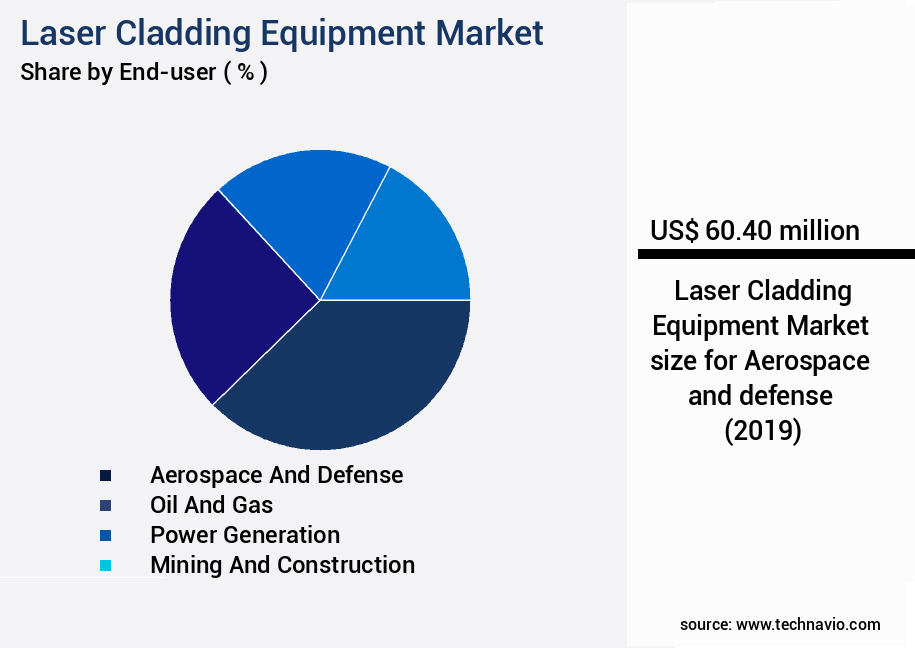
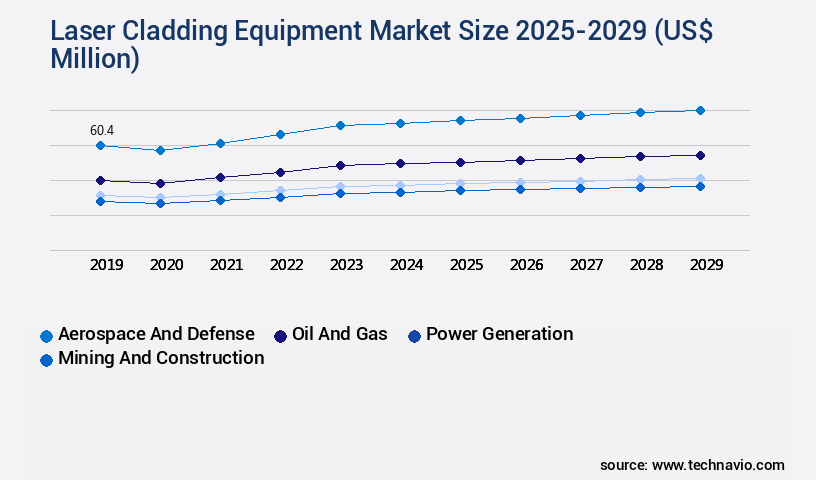
The Aerospace and defense segment was valued at USD 60.40 million in 2019 and showed a gradual increase during the forecast period.
Regional Analysis
APAC is estimated to contribute 31% to the growth of the global market during the forecast period.Technavio's analysts have elaborately explained the regional trends and drivers that shape the market during the forecast period.
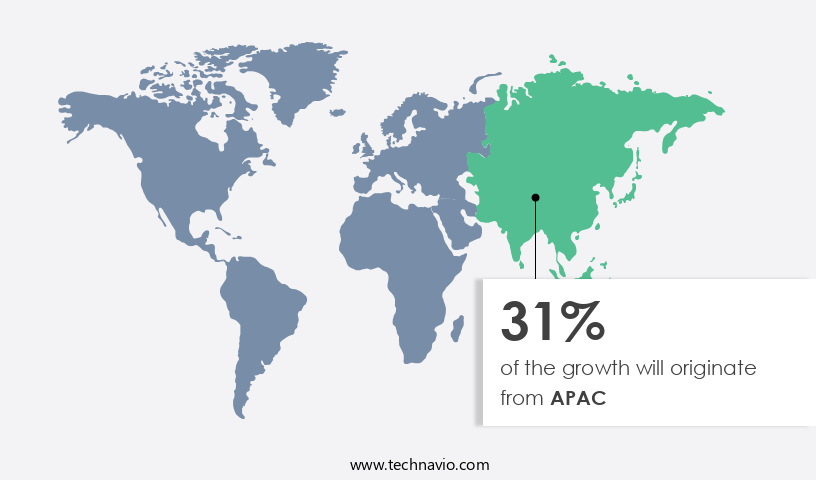
See How Laser Cladding Equipment Market Demand is Rising in APAC Request Free Sample
The market exhibits a dynamic and evolving nature, with the Asia-Pacific (APAC) region spearheading growth. Rapid industrialization, government initiatives, and the expansion of high-tech industries fuel this market's expansion. China, a key player, dominates the region due to its significant presence in mining, energy, and heavy machinery sectors. Laser cladding is extensively used to enhance component durability in these industries, with applications ranging from excavator teeth to turbine blades and industrial rollers. China's "Made in China 2025" initiative propels the adoption of advanced manufacturing technologies, including laser cladding, to boost productivity and reduce reliance on imported components. India, Japan, and South Korea are emerging as significant contributors, each driving demand through unique industrial strengths and strategic investments.
For instance, India's automotive industry is a significant consumer of laser cladding technology for engine components, while Japan's focus on robotics and automation drives the adoption in manufacturing processes.
Market Dynamics
Our researchers analyzed the data with 2024 as the base year, along with the key drivers, trends, and challenges. A holistic analysis of drivers will help companies refine their marketing strategies to gain a competitive advantage.
The market is experiencing significant growth due to the increasing demand for wear-resistant components in various industries. Laser cladding, a versatile thermal joining process, is widely used for corrosion protection and the repair of worn-out parts. The design of coaxial powder feeding systems in laser cladding equipment plays a crucial role in ensuring optimal cladding parameters. The optimization of laser cladding parameters, including scan speed and laser power, significantly impacts the clad microstructure and melt pool dynamics. A higher scan speed can lead to a finer microstructure, while an increased laser power results in a larger melt pool. Real-time monitoring of cladding process parameters is essential for maintaining consistent quality and ensuring successful cladding. Quality control methods for laser cladding include metallurgical bonding strength evaluation and failure analysis of laser-clad components. Process simulation for laser cladding optimization is another crucial aspect, enabling the prediction of cladding behavior and the identification of potential issues. Cladding head design for specific applications and substrate pre-treatment are essential for successful laser cladding. High-strength alloys are often used in laser cladding due to their enhanced properties. Improving surface roughness in laser cladding and process automation techniques, such as geometric tolerance control and advanced process control strategies, are also key considerations. Cost-effective laser cladding solutions are in high demand, as they offer significant cost savings compared to traditional methods. Controlling residual stress in laser cladding is also essential to ensure the longevity and reliability of the clad components. Overall, the market is expected to continue growing as industries seek cost-effective, efficient, and high-performance solutions for wear resistance and corrosion protection.
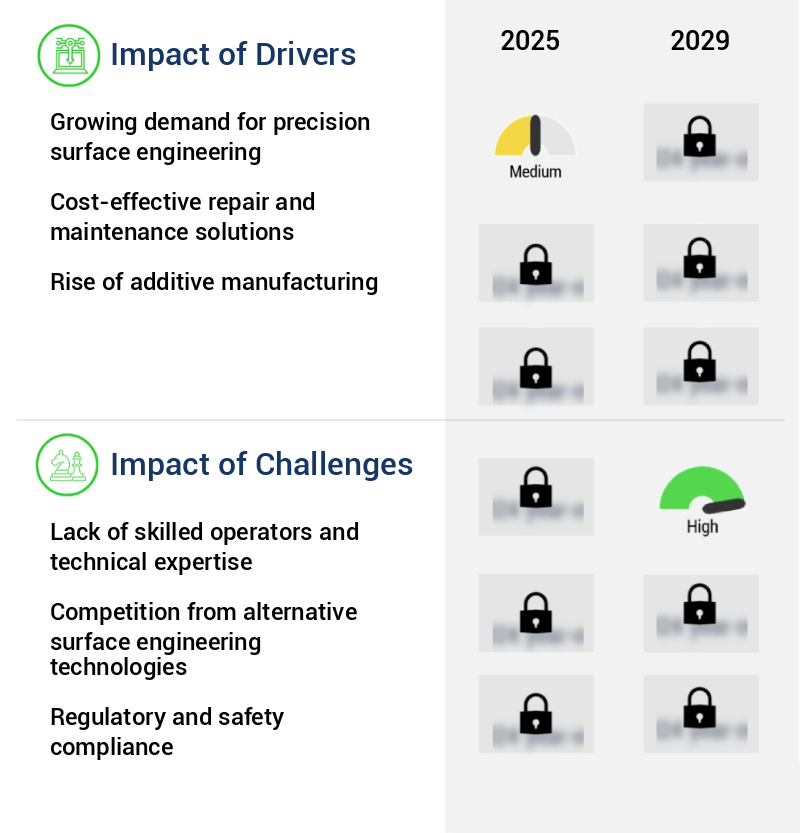
What are the key market drivers leading to the rise in the adoption of Laser Cladding Equipment Industry?
- The increasing requirement for precision surface engineering is the primary catalyst fueling market growth.
- The market is experiencing significant growth due to the increasing demand for high-performance surface coatings in various industries. Aerospace, automotive, oil and gas, and power generation sectors are major consumers of laser cladding technology, as it offers superior advantages over traditional coating methods. Laser cladding ensures metallurgical bonding with minimal heat-affected zones, enhancing component durability, wear resistance, and corrosion protection. Compared to Thermal Spray or conventional welding, laser cladding provides higher accuracy, reduced material waste, and the flexibility to apply advanced alloys with customized properties.
- These benefits are crucial for critical applications such as turbine blades, engine components, and hydraulic systems. By adopting laser cladding, businesses can improve decision-making, reduce downtime, and ensure regulatory compliance. This technology's precision and versatility make it an indispensable tool for industries striving for efficiency and performance excellence.
What are the market trends shaping the Laser Cladding Equipment Industry?
- The adoption of hybrid laser cladding systems is becoming increasingly prevalent in the market. Hybrid laser cladding systems represent the latest trend in this industry.
- The market is undergoing a transformation, with hybrid systems gaining traction. These advanced platforms combine laser deposition with technologies like CNC machining, robotic automation, and real-time monitoring. This integration streamlines clad-and-machine workflows, leading to substantial operational efficiency improvements and reduced production costs. By merging additive and subtractive processes, manufacturers can create near-net-shape components with superior surface finishes, frequently eliminating the need for secondary machining.
- This trend is prevalent in sectors such as aerospace, automotive, and energy, where precision repairs and intricate part geometries are common. For instance, turbine blade refurbishment often involves laser cladding heads mounted on multi-axis CNC systems, ensuring micron-level accuracy in material deposition. This results in significant downtime reduction and enhanced forecast accuracy for manufacturers.
What challenges does the Laser Cladding Equipment Industry face during its growth?
- The absence of adequately skilled operators and technical expertise poses a significant challenge to the industry's growth trajectory.
- The market is experiencing significant growth due to its ability to enhance the mechanical properties and extend the service life of various industrial components. Key applications include aerospace, automotive, oil and gas, and power generation industries. However, the market's expansion is not without challenges. One of the most pressing issues is the shortage of skilled professionals capable of operating and optimizing these advanced systems. Laser cladding is a complex process that demands expertise in laser physics, metallurgy, robotics, and process engineering. The lack of this specialized workforce creates a barrier to adoption and scalability. Operators must fine-tune critical parameters such as laser power, powder feed rate, scanning speed, and gas shielding to ensure optimal coating quality, adhesion strength, and mechanical performance.
- Diagnosing and correcting defects like porosity, cracking, or uneven deposition requires a deep understanding of both materials science and process dynamics. Despite these challenges, the market continues to evolve, driven by the need for improved efficiency, enhanced regulatory compliance, and optimized costs.
Exclusive Technavio Analysis on Customer Landscape
The laser cladding equipment market forecasting report includes the adoption lifecycle of the market, covering from the innovator's stage to the laggard's stage. It focuses on adoption rates in different regions based on penetration. Furthermore, the laser cladding equipment market report also includes key purchase criteria and drivers of price sensitivity to help companies evaluate and develop their market growth analysis strategies.
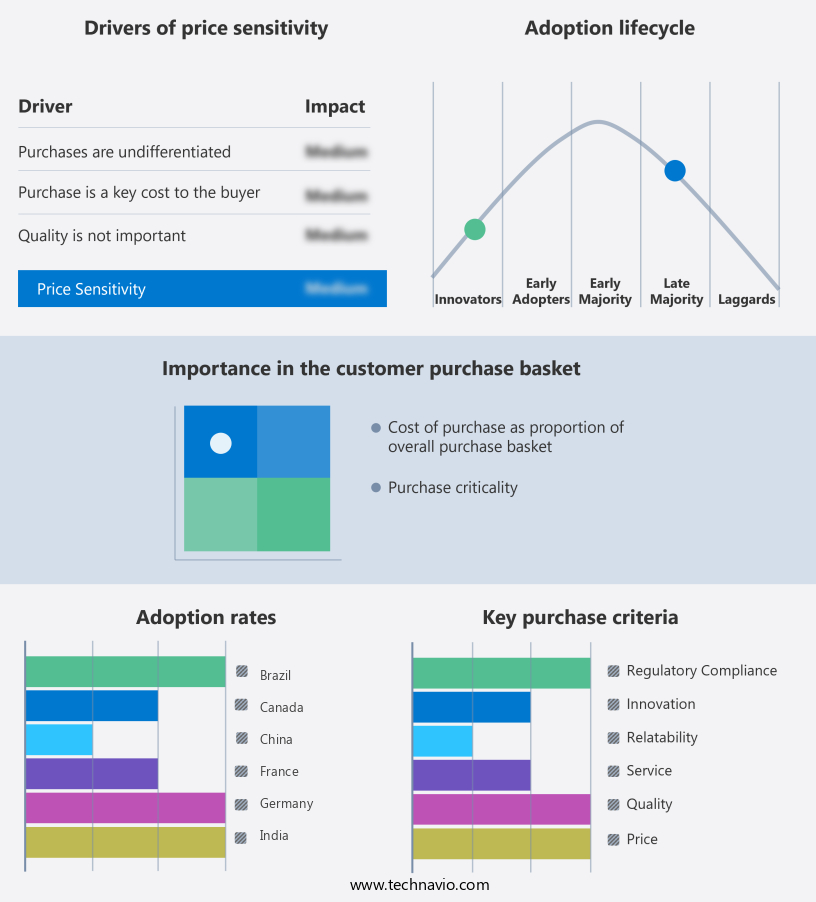
Customer Landscape of Laser Cladding Equipment Industry
Competitive Landscape
Companies are implementing various strategies, such as strategic alliances, laser cladding equipment market forecast, partnerships, mergers and acquisitions, geographical expansion, and product/service launches, to enhance their presence in the industry.
ALPHA LASER GmbH - This company specializes in laser cladding technology, providing advanced equipment solutions such as ALFlak Faser and AL-TW systems, enhancing surface engineering for various industries. These systems offer superior coating capabilities, ensuring durability and improved material properties.
The industry research and growth report includes detailed analyses of the competitive landscape of the market and information about key companies, including:
- ALPHA LASER GmbH
- Coherent Corp.
- Fraunhofer USA Inc
- GTV Wear Protection GmbH
- Hoganas AB
- Hornet Laser Cladding
- Jenoptik AG
- Jinan Senfeng
- Kondex Corp
- Laserline GmbH
- OC Oerlikon Corp. AG
- Shanghai Benxi Welding Research Intelligent Technology Co. Ltd
- SLM Solutions Group AG
- Topclad B.V.
- TRUMPF SE Co. KG
- WUHAN HANS GOLDENSKY LASER SYSTEM CO. LTD.
Qualitative and quantitative analysis of companies has been conducted to help clients understand the wider business environment as well as the strengths and weaknesses of key industry players. Data is qualitatively analyzed to categorize companies as pure play, category-focused, industry-focused, and diversified; it is quantitatively analyzed to categorize companies as dominant, leading, strong, tentative, and weak.
Recent Development and News in Laser Cladding Equipment Market
- In January 2025, leading laser cladding equipment manufacturer, Coherent Inc., announced the launch of its new line of high-power fiber lasers specifically designed for the laser cladding industry (Coherent Press Release, 2025). These new lasers offer increased power and efficiency, making them ideal for large-scale industrial applications.
- In March 2025, Oerlikon Metco, a global leader in surface solutions, entered into a strategic partnership with 3D Systems, a leading provider of 3D printing technologies. The partnership aimed to combine Oerlikon Metco's laser cladding expertise with 3D Systems' additive manufacturing capabilities, creating new opportunities for advanced manufacturing solutions (Oerlikon Metco Press Release, 2025).
- In May 2025, Trumpf, a leading manufacturer of laser technology, announced the acquisition of a significant stake in Laserline GmbH, a German-based laser technology specialist. The acquisition strengthened Trumpf's position in the laser cladding market by expanding its product portfolio and enhancing its technological capabilities (Trumpf Press Release, 2025).
- In August 2024, the European Union granted a significant grant to the European Laser Cladding Innovation Alliance (ELCIA), a consortium of leading laser cladding technology companies. The grant, totaling €15 million, aimed to support the development and commercialization of advanced laser cladding technologies, promoting innovation and competitiveness in the European laser cladding industry (European Commission Press Release, 2024).
Dive into Technavio's robust research methodology, blending expert interviews, extensive data synthesis, and validated models for unparalleled Laser Cladding Equipment Market insights. See full methodology.
|
Market Scope |
|
|
Report Coverage |
Details |
|
Page number |
246 |
|
Base year |
2024 |
|
Historic period |
2019-2023 |
|
Forecast period |
2025-2029 |
|
Growth momentum & CAGR |
Accelerate at a CAGR of 8.8% |
|
Market growth 2025-2029 |
USD 134.5 million |
|
Market structure |
Fragmented |
|
YoY growth 2024-2025(%) |
8.3 |
|
Key countries |
US, China, Germany, Japan, India, South Korea, France, Canada, Brazil, and Italy |
|
Competitive landscape |
Leading Companies, Market Positioning of Companies, Competitive Strategies, and Industry Risks |
Research Analyst Overview
- The market continues to evolve, driven by advancements in additive manufacturing technologies and increasing demand for enhanced component performance across various sectors. Thermal modeling simulation and laser power control are critical aspects of this market, optimizing cladding processes for improved fatigue life evaluation and surface roughness measurement. Quality control methods, such as cladding layer microstructure analysis and residual stress assessment, ensure consistent results. For instance, a leading automotive manufacturer increased sales by 15% by implementing laser cladding for engine components, enhancing corrosion resistance and wear resistance. Industry growth is projected to reach 10% annually, fueled by process optimization strategies, cladding head design, and process automation.
- Coaxial powder delivery and powder feed systems facilitate cost-effective analysis of heat source parameters, while surface hardness testing and microstructural characterization provide valuable insights into material deposition rate and laser beam quality. Defect detection methods and process monitoring systems enable real-time evaluation of cladding processes, ensuring metallurgical bonding and part geometry design meet desired specifications. Tensile strength testing and weld bead geometry analysis provide essential data for assessing cladding performance. Melt pool dynamics and material compatibility are crucial factors in layer-by-layer deposition, with gas shielding techniques ensuring optimal conditions for efficient cladding.
What are the Key Data Covered in this Laser Cladding Equipment Market Research and Growth Report?
-
What is the expected growth of the Laser Cladding Equipment Market between 2025 and 2029?
-
USD 134.5 million, at a CAGR of 8.8%
-
-
What segmentation does the market report cover?
-
The report is segmented by End-user (Aerospace and defense, Oil and gas, Power generation, Mining and construction, and Others), Application (Wear and corrosion resistance, Surface restoration, Hardfacing, Additive manufacturing, and Heat treatment), Material (Nickel-based alloys, Cobalt-based alloys, Iron-based alloys, Carbides and ceramics, and Others), and Geography (APAC, Europe, North America, South America, and Middle East and Africa)
-
-
Which regions are analyzed in the report?
-
APAC, Europe, North America, South America, and Middle East and Africa
-
-
What are the key growth drivers and market challenges?
-
Growing demand for precision surface engineering, Lack of skilled operators and technical expertise
-
-
Who are the major players in the Laser Cladding Equipment Market?
-
ALPHA LASER GmbH, Coherent Corp., Fraunhofer USA Inc, GTV Wear Protection GmbH, Hoganas AB, Hornet Laser Cladding, Jenoptik AG, Jinan Senfeng, Kondex Corp, Laserline GmbH, OC Oerlikon Corp. AG, Shanghai Benxi Welding Research Intelligent Technology Co. Ltd, SLM Solutions Group AG, Topclad B.V., TRUMPF SE Co. KG, and WUHAN HANS GOLDENSKY LASER SYSTEM CO. LTD.
-
Market Research Insights
- The market encompasses a range of technologies designed to enhance the properties of various materials through the fusion of metals. This process involves the use of high-power lasers to melt a filler material, which is then deposited onto a substrate to form a clad layer. Two significant aspects of this market are worth noting. First, the continuous evolution of laser cladding technology has led to advancements in post-processing techniques, data acquisition systems, material characterization methods, and process parameter control. For instance, the integration of automation software and defect classification algorithms has streamlined the manufacturing process, enabling increased efficiency and improved dimensional accuracy.
- Second, the laser cladding market is expected to experience substantial growth in the coming years. According to industry reports, the market is projected to expand at a steady rate, with a significant increase in demand for cladding solutions in industries such as aerospace, automotive, and energy. For example, the adoption of laser cladding in the aerospace sector has led to a notable reduction in fuel consumption and increased component lifecycle management, contributing to the overall growth of the market.
We can help! Our analysts can customize this laser cladding equipment market research report to meet your requirements.
 RIA -
RIA - 
