
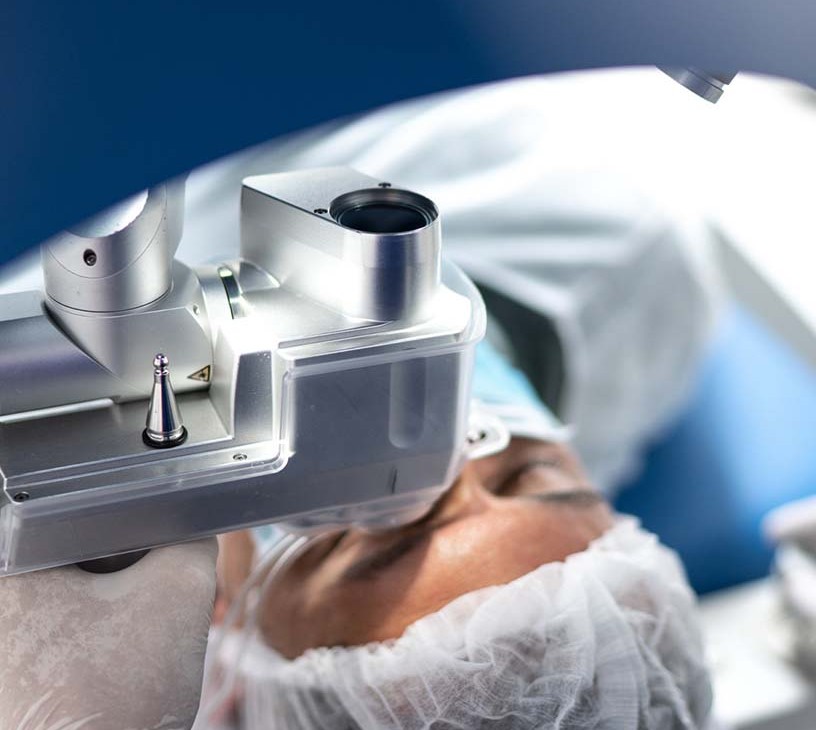


Laser-assisted In Situ Keratomileusis (LASIK) Surgery Market Size 2026-2030
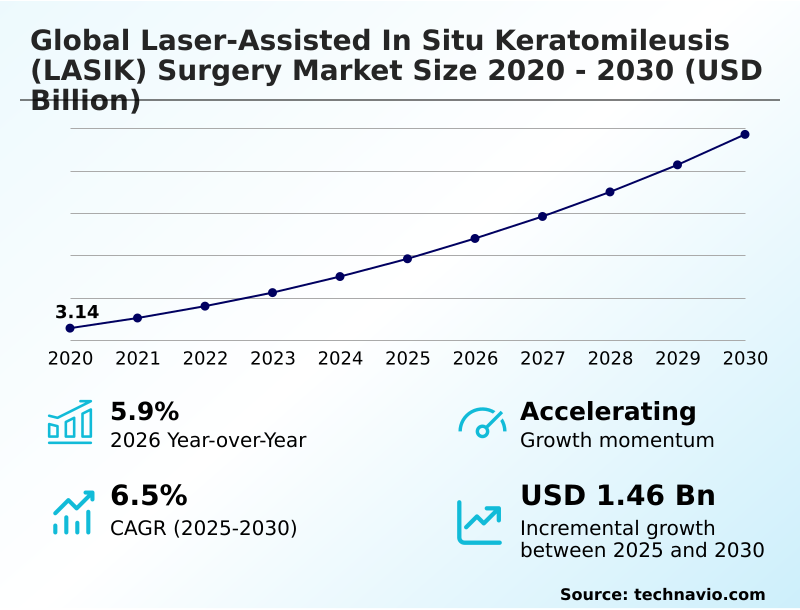
The laser-assisted in situ keratomileusis (lasik) surgery market size is valued to increase by USD 1.46 billion, at a CAGR of 6.5% from 2025 to 2030. Growing preference for quick vision worldwide will drive the laser-assisted in situ keratomileusis (lasik) surgery market.
Major Market Trends & Insights
- North America dominated the market and accounted for a 35.9% growth during the forecast period.
- By Technology - Wavefront-guided segment was valued at USD 1.68 billion in 2024
- By End-user - LASIK centers segment accounted for the largest market revenue share in 2024
Market Size & Forecast
- Market Opportunities: USD 2.29 billion
- Market Future Opportunities: USD 1.46 billion
- CAGR from 2025 to 2030 : 6.5%
Market Summary
- The laser-assisted in situ keratomileusis (LASIK) surgery market represents a highly advanced segment of ophthalmology, focused on correcting refractive errors through sophisticated surgical intervention. The core of this market involves corneal reshaping using either a femtosecond laser or an excimer laser to address conditions like myopia, hyperopia, and astigmatism.
- A key trend shaping the industry is the move towards personalized procedures, such as wavefront-guided ablation and topography-guided treatment, which correct higher-order aberrations to enhance visual acuity beyond what standard methods can achieve. This pursuit of surgical precision is a primary driver.
- For instance, a network of outpatient eye surgery centers can optimize its surgical consumable management and equipment scheduling across multiple locations. By centralizing data on procedure types and patient flow, they can reduce inventory holding costs by 15% and improve equipment utilization, directly impacting operational efficiency and profitability.
- However, the market faces challenges related to the high cost of advanced laser systems and the need for rigorous post-operative care protocols to manage potential complications, which can limit accessibility for some patient demographics.
What will be the Size of the Laser-assisted In Situ Keratomileusis (LASIK) Surgery Market during the forecast period?
Get Key Insights on Market Forecast (PDF) Get Free Sample
How is the Laser-assisted In Situ Keratomileusis (LASIK) Surgery Market Segmented?
The laser-assisted in situ keratomileusis (lasik) surgery industry research report provides comprehensive data (region-wise segment analysis), with forecasts and estimates in "USD million" for the period 2026-2030, as well as historical data from 2020-2024 for the following segments.
- Technology
- Wavefront-guided
- Wavefront-optimized
- Topography-guided
- End-user
- LASIK centers
- Eyecare clinics
- Hospitals
- Type
- Myopia
- Hyperopia
- Astigmatism
- Presbyopia
- Mixed astigmatism
- Age group
- Young adults
- Middle-aged adults
- Elderly
- Geography
- North America
- US
- Canada
- Mexico
- Europe
- Germany
- UK
- France
- Asia
- Rest of World (ROW)
- North America
By Technology Insights
The wavefront-guided segment is estimated to witness significant growth during the forecast period.
The wavefront-guided segment is defined by its use of advanced laser systems for highly personalized vision correction surgery.
This technology leverages detailed wavefront analysis to map the unique optical profile of an eye, identifying not only standard refractive errors but also subtle higher-order aberrations.
Such surgical precision allows surgeons to perform a customized refractive surgery tailored to individual imperfections, leading to improved visual acuity.
For example, clinics adopting this approach for astigmatism correction report that treatment parameter optimization improves visual outcomes by over 15% compared to non-customized methods.
This makes wavefront-guided ablation a critical component in ophthalmic surgical procedures, especially in advanced care settings where superior visual performance metrics are a primary goal and ophthalmic diagnostic tools are state-of-the-art.
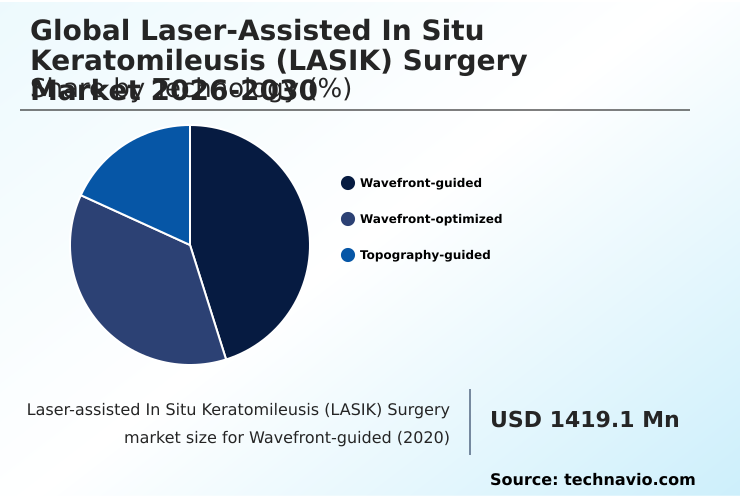
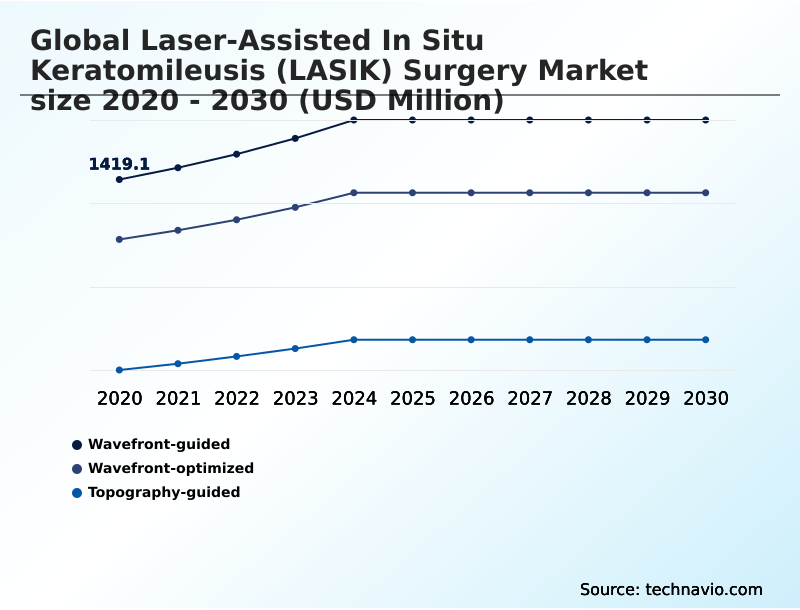
The Wavefront-guided segment was valued at USD 1.68 billion in 2024 and showed a gradual increase during the forecast period.
Regional Analysis
North America is estimated to contribute 35.9% to the growth of the global market during the forecast period.Technavio’s analysts have elaborately explained the regional trends and drivers that shape the market during the forecast period.
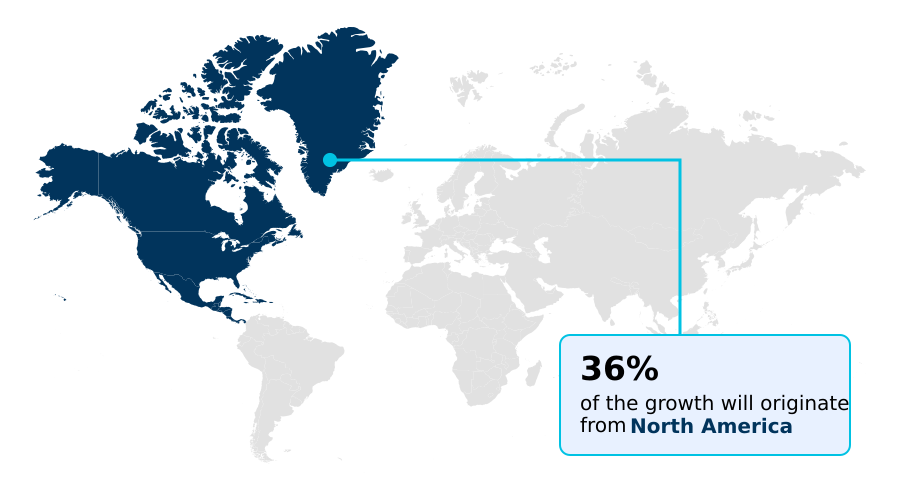
See How Laser-assisted In Situ Keratomileusis (LASIK) Surgery Market Demand is Rising in North America Get Free Sample
Geographically, the market landscape is diverse. North America leads in the adoption of premium technologies like presbyopia treatment and advanced intraocular lens options, supported by high patient awareness and disposable income.
The region’s infrastructure supports a high volume of ophthalmic surgical procedures. In contrast, the Asia Pacific region is experiencing the fastest growth, with procedure volumes increasing nearly 1.5 times faster than in Europe.
This is driven by a rising middle class and increasing access to healthcare in countries like China and India.
Europe maintains a stable market, characterized by strong patient selection criteria and a focus on long-term outcomes, particularly in Germany and the UK. ROW markets are emerging, with growth contingent on improving healthcare infrastructure.
Market Dynamics
Our researchers analyzed the data with 2025 as the base year, along with the key drivers, trends, and challenges. A holistic analysis of drivers will help companies refine their marketing strategies to gain a competitive advantage.
- Strategic decision-making in this market requires a deep understanding of technological nuances and patient outcomes. An in-depth cost-benefit analysis of LASIK vs contact lenses is often the starting point for many prospective patients, influencing clinic marketing and communication strategies.
- For clinicians, the debate between wavefront-guided vs wavefront-optimized LASIK outcomes is central to technology acquisition and patient consultation, as each offers distinct advantages for different refractive profiles. Operationally, leveraging femtosecond laser for corneal flap creation efficiency is a key performance indicator, with advanced systems demonstrating a reduction in procedure time that directly impacts patient throughput and clinic profitability.
- Furthermore, mastering protocols for managing post-LASIK dry eye symptoms effectively is crucial for maintaining high patient satisfaction and minimizing post-operative complications. This directly influences a clinic's reputation and referral rates.
- The ability to perform topography-guided LASIK for irregular corneas represents a significant competitive differentiator, expanding a clinic’s service capabilities to a more complex patient base that was previously ineligible for laser vision correction.
- Clinics specializing in such advanced procedures often report patient satisfaction rates that are nearly 30% higher than centers offering only standard treatments, underscoring the value of investing in specialized technology and expertise to capture high-value market segments.
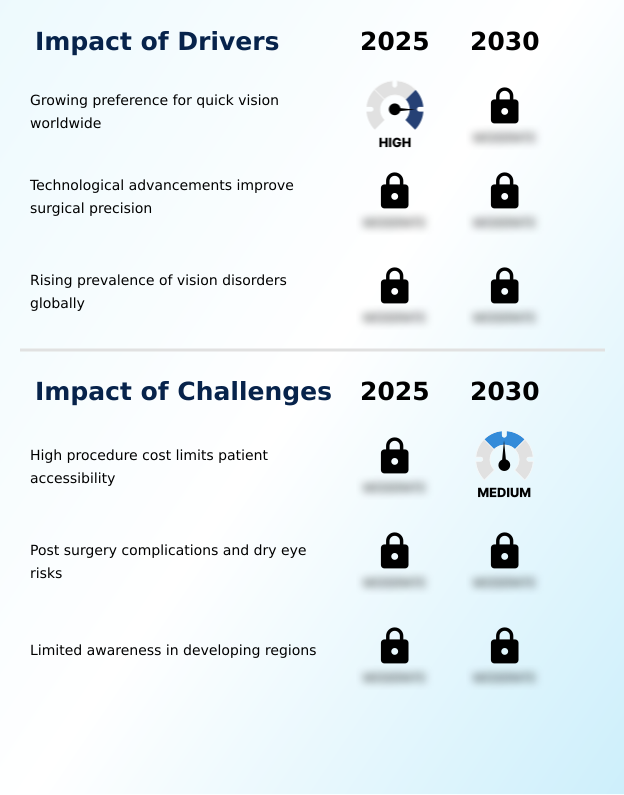
What are the key market drivers leading to the rise in the adoption of Laser-assisted In Situ Keratomileusis (LASIK) Surgery Industry?
- The growing preference for rapid, effective, and long-lasting vision correction solutions is a key driver of growth in the global laser-assisted in situ keratomileusis (LASIK) surgery market.
- Market expansion is significantly propelled by technological advancements in laser vision correction, leading to improved surgical precision and patient satisfaction scores. Innovations in topography-guided treatment allow for highly customized procedures that address specific corneal irregularities, expanding the addressable patient population.
- For instance, the application of these techniques has reduced the need for secondary enhancement procedures by nearly 20%. The growing preference for quick, effective solutions for myopia correction and hyperopia correction is another key driver.
- Efficient surgical center efficiency models are enabling providers to handle higher patient volumes, reducing wait times by an average of 30% and making elective medical procedures more accessible.
What are the market trends shaping the Laser-assisted In Situ Keratomileusis (LASIK) Surgery Industry?
- The increasing adoption of bladeless LASIK procedures represents a significant market trend, driven by patient preferences for safer and more precise vision correction methods.
- A primary trend is the shift toward bladeless LASIK, which utilizes femtosecond laser technology for corneal flap creation, enhancing surgical outcome predictability. This method reduces flap-related complications by over 25% compared to mechanical microkeratomes. Concurrently, the adoption of advanced eye tracking technology integrated into excimer laser platforms ensures greater accuracy during corneal reshaping.
- These systems improve treatment precision by up to 15%, which is crucial for achieving optimal visual acuity. The focus on minimally invasive eye surgery is driving innovation in outpatient eye surgery centers, which are increasingly equipped for these advanced procedures.
What challenges does the Laser-assisted In Situ Keratomileusis (LASIK) Surgery Industry face during its growth?
- The high cost associated with the procedure remains a significant challenge, limiting patient accessibility and potentially constraining market growth.
- A key challenge is managing the high capital expenditure for advanced diagnostic imaging devices and laser systems, which can increase operational overhead for clinics by up to 20%. Ensuring strict regulatory compliance in ophthalmology, including adherence to equipment calibration standards, adds complexity and cost.
- Furthermore, addressing post-operative care protocols, particularly for dry eye management, requires significant resources and can impact clinic profitability. While photorefractive keratectomy (PRK) exists as an alternative, patient education on the differences and managing expectations for recovery from refractive surgery remain critical hurdles. The need for comprehensive surgical consumable management also pressures operational budgets, affecting the overall cost-effectiveness of procedures.
Exclusive Technavio Analysis on Customer Landscape
The laser-assisted in situ keratomileusis (lasik) surgery market forecasting report includes the adoption lifecycle of the market, covering from the innovator’s stage to the laggard’s stage. It focuses on adoption rates in different regions based on penetration. Furthermore, the laser-assisted in situ keratomileusis (lasik) surgery market report also includes key purchase criteria and drivers of price sensitivity to help companies evaluate and develop their market growth analysis strategies.
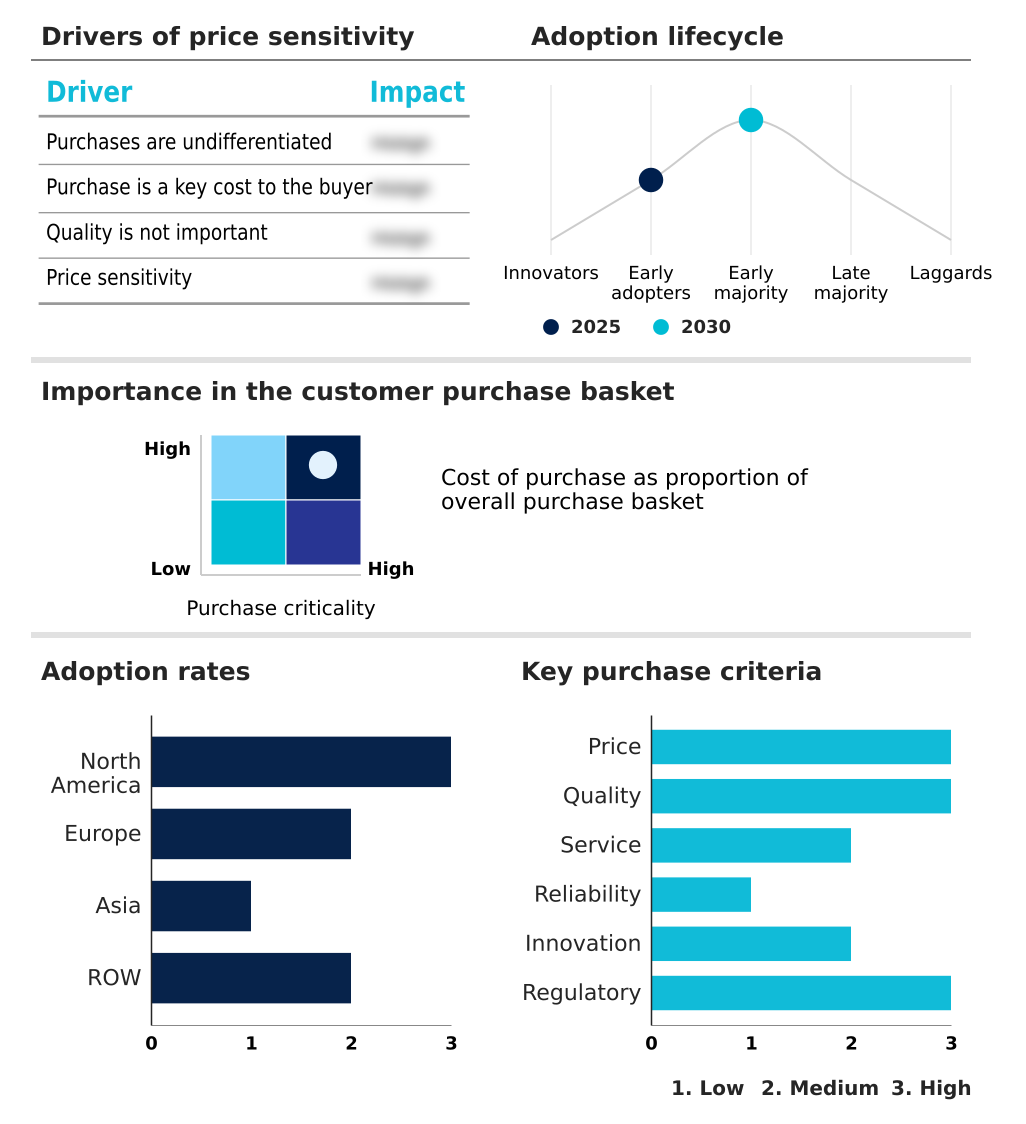
Customer Landscape of Laser-assisted In Situ Keratomileusis (LASIK) Surgery Industry
Competitive Landscape
Companies are implementing various strategies, such as strategic alliances, laser-assisted in situ keratomileusis (lasik) surgery market forecast, partnerships, mergers and acquisitions, geographical expansion, and product/service launches, to enhance their presence in the industry.
Alcon Inc. - Offers advanced laser technologies, including waveLight plus and femtosecond laser systems, for customized refractive vision correction.
The industry research and growth report includes detailed analyses of the competitive landscape of the market and information about key companies, including:
- Alcon Inc.
- Assil Gaur Eye Institute
- Carl Zeiss AG
- Excelsius Medical
- Glaukos Corp.
- Johnson and Johnson Vision Care
- King LASIK
- LASIK MD
- LasikPlus
- LIGHTMED Corp.
- Manhattan LASIK Center
- Mehra Eyetech Pvt. Ltd
- NIDEK Co. Ltd.
- Optical Express Ltd
- Pacific Laser Eye Centre
- QualSight LASIK
- SCHWIND eye-tech-solutions GmbH
- The LASIK Vision Institute
- TLC Vision Corp
- Ziemer Ophthalmic Systems
Qualitative and quantitative analysis of companies has been conducted to help clients understand the wider business environment as well as the strengths and weaknesses of key industry players. Data is qualitatively analyzed to categorize companies as pure play, category-focused, industry-focused, and diversified; it is quantitatively analyzed to categorize companies as dominant, leading, strong, tentative, and weak.
Recent Development and News in Laser-assisted in situ keratomileusis (lasik) surgery market
- In May 2025, Alcon Inc. announced the full commercial launch of its new WaveLight Contoura Vision system in Europe, designed for advanced topography-guided LASIK procedures.
- In February 2025, Johnson and Johnson Vision Care revealed a strategic partnership with a leading digital health platform to integrate pre- and post-operative patient management tools for its iFS Advanced Femtosecond Laser users.
- In November 2024, Carl Zeiss AG completed the acquisition of a Swiss-based AI startup specializing in ophthalmic diagnostic imaging, aiming to enhance the surgical planning capabilities of its MEL excimer laser systems.
- In August 2024, SCHWIND eye-tech-solutions GmbH received FDA approval for its latest ATOS femtosecond laser platform, expanding its footprint in the US market for refractive corneal surgery.
Dive into Technavio’s robust research methodology, blending expert interviews, extensive data synthesis, and validated models for unparalleled Laser-assisted In Situ Keratomileusis (LASIK) Surgery Market insights. See full methodology.
| Market Scope | |
|---|---|
| Page number | 308 |
| Base year | 2025 |
| Historic period | 2020-2024 |
| Forecast period | 2026-2030 |
| Growth momentum & CAGR | Accelerate at a CAGR of 6.5% |
| Market growth 2026-2030 | USD 1464.4 million |
| Market structure | Fragmented |
| YoY growth 2025-2026(%) | 5.9% |
| Key countries | US, Canada, Mexico, Germany, UK, France, Italy, Spain, The Netherlands, China, India, Japan, South Korea, Indonesia, Thailand, Brazil, Saudi Arabia, UAE, Turkey, Argentina, Colombia, South Africa and Israel |
| Competitive landscape | Leading Companies, Market Positioning of Companies, Competitive Strategies, and Industry Risks |
Research Analyst Overview
- The laser-assisted in situ keratomileusis (LASIK) surgery market is defined by continuous innovation in refractive surgery. The drive toward greater surgical precision is pushing the adoption of advanced technologies like wavefront-guided ablation and topography-guided treatment. These methods, which facilitate precise corneal reshaping, are becoming standard in leading outpatient eye surgery centers.
- Key technologies such as the femtosecond laser and excimer laser are fundamental to performing bladeless LASIK, a procedure increasingly demanded by patients for its safety profile in astigmatism correction and myopia correction. Boardroom decisions now center on the high capital investment required for these advanced laser systems and diagnostic imaging devices versus the competitive advantage they provide.
- For example, adopting integrated systems for hyperopia correction has been shown to reduce procedural planning time by up to 25%, a significant operational efficiency gain. This focus on improving visual acuity and minimizing refractive errors through advanced vision correction surgery, including options like photorefractive keratectomy (PRK) and intraocular lens for presbyopia treatment, shapes the competitive landscape.
What are the Key Data Covered in this Laser-assisted In Situ Keratomileusis (LASIK) Surgery Market Research and Growth Report?
-
What is the expected growth of the Laser-assisted In Situ Keratomileusis (LASIK) Surgery Market between 2026 and 2030?
-
USD 1.46 billion, at a CAGR of 6.5%
-
-
What segmentation does the market report cover?
-
The report is segmented by Technology (Wavefront-guided, Wavefront-optimized, and Topography-guided), End-user (LASIK centers, Eyecare clinics, and Hospitals), Type (Myopia, Hyperopia, Astigmatism, Presbyopia, and Mixed astigmatism), Age Group (Young adults, Middle-aged adults, and Elderly) and Geography (North America, Europe, Asia, Rest of World (ROW))
-
-
Which regions are analyzed in the report?
-
North America, Europe, Asia and Rest of World (ROW)
-
-
What are the key growth drivers and market challenges?
-
Growing preference for quick vision worldwide, High procedure cost limits patient accessibility
-
-
Who are the major players in the Laser-assisted In Situ Keratomileusis (LASIK) Surgery Market?
-
Alcon Inc., Assil Gaur Eye Institute, Carl Zeiss AG, Excelsius Medical, Glaukos Corp., Johnson and Johnson Vision Care, King LASIK, LASIK MD, LasikPlus, LIGHTMED Corp., Manhattan LASIK Center, Mehra Eyetech Pvt. Ltd, NIDEK Co. Ltd., Optical Express Ltd, Pacific Laser Eye Centre, QualSight LASIK, SCHWIND eye-tech-solutions GmbH, The LASIK Vision Institute, TLC Vision Corp and Ziemer Ophthalmic Systems
-
Market Research Insights
- Market dynamics are increasingly shaped by the pursuit of superior surgical outcomes and operational efficiency. The integration of advanced ophthalmic diagnostic tools like optical coherence tomography (OCT) into the workflow has enhanced surgical outcome predictability, allowing for better patient selection criteria. Clinics using these tools report a 10% decrease in procedural revisions.
- Moreover, the focus on patient satisfaction scores drives the adoption of technologies that minimize discomfort and recovery time. The emphasis on surgical center efficiency has also become paramount; streamlined post-operative care protocols can reduce follow-up appointments by 20%, optimizing resource allocation. This push for efficiency and quality underpins the competitive landscape for these elective medical procedures.
We can help! Our analysts can customize this laser-assisted in situ keratomileusis (lasik) surgery market research report to meet your requirements.
 RIA -
RIA - 
