



Laundry Folding Robots Market Size 2024-2028
The laundry folding robots market size is forecast to increase by USD 36.02 billion at a CAGR of 60.67% between 2023 and 2028.
- The market is experiencing significant growth driven by the increasing acceptance of personal service robots in households. This trend is being fueled by advancements in robotics technology and the growing demand for labor-saving devices. Additionally, increased funding through partnerships and crowdfunding platforms is enabling startups and established companies to invest in research and development, leading to the launch of innovative folding robots. However, the market is not without challenges. One major obstacle is the inability of robots to effectively fold clothes of extreme sizes or complex shapes. This limitation may hinder the adoption of folding robots in larger households or those with unique clothing items.
- Despite this challenge, companies seeking to capitalize on market opportunities can focus on developing robots with advanced sensors and folding algorithms to overcome this hurdle. By staying abreast of technological advancements and consumer preferences, these companies can navigate challenges and position themselves for long-term success in the market.
What will be the Size of the Laundry Folding Robots Market during the forecast period?
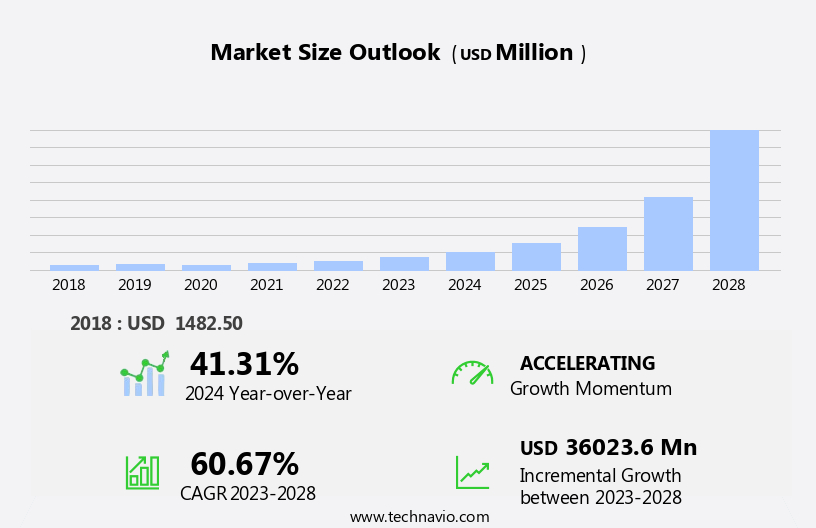
- The market is experiencing significant growth due to the increasing adoption of automation technology in various industries, particularly in the hospitality sector. Semi-automatic and fully automatic robots are increasingly being used in hotels, restaurants, hospitals, and other commercial establishments to streamline laundry operations and improve efficiency. Market dynamics are driven by factors such as the Internet of Things, artificial intelligence, data analytics, and consulting services. Matrix-modeling and image analysis are key technologies enabling these robots to fold clothes accurately and consistently.
- Consumer insights and competitive intelligence are also crucial in shaping market trends. The market size is projected to expand steadily as businesses continue to seek ways to reduce labor costs and enhance customer experience. Business intelligence and IT infrastructure are essential components of the value chain, ensuring seamless integration and operation of these advanced systems.
How is this Laundry Folding Robots Industry segmented?
The laundry folding robots industry research report provides comprehensive data (region-wise segment analysis), with forecasts and estimates in "USD million" for the period 2024-2028, as well as historical data from 2018-2022 for the following segments.
- End-user
- Residential
- Commercial
- Geography
- APAC
- China
- Japan
- North America
- US
- Europe
- France
- Germany
- Middle East and Africa
- South America
- APAC
By End-user Insights
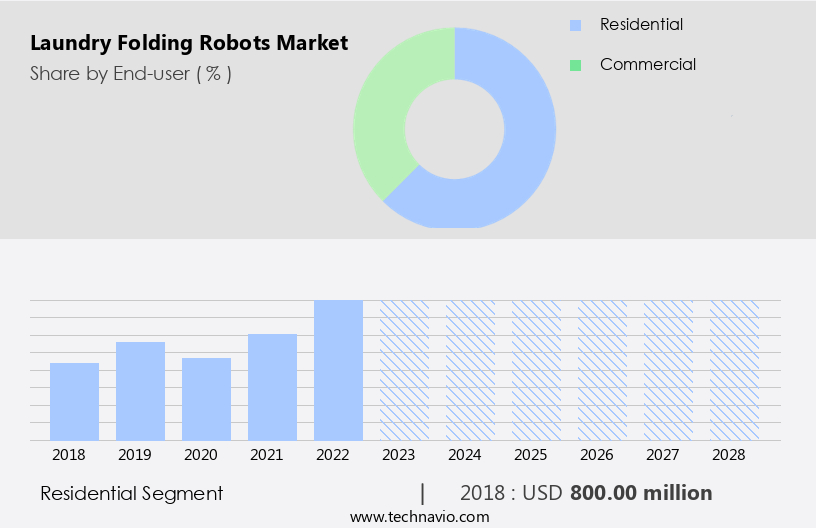
The residential segment is estimated to witness significant growth during the forecast period.
The market is experiencing significant growth, particularly in the residential sector. According to recent studies, sales in this segment are projected to expand at a steady pace, driven by the increasing demand from dual-income families and individuals seeking convenience. However, the high cost of these robots poses a challenge to market expansion. Laundry folding robots, such as FoldiMate, offer simple functionality and user-friendly designs. These devices require users to clip their clothes onto the robot for folding. Additionally, companies have developed dedicated smartphone applications to monitor and manage the robots' operations remotely. Beyond the residential sector, the hospitality industry, including hotels and restaurants, is also exploring the adoption of laundry folding robots.
The integration of automation technology and Internet of Things (IoT) in this sector aims to improve operational efficiency and enhance personal service. Furthermore, healthcare facilities are also considering the implementation of these robots to cater to elderly people and patients with mobility issues. The market's growth is influenced by various social factors, including the increasing middle class population and the desire for personalized services. Funding and development efforts in the field of artificial intelligence and robotics are also contributing to the advancement of laundry folding robots. Businesses can leverage this technology to gain valuable insights through Business Intelligence and optimize their pricing strategies accordingly.
Crowdfunding platforms have emerged as a popular avenue for startups and innovators to secure funding and bring their laundry folding robot concepts to market. As the market continues to evolve, it is essential for businesses to stay informed about the latest trends, assess the potential impact on their IT infrastructure, and consider the pricing implications for their customers.
Get a glance at the market report of share of various segments Request Free Sample
The Residential segment was valued at USD 800.00 billion in 2018 and showed a gradual increase during the forecast period.
Regional Analysis
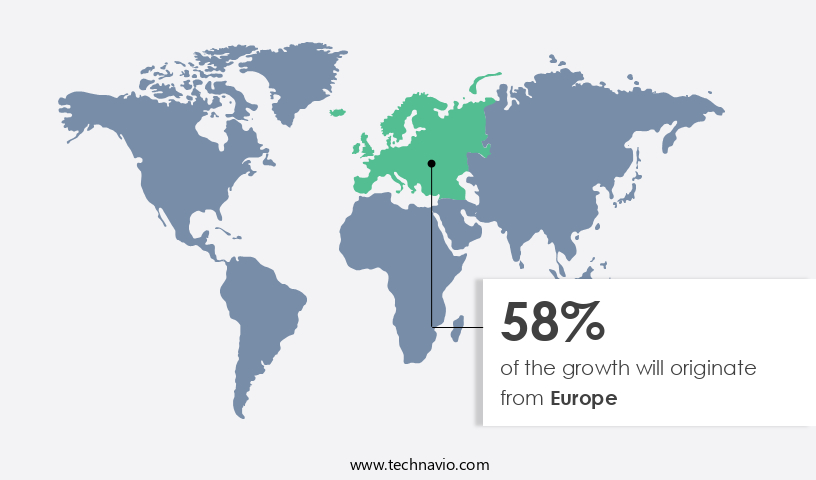
Europe is estimated to contribute 58% to the growth of the global market during the forecast period.Technavio’s analysts have elaborately explained the regional trends and drivers that shape the market during the forecast period.
For more insights on the market size of various regions, Request Free Sample
The market for Laundry Folding Robots is experiencing significant growth, particularly in the APAC region. Factors contributing to this growth include increasing economic prosperity, rising purchasing power and disposable income, a growing working-class population, and the adoption of automated solutions. Japan, in particular, is leading the way with the deployment of laundry folding robots due to high user awareness and an aging population. With a projected increase in the number of elderly individuals living alone, these robots are becoming increasingly essential for undertaking mundane tasks. In the hospitality sector, semi-automatic and fully automatic laundry folding robots are being integrated to enhance personal service and improve business intelligence.
The Internet of Things (IoT) and artificial intelligence are also playing a crucial role in the development of these robots. Funding through various channels, including crowdfunding platforms and consulting firms, is driving innovation in this space. Sales data indicates a positive trend, with companies like Laundroid, FoldiMate, and Personal service robots making strides in the market. The healthcare sector is also showing interest in these robots due to their potential to assist elderly people and those with mobility issues. The pricing strategy and IT infrastructure will be key factors in the adoption of laundry folding robots in various industries.
Market Dynamics
Our researchers analyzed the data with 2023 as the base year, along with the key drivers, trends, and challenges. A holistic analysis of drivers will help companies refine their marketing strategies to gain a competitive advantage.
What are the key market drivers leading to the rise in the adoption of Laundry Folding Robots Industry?
- Growing acceptance of personal service robots is the key driver of the market.
- The market for laundry folding robots has witnessed significant growth in recent years due to the increasing acceptance of automated solutions in daily life. Advanced technologies such as Artificial Intelligence (AI) and the Internet of Things (IoT) have enhanced the capabilities of these robots, enabling them to adapt to the environment and provide valuable insights. The trend toward smart cities is further fueling the demand for automated household appliances, including laundry folding robots. Consumers residing in smart cities are increasingly automating various aspects of their homes, from energy management to domestic assistance.
- The success of robotic vacuum cleaners over the past decade serves as evidence of this trend. As education levels rise and people seek to save time and improve efficiency, the demand for laundry folding robots is poised to continue growing.
What are the market trends shaping the Laundry Folding Robots Industry?
- Increased funding through partnerships and crowdfunding platforms is the upcoming market trend.
- Advanced robotics research, spearheaded by various institutes and governments globally, is a significant trend driving innovation in the market. One notable initiative is SPARC, a European public-private partnership, which includes the European Commission and 180 companies and research academics. With investments totaling USD3.1 billion from 2014-2020, SPARC aims to foster a European robotic hub, encompassing various fields, including consumer robotics. Laundry folding robots are among the consumer robotics sector's innovations that will benefit from this investment.
- This research-driven approach will likely lead to advancements in laundry folding robot technology.
What challenges does the Laundry Folding Robots Industry face during its growth?
- Inability of robots to fold clothes of extreme sizes is a key challenge affecting the industry growth.
- Companies have been investing significantly in research and development of laundry folding robots over the past five years, resulting in the creation of efficient and automated solutions. The integration of advanced technologies such as AI and image processing enables these robots to perform tasks effectively. Sensors are used to fold regular-sized clothes, enhancing productivity and reducing manual intervention. However, the challenge of folding larger items, such as handkerchiefs, bedsheets, or curtains, remains a major obstacle for the market's expansion in the commercial sector.
- Despite this limitation, the increasing demand for labor-saving devices and the potential for increased productivity make laundry folding robots an attractive proposition for businesses.
Exclusive Customer Landscape
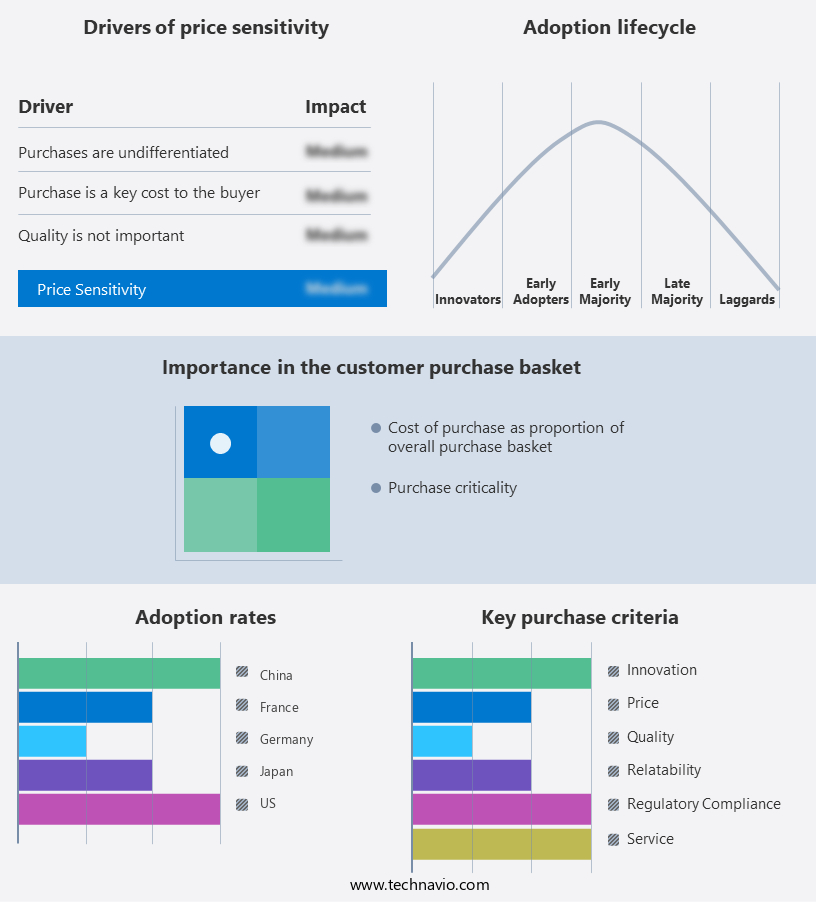
The laundry folding robots market forecasting report includes the adoption lifecycle of the market, covering from the innovator’s stage to the laggard’s stage. It focuses on adoption rates in different regions based on penetration. Furthermore, the laundry folding robots market report also includes key purchase criteria and drivers of price sensitivity to help companies evaluate and develop their market growth analysis strategies.
Customer Landscape
Key Companies & Market Insights
Companies are implementing various strategies, such as strategic alliances, laundry folding robots market forecast, partnerships, mergers and acquisitions, geographical expansion, and product/service launches, to enhance their presence in the industry.
Consolidated Laundry LLC - The company specializes in producing efficient towel folder machines, delivering superior output for textile industries worldwide. These machines, engineered for productivity and quality, streamline production processes and enhance operational excellence.
The industry research and growth report includes detailed analyses of the competitive landscape of the market and information about key companies, including:
- Consolidated Laundry LLC
- Herbert Kannegiesser GmbH
- Panasonic Holdings Corp.
- Ramsons Garment Finishing Equipment Pvt. Ltd.
- Sara Equipments
- Shanghai Flying Fish Machinery Manufacturing Co., Ltd
- Shanghai Jinyi Washing Equipment Manufacturing Co. Ltd
- Shanghai Xunduo laundry Equipment Co,.Ltd.
- Sunrise Garment Machinery Pvt. Ltd.
- Welco Garments Machinery Pvt. Ltd.
Qualitative and quantitative analysis of companies has been conducted to help clients understand the wider business environment as well as the strengths and weaknesses of key industry players. Data is qualitatively analyzed to categorize companies as pure play, category-focused, industry-focused, and diversified; it is quantitatively analyzed to categorize companies as dominant, leading, strong, tentative, and weak.
Research Analyst Overview
The market has witnessed significant advancements in recent years, driven by the increasing adoption of automation technology in various industries. The Internet of Things (IoT) has played a pivotal role in the development of these robots, enabling them to connect and communicate with other devices and systems. The hospitality sector has been an early adopter of laundry folding robots, recognizing the potential benefits for enhancing guest experiences and streamlining operations. Sales data indicates a growing trend towards the use of semi-automatic and fully automatic robots in hotels and restaurants. Consumer insights suggest that the middle class and elderly population are particularly interested in the convenience and time-saving benefits of these robots.
Personal service robots, such as Laundroid and Foldimate, have gained popularity for their ability to fold clothes efficiently and accurately. Artificial intelligence (AI) and business intelligence are key technologies driving the advancements in laundry folding robots. Matrix-modeling and assessment algorithms enable the robots to learn and adapt to different fabric types and folding styles. Funding and development efforts in this market have been , with various sources of financing available through consulting firms, IT infrastructure providers, and crowdfunding platforms. Pricing strategies have been a critical factor in the market's growth, with manufacturers offering promotions and customizable solutions to cater to various customer segments.
The healthcare sector has also shown interest in laundry folding robots for their potential to improve hygiene and reduce labor costs in hospitals. The use of robots in this sector is expected to increase as healthcare facilities seek to optimize their operations and improve patient care. The integration of laundry folding robots into businesses requires careful assessment of their impact on workflows and IT infrastructure. Consulting firms offer valuable insights and expertise to help organizations navigate the implementation process and maximize the benefits of these technologies. In , the market is poised for continued growth, driven by the increasing adoption of automation technology and the demand for personalized and efficient solutions in various industries.
The integration of AI and business intelligence is expected to further enhance the capabilities of these robots and drive innovation in the market.
|
Market Scope |
|
|
Report Coverage |
Details |
|
Page number |
137 |
|
Base year |
2023 |
|
Historic period |
2018-2022 |
|
Forecast period |
2024-2028 |
|
Growth momentum & CAGR |
Accelerate at a CAGR of 60.67% |
|
Market growth 2024-2028 |
USD 36023.6 million |
|
Market structure |
Concentrated |
|
YoY growth 2023-2024(%) |
41.31 |
|
Key countries |
China, US, Germany, Japan, and France |
|
Competitive landscape |
Leading Companies, Market Positioning of Companies, Competitive Strategies, and Industry Risks |
What are the Key Data Covered in this Laundry Folding Robots Market Research and Growth Report?
- CAGR of the Laundry Folding Robots industry during the forecast period
- Detailed information on factors that will drive the growth and forecasting between 2024 and 2028
- Precise estimation of the size of the market and its contribution of the industry in focus to the parent market
- Accurate predictions about upcoming growth and trends and changes in consumer behaviour
- Growth of the market across APAC, North America, Europe, Middle East and Africa, and South America
- Thorough analysis of the market’s competitive landscape and detailed information about companies
- Comprehensive analysis of factors that will challenge the laundry folding robots market growth of industry companies
We can help! Our analysts can customize this laundry folding robots market research report to meet your requirements.
 RIA -
RIA - 
