



Ligases Enzyme Market Size 2024-2028
The ligases enzyme market size is forecast to increase by USD 4.61 billion at a CAGR of 10.1% between 2023 and 2028.
- The market is witnessing significant growth due to the increasing demand for these enzymes in disease treatment applications. Ligases play a crucial role in DNA synthesis and repair, making them essential in various therapeutic procedures. Moreover, the usage of ligases in advanced technologies like qPCR and digital PCR (dPCR) systems is driving market growth. However, limitations associated with ligases enzymes, such as high cost and limited stability, pose challenges to market expansion. Despite these challenges, the market is expected to experience steady growth due to the expanding applications of ligases in molecular biology and genetic engineering. The market trends and analysis report provides an in-depth examination of these growth factors and the challenges influencing the market.
What will be the Size of the Ligases Enzyme Market During the Forecast Period?
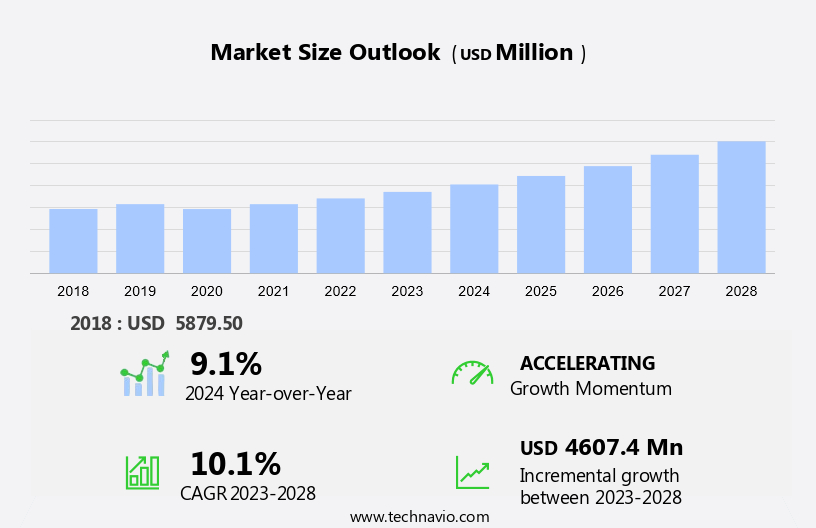
- The market is experiencing significant growth due to the increasing prevalence of genetic abnormalities, infectious illnesses, and cancer. Ligases play a crucial role in various therapeutic strategies, including DNA repair mechanisms, genetic engineering, and molecular diagnostics. Biotechnology organizations are leveraging ligases in protein engineering, polymerase chain reaction (PCR), mutation detection, cloning, and next-generation sequencing. Ligases are also utilized as drug targets In the development of therapeutic interventional benefits for tuberculosis, influenza viruses, and cancer. The market is driven by the increasing demand for biomarkers in clinical trials and the integration of ligase-based assays in molecular biology laboratories. The emergence of CRISPR-based technologies and isothermal amplification methods further expands the application scope of engineered ligases in synthetic biology and personalized medicine. The market is poised for continued growth as these technologies advance and find wider adoption in drug development.
How is this Ligases Enzyme Industry segmented and which is the largest segment?
The industry research report provides comprehensive data (region-wise segment analysis), with forecasts and estimates in "USD billion" for the period 2024-2028, as well as historical data from 2018-2022 for the following segments.
- Source
- Microorganism
- Animal
- Plant
- Geography
- North America
- Canada
- US
- Europe
- Germany
- UK
- France
- Italy
- Asia
- China
- India
- Japan
- South Korea
- Rest of World (ROW)
- North America
By Source Insights
- The microorganism segment is estimated to witness significant growth during the forecast period. Ligases enzymes, sourced from microorganisms, play a crucial role in molecular biology and biotechnology. These enzymes can be categorized into ATP-dependent and NAD-dependent ligases. ATP-dependent ligases are prevalent in eukaryotes and archaea, while NAD-dependent ligases are unique to eubacteria and entomopoxvirinae. Notable ligases include E. Coli DNA ligase (NAD-dependent), T4 DNA ligase, and T4 RNA ligase. E. Coli DNA ligase, also known as E. Coli ligase, is a widely used NAD-dependent ligase in molecular cloning. It facilitates the formation of phosphodiester bonds between double-stranded DNA fragments, enabling the joining of 5'-phosphate termini and 3'-hydroxyl termini. These enzymes contribute significantly to various applications, including genetic abnormalities, infectious illnesses, cancer prevalence, therapeutic agents, and biotechnology organizations.
- Applications include protein engineering, polymerase chain reaction (PCR), mutation detection, cloning, drug target discovery, next-generation sequencing (NGS), DNA repair abnormalities, hereditary cancers, genomic instability, and chronic illnesses. Ligases are integral to therapeutic strategies, biomarkers, clinical trials, real-time PCR, and diagnostic strategies. They are essential in molecular biology laboratories, pharmaceutical, and diagnostic equipment industries.
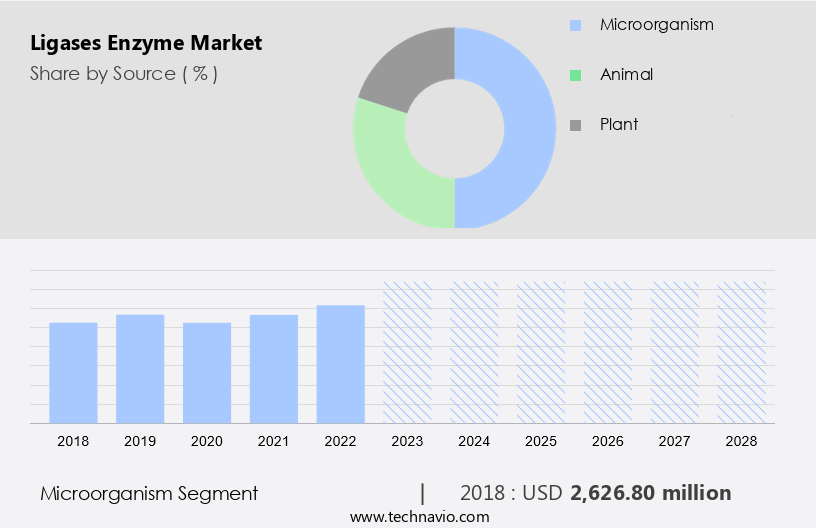
Get a glance at the Ligases Enzyme Industry report of share of various segments Request Free Sample
The Microorganism segment was valued at USD 2.63 billion in 2018 and showed a gradual increase during the forecast period.
Regional Analysis
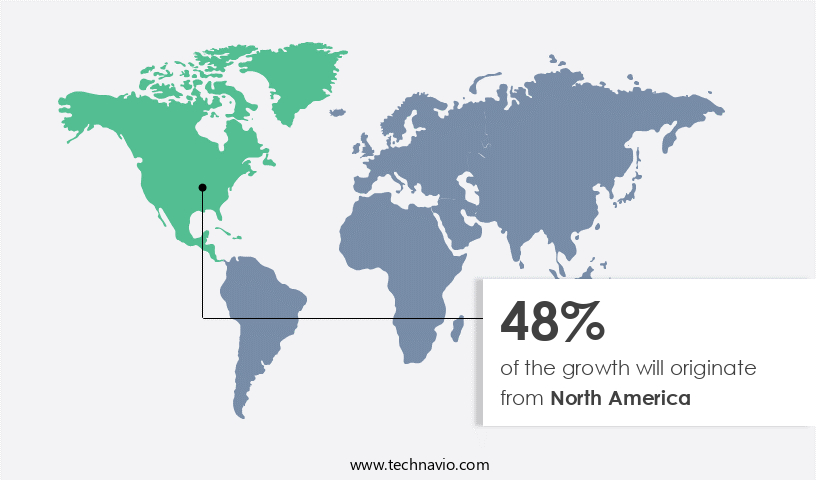
- North America is estimated to contribute 48% to the growth of the global market during the forecast period. Technavio's analysts have elaborately explained the regional trends and drivers that shape the market during the forecast period.
For more insights on the market share of various regions, Request Free Sample
The market in North America, with the US as the leading contributor, is driven by the presence of numerous biotechnology organizations and molecular biology laboratories In the region. These entities utilize ligases for various applications, including DNA repair mechanisms, protein engineering, and molecular cloning. Ligases, such as T4 DNA ligase and mammalian ligases, play crucial roles in recombinant DNA technology, polymerase chain reaction (PCR), and next-generation sequencing (NGS) technologies. In healthcare, ligases are employed for mutation detection, cloning, and drug target identification In therapeutic strategies for genetic diseases, chronic illnesses, hereditary cancers, and DNA repair abnormalities. In the diagnostic sector, ligase-based assays, such as ligase detection reaction (LDR), rolling circle amplification (RCA), proximity ligation assay (PLA), and ligase chain reaction (LCR), are used for infectious diseases, genetic disorders, and syndromic-based infectious diseases. The market is further driven by the development of engineered ligases, CRISPR-based technologies, and isothermal amplification methods. The market statistics indicate steady growth, with increasing demand for these enzymes in the biotechnology, pharmaceutical, and diagnostic equipment industries.
Market Dynamics
Our researchers analyzed the data with 2023 as the base year, along with the key drivers, trends, and challenges. A holistic analysis of drivers will help companies refine their marketing strategies to gain a competitive advantage.
What are the key market drivers leading to the rise In the adoption of Ligases Enzyme Industry?
- The growing need for ligases in disease treatment is the key driver of the market. The market is witnessing significant growth due to the increasing prevalence of genetic abnormalities, infectious illnesses, and cancer. According to the Centers for Disease Control and Prevention (CDC), In the US, over 1.6 million individuals are diagnosed with cancer annually, resulting in nearly 600,000 fatalities. Additionally, genetic disorders, such as congenital disabilities, affect one in every 33 babies (approximately 3%). Infectious diseases caused by pathogens, including bacteria, viruses, fungi, and parasites, are on the rise, leading to conditions like hepatitis, herpes, urinary tract infections, and bladder infections. Genetic abnormalities and hereditary cancers are driving the need for therapeutic agents and diagnostic strategies.
- Biotechnology organizations and molecular biology laboratories are investing in protein engineering, recombinant DNA, and molecular cloning to develop new therapeutic interventions. Next-generation sequencing (NGS) technologies, such as T4 DNA ligase, are revolutionizing drug development and molecular diagnostics. NGS technologies are also crucial In the detection of mutations and DNA repair abnormalities. Ligase-based assays, including ligase detection reaction (LDR), rolling circle amplification (RCA), proximity ligation assay (PLA), and ligase chain reaction (LCR), are essential tools in molecular diagnostics and personalized medicine. The increasing prevalence of chronic illnesses, such as cancer and genetic diseases, necessitates the development of new therapeutic strategies and biomarkers for clinical trials.
What are the market trends shaping the Ligases Enzyme Industry?
- Usage in qPCR and digital PCR (dPCR) systems is the upcoming market trend. The market is experiencing notable expansion due to the escalating utilization of ligases in various applications, particularly in quantitative Polymerase Chain Reaction (qPCR) and digital PCR (dPCR) technologies. In molecular biology, ligases play a pivotal role by joining DNA fragments during the synthesis of templates for amplification in qPCR systems. The efficiency of ligation significantly impacts the success of these assays, as superior ligation products yield better amplification and more dependable results. The growing adoption of qPCR for gene expression analysis and pathogen detection in clinical diagnostics, research, and biotechnology sectors is fueling the demand for specialized ligases. Genetic abnormalities, infectious illnesses, cancer prevalence, and chronic illnesses are some areas where ligases are extensively used for mutation detection, cloning, drug target identification, and DNA repair mechanisms.
- Next-generation sequencing (NGS) technologies and polymerase chain reaction (PCR)-based techniques are also driving the market growth. Molecular biology laboratories, pharmaceutical companies, and diagnostic equipment manufacturers are investing In the development of advanced ligases, such as T4 DNA ligase, mammalian ligases, thermostable ligases, and engineered ligases, to cater to the increasing demand. CRISPR-based technologies, ligase-based assays, ligase chain reaction (LCR), proximity ligation assay (PLA), and real-time PCR are some of the emerging applications of ligases in molecular diagnostics, therapeutic strategies, and personalized medicine. The market is poised for substantial growth, as these technologies continue to evolve and gain acceptance in various industries.
What challenges does the Ligases Enzyme Industry face during its growth?
- Limitations associated with ligases enzymes is a key challenge affecting the industry growth. Ligases enzymes play a crucial role in molecular biology, particularly In the repair of genetic abnormalities and the development of therapeutic agents. These enzymes facilitate the joining of DNA strands, enabling processes such as cloning, mutation detection, and DNA repair mechanisms. In the field of genetic diseases, ligases have been instrumental In the detection and treatment of genetic disorders, including hereditary cancers and chromosomal abnormalities. In the context of biotechnology organizations and pharmaceutical research, ligases have been employed in protein engineering and polymerase chain reaction (PCR) techniques. Next-generation sequencing (NGS) technologies have also relied on ligases for recombinant DNA and DNA repair abnormalities.
- Ligases have been used as drug targets in cancer therapeutic strategies, with therapeutic interventional benefits In the treatment of chronic illnesses such as tuberculosis and influenza viruses. Despite their importance, ligases enzymes have limitations. For instance, some ligases have limited activity on short cohesive and blunt substrates and are not suitable for end-joining reactions. Additionally, their activity is influenced by various factors, including DNA concentration, temperature, ligase concentration, and buffer composition, which restrict their usage for specific applications. Mammalian ligases and thermostable ligases have gained popularity due to their ability to circularize double-stranded DNA (dsDNA) and their high specificity.
Exclusive Customer Landscape
The market forecasting report includes the adoption lifecycle of the market, covering from the innovator's stage to the laggard's stage. It focuses on adoption rates in different regions based on penetration. Furthermore, the market report also includes key purchase criteria and drivers of price sensitivity to help companies evaluate and develop their market growth analysis strategies.
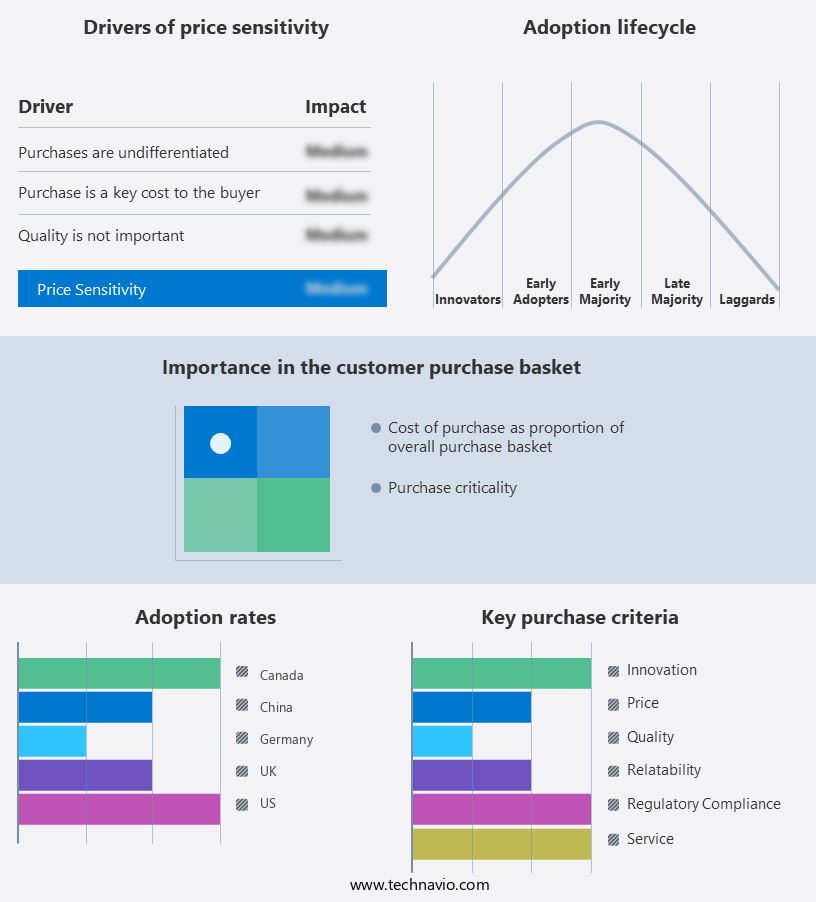
Customer Landscape
Key Companies & Market Insights
Companies are implementing various strategies, such as strategic alliances, market forecast, partnerships, mergers and acquisitions, geographical expansion, and product/service launches, to enhance their presence In the industry.
The industry research and growth report includes detailed analyses of the competitive landscape of the market and information about key companies, including:
- Advanced Enzyme Technologies Ltd.
- Agilent Technologies Inc.
- Amano Enzyme Inc.
- ArcticZymes Technologies ASA
- Axon Medchem B.V
- BASF SE
- Bio Techne Corp.
- biotechrabbit GmbH
- Codexis Inc
- F. Hoffmann La Roche Ltd.
- Merck KGaA
- New England Biolabs Inc.
- Novo Holdings AS
- NZYTech
- Promega Corp.
- Prospec Tany Technogene Ltd.
- QIAGEN N.V.
- Takara Bio Inc.
- Thermo Fisher Scientific Inc.
Qualitative and quantitative analysis of companies has been conducted to help clients understand the wider business environment as well as the strengths and weaknesses of key industry players. Data is qualitatively analyzed to categorize companies as pure play, category-focused, industry-focused, and diversified; it is quantitatively analyzed to categorize companies as dominant, leading, strong, tentative, and weak.
Research Analyst Overview
The market holds significant potential due to the increasing demand for advanced molecular biology techniques in various industries, including biotechnology, pharmaceuticals, and diagnostics. Ligases are essential enzymes that catalyze the formation of phosphodiester bonds between DNA strands, playing a crucial role in DNA repair mechanisms, recombinant DNA technology, and molecular cloning. Genetic abnormalities, infectious illnesses, and cancer are major health concerns driving the need for ligase enzymes In therapeutic strategies. Genetic diseases, such as sickle cell anemia and cystic fibrosis, can benefit from ligase-based therapeutic interventions. Infectious diseases, including tuberculosis and influenza viruses, require diagnostic strategies that utilize ligase enzymes for mutation detection and real-time PCR.
Moreover, cancer, a leading cause of mortality worldwide, can be diagnosed and treated using ligase-based assays, such as LCR and NGS technologies. Biotechnology organizations and molecular biology laboratories are key players In the ligase enzyme market. These entities rely on ligases for protein engineering, cloning, and DNA repair abnormalities. Hereditary cancers and genomic instability are significant areas of research, driving the development of engineered ligases and CRISPR-based technologies. The ligase enzyme market is influenced by several factors, including technological advancements, regulatory frameworks, and market trends. Next-generation sequencing (NGS) technologies and isothermal amplification methods, such as LCR, have revolutionized molecular diagnostics and personalized medicine.
Furthermore, synthetic biology and drug development also contribute to the growing demand for ligase enzymes. Mammalian ligases and thermostable ligases are essential for various applications in molecular biology. The ligase detection reaction (LDR) and rolling circle amplification (RCA) are essential techniques that rely on these enzymes. Proximity ligation assays (PLA) and ligase chain reaction (LCR) are other ligase-based methods used for protein-protein interaction analysis and pathogen detection, respectively. In summary, the ligase enzyme market is a dynamic and growing sector, driven by the increasing demand for advanced molecular biology techniques in various industries. Ligases play a crucial role in DNA repair mechanisms, recombinant DNA technology, and molecular cloning, making them essential for genetic research and therapeutic interventions.
|
Market Scope |
|
|
Report Coverage |
Details |
|
Page number |
162 |
|
Base year |
2023 |
|
Historic period |
2018-2022 |
|
Forecast period |
2024-2028 |
|
Growth momentum & CAGR |
Accelerate at a CAGR of 10.1% |
|
Market growth 2024-2028 |
USD 4.61 billion |
|
Market structure |
Fragmented |
|
YoY growth 2023-2024(%) |
9.1 |
|
Key countries |
US, Germany, UK, Canada, China, India, Japan, South Korea, France, and Italy |
|
Competitive landscape |
Leading Companies, Market Positioning of Companies, Competitive Strategies, and Industry Risks |
What are the Key Data Covered in this Ligases Enzyme Market Research and Growth Report?
- CAGR of the Ligases Enzyme industry during the forecast period
- Detailed information on factors that will drive the market growth and forecasting between 2024 and 2028
- Precise estimation of the size of the market and its contribution of the industry in focus to the parent market
- Accurate predictions about upcoming growth and trends and changes in consumer behaviour
- Growth of the market across North America, Europe, Asia, and Rest of World (ROW)
- Thorough analysis of the market's competitive landscape and detailed information about companies
- Comprehensive analysis of factors that will challenge the ligases enzyme market growth of industry companies
We can help! Our analysts can customize this ligases enzyme market research report to meet your requirements.
 RIA -
RIA - 
