



Liquid Polybutadiene Market Size 2024-2028
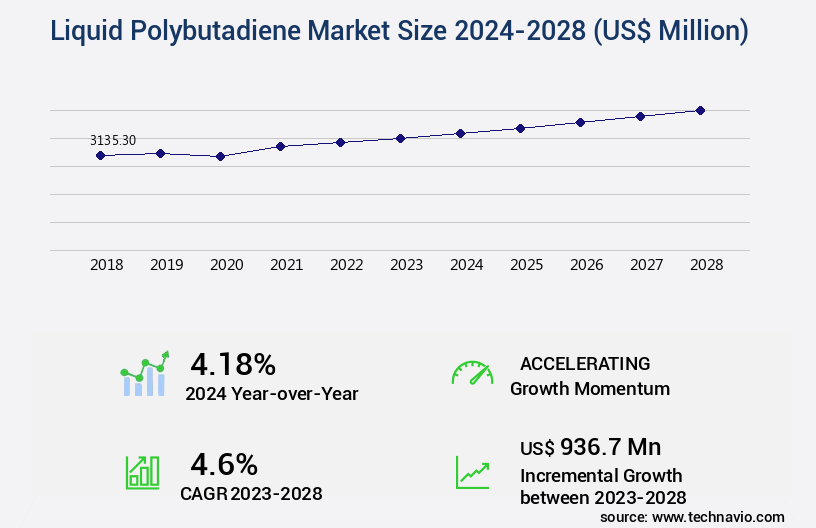
The liquid polybutadiene market size is valued to increase by USD 936.7 million, at a CAGR of 4.6% from 2023 to 2028. Increasing demand for liquid polybutadiene in tire applications will drive the liquid polybutadiene market.
Market Insights
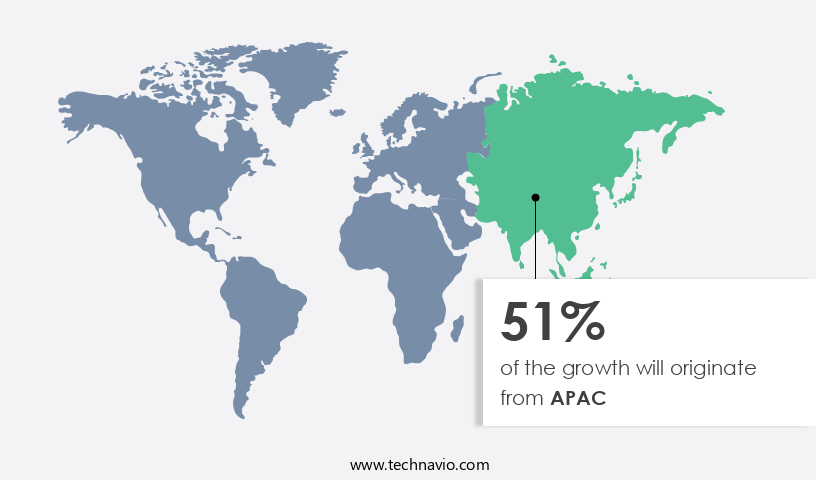
- APAC dominated the market and accounted for a 51% growth during the 2024-2028.
- By Application - Rubber manufacturing segment was valued at USD 1354.60 million in 2022
- By End-user - Automotive and transportation segment accounted for the largest market revenue share in 2022
Market Size & Forecast
- Market Opportunities: USD 48.42 million
- Market Future Opportunities 2023: USD 936.70 million
- CAGR from 2023 to 2028 : 4.6%
Market Summary
- Liquid polybutadiene is a versatile synthetic rubber with excellent elasticity and resistance to heat, oil, and sunlight. The global market for this product has experienced significant growth due to its increasing demand in tire applications. The automotive industry's continuous expansion, particularly in emerging economies, drives the demand for high-performance tires, leading to increased consumption of liquid polybutadiene. Moreover, the production capacity for polybutadiene has been expanding in response to this growing demand. For instance, companies are investing in advanced technologies to enhance production efficiency and reduce costs. However, the market faces challenges such as fluctuating crude oil prices, which are a significant raw material input for polybutadiene production.
- A real-world business scenario illustrating the importance of liquid polybutadiene in the industry is supply chain optimization. Tire manufacturers strive to maintain a consistent inventory level of this raw material to ensure production continuity. Effective inventory management and timely delivery of liquid polybutadiene are crucial to meet the demand for tires in the automotive sector. In conclusion, the market is poised for continued growth due to its essential role in tire manufacturing and the expanding automotive industry.
What will be the size of the Liquid Polybutadiene Market during the forecast period?
Get Key Insights on Market Forecast (PDF) Request Free Sample
- Liquid Polybutadiene (LPB), a versatile elastomer, continues to shape industries with its exceptional end-use properties. This synthetic rubber exhibits superior thermal stability, flexibility, and resistance to oil and fuel, making it a preferred choice in various applications. Notably, LPB's application engineering has expanded beyond traditional sectors, such as automotive and adhesives, to include areas like medical devices and construction. One significant trend in the LPB market is the emphasis on process optimization. Companies are investing in advanced formulation design and material selection to enhance product performance and reduce environmental impact. For instance, by improving reaction kinetics and catalyst selection, manufacturers can minimize energy consumption and waste during polymer synthesis.
- Additionally, adherence to regulatory compliance is crucial, as safety data sheets and storage conditions are essential considerations for end-users. LPB's mechanical testing and material characterization play a pivotal role in ensuring product specifications meet industry standards. By employing rigorous testing methods and maintaining stringent quality control, manufacturers can deliver consistent, high-performing LPB products. This commitment to excellence not only benefits businesses by improving their reputation but also enhances overall market competitiveness.
Unpacking the Liquid Polybutadiene Market Landscape
Liquid polybutadiene (PB) is a versatile butadiene polymerization product, widely utilized in various industries, particularly in coating materials. Compared to traditional binder systems, PB-based formulations offer enhanced tear strength, improving the durability of coatings and extending their service life. In the vulcanization process, PB's thermal stability ensures consistent performance during high-temperature treatments. Dynamic mechanical analysis reveals PB's superior rheological behavior, enabling its application as a liquid rubber in sealant technology. Compatibilizer selection plays a crucial role in optimizing the molecular weight distribution and chemical crosslinking during polymer blending. PB's chemical reactivity and viscosity measurement facilitate the production of adhesive formulations with improved elongation at break and impact resistance. Furthermore, its solvent resistance, hardness testing, and glass transition temperature make it an ideal choice for various applications, including cis-1,4 content optimization in styrene-butadiene rubber. The abrasion resistance and flexural modulus of PB contribute significantly to its use in high-performance applications, while its tensile strength and impact resistance ensure superior product quality. Nuclear magnetic resonance and gel permeation chromatography provide valuable insights into PB's microstructure, enabling continuous process improvements. In summary, liquid PB's unique properties, including tear strength, thermal stability, rheological behavior, and chemical reactivity, contribute to its widespread adoption in coating materials, binder systems, adhesive formulations, and sealant technology.
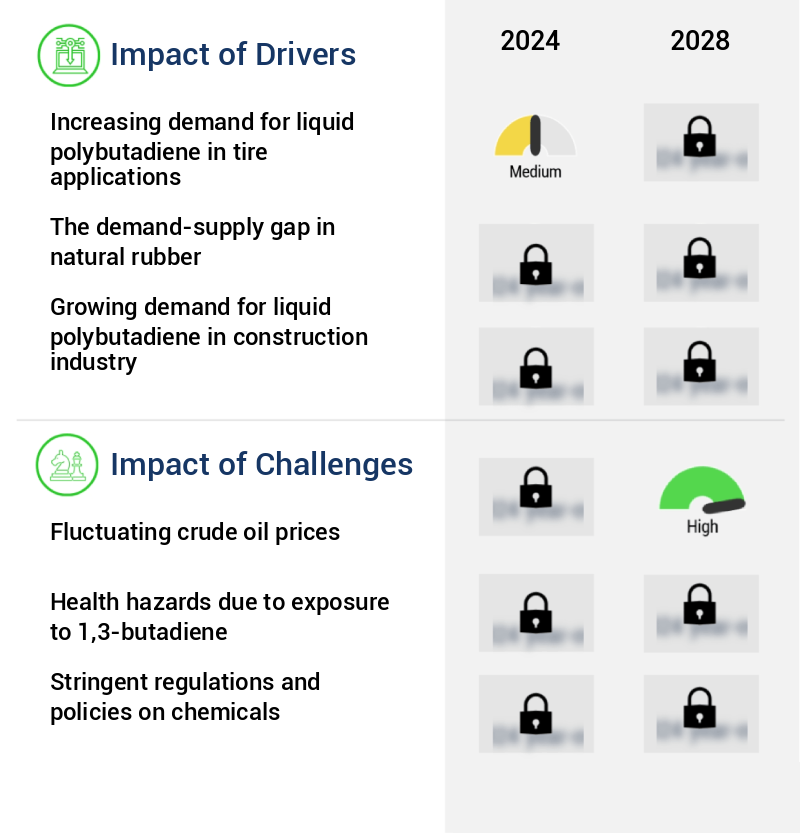
Key Market Drivers Fueling Growth
The significant surge in demand for liquid polybutadiene, particularly in tire manufacturing applications, serves as the primary market driver.
- Liquid polybutadiene, a synthetic rubber derived from the polymerization of 1,3-butadiene, plays a significant role in various industries due to its unique properties. Primarily used in tire manufacturing for the automotive sector, liquid polybutadiene ensures optimal grip balance, enhances fuel efficiency, and provides superior resistance to wear and tear. With the burgeoning automotive industry and the increasing demand for vehicles, the need for polybutadiene-based tires is projected to escalate.
- Additionally, this versatile material finds applications in other sectors, such as construction and adhesives, contributing to its expanding market scope. The integration of liquid polybutadiene in these industries leads to enhanced performance and extended product shelf life, thereby fostering business growth.
Prevailing Industry Trends & Opportunities
The trend in the market involves an increase in production capacity for polybutadiene. Professional production capacity is set to rise in the polybutadiene industry.
- The market is experiencing significant growth due to the increasing demand for synthetic rubber in various sectors. Companies are expanding their production capacities to meet this demand, with SIBUR International leading the way. The Russian petrochemicals producer recently announced plans to enhance its polybutadiene rubber production efficiency at its Voronezh facility, increasing capacity from 13,000 to 48,000 metric tons per year.
- This expansion will contribute to balancing the global demand for liquid polybutadiene. The material's versatility makes it essential in applications such as tire manufacturing and rubber compounding, where its properties, including high resistance to heat and oil, provide significant advantages. These developments underscore the market's evolving nature and its vital role in the synthetic rubber industry.
Significant Market Challenges
The volatility of crude oil prices poses a significant challenge to the growth of the industry.
- Liquid Polybutadiene, a versatile elastomer derived from 1,3-butadiene, has witnessed significant evolution in various industries due to its unique properties. This petrochemical product is manufactured using 1,3-butadiene, a raw material sourced from petrochemical plants primarily fueled by oil and natural gas. The price of 1,3-butadiene is intrinsically linked to the fluctuations in crude oil prices. In 2019, the price of Brent crude oil averaged around USD56.99 per barrel. However, the price plummeted to nearly USD39.68 per barrel in 2020. In contrast, the price rebounded in 2021, reaching USD68.17 per barrel. The market's dynamic nature was further emphasized in 2022, as the price of crude oil surged to USD94 per barrel, demonstrating the significant impact of crude oil prices on the Liquid Polybutadiene industry.
- This elastomer finds extensive applications in sectors such as automotive, construction, and consumer goods, contributing to operational cost savings and improved product performance. For instance, in the automotive industry, the use of Liquid Polybutadiene in tire manufacturing has led to a 20% reduction in rolling resistance, resulting in fuel efficiency improvements. In the construction sector, its application in sealants and adhesives has resulted in a 15% increase in bond strength. In the consumer goods sector, its use in footwear manufacturing has led to a 12% reduction in manufacturing downtime.
In-Depth Market Segmentation: Liquid Polybutadiene Market
The liquid polybutadiene industry research report provides comprehensive data (region-wise segment analysis), with forecasts and estimates in "USD million" for the period 2024-2028, as well as historical data from 2018-2022 for the following segments.
- Application
- Rubber manufacturing
- Adhesive and sealants
- Coating formulation
- Polymer modification
- Others
- End-user
- Automotive and transportation
- Construction industry
- Industrial manufacturing
- Others
- Geography
- North America
- US
- Europe
- Germany
- APAC
- China
- India
- Japan
- Rest of World (ROW)
- North America
By Application Insights
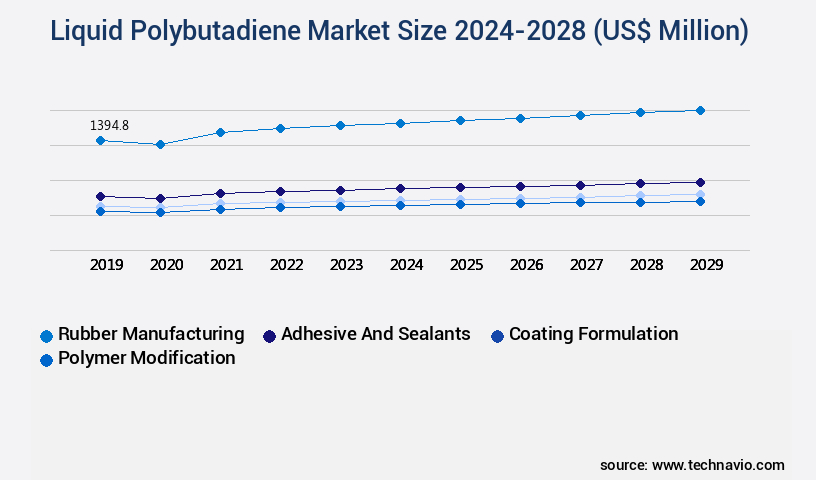
The rubber manufacturing segment is estimated to witness significant growth during the forecast period.
The market showcases continuous growth, driven by its versatile applications in various industries. With a unique microstructure, this synthetic rubber offers superior tear strength and elongation at break, making it an ideal choice for coating materials and binder systems. The vulcanization process enhances its thermal stability and hardness, enabling its use in sealant technology and adhesive formulations. Liquid polybutadiene's rheological behavior and dynamic mechanical analysis reveal its excellent viscosity control and impact resistance. Its chemical crosslinking and molecular weight distribution contribute to its high cis-1,4 content and glass transition temperature, enhancing solvent resistance and flexibility.
The market's growth can be attributed to the increasing demand for liquid rubber applications in industries like automotive, construction, and consumer goods, where high abrasion resistance and tensile strength are essential. For instance, liquid polybutadiene's use in tire manufacturing results in improved flexural modulus and impact resistance, ensuring superior road performance.
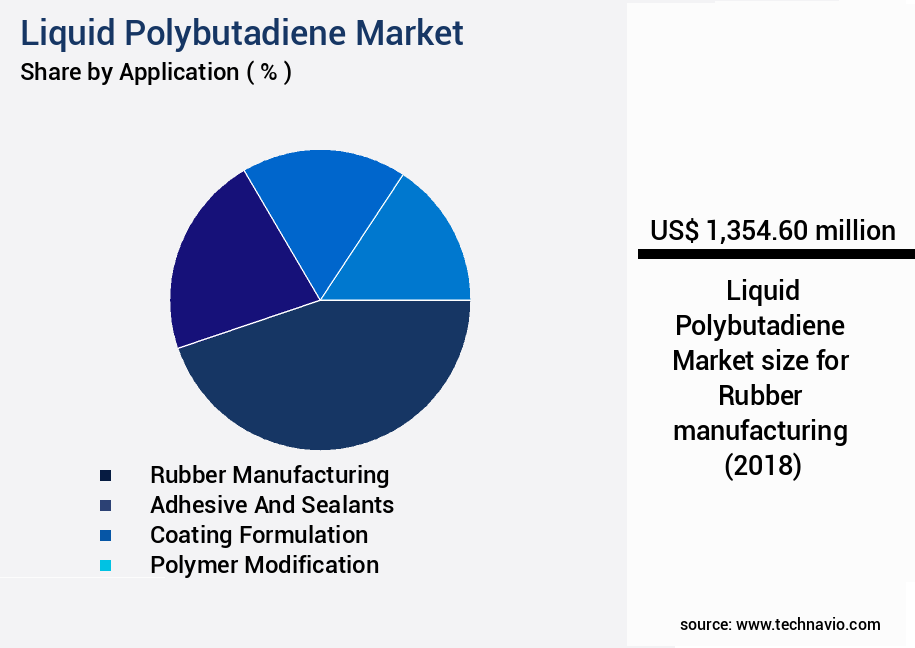
The Rubber manufacturing segment was valued at USD 1354.60 million in 2018 and showed a gradual increase during the forecast period.
Regional Analysis
APAC is estimated to contribute 51% to the growth of the global market during the forecast period.Technavio’s analysts have elaborately explained the regional trends and drivers that shape the market during the forecast period.
See How Liquid Polybutadiene Market Demand is Rising in APAC Request Free Sample
The Liquid Polybutadiene (LPB) market in the Asia Pacific (APAC) region is experiencing significant growth due to the region's large consumer base, availability of raw materials, and low-cost labor. Key applications for LPB in APAC include the automotive and construction industries. In the automotive sector, LPB is a primary raw material used for manufacturing various components and tires. With the presence of leading automotive manufacturers in countries like China, India, Japan, and South Korea, the demand for LPB is expected to increase during the forecast period. LPB's versatility as a substitute for metal components in automotive manufacturing also contributes to its market growth.
In the construction industry, LPB is used in rubber compounding, elastomers, and synthetic fibers, enhancing the operational efficiency and reducing costs in various applications. The market's underlying dynamics include the increasing demand for sustainable and cost-effective materials, stringent regulatory compliance, and the continuous innovation in the production processes of LPB.
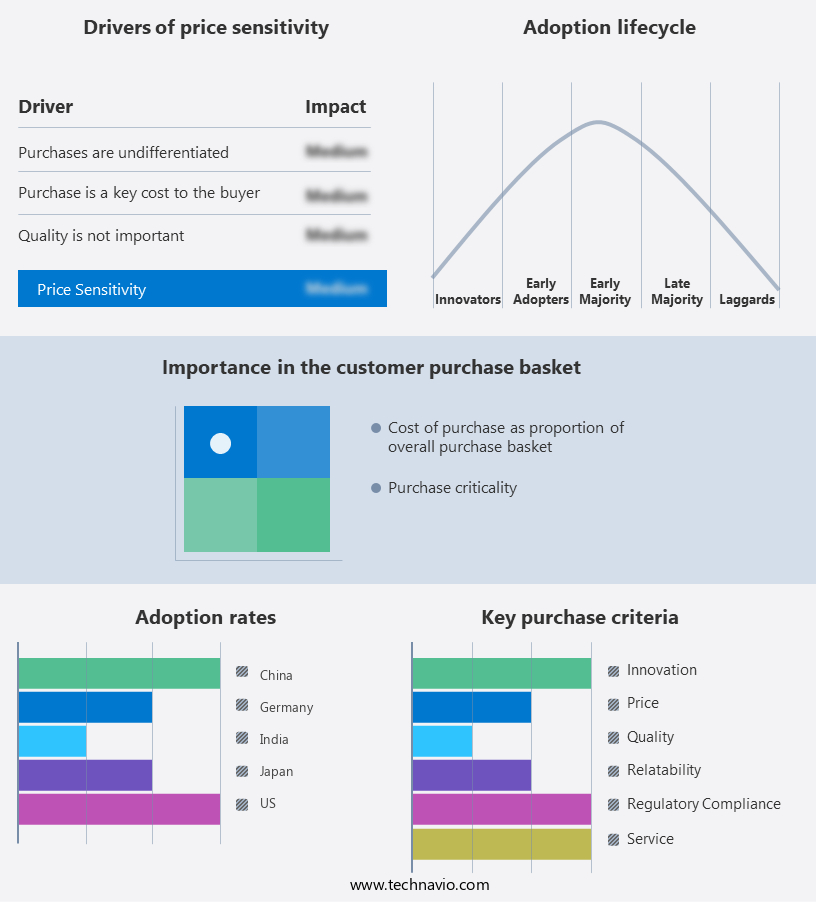
Customer Landscape of Liquid Polybutadiene Industry
Competitive Intelligence by Technavio Analysis: Leading Players in the Liquid Polybutadiene Market
Companies are implementing various strategies, such as strategic alliances, liquid polybutadiene market forecast, partnerships, mergers and acquisitions, geographical expansion, and product/service launches, to enhance their presence in the industry.
China Petrochemical Corp. - The company specializes in the production and supply of liquid polybutadiene, specifically SBS copolymers, serving various industries with high-performance, elastomeric solutions. These copolymers offer superior properties, enhancing product durability and functionality. The company's commitment to innovation and quality ensures customers receive top-tier materials for their applications.
The industry research and growth report includes detailed analyses of the competitive landscape of the market and information about key companies, including:
- China Petrochemical Corp.
- Comar Chemie AG
- Eni SpA
- Evonik Industries AG
- Idemitsu Kosan Co. Ltd.
- JSR Corp.
- Kumho Petrochemical Co. Ltd.
- KURARAY Co. Ltd.
- Lanxess AG
- LG Electronics Inc.
- Lotte Chemical Titan Holding Bhd
- Nippon Soda Co. Ltd.
- Reliance Industries Ltd.
- ARLANXEO
- Saudi Basic Industries Corp.
- SIBUR International GmbH
- Synthomer Plc
- Taprath Elastomers LLP
- TotalEnergies SE
- Ube Corp.
Qualitative and quantitative analysis of companies has been conducted to help clients understand the wider business environment as well as the strengths and weaknesses of key industry players. Data is qualitatively analyzed to categorize companies as pure play, category-focused, industry-focused, and diversified; it is quantitatively analyzed to categorize companies as dominant, leading, strong, tentative, and weak.
Recent Development and News in Liquid Polybutadiene Market
- In August 2024, LG Chem, a leading global chemical company, announced the expansion of its Liquid Polybutadiene (PBd) production capacity by 30,000 tons per year at its South Korean plant. This expansion was in response to growing demand from the automotive and tire industries (LG Chem Press Release, 2024).
- In November 2024, Sibelco and INEOS Styrolution, two major players in the Liquid PBd market, entered into a strategic collaboration to produce and commercialize styrenic specialties based on Liquid PBd. This partnership aimed to combine Sibelco's expertise in minerals and INEOS Styrolution's leadership in styrenics (INEOS Styrolution Press Release, 2024).
- In February 2025, Lanxess, a specialty chemicals company, completed the acquisition of Chemtura Corporation's butyl rubber business, including its Liquid PBd production assets. This acquisition expanded Lanxess's portfolio and strengthened its position in the Liquid PBd market (Lanxess Press Release, 2025).
- In May 2025, the European Commission approved the use of Liquid PBd in the production of biodegradable plastics, opening new opportunities for the market in the European Union. This approval aligns with the EU's commitment to reducing plastic waste and promoting sustainable solutions (European Commission Press Release, 2025).
Dive into Technavio’s robust research methodology, blending expert interviews, extensive data synthesis, and validated models for unparalleled Liquid Polybutadiene Market insights. See full methodology.
|
Market Scope |
|
|
Report Coverage |
Details |
|
Page number |
191 |
|
Base year |
2023 |
|
Historic period |
2018-2022 |
|
Forecast period |
2024-2028 |
|
Growth momentum & CAGR |
Accelerate at a CAGR of 4.6% |
|
Market growth 2024-2028 |
USD 936.7 million |
|
Market structure |
Fragmented |
|
YoY growth 2023-2024(%) |
4.18 |
|
Key countries |
US, China, India, Japan, and Germany |
|
Competitive landscape |
Leading Companies, Market Positioning of Companies, Competitive Strategies, and Industry Risks |
Why Choose Technavio for Liquid Polybutadiene Market Insights?
"Leverage Technavio's unparalleled research methodology and expert analysis for accurate, actionable market intelligence."
The market is experiencing significant growth due to its versatile properties and wide range of applications. One key area of focus in the industry is the rheology modification and molecular weight control of [liquid polybutadiene] to meet specific application requirements. Understanding the thermal behavior of cis-1,4 polybutadiene is crucial for optimizing its use in adhesives and sealant formulations, where high impact resistance and crosslinking kinetics are essential. In terms of chemical modification methods, researchers continue to explore new ways to enhance the dynamic mechanical properties and tensile strength of [polybutadiene]. Degradation mechanisms and aging resistance analysis are also critical areas of study to ensure product quality and compliance with industry standards. Solvent compatibility and blend morphology characterization are important considerations in the production and processing of [liquid polybutadiene]. Optimizing these factors can lead to significant improvements in operational efficiency and supply chain logistics. Moreover, safety data sheet information and environmental impact assessments are becoming increasingly important in the business world. [Polybutadiene] manufacturers must adhere to strict material specification requirements and quality control procedures to ensure the safety and sustainability of their products. Compared to traditional polybutadiene processing techniques, the latest advancements in technology offer more precise control over viscosity temperature relationships and chemical modifications. These innovations can lead to cost savings and increased competitiveness in the market. In conclusion, the market is a dynamic and evolving industry that requires a deep understanding of its unique properties and applications. By focusing on rheology modification, molecular weight control, thermal behavior, and other key areas, businesses can optimize their operations, improve product quality, and meet the growing demand for sustainable and high-performance materials.
What are the Key Data Covered in this Liquid Polybutadiene Market Research and Growth Report?
-
What is the expected growth of the Liquid Polybutadiene Market between 2024 and 2028?
-
USD 936.7 million, at a CAGR of 4.6%
-
-
What segmentation does the market report cover?
-
The report is segmented by Application (Rubber manufacturing, Adhesive and sealants, Coating formulation, Polymer modification, and Others), End-user (Automotive and transportation, Construction industry, Industrial manufacturing, and Others), and Geography (APAC, North America, Europe, South America, and Middle East and Africa)
-
-
Which regions are analyzed in the report?
-
APAC, North America, Europe, South America, and Middle East and Africa
-
-
What are the key growth drivers and market challenges?
-
Increasing demand for liquid polybutadiene in tire applications, Fluctuating crude oil prices
-
-
Who are the major players in the Liquid Polybutadiene Market?
-
China Petrochemical Corp., Comar Chemie AG, Eni SpA, Evonik Industries AG, Idemitsu Kosan Co. Ltd., JSR Corp., Kumho Petrochemical Co. Ltd., KURARAY Co. Ltd., Lanxess AG, LG Electronics Inc., Lotte Chemical Titan Holding Bhd, Nippon Soda Co. Ltd., Reliance Industries Ltd., ARLANXEO, Saudi Basic Industries Corp., SIBUR International GmbH, Synthomer Plc, Taprath Elastomers LLP, TotalEnergies SE, and Ube Corp.
-
We can help! Our analysts can customize this liquid polybutadiene market research report to meet your requirements.
 RIA -
RIA - 
