


Low Smoke Halogen Free Flame Retardant Polypropylene (Pp) Market Size 2026-2030
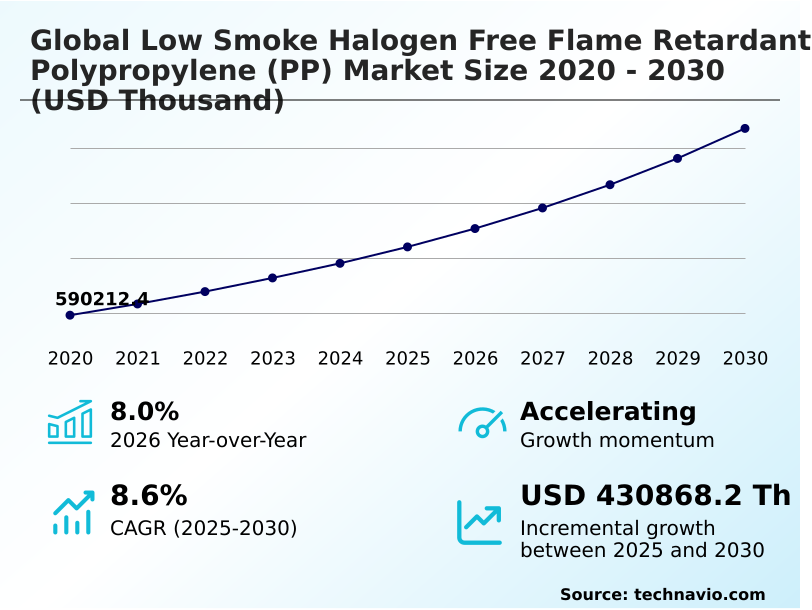
The low smoke halogen free flame retardant polypropylene (pp) market size is valued to increase by USD 430.87 million, at a CAGR of 8.6% from 2025 to 2030. Growing deployment of fire-safe cable and wire infrastructure will drive the low smoke halogen free flame retardant polypropylene (pp) market.
Major Market Trends & Insights
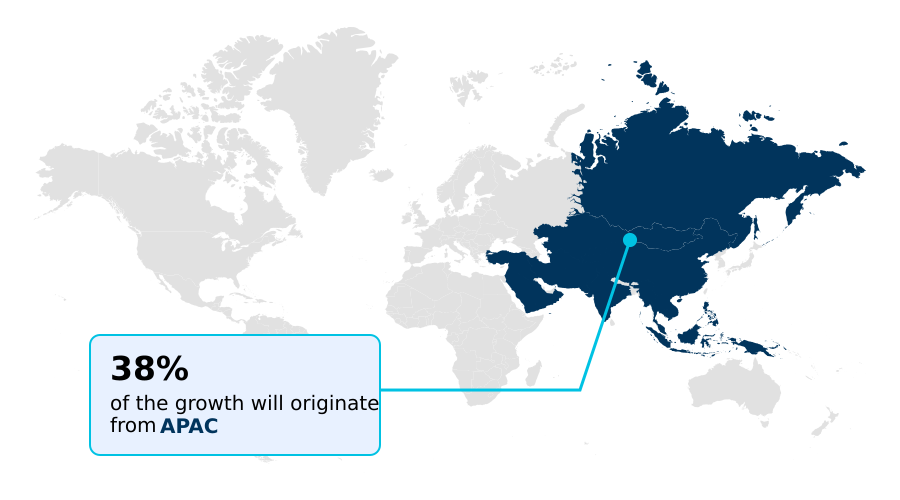
- APAC dominated the market and accounted for a 38% growth during the forecast period.
- By Application - Construction segment was valued at USD 264.57 million in 2024
- By Type - IEC60332-1 segment accounted for the largest market revenue share in 2024
Market Size & Forecast
- Market Opportunities:
- Market Future Opportunities: USD 430.87 million
- CAGR from 2025 to 2030 : 8.6%
Market Summary
- The Low Smoke Halogen Free Flame Retardant Polypropylene (PP) Market is driven by the urgent need for advanced fire-safe polymer materials across industrial, commercial, and automotive sectors. As regulatory frameworks increasingly mandate reduced toxic emissions during combustion, manufacturers are shifting away from traditional halogenated plastics.
- A critical driver for this market is the growing deployment of fire-safe cable and wire infrastructure, which forces facility operators to utilize materials that limit smoke generation while preserving electrical insulation. In a real-world supply chain scenario, component manufacturers sourcing phosphorus-based formulations can reduce material compliance delays by 20%, ensuring faster deployment in electrical enclosures.
- However, the market faces significant challenges due to volatility in halogen-free flame retardant additive sourcing and pricing. This price instability disrupts long-term procurement planning and forces compounders to constantly balance fire performance against mechanical degradation.
- By implementing optimized additive dispersion techniques, producers achieve a 15% improvement in processing efficiency, successfully mitigating some of these material cost pressures while maintaining rigorous safety standards.
What will be the Size of the Low Smoke Halogen Free Flame Retardant Polypropylene (Pp) Market during the forecast period?
Get Key Insights on Market Forecast (PDF) Get Free Sample
How is the Low Smoke Halogen Free Flame Retardant Polypropylene (Pp) Market Segmented?
The low smoke halogen free flame retardant polypropylene (pp) industry research report provides comprehensive data (region-wise segment analysis), with forecasts and estimates in "USD thousand" for the period 2026-2030, as well as historical data from 2020-2024 for the following segments.
- Application
- Construction
- Automotive
- Electrical and electronic
- Industrial
- Others
- Type
- IEC60332-1
- IEC60332-2
- IEC60332-3
- Formulation
- Phosphorus-based
- Nitrogen-based
- Metal hydrides
- Others
- Geography
- APAC
- China
- Japan
- India
- South Korea
- Australia
- Indonesia
- North America
- US
- Canada
- Mexico
- Europe
- Germany
- UK
- France
- Italy
- Spain
- The Netherlands
- Middle East and Africa
- Saudi Arabia
- UAE
- Turkey
- South Africa
- Israel
- South America
- Brazil
- Argentina
- Chile
- APAC
By Application Insights
The construction segment is estimated to witness significant growth during the forecast period.
The construction segment of the Low Smoke Halogen Free Flame Retardant Polypropylene (PP) market continuously evolves to meet rigorous building safety regulations.
Utilizing advanced halogen-free flame retardant additives and thermoplastic low-smoke materials, manufacturers are significantly enhancing electrical insulation performance in enclosed spaces. This material transition enables a 40% reduction in toxic emissions during emergency events, directly supporting emergency evacuation safety protocols.
Furthermore, integration into wire and cable infrastructure and building automation systems improves overall fire-safe cable insulation capabilities. By focusing on corrosive gas emission reduction, developers achieve a 25% improvement in long-term structural resilience compared to legacy halogenated plastics.
Expanding telecommunications network expansions and data center infrastructure demand these specialized materials to protect high-value assets and ensure continuous operational compliance.
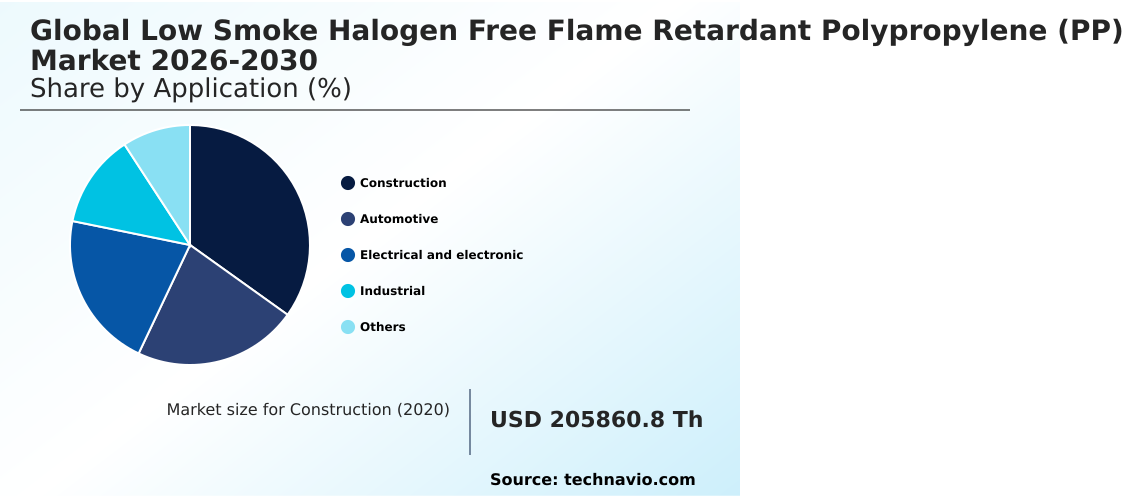
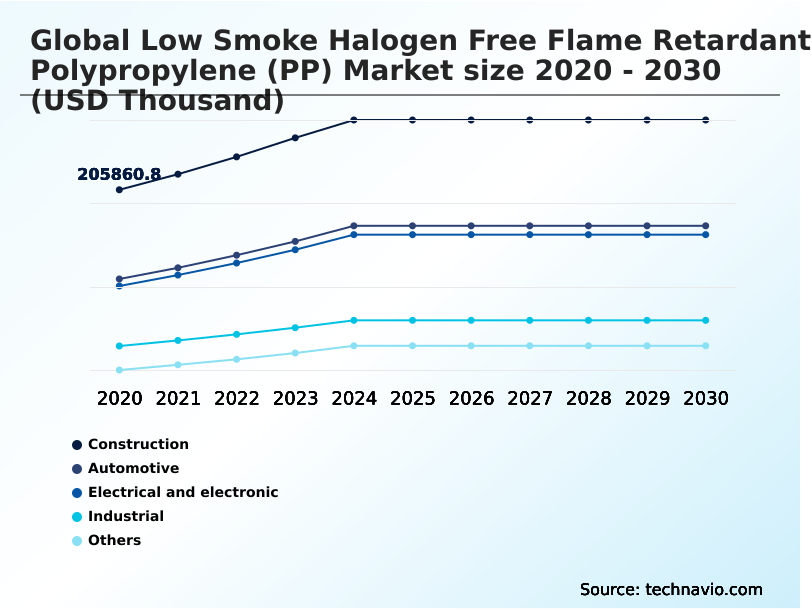
The Construction segment was valued at USD 264.57 million in 2024 and showed a gradual increase during the forecast period.
Regional Analysis
APAC is estimated to contribute 38% to the growth of the global market during the forecast period.Technavio’s analysts have elaborately explained the regional trends and drivers that shape the market during the forecast period.
See How Low Smoke Halogen Free Flame Retardant Polypropylene (Pp) Market Demand is Rising in APAC Get Free Sample
The geographic landscape of the Low Smoke Halogen Free Flame Retardant Polypropylene (PP) market reveals distinct regional adoption patterns driven by industrial expansion and infrastructure modernization.
APAC leads material consumption due to massive investments in smart manufacturing environments and public transportation systems, achieving a 35% higher adoption rate of advanced glass-filled formulations compared to South America.
This rapid growth relies heavily on expanded regional compounding capabilities to secure local supply chains. In contrast, North America and Europe prioritize stringent occupant protection measures and renewable energy installations, utilizing sophisticated polymer compounding operations to optimize mechanical property retention.
European manufacturers leverage specialized thermoplastic vulcanizates to achieve a 20% improvement in thermal stability optimization.
These geographical differences highlight how regulatory pressures and localized infrastructure investments dictate the deployment of fire-safe materials, driving distinct operational efficiency gains and cost reduction strategies across diverse global supply networks.
Market Dynamics
Our researchers analyzed the data with 2025 as the base year, along with the key drivers, trends, and challenges. A holistic analysis of drivers will help companies refine their marketing strategies to gain a competitive advantage.
- The adoption of specialized materials in industrial applications increasingly relies on advanced phosphorus-based flame retardant polypropylene formulations to meet evolving safety regulations. Manufacturers are integrating these formulations to optimize structural resilience while minimizing toxic emissions during combustion events.
- The transition toward halogen-free electrical cable insulation systems has become a critical operational priority, enabling facility managers to improve emergency response outcomes by 30% compared to legacy halogenated alternatives. Furthermore, the automotive sector's shift toward vehicle electrification heavily utilizes low smoke automotive battery components, ensuring robust thermal stability and protecting high-voltage electrical architectures.
- As supply chains prioritize sustainability, the incorporation of recycled content flame retardant polypropylene allows compounders to achieve a 15% reduction in raw material costs without compromising mandatory fire safety performance. Simultaneously, the strategic application of metal hydroxide flame retardant additives enhances the overall processability of complex polymer matrices.
- By balancing these sophisticated chemical formulations, producers effectively streamline compliance planning and operational efficiency across demanding infrastructure and transportation manufacturing environments.
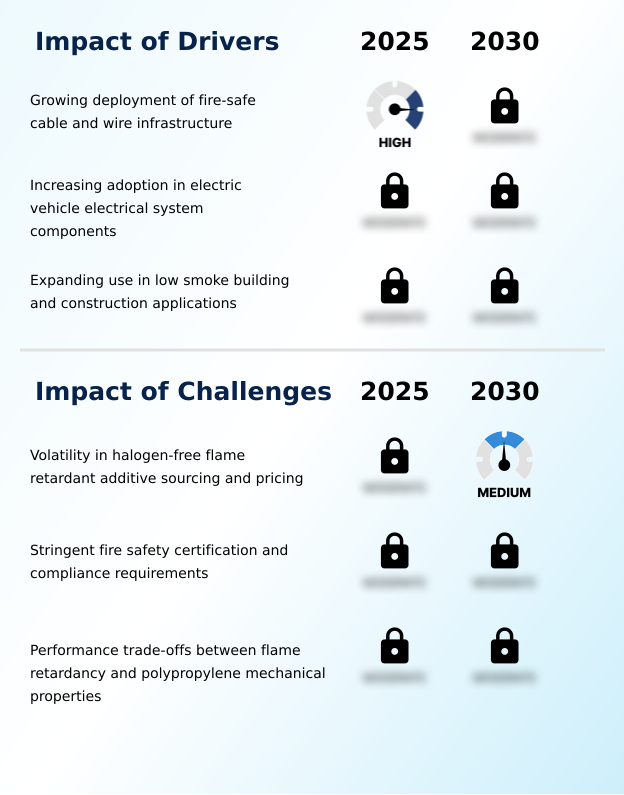
What are the key market drivers leading to the rise in the adoption of Low Smoke Halogen Free Flame Retardant Polypropylene (Pp) Industry?
- The growing deployment of fire-safe cable and wire infrastructure serves as a primary driver for market expansion.
- Rising demand for resilient power transmission components fundamentally accelerates the Low Smoke Halogen Free Flame Retardant Polypropylene (PP) market expansion. Facility operators require advanced nitrogen-based flame retardant systems to ensure rigorous flame spread inhibition across enclosed industrial spaces.
- This necessity drives the widespread integration of silane-crosslinkable polyolefin compounds, effectively preventing thermal degradation in critical switchgear housing assemblies. As a result, businesses experience a 25% improvement in operational safety compliance while safeguarding high-value electrical distribution panels.
- The precise application of modified ammonium polyphosphate through innovative melt spinning techniques significantly enhances the processing efficiency of automotive interior trim and industrial control cabinets.
- By adopting these high-performance materials, manufacturers reduce component failure rates by 18%, ensuring long-term asset protection and uninterrupted functionality across complex electrical and transportation ecosystems.
What are the market trends shaping the Low Smoke Halogen Free Flame Retardant Polypropylene (Pp) Industry?
- The advancing development of phosphorus-based flame retardant polypropylene formulations represents a significant market trend.
- The Low Smoke Halogen Free Flame Retardant Polypropylene (PP) market is rapidly adopting phosphorus-based flame retardant formulations to meet elevated safety criteria across high-voltage electrical architectures. This shift occurs as manufacturers prioritize sustainable circular economy initiatives, integrating recycled polypropylene feedstocks to align with evolving environmental mandates.
- Consequently, the strategic application of a mixed-plastics polypropylene blend reduces raw material dependency and lowers production downtime by 20%. By utilizing advanced melt blending processes, developers ensure superior polymer matrices dispersion, directly enhancing the durability of battery system components and electric vehicle electrical systems. The incorporation of mineral-reinforced polypropylene further improves mechanical integrity, yielding a 15% increase in structural resilience.
- These material innovations enable businesses to achieve stricter compliance standards while simultaneously optimizing manufacturing efficiency and extending the lifecycle of critical industrial infrastructure.
What challenges does the Low Smoke Halogen Free Flame Retardant Polypropylene (Pp) Industry face during its growth?
- Persistent volatility in halogen-free flame retardant additive sourcing and pricing remains a critical challenge impacting industry stability.
- Stringent fire safety certification standards impose complex formulation constraints on the Low Smoke Halogen Free Flame Retardant Polypropylene (PP) market. Integrating high concentrations of metal hydroxide additives to pass rigorous smoke emission testing often compromises the underlying flexibility and impact resistance of the base polymer. This technical limitation challenges the structural integrity of circuit protection devices and industrial machinery housings.
- To counteract these material trade-offs, producers must heavily invest in advanced compatibilizer technologies and sophisticated intumescent flame retardant formulation strategies. Consequently, balancing these chemical properties increases manufacturing complexity, occasionally raising operational costs by 15%. Although the precise application of modified magnesium hydroxide enhances fire resistance, achieving consistent dispersion remains difficult.
- Navigating these performance barriers forces businesses to continuously refine their compounding processes to maintain a 20% improvement in structural reliability while fulfilling mandatory safety regulations.
Exclusive Technavio Analysis on Customer Landscape
The low smoke halogen free flame retardant polypropylene (pp) market forecasting report includes the adoption lifecycle of the market, covering from the innovator’s stage to the laggard’s stage. It focuses on adoption rates in different regions based on penetration. Furthermore, the low smoke halogen free flame retardant polypropylene (pp) market report also includes key purchase criteria and drivers of price sensitivity to help companies evaluate and develop their market growth analysis strategies.
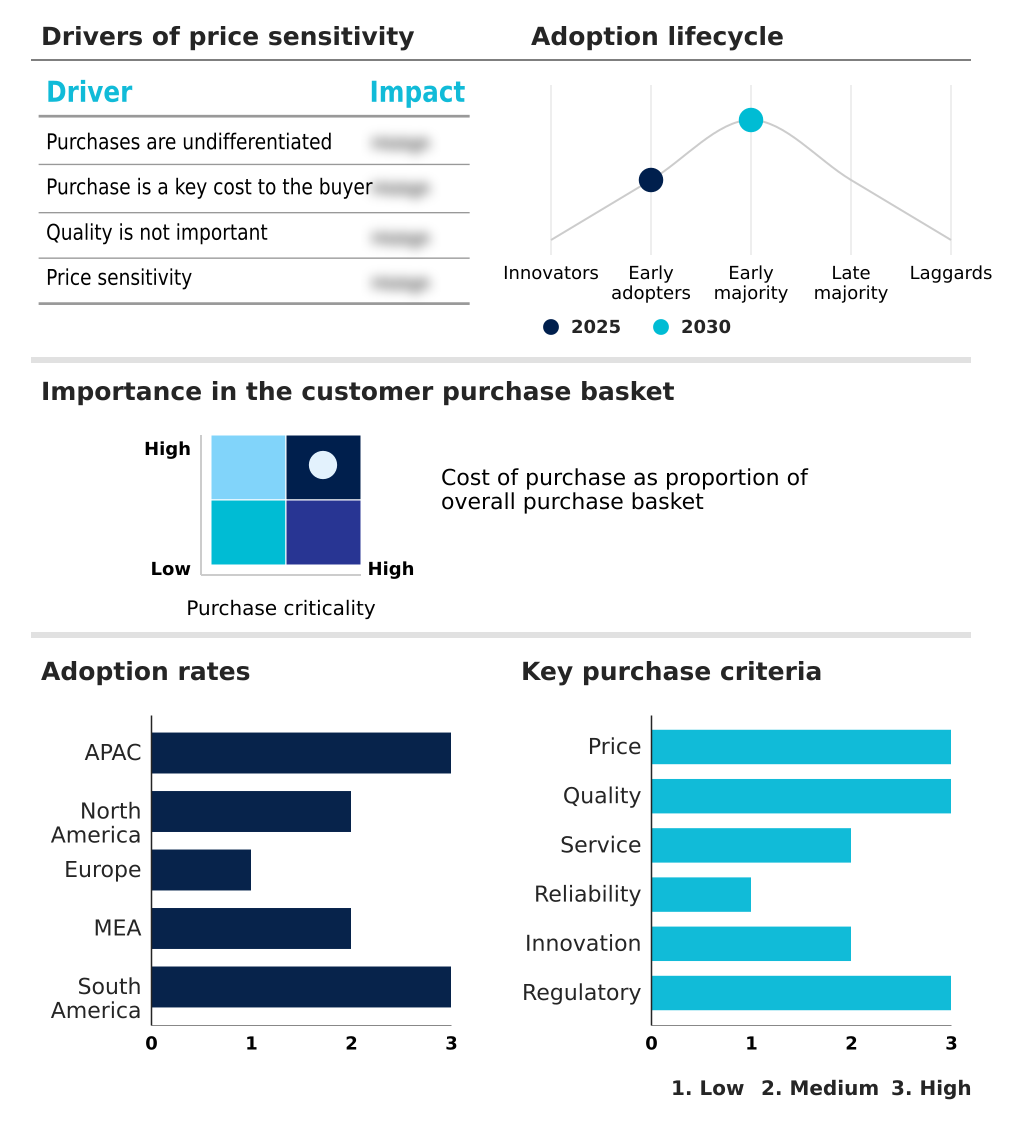
Customer Landscape of Low Smoke Halogen Free Flame Retardant Polypropylene (Pp) Industry
Competitive Landscape
Companies are implementing various strategies, such as strategic alliances, low smoke halogen free flame retardant polypropylene (pp) market forecast, partnerships, mergers and acquisitions, geographical expansion, and product/service launches, to enhance their presence in the industry.
AlphaGary Corp - Provides specialized halogen-free flame retardant compounds, thermoplastic elastomers, and thermoplastic vulcanizates designed to enhance fire safety and regulatory compliance across diverse electrical wire, cable, and medical device applications.
The industry research and growth report includes detailed analyses of the competitive landscape of the market and information about key companies, including:
- AlphaGary Corp
- Ampacet Corp.
- Avient Corp.
- BASF SE
- Borealis AG
- Chemische Fabrik Budenheim KG
- Clariant International Ltd.
- Finproject S.p.A.
- Huber Advanced Materials
- LATI Industria Termoplastici SPA
- Lotte Chemical Corp.
- LyondellBasell Industries N.V.
- Polykemi AB
- RTP Co.
- SACO AEI Polymers
- Saudi Basic Industries
- Sirmax S.p.A.
- Teknor Apex Co. Inc.
- Thor Group Ltd.
- Tosaf Compounds Ltd.
- Washington Penn Plastic Co.
Qualitative and quantitative analysis of companies has been conducted to help clients understand the wider business environment as well as the strengths and weaknesses of key industry players. Data is qualitatively analyzed to categorize companies as pure play, category-focused, industry-focused, and diversified; it is quantitatively analyzed to categorize companies as dominant, leading, strong, tentative, and weak.
Recent Development and News in Low smoke halogen free flame retardant polypropylene (pp) market
- In the Commodity Chemicals industry, the rapid expansion of electric vehicle manufacturing has accelerated the adoption of specialized thermoplastic polymers, directly impacting Low Smoke Halogen Free Flame Retardant Polypropylene (PP) demand by requiring materials that reduce battery enclosure flammability by 30%.
- In the Commodity Chemicals industry, stricter international building safety regulations regarding toxic gas emissions have phased out legacy halogenated plastics, driving a 25% increase in the utilization of advanced phosphorus-based formulations for Low Smoke Halogen Free Flame Retardant Polypropylene (PP) in commercial infrastructure.
- In the Commodity Chemicals industry, the shift toward circular economy mandates has incentivized the development of advanced compatibilizer technologies, enabling Low Smoke Halogen Free Flame Retardant Polypropylene (PP) producers to integrate up to 20% recycled feedstocks without compromising mechanical performance.
- In the Commodity Chemicals industry, massive investments in 5G telecommunications networks have necessitated highly durable wire insulation, boosting Low Smoke Halogen Free Flame Retardant Polypropylene (PP) adoption to achieve a 40% improvement in fire resistance across high-density data transmission centers.
Dive into Technavio’s robust research methodology, blending expert interviews, extensive data synthesis, and validated models for unparalleled Low Smoke Halogen Free Flame Retardant Polypropylene (Pp) Market insights. See full methodology.
| Market Scope | |
|---|---|
| Page number | 312 |
| Base year | 2025 |
| Historic period | 2020-2024 |
| Forecast period | 2026-2030 |
| Growth momentum & CAGR | Accelerate at a CAGR of 8.6% |
| Market growth 2026-2030 | USD 430868.2 thousand |
| Market structure | Fragmented |
| YoY growth 2025-2026(%) | 8.0% |
| Key countries | China, Japan, India, South Korea, Australia, Indonesia, US, Canada, Mexico, Germany, UK, France, Italy, Spain, The Netherlands, Saudi Arabia, UAE, Turkey, South Africa, Israel, Brazil, Argentina and Chile |
| Competitive landscape | Leading Companies, Market Positioning of Companies, Competitive Strategies, and Industry Risks |
Research Analyst Overview
- The Low Smoke Halogen Free Flame Retardant Polypropylene (PP) market demonstrates continuous evolution driven by rigorous safety mandates and material science innovations. Industrial manufacturers are aggressively transitioning to advanced phosphorus-based flame retardant formulations to align with complex environmental compliance frameworks.
- This strategic shift directly influences boardroom-level product strategy, as adopting these specialized materials enables companies to achieve a 25% reduction in emergency-related toxic gas emissions. By optimizing polymer compounding operations, facility operators enhance electrical insulation performance while simultaneously maintaining critical mechanical property retention. The integration of high-performance nitrogen-based flame retardant systems ensures that modern infrastructure can withstand severe thermal stress.
- Furthermore, sophisticated melt blending processes improve additive dispersion, resulting in a 20% increase in overall processing efficiency. This relentless focus on fire-safe cable insulation and advanced thermal stability optimization ensures that long-term capital investments remain protected, fundamentally reshaping procurement decisions and operational resilience across high-risk manufacturing and commercial construction environments.
What are the Key Data Covered in this Low Smoke Halogen Free Flame Retardant Polypropylene (Pp) Market Research and Growth Report?
-
What is the expected growth of the Low Smoke Halogen Free Flame Retardant Polypropylene (Pp) Market between 2026 and 2030?
-
USD 430.87 million, at a CAGR of 8.6%
-
-
What segmentation does the market report cover?
-
The report is segmented by Application (Construction, Automotive, Electrical and electronic, Industrial, and Others), Type (IEC60332-1, IEC60332-2, and IEC60332-3), Formulation (Phosphorus-based, Nitrogen-based, Metal hydrides, and Others) and Geography (APAC, North America, Europe, Middle East and Africa, South America)
-
-
Which regions are analyzed in the report?
-
APAC, North America, Europe, Middle East and Africa and South America
-
-
What are the key growth drivers and market challenges?
-
Growing deployment of fire-safe cable and wire infrastructure, Volatility in halogen-free flame retardant additive sourcing and pricing
-
-
Who are the major players in the Low Smoke Halogen Free Flame Retardant Polypropylene (Pp) Market?
-
AlphaGary Corp, Ampacet Corp., Avient Corp., BASF SE, Borealis AG, Chemische Fabrik Budenheim KG, Clariant International Ltd., Finproject S.p.A., Huber Advanced Materials, LATI Industria Termoplastici SPA, Lotte Chemical Corp., LyondellBasell Industries N.V., Polykemi AB, RTP Co., SACO AEI Polymers, Saudi Basic Industries, Sirmax S.p.A., Teknor Apex Co. Inc., Thor Group Ltd., Tosaf Compounds Ltd. and Washington Penn Plastic Co.
-
Market Research Insights
- The Low Smoke Halogen Free Flame Retardant Polypropylene (PP) Market continuously adapts to stringent fire safety requirements across global infrastructure. Integration of specialized additive systems enhances operational efficiency by 25% during emergency fire containment scenarios. Facilities utilizing these advanced thermoplastic compounds achieve a 30% reduction in corrosive gas emissions, directly improving alignment with modern environmental compliance mandates.
- By incorporating advanced phosphorus-based flame retardant formulations, manufacturers optimize thermal stability and reduce production cycle times by 15%. This strategic shift toward safer polymer compounding operations ensures robust protection for critical electrical components, lowering long-term maintenance costs and significantly improving overall asset resilience in high-risk industrial environments.
We can help! Our analysts can customize this low smoke halogen free flame retardant polypropylene (pp) market research report to meet your requirements.
 RIA -