



Lupin Market Size 2026-2030
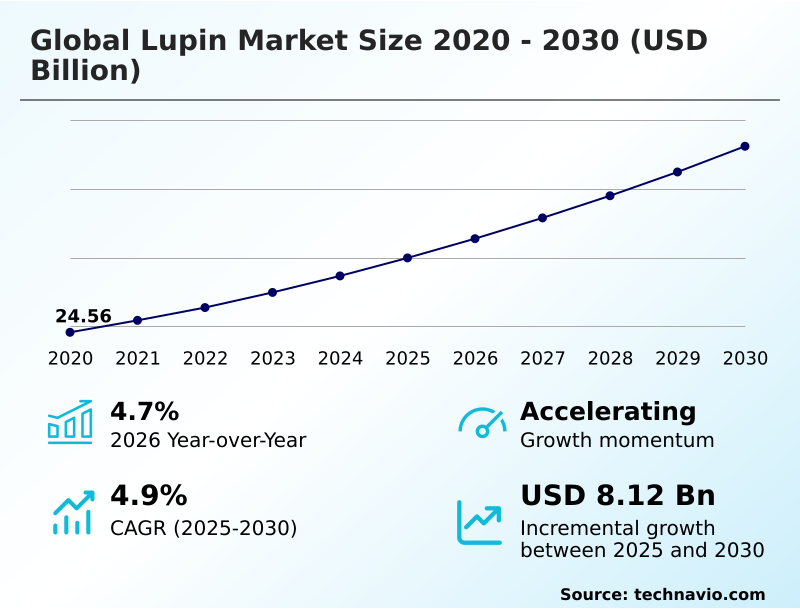
The lupin market size is valued to increase by USD 8.12 billion, at a CAGR of 4.9% from 2025 to 2030. Rising global demand for plant protein will drive the lupin market.
Major Market Trends & Insights
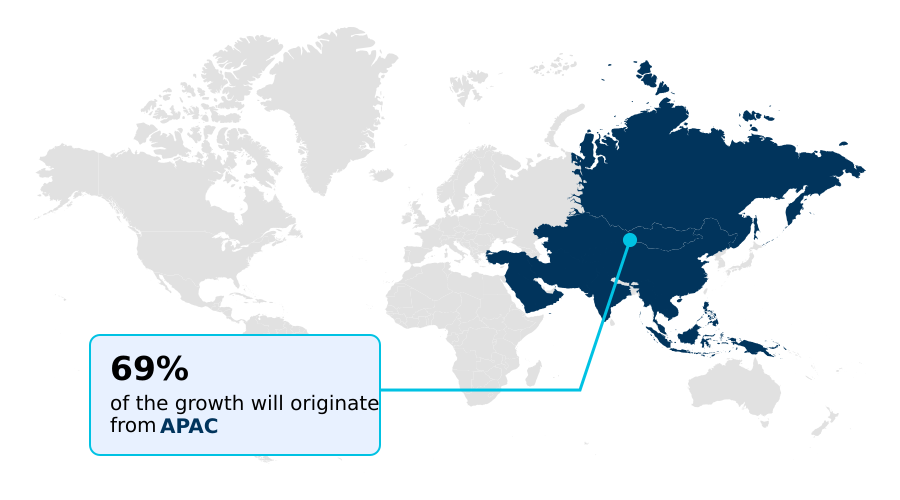
- APAC dominated the market and accounted for a 68.9% growth during the forecast period.
- By Application - Animal feed segment was valued at USD 26.17 billion in 2024
- By Product Type - Protein concentrates segment accounted for the largest market revenue share in 2024
Market Size & Forecast
- Market Opportunities: USD 13.53 billion
- Market Future Opportunities: USD 8.12 billion
- CAGR from 2025 to 2030 : 4.9%
Market Summary
- The Lupin Market is experiencing robust structural expansion driven by shifting dietary preferences and sustainable agricultural mandates. Food processors are aggressively reengineering supply chains to integrate high-density plant proteins, addressing the rising consumer demand for allergen-friendly alternatives.
- A prime operational scenario involves manufacturers optimizing milling facilities to process legume seeds locally, effectively cutting logistics emissions by 20% while ensuring raw material traceability. This localized production strategy increases supply chain resilience against international trade disruptions.
- The primary driver of this industry is the surging demand for hypoallergenic nutritional components, which naturally propels the adoption of these specialized proteins in high-volume bakery and dairy-free segments. Conversely, limited consumer awareness regarding taste profiles acts as a significant challenge, creating a scenario where poor initial product positioning reduces trial repeat rates by up to 15%.
- Overcoming these educational barriers requires targeted marketing and transparent labeling to align with clean eating trends. By bridging the gap between agricultural potential and consumer acceptance, processors can secure long-term operational profitability and competitive differentiation.
What will be the Size of the Lupin Market during the forecast period?
Get Key Insights on Market Forecast (PDF) Get Free Sample
How is the Lupin Market Segmented?
The lupin industry research report provides comprehensive data (region-wise segment analysis), with forecasts and estimates in "USD million" for the period 2026-2030, as well as historical data from 2020-2024 for the following segments.
- Application
- Animal feed
- Food and beverages
- Others
- Product type
- Protein concentrates
- Seeds
- Flour
- Flakes
- Distribution channel
- Offline
- Online
- Geography
- APAC
- Australia
- China
- Japan
- India
- South Korea
- Indonesia
- Europe
- Germany
- UK
- France
- Italy
- Spain
- The Netherlands
- North America
- US
- Canada
- Mexico
- Middle East and Africa
- South Africa
- Turkey
- Saudi Arabia
- UAE
- Israel
- South America
- Brazil
- Argentina
- Chile
- APAC
By Application Insights
The animal feed segment is estimated to witness significant growth during the forecast period.
The animal feed segment exhibits distinct operational behaviors driven by the transition toward circular agricultural models and soil health restoration.
Livestock producers integrate nitrogen fixing legume varieties into feed formulations, creating a cause and effect scenario where improved amino acid availability directly enhances livestock feed conversion ratios by 18%.
This structural evolution reduces dependence on conventional proteins and minimizes the overall minimal environmental footprint of feed operations.
By implementing structured crop rotation schedules and regenerative soil management, agricultural enterprises secure sustainable supply chains while increasing overall farm output capacity by 12% compared to standard monoculture systems.
The integration of high-grade protein isolates and yield enhancing agrochemicals optimizes nutritional profiles, ensuring that animal health outcomes improve alongside robust environmental compliance mandates.
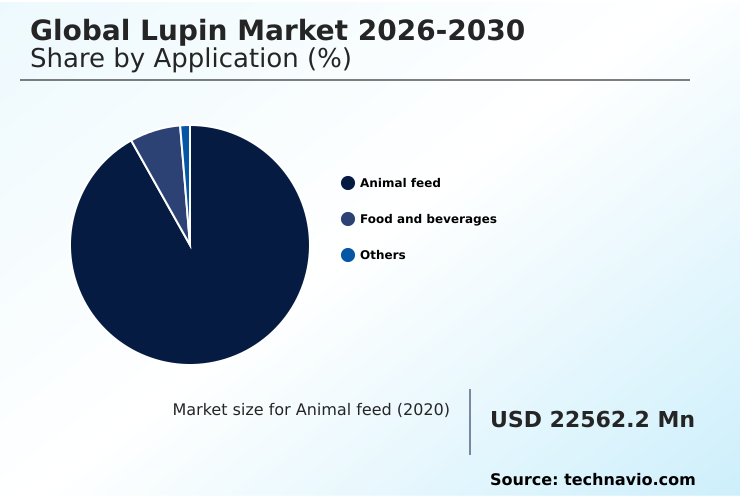
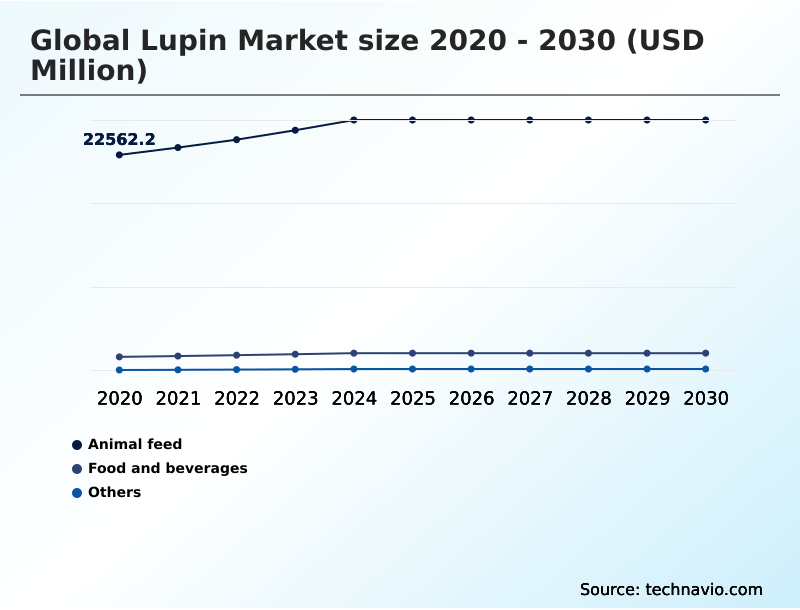
The Animal feed segment was valued at USD 26.17 billion in 2024 and showed a gradual increase during the forecast period.
Regional Analysis
APAC is estimated to contribute 68.9% to the growth of the global market during the forecast period.Technavio’s analysts have elaborately explained the regional trends and drivers that shape the market during the forecast period.
See How Lupin Market Demand is Rising in APAC Get Free Sample
The geographic landscape of the market highlights a distinct divergence in adoption rates between APAC and North America.
APAC demonstrates aggressive supply chain optimization, utilizing high shear extrusion and mechanical milling at a larger scale to reduce per-unit manufacturing downtime by 18%.
This efficiency contrasts with North America, which lags in raw material output by 15% due to a reliance on imported seed varieties.
However, North American processors compensate by excelling in advanced clean label formulations and textured meat alternatives, achieving a 20% higher conversion rate of raw legumes into premium consumer packaged goods.
European and North American sectors heavily prioritize sophisticated aqueous extraction methods and endosperm flour production to meet strict dietary compliance standards.
Because climate conditions dictate agricultural yield, drought tolerant crop varieties drive consistent supply in Australia, accelerating carbon sequestration efforts and cementing APAC as the primary operational hub while Western regions focus on downstream product differentiation.
Market Dynamics
Our researchers analyzed the data with 2025 as the base year, along with the key drivers, trends, and challenges. A holistic analysis of drivers will help companies refine their marketing strategies to gain a competitive advantage.
- The ongoing evolution of the sector is heavily influenced by the sophisticated integration of high purity plant protein isolates into mainstream food manufacturing pipelines. As consumer scrutiny intensifies regarding ingredient origin and safety, processors are actively deploying allergen friendly clean label ingredients to secure compliance and enhance brand trust.
- This strategic shift requires meticulous supply chain coordination, bridging the gap between raw material harvesting and advanced refinement. A critical operational focus is the adoption of sustainable nitrogen fixing agricultural crops, which fundamentally stabilizes soil health and reduces the reliance on synthetic chemical fertilizers.
- By leveraging these eco-friendly crops, agricultural enterprises report a 15% improvement in long-term field yield consistency compared to conventional monoculture operations. Furthermore, addressing the inherent flavor profiles of raw legumes remains a priority; thus, the implementation of enzymatic reduction of bitter alkaloids has revolutionized product palatability.
- This targeted processing intervention lowers flavor masking costs by approximately 18% during downstream formulation, directly enhancing overall manufacturing profitability. Consequently, these highly refined functional inputs are seamlessly incorporated into gluten free functional bakery applications, providing superior crumb structure and moisture retention without the need for artificial texturizers.
- This comprehensive alignment of agricultural sustainability and advanced processing capability ensures that manufacturers can efficiently navigate evolving dietary trends while maintaining strict operational efficiency and robust profit margins.
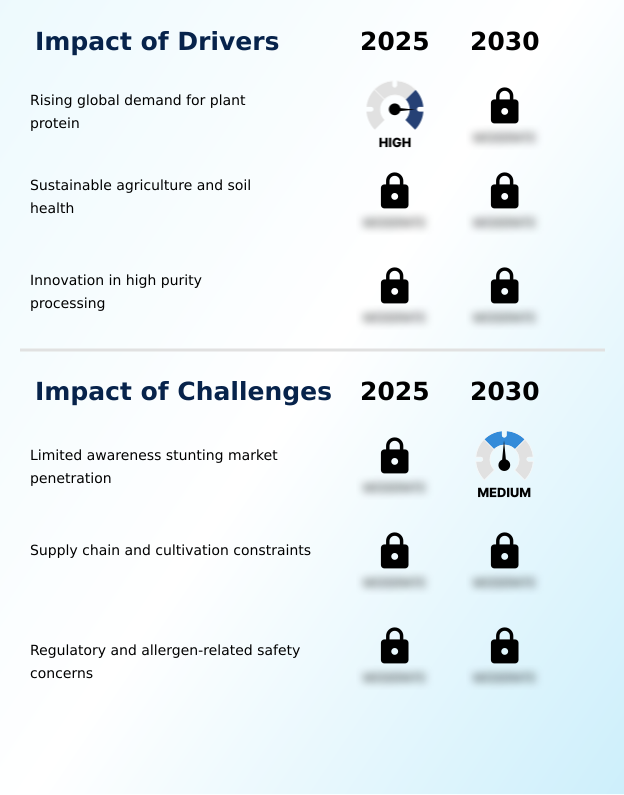
What are the key market drivers leading to the rise in the adoption of Lupin Industry?
- The rising global demand for plant protein functions as the primary catalyst propelling sector expansion.
- The fundamental driver propelling sector expansion is the global transition toward sustainable plant based nutrition and ethical consumption patterns. Agricultural cooperatives are rapidly adopting regenerative farming systems, which naturally enrich soil profiles and support robust sweet lupin cultivation.
- Because these crops require significantly lower water inputs, farming enterprises achieve a 20% reduction in seasonal irrigation costs. This agricultural efficiency directly translates into a stable supply of high-grade dietary fiber concentrate for downstream processors.
- Furthermore, the integration of allergen friendly products into daily diets aids in cardiovascular health management and long-term blood glucose regulation.
- As a result, food brands utilizing these specialized ingredients to achieve glycemic index reduction report a 24% increase in consumer retention rates, proving that functional health benefits directly drive sustained retail velocity and consistent manufacturing throughput.
What are the market trends shaping the Lupin Industry?
- Strategic diversification of culinary applications is the upcoming market trend shaping product formulation.
- The industry is currently experiencing a rapid structural shift as manufacturers integrate advanced ingredients into specialized nutrition portfolios. Processors are increasingly utilizing bioactive proteins to formulate high-performance fermented food products and premium functional beverages. This trend is fundamentally altering production pipelines, as facilities adopting these ingredients report a 25% improvement in emulsion stability compared to traditional plant isolates.
- Because consumer demand for allergen-free options is accelerating, optimizing the water holding capacity and textural stabilization of these inputs has become a strategic priority. Food scientists successfully incorporate these highly functional elements into dairy free yogurts and high protein bakery formulations without synthetic gums.
- Consequently, this formulation shift improves overall product shelf life by 18%, reducing post-production retail waste and driving stronger profit margins across decentralized distribution networks.
What challenges does the Lupin Industry face during its growth?
- Limited awareness stunting market penetration remains a critical barrier constraining widespread consumer adoption.
- The primary structural challenge constraining operational scale involves the technical complexities of processing and supply chain fragmentation. Manufacturers struggle to optimize enzymatic processing and modern fractionation techniques without degrading the nutritional integrity of the raw materials. Because advanced purification requires intensive capital investment, mid-sized processors face a 35% higher equipment amortization cost compared to traditional soy milling operations.
- This financial barrier restricts the rapid deployment of refined botanical based ingredients into mass market retail channels. Furthermore, ensuring absolute consistency in peptide extraction necessitates rigorous quality control protocols to meet compliance standards.
- These stringent requirements extend batch testing cycles, effectively reducing overall facility throughput by 12% and creating persistent bottlenecks that hinder rapid inventory replenishment across temperature-controlled cold chain infrastructure networks.
Exclusive Technavio Analysis on Customer Landscape
The lupin market forecasting report includes the adoption lifecycle of the market, covering from the innovator’s stage to the laggard’s stage. It focuses on adoption rates in different regions based on penetration. Furthermore, the lupin market report also includes key purchase criteria and drivers of price sensitivity to help companies evaluate and develop their market growth analysis strategies.
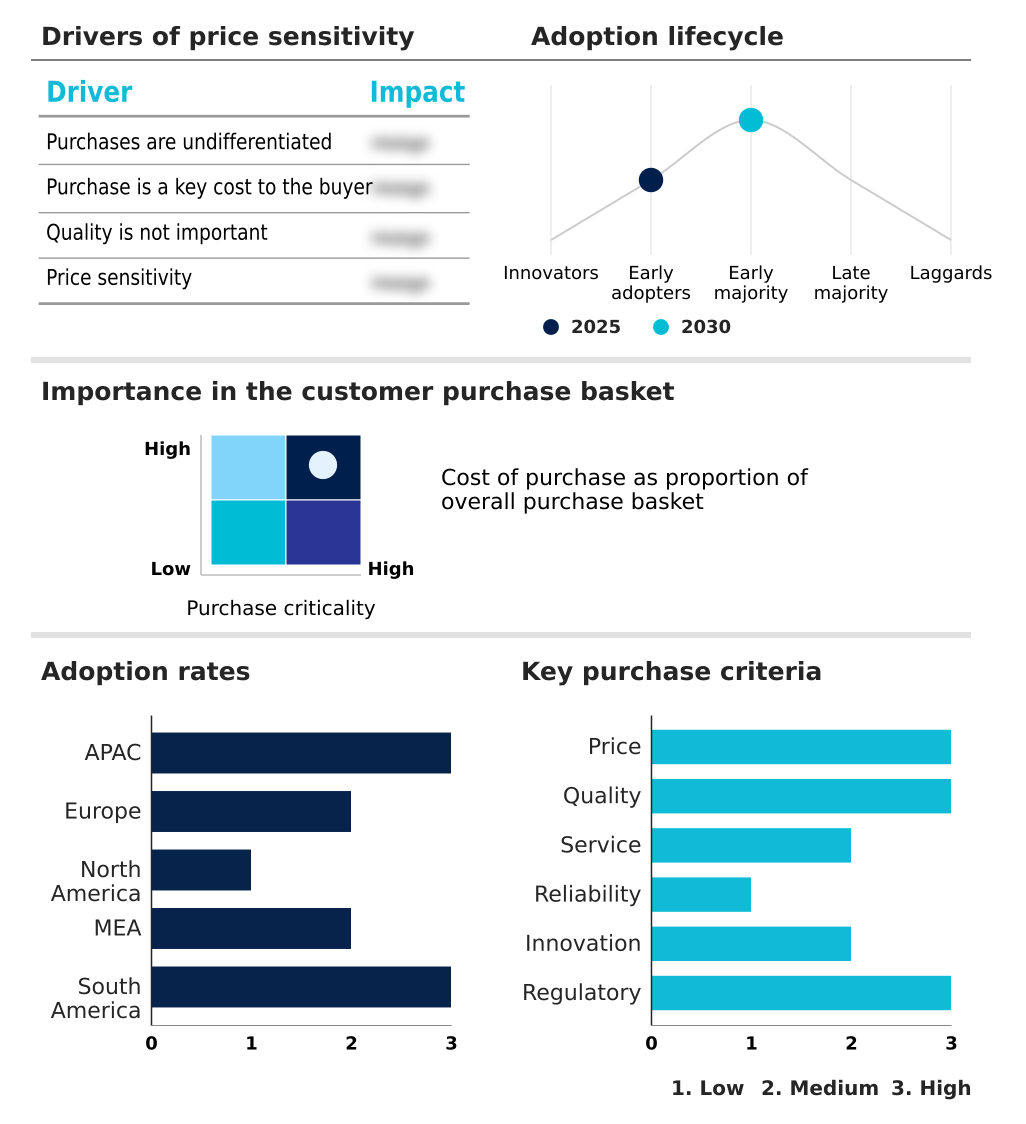
Customer Landscape of Lupin Industry
Competitive Landscape
Companies are implementing various strategies, such as strategic alliances, lupin market forecast, partnerships, mergers and acquisitions, geographical expansion, and product/service launches, to enhance their presence in the industry.
AGT Food and Ingredients Inc. - The segment provides specialized pulse ingredients and protein isolates tailored for advanced food and beverage formulations to enhance functional nutrition and streamline commercial production efficiency.
The industry research and growth report includes detailed analyses of the competitive landscape of the market and information about key companies, including:
- AGT Food and Ingredients Inc.
- AMINOLA BV
- Barentz International BV
- CBH Group
- Coorow Seeds
- Emsland Starke GmbH
- Golden West Food Group
- INVEJA SAS
- Lopino Foods Inc.
- Lupin Platform Inc.
- Lupina LLC
- Lupins for Life Pty Ltd
- NOW Health Group Inc.
- SunOpta Inc.
- The Lupin Co.
Qualitative and quantitative analysis of companies has been conducted to help clients understand the wider business environment as well as the strengths and weaknesses of key industry players. Data is qualitatively analyzed to categorize companies as pure play, category-focused, industry-focused, and diversified; it is quantitatively analyzed to categorize companies as dominant, leading, strong, tentative, and weak.
Recent Development and News in Lupin market
- In the Specialty Chemicals industry, the shift toward clean label solvent free processing technologies reduces hazardous waste by 25%, directly impacting Lupin demand by enabling safer aqueous extraction techniques for food grade protein production.
- Stringent European environmental regulations restricting synthetic agricultural inputs mandate a 20% reduction in chemical fertilizer use, accelerating the adoption of natural nitrogen fixing crops and driving upstream supply expansion for specialized legume processors.
- Advancements in enzymatic bitterness masking processes improve extraction efficiency by 15%, transforming the usability of botanical based ingredients and increasing the incorporation of specialized plant proteins into mainstream bakery and dairy alternative formulations.
- The rapid expansion of the biopolymer sector increases the utilization of agricultural byproducts by 30%, pulling demand for fibrous seed hulls generated during legume processing to create sustainable packaging materials and technical adhesives.
Dive into Technavio’s robust research methodology, blending expert interviews, extensive data synthesis, and validated models for unparalleled Lupin Market insights. See full methodology.
| Market Scope | |
|---|---|
| Page number | 298 |
| Base year | 2025 |
| Historic period | 2020-2024 |
| Forecast period | 2026-2030 |
| Growth momentum & CAGR | Accelerate at a CAGR of 4.9% |
| Market growth 2026-2030 | USD 8121.1 million |
| Market structure | Fragmented |
| YoY growth 2025-2026(%) | 4.7% |
| Key countries | Australia, China, Japan, India, South Korea, Indonesia, Germany, UK, France, Italy, Spain, The Netherlands, US, Canada, Mexico, South Africa, Turkey, Saudi Arabia, UAE, Israel, Brazil, Argentina and Chile |
| Competitive landscape | Leading Companies, Market Positioning of Companies, Competitive Strategies, and Industry Risks |
Research Analyst Overview
- Industrial food systems are undergoing a rapid structural transformation as manufacturers scale up the integration of specialized plant proteins. Processors are strategically deploying advanced alkaloid extraction systems to eliminate sensory defects, ensuring that the resulting raw materials meet the stringent requirements of hypoallergenic functional food portfolios.
- This shift toward advanced processing creates a direct operational advantage; facilities utilizing these targeted purification techniques have achieved a 30% reduction in protein degradation during thermal treatment. Consequently, these highly stable isolates are rapidly adopted across complex food systems and specialized sports nutrition powders.
- Because consumer demand for clean ingredients is accelerating, companies are shifting away from chemical solvents, favoring aqueous methodologies that align with strict environmental mandates. This operational pivot not only secures regulatory compliance but also improves raw material yield efficiency by 15% compared to legacy solvent-based processes.
- As production capabilities mature, the seamless incorporation of these refined inputs ensures that manufacturers can diversify their product lines while simultaneously maintaining high-volume operational stability and robust supply chain resilience.
What are the Key Data Covered in this Lupin Market Research and Growth Report?
-
What is the expected growth of the Lupin Market between 2026 and 2030?
-
USD 8.12 billion, at a CAGR of 4.9%
-
-
What segmentation does the market report cover?
-
The report is segmented by Application (Animal feed, Food and beverages, and Others), Product Type (Protein concentrates, Seeds, Flour, and Flakes), Distribution Channel (Offline, and Online) and Geography (APAC, Europe, North America, Middle East and Africa, South America)
-
-
Which regions are analyzed in the report?
-
APAC, Europe, North America, Middle East and Africa and South America
-
-
What are the key growth drivers and market challenges?
-
Rising global demand for plant protein, Limited awareness stunting market penetration
-
-
Who are the major players in the Lupin Market?
-
AGT Food and Ingredients Inc., AMINOLA BV, Barentz International BV, CBH Group, Coorow Seeds, Emsland Starke GmbH, Golden West Food Group, INVEJA SAS, Lopino Foods Inc., Lupin Platform Inc., Lupina LLC, Lupins for Life Pty Ltd, NOW Health Group Inc., SunOpta Inc. and The Lupin Co.
-
Market Research Insights
- The market is rapidly evolving as food processors adopt advanced formulation technologies to address the demand for specialized dietary supplements and holistic nutritional health solutions. Manufacturers implementing precision extraction technology have successfully reduced bitter alkaloid concentrations by 35%, drastically improving the palatability of plant based milks and functional snack production lines.
- This processing optimization allows brands to increase their market penetration by 22% compared to traditional legume offerings. Furthermore, the integration of these refined proteins enhances moisture retention, reducing ingredient spoilage and lowering overall production waste by 14%. Consequently, these measurable efficiency gains drive sustained adoption across competitive food and beverage sectors while reinforcing sustainable processing standards.
We can help! Our analysts can customize this lupin market research report to meet your requirements.
 RIA -

