


Manufacturing Operations Management (MOM) Software Market Analysis North America, Europe, APAC, South America, Middle East and Africa - US, China, Germany, Canada, Japan - Size and Forecast 2024-2028

Manufacturing Operations Management (MOM) Software Market Analysis North America, Europe, APAC, South America, Middle East and Africa - US, China, Germany, Canada, Japan - Size and Forecast 2024-2028

Published: Jul 2024 184 Pages SKU: IRTNTR72356

Market Overview at a Glance

$21.43 B
Market Opportunity
12.88%
CAGR
11.54
YoY growth 2023-2024(%)

Manufacturing Operations Management (MOM) Software Market Size 2024-2028

The manufacturing operations management (mom) software market size is forecast to increase by USD 21.43 billion at a CAGR of 12.88% between 2023 and 2028.

  • The market is experiencing significant growth due to the increasing demand for automation in industrial sectors. This trend is driven by the need to improve operational efficiency, reduce costs, and enhance product quality. Integration of Enterprise Resource Planning (ERP) and Product Lifecycle Management (PLM) systems with MOM software is another key growth factor. However, the market also faces challenges such as the threat of pirated software, which can negatively impact revenue and market share for legitimate software companies. To mitigate this risk, companies are investing in robust security measures and legal actions against piracy. Overall, the MOM software market is expected to witness steady growth In the coming years as more manufacturers adopt technology to streamline their operations and stay competitive.
  • What will be the Size of the Manufacturing Operations Management (MOM) Software Market During the Forecast Period?
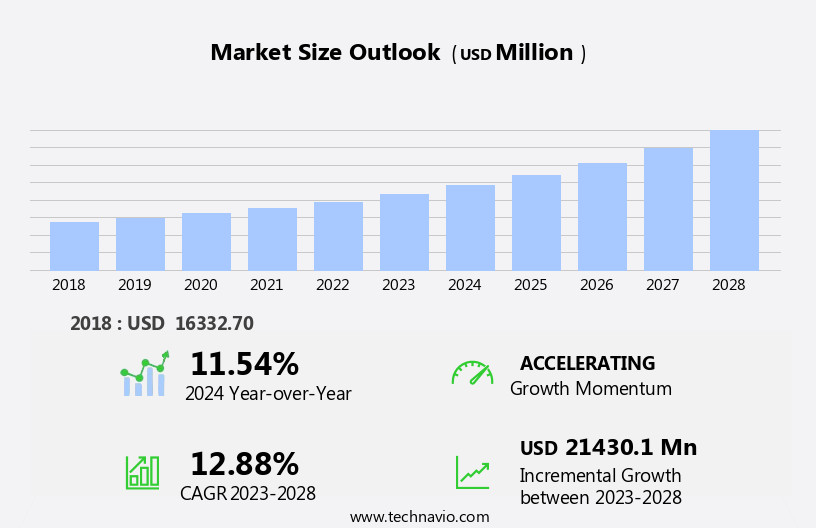
    Manufacturing Operations Management (MOM) Software Market Size

     Request Free Sample

  • The market encompasses solutions designed to optimize inventory management, enhance product quality, minimize damage, and boost operational efficiency for businesses. MOM software streamlines processes involving order taking, fulfillment accuracy, planning and scheduling, and production efficiency. These digitized technologies enable real-time monitoring of raw materials and finished goods, ensuring efficient execution systems and timely delivery to customers. The market is driven by the growing need for increased efficiency, improved profitability, and heightened customer satisfaction. The automotive sector represents a significant portion of the market due to its complex production processes. However, challenges such as data theft, cyberattacks, and privacy concerns necessitate robust security measures in MOM software solutions.
  • The MOM software market is segmented into software and services. The software segment includes on-premise and cloud-based offerings, such as SaaS and PI systems. The services segment comprises consulting, implementation, and support services. Regardless of the deployment model, MOM software offers substantial benefits, including reduced lead times, improved order fulfillment, and enhanced product quality.
  • How is this Manufacturing Operations Management (MOM) Software Industry segmented and which is the largest segment?

    The manufacturing operations management (mom) software industry research report provides comprehensive data (region-wise segment analysis), with forecasts and estimates in "USD million" for the period 2024-2028, as well as historical data from 2018-2022 for the following segments.

    • End-user
      • Automotive
      • Food and beverages
      • Chemical
      • Pharmaceutical
      • Others
    • Deployment
      • On-premises
      • Cloud
    • Geography
      • North America
        • Canada
        • US
      • Europe
        • Germany
      • APAC
        • China
        • Japan
      • South America
        • Middle East and Africa

        By End-user Insights

        • The automotive segment is estimated to witness significant growth during the forecast period.

        The market plays a crucial role in enhancing operational efficiency and profitability In the automotive industry. This sector focuses on optimizing production processes, improving product quality, and ensuring inventory management. Key features of MOM software include digitized technologies, planning and scheduling, execution systems, and advanced analytics using AI and machine learning. Inventory management is essential to minimize damage and losses, while real-time data and advanced analytics help in reducing fuel consumption and optimizing raw material usage. Customer satisfaction is ensured through on-time order fulfillment and accuracy. MOM software also aids in employee training and digital adoption, addressing the need for organizational efficiency and social distancing In the current scenario.

        MOM software solutions are available as SaaS, cloud-based, on-premise, and hybrid models. Notable software segments include manufacturing execution systems, AI-based process optimization, and datadriven process optimization. Strategic partnerships between companies like SymphonyAI Industrial, iBASEt, Cyient, and Plex Systems contribute to the growth of this market. The market is witnessing technological advancements, including IoT architectures, edge computing, supervisory control, and advanced analytics. However, concerns regarding data theft, cyberattacks, and privacy are significant challenges. Despite these concerns, the benefits of MOM software, such as increased production efficiency, streamlined processes, and improved profitability, make it an indispensable tool for industrial manufacturing and R&D activities.

        Manufacturing Operations Management (MOM) Software Market Size

        Get a glance at the  Manufacturing Operations Management (MOM) Software Industry report of share of various segments Request Free Sample

        The Automotive segment was valued at USD 4.6 billion in 2018 and showed a gradual increase during the forecast period.

        Regional Analysis

        • North America is estimated to contribute 33% to the growth of the global market during the forecast period.

        Technavio’s analysts have elaborately explained the regional trends and drivers that shape the market during the forecast period.
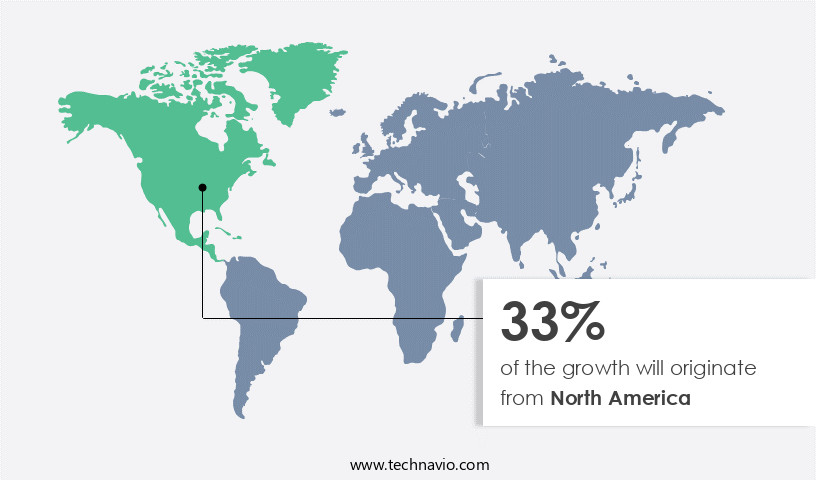
        Manufacturing Operations Management (MOM) Software Market Share by Geography

        For more insights on the market share of various regions, Request Free Sample

        The North American manufacturing industry's maturity in adopting cloud services and digital platforms is driving the growth of the MOM software market. Major companies In the region and the availability of cloud solution expertise are significant factors. The adoption of cloud solutions and services to lower operating costs and enhance operational efficiency is a critical trend. Leading North American manufacturing companies are extensively utilizing MOM software to scale their processes. As a result, North America is projected to dominate the MOM software market during the forecast period. This market expansion is attributed to the increasing use of cloud technologies, digitization, automation, machine learning, and interconnectivity of networks.

        Additionally, the integration of advanced analytics, AI, and IoT architectures is enhancing manufacturing execution, planning, and scheduling. The focus on operational efficiency, execution systems, and enterprise-level governance is also a significant factor. Despite concerns over data theft, cyberattacks, and privacy, the shift towards SaaS solutions, such as those offered by SymphonyAI Industrial and Plex Systems, is continuing.

        Market Dynamics

        Our  researchers analyzed the data with 2023 as the base year, along with the key drivers, trends, and challenges. A holistic analysis of drivers will help companies refine their marketing strategies to gain a competitive advantage.

        What are the key market drivers leading to the rise In the adoption of Manufacturing Operations Management (MOM) Software Industry?

        Increasing demand for automation in industrial sectors is the key driver of the market.

      • Manufacturing Operations Management (MOM) software has gained significant traction In the industry landscape as businesses strive for operational efficiency and improved product quality. MOM software facilitates the seamless flow of information from the shop floor to the enterprise, enabling real-time control and adjustments to operations. This digitization of manufacturing processes leads to numerous benefits, including inventory management, damage reduction, and increased customer satisfaction. MOM software enables the monitoring of raw materials and orders, ensuring fulfillment accuracy and minimizing losses due to damage or inefficiencies. IoT and AI analytics technologies integrated into MOM systems provide advanced process optimization, while cloud technologies and automation ensure organizational efficiency.
      • Furthermore, MOM software supports the planning and scheduling of production, ensuring that resources are utilized optimally. The implementation of MOM software also addresses the challenges of social distancing and real-time data analysis in today's business environment. With AI-based process optimization and datadriven insights, MOM software helps manufacturers streamline processes, improve production efficiency, and enhance overall profits. However, concerns regarding data theft, cyberattacks, and privacy issues persist, necessitating the adoption of robust security measures. Notable MOM software solutions include SymphonyAI Industrial, iBASEt, and Cyient, among others. These purpose-built software solutions cater to various industries, including automotive, and offer strategic partnerships to provide comprehensive digital operations solutions.
      • The MOM software market is segmented into software, services, on-premise, and cloud segments, reflecting the diverse needs of manufacturers. Technological advancements, including IIoT architectures, machine learning, and interconnectivity of networks, continue to shape the future of MOM software.
      • What are the market trends shaping the Manufacturing Operations Management (MOM) Software Industry?

        ERP and PLM integration is the upcoming market trend.

      • Manufacturing Operations Management (MOM) software plays a pivotal role in optimizing and managing various aspects of industrial manufacturing. This purpose-built software facilitates the efficient handling of tasks such as inventory management, product quality control, and order fulfillment. MOM software is digitally interconnected with other systems, including Enterprise Resource Planning (ERP), Supply Chain Management (SCM), Warehouse Management Systems (WMS), Decision Support Systems (DSS), Business Intelligence, and e-commerce platforms. The integration of MOM software with ERP and WMS systems, for instance, ensures seamless order management and accurate data feeding. By connecting production execution systems to Product Lifecycle Management (PLM), manufacturers can enhance planning capabilities and boost productivity.
      • Moreover, the adoption of digitized technologies like Internet of Things (IoT), Artificial Intelligence (AI) analytics, and Machine Learning (ML) enables real-time data analysis and advanced analytics, resulting in operational efficiency and enhanced customer satisfaction. The MOM software market is segmented into software and services. The software segment includes on-premise, cloud, and SaaS solutions. The services segment offers implementation, consulting, training, and support services. The market is driven by factors such as the need for increased operational efficiency, profit enhancement, and customer satisfaction. However, concerns regarding data theft, cyberattacks, and privacy issues pose challenges to the market's growth. In conclusion, MOM software is a vital component of digital operations in industrial manufacturing, facilitating the integration of various systems and enabling real-time data analysis and advanced process optimization.
      • The market for MOM software is growing due to the increasing demand for digitization and automation in manufacturing industries. By adopting MOM software, manufacturers can streamline processes, reduce losses in fuel and raw materials, and ensure high-quality products.
      • What challenges does the Manufacturing Operations Management (MOM) Software Industry face during its growth?

        Threat of pirated software is a key challenge affecting the industry growth.

      • Manufacturing Operations Management (MOM) software plays a crucial role in enhancing inventory management, product quality, and operational efficiency in industrial manufacturing. However, the market faces challenges such as software piracy, which poses a significant threat to companies' profits. Pirated software, often shared among end-users, contains malware that can lead to data loss, security breaches, and increased expenses. The Software Alliance, representing numerous software makers, advocates against the use of pirated software to mitigate these risks. MOM software solutions enable digitized technologies like IoT, AI analytics, and machine learning to optimize production processes. These advanced technologies improve order taking, fulfillment accuracy, and real-time data analysis, resulting in higher customer satisfaction.
      • Furthermore, MOM software streamlines raw material management, planning and scheduling, and manufacturing execution. Enterprise-level governance, AI-based process optimization, and cloud technologies are essential components of purpose-built MOM software. SymphonyAI Industrial, iBASEt, Cyient, and Plex Systems are some strategic partners offering cloud-based smart manufacturing platforms to boost production efficiency and digitize operations. IIoT architectures, edge computing, and supervisory control systems enable interconnectivity of networks, ensuring organizational efficiency. However, concerns over data theft, cyberattacks, and privacy issues persist, necessitating robust security measures. Technological advancements in MOM software, including AI, machine learning, and advanced analytics, contribute to the market's growth.
      • PlanetTogether, a manufacturing execution system, offers visual planning, scheduling, and real-time data capabilities to optimize industrial manufacturing. In conclusion, MOM software is a vital investment for manufacturers seeking to improve operational efficiency, product quality, and customer satisfaction. However, addressing challenges like software piracy, data security, and privacy concerns is essential to ensure the long-term success of these solutions.
      • Exclusive Customer Landscape

        The manufacturing operations management (mom) software market forecasting report includes the adoption lifecycle of the market, covering from the innovator’s stage to the laggard’s stage. It focuses on adoption rates in different regions based on penetration. Furthermore, the manufacturing operations management (mom) software market report also includes key purchase criteria and drivers of price sensitivity to help companies evaluate and develop their market growth analysis strategies.

        Manufacturing Operations Management (MOM) Software Market Share by Geography

         Customer Landscape

        Key Companies & Market Insights

        Companies are implementing various strategies, such as strategic alliances, manufacturing operations management (mom) software market forecast, partnerships, mergers and acquisitions, geographical expansion, and product/service launches, to enhance their presence In the industry.

        ABB Ltd. - Manufacturing Operations Management (MOM) software enables organizations to optimize and streamline their production processes, enhancing efficiency and reducing costs. ABB, a leading technology provider, offers a comprehensive solution under the brand ABB Ability. This software suite integrates various manufacturing functions, including production planning, real-time monitoring, and performance analysis. By leveraging advanced technologies such as artificial intelligence, machine learning, and the Internet of Things (IoT), MOM software allows manufacturers to improve operational visibility, minimize downtime, and boost overall productivity. The implementation of MOM solutions can lead to significant improvements in supply chain agility, product quality, and customer satisfaction.

        The industry research and growth report includes detailed analyses of the competitive landscape of the market and information about key companies, including:

        • ABB Ltd.
        • Aegis Industrial Software Corp.
        • ARC Advisory Group
        • ATS Global B.V.
        • Critical Software
        • Dassault Systemes SE
        • Durr AG
        • ECI Software Solutions Inc.
        • Emerson Electric Co.
        • Epicor Software Corp.
        • HCL Technologies Ltd.
        • iBASEt Inc.
        • Panasonic Holdings Corp.
        • Rockwell Automation Inc.
        • Royal Cargo Inc.
        • Schneider Electric SE
        • sedApta S.r.l.
        • Siemens AG
        • SNic Solutions Inc.

        Qualitative and quantitative analysis of companies has been conducted to help clients understand the wider business environment as well as the strengths and weaknesses of key industry players. Data is qualitatively analyzed to categorize companies as pure play, category-focused, industry-focused, and diversified; it is quantitatively analyzed to categorize companies as dominant, leading, strong, tentative, and weak.

        Research Analyst Overview

        Manufacturing Operations Management (MOM) software plays a pivotal role in enhancing the productivity and efficiency of industrial manufacturing processes. This category of software solutions facilitates seamless integration of various functions, including inventory management, order taking, fulfillment accuracy, and planning and scheduling. By leveraging digitized technologies such as IoT, AI analytics, and machine learning, MOM software enables real-time data processing and advanced analytics, leading to improved operational efficiency and customer satisfaction. One of the primary functions of MOM software is inventory management. Effective inventory control is crucial for minimizing holding costs and ensuring the availability of raw materials for production.

        By providing real-time visibility into inventory levels and automating reorder processes, MOM software can help reduce stockouts and overstocking, leading to significant cost savings. Product quality is another critical aspect of manufacturing operations. MOM software can help minimize product damage and defects by implementing quality control measures and providing data-driven insights for process optimization. AI-based process optimization can identify inefficiencies and suggest improvements, leading to increased production efficiency and improved product quality. MOM software also plays a vital role in ensuring efficient order taking and fulfillment. By automating order processing and providing real-time visibility into inventory levels, MOM software can help streamline processes and reduce lead times.

        Fulfillment accuracy is also improved, leading to higher customer satisfaction and reduced returns. The adoption of MOM software is driven by the need for organizational efficiency and the interconnectivity of networks. With the increasing use of cloud technologies and SAAS solutions, MOM software can be accessed from anywhere, enabling remote work and social distancing. This is particularly important In the current business environment, where flexibility and adaptability are key to surviving and thriving. Technological advancements in MOM software are also driving innovation In the manufacturing industry. IIoT architectures and edge computing are enabling real-time data processing and analysis, leading to improved operational efficiency and better decision-making.

        AI and machine learning are being used to optimize processes and identify inefficiencies, leading to significant cost savings and increased productivity. Despite the numerous benefits of MOM software, there are also challenges associated with its adoption. Data theft and cyberattacks are becoming increasingly common, and privacy concerns are a major issue. Companies need to ensure that their MOM software solutions are secure and comply with data protection regulations. The MOM software market can be segmented into software, services, on-premise, and cloud segments. The software segment includes the sales of MOM software solutions, while the services segment includes consulting and implementation services.

        The on-premise segment refers to software that is installed and run on the company's own servers, while the cloud segment refers to software that is accessed via the internet. The automotive segment is a major user of MOM software due to the complex nature of manufacturing processes and the need for high levels of quality control. Other industries, such as food and beverage, pharmaceuticals, and electronics, also heavily rely on MOM software to optimize their manufacturing processes and improve operational efficiency. In conclusion, Manufacturing Operations Management (MOM) software is a critical tool for enhancing productivity and efficiency in industrial manufacturing processes.

        By leveraging digitized technologies such as IoT, AI analytics, and machine learning, MOM software enables real-time data processing and advanced analytics, leading to improved operational efficiency, product quality, and customer satisfaction. The adoption of MOM software is driven by the need for organizational efficiency and the interconnectivity of networks, but there are also challenges associated with data security and privacy. The MOM software market is segmented into software, services, on-premise, and cloud segments, with the automotive industry being a major user.

        Market Scope

        Report Coverage

        Details

        Page number

        184

        Base year

        2023

        Historic period

        2018-2022

        Forecast period

        2024-2028

        Growth momentum & CAGR

        Accelerate at a CAGR of 12.88%

        Market growth 2024-2028

        USD 21430.1 million

        Market structure

        Fragmented

        YoY growth 2023-2024(%)

        11.54

        Key countries

        US, China, Germany, Canada, and Japan

        Competitive landscape

        Leading Companies, Market Positioning of Companies, Competitive Strategies, and Industry Risks

        Request Free Sample

        What are the Key Data Covered in this Manufacturing Operations Management (MOM) Software Market Research and Growth Report?

        • CAGR of the Manufacturing Operations Management (MOM) Software industry during the forecast period
        • Detailed information on factors that will drive the growth and forecasting between 2024 and 2028
        • Precise estimation of the size of the market and its contribution of the industry in focus to the parent market
        • Accurate predictions about upcoming growth and trends and changes in consumer behaviour
        • Growth of the market across North America, Europe, APAC, South America, and Middle East and Africa
        • Thorough analysis of the market’s competitive landscape and detailed information about companies
        • Comprehensive analysis of factors that will challenge the manufacturing operations management (mom) software market growth of industry companies

        We can help! Our analysts can customize this manufacturing operations management (mom) software market research report to meet your requirements.

        Get in touch


        Table of Contents not available.

        Research Methodology

        Technavio presents a detailed picture of the market by way of study, synthesis, and summation of data from multiple sources. The analysts have presented the various facets of the market with a particular focus on identifying the key industry influencers. The data thus presented is comprehensive, reliable, and the result of extensive research, both primary and secondary.

        INFORMATION SOURCES

        Primary sources

        • Manufacturers and suppliers
        • Channel partners
        • Industry experts
        • Strategic decision makers

        Secondary sources

        • Industry journals and periodicals
        • Government data
        • Financial reports of key industry players
        • Historical data
        • Press releases

        DATA ANALYSIS

        Data Synthesis

        • Collation of data
        • Estimation of key figures
        • Analysis of derived insights

        Data Validation

        • Triangulation with data models
        • Reference against proprietary databases
        • Corroboration with industry experts

        REPORT WRITING

        Qualitative

        • Market drivers
        • Market challenges
        • Market trends
        • Five forces analysis

        Quantitative

        • Market size and forecast
        • Market segmentation
        • Geographical insights
        • Competitive landscape

        Interested in this report?

        Get your sample now to see our research methodology and insights!

        Download Now

        Frequently Asked Questions

        Manufacturing Operations Management (MOM) Software market growth will increase by $ 21430.1 mn during 2024-2028.

        The Manufacturing Operations Management (MOM) Software market is expected to grow at a CAGR of 12.88% during 2024-2028.

        Manufacturing Operations Management (MOM) Software market is segmented by End-user( Automotive, Food and beverages, Chemical, Pharmaceutical, Others) Deployment( On-premises, Cloud, APAC, South America, Middle East and Africa)

        ABB Ltd., Aegis Industrial Software Corp., ARC Advisory Group, ATS Global B.V., Critical Software, Dassault Systemes SE, Durr AG, ECI Software Solutions Inc., Emerson Electric Co., Epicor Software Corp., HCL Technologies Ltd., iBASEt Inc., Panasonic Holdings Corp., Rockwell Automation Inc., Royal Cargo Inc., Schneider Electric SE, sedApta S.r.l., Siemens AG, SNic Solutions Inc. are a few of the key vendors in the Manufacturing Operations Management (MOM) Software market.

        North America will register the highest growth rate of 33% among the other regions. Therefore, the Manufacturing Operations Management (MOM) Software market in North America is expected to garner significant business opportunities for the vendors during the forecast period.

        US, China, Germany, Canada, Japan

        • Increasing demand for automation in industrial sectorsWith improving economic conditions across the globe is the driving factor this market.
        • industries are finding ways and means to improve their efficiency and enhance the productivity of their manufacturing methods. This has fostered the automation of industrial processes is the driving factor this market.
        • besides minimizing the prevalent human errors in traditional paper-based record-keeping systems. This is the driving factor this market.
        • in turn is the driving factor this market.
        • has fostered the development and growth of software-based solutions such as MOM. Moreover is the driving factor this market.
        • MOM software facilitates the flow of information from the shop floor to the rest of the company is the driving factor this market.
        • which leads to better visibility of the shop floor and through which real-time control and adjustments to operations can be made easily. Benefits such as production is the driving factor this market.
        • process is the driving factor this market.
        • and energy monitoring of MOM help capture data directly from machines and operators and provide real-time production metrics and analytics. MOM software identifies and sends alerts is the driving factor this market.
        • triggers alarms is the driving factor this market.
        • or even automatically shuts down a machine if needed through such real-time metrics. Real-time metrics help analyze load patterns is the driving factor this market.
        • production requirements is the driving factor this market.
        • and resource demands for energy savings. The continued demand for automation in industrial sectors is expected to foster the growth of the global MOM software market during the forecast period. is the driving factor this market.

        The Manufacturing Operations Management (MOM) Software market vendors should focus on grabbing business opportunities from the Automotive segment as it accounted for the largest market share in the base year.