


Medical Furniture And Respiratory Care Devices Market Size and Growth Forecast 2026-2030
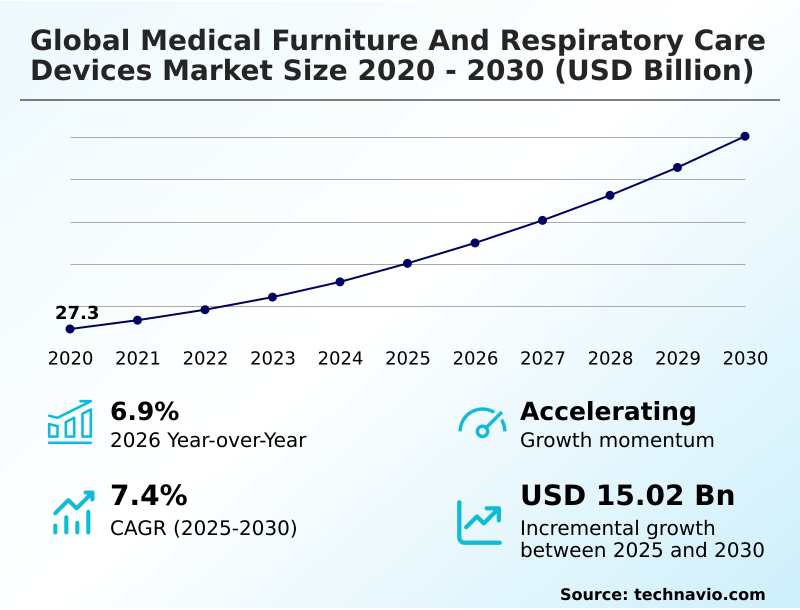
The Medical Furniture And Respiratory Care Devices Market size was valued at USD 35.06 billion in 2025 growing at a CAGR of 7.4% during the forecast period 2026-2030.
Asia accounts for 30.1% of incremental growth during the forecast period. The Respiratory care devices segment by Product Type was valued at USD 22.17 billion in 2024, while the Hospitals and clinics segment holds the largest revenue share by End-user.
The market is projected to grow by USD 22.77 billion from 2020 to 2030, with USD 15.02 billion of the growth expected during the forecast period of 2025 to 2030.
Get Key Insights on Market Forecast (PDF) Request Free Sample
Medical Furniture And Respiratory Care Devices Market Overview
The medical furniture and respiratory care devices market is defined by a continuous push for technological integration to meet complex clinical demands. A key driver is the increasing global geriatric population, which contributes to a higher incidence of chronic respiratory diseases. This demographic shift, coupled with rapid advancements in medical infrastructure, fuels the need for sophisticated equipment like smart hospital beds with integrated biometric sensors and advanced mechanical ventilators. The market shows a year-over-year growth of 6.9%, with Asia poised to contribute over 30% of the incremental growth, reflecting the region's massive healthcare expansion projects. A typical scenario involves an intensive care unit upgrading its fleet of beds to smart bed systems that feature automated lateral rotation and integrated weight monitoring. This not only prevents dangerous decubitus ulcers in bedridden patients but also transmits vital data to a central nursing station, optimizing workflow and enhancing patient safety. This trend toward connected care, where smart medical furniture and iot-enabled respiratory devices create a comprehensive patient monitoring ecosystem, is reshaping clinical practice and driving procurement decisions globally. The focus remains on improving patient outcomes through intelligent ventilation solutions and ergonomic clinical design.
Drivers, Trends, and Challenges in the Medical Furniture And Respiratory Care Devices Market
The global medical furniture and respiratory care devices market is undergoing a significant transformation, with its trajectory heavily influenced by the need to balance advanced technology with regulatory compliance and cost pressures. The market is projected to grow by USD 15015.9 million, driven by an accelerating momentum.
A key aspect shaping procurement is the total cost of ownership of advanced medical equipment, which extends beyond the initial purchase to include maintenance, software updates, and consumables for devices like high-performance ventilators. Decision-makers must navigate complex global supply chain vulnerabilities for critical components such as specialized microchips.
For instance, a large hospital network implementing an upgrade to smart hospital beds must adhere to rigorous standards like those set by the European Medicines Agency, while also managing the integration of these beds into their existing IT infrastructure.
The trend toward integration of AI and IoT in respiratory care devices is creating new opportunities, but also adds layers of complexity related to data security and interoperability. The market is also seeing a focus on sustainable manufacturing and ergonomic clinical design, particularly in regions like Europe.
This dynamic environment requires vendors to offer not just innovative products like cloud-connected cpap machines and smart ventilator technology, but also comprehensive service and support models that address the lifecycle costs and operational challenges faced by healthcare providers.
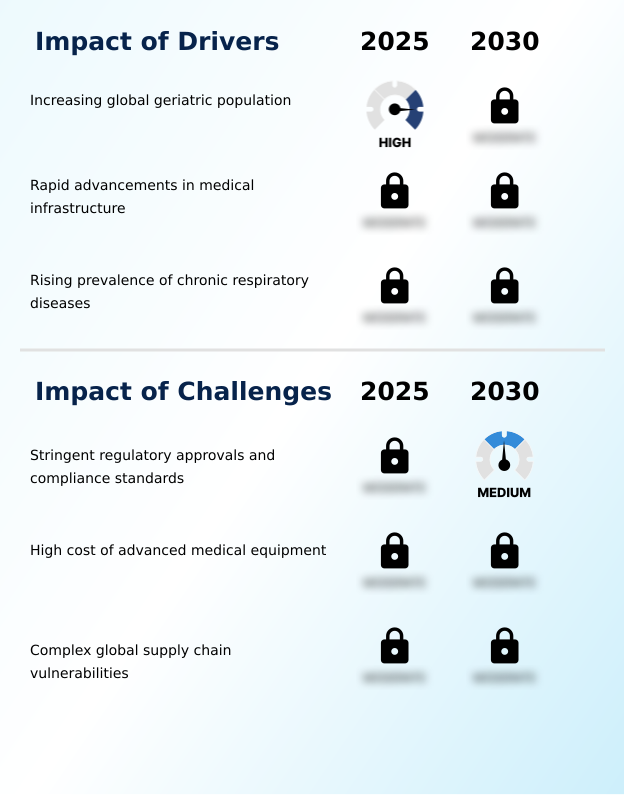
Primary Growth Driver: The increasing global geriatric population is a primary driver, escalating demand for specialized medical furniture and respiratory care solutions to manage age-related health conditions.
The market is propelled by powerful demographic and infrastructural drivers. A rising global geriatric population, more susceptible to chronic respiratory diseases, creates sustained demand for both specialized medical furniture and respiratory care devices.
This is amplified by rapid advancements in medical infrastructure, particularly in developing nations in Asia, which is projected to be the fastest-growing region.
The construction of new hospitals and specialized care centers necessitates large-scale procurement of equipment, from ergonomic patient transfer systems to high-performance ventilators.
The surging prevalence of conditions like chronic obstructive pulmonary disease (COPD) and sleep apnea directly fuels the need for devices like portable oxygen concentrators and non-invasive ventilation systems.
This clinical demand also influences the design of medical furniture, with intensive care units requiring beds that facilitate specialized respiratory therapies like prone positioning.
Emerging Market Trend: The integration of artificial intelligence and the Internet of Medical Things in respiratory care devices is a transformative trend. This convergence enables advanced remote patient monitoring and personalized therapeutic adjustments.
A significant trend shaping the market is the rapid integration of AI and the Internet of Medical Things (IoMT), transforming standard equipment into data-generating assets. Smart ventilators and cloud-connected CPAP machines now offer remote patient monitoring capabilities, allowing clinicians to adjust treatment protocols in real-time.
This shift is particularly evident in the homecare settings segment, which is expanding as healthcare systems prioritize reducing hospital stays. These advanced systems, often equipped with predictive maintenance algorithms, minimize device downtime and optimize resource allocation in clinical settings.
The convergence of digital health platforms with physical infrastructure, such as smart hospital beds featuring biometric sensors, creates a holistic patient monitoring ecosystem. This focus on connectivity and data analytics is driving research and development toward interoperable medical furniture and digital respiratory solutions, establishing a new standard of care.
Key Industry Challenge: Stringent regulatory approvals and complex compliance standards present a significant challenge, extending product development timelines and increasing operational costs for manufacturers.
Significant challenges constrain the market, led by stringent regulatory hurdles and high equipment costs. Manufacturers must navigate complex and expensive approval processes from bodies like the FDA and the European Medicines Agency, which can delay the commercialization of innovations like AI-enabled smart hospital beds and software-integrated mechanical ventilators. This regulatory burden disproportionately affects smaller firms.
Additionally, the high cost of advanced medical equipment, driven by sophisticated technology and components like specialized microchips, creates a financial barrier for many healthcare institutions, especially in developing regions.
Complex global supply chain vulnerabilities further exacerbate these issues, with disruptions in the availability of raw materials or electronic components leading to production delays and inventory shortages, directly impacting the ability of healthcare providers to procure critical equipment.
Explore Full Market Dynamics Analysis Request Free Sample
Medical Furniture And Respiratory Care Devices Market Segmentation
The medical furniture and respiratory care devices industry research report provides comprehensive data including region-wise segment analysis, with forecasts and analysis for the period 2026-2030, as well as historical data from 2020-2024 for the following segments.
Product Type Segment Analysis
The respiratory care devices segment is estimated to witness significant growth during the forecast period.
The respiratory care devices segment, a critical component of the global market, is driven by the rising prevalence of pulmonary disorders.
This category, which includes advanced mechanical ventilators, cpap machines, and portable oxygen concentrators, addresses the needs of patients with conditions like chronic obstructive pulmonary disease.
The market is witnessing a shift towards devices with wireless connectivity, enabling remote patient monitoring and adherence to treatment protocols, which is critical for reducing hospital readmissions.
This sub-segment, accounting for a significant portion of the market, is expanding due to technological advancements in smart ventilator technology and non-invasive ventilation.
The development of user-friendly interfaces and compact designs for homecare settings further accelerates adoption, reflecting the broader trend of decentralized patient management and telehealth integration.
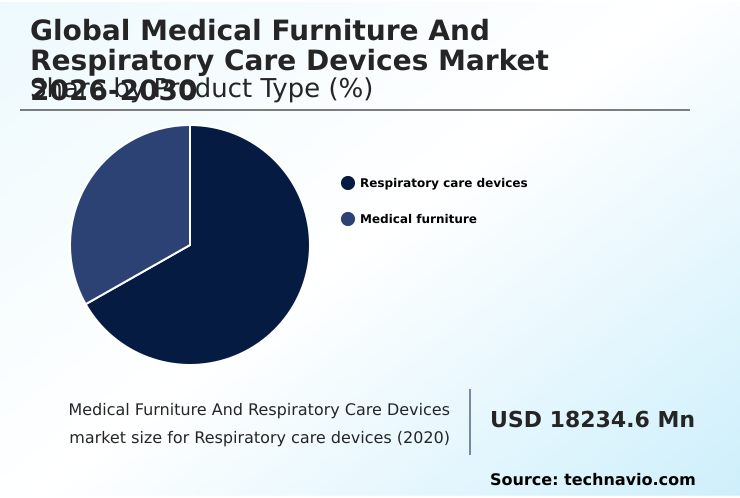
The Respiratory care devices segment was valued at USD 22.17 billion in 2024 and showed a gradual increase during the forecast period.
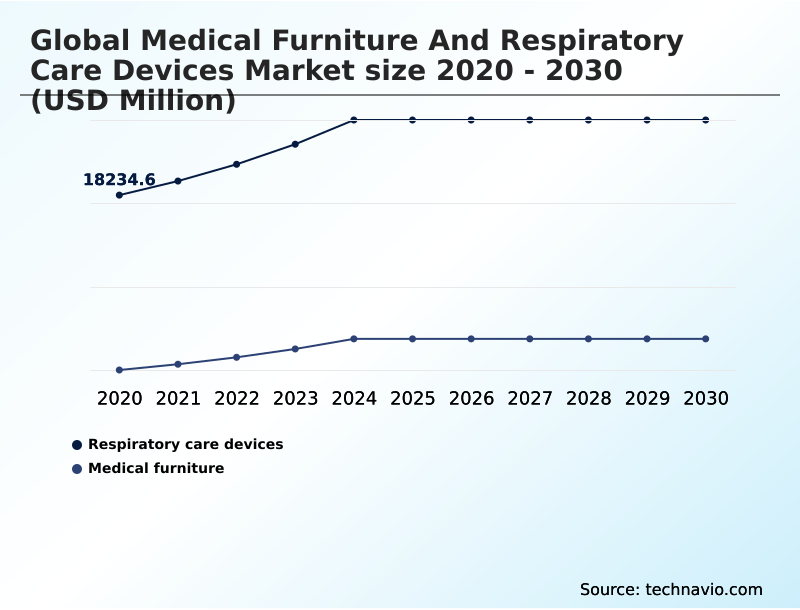
Medical Furniture And Respiratory Care Devices Market by Region: Asia Leads with 30.1% Growth Share
Asia is estimated to contribute 30.1% to the growth of the global market during the forecast period.

The geographic landscape of the medical furniture and respiratory care devices market is characterized by diverse regional dynamics and growth trajectories.
North America, forecast to be the largest market with a share of 28.45%, is driven by its highly developed clinical infrastructure and robust reimbursement frameworks that facilitate the adoption of premium equipment such as advanced ICU ventilators.
However, Asia is projected to be the fastest-growing region, with a CAGR of 8.9%, contributing significantly to the market's incremental growth.
This expansion is fueled by massive government investments in healthcare infrastructure, particularly in China and India, to address the rising prevalence of chronic respiratory diseases.
These regions are focused on procuring foundational equipment like hospital beds and portable oxygen concentrators to expand healthcare access.
In contrast, Europe, which accounts for 23.99% of the market, emphasizes ergonomic clinical design and sustainable manufacturing, with a strong focus on homecare settings and the adoption of non-invasive ventilation solutions.
Customer Landscape Analysis for the Medical Furniture And Respiratory Care Devices Market
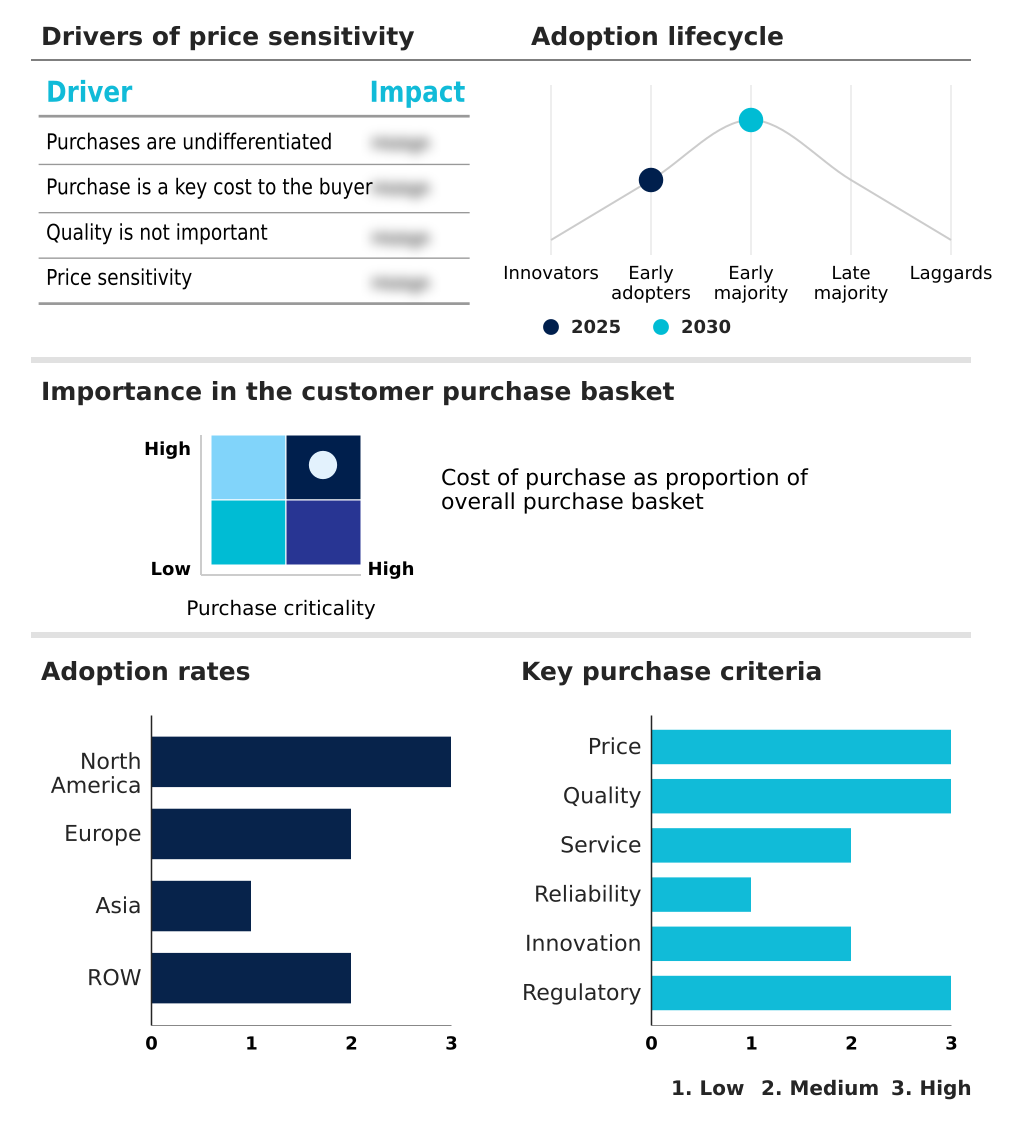
The medical furniture and respiratory care devices market forecasting report includes the adoption lifecycle of the market, covering from the innovator’s stage to the laggard’s stage. It focuses on adoption rates in different regions based on penetration. Furthermore, the medical furniture and respiratory care devices market report also includes key purchase criteria and drivers of price sensitivity to help companies evaluate and develop their market growth analysis strategies.
Competitive Landscape of the Medical Furniture And Respiratory Care Devices Market
Companies are implementing various strategies, such as strategic alliances, partnerships, mergers and acquisitions, geographical expansion, and product/service launches, to enhance their presence in the medical furniture and respiratory care devices market industry.
Air Liquide SA - The portfolio features advanced medical furniture and respiratory care devices, emphasizing technological integration and clinical efficacy to enhance patient outcomes and streamline healthcare delivery.
The industry research and growth report includes detailed analyses of the competitive landscape of the market and information about key companies, including:
- Air Liquide SA
- Arjo AB
- Baxter International Inc.
- Dragerwerk AG and Co. KGaA
- Drive DeVilbiss Healthcare
- Getinge AB
- Hamilton Medical AG
- ICU Medical Inc.
- Joerns Healthcare LLC
- Koninklijke Philips NV
- LINET Group SE
- Masimo Corp.
- Medtronic Plc
- Midmark Corp.
- Paramount Bed Ltd.
- ResMed Inc.
- Stiegelmeyer GmbH and Co. KG
- Stryker Corp.
- Sunrise Medical LLC
- Teleflex Inc.
Qualitative and quantitative analysis of companies has been conducted to help clients understand the wider business environment as well as the strengths and weaknesses of key industry players. Data is qualitatively analyzed to categorize companies as pure play, category-focused, industry-focused, and diversified; it is quantitatively analyzed to categorize companies as dominant, leading, strong, tentative, and weak.
Recent Developments in the Medical Furniture And Respiratory Care Devices Market
- In March 2025, Inspira Technologies initiated deployment of its ART100 respiratory support system at selected cardiothoracic medical centers in the United States, targeting advanced respiratory care applications.
- In March 2025, Indian healthcare company Zydus Lifesciences announced the acquisition of French orthopedic device manufacturer Amplitude Surgical, expanding its portfolio in the medical equipment sector.
- In February 2025, IMT Innovations introduced a prototype mechanical ventilator platform designed for critical care and sub-acute hospital environments, featuring a compact design and enhanced monitoring capabilities.
- In January 2025, Viemed Healthcare announced the acquisition of Lehans Medical Equipment for approximately $26 million, strengthening its presence in the home medical equipment and respiratory services sector across the United States.
Research Analyst Overview: Medical Furniture And Respiratory Care Devices Market
The medical furniture and respiratory care devices market is evolving beyond simple equipment provision to become a critical enabler of data-driven, efficient healthcare. With a year-over-year growth of 6.9%, the market's expansion is not just about volume but about technological sophistication.
Boardroom decisions now hinge on integrating smart bed systems and advanced mechanical ventilators into broader digital health ecosystems to improve patient outcomes and optimize resource allocation.
A key consideration is compliance with stringent regulations, such as the FDA's Unique Device Identification (UDI) system, which mandates granular traceability for components like medical-grade polymers and specialized microchips, impacting supply chain and manufacturing costs.
For example, a hospital's investment in smart hospital beds is no longer just about patient comfort; it's a strategic decision to leverage integrated biometric sensors and automated alerts to reduce fall risks and prevent pressure ulcers.
This shift is compelling manufacturers to innovate in areas like non-invasive ventilation and cloud-connected CPAP machines, focusing on devices that offer seamless data transmission and remote monitoring capabilities to support the growing trend of home healthcare.
Dive into Technavio’s robust research methodology, blending expert interviews, extensive data synthesis, and validated models for unparalleled Medical Furniture And Respiratory Care Devices Market insights. See full methodology.
| Market Scope | |
|---|---|
| Page number | 296 |
| Base year | 2025 |
| Historic period | 2020-2024 |
| Forecast period | 2026-2030 |
| Growth momentum & CAGR | Accelerate at a CAGR of 7.4% |
| Market growth 2026-2030 | USD 15015.9 million |
| Market structure | Fragmented |
| YoY growth 2025-2026(%) | 6.9% |
| Key countries | US, Canada, Mexico, Germany, UK, France, Italy, The Netherlands, Spain, Russia, China, India, Japan, South Korea, Thailand, Indonesia, Singapore, Australia, Brazil, Saudi Arabia, UAE, South Africa and Turkey |
| Competitive landscape | Leading Companies, Market Positioning of Companies, Competitive Strategies, and Industry Risks |
Medical Furniture And Respiratory Care Devices Market: Key Questions Answered in This Report
-
What is the expected growth of the Medical Furniture And Respiratory Care Devices Market between 2026 and 2030?
-
The Medical Furniture And Respiratory Care Devices Market is expected to grow by USD 15.02 billion during 2026-2030, registering a CAGR of 7.4%. Year-over-year growth in 2026 is estimated at 6.9%%. This acceleration is shaped by increasing global geriatric population, which is intensifying demand across multiple end-use verticals covered in the report.
-
-
What segmentation does the market report cover?
-
The report is segmented by Product Type (Respiratory care devices, and Medical furniture), End-user (Hospitals and clinics, Homecare settings, and Ambulatory surgical centers (ASCs)), Distribution Channel (Offline, and Online) and Geography (North America, Europe, Asia, Rest of World (ROW)). Among these, the Respiratory care devices segment is estimated to witness significant growth during the forecast period, driven by rising adoption across key application areas. Each segment includes detailed qualitative and quantitative analysis, along with historical data from 2020-2024 and forecasts through 2030 with year-over-year growth rates.
-
-
Which regions are analyzed in the report?
-
The report covers North America, Europe, Asia and Rest of World (ROW). Asia is estimated to contribute 30.1% to market growth during the forecast period. Country-level analysis includes US, Canada, Mexico, Germany, UK, France, Italy, The Netherlands, Spain, Russia, China, India, Japan, South Korea, Thailand, Indonesia, Singapore, Australia, Brazil, Saudi Arabia, UAE, South Africa and Turkey, with dedicated market size tables and year-over-year growth for each.
-
-
What are the key growth drivers and market challenges?
-
The primary driver is increasing global geriatric population, which is accelerating investment and industry demand. The main challenge is stringent regulatory approvals and compliance standards, creating operational barriers for key market participants. The report quantifies the impact of each driver and challenge across 2026 and 2030 with comparative analysis.
-
-
Who are the major players in the Medical Furniture And Respiratory Care Devices Market?
-
Key vendors include Air Liquide SA, Arjo AB, Baxter International Inc., Dragerwerk AG and Co. KGaA, Drive DeVilbiss Healthcare, Getinge AB, Hamilton Medical AG, ICU Medical Inc., Joerns Healthcare LLC, Koninklijke Philips NV, LINET Group SE, Masimo Corp., Medtronic Plc, Midmark Corp., Paramount Bed Ltd., ResMed Inc., Stiegelmeyer GmbH and Co. KG, Stryker Corp., Sunrise Medical LLC and Teleflex Inc.. The report provides qualitative and quantitative analysis categorizing companies as dominant, leading, strong, tentative, and weak based on their market positioning. Company profiles include business segment analysis, SWOT assessment, key offerings, and recent strategic developments.
-
Medical Furniture And Respiratory Care Devices Market Research Insights
Market dynamics are increasingly shaped by the need for operational efficiency and adherence to stringent regulatory frameworks like the FDA's Unique Device Identification (UDI) system. This mandate, aimed at enhancing post-market surveillance and patient safety, pressures manufacturers to invest in robust track-and-trace capabilities for every component, from specialized microchips to medical-grade polymers.
Procurement decisions for capital equipment such as high-performance ventilators and bariatric medical furniture are now heavily influenced by total cost of ownership, which includes long-term maintenance and compliance expenses. In practice, a hospital network evaluating new smart hospital beds will prioritize systems that not only offer patient monitoring but also integrate seamlessly with existing electronic health records to streamline workflows.
This shift towards interconnected ecosystems drives demand for interoperable medical furniture and devices, forcing vendors to balance technological sophistication with cost-effectiveness to serve a market where both public and private healthcare providers face significant budget constraints.
We can help! Our analysts can customize this medical furniture and respiratory care devices market research report to meet your requirements.
 RIA -
RIA - 
