


Meltblown Fabrics Market Size 2024-2028
The meltblown fabrics market size is forecast to increase by USD 3.20 billion at a CAGR of 7.43% between 2023 and 2028.
- The market is witnessing significant growth due to strategic initiatives by market participants. Companies are focusing on product innovation and expansion of their product portfolio to cater to the evolving needs of various end-user industries. Furthermore, the increasing demand for eco-friendly and biodegradable materials is driving market growth. The healthcare sector is a major consumer, with uses in medical fabrics for surgical masks, N95 respirators, and filtration systems for diagnostic imaging and precision medical equipment. However, the easy availability of substitutes for meltblown fabrics poses a challenge to market companies. To remain competitive, they must focus on offering superior quality and cost-effective solutions to their customers. This market trends and analysis report provides an in-depth exploration of these growth factors and the challenges impacting the market.
What will be the Size of the Meltblown Fabrics Market During the Forecast Period?

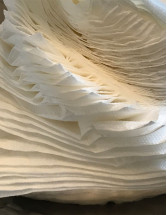
- Meltblown fabrics, a type of nonwoven fabric, have gained significant traction in various industries due to their unique properties and versatility. These fabrics are manufactured using synthetic polymer fibers, resulting in a fine, uniform, and meshlike structure. The meltblown fabric market is driven by its extensive applications in filtration, particularly in removing particles and microorganisms.
- Additionally, the market finds a strong foothold in personal care, including sanitary products and absorbent materials. Optical technologies, dental care, and home textiles also utilize meltblown fabrics due to their excellent filtration efficiency and absorbent properties. Polypropylene and polyester are commonly used materials in meltblown fabric production, contributing to its widespread adoption across diverse industries.
How is this Meltblown Fabrics Industry segmented and which is the largest segment?
The meltblown fabrics industry research report provides comprehensive data (region-wise segment analysis), with forecasts and estimates in "USD billion" for the period 2024-2028, as well as historical data from 2018-2022 for the following segments.
- Material
- Polypropylene
- Polyester
- Others
- End-user
- Medical hygiene and personal care
- Construction
- Home textile
- Automotive
- Others
- Geography
- APAC
- China
- India
- Japan
- North America
- US
- Europe
- Germany
- South America
- Middle East and Africa
- APAC
By Material Insights
- The polypropylene segment is estimated to witness significant growth during the forecast period.
Meltblown fabrics, specifically those made from synthetic polymer fibers such as polypropylene and polybutylene terephthalate, are widely utilized in various industries for filtration applications. These fabrics possess a fine meshlike structure, enabling them to effectively filter out particles and microorganisms. In healthcare, they are employed In the production of surgical masks, personal protective equipment (PPE), and PPE kits due to their excellent filtration efficiency and absorbent properties. In the medical field, they are also used in medical fabrics for sanitary products, diagnostic imaging, precision medical, optical technologies, dental care, and bacterial protection. Polypropylene and polyamide meltblown fabrics offer elasticity, while thermoplastic polyurethane and polycarbonate provide dual textures and fine fibers.

Get a glance at the Meltblown Fabrics Industry report of share of various segments Request Free Sample
The polypropylene segment was valued at USD 3.25 billion in 2018 and showed a gradual increase during the forecast period.
Regional Analysis
- APAC is estimated to contribute 51% to the growth of the global market during the forecast period.
Technavio's analysts have elaborately explained the regional trends and drivers that shape the market during the forecast period.

For more insights on the market share of various regions, Request Free Sample
Meltblown fabrics, a type of nonwoven fabric, are gaining popularity in various industries due to their fine meshlike structure and superior properties. These fabrics are primarily made from synthetic polymer fibers, including polypropylene, polybutylene terephthalate, polycarbonate, polyamide, elastic polypropylene, and thermoplastic polyurethane. The fine fibers and dual textures offer excellent filtration efficiency, making meltblown fabrics ideal for applications in healthcare, filtration, personal care, and absorbent products. In healthcare, they are used in surgical masks, personal protective equipment (PPE), and medical kits. In filtration, they are used in air and liquid filtration systems, as well as in filtration products for industrial applications.
Market Dynamics
Our researchers analyzed the data with 2023 as the base year, along with the key drivers, trends, and challenges. A holistic analysis of drivers will help companies refine their marketing strategies to gain a competitive advantage.
What are the key market drivers leading to the rise In the adoption of Meltblown Fabrics Industry?
Strategic initiatives by market companies is the key driver of the market.
- Meltblown fabric, a type of nonwoven fabric, is gaining popularity due to its fine mesh-like structure and versatile applications. Synthetic polymer fibers, including polypropylene, polybutylene terephthalate, polycarbonate, polyamide, elastic polypropylene, thermoplastic polyurethane, and others, are commonly used in its production. This material is widely used in various industries for filtering particles, microorganisms, and providing absorbent properties. In healthcare, meltblown fabrics are utilized in medical applications such as surgical masks, personal protective equipment (PPE), and PPE kits. They offer bacterial protection and are essential in hygiene products, diagnostic imaging, precision medical, optical technologies, dental care, and more. The filtration efficiency of these fabrics is crucial in industries like construction and home textiles, where they are used as filtration products.
- In addition, companies are expanding their product offerings by developing specialized fabrics for specific sectors, such as healthcare, filtration, automotive, and construction. They are also exploring new uses and functionalities in meltblown materials, like nanofiber nonwoven fabrics for oil adsorbents and eco-friendly materials for medical tourism. To meet the growing demand, meltblown fabric companies are investing in expanding their existing manufacturing facilities or establishing new production plants worldwide. This includes adding production lines, increasing floor space, locating facilities near key markets, and sourcing new raw materials. For instance, Mogul Co. Recently announced plans to build a new production plant to cater to the increasing demand for meltblown fabrics in various industries.
What are the market trends shaping the Meltblown Fabrics Industry?
Rising demand for biodegradable and eco-friendly materials in end-user industries is the upcoming market trend.
- Meltblown fabrics, a type of nonwoven fabric, are increasingly gaining popularity due to their fine meshlike structure and versatile properties. These fabrics are primarily made from synthetic polymer fibers, including polypropylene, polybutylene terephthalate, polycarbonate, polyamide, elastic polypropylene, thermoplastic polyurethane, and others. The fine fibers create high filtration efficiency, making meltblown fabrics suitable for various applications in healthcare, filtration, personal care, and more. In healthcare, meltblown fabrics are used in PPE kits, surgical masks, and personal protective equipment (PPE) due to their bacterial protection and absorbent properties. In the filtration industry, they are used in air and liquid filtration systems, while in personal care, they are used in sanitary products and diagnostics imaging.
- In addition, as the demand for eco-friendly materials grows, companies In the market are focusing on using biodegradable materials, such as polylactic acid (PLA) and polyhydroxyalkanoates (PHA), to produce meltblown fabrics. For instance, Roswell Textiles and PADM Medical recently created Canada's first medical-grade procedural mask, VIRALOC ECO, using their unique plant-based nonwoven materials. This mask reduces the carbon footprint by 65% compared to typical synthetic masks, making it a sustainable option for various applications. Meltblown fabrics are also used in construction, home textiles, and various other industries due to their unique properties. They are used in optical technologies, dental care, and precision medical applications, among others.
What challenges does the Meltblown Fabrics Industry face during its growth?
Easy availability of substitutes for meltblown fabrics is a key challenge affecting the industry growth.
- Meltblown fabrics, a type of nonwoven fabric, are renowned for their fine meshlike structure derived from synthetic polymer fibers. These fabrics are widely used in various industries, including healthcare, filtration, personal care, and construction, due to their absorbent properties and bacterial protection. However, they face competition from alternative materials, such as woven fabrics, microfiber fabrics, and natural fibers. Woven fabrics, which are produced by interlacing yarns or threads, serve as viable substitutes for meltblown fabrics in applications where filtration efficiency is not a primary concern. Their durability and versatility make them suitable for various applications, such as clothing, upholstery, and bags.
- In contrast, meltblown fabrics excel in filtration applications due to their fine fibers and high filtration efficiency. In the healthcare sector, meltblown fabrics are used extensively in medical applications, including surgical masks and personal protective equipment (PPE), due to their ability to filter particles and microorganisms. They are also used in sanitary products, diagnostic imaging, precision medical, optical technologies, dental care, and ecommerce for hygiene products. Meltblown fabrics are made from various thermoplastic polymers, including polypropylene, polybutylene terephthalate, polycarbonate, polyamide, elastic polypropylene, and thermoplastic polyurethane. These materials offer unique properties, such as biodegradability, eco-friendliness, and dual textures, making them suitable for various applications.
Exclusive Customer Landscape
The meltblown fabrics market forecasting report includes the adoption lifecycle of the market, covering from the innovator's stage to the laggard's stage. It focuses on adoption rates in different regions based on penetration. Furthermore, the meltblown fabrics market report also includes key purchase criteria and drivers of price sensitivity to help companies evaluate and develop their market growth analysis strategies.

Customer Landscape
Key Companies & Market Insights
Companies are implementing various strategies, such as strategic alliances, meltblown fabrics market forecast, partnerships, mergers and acquisitions, geographical expansion, and product/service launches, to enhance their presence In the industry.
The industry research and growth report includes detailed analyses of the competitive landscape of the market and information about key companies, including:
- Ahlstrom Holding 3 Oy
- Armbrust American
- Atex SpA
- Berry Global Inc.
- DuPont de Nemours Inc.
- Evora SA
- Freudenberg and Co. KG
- Hollingsworth and Vose
- Hunan Mingyu Nonwovens Co. Ltd.
- Indorama Ventures Public Co. Ltd.
- IREMA Ireland
- Johns Manville
- Kimberly Clark Corp.
- Mitsui Chemicals Inc.
- Mogul Co. Ltd.
- OC Oerlikon Corp. AG
- PADM Group
- PFNonwovens Holding s.r.o.
- Precision ADM Inc.
- Radici Partecipazioni Spa
- Sinopec Shanghai Petrochemical Co. Ltd.
- THRACE PLASTICS CO S.A.
- Toray Industries Inc.
Qualitative and quantitative analysis of companies has been conducted to help clients understand the wider business environment as well as the strengths and weaknesses of key industry players. Data is qualitatively analyzed to categorize companies as pure play, category-focused, industry-focused, and diversified; it is quantitatively analyzed to categorize companies as dominant, leading, strong, tentative, and weak.
Research Analyst Overview
Meltblown fabrics, a type of nonwoven fabric, have gained significant attention in various industries due to their unique properties and versatility. These fabrics are manufactured using synthetic polymer fibers, which are extruded through a heated die and then rapidly solidified and dispersed in a high-velocity air stream. The result is a fine, uniformly sized meshlike structure that offers exceptional filtration capabilities. Meltblown fabrics have found extensive applications In the health and hygiene sector, particularly in filtration and personal protective equipment (PPE). In the realm of filtration, these fabrics are used to filter particles and microorganisms, making them indispensable in healthcare settings.
In addition, they are used in surgical masks, PPE kits, and other medical applications to ensure the highest level of protection for patients and healthcare workers. The fine fibers also make them suitable for use in various medical textiles. For instance, they are used In the production of medical fabrics for sanitary products, diagnostic imaging, and precision medical equipment. In addition, they find applications in optical technologies, dental care, and other fields where high filtration efficiency is required. The versatility extends beyond healthcare applications. They are also used In the construction industry for insulation and as a barrier material.
Furthermore, in the home textile sector, they are used for making eco-friendly and biodegradable materials. In the realm of filtration products, they are used as oil adsorbents, making them valuable in various industrial applications. The demand is driven by the increasing focus on health and hygiene, especially In the wake of the global health crisis. The need for effective filtration and protection against microorganisms has led to an increase in demand for these fabrics in various industries. Furthermore, the development of nanofiber nonwoven fabrics has opened up new possibilities, expanding their applications in various sectors.
Furthermore, the market is expected to grow significantly In the coming years, driven by the increasing demand for filtration and protective materials. The growing trend towards eco-friendly and biodegradable materials is also expected to boost the market. The use of these fabrics in various industries, including healthcare, construction, home textiles, and filtration, is expected to drive the market growth. Therefore, these are a versatile and valuable material with a wide range of applications. Their unique properties, including their fine fibers and exceptional filtration capabilities, make them indispensable in various industries, particularly in healthcare and filtration. The market is expected to grow significantly In the coming years, driven by the increasing demand for filtration and protective materials and the trend towards eco-friendly and biodegradable materials.
|
Market Scope |
|
|
Report Coverage |
Details |
|
Page number |
182 |
|
Base year |
2023 |
|
Historic period |
2018-2022 |
|
Forecast period |
2024-2028 |
|
Growth momentum & CAGR |
Accelerate at a CAGR of 7.43% |
|
Market growth 2024-2028 |
USD 3.20 billion |
|
Market structure |
Fragmented |
|
YoY growth 2023-2024(%) |
7.27 |
|
Key countries |
US, China, India, Japan, and Germany |
|
Competitive landscape |
Leading Companies, market growth and forecasting , Market Positioning of Companies, Competitive Strategies, and Industry Risks |
What are the Key Data Covered in this Market Research and Growth Report?
- CAGR of the industry during the forecast period
- Detailed information on factors that will drive the growth and forecasting between 2024 and 2028
- Precise estimation of the size of the market and its contribution of the industry in focus to the parent market
- Accurate predictions about upcoming growth and trends and changes in consumer behaviour
- Growth of the market across APAC, North America, Europe, South America, and Middle East and Africa
- Thorough analysis of the market's competitive landscape and detailed information about companies
- Comprehensive analysis of factors that will challenge the market growth of industry companies
We can help! Our analysts can customize this market research report to meet your requirements.