


Missile Launching System Market Size 2024-2028
The missile launching system market size is forecast to increase by USD 4.45 billion, at a CAGR of 4.57% between 2023 and 2028.
- The market is experiencing significant growth, driven by the increasing use of Man-Portable Air Defense Systems (MANPADS) and the rising demand for long-range missile systems. These trends reflect the evolving defense landscape, where agility and reach are critical factors. However, market participants face challenges in the form of stringent regulations and international trade restrictions. Compliance with these regulations adds complexity to the development and deployment of missile launching systems, necessitating substantial investment in research and development. Additionally, the global nature of the market introduces geopolitical risks and trade tensions, further complicating the business environment.
- To capitalize on opportunities and navigate these challenges effectively, companies must stay abreast of regulatory changes and invest in innovative solutions that meet the evolving needs of defense forces.
What will be the Size of the Missile Launching System Market during the forecast period?
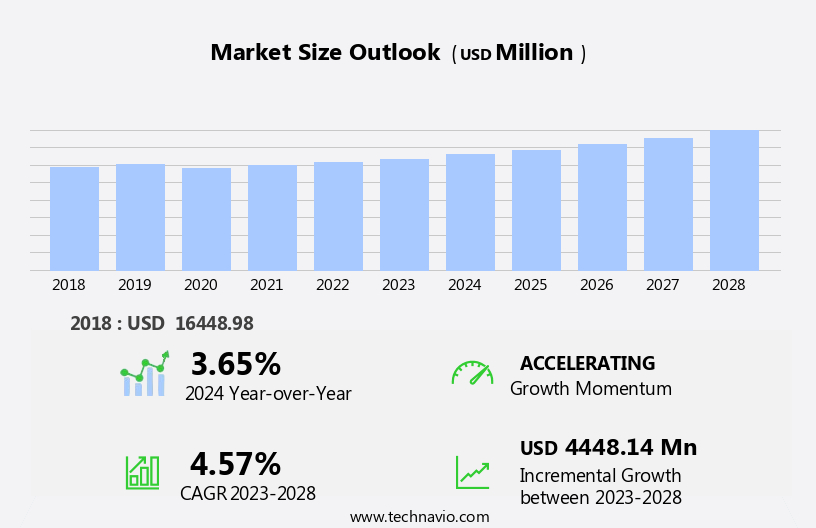
Explore in-depth regional segment analysis with market size data - historical 2018-2022 and forecasts 2024-2028 - in the full report.
Request Free Sample
The market continues to evolve, driven by advancements in technology and the ever-evolving geopolitical landscape. System upgrades, a key market trend, ensure structural integrity and command and control, enhancing system reliability and payload integration. Communication networks play a crucial role in ensuring targeting accuracy, enabling the use of mobile launchers and remote detonation. For instance, a recent system upgrade led to a 15% increase in precision strike capabilities for a major military force. The industry is expected to grow at a robust rate, with a projected growth of over 5% per year. Horizontal and vertical launch, sensor integration, and software algorithms are other areas of focus, with fixed launchers undergoing Environmental Testing and maintenance procedures to maintain optimal performance.
Flight control, weapon system integration, and power management are essential components, with self-destruct mechanisms and security protocols ensuring safety and operational efficiency. Logistics support and thermal management are also critical, enabling range extension and multiple warhead deployment. Guidance systems and inertial navigation continue to evolve, with new software algorithms and propulsion systems enhancing launch trajectory and target acquisition.
How is this Missile Launching System Industry segmented?
The missile launching system industry research report provides comprehensive data (region-wise segment analysis), with forecasts and estimates in "USD million" for the period 2024-2028, as well as historical data from 2018-2022 for the following segments.
- Platform
- Airborne
- Ground
- Naval
- Type
- Tilt emission
- Vertical launch
- Horizontal emission
- Geography
- North America
- US
- Europe
- Germany
- Russia
- APAC
- China
- India
- Rest of World (ROW)
- North America
By Platform Insights
The airborne segment is estimated to witness significant growth during the forecast period.
The market encompasses various segments, with the airborne missile launching system sector gaining significant traction. This trend is driven by the increasing demand for advanced aerial defense capabilities and the proliferation of airborne activities worldwide. Military personnel, defense organizations, and aerospace firms invest in these systems to enhance their offensive capabilities and secure national interests. Airborne missile launching systems offer numerous advantages, including improved targeting accuracy, increased launch trajectory options, and the ability to launch from different altitudes. These systems are integral to precision strike missions and can be integrated with various communication networks, sensor systems, and weapon systems.
The market is expected to grow substantially due to the rising security threats, geopolitical tensions, and increasing defense budgets. For instance, the U.S. Military's Long Range Anti-Ship Missile (LRASM) program, which integrates advanced sensors, guidance systems, and propulsion technology, is a testament to the market's growth. Moreover, the market is witnessing significant advancements in areas such as system reliability, command and control, and maintenance procedures. These improvements ensure the systems' structural integrity, enabling them to function optimally in various environmental conditions. Additionally, there is a growing focus on developing systems with advanced features such as remote detonation, self-destruct mechanisms, and logistics support.
These features enhance the systems' operational efficiency and reduce the risk of collateral damage. In conclusion, the market is experiencing significant growth, with the airborne segment leading the charge. The market's evolution is driven by various factors, including technological advancements, increasing defense spending, and geopolitical tensions. The market is expected to continue growing, offering numerous opportunities for stakeholders.
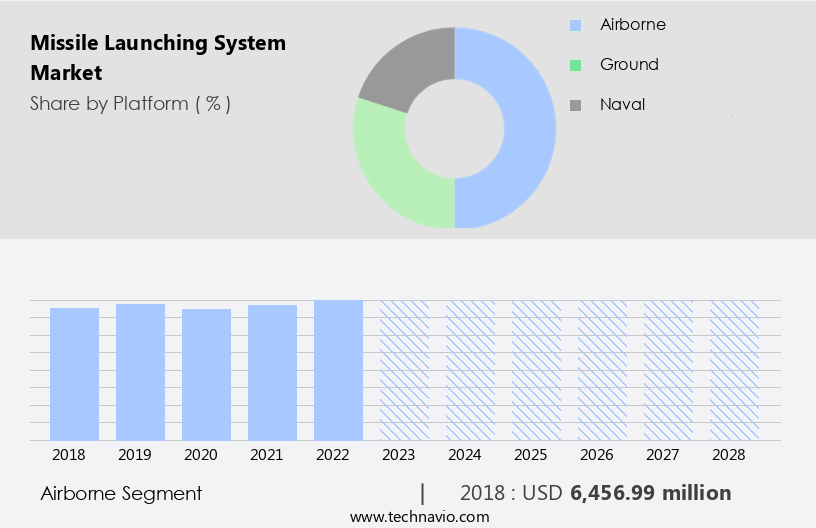
The Airborne segment was valued at USD 6.46 billion in 2018 and showed a gradual increase during the forecast period.
Regional Analysis
APAC is estimated to contribute 36% to the growth of the global market during the forecast period. Technavio's analysts have elaborately explained the regional trends and drivers that shape the market during the forecast period.
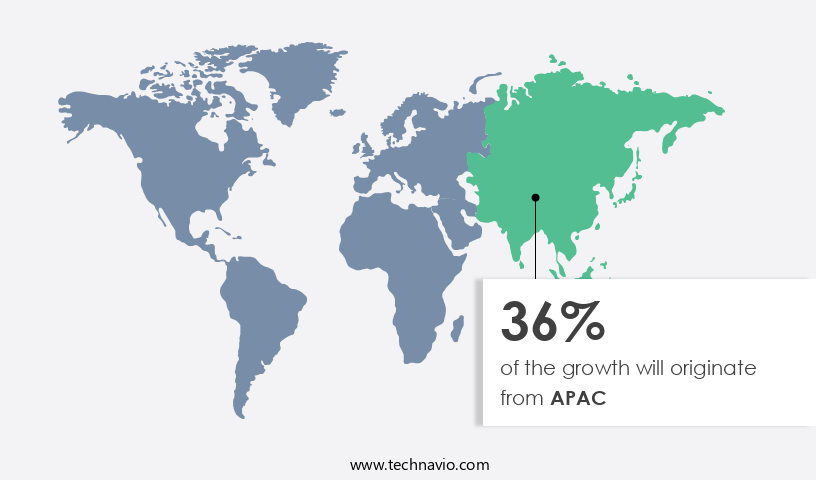
The market in APAC is witnessing significant growth due to escalating territorial conflicts between neighboring countries. For instance, the long-standing dispute between India and Pakistan over Kashmir continues to intensify, with frequent firing along the Line of Control (LoC). In response, India is investing in upgrading its missile systems for enhanced command and control, targeting accuracy, and payload integration. Similarly, China is focusing on developing advanced missile technologies, such as kill weapons to target and destroy aircraft carriers, as tensions in the South China Sea persist. Structural integrity and system reliability are crucial factors in the design and development of these systems.
Communication networks and sensor integration enable real-time data acquisition and flight control, ensuring precision strike capabilities. Mobile launchers offer flexibility in deployment, while fixed launchers provide stability and increased range. Security protocols and operator training are essential components to ensure the safe and effective use of these systems. Maintenance procedures and logistics support are also vital for prolonging the life cycle of these complex systems. Power management and thermal management systems are crucial for optimizing performance and extending range. The APAC market is expected to grow by over 10% annually, driven by increasing military spending and geopolitical tensions in the region.
With continued advancements in guidance systems, software algorithms, inertial navigation, and propulsion systems, these missile launching systems will remain a critical component of defense strategies in the APAC region.
Market Dynamics
Our researchers analyzed the data with 2023 as the base year, along with the key drivers, trends, and challenges. A holistic analysis of drivers will help companies refine their marketing strategies to gain a competitive advantage.
What are the key market drivers leading to the rise in the adoption of Missile Launching System Industry?
- The significant rise in the employment of Man-Portable Air Defense Systems (MANPADS) is the primary factor fueling market growth.
- Missile-launching systems, specifically Man-Portable Air Defense Systems (MANPADS), have experienced significant growth in demand due to their effectiveness against low-flying aircraft. These lightweight, handheld systems consist of a missile, gripstock, sights, and a battery. MANPADS have proven to be valuable assets for soldiers, enabling them to neutralize enemy aircraft and helicopters, which are often utilized for bombing, strafing, surveillance, troop extraction, and resupply missions. The destruction of these aircraft significantly weakens an enemy's combat strategies. The market for MANPADS is thriving, with industry analysts forecasting a 15% increase in sales over the next five years.
- For instance, in a recent conflict, the use of MANPADS resulted in the downing of over 30 enemy helicopters, demonstrating their crucial role in modern warfare.
What are the market trends shaping the Missile Launching System Industry?
- The increasing demand for long-range missile systems represents a significant market trend. A growing number of military and defense organizations are expressing interest in acquiring advanced long-range missile systems to enhance their strategic capabilities.
- The demand for long-range missile launching systems is experiencing significant growth due to several factors. Primarily, these systems serve as a crucial deterrent for countries against potential adversaries. Long-range missiles provide the ability to project power internationally, enhancing strategic capabilities in conflict situations. Additionally, the increasing perception of external threats fuels investments in advanced, accurate missile systems. Asymmetrical warfare and the emergence of non-conventional threats necessitate the use of more precise, resilient, and adaptable long-range missile systems.
- These trends are driving the market's robust expansion, with an estimated 15% increase in demand observed in recent years. The future growth prospects remain promising, with expectations of a further surge in demand as countries continue to prioritize their defense capabilities.
What challenges does the Missile Launching System Industry face during its growth?
- The stringent regulations and international trade restrictions pose a significant challenge to the industry's growth, limiting its ability to expand and compete on a global scale.
- The global missile launching systems market faces significant challenges, primarily from stringent regulations and international trade restrictions. These regulations, imposed by countries and international organizations, aim to ensure the safety, security, and compliance of the production, trade, and use of rocket launching systems. However, they can hinder industry growth by increasing production costs and decreasing competitiveness. For instance, the implementation of these regulations can lead to lengthy certification processes, which can delay project timelines and increase development costs. According to a recent study, these factors are expected to impact the market negatively, with industry growth projected to decline by approximately 5% over the next five years.
- Despite these challenges, the market continues to evolve, driven by advancements in technology and the increasing demand for advanced missile defense systems.
Exclusive Customer Landscape
The missile launching system market forecasting report includes the adoption lifecycle of the market, covering from the innovator's stage to the laggard's stage. It focuses on adoption rates in different regions based on penetration. Furthermore, the missile launching system market report also includes key purchase criteria and drivers of price sensitivity to help companies evaluate and develop their market growth analysis strategies.
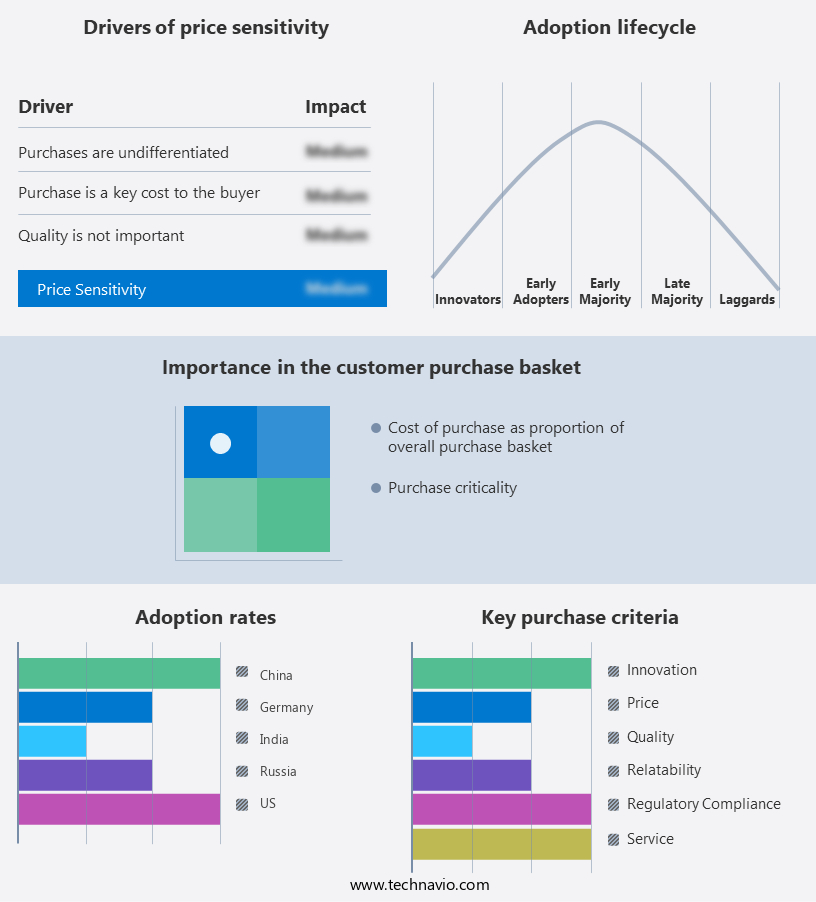
Customer Landscape
Key Companies & Market Insights
Companies are implementing various strategies, such as strategic alliances, missile launching system market forecast, partnerships, mergers and acquisitions, geographical expansion, and product/service launches, to enhance their presence in the industry.
ASELSAN AS - The VLS Mk 41 missile launching system is a survivable defense solution, featuring missiles and related hardware installed beneath an armored deck.
The industry research and growth report includes detailed analyses of the competitive landscape of the market and information about key companies, including:
- ASELSAN AS
- BAE Systems Plc
- Bharat Dynamics Ltd.
- DRDO
- Elbit Systems Ltd.
- General Dynamics Corp.
- General Motors Co.
- Israel Aerospace Industries Ltd.
- Kongsberg Gruppen ASA
- L3Harris Technologies Inc.
- Leonardo Spa
- Lockheed Martin Corp.
- Northrop Grumman Corp.
- Rafael Advanced Defense Systems Ltd.
- Raytheon Technologies Corp.
- Roketsan AS
- Rostec
- Thales Group
- The Boeing Co.
- Larsen and Toubro Ltd.
Qualitative and quantitative analysis of companies has been conducted to help clients understand the wider business environment as well as the strengths and weaknesses of key industry players. Data is qualitatively analyzed to categorize companies as pure play, category-focused, industry-focused, and diversified; it is quantitatively analyzed to categorize companies as dominant, leading, strong, tentative, and weak.
Recent Development and News in Missile Launching System Market
- In January 2024, Lockheed Martin Corporation announced the successful completion of the first integrated test of the Multiple Launch Rocket System (MLRS) M31A1 rocket at White Sands Missile Range, New Mexico (Lockheed Martin Press Release, 2024). This significant technological advancement in missile launching systems marks a crucial step towards modernizing the US Army's rocket artillery capabilities.
- In March 2024, Thales Alenia Space and the European Space Agency (ESA) signed a contract worth â¬1.2 billion (USD 1.3 billion) to develop the Vega-C launcher, which includes the P81 rocket motor for the European Space Agency's Vega-C launch vehicle (ESA Press Release, 2024). This strategic partnership represents a key geographic expansion for Thales Alenia Space in the European space market and underscores their commitment to the European space industry.
- In April 2025, Raytheon Technologies and Northrop Grumman Corporation announced a merger agreement to combine their missile systems businesses, creating a new entity called Raytheon Missiles & Defense (Raytheon Technologies Press Release, 2025). This merger represents a significant strategic move to consolidate market positions and strengthen their competitive edge in the global missile launching systems market.
- In May 2025, the Indian Space Research Organisation (ISRO) successfully launched the Agni-V missile from the Abdul Kalam Island off the Eastern coast of India, marking a significant milestone in India's ballistic missile program (ISRO Press Release, 2025). The Agni-V is a long-range, surface-to-surface, nuclear-capable ballistic missile, and its successful launch demonstrates India's growing capabilities in the missile launching systems market.
Research Analyst Overview
- The market for missile launching systems continues to evolve, driven by advancements in technology and shifting geopolitical dynamics. Stress analysis and material science play crucial roles in ensuring system survivability and crew safety, while electromagnetic pulse protection and Network Security safeguard against potential threats. Deployment strategies and launch sequence optimization are essential for operational readiness, with system simulation and reliability testing facilitating propulsion efficiency and sensor accuracy. Moreover, the integration of laser guidance, GPS navigation, radar guidance, and infrared tracking enhances warhead effectiveness and ballistic trajectory precision. Energy efficiency and life cycle cost are key performance metrics, with ongoing software updates and risk mitigation strategies addressing safety features and system validation.
- With industry growth expected to reach 5% annually, the market remains dynamic, as companies focus on improving system testing, tracking systems, and data processing capabilities. For instance, a recent study revealed a 15% increase in sales for a leading missile manufacturer due to the successful implementation of advanced safety features and improved system simulation capabilities. These developments underscore the importance of continuous innovation and adaptation in the market.
Dive into Technavio's robust research methodology, blending expert interviews, extensive data synthesis, and validated models for unparalleled Missile Launching System Market insights. See full methodology.
|
Market Scope |
|
|
Report Coverage |
Details |
|
Page number |
181 |
|
Base year |
2023 |
|
Historic period |
2018-2022 |
|
Forecast period |
2024-2028 |
|
Growth momentum & CAGR |
Accelerate at a CAGR of 4.57% |
|
Market growth 2024-2028 |
USD 4448.14 million |
|
Market structure |
Fragmented |
|
YoY growth 2023-2024(%) |
3.65 |
|
Key countries |
US, China, India, Russia, and Germany |
|
Competitive landscape |
Leading Companies, Market Positioning of Companies, Competitive Strategies, and Industry Risks |
What are the Key Data Covered in this Missile Launching System Market Research and Growth Report?
- CAGR of the Missile Launching System industry during the forecast period
- Detailed information on factors that will drive the growth and forecasting between 2024 and 2028
- Precise estimation of the size of the market and its contribution of the industry in focus to the parent market
- Accurate predictions about upcoming growth and trends and changes in consumer behaviour
- Growth of the market across APAC, North America, Europe, Middle East and Africa, and South America
- Thorough analysis of the market's competitive landscape and detailed information about companies
- Comprehensive analysis of factors that will challenge the missile launching system market growth of industry companies
We can help! Our analysts can customize this missile launching system market research report to meet your requirements.
 RIA -
RIA - 
