


Environmental Testing Market Size 2025-2029
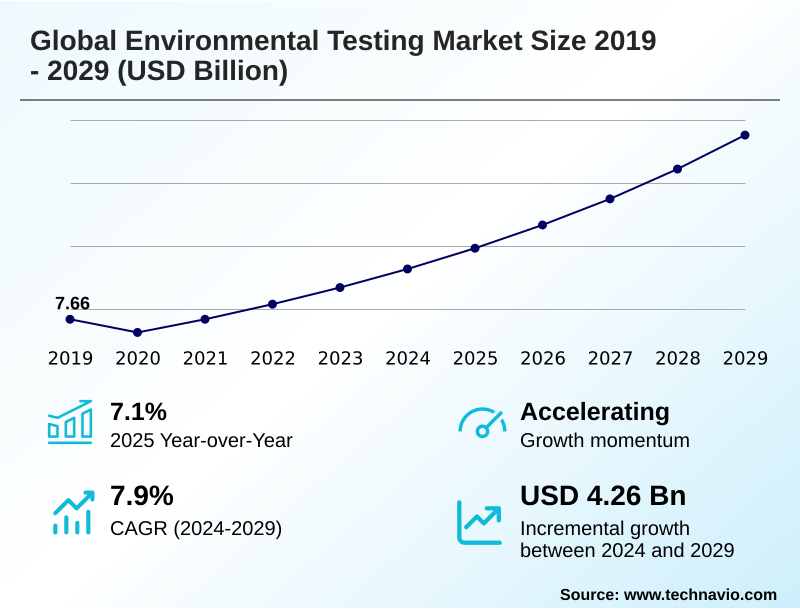
The environmental testing market size is valued to increase by USD 4.26 billion, at a CAGR of 7.9% from 2024 to 2029. Marked increase in soil contamination will drive the environmental testing market.
Major Market Trends & Insights
- North America dominated the market and accounted for a 34.3% growth during the forecast period.
- By Application - Air testing segment was valued at USD 3.30 billion in 2023
- By Product - Mass spectrometers segment accounted for the largest market revenue share in 2023
Market Size & Forecast
- Market Opportunities: USD 5.86 billion
- Market Future Opportunities: USD 4.26 billion
- CAGR from 2024 to 2029 : 7.9%
Market Summary
- The environmental testing market is foundational to safeguarding public health and ensuring ecological balance amid growing industrial and urban pressures. Its scope extends beyond simple measurements, encompassing complex chemical analysis, microbiological testing, and radiological assessments to identify and quantify pollutants in air, water, and soil.
- A key driver is the enforcement of stringent regulatory compliance testing standards globally, compelling industries to invest in continuous environmental monitoring. For instance, a manufacturing facility might deploy real-time monitoring systems for its discharge, using data from advanced analytical instruments to optimize its wastewater analysis and treatment processes.
- This proactive approach not only prevents costly penalties but also reinforces corporate environmental stewardship. Trends such as the focus on emerging contaminants like PFAS and the integration of digital infrastructure are pushing laboratories to adopt more sophisticated technologies, including chromatography and mass spectrometers, to achieve greater accuracy and efficiency in contaminant characterization and support large-scale environmental remediation efforts.
What will be the Size of the Environmental Testing Market during the forecast period?
Get Key Insights on Market Forecast (PDF) Get Free Sample
How is the Environmental Testing Market Segmented?
The environmental testing industry research report provides comprehensive data (region-wise segment analysis), with forecasts and estimates in "USD million" for the period 2025-2029, as well as historical data from 2019-2023 for the following segments.
- Application
- Air testing
- Water testing
- Soil testing
- Product
- Mass spectrometers
- Chromatography
- pH meters
- Molecular spectroscopy products
- TOC analyzers
- Type
- Temperature testing
- Humidity testing
- Climatic testing
- Shock and vibration testing
- Others
- Geography
- North America
- US
- Canada
- Mexico
- Europe
- Germany
- UK
- France
- APAC
- China
- Japan
- India
- South America
- Brazil
- Argentina
- Middle East and Africa
- Saudi Arabia
- UAE
- South Africa
- Rest of World (ROW)
- North America
By Application Insights
The air testing segment is estimated to witness significant growth during the forecast period.
The air testing segment is expanding significantly, driven by stringent regulatory frameworks and heightened focus on public health.
Industrial compliance is a primary catalyst, with sectors such as manufacturing and energy mandated to monitor emissions of pollutants like volatile organic compounds and particulate matter.
This demand is amplified by urbanization, necessitating robust ambient air quality monitoring networks and noise testing.
A pivotal regulatory action recently lowered the primary annual PM2.5 standard by 25%, compelling states to implement new reduction plans and driving demand for precise air testing and radiological assessments.
The subsegment of indoor air quality is also growing, fueled by awareness of health risks from heavy metals and mold, prompting increased use of environmental sensors and molecular diagnostics in commercial and institutional buildings.
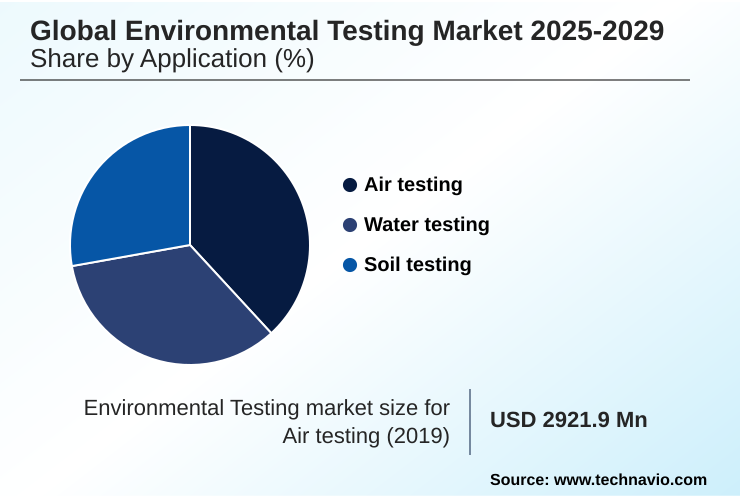
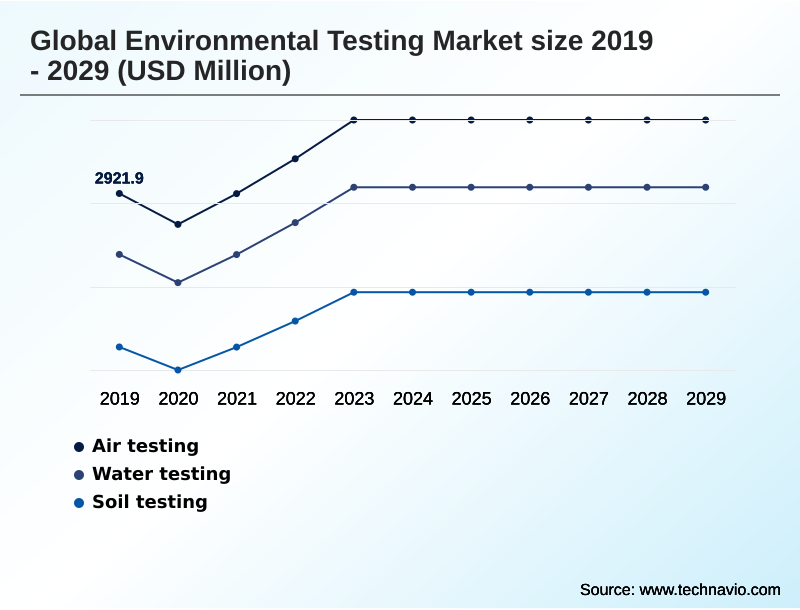
The Air testing segment was valued at USD 3.30 billion in 2023 and showed a gradual increase during the forecast period.
Regional Analysis
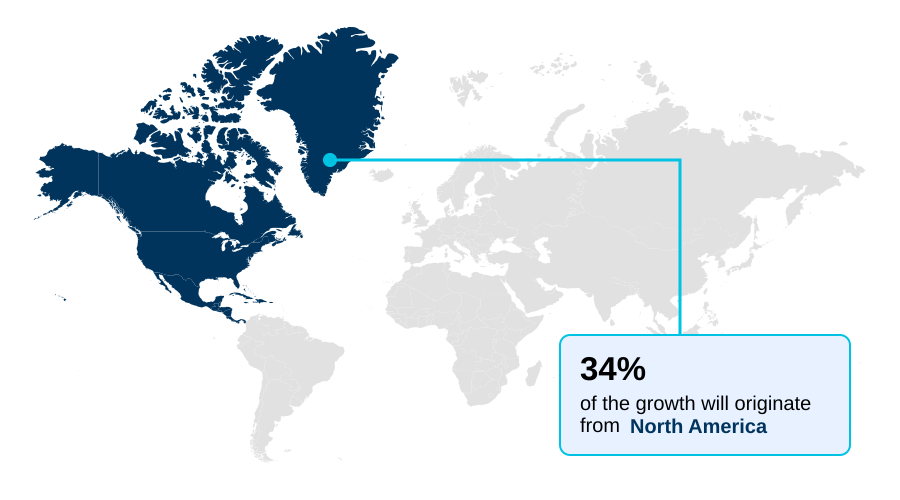
North America is estimated to contribute 34.3% to the growth of the global market during the forecast period.Technavio’s analysts have elaborately explained the regional trends and drivers that shape the market during the forecast period.
See How Environmental Testing Market Demand is Rising in North America Get Free Sample
North America is set to contribute approximately 34.3% of the market's incremental growth, driven by stringent enforcement and public awareness, with a pronounced focus on brownfield redevelopment testing and PFAS detection services.
Europe, accounting for around 28.8% of the growth, emphasizes compliance with comprehensive frameworks, which drives demand for industrial effluent monitoring and wastewater analysis.
The APAC region is a dynamic landscape where rapid industrialization fuels the need for ambient air quality monitoring and site investigation services.
The use of hydrocarbon forensics in these regions is increasing, while techniques like thermal cycling and humidity testing are crucial for ensuring instrument reliability across all geographies.
Market Dynamics
Our researchers analyzed the data with 2024 as the base year, along with the key drivers, trends, and challenges. A holistic analysis of drivers will help companies refine their marketing strategies to gain a competitive advantage.
- The demand for specialized testing services is escalating as industries navigate complex regulatory landscapes. The necessity for environmental testing for industrial compliance has become a cornerstone of operational strategy, forcing companies to adopt robust monitoring programs. This includes implementing real time air quality monitoring systems in urban and industrial zones to manage emissions proactively.
- In the water sector, advanced PFAS testing methodologies for water are becoming critical as awareness of these persistent chemicals grows, leading to more stringent drinking water standards. Consequently, facilities are investing in comprehensive wastewater analysis for regulatory reporting to avoid significant non-compliance penalties. In agriculture and land development, the focus is twofold.
- First, heavy metal detection in agricultural soil is essential for ensuring food safety and sustainable farming practices. Second, the need for effective soil contamination assessment and remediation services is paramount for redeveloping brownfield sites safely. To manage the increasing sample volume and complexity, laboratory automation for high throughput environmental testing is being widely adopted.
- Facilities that have automated their workflows report data turnaround times up to 40% faster than their manual counterparts, providing a distinct competitive advantage in a time-sensitive market.
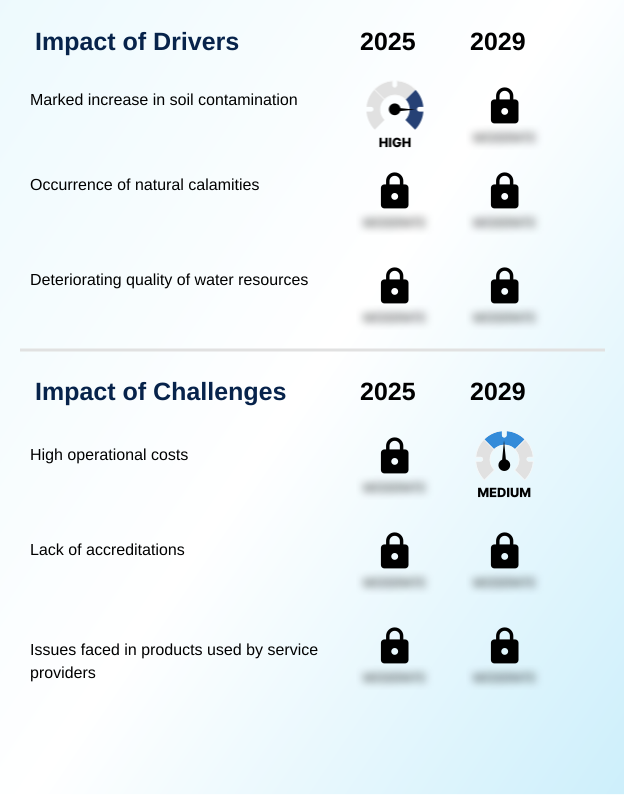
What are the key market drivers leading to the rise in the adoption of Environmental Testing Industry?
- A marked increase in soil contamination, largely resulting from escalating industrial and agricultural activities, serves as a primary driver for the environmental testing market.
- Deteriorating environmental quality is a primary market driver, with a significant rise in water-related diseases necessitating more robust testing protocols.
- A marked increase in contamination is fueling demand for comprehensive soil testing, water testing, and air testing, which prompts stricter pollution control programs and regulatory compliance testing.
- Consequently, there is a greater need for advanced techniques like spectroscopy, gas chromatography, and liquid chromatography for accurate contaminant characterization.
- The need for effective remediation strategies and land restoration projects has driven a 25% year-over-year increase in demand for specialized analytical services in affected regions, particularly for industrial effluent monitoring.
What are the market trends shaping the Environmental Testing Industry?
- A notable trend shaping the market is the increasing prevalence of strategic partnerships and collaborations, which are instrumental for leveraging technological capabilities and expanding market presence.
- Strategic alliances are reshaping the environmental testing landscape, with firms reporting a 15% increase in R&D efficiency through collaborative ventures. The adoption of advanced environmental sensors and miniaturized sensors based on MEMS technology is a key trend, enabling more effective environmental monitoring and the deployment of real-time monitoring systems.
- These partnerships facilitate the development of cutting-edge molecular spectroscopy products and enhance capabilities in PFAS analysis. This collaborative approach supports circular economy initiatives and improves environmental stewardship, particularly as companies leverage shared expertise in geospatial data and remote sensing tools to address complex challenges related to emerging contaminants.
- This integration has been shown to improve project success rates by over 20%.
What challenges does the Environmental Testing Industry face during its growth?
- High operational costs, driven by the need for advanced analytical instruments and specialized personnel, present a significant challenge to profitability and market expansion.
- High operational costs remain a significant barrier, as labs must invest heavily in sophisticated analytical instruments like mass spectrometers and TOC analyzers, which can account for up to 50% of a new facility’s budget. The complexity of performing chemical analysis, microbiological testing, and radiological assessments to detect persistent organic pollutants and heavy metals demands skilled personnel, adding to expenses.
- Furthermore, supply chain disruptions for reagents can delay project timelines by an average of 15%. Integrating modern digital infrastructure for managing data from pH meters and other devices also requires substantial upfront investment, challenging smaller firms.
Exclusive Technavio Analysis on Customer Landscape
The environmental testing market forecasting report includes the adoption lifecycle of the market, covering from the innovator’s stage to the laggard’s stage. It focuses on adoption rates in different regions based on penetration. Furthermore, the environmental testing market report also includes key purchase criteria and drivers of price sensitivity to help companies evaluate and develop their market growth analysis strategies.
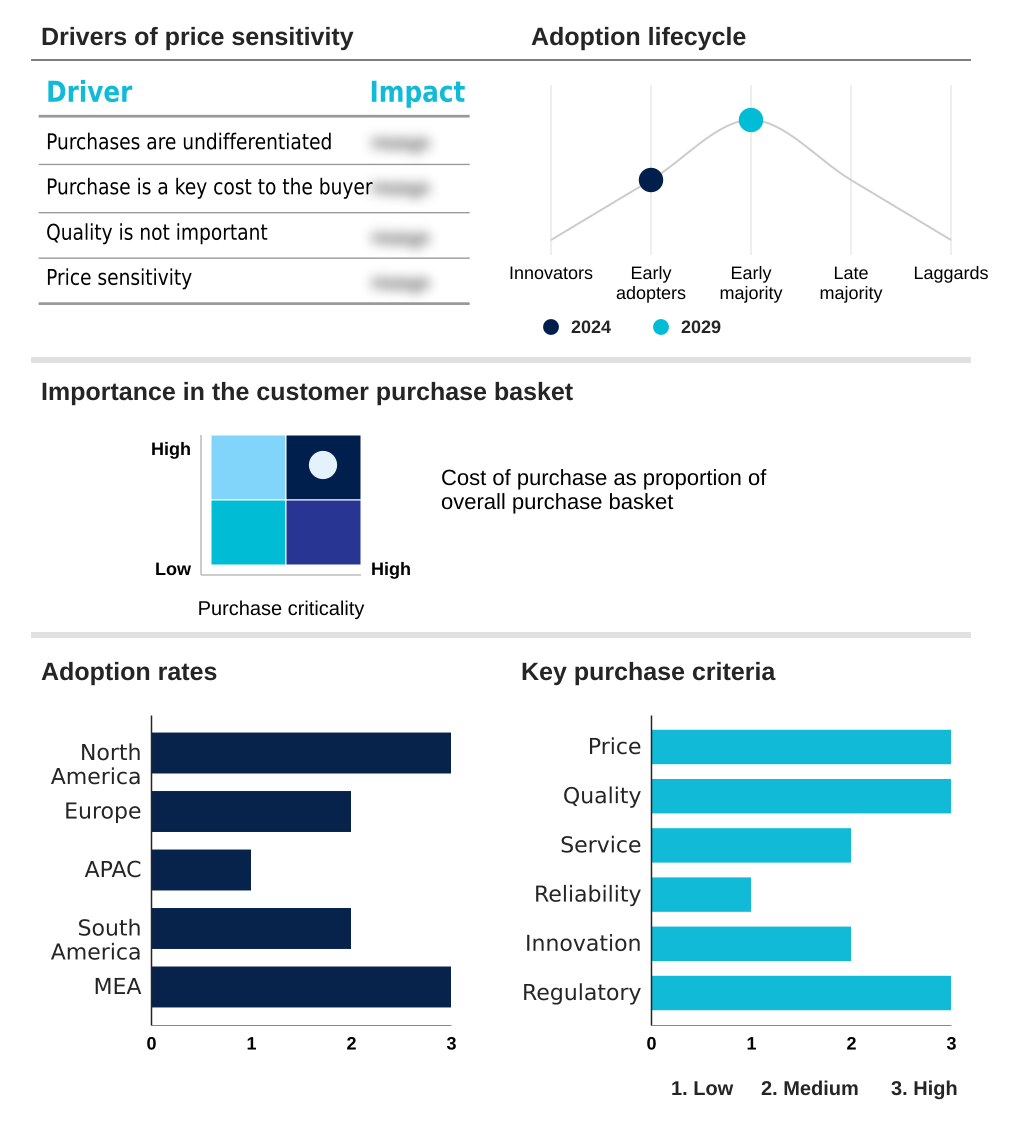
Customer Landscape of Environmental Testing Industry
Competitive Landscape
Companies are implementing various strategies, such as strategic alliances, environmental testing market forecast, partnerships, mergers and acquisitions, geographical expansion, and product/service launches, to enhance their presence in the industry.
Advanced Environmental Testing and Research Lab - Offers comprehensive analytical testing and sampling services, featuring remote monitoring solutions for environmental, food, and pharmaceutical markets to ensure quality and compliance.
The industry research and growth report includes detailed analyses of the competitive landscape of the market and information about key companies, including:
- Advanced Environmental Testing and Research Lab
- Alpha Analytical Inc.
- ALS Ltd.
- American Environmental Testing Laboratory LLC
- AnaLabs Inc.
- Apal Agricultural Laboratory
- AS International Corporation Ltd.
- AsureQuality Ltd.
- Bureau Veritas SA
- EMSL Analytical Inc.
- Eurofins Scientific SE
- Hydrologic Associates
- Intertek Group Plc
- Merieux NutriSciences Corp.
- Microbac Laboratories Inc.
- Pace Analytical Services LLC
- RJ Hill Laboratories Ltd.
- SGS SA
- Symbio Laboratories
- TUV SUD AG
Qualitative and quantitative analysis of companies has been conducted to help clients understand the wider business environment as well as the strengths and weaknesses of key industry players. Data is qualitatively analyzed to categorize companies as pure play, category-focused, industry-focused, and diversified; it is quantitatively analyzed to categorize companies as dominant, leading, strong, tentative, and weak.
Recent Development and News in Environmental testing market
- In August 2025, Agilent Technologies established a Center of Excellence in partnership with Georgia Tech, dedicated to advancing research in environmental health and water quality.
- In January 2025, SGS enhanced its market position through the acquisition of RTI Laboratories, thereby expanding its specialized PFAS analysis capabilities and its North American footprint.
- In January 2025, Agilent Technologies announced a strategic partnership with ABB Robotics to pioneer advanced laboratory automation solutions tailored for environmental testing workflows.
- In October 2024, the United States Environmental Protection Agency commenced enforcement of new national drinking water standards for PFAS, mandating widespread compliance monitoring by public water systems.
Dive into Technavio’s robust research methodology, blending expert interviews, extensive data synthesis, and validated models for unparalleled Environmental Testing Market insights. See full methodology.
| Market Scope | |
|---|---|
| Page number | 310 |
| Base year | 2024 |
| Historic period | 2019-2023 |
| Forecast period | 2025-2029 |
| Growth momentum & CAGR | Accelerate at a CAGR of 7.9% |
| Market growth 2025-2029 | USD 4258.4 million |
| Market structure | Fragmented |
| YoY growth 2024-2025(%) | 7.1% |
| Key countries | US, Canada, Mexico, Germany, UK, France, Italy, The Netherlands, Spain, China, Japan, India, South Korea, Australia, Indonesia, Brazil, Argentina, Chile, Saudi Arabia, UAE, South Africa, Egypt and Nigeria |
| Competitive landscape | Leading Companies, Market Positioning of Companies, Competitive Strategies, and Industry Risks |
Research Analyst Overview
- The environmental testing market is defined by its critical role in regulatory enforcement and risk management, necessitating constant technological evolution. The use of advanced analytical instruments, including mass spectrometers and systems for gas chromatography and liquid chromatography, is now standard for precise chemical analysis.
- A core boardroom consideration is the rising liability associated with pollutants, which has made investments in comprehensive water testing, soil testing, and air testing a strategic imperative. Firms are leveraging technologies like spectroscopy and molecular diagnostics for unparalleled accuracy.
- The deployment of miniaturized environmental sensors and MEMS technology has proven to reduce field sampling costs by up to 25% compared to traditional methods. This shift toward in-situ analysis, supported by modern digital infrastructure, enhances capabilities in everything from PFAS analysis to microbiological testing, ensuring data integrity for critical decisions.
What are the Key Data Covered in this Environmental Testing Market Research and Growth Report?
-
What is the expected growth of the Environmental Testing Market between 2025 and 2029?
-
USD 4.26 billion, at a CAGR of 7.9%
-
-
What segmentation does the market report cover?
-
The report is segmented by Application (Air testing, Water testing, Soil testing), Product (Mass spectrometers, Chromatography, pH meters, Molecular spectroscopy products, TOC analyzers), Type (Temperature testing, humidity testing, climatic testing, shock and vibration testing, Others) and Geography (North America, Europe, APAC, South America, Middle East and Africa)
-
-
Which regions are analyzed in the report?
-
North America, Europe, APAC, South America and Middle East and Africa
-
-
What are the key growth drivers and market challenges?
-
Marked increase in soil contamination, High operational costs
-
-
Who are the major players in the Environmental Testing Market?
-
Advanced Environmental Testing and Research Lab, Alpha Analytical Inc., ALS Ltd., American Environmental Testing Laboratory LLC, AnaLabs Inc., Apal Agricultural Laboratory, AS International Corporation Ltd., AsureQuality Ltd., Bureau Veritas SA, EMSL Analytical Inc., Eurofins Scientific SE, Hydrologic Associates, Intertek Group Plc, Merieux NutriSciences Corp., Microbac Laboratories Inc., Pace Analytical Services LLC, RJ Hill Laboratories Ltd., SGS SA, Symbio Laboratories and TUV SUD AG
-
Market Research Insights
- Market dynamics are increasingly shaped by the need for verifiable data to support environmental stewardship and meet stringent regulations. Adoption of automated real-time monitoring systems has led to a 30% improvement in response times for contamination events. The focus on emerging contaminants and water-related diseases is driving demand for advanced PFAS detection services and comprehensive water quality assessments.
- This shift has seen labs that invest in specialized equipment for contaminant characterization achieve over 95% accuracy in detecting pollutants at trace levels. Furthermore, the push for sustainable land use and land restoration is supported by precise soil nutrient analysis, with firms using these services reporting a 15% increase in agricultural efficiency while ensuring compliance.
We can help! Our analysts can customize this environmental testing market research report to meet your requirements.
 RIA -
RIA - 
