


Magnetic Resonance Imaging Systems Market Size 2025-2029
The magnetic resonance imaging (MRI) systems market size is forecast to increase by USD 3.09 billion at a CAGR of 6.9% between 2024 and 2029.
- The market is driven by the increasing prevalence of diseases and the growing geriatric population. The aging demographic is more susceptible to various health conditions, leading to a rise in demand for diagnostic imaging technologies like MRI. Furthermore, software advances in MRI technology enable improved image quality, faster scanning times, and enhanced diagnostic capabilities. Despite this, opportunities exist for companies to innovate and offer cost-effective solutions without compromising on image quality or diagnostic accuracy.
- To capitalize on these opportunities, market participants must stay abreast of technological advancements, collaborate with healthcare providers to offer integrated solutions, and explore emerging markets. By addressing these challenges and leveraging market trends, companies can effectively navigate the competitive landscape and seize growth opportunities in the MRI Systems market. MRI market trends include the increasing use of deep learning algorithms, the growing popularity of ultra-high field MRI (7T and above), and the development of open MRI systems for improved patient comfort.
What will be the Size of the Magnetic Resonance Imaging (MRI) Systems Market during the forecast period?
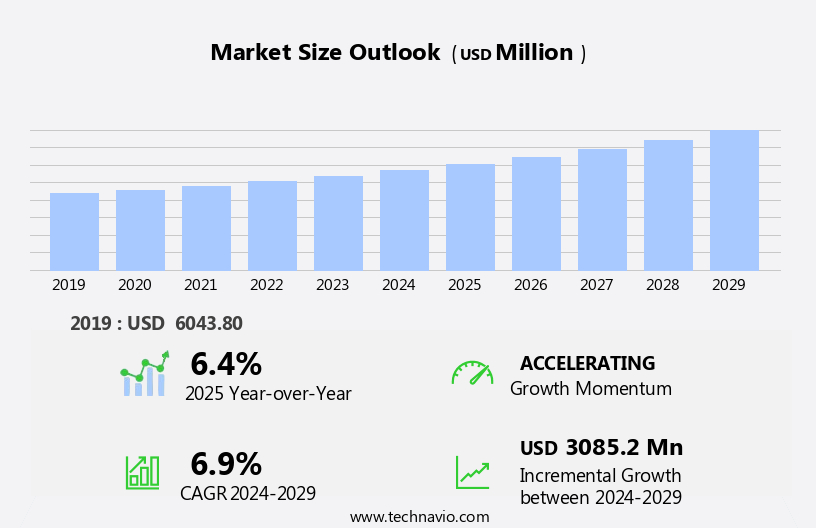
Explore in-depth regional segment analysis with market size data - historical 2019-2023 and forecasts 2025-2029 - in the full report.
Request Free Sample
The market is experiencing significant advancements, driven by the integration of innovative technologies and regulatory compliance. Quality assurance is a crucial aspect of MRI, ensuring accurate and reliable diagnostic results. Cloud-based MRI solutions enable remote diagnostics, expanding market access and improving patient experience. Compressed sensing and parallel imaging technologies enhance image acquisition, reducing scanning time and improving image quality. Clinical trials and regulatory approvals are essential for new MRI systems, ensuring safety and efficacy. Data security is a major concern, with ISO standards and ethical considerations ensuring patient privacy. Economic analysis is crucial for healthcare providers, assessing the cost-effectiveness of MRI systems.
ISO standards, CE marking, and regulatory compliance are essential for market entry and maintaining regulatory approvals. Image segmentation and registration, data analytics, and technology adoption are key trends driving market growth. The supply chain is optimized through efficient logistics and strategic partnerships. Magnetic Resonance Thermometry is a promising application, offering temperature mapping capabilities for therapeutic interventions. Regulatory bodies and ethical considerations play a significant role in market dynamics, ensuring patient safety and ethical use of technology. Data analytics and image processing techniques are transforming MRI, offering new insights and improving diagnostic accuracy. The future of MRI systems lies in the integration of advanced technologies, regulatory compliance, and a focus on patient-centric care.
How is this Magnetic Resonance Imaging (MRI) Systems Industry segmented?
The magnetic resonance imaging (MRI) systems industry research report provides comprehensive data (region-wise segment analysis), with forecasts and estimates in "USD million" for the period 2025-2029, as well as historical data from 2019-2023 for the following segments.
- Product
- Closed MRI systems
- Open MRI systems
- Type
- Fixed MRI
- Mobile MRI
- End-user
- Hospitals
- Diagnostic centers
- Ambulatory surgical centers
- Research institutes and universities
- Veterinary clinics
- Technology
- High-field MRI
- Low-field MRI
- AI-enabled MRI
- Ultra-high-field
- Geography
- North America
- US
- Canada
- Mexico
- Europe
- France
- Germany
- Italy
- UK
- APAC
- China
- Japan
- South America
- Brazil
- Rest of World (ROW)
- North America
By Product Insights
The Closed MRI systems segment is estimated to witness significant growth during the forecast period. In the realm of diagnostic medical imaging, Magnetic Resonance Imaging (MRI) systems continue to dominate with their ability to produce detailed, high-resolution images of the human body. These systems utilize powerful magnetic fields, typically ranging from 1.5 Tesla to 3.0 Tesla or higher, housed in a tube-like structure called a closed MRI system. This enclosed environment enables the generation of precise images, allowing for the detection and diagnosis of various health conditions, including heart, brain, spine, breast, and abdominal issues. Superconducting magnets are a critical component of closed MRI systems, contributing to both image quality and throughput. These systems can be categorized into wide bore (open bore) and narrow bore configurations.
The wide bore design offers more patient comfort due to increased space, while the narrow bore provides higher spatial resolution. Scan times in MRI systems have been a significant focus, with advancements in radiofrequency pulse sequences, data acquisition systems, and gradient coils contributing to faster imaging. Closed MRI systems employ various techniques such as perfusion imaging, functional MRI (fMRI), and ultrafast MRI to enhance diagnostic capabilities. Patient safety is paramount in MRI applications. Contrast agents, administered intravenously or orally, aid in image enhancement. Service contracts and coil technology ensure optimal system performance and maintenance. Additionally, advancements in image processing, motion correction, and quality control further improve image quality and reduce artifacts.
MRI software plays a crucial role in image reconstruction and analysis, enabling efficient and accurate diagnosis. High-field MRI systems offer superior image quality and diagnostic capabilities, making them increasingly popular in clinical settings. Despite the advantages, challenges persist, including high costs, long scan times, and potential patient discomfort. In summary, the MRI market is characterized by continuous innovation and advancements in technology, leading to improved patient care and diagnostic accuracy. Closed MRI systems, with their high magnetic fields and enclosed structures, remain a cornerstone in diagnostic medical imaging, addressing a wide range of clinical applications while ensuring patient safety and comfort.
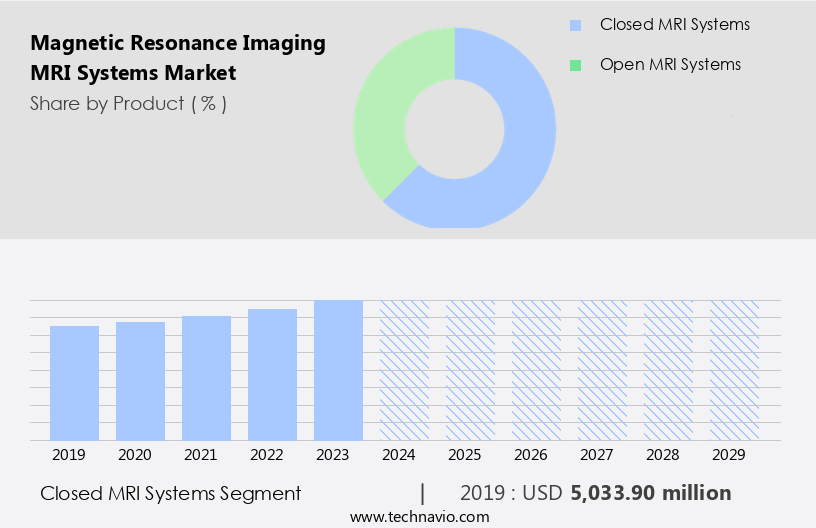
The Closed MRI systems segment was valued at USD 5.03 billion in 2019 and showed a gradual increase during the forecast period.
The Magnetic Resonance Imaging (MRI) Systems Market is advancing with a focus on enhanced precision, speed, and patient comfort. Innovations in MRI scanner design are boosting image clarity while reducing discomfort and noise levels. Enhanced gradient amplifier technology plays a crucial role in improving signal processing, enabling faster and more detailed imaging. Reduction in scan time is a major trend, driven by growing demand in busy diagnostic centers and hospitals. Additionally, improved intravenous injection protocols for contrast agents are streamlining workflow and enhancing diagnostic accuracy. The integration of advanced technologies like artificial intelligence (AI) and machine learning is expected to enhance the capabilities of MRI systems further.
Portable MRI systems offer flexibility in imaging, while dedicated MRI systems cater to specific clinical applications such as musculoskeletal imaging and head MRI. Signal-to-noise ratio (SNR) and temporal resolution are essential factors in image interpretation. Closed MRI systems must adhere to stringent safety standards, including radiation safety and patient safety, to ensure a positive patient experience. Incorporating advanced technologies like digital-to-analog converters (DACs), gradient amplifiers, and analog-to-digital converters (ADCs) has led to improved image quality and diagnostic accuracy. Slice thickness, a critical factor in image resolution, is continually decreasing. Closed MRI systems also address metal artifact challenges through advanced techniques and specialized coils.
Regional Analysis
North America is estimated to contribute 46% to the growth of the global market during the forecast period.Technavio's analysts have elaborately explained the regional trends and drivers that shape the market during the forecast period.
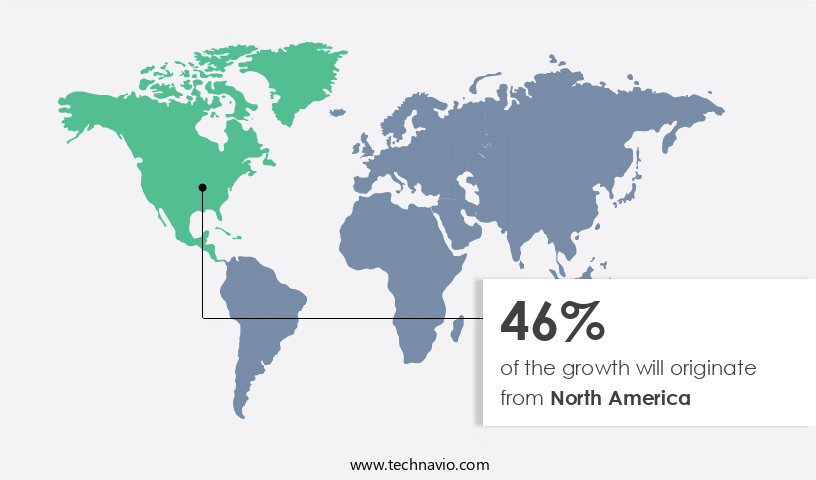
The market is experiencing significant growth, driven by various factors. In terms of geography, North America held the largest market share in 2024, with the US and Canada being major contributors. The region's growth can be attributed to the increasing prevalence of medical conditions, enhanced healthcare infrastructure, favorable reimbursement policies, and the presence of established companies. Additionally, the increasing number of MRI examinations and availability of government grants for research and development are boosting the market. Advancements in MRI technology include high-field MRI systems, which offer superior image quality, and ultrafast MRI, reducing scan times. Closed MRI systems and portable MRI systems cater to patient safety and accessibility concerns.
Dedicated MRI systems, such as breast MRI and head MRI, cater to specific clinical applications. The use of intravenous injections for contrast enhancement and oral administration of contrast media are common practices in MRI. Radiofrequency pulse sequences and gradient coils are essential components of MRI systems, while data acquisition systems and analog-to-digital converters facilitate image processing. Signal-to-noise ratio and motion correction are crucial for image quality. Superconducting magnets and gradient amplifiers are integral to MRI systems, while coil technology and service contracts ensure optimal performance. Patient safety remains a top priority, with concerns over metal artefacts and radiation safety being addressed.
Functional MRI (fMRI) and perfusion imaging provide valuable clinical insights. MRI systems have various clinical applications, including musculoskeletal imaging, body MRI, and image interpretation. Service contracts and image reconstruction software support system maintenance and data analysis. However, the high cost of MRI systems remains a significant challenge for market growth. The market's future growth is expected to be influenced by ongoing technological advancements and increasing demand for non-invasive diagnostic tools.
Market Dynamics
Our researchers analyzed the data with 2024 as the base year, along with the key drivers, trends, and challenges. A holistic analysis of drivers will help companies refine their marketing strategies to gain a competitive advantage.
What are the Magnetic Resonance Imaging (MRI) Systems market drivers leading to the rise in the adoption of Industry?
- The escalating incidence of diseases and the concurrent expansion of the geriatric demographic segment are the primary factors fueling market growth. Magnetic Resonance Imaging (MRI) systems have become essential diagnostic tools in the healthcare industry, primarily used for clinical applications in the examination of the central nervous system (CNS), orthopedic, and cardiovascular health conditions (CVDs). The global prevalence of these health issues is on the rise, with CVDs being a significant concern due to their potential to cause heart attacks or cardiac arrest. Early diagnosis of CVDs is crucial to prevent medical complications and reduce mortality rates. MRI technology offers several advantages, including high-quality images, patient safety, and non-invasive procedures.
- MRI systems also offer motion correction and quality control features to ensure precise and reliable results. Portable MRI systems have gained popularity due to their ability to provide imaging services in remote locations, enhancing patient accessibility. Musculoskeletal imaging is another clinical application of MRI systems, providing detailed information on various conditions affecting bones, joints, and muscles. Signal-to-noise ratio (SNR) is a critical factor in MRI image quality. Advanced MRI systems offer enhanced SNR, enabling clearer images and improved diagnostic accuracy. Despite these advancements, challenges such as motion artifacts and image distortions remain, necessitating ongoing research and development efforts in MRI technology.
What are the Magnetic Resonance Imaging (MRI) Systems market trends shaping the Industry?
- MRI technology is currently experiencing significant advances, serving as the prevailing market trend in the software sector. This progressive development is a noteworthy trend in healthcare technology. MRI systems market has witnessed notable advancements, particularly in software and computing technology. Siemens Healthineers' new application, Simultaneous Multi-Slice, is one such innovation. This technology significantly enhances 2D acquisition time in MRI scans by a factor of three, facilitating advanced applications like diffusion tensor imaging (DTI) and blood oxygenation level-dependent imaging in clinical settings.
- Additionally, it holds potential for expediting routine examinations in orthopedic and abdominal areas. Coil technology, image quality, high-field MRI, digital-to-analog converter (DAC), slice thickness, metal artefacts, radiation safety, and image reconstruction are other essential aspects of MRI systems that continue to evolve, ensuring improved patient care and diagnostic accuracy. By reducing the duration of brain examinations, this software brings clinical significance to sophisticated neurological applications. The availability of custom MRI coils, designed using computer-aided design (CAD) technology, is another key factor driving market growth.
How does Magnetic Resonance Imaging (MRI) Systems market faces challenges during its growth?
- The high cost of MRI systems poses a significant challenge to the growth of the industry. With advanced technology and increasing demand for diagnostic imaging, the financial burden of acquiring and maintaining MRI systems remains a major obstacle for healthcare providers. Magnetic Resonance Imaging (MRI) systems are essential diagnostic tools used in the healthcare industry to produce detailed images of the body's internal structures. However, the high cost of these systems is a significant barrier to their adoption. A 3.0T MRI system, for instance, can cost over USD3 million, and additional expenses include establishing an MRI suite, patient support areas, machine installation and servicing, software upgrading, and maintenance. The cost of MRI systems depends on their magnetic field strength.
- MRI systems use a strong magnetic field, intravenous injections, and radiofrequency pulse sequences to produce detailed images. The scanning process involves the application of a strong magnetic field and radiofrequency pulses to align the hydrogen atoms in the body. The system then uses gradient coils to create a magnetic field gradient and detect the signal emitted by the aligned hydrogen atoms. The data acquisition system records this signal, which is then processed using an analog-to-digital converter (ADC) to produce the final image. MRI systems come in various configurations, including dedicated MRI systems for specific body parts, such as the brain or the spine, and whole-body MRI systems.
Exclusive Customer Landscape
The magnetic resonance imaging (MRI) systems market forecasting report includes the adoption lifecycle of the market, covering from the innovator's stage to the laggard's stage. It focuses on adoption rates in different regions based on penetration. Furthermore, the magnetic resonance imaging (MRI) systems market report also includes key purchase criteria and drivers of price sensitivity to help companies evaluate and develop their market growth analysis strategies.
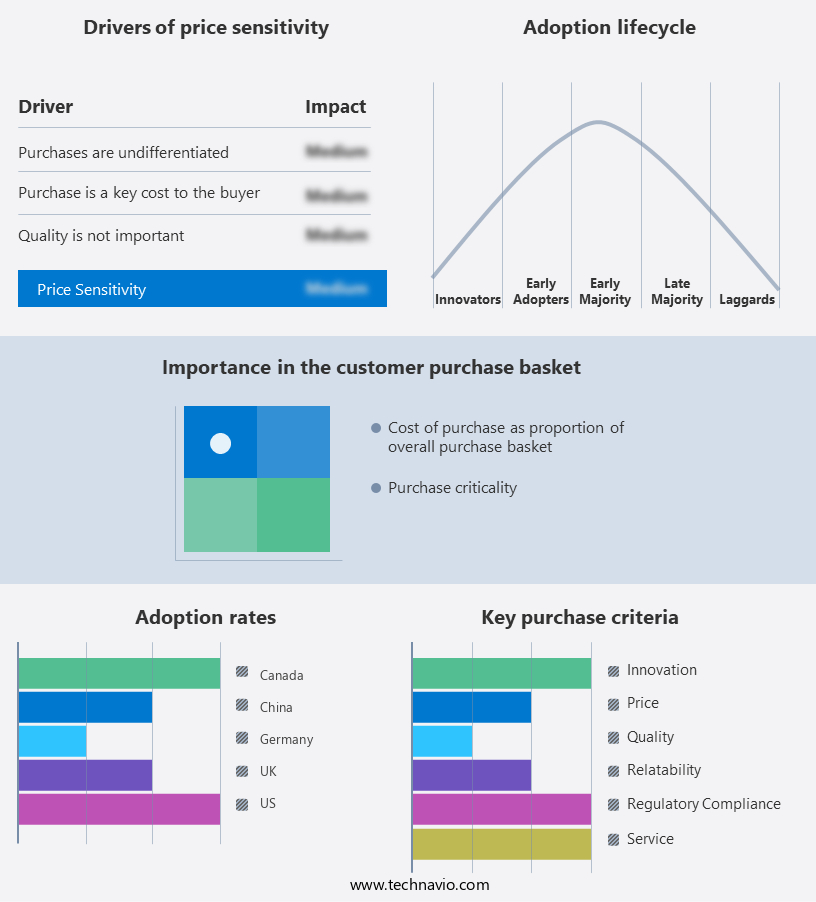
Customer Landscape
Key Companies & Market Insights
Companies are implementing various strategies, such as strategic alliances, magnetic resonance imaging (MRI) systems market forecast, partnerships, mergers and acquisitions, geographical expansion, and product/service launches, to enhance their presence in the industry.
Aspect Imaging Ltd. - The company specializes in advanced Medical Imaging technology, including the Embrace Neonatal MRI System.
The industry research and growth report includes detailed analyses of the competitive landscape of the market and information about key companies, including:
- Aspect Imaging Ltd.
- AURORA HEALTHCARE US Corp.
- Bruker Corp.
- Canon Inc.
- Esaote Spa
- FONAR Corp.
- FUJIFILM Holdings Corp.
- GE Healthcare Technologies Inc.
- Hologic Inc.
- Koninklijke Philips NV
- MR Solutions Ltd.
- Neusoft Corp.
- Onex Corp.
- Sanrad Medical Systems Pvt ltd
- Shenzhen Anke High tech Co.
- Shimadzu Corp.
- Siemens Healthineers AG
- Time Medical Holding Co Ltd
Qualitative and quantitative analysis of companies has been conducted to help clients understand the wider business environment as well as the strengths and weaknesses of key industry players. Data is qualitatively analyzed to categorize companies as pure play, category-focused, industry-focused, and diversified; it is quantitatively analyzed to categorize companies as dominant, leading, strong, tentative, and weak.
Recent Development and News in Magnetic Resonance Imaging (MRI) Systems Market
- In January 2024, Siemens Healthineers, a leading medical technology company, launched its new MR imaging system, the Magnetom Vida, featuring a 1.2 Tesla strength and a compact design, making it suitable for smaller hospitals and clinics (Siemens Healthineers Press Release).
- In March 2024, General Electric Company (GE) and Microsoft Corporation announced a strategic partnership to integrate Microsoft's Azure AI platform with GE's MR imaging systems, aiming to enhance diagnostic accuracy and improve patient care (GE Press Release).
- In May 2024, Canon Medical Systems Corporation received approval from the U.S. Food and Drug Administration (FDA) for its new MR imaging system, the Vantage Titan, which offers advanced imaging capabilities and improved workflow efficiency (Canon Medical Systems Press Release).
- In April 2025, Philips Healthcare, a division of Royal Philips, completed the acquisition of Carestream Health's Health Imaging business, expanding its portfolio of diagnostic imaging solutions and strengthening its position in the global MR systems market (Philips Press Release).
Research Analyst Overview
The market is characterized by continuous evolution and dynamic market activities. MRI scanners, a key component of this market, are employed across various sectors, including healthcare, research, and industrial applications. The ongoing advancements in MRI technology are reflected in the development of high-field MRI systems, which offer superior image quality and increased spatial resolution. Coil technology plays a pivotal role in enhancing image quality, with open MRI systems and RF coils enabling better patient comfort and accessibility. Service contracts are essential for ensuring optimal performance and maintenance of MRI systems. The market dynamics are further influenced by the ongoing research and development in areas such as digital-to-analog converters (DAC), slice thickness, metal artefacts, radiation safety, and image reconstruction.
These advancements contribute to the ongoing unfolding of market activities, with digital-to-analog converters improving image quality and reducing scan times. The ongoing development of MRI technology is also reflected in the emergence of new applications, such as perfusion imaging, functional MRI (fMRI), and ultrafast MRI. These applications offer enhanced diagnostic capabilities and clinical applications, contributing to the growth and evolution of the MRI systems market. Patient safety remains a top priority, with ongoing efforts to minimize radiation exposure and improve motion correction and quality control. The market also witnesses the emergence of portable MRI systems, providing greater flexibility and accessibility for clinical applications.
The MRI systems market is further influenced by the ongoing advancements in contrast agents and contrast media, enabling improved contrast enhancement and oral administration, as well as the development of dedicated MRI systems for specific applications, such as breast MRI and musculoskeletal imaging. The market's continuous evolution is further reflected in the ongoing research and development in areas such as image processing, signal-to-noise ratio (SNR), and temporal resolution, enabling faster data acquisition and improved image quality. The market's dynamics are further shaped by the ongoing advancements in gradient coils, gradient amplifiers, and data acquisition systems, enabling improved performance and functionality.
The MRI systems market is characterized by continuous evolution and dynamic market activities, with ongoing advancements in technology, applications, and patient safety driving growth and innovation. The market's dynamics are shaped by a range of factors, including coil technology, image quality, high-field MRI, digital-to-analog converters, slice thickness, metal artefacts, radiation safety, image reconstruction, patient safety, portable MRI, functional MRI, contrast agents, and clinical applications. The market's ongoing unfolding reflects the ongoing efforts to improve diagnostic capabilities, enhance patient comfort, and provide greater accessibility and flexibility for clinical applications.
Dive into Technavio's robust research methodology, blending expert interviews, extensive data synthesis, and validated models for unparalleled Magnetic Resonance Imaging (MRI) Systems Market insights. See full methodology.
|
Market Scope |
|
|
Report Coverage |
Details |
|
Page number |
250 |
|
Base year |
2024 |
|
Historic period |
2019-2023 |
|
Forecast period |
2025-2029 |
|
Growth momentum & CAGR |
Accelerate at a CAGR of 6.9% |
|
Market growth 2025-2029 |
USD 3.09 billion |
|
Market structure |
Fragmented |
|
YoY growth 2024-2025(%) |
6.4 |
|
Key countries |
US, Germany, UK, China, France, Canada, Japan, Italy, Brazil, and Mexico |
|
Competitive landscape |
Leading Companies, Market Positioning of Companies, Competitive Strategies, and Industry Risks |
What are the Key Data Covered in this Magnetic Resonance Imaging (MRI) Systems Market Research and Growth Report?
- CAGR of the Magnetic Resonance Imaging (MRI) Systems industry during the forecast period
- Detailed information on factors that will drive the growth and forecasting between 2025 and 2029
- Precise estimation of the size of the market and its contribution of the industry in focus to the parent market
- Accurate predictions about upcoming growth and trends and changes in consumer behaviour
- Growth of the market across North America, Europe, Asia, and Rest of World (ROW)
- Thorough analysis of the market's competitive landscape and detailed information about companies
- Comprehensive analysis of factors that will challenge the magnetic resonance imaging (MRI) systems market growth of industry companies
We can help! Our analysts can customize this magnetic resonance imaging (MRI) systems market research report to meet your requirements.
 RIA -
RIA - 
