



Neuromodulation Market Size 2026-2030
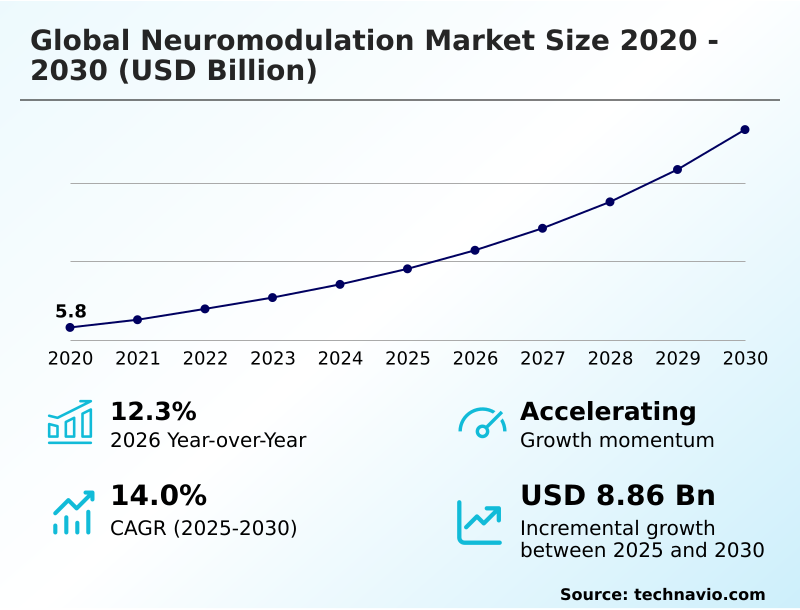
The neuromodulation market size is valued to increase by USD 8.86 billion, at a CAGR of 14% from 2025 to 2030. Rising prevalence of chronic pain and neurological disorders will drive the neuromodulation market.
Major Market Trends & Insights
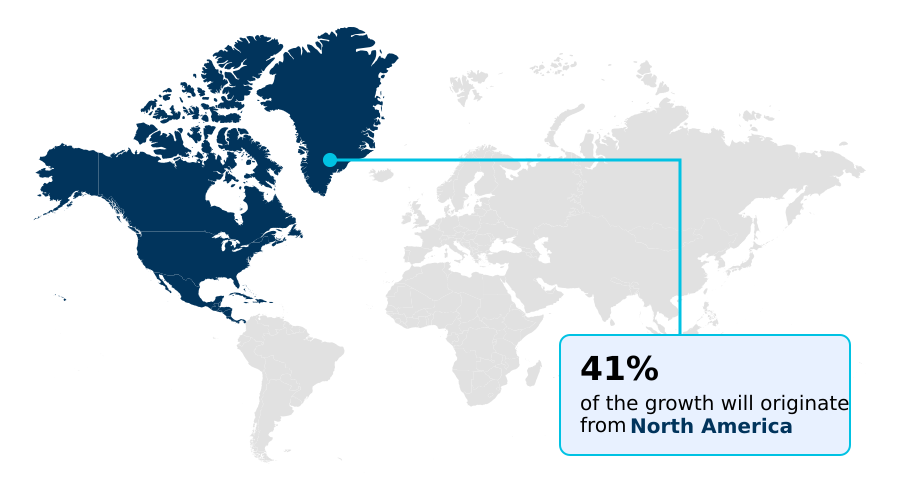
- North America dominated the market and accounted for a 40.7% growth during the forecast period.
- By Product - Implantable neuromodulation devices segment was valued at USD 5.00 billion in 2024
- By End-user - Hospitals segment accounted for the largest market revenue share in 2024
Market Size & Forecast
- Market Opportunities: USD 12.59 billion
- Market Future Opportunities: USD 8.86 billion
- CAGR from 2025 to 2030 : 14%
Market Summary
- The neuromodulation market is characterized by the use of targeted stimuli to alter nerve activity and restore biological function. Unlike systemic pharmacological treatments, these technologies, including spinal cord stimulation and deep brain stimulation, offer site-specific therapy, minimizing extraneous side effects. Key applications focus on chronic pain management, movement disorder therapy, and epilepsy seizure control.
- The industry's trajectory is shaped by advancements in miniaturization, battery technology, and the integration of AI-enabled sensors. For instance, a clinical setting might leverage a responsive neurostimulation platform with a brain-computer interface to treat drug-resistant epilepsy, collecting real-world data to refine treatment algorithms and improve patient-reported outcome measures. This shift toward personalized, data-driven interventions is a core dynamic.
- However, market access is constrained by high device costs and complex regulatory pathways, which can delay the introduction of innovative bioelectronic medicine and non-invasive neuromodulation solutions.
What will be the Size of the Neuromodulation Market during the forecast period?
Get Key Insights on Market Forecast (PDF) Get Free Sample
How is the Neuromodulation Market Segmented?
The neuromodulation industry research report provides comprehensive data (region-wise segment analysis), with forecasts and estimates in "USD million" for the period 2026-2030, as well as historical data from 2020-2024 for the following segments.
- Product
- Implantable neuromodulation devices
- External neuromodulation devices
- End-user
- Hospitals
- ASCs
- Others
- Application
- Epilepsy
- Obesity
- Depression
- Ischemia
- Geography
- North America
- US
- Canada
- Mexico
- Europe
- Germany
- France
- UK
- Asia
- Rest of World (ROW)
- North America
By Product Insights
The implantable neuromodulation devices segment is estimated to witness significant growth during the forecast period.
The implantable neuromodulation devices segment is foundational to the market, defined by advanced surgical interventions delivering long-term therapeutic value.
This category includes technologies like spinal cord stimulation and closed-loop deep brain stimulation, which use precise electrical impulses from high-density lithium-ion batteries to modulate nervous system activity for conditions such as parkinson's disease therapy.
The demand for these sophisticated units, which often feature platinum-iridium electrodes, is driven by the rising prevalence of neuropathic conditions. Recent clinical data for closed-loop stimulation shows a 93% reduction in overstimulation, underscoring the shift toward responsive, personalized therapy.
As a key component of neurorehabilitation strategies, these implants provide a pathway to reduced pharmaceutical dependency and enhanced functional independence for patients undergoing chronic pain management.
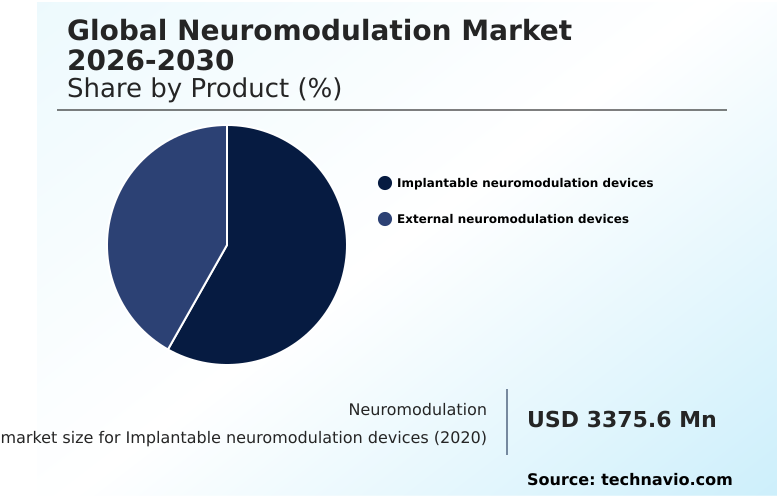
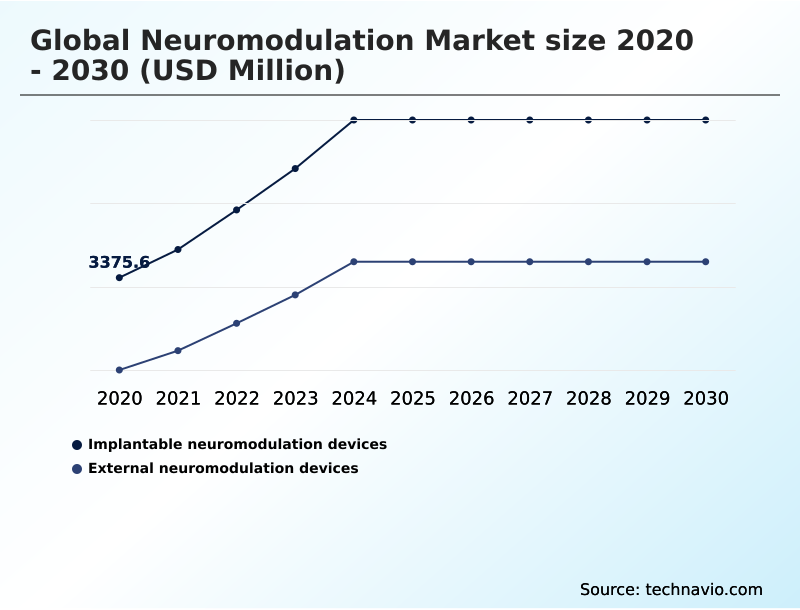
The Implantable neuromodulation devices segment was valued at USD 5.00 billion in 2024 and showed a gradual increase during the forecast period.
Regional Analysis
North America is estimated to contribute 40.7% to the growth of the global market during the forecast period.Technavio’s analysts have elaborately explained the regional trends and drivers that shape the market during the forecast period.
See How Neuromodulation Market Demand is Rising in North America Get Free Sample
The geographic landscape of the neuromodulation market is diversifying, though North America continues to lead, contributing 40.7% of the incremental growth.
This dominance is sustained by a sophisticated healthcare infrastructure and high adoption rates of advanced therapies like closed-loop deep brain stimulation.
Meanwhile, Asia is the fastest-growing region, with a projected CAGR of 14.4%, driven by improving healthcare access and government support for domestic innovation.
In Europe, a strong focus on clinical research and structured regulatory frameworks supports the adoption of both implantable and external neuromodulation devices.
Emerging markets in South America and the Middle East are also expanding, fueled by rising healthcare expenditure and the establishment of specialized neurological centers offering therapies for conditions like drug-resistant epilepsy and refractory angina treatment.
This global expansion underscores the increasing acceptance of neurorehabilitation strategies worldwide.
Market Dynamics
Our researchers analyzed the data with 2025 as the base year, along with the key drivers, trends, and challenges. A holistic analysis of drivers will help companies refine their marketing strategies to gain a competitive advantage.
- The Global Neuromodulation Market 2026-2030 is advancing through key technological and clinical shifts. The comparison between closed-loop vs open-loop neuromodulation systems reveals a clear trend toward adaptive, real-time therapy adjustment, particularly for deep brain stimulation for parkinson's disease. As a primary application, spinal cord stimulation for chronic pain continues to evolve with more sophisticated programming and lead designs.
- The benefits of non-invasive vagus nerve stimulation are expanding its use cases, complementing the rise of wearable devices for at-home neuromodulation. The integration of digital therapeutics is critical for improving adherence with digital therapeutics, which is essential for achieving optimal outcomes with treatments like transcranial magnetic stimulation for depression and responsive neurostimulation for epilepsy treatment.
- Innovations such as MRI-safe implants for patient comfort and graphene electrodes in neural interfaces are enhancing device safety and performance. Strategically, manufacturers must navigate the cost-effectiveness of neuromodulation therapies to improve market access, especially as vagus nerve stimulation for stroke recovery gains traction.
- The impact of the aging population on neuromodulation demand is undeniable, pushing growth in areas like sacral nerve stimulation for bladder control. However, navigating regulatory pathways for neuromodulation devices remains a significant operational hurdle, with approval timelines being up to 50% longer than for less complex medical devices, compounding the challenges posed by supply chain risks in medical device manufacturing.
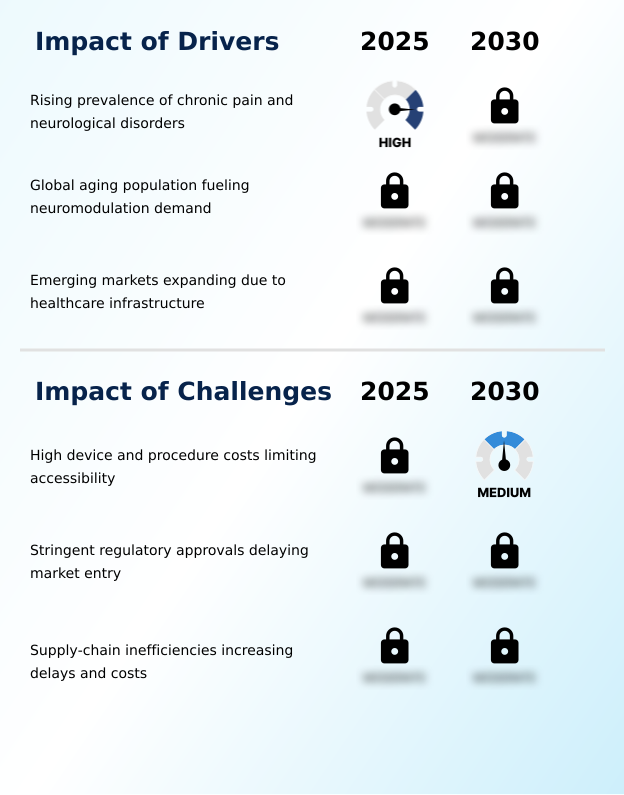
What are the key market drivers leading to the rise in the adoption of Neuromodulation Industry?
- A primary market driver is the rising global prevalence of chronic pain and various neurological disorders, which increases the demand for advanced therapeutic interventions.
- Market growth is fundamentally driven by pressing demographic and clinical needs.
- The rising prevalence of neurological disorders and the global aging population, with the number of individuals over 60 expected to nearly double by 2050, are creating sustained demand for effective therapies like deep brain stimulation.
- These technologies offer targeted interventions for movement disorder therapy and epilepsy seizure control, providing alternatives to long-term pharmacological treatments. Furthermore, emerging markets are expanding access to advanced healthcare, fueling adoption in regions previously constrained by infrastructure limitations.
- As awareness of the benefits of neuromodulation for conditions such as failed back surgery syndrome and complex regional pain syndrome grows, so does the clinical urgency for these minimally invasive procedures and neurorehabilitation strategies.
What are the market trends shaping the Neuromodulation Industry?
- A key market trend is the development of non-invasive and wearable neuromodulation devices, which are enabling more accessible and convenient home-based therapy options.
- Key market trends are reshaping therapeutic delivery, with a strong emphasis on patient-centric solutions. The rise of non-invasive and wearable devices, such as those leveraging transcutaneous electrical nerve stimulation (TENS), is enabling effective home-based therapy for chronic pain management. This aligns with the integration of digital therapeutics and telehealth solutions, which improve treatment adherence and allow for remote patient monitoring.
- In outpatient settings, the volume of neuromodulation procedures performed in ambulatory surgical centers has increased by 20%, driven by miniaturized MRI-safe implants and less invasive surgical techniques. Technologies like transcranial magnetic stimulation (TMS) for psychiatric condition treatment are also becoming more accessible.
- The development of advanced neural-processing chips facilitates more sophisticated, personalized treatment protocols, enhancing the efficacy of therapies for conditions like treatment-resistant depression.
What challenges does the Neuromodulation Industry face during its growth?
- A significant market challenge is the high cost associated with both the neuromodulation devices and the required surgical procedures, which limits widespread accessibility.
- Despite strong clinical demand, the market faces significant hurdles that constrain growth. High device and procedure costs remain a primary barrier, limiting accessibility, particularly in healthcare systems with constrained budgets.
- Stringent regulatory approvals also pose a challenge, with the complex compliance requirements for high-risk devices leading to multi-year delays in market entry, which can increase development costs by over 40% compared to lower-risk medical products. Furthermore, supply-chain inefficiencies, stemming from a reliance on specialized components and niche suppliers, increase production delays and expenses.
- These factors collectively hinder the broader adoption of advanced therapies for indications like ischemia blood flow improvement and Alzheimer's disease intervention, affecting both patient access and manufacturers' ability to scale operations efficiently.
Exclusive Technavio Analysis on Customer Landscape
The neuromodulation market forecasting report includes the adoption lifecycle of the market, covering from the innovator’s stage to the laggard’s stage. It focuses on adoption rates in different regions based on penetration. Furthermore, the neuromodulation market report also includes key purchase criteria and drivers of price sensitivity to help companies evaluate and develop their market growth analysis strategies.
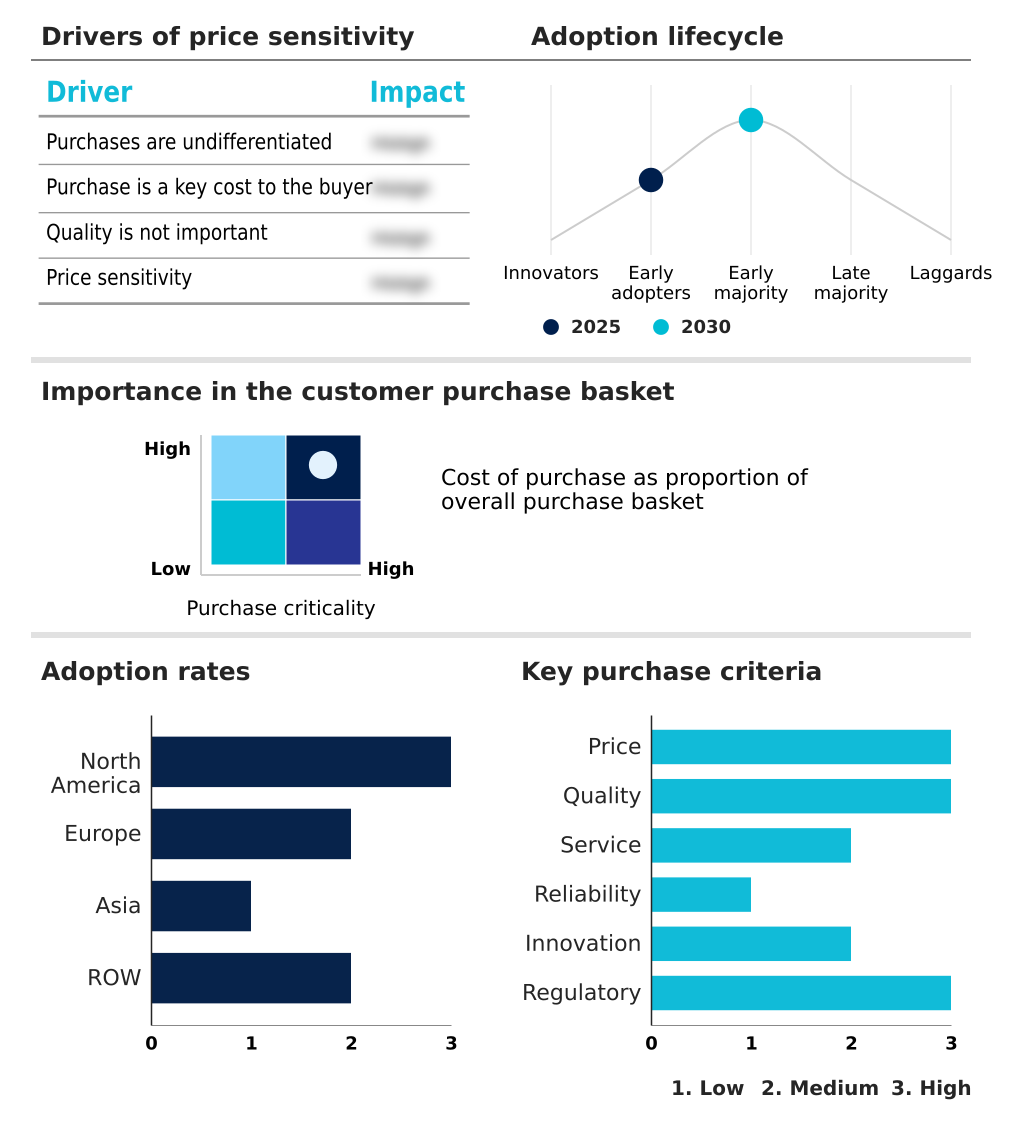
Customer Landscape of Neuromodulation Industry
Competitive Landscape
Companies are implementing various strategies, such as strategic alliances, neuromodulation market forecast, partnerships, mergers and acquisitions, geographical expansion, and product/service launches, to enhance their presence in the industry.
Abbott Laboratories - The vendor delivers neuromodulation systems, including rechargeable deep brain stimulation devices designed for treating movement disorders such as Parkinson's disease and essential tremor.
The industry research and growth report includes detailed analyses of the competitive landscape of the market and information about key companies, including:
- Abbott Laboratories
- BioWave Ltd.
- Boston Scientific Corp.
- BrainsWay Ltd.
- Cognito Therapeutics Inc.
- electroCore Inc.
- Flow Neuroscience AB
- INSIGHTEC Ltd.
- LivaNova PLC
- Medtronic Plc
- Neuroelectrics Barcelona SLU
- Neuronetics Inc.
- NeuroPace Inc.
- NeuroSigma Inc.
- Nevro Corp.
- Saluda Medical Pty Ltd.
- Synapse Biomedical Inc.
- Theranica Bio Electronics Ltd.
Qualitative and quantitative analysis of companies has been conducted to help clients understand the wider business environment as well as the strengths and weaknesses of key industry players. Data is qualitatively analyzed to categorize companies as pure play, category-focused, industry-focused, and diversified; it is quantitatively analyzed to categorize companies as dominant, leading, strong, tentative, and weak.
Recent Development and News in Neuromodulation market
- In November 2024, Nevro Corp. received EU market authorisation for its HFX iQ spinal cord stimulation system, an AI-driven platform personalizing chronic pain management with real-time data and cloud-based adjustments.
- In April 2025, Medtronic Plc received U.S. approval for its Inceptiv closed-loop spinal cord stimulation system, which demonstrated a 93% reduction in overstimulation in 12-month clinical trials.
- In September 2025, INBRAIN Neuroelectronics announced the successful human implantation of a graphene-based electrode array, enabling high-density neural recording and stimulation with minimal tissue scarring.
- In December 2025, Flow Neuroscience AB received FDA Class III approval for its FL-100 device, the first prescription brain stimulation headset designed for at-home depression treatment under clinical supervision.
Dive into Technavio’s robust research methodology, blending expert interviews, extensive data synthesis, and validated models for unparalleled Neuromodulation Market insights. See full methodology.
| Market Scope | |
|---|---|
| Page number | 290 |
| Base year | 2025 |
| Historic period | 2020-2024 |
| Forecast period | 2026-2030 |
| Growth momentum & CAGR | Accelerate at a CAGR of 14% |
| Market growth 2026-2030 | USD 8855.5 million |
| Market structure | Fragmented |
| YoY growth 2025-2026(%) | 12.3% |
| Key countries | US, Canada, Mexico, Germany, France, UK, Italy, Spain, The Netherlands, China, Japan, India, South Korea, Indonesia, Thailand, Brazil, Saudi Arabia, UAE, Turkey, Argentina, Colombia, South Africa and Israel |
| Competitive landscape | Leading Companies, Market Positioning of Companies, Competitive Strategies, and Industry Risks |
Research Analyst Overview
- The neuromodulation market is defined by rapid innovation in bioelectronic medicine, where adaptive neuromodulation and closed-loop stimulation are becoming standard. Devices now integrate sophisticated neural-sensing platforms with AI-enabled sensors and Bluetooth connectivity, feeding data to cloud-based data platforms for analysis. Key hardware advancements include graphene-based electrode arrays for high-density neural recording, biocompatible hermetic feeds, and durable platinum-iridium electrodes.
- The move toward non-invasive neuromodulation is exemplified by wearable transcranial magnetic stimulation caps, while implantable systems feature high-density lithium-ion batteries and wireless micro-stimulators. Technologies like responsive neurostimulation, peripheral nerve stimulation, and gastric electrical stimulation are expanding therapeutic reach.
- Boardroom decisions are increasingly influenced by the clinical efficacy of these systems; for instance, the demonstrated ability of closed-loop deep brain stimulation to reduce overstimulation by 93% directly impacts product strategy and reimbursement negotiations. This focus on functional magnetic resonance imaging-guided targeting and enhancing neuroplasticity is shaping the next generation of brain-computer interface devices.
What are the Key Data Covered in this Neuromodulation Market Research and Growth Report?
-
What is the expected growth of the Neuromodulation Market between 2026 and 2030?
-
USD 8.86 billion, at a CAGR of 14%
-
-
What segmentation does the market report cover?
-
The report is segmented by Product (Implantable neuromodulation devices, and External neuromodulation devices), End-user (Hospitals, ASCs, and Others), Application (Epilepsy, Obesity, Depression, and Ischemia) and Geography (North America, Europe, Asia, Rest of World (ROW))
-
-
Which regions are analyzed in the report?
-
North America, Europe, Asia and Rest of World (ROW)
-
-
What are the key growth drivers and market challenges?
-
Rising prevalence of chronic pain and neurological disorders, High device and procedure costs limiting accessibility
-
-
Who are the major players in the Neuromodulation Market?
-
Abbott Laboratories, BioWave Ltd., Boston Scientific Corp., BrainsWay Ltd., Cognito Therapeutics Inc., electroCore Inc., Flow Neuroscience AB, INSIGHTEC Ltd., LivaNova PLC, Medtronic Plc, Neuroelectrics Barcelona SLU, Neuronetics Inc., NeuroPace Inc., NeuroSigma Inc., Nevro Corp., Saluda Medical Pty Ltd., Synapse Biomedical Inc. and Theranica Bio Electronics Ltd.
-
Market Research Insights
- Market dynamics are increasingly shaped by a focus on value-based care models, which prioritize measurable clinical outcomes and cost-efficiency. The adoption of ambulatory surgical centers for implantation procedures has shown a 20% increase in volume, reflecting a shift toward more streamlined and cost-effective care delivery.
- Innovations in closed-loop stimulation have demonstrated a 93% reduction in overstimulation events, significantly improving the patient experience and therapeutic precision for movement disorder therapy. This integration of digital health solutions and remote patient monitoring enhances treatment adherence and allows for real-time adjustments, positioning neuromodulation as a cornerstone of modern neurorehabilitation strategies.
- As healthcare systems pivot from fee-for-service, technologies that offer superior long-term efficacy in chronic pain management and psychiatric condition treatment gain a competitive advantage.
We can help! Our analysts can customize this neuromodulation market research report to meet your requirements.
 RIA -
RIA - 
