



Passenger Information System Market Size 2026-2030
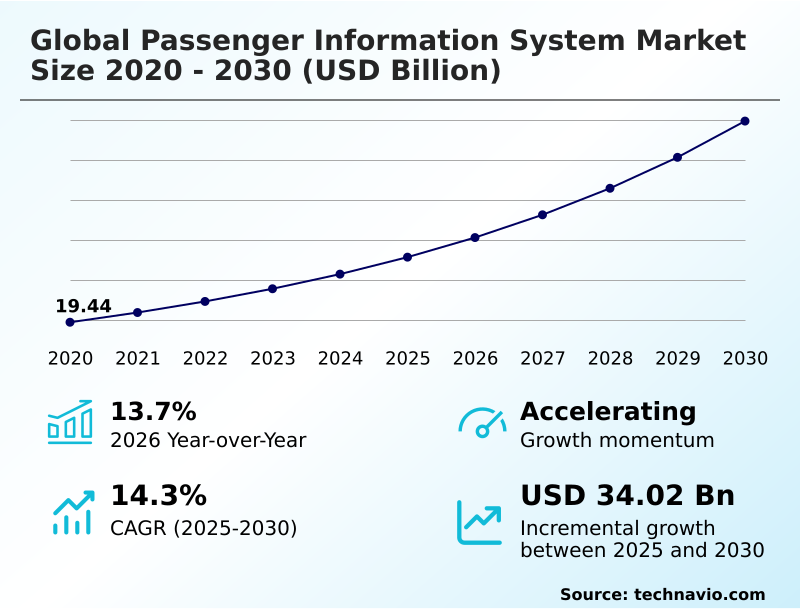
The passenger information system market size is valued to increase by USD 34.02 billion, at a CAGR of 14.3% from 2025 to 2030. Expansion of urban infrastructure and smart city initiatives will drive the passenger information system market.
Major Market Trends & Insights
- North America dominated the market and accounted for a 30.2% growth during the forecast period.
- By Component - Solution segment was valued at USD 22.44 billion in 2024
- By Mode of Transportation - Railways segment accounted for the largest market revenue share in 2024
Market Size & Forecast
- Market Opportunities: USD 50.29 billion
- Market Future Opportunities: USD 34.02 billion
- CAGR from 2025 to 2030 : 14.3%
Market Summary
- The passenger information system market is undergoing a significant transformation, driven by the convergence of digitalization and urbanization. Modern systems are much more than simple digital signage solutions; they are complex ecosystems incorporating real-time passenger information (RTPI), automatic vehicle location (AVL), and passenger flow analytics to enhance urban mobility platforms.
- The strategic imperative for transit agencies is to provide a seamless, predictable journey, which necessitates the adoption of technologies like predictive arrival algorithms and cloud-based PIS platforms. For instance, a metropolitan transit authority can leverage integrated data from passenger counting systems and GNSS-based tracking to dynamically adjust service frequency, reducing platform overcrowding by up to 20% during peak hours.
- This shift from static schedules to dynamic, responsive operations is a cornerstone of smart city transit projects, improving passenger experience enhancement while optimizing resource allocation and supporting sustainable transit technologies. The integration with fleet management software and journey planning applications further solidifies the role of PIS in modern public transport.
What will be the Size of the Passenger Information System Market during the forecast period?
Get Key Insights on Market Forecast (PDF) Get Free Sample
How is the Passenger Information System Market Segmented?
The passenger information system industry research report provides comprehensive data (region-wise segment analysis), with forecasts and estimates in "USD million" for the period 2026-2030, as well as historical data from 2020-2024 for the following segments.
- Component
- Solution
- Services
- Mode of transportation
- Railways
- Roadways
- Air and waterways
- Location
- On-board
- In-station
- Geography
- North America
- US
- Canada
- Mexico
- Europe
- Germany
- UK
- France
- APAC
- China
- India
- Japan
- South America
- Brazil
- Argentina
- Colombia
- Middle East and Africa
- Saudi Arabia
- UAE
- South Africa
- Rest of World (ROW)
- North America
By Component Insights
The solution segment is estimated to witness significant growth during the forecast period.
The solution segment is defined by a technological framework focused on passenger experience enhancement. Core offerings include onboard passenger information systems equipped with passenger-facing displays that provide dynamic, real-time data through advanced visual communication solutions.
These systems often feature next stop announcement systems and integrated passenger counting systems to inform commuters and optimize vehicle capacity.
Through headway management systems and AI in public transport, operators achieve significant operational efficiency improvements, with some reporting a 15% reduction in schedule deviations.
The emphasis is on passenger journey optimization and a passenger-centric design, utilizing ruggedized display hardware for reliability and delivering personalized travel information to create a seamless transit experience for all users.
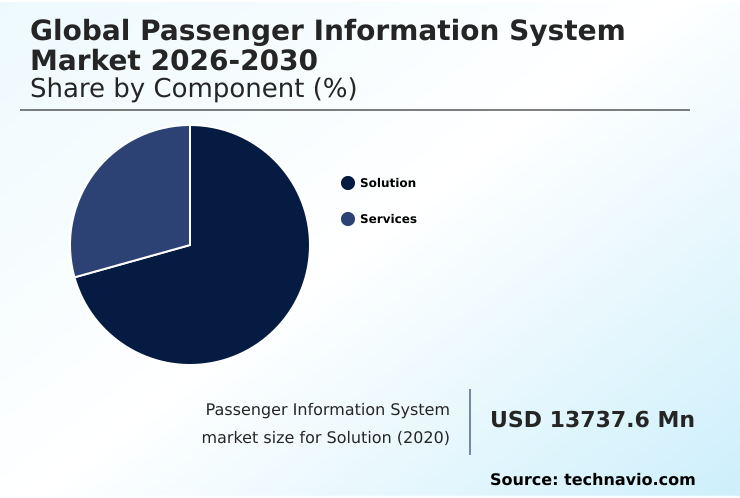
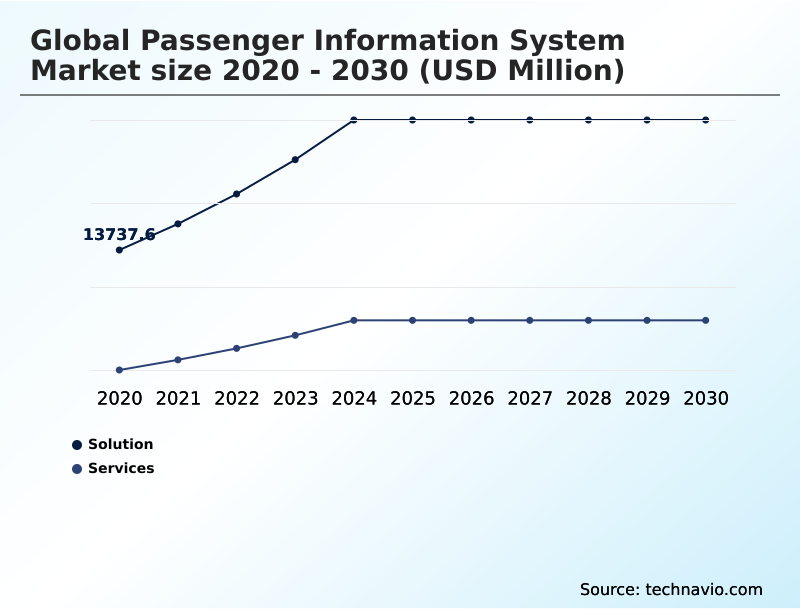
The Solution segment was valued at USD 22.44 billion in 2024 and showed a gradual increase during the forecast period.
Regional Analysis
North America is estimated to contribute 30.2% to the growth of the global market during the forecast period.Technavio’s analysts have elaborately explained the regional trends and drivers that shape the market during the forecast period.

See How Passenger Information System Market Demand is Rising in North America Get Free Sample
The market's geographic landscape is led by North America, which accounts for over 30% of the incremental growth, driven by extensive modernization projects.
Europe follows closely, contributing approximately 28%, with a strong focus on interoperable intelligent transportation systems (ITS) and open data transit policies.
In these mature regions, deployments often include advanced onboard passenger information systems with voice announcement systems and haptic feedback interfaces to enhance accessibility. The APAC region is the fastest-growing, fueled by new infrastructure in China and India.
Across all regions, the integration of real-time fleet monitoring and dynamic route mapping into the operational control center (OCC) is standard.
This focus on passenger journey optimization, automated passenger assistance, and contactless payment integration underscores a global push toward more efficient and user-centric transit networks.
Market Dynamics
Our researchers analyzed the data with 2025 as the base year, along with the key drivers, trends, and challenges. A holistic analysis of drivers will help companies refine their marketing strategies to gain a competitive advantage.
- Strategic deployment across the global passenger information system market 2026-2030 is increasingly specialized, focusing on use-case-specific solutions. For instance, the adoption of a cloud-based PIS for bus rapid transit offers scalability and centralized control, which is a stark contrast to the localized hardware of the past.
- Similarly, AI-powered passenger flow analysis software is becoming crucial for optimizing schedules in high-traffic zones. In rail, the integration of PIS and CCTV for rail networks enhances both security and operational awareness. A key trend in sustainability is the deployment of solar-powered e-paper displays for bus stops, reducing the grid dependency of wayside infrastructure.
- For long-haul travel, real-time infotainment systems for long-distance trains are now a competitive differentiator. The market is also seeing a push towards MaaS platform integration with existing PIS, creating a unified passenger experience. In metro systems, installing EN 50155 certified onboard displays for metros is a non-negotiable requirement for safety and reliability.
- The use of next-generation passenger counting sensors provides data accuracy that is over 15% higher than legacy infrared systems, directly impacting load management strategies. Implementing robust cybersecurity solutions for public transport networks has become a top priority for transit authorities.
- The focus is on creating seamless journeys through real-time PIS for multimodal transit hubs and employing predictive analytics for bus arrival times. Many agencies are now upgrading legacy PIS with IoT capabilities to unlock new data streams. Specific solutions are also emerging for new vehicle types, such as passenger information systems for electric buses that display battery and range data.
- Ensuring compliance and accessibility is driving the adoption of ADA compliant audio-visual announcement systems. Finally, centralized content management for PIS networks allows for efficient updates and consistent messaging across all fleet and station assets, highlighting the benefits of 5G in passenger information systems.
- Mobile PIS applications with real-time tracking, often linked with fleet management software with PIS integration, empower passengers directly, while specialized wayside PIS for high-speed rail platforms address unique operational needs. This focus on custom solutions is key to reducing operational costs with cloud PIS.
What are the key market drivers leading to the rise in the adoption of Passenger Information System Industry?
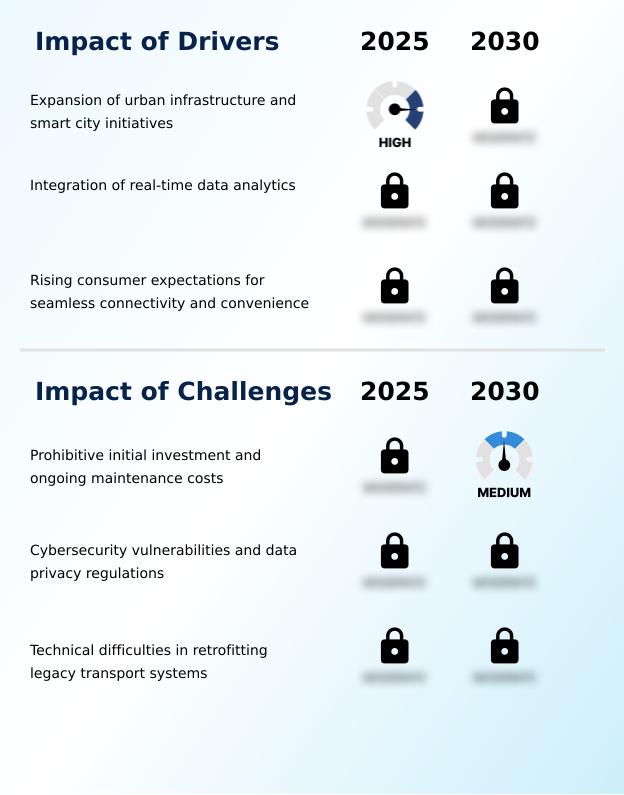
- The ongoing expansion of urban infrastructure and the proliferation of smart city initiatives are primary drivers for the passenger information system market growth.
- The rapid expansion of urban infrastructure and smart city transit projects is a primary driver, fueling the demand for advanced systems that support public transport digitalization.
- Governments are prioritizing urban mobility platforms that offer intermodal transport solutions, requiring seamless multimodal transit integration. Systems leveraging automatic vehicle location (AVL) and real-time data feeds improve operational efficiency improvements by an average of 18%.
- The increasing expectation for convenience fuels demand for sophisticated journey planning applications and accessible transit data APIs.
- Moreover, a focus on safety and reliability drives the adoption of compliant systems, including public address (PA) systems for clear communication and automated service disruption alerts, with adherence to standards like EN 50155 compliance being critical.
- The need to manage passenger data privacy remains a key consideration in these deployments.
What are the market trends shaping the Passenger Information System Industry?
- The increasing adoption of artificial intelligence and predictive analytics in passenger data management is a transformative trend shaping the market. This shift enables dynamic, data-driven systems for enhanced operational efficiency.
- The market is witnessing a strategic shift towards dynamic, data-driven solutions powered by AI and machine learning. The integration of IoT sensors in transit allows for real-time passenger information (RTPI) and predictive maintenance for PIS, with some operators reporting a 25% decrease in hardware downtime.
- This trend facilitates real-time data synchronization across all touchpoints, from LED and LCD displays in stations to onboard infotainment systems. The adoption of cloud-based PIS platforms is central to this evolution, enabling the use of predictive arrival algorithms and supporting the framework for mobility as a service (MaaS).
- Leveraging 5G connectivity for transit and IP-based communication networks has improved data transmission speeds by over 40%, enabling seamless GNSS-based tracking and the delivery of personalized travel information, thus transforming the passenger journey.
What challenges does the Passenger Information System Industry face during its growth?
- The prohibitive initial investment required for system deployment and the high ongoing maintenance costs present a significant challenge to market growth.
- Significant challenges persist, primarily the high costs and technical complexities of legacy system modernization. Integrating new digital signage solutions and wayside passenger information systems with older infrastructure can increase project costs by up to 35%. Cybersecurity for transit networks is another major concern, as interconnected systems, including fleet management software and computer-aided dispatch (CAD), are vulnerable to breaches.
- Implementing robust emergency communication protocols and secure mobile ticketing integration adds further complexity and expense. Furthermore, developing sustainable transit technologies and comprehensive transit accessibility solutions requires substantial upfront investment. The difficulty in implementing effective remote system management and crowd density monitoring without a complete overhaul presents a considerable barrier for many transit agencies.
Exclusive Technavio Analysis on Customer Landscape
The passenger information system market forecasting report includes the adoption lifecycle of the market, covering from the innovator’s stage to the laggard’s stage. It focuses on adoption rates in different regions based on penetration. Furthermore, the passenger information system market report also includes key purchase criteria and drivers of price sensitivity to help companies evaluate and develop their market growth analysis strategies.
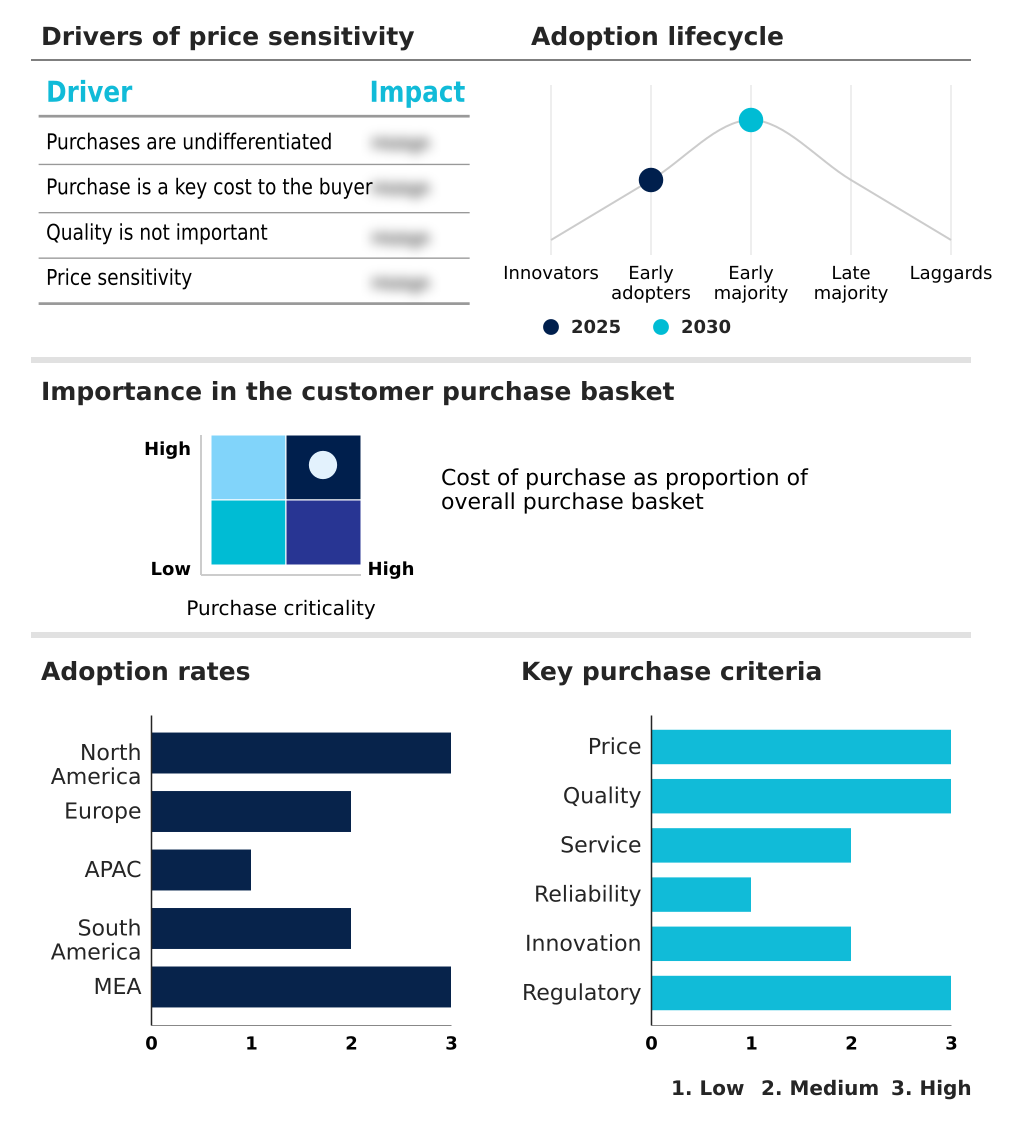
Customer Landscape of Passenger Information System Industry
Competitive Landscape
Companies are implementing various strategies, such as strategic alliances, passenger information system market forecast, partnerships, mergers and acquisitions, geographical expansion, and product/service launches, to enhance their presence in the industry.
Advantech Co. Ltd. - Delivering integrated public transport digitalization through advanced passenger information systems and intelligent transportation systems (ITS) for enhanced urban mobility and operational efficiency.
The industry research and growth report includes detailed analyses of the competitive landscape of the market and information about key companies, including:
- Advantech Co. Ltd.
- ALSTOM SA
- Cisco Systems Inc.
- Cubic Corp.
- Dysten
- Hitachi Ltd.
- Huawei Technologies Co. Ltd.
- Icon Multimedia
- Indra Group
- LUNETTA Pvt. Ltd.
- Mitsubishi Electric Corp.
- Passio Technologies Inc.
- r2p Group
- Rohde and Schwarz GmbH
- Siemens AG
- ST Engineering Ltd.
- Teleste Corp.
- Televic Group NV
- Thales Group
- Wabtec Corp.
Qualitative and quantitative analysis of companies has been conducted to help clients understand the wider business environment as well as the strengths and weaknesses of key industry players. Data is qualitatively analyzed to categorize companies as pure play, category-focused, industry-focused, and diversified; it is quantitatively analyzed to categorize companies as dominant, leading, strong, tentative, and weak.
Recent Development and News in Passenger information system market
- In March 2025, Siemens AG launched its new AI-driven cloud-based PIS platform, 'ConnectFlow', designed to integrate multimodal transit data for enhanced passenger flow analytics and predictive arrival algorithms.
- In January 2025, Wabtec Corp. announced the acquisition of a European AI startup specializing in computer vision for a reported $85 million, aiming to integrate advanced passenger counting systems and crowd density monitoring into its rail solutions.
- In November 2024, Thales Group secured a major contract with the Riyadh Metro project to deploy its comprehensive in-station and onboard passenger information systems, including integrated surveillance and emergency communication protocols across all new lines.
- In September 2024, Teleste Corp. unveiled its latest line of solar-powered e-paper information displays, designed for wayside passenger information systems at remote bus stops and promoting sustainable transit technologies.
Dive into Technavio’s robust research methodology, blending expert interviews, extensive data synthesis, and validated models for unparalleled Passenger Information System Market insights. See full methodology.
| Market Scope | |
|---|---|
| Page number | 294 |
| Base year | 2025 |
| Historic period | 2020-2024 |
| Forecast period | 2026-2030 |
| Growth momentum & CAGR | Accelerate at a CAGR of 14.3% |
| Market growth 2026-2030 | USD 34018.5 million |
| Market structure | Fragmented |
| YoY growth 2025-2026(%) | 13.7% |
| Key countries | US, Canada, Mexico, Germany, UK, France, Italy, The Netherlands, Spain, China, India, Japan, South Korea, Australia, Indonesia, Brazil, Argentina, Colombia, Saudi Arabia, UAE, South Africa, Israel and Turkey |
| Competitive landscape | Leading Companies, Market Positioning of Companies, Competitive Strategies, and Industry Risks |
Research Analyst Overview
- The passenger information system market is defined by its critical role in public transit modernization, driven by an ecosystem of integrated technologies. The foundation includes both onboard passenger information systems and wayside passenger information systems, which leverage digital signage solutions like LED and LCD displays alongside clear public address (PA) systems and voice announcement systems for effective communication.
- Key functionalities such as next stop announcement systems are now standard in these visual communication solutions. Operationally, data from automatic vehicle location (AVL) and GNSS-based tracking is fed into computer-aided dispatch (CAD) and fleet management software, managed from a central operational control center (OCC). This integration enables sophisticated dynamic route mapping and headway management systems.
- Advanced capabilities include passenger counting systems and integrated surveillance systems, all connected via secure IP-based communication networks with established emergency communication protocols. For boardroom strategy, the migration to a cloud-based PIS platform is critical, with some operators achieving a 20% reduction in IT overhead.
- Modern systems facilitate contactless payment integration and mobile ticketing integration through accessible transit data APIs and journey planning applications. Hardware, often seen in passenger-facing displays or e-paper information displays, must be ruggedized display hardware and meet standards such as EN 50155 compliance.
- The inclusion of infotainment systems and accessibility features like haptic feedback interfaces addresses rising passenger expectations for a seamless experience, while automated service disruption alerts maintain trust.
What are the Key Data Covered in this Passenger Information System Market Research and Growth Report?
-
What is the expected growth of the Passenger Information System Market between 2026 and 2030?
-
USD 34.02 billion, at a CAGR of 14.3%
-
-
What segmentation does the market report cover?
-
The report is segmented by Component (Solution, and Services), Mode of Transportation (Railways, Roadways, and Air and waterways), Location (On-board, and In-station) and Geography (North America, Europe, APAC, South America, Middle East and Africa)
-
-
Which regions are analyzed in the report?
-
North America, Europe, APAC, South America and Middle East and Africa
-
-
What are the key growth drivers and market challenges?
-
Expansion of urban infrastructure and smart city initiatives, Prohibitive initial investment and ongoing maintenance costs
-
-
Who are the major players in the Passenger Information System Market?
-
Advantech Co. Ltd., ALSTOM SA, Cisco Systems Inc., Cubic Corp., Dysten, Hitachi Ltd., Huawei Technologies Co. Ltd., Icon Multimedia, Indra Group, LUNETTA Pvt. Ltd., Mitsubishi Electric Corp., Passio Technologies Inc., r2p Group, Rohde and Schwarz GmbH, Siemens AG, ST Engineering Ltd., Teleste Corp., Televic Group NV, Thales Group and Wabtec Corp.
-
Market Research Insights
- The market dynamics are shaped by a strategic push toward public transport digitalization and the development of comprehensive urban mobility platforms. The integration of mobility as a service (MaaS) frameworks and intermodal transport solutions is driving a need for real-time data synchronization across all transit modes.
- Intelligent transportation systems (ITS) are at the core of this shift, with implementations showing up to a 15% improvement in network efficiency. Passenger experience enhancement is a key objective, compelling agencies to adopt advanced transit accessibility solutions and a passenger-centric design approach. This focus has led to a 20% increase in passenger satisfaction scores in pilot projects.
- However, ensuring passenger data privacy and robust cybersecurity for transit networks remain critical considerations in this evolving landscape.
We can help! Our analysts can customize this passenger information system market research report to meet your requirements.
 RIA -
RIA - 
