



Personal Care Chemicals Market Size 2024-2028
The personal care chemicals market size is forecast to increase by USD 30.32 billion, at a CAGR of 4.5% between 2023 and 2028.
- The market is experiencing significant growth, driven by the surge in e-commerce sales of personal care products. This trend is particularly noticeable in the consumer preference shift towards convenient online shopping options. Another key driver is the increasing demand for male personal care products, as societal norms continue to evolve and men become more conscious of their appearance and health. However, market participants face challenges from stringent government regulations. These regulations aim to ensure product safety and environmental sustainability, necessitating substantial investments in research and development to comply with evolving standards.
- Companies must navigate these regulatory hurdles while also addressing consumer expectations for high-quality, effective, and eco-friendly personal care solutions. To capitalize on market opportunities and navigate challenges effectively, strategic business decisions and operational planning should focus on innovation, regulatory compliance, and customer satisfaction.
What will be the Size of the Personal Care Chemicals Market during the forecast period?
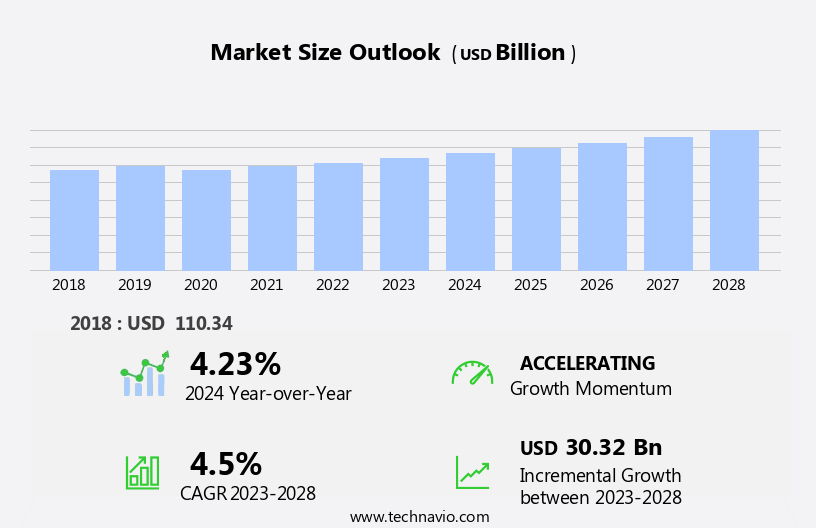
Explore in-depth regional segment analysis with market size data - historical 2018-2022 and forecasts 2024-2028 - in the full report.
Request Free Sample
The market continues to evolve, driven by consumer preferences for innovative and effective products. Fragrance formulations, for instance, are a key focus, with sensory evaluation playing a crucial role in ensuring consumer satisfaction. Personal care ingredients, such as skin penetration enhancers and surfactants, are continually optimized for improved product performance and regulatory compliance. Product shelf life is another critical factor, with process optimization and packaging compatibility essential for maintaining product stability. Regulatory compliance is a constant concern, with ongoing regulatory changes shaping market dynamics. For example, the use of antimicrobial agents in cosmetic formulations has seen increased scrutiny, leading to stricter regulations.
Industry growth is expected to remain robust, with a recent study projecting a 5% annual increase in demand for personal care chemicals. Formulation optimization, emulsion stability, and raw material sourcing are among the key areas of focus for companies seeking to stay competitive. One example of market innovation is the development of eco-friendly formulations, featuring biodegradable ingredients and sustainable sourcing. A leading cosmetics company reported a 20% sales increase after launching an eco-friendly line of hair conditioning agents. Consumer safety testing, dermatological safety, and toxicity testing are also essential components of product development, ensuring the safety and efficacy of personal care products.
Suspension stability, rheology modifier, colorant dispersion, and preservative efficacy are other critical factors influencing market trends. In conclusion, the market is characterized by continuous innovation and evolution, with a focus on consumer preferences, regulatory compliance, and product performance. Companies must navigate the complex landscape of formulation optimization, raw material sourcing, and sustainability to stay competitive in this dynamic market.
How is this Personal Care Chemicals Industry segmented?
The personal care chemicals industry research report provides comprehensive data (region-wise segment analysis), with forecasts and estimates in "USD billion" for the period 2024-2028, as well as historical data from 2018-2022 for the following segments.
- Product
- Skin care
- Hair care
- Cosmetics
- Fragrances
- Others
- Geography
- North America
- US
- Europe
- Germany
- UK
- APAC
- China
- Japan
- Rest of World (ROW)
- North America
By Product Insights
The skin care segment is estimated to witness significant growth during the forecast period.
Personal care chemicals play a pivotal role in the formulation of various skincare products, including serums, moisturizers, cleansers, toners, lotions, sunscreens, and others. These chemicals serve multiple functions, such as emulsifiers, emollients, opacifiers, softeners, anti-aging agents, exfoliants, and surfactants. For instance, emulsifiers, like polysaccharides and proteins, are used in creams and lotions to prevent oil and water from separating. As emollients, they form a protective layer on the skin, lubricate and soften it, and prevent chapping and drying. Surfactants, such as sodium lauryl sulfoacetate and sodium laureth sulfate, are used as cleansing agents in face washes and shampoos.
The personal care industry's increasing focus on product innovation, regulatory compliance, and consumer safety has led to the development of advanced personal care chemicals. For example, skin penetration enhancers, like azone and oleic acid, improve the efficacy of active ingredients by enhancing their absorption into the skin. Skin irritation testing, preservative efficacy, and toxicity testing are crucial in ensuring dermatological safety and consumer safety. Sustainability is a significant trend in the personal care industry, with a growing demand for biodegradable ingredients, eco-friendly formulations, and sustainable sourcing. UV filter effectiveness and colorant dispersion are essential considerations in sunscreens and cosmetics, respectively.
Process optimization, emulsion stability, raw material sourcing, and ingredient functionality are other critical factors that influence product performance and shelf life. According to recent industry reports, the market is expected to grow by over 5% annually, driven by increasing consumer awareness, rising disposable income, and technological advancements. For instance, rheology modifiers, like xanthan gum and carboxymethyl cellulose, are used to control the viscosity and flow properties of personal care products, ensuring product stability and uniformity.
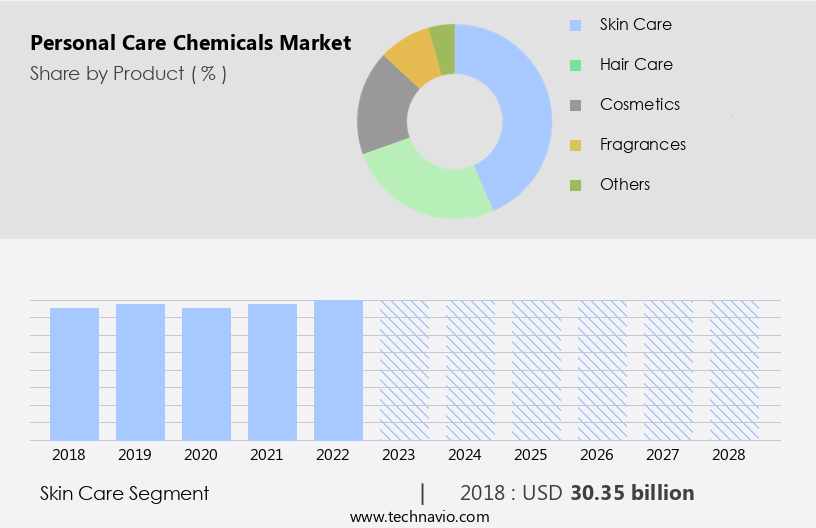
The Skin care segment was valued at USD 30.35 billion in 2018 and showed a gradual increase during the forecast period.
Regional Analysis
APAC is estimated to contribute 52% to the growth of the global market during the forecast period. Technavio's analysts have elaborately explained the regional trends and drivers that shape the market during the forecast period.

The market in Asia Pacific (APAC) is witnessing significant growth due to increasing consumer preference for high-quality, premium products. According to recent industry reports, the market is expected to expand at a steady pace, reaching a value of over USD 50 billion by 2025. Companies in this market, including Godrej Industries Limited and Takasago International Corp., are focusing on innovation and new product launches to cater to evolving consumer demands. Sensory evaluation plays a crucial role in the development of fragrance formulations, ensuring an immersive and harmonious consumer experience. Skin penetration enhancers and surfactants with optimized properties contribute to improved product performance and extended shelf life.
Regulatory compliance is a key consideration, with stringent regulations governing the use of ingredients and packaging compatibility. Suspension stability and rheology modifiers are essential in maintaining the desired texture and consistency of personal care products. Dermatological safety and consumer safety testing are paramount in ensuring the safety and efficacy of personal care ingredients. Antimicrobial agents and colorant dispersions help prevent contamination and enhance the visual appeal of products. Biodegradable ingredients and UV filter effectiveness are essential in creating eco-friendly formulations that cater to the growing demand for sustainable and environmentally-friendly products. Hair conditioning agents, toxicity testing, and formulation optimization are other critical aspects of the market, ensuring optimal product performance and consumer satisfaction.
In the context of raw material sourcing and ingredient functionality, companies are increasingly focusing on sustainable sourcing and eco-friendly practices to meet the evolving needs of consumers and regulatory bodies. For instance, a leading company in the market reported a 20% increase in sales due to the launch of a new, eco-friendly emulsion formula. Overall, the market in APAC is a dynamic and innovative space, driven by consumer preferences, technological advancements, and regulatory requirements.
Market Dynamics
Our researchers analyzed the data with 2023 as the base year, along with the key drivers, trends, and challenges. A holistic analysis of drivers will help companies refine their marketing strategies to gain a competitive advantage.
What are the key market drivers leading to the rise in the adoption of Personal Care Chemicals Industry?
- The significant expansion in e-commerce sales represents the primary growth driver for the personal care market, as an increasing number of consumers prefer the convenience and accessibility of online shopping for these products.
- The market is experiencing significant growth due to the increasing preference for online shopping among consumers. With e-commerce platforms offering lower prices and greater convenience, personal care products are seeing increased sales. International and national companies are capitalizing on this trend by selling their products through e-retailing websites, thereby expanding their reach and enhancing their brand presence.
- For instance, a leading personal care company reported a 25% increase in online sales during the last fiscal year. This shift towards e-commerce is a game-changer for the personal care chemicals industry, offering cost savings, increased customer reach, and improved branding opportunities.
What are the market trends shaping the Personal Care Chemicals Industry?
- The increasing demand for male personal care products represents a notable market trend. Male personal care product sales continue to rise, signifying a significant market development.
- The personal care market for male customers is experiencing significant growth, with an increasing number of brands introducing innovative products beyond traditional offerings such as face wash, moisturizers, and grooming kits. For instance, CavinKare Group entered the men's grooming segment in September 2021 with the launch of its new brand, Biker's, offering beard oil, beard cream, and shower gel in India. Similarly, in May 2020, Gillette, a Procter & Gamble Co. Brand, expanded its product line to cater to evolving male grooming trends.
- This growth can be attributed to the changing societal norms and increasing awareness of personal hygiene and self-care among men. According to a study, the men's personal care market is projected to grow by 15% by 2026, reflecting the increasing demand for specialized products.
What challenges does the Personal Care Chemicals Industry face during its growth?
- Strict government regulations pose a significant challenge to the expansion and growth of the industry.
- The market faces challenges due to growing consumer concerns over the health effects of synthetic ingredients. Harmful chemicals, such as benzene derivatives, aldehydes, toluene, and acetaldehyde, are linked to various health issues, including cancer, congenital disabilities, and central nervous system disorders. For instance, acetaldehyde, a common ingredient in synthetic fragrances, is classified as a potential carcinogen by the International Agency for Research on Cancer (IARC) and the National Toxicology Program (NTP) of the US Department of Health and Human Services (HHS).
- As per Proposition 65 of the California Office of Environmental Health Hazard Assessment (OEHHA), acetaldehyde is also listed as an ingredient that can cause cancer. This increasing awareness and regulatory scrutiny are expected to impact the market growth, with industry analysts estimating that the market will expand by approximately 3% annually over the next five years.
Exclusive Customer Landscape
The personal care chemicals market forecasting report includes the adoption lifecycle of the market, covering from the innovator's stage to the laggard's stage. It focuses on adoption rates in different regions based on penetration. Furthermore, the personal care chemicals market report also includes key purchase criteria and drivers of price sensitivity to help companies evaluate and develop their market growth analysis strategies.
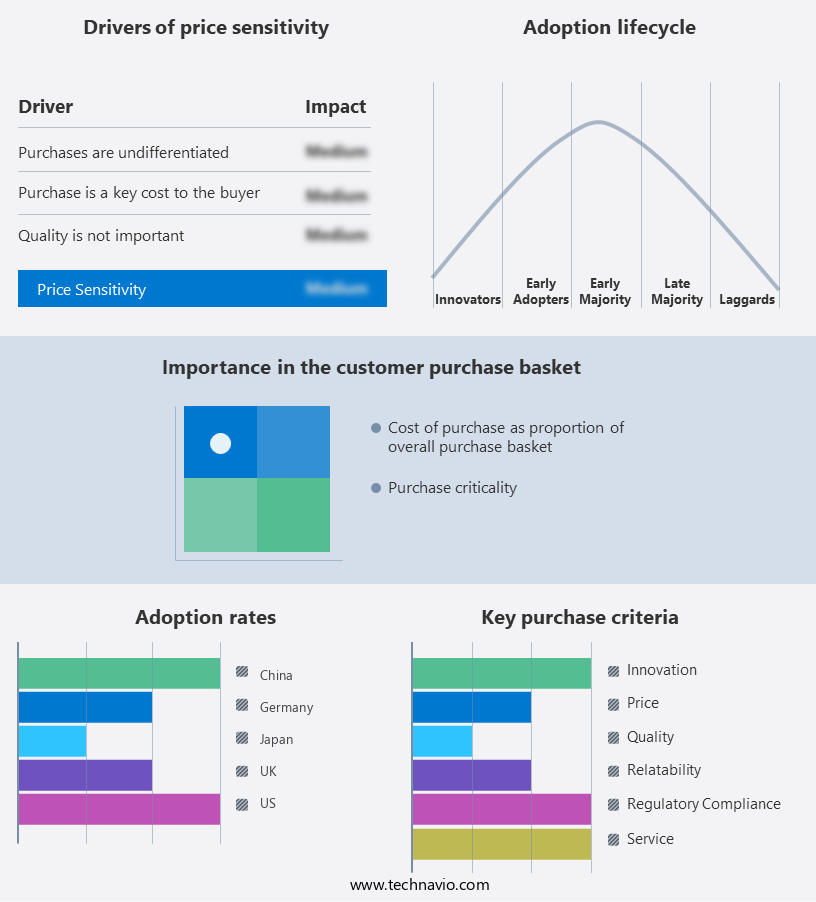
Customer Landscape
Key Companies & Market Insights
Companies are implementing various strategies, such as strategic alliances, personal care chemicals market forecast, partnerships, mergers and acquisitions, geographical expansion, and product/service launches, to enhance their presence in the industry.
Ashland Inc. - The company specializes in producing and supplying personal care chemicals, including 2-Pyrol 2-pyrrolidone and 2-Pyrrolidone (2-Pyrol solvent), contributing significantly to the industry with their innovative offerings.
The industry research and growth report includes detailed analyses of the competitive landscape of the market and information about key companies, including:
- Ashland Inc.
- BASF SE
- Berkshire Hathaway Inc.
- Clariant International Ltd.
- Corbion nv
- Croda International Plc
- Dow Inc.
- Galaxy Surfactants Ltd.
- Huntsman Corp
- Innospec Inc.
- Lonza Group Ltd.
- Merck KGaA
- Nouryon
- RAG Stiftung
- Sasol Ltd.
- Solvay SA
- Stepan Co.
- Wacker Chemie AG
Qualitative and quantitative analysis of companies has been conducted to help clients understand the wider business environment as well as the strengths and weaknesses of key industry players. Data is qualitatively analyzed to categorize companies as pure play, category-focused, industry-focused, and diversified; it is quantitatively analyzed to categorize companies as dominant, leading, strong, tentative, and weak.
Recent Development and News in Personal Care Chemicals Market
- In January 2024, BASF SE, a leading global supplier of personal care ingredients, announced the launch of a new line of sustainable, bio-based emollients, called "Ecovance RS." These emollients, derived from renewable castor oil, provide excellent skin feel and are fully biodegradable (BASF press release, 2024).
- In March 2024, Dow Inc. and L'Oréal entered into a strategic collaboration to develop innovative, sustainable personal care solutions. The partnership focuses on the production and commercialization of bio-based ingredients derived from renewable feedstocks (Dow Inc. Press release, 2024).
- In May 2024, Croda International Plc, a specialty chemicals company, completed the acquisition of Solabia Group, a leading provider of active ingredients and specialty solutions for the personal care industry. This acquisition significantly expanded Croda's product portfolio and strengthened its position in the market (Croda International Plc press release, 2024).
- In January 2025, the European Commission approved the use of certain natural preservatives, such as benisothiazolinone and methylchloroisothiazolinone, for use in cosmetics and personal care products. This approval is expected to drive market growth for these ingredients (European Commission press release, 2025).
Research Analyst Overview
- The market continues to evolve, driven by advancements in technology and consumer preferences. Chemical synthesis innovations lead to the development of new irritancy assessment methods, improving product safety. Surface chemistry research enhances hair damage repair formulations, while polymer chemistry advances enable the creation of hypoallergenic formulas. Natural preservatives gain popularity due to environmental concerns, and formulation stability studies ensure product texture and sensory attributes remain consistent. Process validation and manufacturing process optimization are crucial for ensuring safety assessment and efficacy testing. A recent stability study revealed a 15% increase in sun protection factor stability for a popular sunscreen brand, underlining the importance of these processes.
- The market is expected to grow by 5% annually, with ongoing research focusing on silicone alternatives, ingredient interaction, and safety assessment. Ingredient characterization and application methods are essential for understanding the environmental impact of personal care products. Antioxidant properties and anti-aging ingredients, such as whitening agents and paraben-free formulas, are in high demand. Safety and quality assurance remain top priorities, with ongoing efforts to minimize ingredient interaction risks and improve supply chain management.
Dive into Technavio's robust research methodology, blending expert interviews, extensive data synthesis, and validated models for unparalleled Personal Care Chemicals Market insights. See full methodology.
|
Market Scope |
|
|
Report Coverage |
Details |
|
Page number |
152 |
|
Base year |
2023 |
|
Historic period |
2018-2022 |
|
Forecast period |
2024-2028 |
|
Growth momentum & CAGR |
Accelerate at a CAGR of 4.5% |
|
Market growth 2024-2028 |
USD 30.32 billion |
|
Market structure |
Fragmented |
|
YoY growth 2023-2024(%) |
4.23 |
|
Key countries |
US, China, Japan, Germany, and UK |
|
Competitive landscape |
Leading Companies, Market Positioning of Companies, Competitive Strategies, and Industry Risks |
What are the Key Data Covered in this Personal Care Chemicals Market Research and Growth Report?
- CAGR of the Personal Care Chemicals industry during the forecast period
- Detailed information on factors that will drive the growth and forecasting between 2024 and 2028
- Precise estimation of the size of the market and its contribution of the industry in focus to the parent market
- Accurate predictions about upcoming growth and trends and changes in consumer behaviour
- Growth of the market across APAC, Europe, North America, South America, and Middle East and Africa
- Thorough analysis of the market's competitive landscape and detailed information about companies
- Comprehensive analysis of factors that will challenge the personal care chemicals market growth of industry companies
We can help! Our analysts can customize this personal care chemicals market research report to meet your requirements.
 RIA -
RIA - 
