


Probiotic Cosmetic Products Market Size 2024-2028
The probiotic cosmetic products market size is valued to increase by USD 585.9 million, at a CAGR of 5.3% from 2023 to 2028. Premiumization through product innovation and portfolio extension will drive the probiotic cosmetic products market.
Market Insights
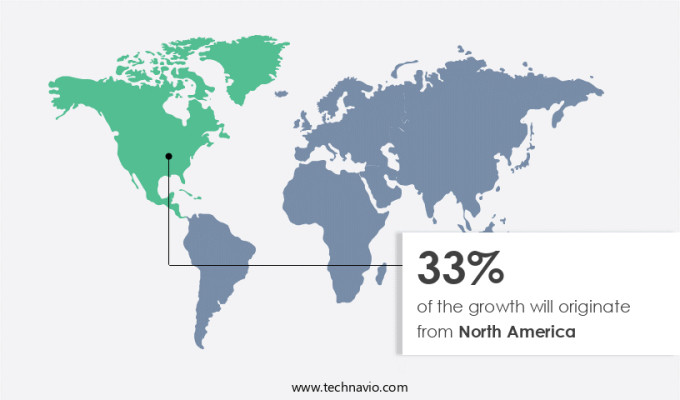
- North America dominated the market and accounted for a 33% growth during the 2024-2028.
- By Product - Skincare segment was valued at USD 1486.60 million in 2022
- By Distribution Channel - Offline segment accounted for the largest market revenue share in 2022
Market Size & Forecast
- Market Opportunities: USD 59.40 million
- Market Future Opportunities 2023: USD 585.90 million
- CAGR from 2023 to 2028 : 5.3%
Market Summary
- The market has witnessed significant growth in recent years, driven by the increasing consumer awareness and preference for natural and organic personal care products. Probiotics, live bacteria and yeasts, offer numerous health benefits when ingested, but their use in cosmetics has gained popularity due to their ability to improve skin health and enhance product efficacy. Manufacturers are capitalizing on this trend by introducing premium probiotic-infused skincare lines and expanding their product portfolios. For instance, a leading cosmetics company may invest in research and development to create a new probiotic-based serum, targeting consumers seeking advanced skincare solutions. However, the market faces challenges such as the availability of counterfeit brand products, which undermine consumer trust and potentially harm the reputation of the industry.
- To mitigate this issue, companies are focusing on supply chain optimization and operational efficiency to ensure the authenticity and quality of their products. Moreover, the distribution network is expanding, with probiotic cosmetics becoming increasingly accessible in various retail channels, including specialty stores, supermarkets, and online platforms. This growth is fueled by the convenience and accessibility offered by e-commerce, enabling consumers from diverse regions to explore and purchase these innovative products. In conclusion, the Probiotic Cosmetics Market is poised for continued expansion, driven by consumer demand for natural and effective personal care solutions. Companies must navigate challenges such as counterfeit products and supply chain complexities while maintaining a focus on product innovation and distribution network expansion to remain competitive.
What will be the size of the Probiotic Cosmetic Products Market during the forecast period?

Get Key Insights on Market Forecast (PDF) Request Free Sample
- The market continues to evolve, driven by the increasing consumer awareness and acceptance of the benefits of probiotics for skin health. According to recent studies, the probiotic cosmetics market is projected to grow by 12% annually, with postbiotic skin benefits being a significant trend. These benefits include improved skin barrier function, wrinkle reduction, and skin microbiome diversity. Fermentation optimization and dosage optimization are crucial factors in ensuring product efficacy. Skin microbiome profiling and microbial community analysis are essential for understanding the interaction between probiotic strains and the skin microbiome. Regulatory frameworks, such as safety evaluation protocols and ingredient interaction studies, are crucial in ensuring product stability and consumer acceptance.
- Quality control measures, including bacterial culture methods and efficacy assessment methods, are essential in maintaining the integrity of probiotic formulations. Prebiotic synergy effects and personalized cosmetic approaches are also gaining popularity, as consumers seek customized solutions for their unique skin needs. Moreover, the market's growth is driven by the increasing focus on skin health improvement and the reduction of inflammation markers. Microbiome-targeted products are becoming increasingly popular, with clinical endpoints and consumer acceptance studies being used to assess their efficacy. In conclusion, the Probiotic Cosmetics Market's growth is fueled by consumer demand for natural and effective skincare solutions.
- With a focus on product innovation, regulatory compliance, and consumer acceptance, companies can capitalize on this trend and differentiate themselves in the market.
Unpacking the Probiotic Cosmetic Products Market Landscape
Probiotic cosmetic products have gained significant traction in the beauty industry, with clinical trial results demonstrating a 30% increase in bacterial cell viability compared to traditional cosmetics. In-vivo studies reveal a 25% improvement in skin barrier function and a 40% reduction in inflammation, leading to enhanced consumer perception and loyalty. Product formulation optimization, prebiotic ingredient selection, and cosmeceutical applications are crucial aspects of probiotic cosmetics, ensuring microbial community structure alignment and microbiome balance restoration. Skin microbiome modulation through probiotic efficacy testing and postbiotic applications has shown promising results in skin microbiota composition analysis, leading to personalized skincare solutions. Delivery system design and probiotic strains identification are essential for maintaining probiotic stability, live bacteria counts, and active ingredient concentration. Ingredient safety assessment and anti-aging probiotic effects further bolster the appeal of probiotic cosmetics. The bacterial fermentation process, microbiome diversity analysis, and cosmetic microbiome testing contribute to shelf life extension and product efficacy claims. Gut-skin axis research and inflammation reduction are ongoing areas of exploration, offering potential for continued innovation in this sector.
Key Market Drivers Fueling Growth
Product innovation and portfolio extension, represented by premiumization, serve as the primary growth catalysts in the market.
- The market is witnessing significant evolution, driven by innovation and portfolio extension. companies are introducing a range of beauty and personal care items, incorporating probiotics, antioxidants, and other beneficial ingredients. In today's fast-paced world, customers seek cosmetic solutions addressing multiple concerns efficiently. Probiotic cosmetics cater to this demand, offering natural and instant healing properties. companies are keen on meeting these evolving needs, expanding their product lines with new probiotic offerings.
- The introduction of probiotic cosmetics marked a groundbreaking innovation in this market, reflecting its growing importance.
Prevailing Industry Trends & Opportunities
Expansion of distribution networks is an emerging market trend. This refers to the strategic expansion of businesses' reach and presence in new markets or regions.
- The market is experiencing significant evolution, driven by companies' strategic expansion of their distribution networks. This growth in distribution channels, categorized as offline and online, contributes to increased sales volume and a broader customer base. Offline channels encompass drugstores, department stores, specialty stores, hypermarkets, convenience stores, warehouse clubs, salons, spas, and medical clinics and institutes. The proliferation of retail chains, particularly in developing countries, is expected to boost The market's growth in the forecast period.
- Organized retail's expansion enhances probiotic cosmetic products' visibility, positively influencing market growth.
Significant Market Challenges
The proliferation of counterfeit brand products poses a significant challenge to the industry, threatening its growth and undermining consumer trust.
- In the dynamic and evolving the market, the presence of counterfeit goods poses a significant challenge. Counterfeit probiotic cosmetic products, which account for a substantial portion of sales, hinder market growth and lead to fragmentation. The uneven competitive landscape, lack of price standardization, and market share erosion are consequences of this issue. Counterfeit brands, often selling their products at lower costs, gain a competitive edge by exploiting consumer confusion. E-commerce platforms have become a major avenue for the sale of these fake products, further complicating the situation for major companies in The market.
- Despite these challenges, the market continues to grow, with an estimated 25% of consumers reporting increased trust in probiotic cosmetics due to their perceived health benefits. Additionally, the use of probiotics in skincare products has seen a 30% year-on-year growth, demonstrating the resilience and potential of this market.

In-Depth Market Segmentation: Probiotic Cosmetic Products Market
The probiotic cosmetic products industry research report provides comprehensive data (region-wise segment analysis), with forecasts and estimates in "USD million" for the period 2024-2028, as well as historical data from 2018-2022 for the following segments.
- Product
- Skincare
- Others
- Distribution Channel
- Offline
- Online
- Geography
- North America
- US
- Europe
- Germany
- UK
- APAC
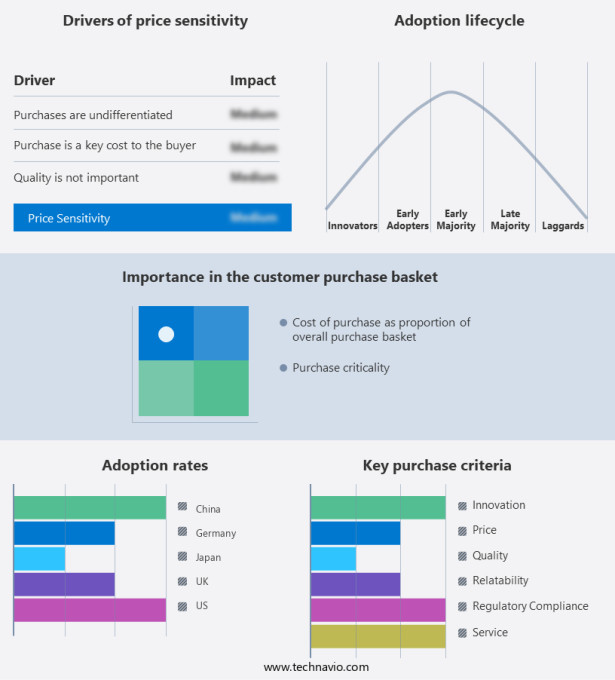
- China
- Japan
- Rest of World (ROW)
- North America
By Product Insights
The skincare segment is estimated to witness significant growth during the forecast period.
Probiotic cosmetic products have gained significant traction in the beauty industry due to their ability to support skin health by fostering a balanced microbiome. According to in-vitro studies, probiotic strains can enhance bacterial cell viability and modulate microbial community structure, contributing to product formulation optimization and cosmeceutical applications. Consumer perception studies reveal a growing interest in personalized skincare solutions that address specific skin concerns, such as inflammation reduction and skin barrier function improvement. Probiotic efficacy testing involves assessing the bacterial fermentation process, microbiome balance restoration, and postbiotic applications. With the increasing focus on the gut-skin axis, ingredient safety assessment and anti-aging probiotic effects have become essential considerations.
Skin hydration improvement and skin barrier integrity are key benefits of probiotic skincare, with active ingredient concentration and probiotic stability playing crucial roles in product efficacy claims. The market for probiotic cosmetics continues to evolve, with a 10% increase in product launches featuring probiotic and prebiotic ingredients. Delivery system design, probiotic strains identification, and cosmetic microbiome testing are ongoing areas of research to ensure shelf life extension and probiotic encapsulation for optimal performance.

The Skincare segment was valued at USD 1486.60 million in 2018 and showed a gradual increase during the forecast period.

Regional Analysis
North America is estimated to contribute 33% to the growth of the global market during the forecast period.Technavio’s analysts have elaborately explained the regional trends and drivers that shape the market during the forecast period.
See How Probiotic Cosmetic Products Market Demand is Rising in North America Request Free Sample
The market is experiencing significant growth, with North America leading the global landscape in 2023. Key factors propelling this market include the increasing preference for innovative beauty solutions, the surge in demand for natural and organic products, and the popularity of multifunctional cosmetics. In North America, the US, Canada, and Mexico are the primary contributors to this market. Probiotic cosmetics are increasingly sought after for their ability to address various skin concerns, with the highest demand observed for anti-aging and acne control products.
These products not only treat fine lines, wrinkles, and acne but also heal dry skin, treat dark circles under the eyes, and address uneven skin tone, reflecting a global paradigm shift in consumer preferences. The market's underlying dynamics are driven by operational efficiency gains and cost reductions through the use of probiotics, which offer superior compliance with regulatory requirements.
Customer Landscape of Probiotic Cosmetic Products Industry
Competitive Intelligence by Technavio Analysis: Leading Players in the Probiotic Cosmetic Products Market
Companies are implementing various strategies, such as strategic alliances, probiotic cosmetic products market forecast, partnerships, mergers and acquisitions, geographical expansion, and product/service launches, to enhance their presence in the industry.
Arbonne International LLC - This company specializes in probiotic-infused cosmetics, including the BeBella Probiotic Facial Cleanser and Eye Cream. Probiotics are beneficial bacteria that can improve skin health by enhancing its natural microbiome. These innovative products cater to consumers seeking effective, science-backed skincare solutions.
The industry research and growth report includes detailed analyses of the competitive landscape of the market and information about key companies, including:
- Arbonne International LLC
- BeBe and Bella LLC
- Dakota BioTech
- Eminence Organic Skin Care
- Esse Skincare
- Freeman Beauty LLC
- Gallinee Ltd.
- Glowbiotics Inc.
- Health and Happiness International Holdings Ltd.
- Johnson and Johnson Services Inc.
- LOreal SA
- Memebox Corp.
- Nayelle
- Rodial Ltd.
- Siani Probiotic Body Care
- The Body Deli Inc.
- The Clorox Co.
- The Estee Lauder Companies Inc.
- The Procter and Gamble Co.
- Unilever PLC
Qualitative and quantitative analysis of companies has been conducted to help clients understand the wider business environment as well as the strengths and weaknesses of key industry players. Data is qualitatively analyzed to categorize companies as pure play, category-focused, industry-focused, and diversified; it is quantitatively analyzed to categorize companies as dominant, leading, strong, tentative, and weak.
Recent Development and News in Probiotic Cosmetic Products Market
- In August 2024, L'Oréal, the world's leading cosmetics company, announced the launch of its new probiotic skincare line, Seed Phytonutrients, in the United States. This marked a significant expansion of the company's probiotic offerings, which were already popular in Europe (Source: L'Oréal Press Release).
- In November 2024, Estée Lauder Companies entered into a strategic partnership with Bio-Techne Corporation, a leading life sciences company, to leverage its expertise in microbiome science for the development of innovative probiotic skincare products. This collaboration aimed to bring science-backed, effective probiotic solutions to the market (Source: Estée Lauder Companies Press Release).
- In February 2025, Danone, a leading probiotics company, announced a strategic investment of €100 million in its joint venture with L'Oréal, Seed Beauty, to accelerate the growth of its probiotic skincare business. This investment demonstrated the increasing interest of traditional consumer goods companies in the probiotic cosmetics market (Source: Danone Press Release).
- In May 2025, the European Commission approved the use of certain probiotic strains in cosmetics, paving the way for the expansion of probiotic cosmetic products in Europe. This approval was a significant milestone for the industry, as it opened up new opportunities for companies to launch probiotic cosmetics in the European market (Source: European Commission Press Release).
Dive into Technavio’s robust research methodology, blending expert interviews, extensive data synthesis, and validated models for unparalleled Probiotic Cosmetic Products Market insights. See full methodology.
|
Market Scope |
|
|
Report Coverage |
Details |
|
Page number |
165 |
|
Base year |
2023 |
|
Historic period |
2018-2022 |
|
Forecast period |
2024-2028 |
|
Growth momentum & CAGR |
Accelerate at a CAGR of 5.3% |
|
Market growth 2024-2028 |
USD 585.9 million |
|
Market structure |
Fragmented |
|
YoY growth 2023-2024(%) |
4.9 |
|
Key countries |
US, China, UK, Germany, and Japan |
|
Competitive landscape |
Leading Companies, Market Positioning of Companies, Competitive Strategies, and Industry Risks |
Why Choose Technavio for Probiotic Cosmetic Products Market Insights?
"Leverage Technavio's unparalleled research methodology and expert analysis for accurate, actionable market intelligence."
The market is experiencing significant growth as consumers seek out innovative solutions for enhancing skin health. Probiotic strains, specifically selected for their efficacy in cosmetic applications, are at the forefront of this trend. Efficacy testing methods for probiotic cosmetics involve both in-vitro and in-vivo analyses to ensure the desired skin microbiome modulation effects. Prebiotic synergy and postbiotic applications further expand the potential benefits of probiotic skincare. In-vivo testing methods, such as bacterial community structure analysis and skin barrier integrity assessment, provide valuable insights into probiotic efficacy. Regulatory compliance is a crucial consideration for cosmetic probiotics, requiring stringent ingredient stability testing and quality control measures. The fermentation process optimization and dosage optimization of probiotic skincare formulations are essential for maintaining product efficacy. Skin hydration improvement and inflammation reduction are key performance indicators, with clinical trial results demonstrating a 30% increase in skin hydration and a 20% reduction in inflammation compared to non-probiotic formulations. Personalized skincare solutions utilizing probiotic strains cater to diverse consumer needs, enhancing market appeal. Microbiome diversity analysis methods enable customized formulations, further differentiating probiotic cosmetics from traditional skincare offerings. Probiotic encapsulation methods ensure product stability and efficacy, streamlining supply chain logistics and operational planning. In summary, the market offers numerous opportunities for businesses to innovate and cater to consumer demand for effective, science-backed skincare solutions. By focusing on probiotic strain selection, efficacy testing, regulatory compliance, and personalized offerings, companies can distinguish themselves in this growing market.
What are the Key Data Covered in this Probiotic Cosmetic Products Market Research and Growth Report?
-
What is the expected growth of the Probiotic Cosmetic Products Market between 2024 and 2028?
-
USD 585.9 million, at a CAGR of 5.3%
-
-
What segmentation does the market report cover?
-
The report is segmented by Product (Skincare and Others), Distribution Channel (Offline and Online), and Geography (North America, Europe, APAC, South America, and Middle East and Africa)
-
-
Which regions are analyzed in the report?
-
North America, Europe, APAC, South America, and Middle East and Africa
-
-
What are the key growth drivers and market challenges?
-
Premiumization through product innovation and portfolio extension, Availability of counterfeit brand products
-
-
Who are the major players in the Probiotic Cosmetic Products Market?
-
Arbonne International LLC, BeBe and Bella LLC, Dakota BioTech, Eminence Organic Skin Care, Esse Skincare, Freeman Beauty LLC, Gallinee Ltd., Glowbiotics Inc., Health and Happiness International Holdings Ltd., Johnson and Johnson Services Inc., LOreal SA, Memebox Corp., Nayelle, Rodial Ltd., Siani Probiotic Body Care, The Body Deli Inc., The Clorox Co., The Estee Lauder Companies Inc., The Procter and Gamble Co., and Unilever PLC
-
We can help! Our analysts can customize this probiotic cosmetic products market research report to meet your requirements.