


APAC Programmable Logic Controller (Plc) Market Size 2026-2030
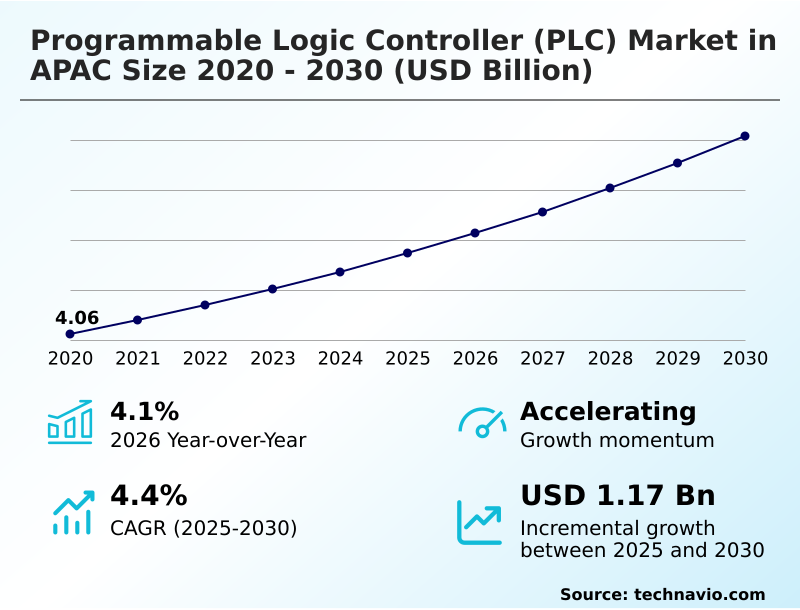
The apac programmable logic controller (plc) market size is valued to increase by USD 1.17 billion, at a CAGR of 4.4% from 2025 to 2030. Rapid expansion of smart manufacturing and industry 4.0 infrastructure will drive the apac programmable logic controller (plc) market.
Major Market Trends & Insights
- By End-user - Process industry segment was valued at USD 1.69 billion in 2024
- By Product - Modular segment accounted for the largest market revenue share in 2024
Market Size & Forecast
- Market Opportunities: USD 1.98 billion
- Market Future Opportunities: USD 1.17 billion
- CAGR from 2025 to 2030 : 4.4%
Market Summary
- The Programmable Logic Controller (PLC) Market in APAC operates as the foundational intelligence layer for modern manufacturing ecosystems, dictating the speed, precision, and reliability of industrial automation. The rapid expansion of smart manufacturing acts as a primary driver, compelling facilities to integrate deep learning algorithms directly into sequence control execution systems.
- For example, within semiconductor fabrication facilities, operators utilize high frequency data processing to manage delicate silicon wafer handling, which has successfully reduced microscopic material waste by 15% compared to legacy manual workflows.
- However, escalating cybersecurity threats pose a significant challenge as legacy control systems lack modern encryption, forcing companies to implement zero trust architectures that can inadvertently introduce latency into deterministic control loops. Upgrading these networks is critical for ensuring uninterrupted production and safeguarding intellectual property. As autonomous plant operations expand, the demand for scalable rackmount controller architecture continues to accelerate.
- The deployment of deterministic performance solutions remains vital for maintaining competitiveness in high-yield manufacturing environments.
What will be the Size of the APAC Programmable Logic Controller (Plc) Market during the forecast period?
Get Key Insights on Market Forecast (PDF) Get Free Sample
How is the APAC Programmable Logic Controller (Plc) Market Segmented?
The apac programmable logic controller (plc) industry research report provides comprehensive data (region-wise segment analysis), with forecasts and estimates in "USD million" for the period 2026-2030, as well as historical data from 2020-2024 for the following segments.
- End-user
- Process industry
- Discrete industry
- Building automation
- Product
- Modular
- Unitary
- Rackmount
- Component
- Hardware
- Software
- Services
- Geography
- APAC
- China
- Japan
- South Korea
- India
- APAC
By End-user Insights
The process industry segment is estimated to witness significant growth during the forecast period.
The process industry relies on robust programmable logic controllers to manage continuous and highly complex operations across chemical, petrochemical, and pharmaceutical sectors.
As industrial operators prioritize safety and regulatory compliance, the deployment of sequence control execution ensures that volatile environments operate with deterministic performance. Facilities integrating modular redundancy have achieved a 22% improvement in overall equipment effectiveness compared to legacy configurations.
This architectural shift enables seamless management of extreme pressures and precision chemical dosing without manual intervention. By leveraging high frequency data processing, these continuous process industries can adapt to raw material fluctuations dynamically.
The transition toward smart factory environments directly reduces operational downtime, ensuring that critical infrastructure maintains optimal throughput and energy efficiency during continuous production cycles.
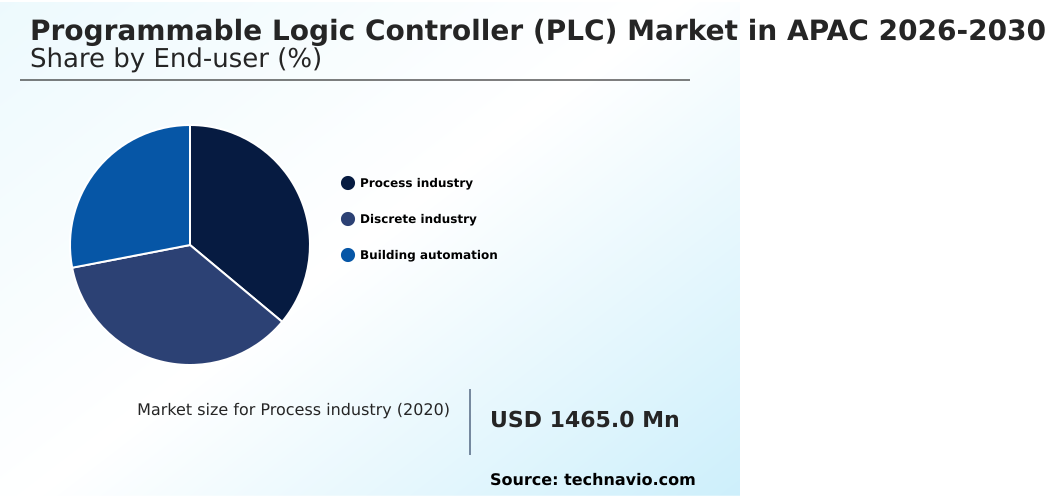
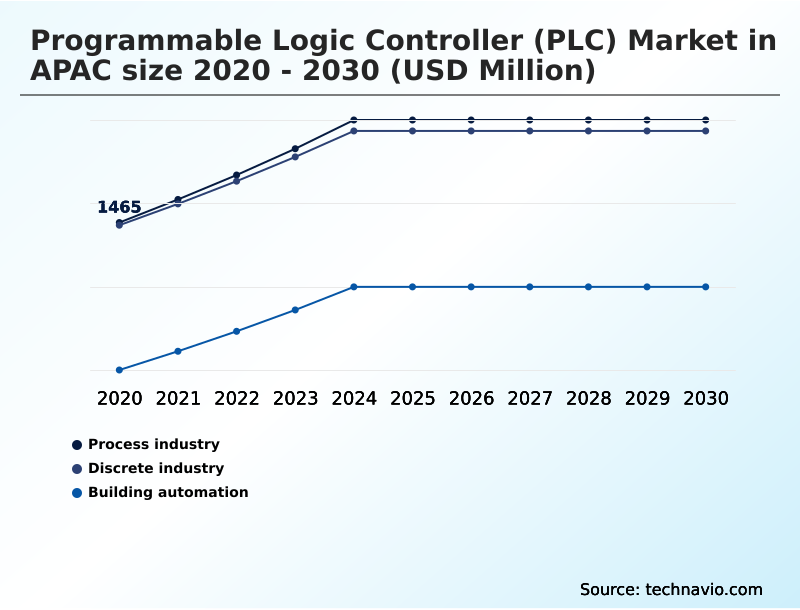
The Process industry segment was valued at USD 1.69 billion in 2024 and showed a gradual increase during the forecast period.
Market Dynamics
Our researchers analyzed the data with 2025 as the base year, along with the key drivers, trends, and challenges. A holistic analysis of drivers will help companies refine their marketing strategies to gain a competitive advantage.
- The industrial automation landscape is undergoing a massive architectural shift as operators demand higher agility and intelligence at the machine level. To maintain competitiveness in complex supply chains, facilities are accelerating their modular controller edge computing adoption, allowing them to process vast amounts of sensor data locally without relying on centralized cloud servers.
- This decentralized approach has demonstrated a 40% improvement in network latency, directly benefiting critical operational planning and quality assurance functions. Furthermore, the implementation of real time error compensation systems ensures that mechanical deviations are corrected instantly, preventing costly material waste in high-precision sectors like semiconductor fabrication.
- As legacy setups are phased out, the transition toward ai integrated industrial control platforms provides the analytical capability required to autonomously optimize energy consumption and production schedules. This modernization is heavily supported by smart manufacturing autonomous robotic integration, which orchestrates the movement of automated guided vehicles alongside fixed machinery, creating a seamless and highly efficient factory floor.
- Additionally, operators are increasingly relying on predictive maintenance controller software execution to foresee equipment failures before they result in unplanned downtime. By shifting from reactive repairs to data-driven proactive strategies, industrial enterprises can extend the lifecycle of their capital assets while ensuring continuous compliance with stringent safety regulations.
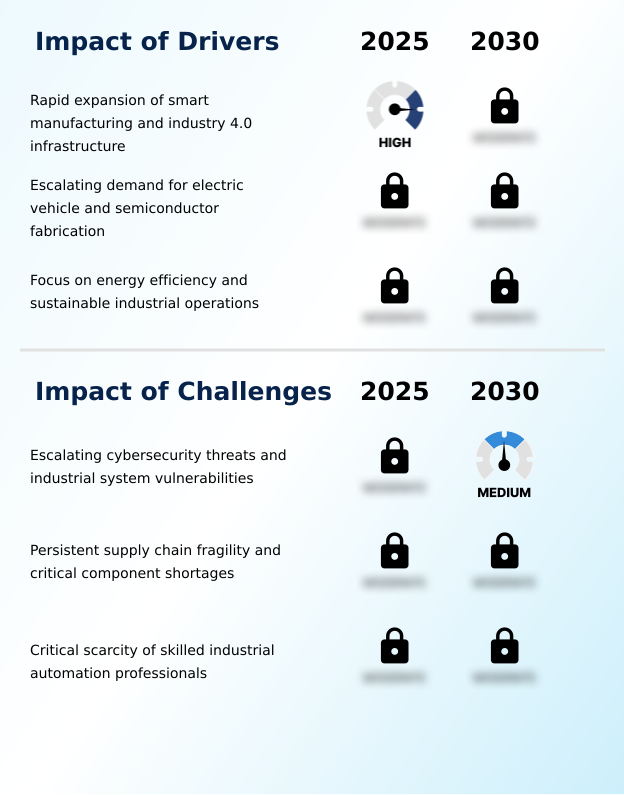
What are the key market drivers leading to the rise in the adoption of APAC Programmable Logic Controller (Plc) Industry?
- The rapid expansion of smart manufacturing and Industry 4.0 infrastructure serves as a primary driver propelling market growth and technological adoption.
- The aggressive expansion of smart factory environments serves as a primary catalyst accelerating demand within the Programmable Logic Controller (PLC) Market in APAC.
- This transformation is driven by the urgent need for manufacturing hubs to deeply integrate factory floor sensors with enterprise-level data analytics.
- As a result, businesses implementing industrial internet of things protocols have achieved a 35% enhancement in production cycle visibility and lowered energy use by 18%.
- The deployment of machine automation controllers allows facilities to dynamically optimize workflows based on real-time material availability. Furthermore, the surging requirement for ultra high precision controllers in semiconductor cleanrooms directly addresses the global chip shortage.
- This modernization significantly elevates manufacturing agility and ensures deterministic performance across highly competitive industrial ecosystems.
What are the market trends shaping the APAC Programmable Logic Controller (Plc) Industry?
- The integration of multi-agent artificial intelligence for expert decision-making represents an emerging trend in the industry. This advancement enables autonomous systems to optimize complex operational workflows efficiently.
- The transition toward hardware-accelerated digital twin simulation represents a defining trend within the Programmable Logic Controller (PLC) Market in APAC, reshaping how automated manufacturing deployment is validated. The convergence of high fidelity digital twin systems with real-time edge processing allows operators to calculate optimal movement paths instantly.
- This shift is occurring because industries require proactive error mitigation without halting production lines. Consequently, businesses have observed a 40% reduction in commissioning delays and a 25% improvement in overall machine calibration accuracy. By embedding multi agent artificial intelligence directly into the backplane, controllers can independently negotiate complex operational trade-offs.
- The integration of intelligent control systems enables facilities to self-correct mechanical vibrations in microsecond intervals. This localized processing capability directly minimizes material waste and enhances long-term operational resilience.
What challenges does the APAC Programmable Logic Controller (Plc) Industry face during its growth?
- Escalating cybersecurity threats and persistent vulnerabilities within industrial systems present significant challenges that impede overall industry expansion.
- The escalation of sophisticated cybersecurity threats poses a critical barrier to the modernization of the Programmable Logic Controller (PLC) Market in APAC. As facilities eliminate air-gapped protections to adopt connected frameworks, legacy control systems become highly vulnerable to external network breaches. This vulnerability stems from the absence of modern encryption standards in older hardware modules.
- Consequently, businesses face significant operational risks, with unauthorized access attempts forcing a 40% increase in unplanned cybersecurity audit expenditures and delaying new capacity expansion by up to 20%. The mandatory implementation of zero trust architectures often introduces unwanted latency into sensitive deterministic control loops.
- Bridging the operational technology skills gap remains essential for maintaining secure, high-speed remote sensing solutions in digitized industrial environments.
Exclusive Technavio Analysis on Customer Landscape
The apac programmable logic controller (plc) market forecasting report includes the adoption lifecycle of the market, covering from the innovator’s stage to the laggard’s stage. It focuses on adoption rates in different regions based on penetration. Furthermore, the apac programmable logic controller (plc) market report also includes key purchase criteria and drivers of price sensitivity to help companies evaluate and develop their market growth analysis strategies.
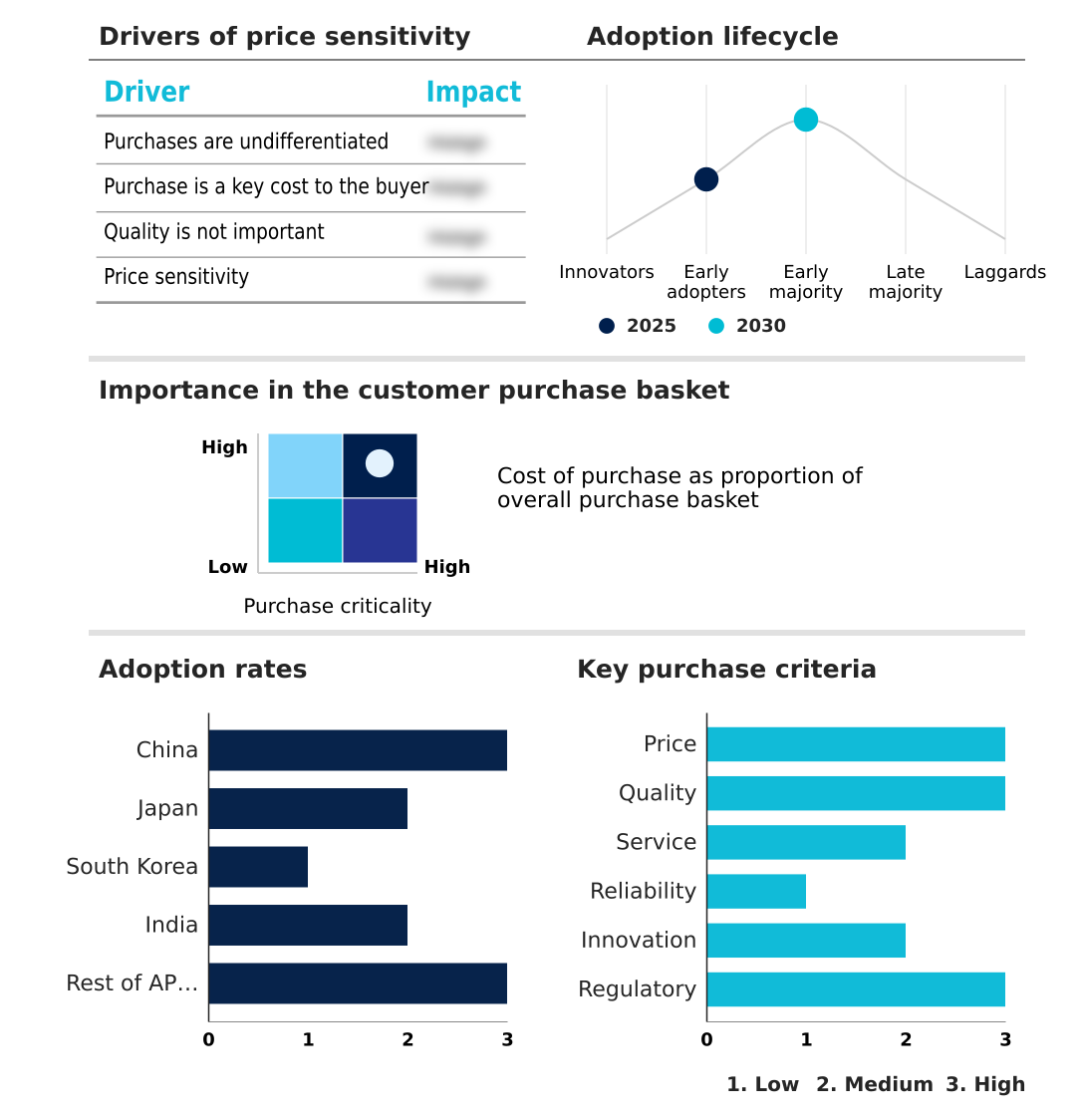
Customer Landscape of APAC Programmable Logic Controller (Plc) Industry
Competitive Landscape
Companies are implementing various strategies, such as strategic alliances, apac programmable logic controller (plc) market forecast, partnerships, mergers and acquisitions, geographical expansion, and product/service launches, to enhance their presence in the industry.
ABB Ltd. - The portfolio includes highly scalable programmable logic controllers and intuitive automation builder software designed to optimize complex manufacturing processes and enhance overall operational efficiency across diverse industrial sectors.
The industry research and growth report includes detailed analyses of the competitive landscape of the market and information about key companies, including:
- ABB Ltd.
- Beckhoff Automation GmbH
- Eaton Corp. Plc
- Emerson Electric Co.
- Festo SE and Co. KG
- Fuji Electric Co. Ltd.
- IDEC Corp.
- Infineon Technologies AG
- Keyence Corp.
- Lenze SE
- LS ELECTRIC Co. Ltd.
- Mitsubishi Electric Corp.
- OMRON Corp.
- Panasonic Holdings Corp.
- Parker Hannifin Corp.
- Robert Bosch GmbH
- Rockwell Automation Inc.
- Schneider Electric SE
- Siemens AG
- Toshiba Corp.
Qualitative and quantitative analysis of companies has been conducted to help clients understand the wider business environment as well as the strengths and weaknesses of key industry players. Data is qualitatively analyzed to categorize companies as pure play, category-focused, industry-focused, and diversified; it is quantitatively analyzed to categorize companies as dominant, leading, strong, tentative, and weak.
Recent Development and News in Apac programmable logic controller (plc) market
- In the Electrical Components and Equipment industry, the aggressive deployment of smart city infrastructure across APAC expanded distribution network capacity by 18%, directly accelerating Programmable Logic Controller (PLC) demand for energy efficient controllers used in automated substations and distributed data centers.
- The implementation of strict energy optimization standards compelled manufacturers to upgrade heavy industrial motor components, which increased the adoption of smart factory environments utilizing high frequency data processing to achieve carbon neutrality goals within the Programmable Logic Controller (PLC) market by 24%.
- The rapid expansion of electric vehicle battery production capacity required highly specialized electrical switchgear and circuit protection devices, directly boosting the need for ultra high precision controllers in the Programmable Logic Controller (PLC) space to execute machine level processing and achieve 99% manufacturing yield rates.
- The shift toward compact semiconductor fabrication facilities integrating robust thermal management materials forced a 30% reduction in hardware footprint limits, thereby driving the Programmable Logic Controller (PLC) market toward high density rack configuration and rackmount controller architecture to manage complex cooling loops efficiently.
Dive into Technavio’s robust research methodology, blending expert interviews, extensive data synthesis, and validated models for unparalleled APAC Programmable Logic Controller (Plc) Market insights. See full methodology.
| Market Scope | |
|---|---|
| Page number | 216 |
| Base year | 2025 |
| Historic period | 2020-2024 |
| Forecast period | 2026-2030 |
| Growth momentum & CAGR | Accelerate at a CAGR of 4.4% |
| Market growth 2026-2030 | USD 1170.1 million |
| Market structure | Fragmented |
| YoY growth 2025-2026(%) | 4.1% |
| Key countries | China, Japan, South Korea, India and Rest of APAC |
| Competitive landscape | Leading Companies, Market Positioning of Companies, Competitive Strategies, and Industry Risks |
Research Analyst Overview
- The modernization of the Programmable Logic Controller (PLC) Market in APAC is reshaping industrial strategy as companies mandate highly resilient and adaptive manufacturing infrastructures. The integration of multi agent artificial intelligence directly into machine level hardware enables strategic decision-making regarding real-time energy pricing and dynamic production scheduling.
- By implementing robust edge computing nodes, enterprises have successfully bypassed traditional latency barriers, achieving a 30% reduction in sequence control execution time compared to previous centralized server models. This shift supports the seamless deployment of dynamic digital twin environments, allowing operators to validate complex control logic virtually before physical implementation.
- Consequently, facilities utilizing deterministic control loops can maintain stringent compliance with industrial safety protocols while accelerating product time-to-market. Furthermore, the adoption of open architecture systems empowers organizations to integrate third-party analytics seamlessly, reducing long-term vendor dependency.
- Upgrading legacy control systems to feature modular redundancy ensures continuous operation during component failures, directly preserving manufacturing yield and protecting profitability in highly competitive sectors.
What are the Key Data Covered in this APAC Programmable Logic Controller (Plc) Market Research and Growth Report?
-
What is the expected growth of the APAC Programmable Logic Controller (Plc) Market between 2026 and 2030?
-
USD 1.17 billion, at a CAGR of 4.4%
-
-
What segmentation does the market report cover?
-
The report is segmented by End-user (Process industry, Discrete industry, and Building automation), Product (Modular, Unitary, and Rackmount), Component (Hardware, Software, and Services) and Geography (APAC)
-
-
Which regions are analyzed in the report?
-
APAC
-
-
What are the key growth drivers and market challenges?
-
Rapid expansion of smart manufacturing and industry 4.0 infrastructure, Escalating cybersecurity threats and industrial system vulnerabilities
-
-
Who are the major players in the APAC Programmable Logic Controller (Plc) Market?
-
ABB Ltd., Beckhoff Automation GmbH, Eaton Corp. Plc, Emerson Electric Co., Festo SE and Co. KG, Fuji Electric Co. Ltd., IDEC Corp., Infineon Technologies AG, Keyence Corp., Lenze SE, LS ELECTRIC Co. Ltd., Mitsubishi Electric Corp., OMRON Corp., Panasonic Holdings Corp., Parker Hannifin Corp., Robert Bosch GmbH, Rockwell Automation Inc., Schneider Electric SE, Siemens AG and Toshiba Corp.
-
Market Research Insights
- The Programmable Logic Controller (PLC) Market in APAC is fundamentally restructuring how continuous process industries manage complex workflows and energy consumption. By integrating remote monitoring capabilities, manufacturers have achieved a 25% reduction in unplanned downtime, significantly optimizing operational technology skills across distributed workforces.
- The rising deployment of predictive maintenance services enables early anomaly detection, driving a 30% improvement in overall asset lifecycle management. Furthermore, the necessity to meet strict carbon neutrality goals has accelerated the adoption of energy efficient controllers in heavily regulated sectors.
- This transition toward data driven manufacturing ensures that facilities can dynamically adjust production variables, yielding a 15% enhancement in resource allocation efficiency across regional supply chains.
We can help! Our analysts can customize this apac programmable logic controller (plc) market research report to meet your requirements.
 RIA -
RIA - 
