



Prosthetic Heart Valves Market Size 2024-2028
The prosthetic heart valves market size is forecast to increase by USD 4.83 billion at a CAGR of 10.03% between 2023 and 2028.
- The market is experiencing significant growth due to the rising prevalence of heart disorders, particularly among the geriatric population. This trend is driven by the increasing incidence of cardiovascular diseases and the subsequent need for heart valve replacement. Another trend influencing the market is the development of MRI-conditional heart valves, which enable patients to undergo magnetic resonance imaging procedures without the risk of valve damage. However, complications associated with prosthetic heart valve replacement, such as blood clots and the need for long-term anticoagulation therapy, pose challenges to market growth. Additionally, factors like medical tourism, the adoption of minimally invasive procedures, and the increasing availability of skilled healthcare professionals are shaping the market dynamics. Furthermore, advancements in wearable devices and telemedicine are enabling remote monitoring and early detection of valve-related issues, improving patient outcomes and reducing healthcare costs.
What will be the Size of the Prosthetic Heart Valves Market During the Forecast Period?
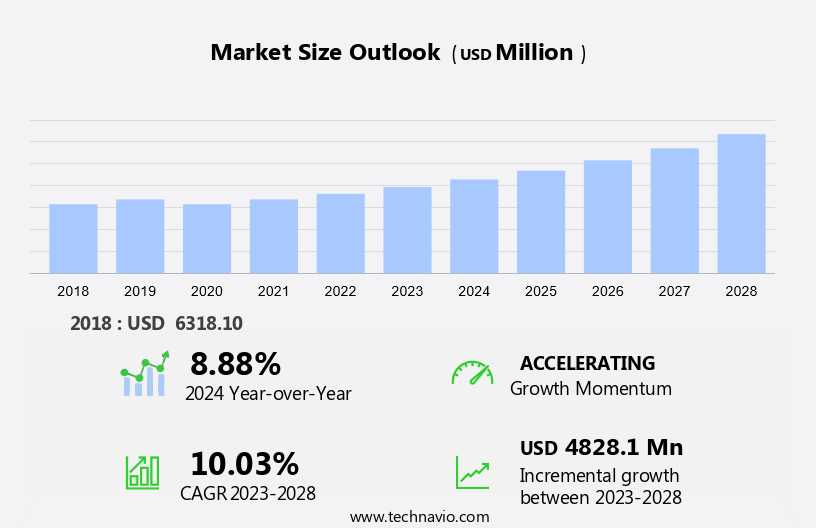
- The market represents a significant segment in the medical technology industry, catering to the demand for solutions addressing various cardiovascular diseases, particularly valvular heart diseases. This market is driven by several factors, including an aging population, increasing prevalence of cardiovascular diseases, and advancements in medical technology. Cardiovascular diseases, including heart valve diseases such as mitral valve insufficiency and mitral regurgitation, pose a substantial health risk to the population. According to the American Heart Association, heart disease is the leading cause of death In the US. They are essential medical devices used to replace damaged or diseased heart valves, ensuring proper blood flow within the heart.
- The market encompasses various types, including mechanical heart valves and biological valves. Mechanical heart valves are typically made of materials like titanium and are known for their durability, while biological valves are derived from animal tissue or human donor tissue. Both types cater to specific patient needs, with mechanical valves offering longer lifespans but requiring regular anticoagulation and biological valves more closely mimicking the natural heart valve. Advancements in medical technology have led to the emergence of minimally invasive surgical interventions and transcatheter heart valve replacement procedures. These innovations have made heart valve replacement surgeries less invasive and more accessible to a broader patient population.
How is this Prosthetic Heart Valves Industry segmented and which is the largest segment?
The industry research report provides comprehensive data (region-wise segment analysis), with forecasts and estimates in "USD billion" for the period 2024-2028, as well as historical data from 2018-2022 for the following segments.
- Product
- Transcatheter heart valves
- Tissue heart valves
- Mechanical heart valves
- Geography
- North America
- Canada
- US
- Europe
- Germany
- UK
- Asia
- China
- Rest of World (ROW)
- North America
By Product Insights
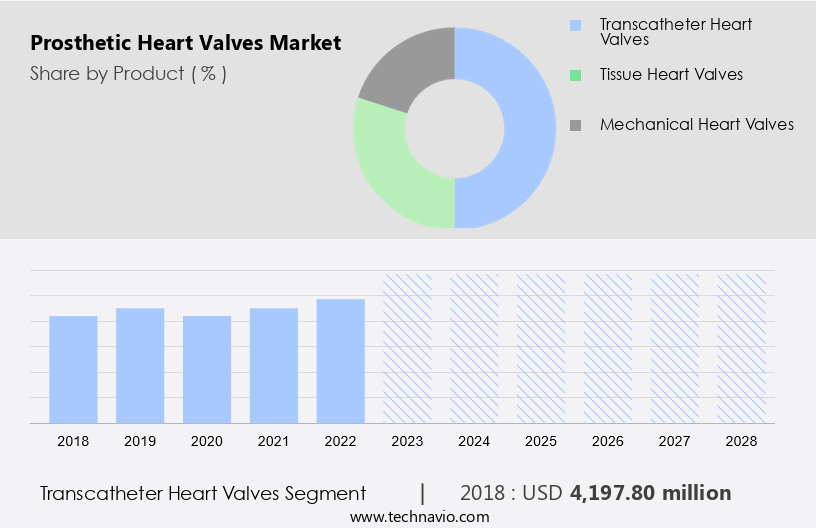
- The transcatheter heart valves segment is estimated to witness significant growth during the forecast period.
The global market is experiencing significant growth due to the increasing prevalence of heart valve diseases, particularly among the geriatric population. Approximately 5% of the world's population aged 65 and above are at risk of developing valvular heart diseases, such as mitral regurgitation and aortic stenosis. As people age, heart muscles lose elasticity, making it more challenging for them to manage different blood pressure rates. This results In the need for replacement or repair procedures. Moreover, advancements in medical technology have led to minimally invasive procedures, wearable devices, and telemedicine, which have increased accessibility to healthcare services.
These innovations have contributed to the growth of the market, making procedures more convenient and less invasive for patients. Skilled healthcare professionals are also increasingly using titanium and carbon prosthetic heart valves due to their durability and effectiveness in preventing blood clots. Medical tourism is another factor driving the growth of the market, as patients travel to countries with advanced healthcare facilities and lower costs for treatment. The market is expected to continue growing as more people require heart valve procedures due to aging populations and the rising prevalence of heart valve diseases.
Get a glance at the market report of share of various segments Request Free Sample
The Transcatheter heart valve segment was valued at USD 4.2 billion in 2018 and showed a gradual increase during the forecast period.
Regional Analysis
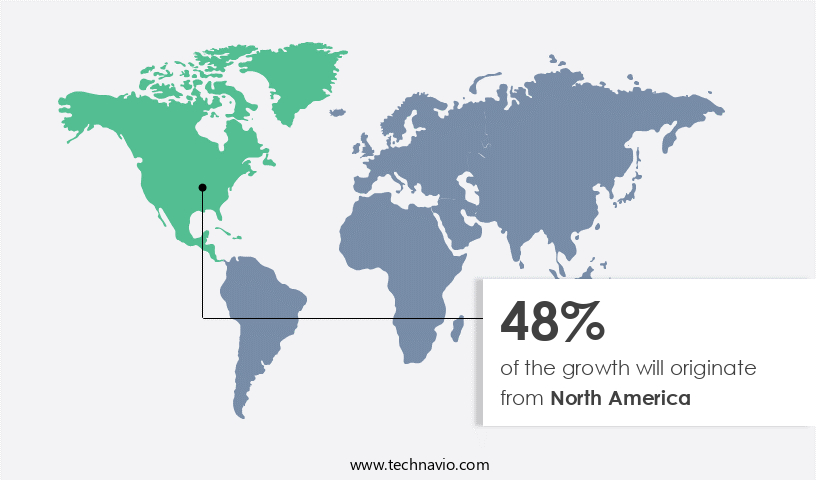
- North America is estimated to contribute 48% to the growth of the global market during the forecast period.
Technavio's analysts have elaborately explained the regional trends and drivers that shape the market during the forecast period.
For more insights on the market size of various regions, Request Free Sample
The North American market is experiencing notable expansion due to the elevated incidence of heart conditions, including heart valve diseases such as aortic regurgitation and mitral regurgitation. Factors contributing to this growth include the increasing adoption of minimally invasive (MI) procedures, the rising number of elderly individuals, and the preference for suture-less tissue valves. These valves mimic the natural flow of blood, ensuring their durability and popularity. Key market participants have been instrumental in introducing innovative products, further fueling market development. The older adult population's growth is a significant factor, as heart valve diseases are more common in this demographic.
Regulatory approvals for advanced heart valve technologies and the increasing use of pacemakers and medication to manage heart conditions also contribute to the market's expansion.
Market Dynamics
Our researchers analyzed the data with 2023 as the base year, along with the key drivers, trends, and challenges. A holistic analysis of drivers will help companies refine their marketing strategies to gain a competitive advantage.
What are the key market drivers leading to the rise In the adoption of Prosthetic Heart Valves Industry?
The growing prevalence of heart-related disorders is the key driver of the market.
- Heart valve diseases, primarily affecting the elderly population, continue to pose a significant health concern worldwide. These conditions, including cardio valvular diseases and valvular heart failure, result in an increased need for prosthetic heart valves. Complications such as prosthetic valve thrombosis, mechanical hemolytic anemia, prosthetic valve endocarditis, and thromboembolism further fuel market growth. Additionally, clinical complications like stroke, rhythm disorders, congenital heart disease, subclinical atherosclerosis, heart failure, and peripheral arterial disease contribute to the rising demand for cardiac prosthetic devices.
- Furthermore, the obstruction in blood flow due to these conditions necessitates the use of prosthetic heart valves. Approximately one million newborns are diagnosed with congenital heart disease (CHD) each year, emphasizing the importance of addressing heart valve disorders. Public health programs and patient advocacy groups play a crucial role in raising awareness and promoting access to medical technology, including minimally invasive surgeries for heart valve operations.
What are the market trends shaping the Prosthetic Heart Valves Industry?
The emergence of MRI-conditional heart valves is the upcoming market trend.
- The advancements in heart valve repair and replacement technology continue to shape the market. Patients with cardiovascular diseases, particularly those suffering from valvular heart disease, stand to benefit significantly from these innovations. Over the past few decades, the prosthetic heart valve industry has witnessed numerous developments to cater to the unmet needs of patients. As a result, companies have invested substantially in research and development, leading to the introduction of MRI-conditional heart valves. These valves enable clearer visualization of the heart valve during diagnostic procedures, enhancing the accuracy and effectiveness of treatments. They come in various forms, including mechanical heart valves, tissue heart valves, and transcatheter heart valves.
- Mechanical valves, known for their durability and longevity, are preferred for their ability to withstand the high pressures within the heart. Tissue heart valves, on the other hand, mimic the natural function of the heart valve and are suitable for patients who cannot tolerate mechanical valves. Transcatheter heart valves offer a minimally invasive alternative to traditional surgical procedures, making them an attractive option for many patients. Innovations in technology, such as 3D printing, have played a crucial role In the evolution of prosthetic heart valves. These advancements have led to the creation of more efficient, cost-effective, and customizable solutions.
What challenges does the Prosthetic Heart Valves Industry face during its growth?
Complications associated with prosthetic heart valve replacement is a key challenge affecting the industry growth.
- The use of prosthetic heart valves is a common solution for individuals with damaged valves. However, the implantation process carries potential complications that hinder market expansion. Acute complications following heart valve replacement are prevalent, including bleeding, infections, pneumonia, breathing difficulties, arrhythmias, and blood clots leading to heart attacks, strokes, or lung disorders. These complications can arise during or post-surgery and significantly impact patient health. Transcatheter aortic valve implantation (TAVI), a minimally invasive procedure, also comes with serious complications. These include vascular injuries, strokes, structural damage to the aorta and heart valve, tissue injuries, paravalvular leaks, aortic root or annulus injuries, and valve malposition.
- These complications can lead to long-term health issues and increased healthcare costs. Disease risk factors, such as age, genetics, and underlying health conditions, contribute to the occurrence of these complications. Healthcare policies and insurance coverage play a significant role in determining access to prosthetic heart valves and related treatments. Allergic conditions, including anaphylaxis, can also pose challenges during the implantation process, necessitating the use of auto-injectors for emergency medication administration. Urbanization and its associated lifestyle factors can increase the prevalence of heart valve diseases and the need for prosthetic valves. In the face of these challenges, ongoing research and advancements in clinical indications and treatment methods aim to improve patient outcomes and reduce complications.
Exclusive Customer Landscape
The market forecasting report includes the adoption lifecycle of the market, covering from the innovator's stage to the laggard's stage. It focuses on adoption rates in different regions based on penetration. Furthermore, the market report also includes key purchase criteria and drivers of price sensitivity to help companies evaluate and develop their market growth analysis strategies.
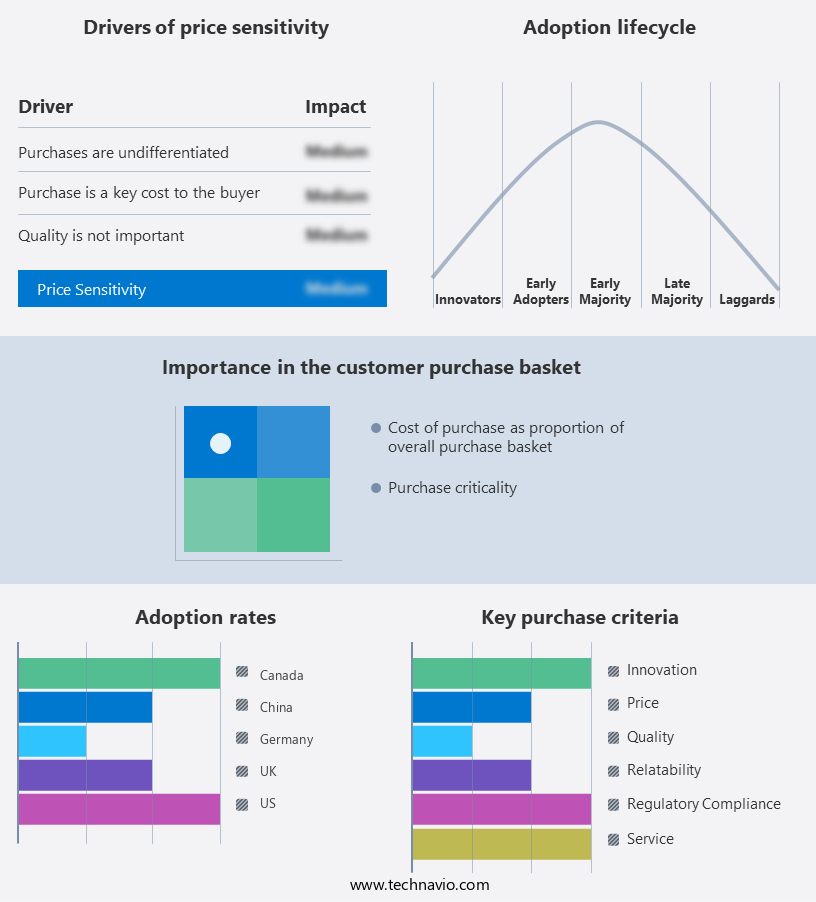
Customer Landscape
Key Companies & Market Insights
Companies are implementing various strategies, such as strategic alliances, market forecast, partnerships, mergers and acquisitions, geographical expansion, and product/service launches, to enhance their presence In the industry.
The industry research and growth report includes detailed analyses of the competitive landscape of the market and information about key companies, including:
- Abbott Laboratories
- Anteris Technologies Ltd.
- Artivion Inc.
- Boston Scientific Corp.
- Braile Biomedica
- Colibri Heart Valve LLC
- Cryolife Inc.
- Edwards Lifesciences Corp.
- Foldax, Inc.
- Jc Medical Inc.
- JenaValve Technology Inc.
- Labcor Laboratorios Ltda.
- Lepu Medical Technology Beijing Co. Ltd.
- LivaNova PLC
- Medtronic Plc
- Meril Life Sciences Pvt. Ltd.
- Micro Interventional Devices Inc.
- MicroPort Scientific Corp.
- TTK Healthcare Ltd.
Qualitative and quantitative analysis of companies has been conducted to help clients understand the wider business environment as well as the strengths and weaknesses of key industry players. Data is qualitatively analyzed to categorize companies as pure play, category-focused, industry-focused, and diversified; it is quantitatively analyzed to categorize companies as dominant, leading, strong, tentative, and weak.
Research Analyst Overview
Prosthetic heart valves are medical devices designed to replace damaged or diseased heart valves. These valves help maintain proper blood flow between the heart's chambers and the aorta, preventing conditions such as aortic stenosis and aortic regurgitation. The global market is witnessing significant growth due to the increasing prevalence of cardiovascular diseases, particularly valvular heart disease, In the aging population. Mechanical valves, made of materials like titanium and carbon, offer durability but require lifelong use of anticoagulant medications to prevent blood clots. Tissue valves, derived from biological sources, are more biocompatible but may degenerate over time.
Furthermore, advancements in medical technology include 3D printing, catheter-based procedures, and minimally invasive surgeries, making heart valve operations more accessible and less invasive for patients. Telemedicine, wearable devices, and skilled healthcare professionals also contribute to improved patient care. Regulatory approvals, disease risk factors, healthcare policies, and patient advocacy groups play crucial roles in driving market growth. Challenges include the risk of infections, allergic conditions, and anaphylaxis. The future lies in innovative solutions like bioengineered valves and pacemaker integration. The global market is expected to grow significantly due to the increasing burden of heart valve diseases, the aging population, and advancements in medical technology.
|
Market Scope |
|
|
Report Coverage |
Details |
|
Page number |
147 |
|
Base year |
2023 |
|
Historic period |
2018-2022 |
|
Forecast period |
2024-2028 |
|
Growth momentum & CAGR |
Accelerate at a CAGR of 10.03% |
|
Market Growth 2024-2028 |
USD 4.83 billion |
|
Market structure |
Fragmented |
|
YoY growth 2023-2024(%) |
8.88 |
|
Key countries |
US, Germany, UK, China, and Canada |
|
Competitive landscape |
Leading Companies, Market Positioning of Companies, Competitive Strategies, and Industry Risks |
What are the Key Data Covered in this Market Research and Growth Report?
- CAGR of the industry during the forecast period
- Detailed information on factors that will drive the market growth and forecasting between 2024 and 2028
- Precise estimation of the size of the market and its contribution of the industry in focus to the parent market
- Accurate predictions about upcoming growth and trends and changes in consumer behaviour
- Growth of the market across North America, Europe, Asia, and Rest of World (ROW)
- Thorough analysis of the market's competitive landscape and detailed information about companies
- Comprehensive analysis of factors that will challenge the market growth of industry companies
We can help! Our analysts can customize this market research report to meet your requirements.
 RIA -
RIA - 
