
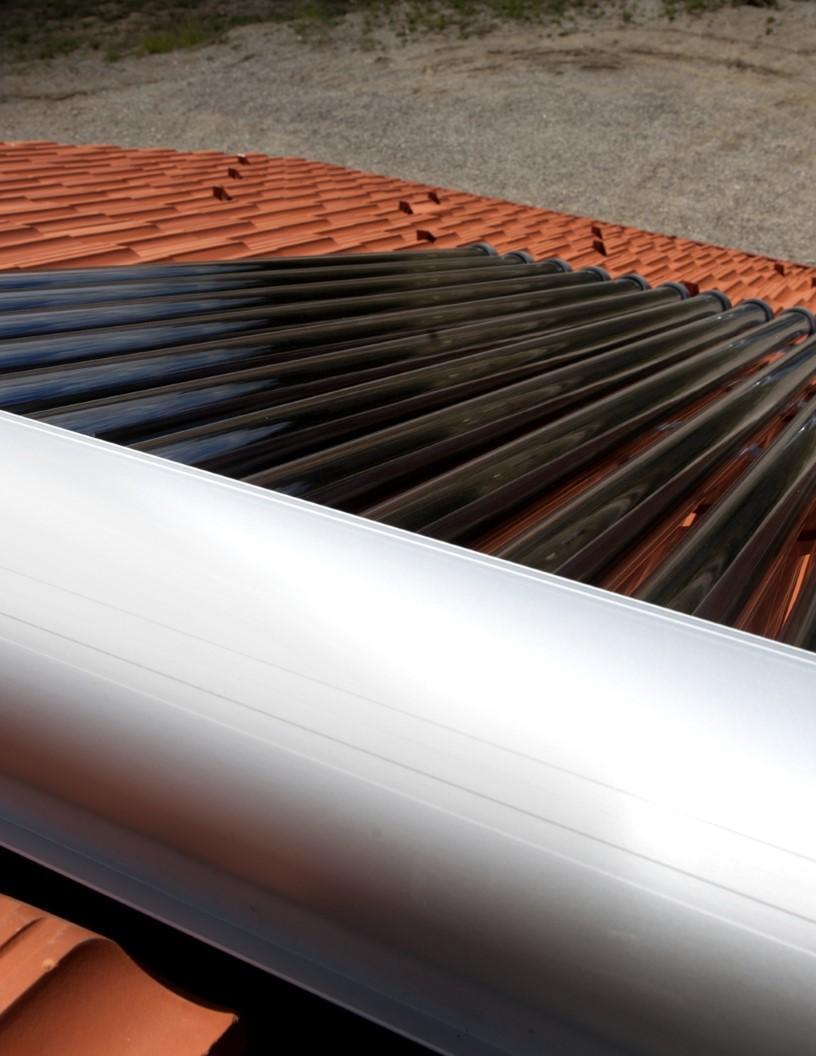


Reflective Thermal Insulation Coatings Market Size 2024-2028
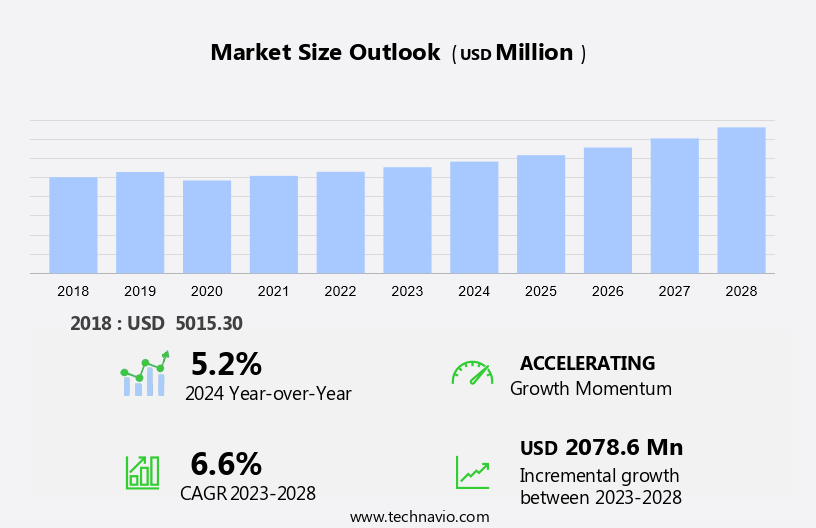
The reflective thermal insulation coatings market size is forecast to increase by USD 2.08 billion at a CAGR of 6.6% between 2023 and 2028.
- Reflective thermal insulation coatings have gained significant traction in the building and construction industry due to rising energy costs and the need for energy efficiency. These coatings reflect solar radiation, thereby reducing the amount of heat absorbed by buildings, leading to energy savings. Advancements in reflective thermal insulation coatings have resulted in improved performance and durability, making them a popular choice for both new and existing structures. Building insulation properties are enhanced, as these coatings act as a passive cooling technique, complementing traditional energy storage methods. However, seasonal performance variability of reflective coatings can impact their effectiveness, necessitating careful consideration and selection based on local climate conditions. Proper application and maintenance are also crucial to ensuring the coatings deliver optimal energy savings and insulation benefits. In summary, the market is driven by the need to reduce energy consumption and costs, with advancements in technology addressing performance concerns, while the challenge of seasonal variability necessitates careful selection and application.
What will be the Size of the Reflective Thermal Insulation Coatings Market During the Forecast Period?
- The market encompasses heat-reflective products designed for exterior envelope walls, offering significant benefits in both hot summer and cold winter climates. These coatings reflect solar radiation intensity, reducing heat absorption and subsequent wall temperature changes, thereby improving indoor thermal comfort. By employing reflective coatings, buildings can save on air-conditioning electricity usage and overall energy consumption, contributing to increased energy efficiency and carbon dioxide emissions reduction. The market's growth is driven by the increasing focus on reducing anthropogenic heat emissions and enhancing the overall thermal performance of buildings, particularly in coastal areas and regions with extreme climate conditions.
- In addition, comparative experiments using test rooms and experimental apparatus provide valuable heat flux data, validating the practical application of reflective coatings as an effective solution for optimizing building thermal behavior. Non-insulated ordinary paint alternatives require minimal preparation, making reflective thermal insulation coatings an attractive, cost-effective choice for enhancing a building's energy efficiency.
How is this Reflective Thermal Insulation Coatings Industry segmented and which is the largest segment?
The reflective thermal insulation coatings industry research report provides comprehensive data (region-wise segment analysis), with forecasts and estimates in "USD billion" for the period 2024-2028, as well as historical data from 2018-2022 for the following segments.
- Type
- Acrylic
- Epoxy and silicone
- Polyurethane
- Others
- End-user
- Building and construction
- Industrial
- Automotive and OEM
- Aerospace and defense
- Others
- Geography
- APAC
- China
- Japan
- North America
- US
- Europe
- Germany
- UK
- Middle East and Africa
- South America
- APAC
By Type Insights
- The acrylic segment is estimated to witness significant growth during the forecast period.
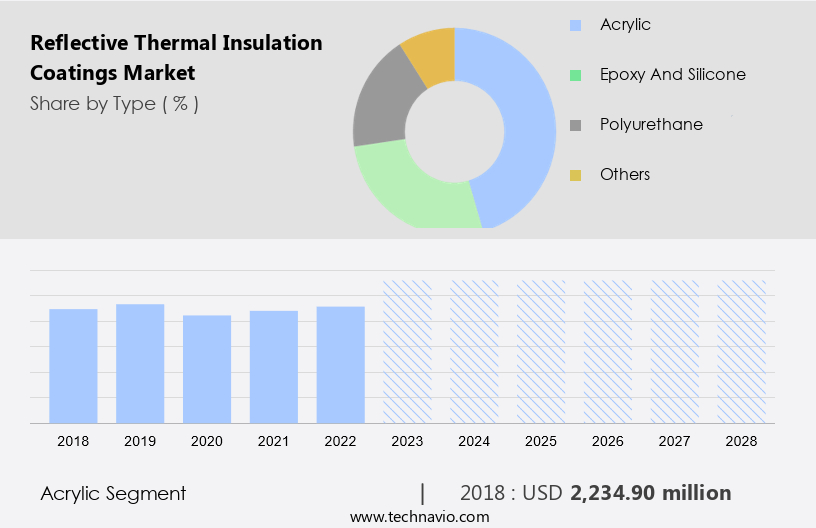
The market encompasses various types, with acrylic-based coatings holding a substantial share due to their flexibility, durability, and resistance to environmental factors like moisture and UV radiation. Acrylic surface coatings, primarily composed of a water-based elastic acrylic emulsion, form a protective film that enhances building energy efficiency by maintaining consistent indoor temperatures. A notable product in this category is FlexThermaCoat, an advanced water-based acrylic-latex coating suitable for roofs, walls, and similar surfaces. This coating offers superior thermal insulation, contributing to energy savings by reducing air-conditioning electricity usage and lowering building energy consumption. The coatings' high reflectivity towards solar radiation and low thermal conductivity further improve their energy-saving capabilities.
Get a glance at the Reflective Thermal Insulation Coatings Industry report of share of various segments Request Free Sample
The acrylic segment was valued at USD 2.23 billion in 2018 and showed a gradual increase during the forecast period.
Regional Analysis
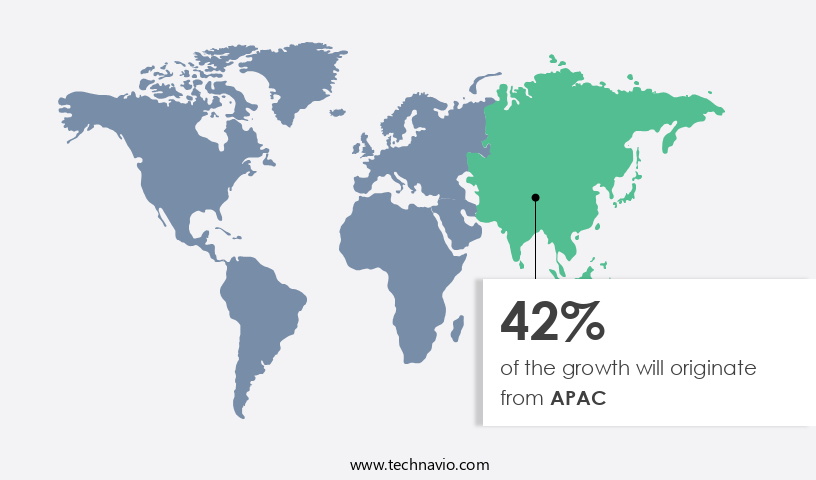
- APAC is estimated to contribute 42% to the growth of the global market during the forecast period.
Technavio's analysts have elaborately explained the regional trends and drivers that shape the market during the forecast period.
For more insights on the market share of various regions, Request Free Sample
The APAC region, specifically the Association of Southeast Asian Nations (ASEAN), contributes significantly to global efforts in decarbonizing the economy, with buildings accounting for approximately 25% of the region's total energy consumption and CO2 emissions. With economic development, urbanization, and population growth, the International Energy Agency (IEA) projects that energy consumption and CO2 emissions in buildings will continue to increase without intervention. Enhancing the energy efficiency of building envelopes and systems is crucial to mitigate this issue. Reflective thermal insulation coatings offer a solution by reducing cooling loads, improving energy efficiency, and promoting sustainability. These coatings, which include heat-reflective pigments, fillers, and auxiliary agents, form a high-efficiency reflective sunlight barrier with low thermal conductivity.
Market Dynamics
Our researchers analyzed the data with 2023 as the base year, along with the key drivers, trends, and challenges. A holistic analysis of drivers will help companies refine their marketing strategies to gain a competitive advantage.
What are the key market drivers leading to the rise In the adoption of Reflective Thermal Insulation Coatings Industry?
Rising energy costs is the key driver of the market.
- Reflective thermal insulation coatings have gained significant attention In the global market due to rising energy costs and the need for energy efficiency. These coatings, which reflect solar radiation, play a vital role in reducing cooling loads, particularly in regions with hot summers. In experimental apparatus and test rooms, reflective coatings have demonstrated the ability to decrease cooling loads by up to 93%, leading to substantial electricity savings during peak periods. The thermal performance of these coatings is essential for maintaining indoor thermal comfort and reducing building energy consumption. The coatings' heat reflectivity, solar infrared reflectivity, and ultravariant ray reflectivity contribute to their energy-saving properties.
- Moreover, the coatings' base-material, which may include heat reflection pigments, filler, and auxiliary agents, enhances their heat preservation capabilities. High-efficiency reflective sunlight, often achieved through a thin layer, is a key feature of these insulating reflecting coatings. The coatings' hemispherical emissivity and solar reflectivity are crucial factors In their thermal behavior. Additionally, these coatings offer benefits such as waterproofing, antiseep, hydrophobicity, self-cleaning properties, and energy conservation. Comparative experiments have shown that reflective coatings outperform non-insulated ordinary paint, making them a practical application for improving building insulation properties. The coatings' carbon dioxide emissions and anthropogenic heat emissions are significantly lower than those of traditional insulation materials.
What are the market trends shaping the Reflective Thermal Insulation Coatings Industry?
Advancements in reflective thermal insulation coatings is the upcoming market trend.
- The market is experiencing notable growth due to the increasing focus on energy efficiency and reducing building energy consumption, particularly in extreme climates. A recent development in this field comes from researchers at the Indian Institute of Technology Bombay, who introduced a hydrophobic epoxy composite coating in January 2024. This innovative coating material effectively reflects solar heat, thereby reducing heat absorption and enhancing thermal insulation properties. The coating's advanced fillers contribute to its superior thermal performance. The first filler is micron-sized silica-modified hollow microspheres (sHMS), which minimize heat conduction. The second filler consists of surface-modified TiO2 nanoparticles, renowned for their high solar reflectance.
- Furthermore, these coatings can significantly reduce air-conditioning electricity usage and decrease carbon dioxide emissions, making them an attractive solution for both hot summer and cold winter climates. The coating's energy-saving capabilities are achieved through its high-efficiency reflective sunlight property, which is a thin layer that can be applied to exterior envelope walls. The material's self-cleaning property, waterproof, and antiseptic qualities further add to its appeal. The reflective coatings' solar infrared and ultraviolet ray reflectivity, as well as their hemispherical emissivity, contribute to the material's cooling effect. The coatings' thermal conductivity is also reduced due to the use of cenospheres, ensuring a constant temperature.
What challenges does the Reflective Thermal Insulation Coatings Industry face during its growth?
Seasonal performance variability of reflective coatings is a key challenge affecting the industry growth.
- Reflective thermal insulation coatings offer energy efficiency benefits by reflecting solar radiation during hot summer months, reducing the need for air-conditioning and lowering building energy consumption. However, during cold winter seasons, these coatings can result in increased heating requirements due to reduced solar energy absorption, leading to higher energy costs and carbon dioxide emissions. Climate significantly influences the performance of reflective coatings, as they provide substantial cooling savings in hot climates but may result in increased heating penalties in colder regions. To evaluate the thermal performance of reflective coatings, experimental apparatus in test rooms are used to collect heat flux data and monitor wall temperature changes.
- Furthermore, the coatings' ability to save energy and reduce air-conditioning electricity usage contributes to improved building energy efficiency and decreased anthropocentric heat emissions. Reflective coatings consist of a base-material, heat reflection pigment, filler, and auxiliary agents. High-efficiency reflective sunlight is achieved through the use of thin layers and insulating reflecting coatings, which enhance sun reflectivity and hemispherical emissivity. These coatings also offer additional benefits, such as waterproof, antiseptic, hydrophobicity, self-cleaning properties, and energy-saving properties. Core-shell emulsions and grafting mechanisms are used In their preparation. The market for reflective thermal insulation coatings continues to grow due to the increasing importance of energy conservation and passive cooling techniques in the construction industry.
Exclusive Customer Landscape
The reflective thermal insulation coatings market forecasting report includes the adoption lifecycle of the market, covering from the innovator's stage to the laggard's stage. It focuses on adoption rates in different regions based on penetration. Furthermore, the reflective thermal insulation coatings market report also includes key purchase criteria and drivers of price sensitivity to help companies evaluate and develop their market growth analysis strategies.

Customer Landscape
Key Companies & Market Insights
Companies are implementing various strategies, such as strategic alliances, reflective thermal insulation coatings market forecast, partnerships, mergers and acquisitions, geographical expansion, and product/service launches, to enhance their presence in the industry.
The industry research and growth report includes detailed analyses of the competitive landscape of the market and information about key companies, including:
- Akzo Nobel NV
- Asian Paints Ltd.
- Axalta Coating Systems Ltd.
- BASF SE
- Benjamin Moore and Co.
- Berger Paints India Ltd
- Cloverdale Paint Inc.
- DAW SE
- Hempel AS
- Jotun AS
- Kansai Paint Co. Ltd.
- Mascoat
- NATIONAL PAINTS FACTORIES CO. LTD
- Nippon Paint Holdings Co. Ltd.
- PPG Industries Inc.
- RPM International Inc.
- Teknos Group Oy
- The Sherwin Williams Co.
- Tikkurila OYJ
- Zhongshan Weiershun Paint Co Ltd
Qualitative and quantitative analysis of companies has been conducted to help clients understand the wider business environment as well as the strengths and weaknesses of key industry players. Data is qualitatively analyzed to categorize companies as pure play, category-focused, industry-focused, and diversified; it is quantitatively analyzed to categorize companies as dominant, leading, strong, tentative, and weak.
Research Analyst Overview
Reflective thermal insulation coatings have gained significant attention In the construction industry due to their ability to enhance the energy efficiency of exterior envelope walls. These coatings are particularly beneficial in both hot summer and cold winter climates, as they help regulate indoor thermal comfort by reflecting solar radiation and reducing heat transfer. The background technology of reflective thermal insulation coatings involves the use of heat reflection pigments, fillers, and auxiliary agents. The base-material is typically a thin layer that adheres well to various substrates. The heat reflection pigments are responsible for high-efficiency reflectivity under both sunlight and infrared radiation.
Moreover, the fillers and auxiliary agents enhance the coating's properties, such as waterproofing, antiseep, and hydrophobicity. The practical application of reflective thermal insulation coatings lies In their ability to save energy by reducing air-conditioning electricity usage and overall building energy consumption. By reflecting solar radiation, the coatings help maintain a constant temperature on the exterior wall, which in turn reduces the amount of heat that enters the building. This passive cooling technique contributes to energy conservation, making it an attractive option for coastal areas where high solar radiation intensity is prevalent. Comparative experiments have shown that reflective thermal insulation coatings outperform non-insulated ordinary paint in terms of thermal performance.
In addition, the coatings' sun reflectivity and hemispherical emissivity are crucial factors In their energy-saving capabilities. The solar infrared reflectivity helps prevent heat absorption, while the hemispherical emissivity ensures that the coating releases absorbed heat efficiently. The technical field of reflective thermal insulation coatings is continually evolving, with advancements in technology leading to improvements in coating properties. For instance, core-shell emulsions and grafting mechanisms have been developed to enhance the coating's self-cleaning property and ionic bonding mechanism, respectively. Their ability to reflect solar radiation and reduce heat transfer makes them a valuable tool In the quest for sustainable and energy-efficient buildings. As the demand for eco-friendly and cost-effective solutions continues to grow, reflective thermal insulation coatings are poised to play a crucial role In the future of building insulation properties.
|
Market Scope |
|
|
Report Coverage |
Details |
|
Page number |
221 |
|
Base year |
2023 |
|
Historic period |
2018-2022 |
|
Forecast period |
2024-2028 |
|
Growth momentum & CAGR |
Accelerate at a CAGR of 6.6% |
|
Market growth 2024-2028 |
USD 2.08 billion |
|
Market structure |
Fragmented |
|
YoY growth 2023-2024(%) |
5.2 |
|
Key countries |
US, China, Japan, Germany, and UK |
|
Competitive landscape |
Leading Companies, market growth and forecasting, Market Positioning of Companies, Competitive Strategies, and Industry Risks |
What are the Key Data Covered in this Reflective Thermal Insulation Coatings Market Research and Growth Report?
- CAGR of the Reflective Thermal Insulation Coatings industry during the forecast period
- Detailed information on factors that will drive the growth and forecasting between 2024 and 2028
- Precise estimation of the size of the market and its contribution of the industry in focus to the parent market
- Accurate predictions about upcoming growth and trends and changes in consumer behaviour
- Growth of the market across APAC, North America, Europe, Middle East and Africa, and South America
- Thorough analysis of the market's competitive landscape and detailed information about companies
- Comprehensive analysis of factors that will challenge the reflective thermal insulation coatings market growth of industry companies
We can help! Our analysts can customize this reflective thermal insulation coatings market research report to meet your requirements.
 RIA -
RIA - 
