
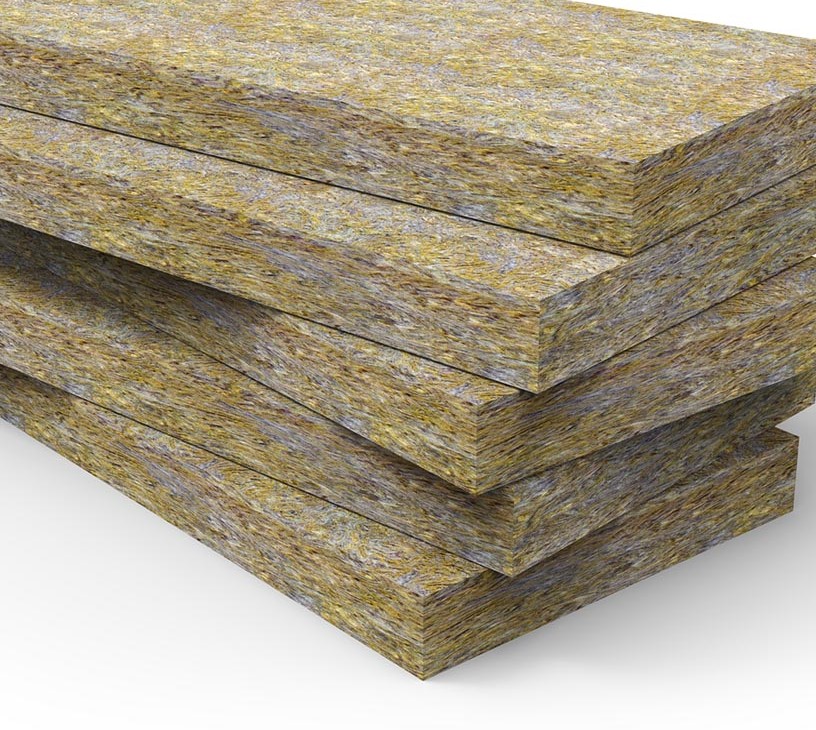


Basalt Fiber Market Size 2025-2029
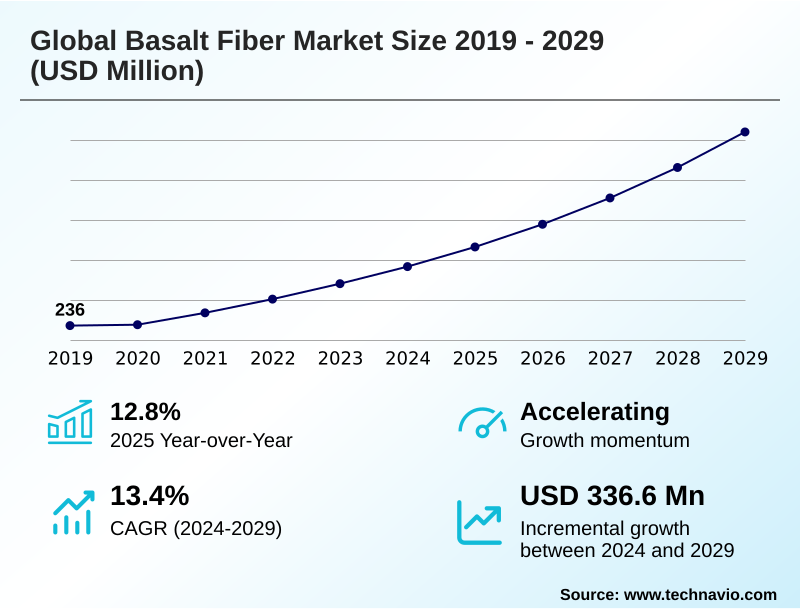
The basalt fiber market size is valued to increase by USD 336.6 million, at a CAGR of 13.4% from 2024 to 2029. Increase in renewable energy projects will drive the basalt fiber market.
Major Market Trends & Insights
- APAC dominated the market and accounted for a 45.5% growth during the forecast period.
- By Application - Composites segment was valued at USD 243.1 million in 2023
- By End-user - Construction and infrastructure segment accounted for the largest market revenue share in 2023
Market Size & Forecast
- Market Opportunities: USD 484.1 million
- Market Future Opportunities: USD 336.6 million
- CAGR from 2024 to 2029 : 13.4%
Market Summary
- The Basalt Fiber Market is defined by the increasing adoption of this high-performance material across construction, automotive, and renewable energy sectors. Characterized by exceptional high tensile strength, inherent corrosion resistance, and thermal stability, basalt fiber offers a superior alternative to traditional materials.
- A key driver is the global push for sustainable construction materials and automotive lightweighting, where basalt fiber composites contribute to energy efficiency and structural longevity. For instance, an infrastructure asset manager evaluating materials for a coastal bridge project may select basalt fiber rebar over conventional steel.
- This decision would be based on lifecycle cost analysis showing a significant reduction in future maintenance expenses due to the material's immunity to corrosion. The market is also propelled by innovations in basalt fiber manufacturing, which are making products like basalt roving and chopped strands more cost-competitive.
- However, challenges related to the intricate melt-spinning process and ensuring consistent quality from variable raw basalt rock sources can temper growth. The trend toward using this eco-friendly material for structural reinforcement in demanding environments continues to create new opportunities for the basalt fiber market.
What will be the Size of the Basalt Fiber Market during the forecast period?
Get Key Insights on Market Forecast (PDF) Get Free Sample
How is the Basalt Fiber Market Segmented?
The basalt fiber industry research report provides comprehensive data (region-wise segment analysis), with forecasts and estimates in "USD million" for the period 2025-2029, as well as historical data from 2019-2023 for the following segments.
- Application
- Composites
- Non-composites
- End-user
- Construction and infrastructure
- Automotive and transportation
- Wind energy
- Others
- Form factor
- Continuous basalt fiber
- Discrete basalt fiber
- Geography
- APAC
- China
- Japan
- India
- North America
- US
- Canada
- Mexico
- Europe
- Germany
- France
- UK
- South America
- Brazil
- Argentina
- Colombia
- Middle East and Africa
- Saudi Arabia
- UAE
- South Africa
- Rest of World (ROW)
- APAC
By Application Insights
The composites segment is estimated to witness significant growth during the forecast period.
The composites segment is pivotal, driven by demand for advanced materials in demanding applications. The use of basalt fiber composites, which incorporate materials from thermoplastic resins to cementitious matrices, is expanding.
These composites offer superior structural reinforcement in applications from automotive components to construction. The adoption of chopped strands as an additive and basalt fiber mesh for roadway reinforcement showcases the material's versatility.
Advances in furnace technology are improving production efficiency for these lightweight composite materials.
As industries prioritize sustainable construction materials and infrastructure durability, basalt fiber's role is growing, although its use in construction remains about one-third that of glass and steel fibers, indicating significant potential for market penetration in areas like pultruded products and basalt fiber concrete reinforcement.
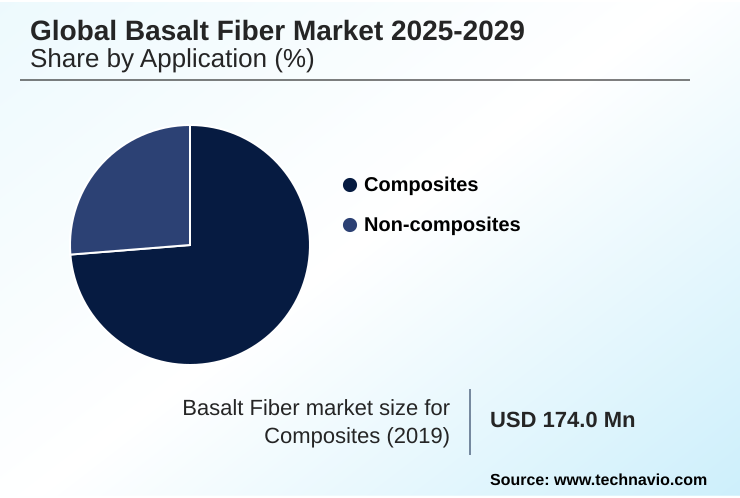
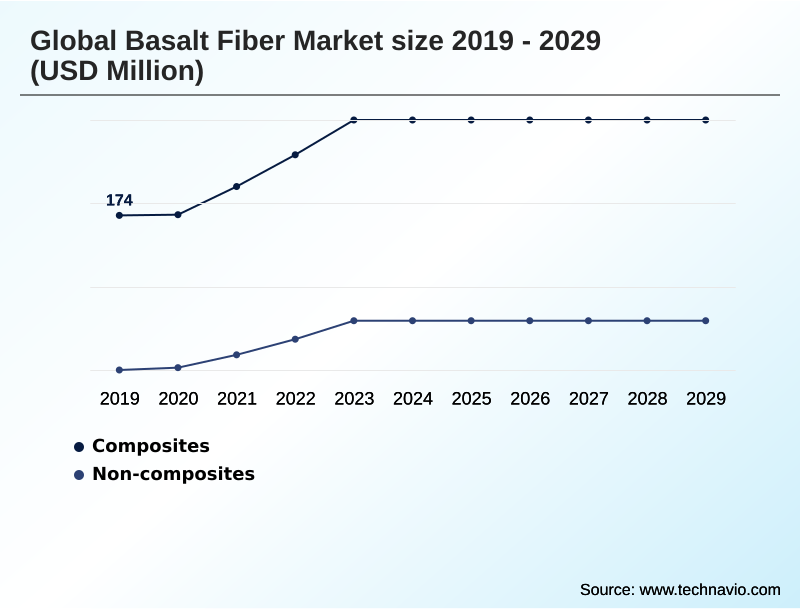
The Composites segment was valued at USD 243.1 million in 2023 and showed a gradual increase during the forecast period.
Regional Analysis
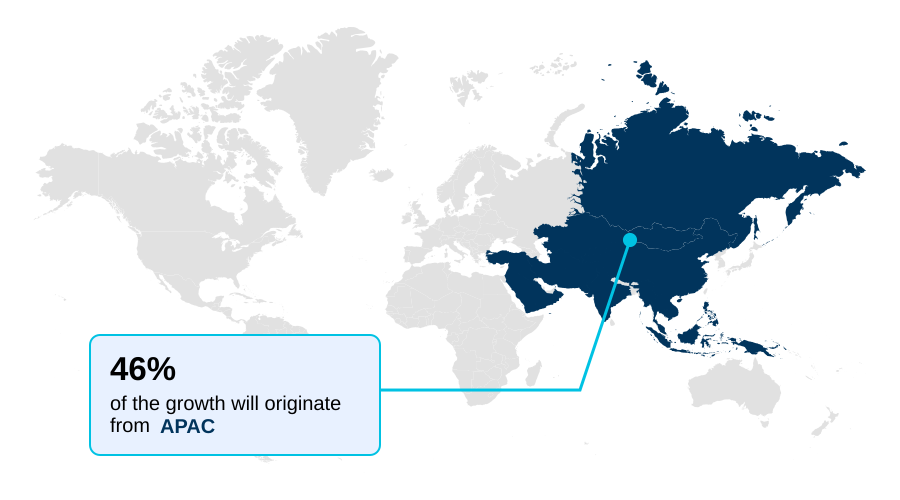
APAC is estimated to contribute 45.5% to the growth of the global market during the forecast period.Technavio’s analysts have elaborately explained the regional trends and drivers that shape the market during the forecast period.
See How Basalt Fiber Market Demand is Rising in APAC Get Free Sample
Geographically, APAC leads market expansion, contributing over 45% of incremental growth, fueled by vast infrastructure projects utilizing products like geogrids for roadway reinforcement.
The region's market is expanding at a rate of 14.2%, driven by demand for materials with high alkali resistance in concrete. North America, representing about 22.5% of growth, focuses on high-value applications where dielectric properties are critical for electrical insulation.
Europe prioritizes materials that are non-combustible for fire-resistant textiles and high-temperature insulation in regulated industries. The material's vibration damping qualities are also driving adoption in sports equipment composites, with some applications achieving a 20% improvement in user comfort.
Market Dynamics
Our researchers analyzed the data with 2024 as the base year, along with the key drivers, trends, and challenges. A holistic analysis of drivers will help companies refine their marketing strategies to gain a competitive advantage.
- The strategic value of the basalt fiber market is increasingly evident in specific, high-performance use cases. For instance, the practice of using basalt fiber for concrete reinforcement is becoming standard in critical infrastructure to enhance durability. Decision-makers weighing basalt fiber rebar vs steel rebar cost are now factoring in lifecycle savings, which often favor basalt in corrosive environments.
- The benefits of basalt fiber in automotive parts extend beyond simple lightweighting vehicles with basalt fiber composites to include improved vibration damping and thermal management. Understanding the manufacturing process of continuous basalt fiber is crucial for appreciating its quality and consistency, which is superior for applications like basalt fiber in wind turbine blade construction.
- The excellent thermal insulation properties of basalt fiber make it ideal for basalt fiber for high-temperature insulation applications. Moreover, the diverse applications of chopped basalt fiber strands are expanding, from concrete admixtures to using basalt fiber in 3D printing. Basalt fiber composites in the aerospace industry are valued for their strength-to-weight ratio.
- The environmental impact of basalt fiber production is relatively low, positioning it as a preferred basalt fiber as a sustainable building material. Its superior mechanical properties of basalt fiber roving, excellent corrosion resistance of basalt fiber in marine environments, and its role in improving concrete durability with basalt fiber are well-documented.
- The material’s cost-effectiveness of basalt fiber materials is improving, expanding its use in basalt fiber applications in civil engineering and as part of a role of basalt fiber in fire protection strategy. Finally, its use for basalt fiber for reinforcing thermoplastic polymers is opening new industrial opportunities.
- In terms of business operations, supply chains for projects incorporating these lightweight components can achieve transportation cost reductions of up to 15% compared to sourcing heavier, traditional materials.

What are the key market drivers leading to the rise in the adoption of Basalt Fiber Industry?
- The global expansion of renewable energy projects, particularly in the wind and solar power sectors, serves as a key market driver.
- Key market drivers are centered on the superior performance characteristics of basalt fiber in critical sectors.
- The material's inherent high tensile strength and exceptional corrosion resistance make basalt fiber rebar a compelling alternative to steel, capable of extending infrastructure service life by over 25%.
- In the renewable energy sector, basalt roving is crucial for manufacturing stronger and lighter wind turbine blades via filament winding. As an eco-friendly material with excellent thermal stability, it is also gaining traction in aerospace components.
- Broadly, the demand across diverse basalt fiber applications, from marine applications to geotechnical applications, is fueled by its standing as one of the most reliable high-performance fibers available.
What are the market trends shaping the Basalt Fiber Industry?
- A prominent market trend is the increasing demand for sustainable building and construction materials. This shift is driving the adoption of eco-friendly alternatives that improve structural durability and performance.
- Market trends are shaped by innovations in basalt fiber manufacturing and a growing focus on automotive lightweighting. Advances in the melt-spinning process and bushing design have enhanced basalt fiber properties, leading to a 15% improvement in tensile strength consistency. This allows for more reliable applications of continuous basalt fiber products like basalt fiber tape and basalt twisted yarn.
- Enhanced fiber sizing and surface treatment techniques improve chemical resistance, making basalt an ideal non-corrosive reinforcement for structural retrofitting, where its adoption has grown by 40% in specialized projects. These material improvements directly address industry needs for high-performance, durable solutions.
What challenges does the Basalt Fiber Industry face during its growth?
- The inconsistent availability of high-quality basalt rock suitable for fiber production poses a significant challenge to consistent market growth and supply chain stability.
- Market challenges persist despite basalt fiber's advantages, primarily stemming from manufacturing complexities and cost comparisons. The production of specialized products like gun roving for spray-up applications and composite macrofibre for concrete admixtures requires precise process control, where inconsistencies can lead to a 10% variation in performance.
- In the basalt fiber vs carbon fiber debate, basalt offers a cost advantage but can be 25% more energy-intensive to produce than fiberglass. Scaling production for items like basalt fiber panels and pultrusion profiles using direct roving or assembled roving remains a hurdle.
- These factors impact its adoption in price-sensitive areas such as friction materials and emerging fields like 3D printing filaments.
Exclusive Technavio Analysis on Customer Landscape
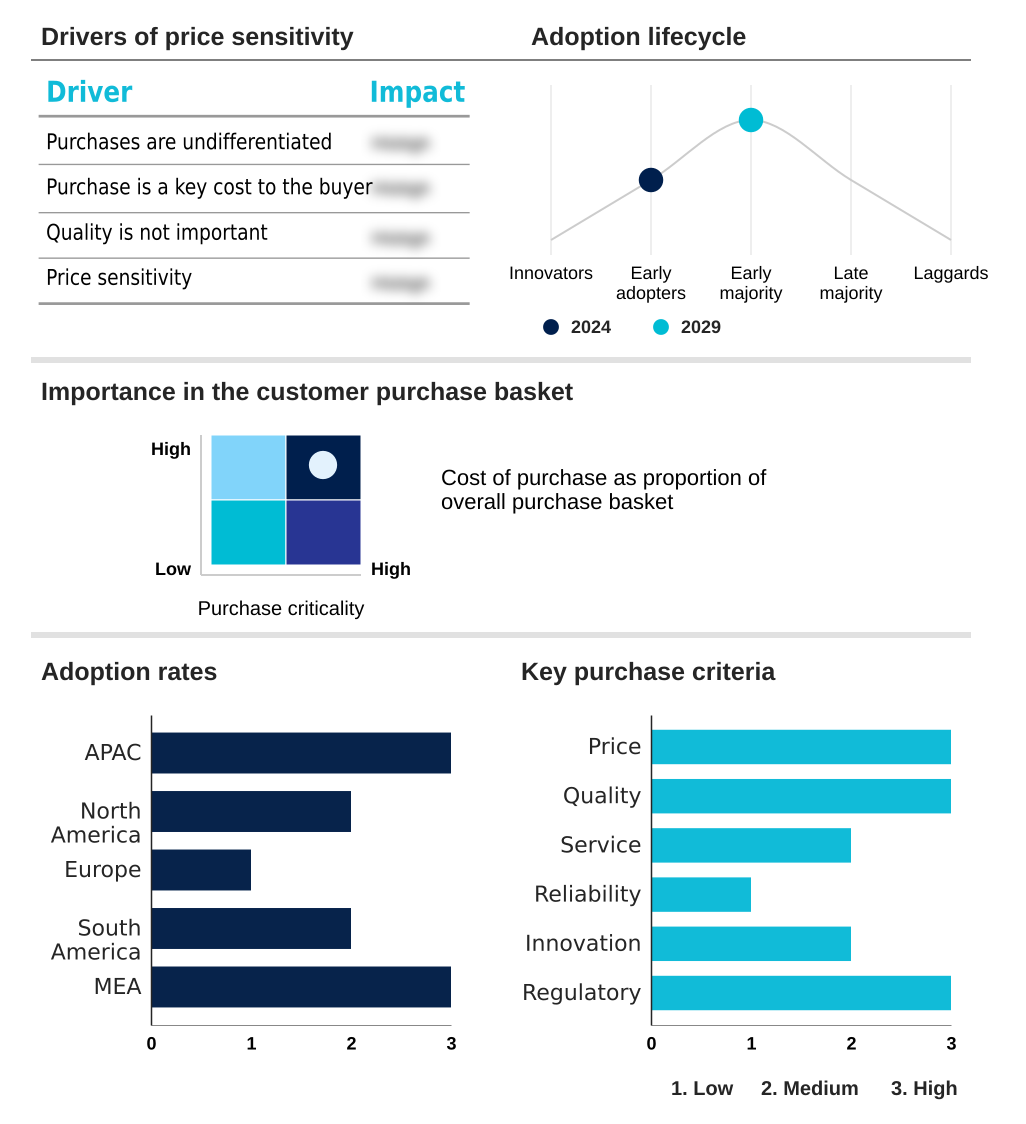
The basalt fiber market forecasting report includes the adoption lifecycle of the market, covering from the innovator’s stage to the laggard’s stage. It focuses on adoption rates in different regions based on penetration. Furthermore, the basalt fiber market report also includes key purchase criteria and drivers of price sensitivity to help companies evaluate and develop their market growth analysis strategies.
Customer Landscape of Basalt Fiber Industry
Competitive Landscape
Companies are implementing various strategies, such as strategic alliances, basalt fiber market forecast, partnerships, mergers and acquisitions, geographical expansion, and product/service launches, to enhance their presence in the industry.
Basalt Engineering LLC - Engineered basalt fiber products, including rovings and chopped strands, provide high-performance solutions for demanding industrial, structural, and composite applications.
The industry research and growth report includes detailed analyses of the competitive landscape of the market and information about key companies, including:
- Basalt Engineering LLC
- Basalt Fiber Tech
- BFMTD Co. Ltd.
- Deutsche Basalt Faser GmbH
- Fiberbas Construction and Building Tech
- Final Advanced Materials Sarl
- Funique Composites Pvt. Ltd.
- Galen LLC
- HG GBF Basalt Fiber Co. Ltd.
- Jianfeng Chemical Co. Ltd.
- Jumeisheng Co. Ltd.
- Kamenny Vek
- Kodiak Fiberglass Rebar
- Lavaintel
- Sudaglass Fiber Technology Inc.
- SWICOFIL AG
- Technobasalt LLC
- TLCBF High tech Co. Ltd.
Qualitative and quantitative analysis of companies has been conducted to help clients understand the wider business environment as well as the strengths and weaknesses of key industry players. Data is qualitatively analyzed to categorize companies as pure play, category-focused, industry-focused, and diversified; it is quantitatively analyzed to categorize companies as dominant, leading, strong, tentative, and weak.
Recent Development and News in Basalt fiber market
- In October 2024, Kamenny Vek announced the launch of a new grade of high-modulus basalt fiber roving, specifically designed for filament winding of high-pressure vessels, enhancing burst strength by 15%.
- In December 2024, Basalt Fiber Tech revealed a strategic partnership with a leading European automotive manufacturer to co-develop lightweight basalt fiber composite battery enclosures for their next-generation electric vehicle platform, as per their latest press release.
- In February 2025, HG GBF Basalt Fiber Co. Ltd. confirmed the completion of its new production facility in China, increasing its annual continuous basalt fiber capacity by 20,000 metric tons to meet growing demand from the wind energy and construction sectors, reported by industry sources.
- In April 2025, the US Department of Transportation officially approved the use of basalt fiber rebar as a primary reinforcement material in federally funded bridge construction projects in coastal regions, citing its superior corrosion resistance and lifecycle benefits.
Dive into Technavio’s robust research methodology, blending expert interviews, extensive data synthesis, and validated models for unparalleled Basalt Fiber Market insights. See full methodology.
| Market Scope | |
|---|---|
| Page number | 289 |
| Base year | 2024 |
| Historic period | 2019-2023 |
| Forecast period | 2025-2029 |
| Growth momentum & CAGR | Accelerate at a CAGR of 13.4% |
| Market growth 2025-2029 | USD 336.6 million |
| Market structure | Fragmented |
| YoY growth 2024-2025(%) | 12.8% |
| Key countries | China, Japan, India, South Korea, Australia, Indonesia, US, Canada, Mexico, Germany, France, UK, Italy, The Netherlands, Spain, Brazil, Argentina, Colombia, Saudi Arabia, UAE, South Africa, Israel and Turkey |
| Competitive landscape | Leading Companies, Market Positioning of Companies, Competitive Strategies, and Industry Risks |
Research Analyst Overview
- The market is characterized by a shift toward high-performance, sustainable materials, with basalt fiber composites at the forefront. The adoption of continuous basalt fiber and basalt roving is driven by their high tensile strength and corrosion resistance, which are critical for long-term structural integrity.
- Innovations in furnace technology and the melt-spinning process are key, as they directly impact the quality of direct roving and assembled roving. Boardroom-level decisions are increasingly influenced by ESG goals, making this eco-friendly material a strategic choice for green initiatives. For example, recent process enhancements have yielded a 10% reduction in energy consumption during manufacturing.
- This strengthens the material's value proposition for applications ranging from basalt fiber rebar in construction to filament winding in composites. The versatility extends to chopped strands for thermoplastic resins, basalt fiber tape for repairs, and fabrics offering high-temperature insulation. The material's excellent dielectric properties and alkali resistance further expand its utility in specialized industrial applications.
What are the Key Data Covered in this Basalt Fiber Market Research and Growth Report?
-
What is the expected growth of the Basalt Fiber Market between 2025 and 2029?
-
USD 336.6 million, at a CAGR of 13.4%
-
-
What segmentation does the market report cover?
-
The report is segmented by Application (Composites, and Non-composites), End-user (Construction and infrastructure, Automotive and transportation, Wind energy, and Others), Form Factor (Continuous basalt fiber, and Discrete basalt fiber) and Geography (APAC, North America, Europe, South America, Middle East and Africa)
-
-
Which regions are analyzed in the report?
-
APAC, North America, Europe, South America and Middle East and Africa
-
-
What are the key growth drivers and market challenges?
-
Increase in renewable energy projects, Poor availability of raw materials
-
-
Who are the major players in the Basalt Fiber Market?
-
Basalt Engineering LLC, Basalt Fiber Tech, BFMTD Co. Ltd., Deutsche Basalt Faser GmbH, Fiberbas Construction and Building Tech, Final Advanced Materials Sarl, Funique Composites Pvt. Ltd., Galen LLC, HG GBF Basalt Fiber Co. Ltd., Jianfeng Chemical Co. Ltd., Jumeisheng Co. Ltd., Kamenny Vek, Kodiak Fiberglass Rebar, Lavaintel, Sudaglass Fiber Technology Inc., SWICOFIL AG, Technobasalt LLC and TLCBF High tech Co. Ltd.
-
Market Research Insights
- The market dynamics are heavily influenced by the pursuit of high-performance, sustainable materials across key industries. The adoption of lightweight composite materials in automotive lightweighting strategies has resulted in components that are up to 40% lighter than their steel counterparts, directly enhancing fuel efficiency.
- In construction, the use of non-corrosive reinforcement like basalt fiber for infrastructure durability projects is projected to reduce long-term maintenance costs by over 25% compared to traditional methods. High-performance fibers are also critical for manufacturing advanced aerospace components and more efficient wind turbine blades.
- The material's unique properties are expanding its use in niche marine applications and specialized geotechnical applications, where its resilience to harsh environments is a primary advantage.
We can help! Our analysts can customize this basalt fiber market research report to meet your requirements.
 RIA -
RIA - 
