


Household Composters Market Size 2025-2029
The household composters market size is forecast to increase by USD 561.2 million at a CAGR of 6.6% between 2024 and 2029.
- The market is experiencing significant growth due to several key trends. Effective supply chain management has been a major driving factor, ensuring the timely delivery of composters to meet consumer demand. Additionally, low interest in gardening, time constraints of working consumers, the introduction of chemical fertilizers, and substantial growth in real estate and construction activities are projected to negatively impact market growth. Consumers, municipalities, schools, restaurants, corporate offices, and households all benefit from the use of household composters for managing kitchen waste, food scraps, backyard waste, vegetables and fruits, tea bags, nutshells, eggshells, leftovers, paper, and other organic materials.
- Additionally, increased investment in research and development is leading to the innovation of more efficient and user-friendly composting solutions. Furthermore, the availability of alternative composting methods, such as vermicomposting and bokashi, is expanding the market's reach and providing consumers with diverse options. These trends are expected to continue shaping the growth of the market In the coming years.
What will be the Size of the Household Composters Market During the Forecast Period?

- The market encompasses the production and distribution of composters designed for use in residential settings. This market is driven by the growing trend towards eco-friendly practices and the increasing awareness of the environmental impact of household garbage. Food scraps, including kitchen and garden waste, are the primary feedstock for these composters. The market's size is significant, with a steady growth trajectory, as more households turn to composting as an alternative to chemical-based fertilizers and landfill disposal. Composters cater to various needs, from backyard models to solar digesters, self-composting systems, and specialized models for food waste and garden waste. The market's reach extends to specialty stores, supermarkets, and online platforms.
- Key trends include the hygienic value, germ control, and odor reduction features of modern composters, as well as their role in food safety and urban agriculture. Household waste segregation is a crucial aspect of the market, with composting becoming an integral part of sustainable gardening practices. Overall, the market continues to evolve, offering innovative solutions for managing solid waste and promoting organic manure production.
How is this Household Composters Industry segmented and which is the largest segment?
The household composters industry research report provides comprehensive data (region-wise segment analysis), with forecasts and estimates in "USD million" for the period 2025-2029, as well as historical data from 2019-2023 for the following segments.
- Product
- Tumbler
- Stationary
- Compacting
- Material
- Plastic
- Metal
- Others
- Distribution Channel
- Offline
- Online
- Geography
- Europe
- Germany
- UK
- France
- Italy
- North America
- Canada
- US
- APAC
- China
- India
- Japan
- South America
- Brazil
- Middle East and Africa
- Europe
By Product Insights
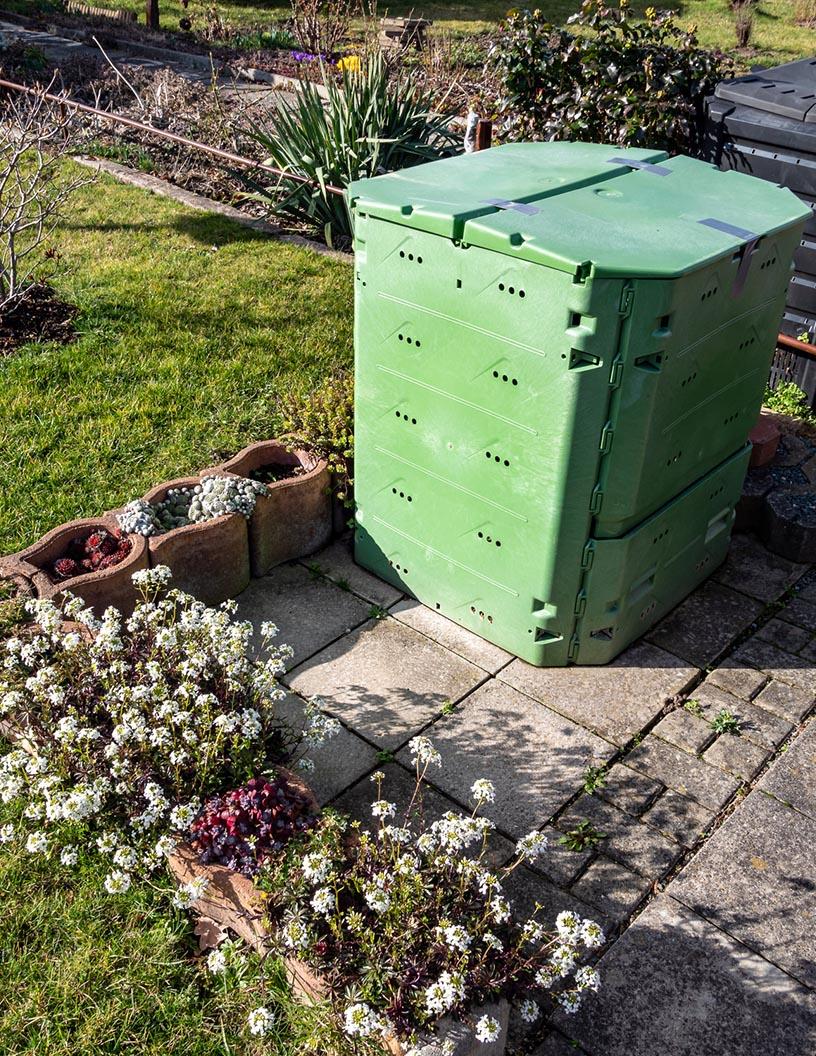
- The tumbler segment is estimated to witness significant growth during the forecast period. Stationary household composters also referred to as enclosed or static bins, are a popular choice for managing organic household waste. These composters are installed in specific locations and offer larger capacities compared to other types. They come in various shapes and sizes to cater to different consumer needs. The majority of stationary composters are manufactured using recycled plastic and painted in dark colors to retain heat, thereby promoting optimal composting conditions. Their design includes bottom openings to attract beneficial microorganisms, including worms, that accelerate the composting process. These composters are ideal for households generating substantial organic waste, such as schools, restaurants, corporate offices, and households with large gardens.
- By using stationary composters, consumers can reduce their household garbage, minimize food waste, and contribute to organic farming through the production of organic compost. Additionally, these composters offer environmental benefits, including water conservation, improved groundwater quality, and reduced fertilizer requirements. Home composting is a cost-effective and eco-friendly practice that aligns with health conscious consumers' growing interest in organic produce and gardening materials.

Get a glance at the market report of share of various segments Request Free Sample
- The tumbler segment was valued at USD 626.90 million in 2019 and showed a gradual increase during the forecast period.
Regional Analysis
- Europe is estimated to contribute 35% to the growth of the global market during the forecast period. Technavio's analysts have elaborately explained the regional trends and drivers that shape the market during the forecast period. Household composters are gaining popularity in Europe due to the rise of eco-conscious consumers seeking innovative methods for managing organic waste. Improved living standards, urbanization, and the convenience of cost-effective and hassle-free waste management systems are driving market growth.

For more insights on the market size of various regions, Request Free Sample
- According to European Union statistics, approximately 46.3% of municipal waste is recycled through material recycling and composting. This trend is expected to continue, as residential construction activities increase and gardening becomes more popular. Key factors contributing to market expansion include water conservation, soil health improvement, and the reduction of household waste. Household composters are available in various materials, including plastics and metals, and come in stationary and tumbler designs.
- Organic farming and organic composting also benefit from the use of household composters, providing valuable organic manure and improving soil health. Additionally, home composting offers health and hygiene advantages, including germ control, odor reduction, and waste segregation. Self-composting systems provide an eco-friendly alternative to chemical-based fertilizers, contributing to environmental awareness and urban agriculture. Household composters are a cost-effective labor-saving solution, with potential government subsidies and the availability of e-commerce platforms and online retailers making them accessible to a wide range of consumers.
Market Dynamics
Our researchers analyzed the data with 2024 as the base year, along with the key drivers, trends, and challenges. A holistic analysis of drivers will help companies refine their marketing strategies to gain a competitive advantage.
What are the key market drivers leading to the rise In the adoption of Household Composters Industry?
- Effective supply chain management is the key driver of the market. Household composters play a significant role in biowaste management, particularly in developed economies, where municipalities are promoting eco-friendly practices to reduce the burden of collecting and processing household garbage. Composters help convert food scraps, backyard waste, and kitchen leftovers into nutrient-rich compost, which is beneficial for organic farming and gardening practices. By using compost instead of chemical-based fertilizers, water conservation is ensured, contributing to improved groundwater quality and meeting fertilizer requirements. Municipalities and governments are encouraging consumers to adopt composting as a waste reduction strategy, which also conserves resources and improves soil health. Education programs are implemented to promote the use of composters, which can be stationery products like tumblers or plastics and metal materials. Schools, restaurants, corporate offices, and households generate substantial food waste, making composting an ideal solution for managing this organic waste.
- Vegetables and fruits, tea bags, nutshells, and eggshells can all be composted, along with paper. Composting also offers hygienic value, germ control, and odor reduction. Home composting is a cost-effective labor-saving alternative to traditional waste management methods, with potential government subsidies available to incentivize adoption. Organic produce and gardening materials are common applications for compost, making it an essential component of home gardening. E-commerce and online retailers offer a convenient platform for purchasing composters, catering to health-conscious consumers who prioritize environmental awareness. Incorporating composting into urban agriculture and food waste composting systems can further reduce waste and promote sustainable practices. Overall, household composters offer a practical and cost-effective solution for managing organic waste, contributing to waste reduction and improving soil health.
What are the market trends shaping the Household Composters Industry?
- An increased investment in research and development is the upcoming market trend. Companies are investing significantly in research and development to create advanced composters, integrating innovative features for efficient and effective bio waste management. The focus is on enhancing composting processes and introducing new offerings such as commercial fertilizers, nitrogen fortifiers, and biofertilizers. This investment aims to deliver market-leading and differentiated composters for both household and commercial consumers. The rise in research and development efforts is projected to drive the composters market, enabling the reduction of household garbage through the composting of food scraps, backyard waste, and kitchen leftovers. Additionally, the production of organic compost from vegetables and fruits, tea bags, nutshells, and eggshells contributes to organic farming, water conservation, and improved groundwater quality.
- The adoption of eco-friendly practices, including home composting and organic composting, aligns with health-conscious consumers' preferences for organic produce and gardening materials. Furthermore, composting supports waste reduction, resource conservation, and improving soil health for home gardening, urban agriculture, and food waste composting. The market expansion is also facilitated by e-commerce, online retailers, and specialty stores, making composters accessible to a wider audience. Environmental awareness and the importance of maintaining health and hygiene through germ control, odor reduction, and hygienic value further fuel the market's growth.
What challenges does the Household Composters Industry face during its growth?
- The availability of alternative solutions is a key challenge affecting the industry's growth. The market faces challenges due to the availability of packaged manure and other composting methods, a well-organized civic waste collection process, and the presence of local composters. These factors may hamper sales during the forecast period. However, eco-friendly practices, such as composting food scraps, backyard waste, kitchen waste, vegetables and fruits, tea bags, nutshells, and eggshells, remain essential for reducing household waste, conserving resources, and improving soil health. Organic farming, organic composting, and gardening practices continue to gain popularity among health-conscious consumers, driving demand for composters.
- Home composting systems, such as stationary products like tumbler composters and plastics or metal materials, offer hygienic value, germ control, odor reduction, and cost-effective labor. Furthermore, government subsidies, environmental awareness, and the availability of composting solutions through e-commerce and online retailers contribute to market growth.
Exclusive Customer Landscape
The household composters market forecasting report includes the adoption lifecycle of the market, market growth and forecasting, covering from the innovator's stage to the laggard's stage. It focuses on adoption rates in different regions based on penetration. Furthermore, the household composters market report also includes key purchase criteria and drivers of price sensitivity to help companies evaluate and develop their market growth analysis strategies.

Customer Landscape
Key Companies & Market Insights
Companies are implementing various strategies, such as strategic alliances, household composters market forecast, partnerships, mergers and acquisitions, geographical expansion, and product/service launches, to enhance their presence In the industry.
Algreen Products Inc. - The company offers a variety of household composters like Soil Saver Composter, Solar Digester, Tumbling Composter, and others.
The industry research and growth report includes detailed analyses of the competitive landscape of the market and information about key companies, including:
- Algreen Products Inc.
- Enviro World Corp.
- Envirocycle Systems Inc.
- Forest City Models and Patterns Ltd.
- Good Ideas Inc.
- Jora Composters
- Natures Footprint, Inc.
- Sampoorn Zero Waste Pvt. Ltd
- SCD Probiotics, LLC
- Schiller Grounds Care Inc.
- The Scotts Miracle Gro Co.
- Track Trading Co.
Qualitative and quantitative analysis of companies has been conducted to help clients understand the wider business environment as well as the strengths and weaknesses of key industry players. Data is qualitatively analyzed to categorize companies as pure play, category-focused, industry-focused, and diversified; it is quantitatively analyzed to categorize companies as dominant, leading, strong, tentative, and weak.
Research Analyst Overview
The market encompasses a wide range of eco-friendly waste management solutions designed for managing various types of organic waste within residential settings. This market caters to the growing demand for sustainable practices and the need to reduce the volume of solid waste generated from kitchen and garden sources. Household composters are essential tools for managing bio waste, including food scraps, vegetable and fruit peels, tea bags, nutshells, and eggshells. These composters facilitate the decomposition process, transforming organic waste into nutrient-rich compost. This compost can be utilized for various purposes, such as organic farming, gardening, and soil improvement. The market for household composters caters to various consumer segments, including schools, restaurants, corporate offices, and households. The increasing awareness of environmental issues and the desire for healthier, organic produce have led to a rise in demand for these products. Moreover, the potential for water conservation and improved groundwater quality has further fueled the market's growth. Fertilizer requirements for organic farming and gardening practices are significant drivers for the market. These composters offer a cost-effective alternative to chemical-based fertilizers, making them an attractive option for consumers and municipalities alike.
Additionally, the market for household composters extends to specialty stores, supermarkets, and e-commerce platforms. The market for household composters comprises various product types, including stationary and tumbler composters. These products are available in various materials, such as plastics and metals, catering to diverse consumer preferences and budgets. The adoption of household composters is influenced by several factors, including food safety concerns, waste reduction, resource conservation, and improving soil health. In warm climates, the market for these products experiences particular growth due to the year-round availability of organic waste. Health-conscious consumers are increasingly adopting household composters as a means of reducing their carbon footprint and contributing to a more sustainable future. Furthermore, the growing trend of urban agriculture and home gardening has led to a heightened interest In these products.
The market for household composters offers several benefits, including odor reduction, germ control, and hygienic value. These products enable households to effectively manage their household waste through waste segregation and self-composting, reducing the reliance on municipal waste management systems. The market for household composters is expected to continue growing as consumers and governments increasingly focus on reducing waste and promoting eco-friendly practices. This trend is further fueled by the availability of cost-effective labor and government subsidies, making these products increasingly accessible to a wider audience. Thus, the market represents a significant opportunity for businesses seeking to cater to the growing demand for sustainable waste management solutions. This market is driven by various factors, including environmental awareness, resource conservation, and the desire for healthier, organic produce. As consumers continue to prioritize eco-friendly practices and governments promote sustainable waste management, the market for household composters is poised for continued growth.
|
Market Scope |
|
|
Report Coverage |
Details |
|
Page number |
202 |
|
Base year |
2024 |
|
Historic period |
2019-2023 |
|
Forecast period |
2025-2029 |
|
Growth momentum & CAGR |
Accelerate at a CAGR of 6.6% |
|
Market growth 2025-2029 |
USD 561.2 million |
|
Market structure |
Concentrated |
|
YoY growth 2024-2025(%) |
5.8 |
|
Key countries |
US, Germany, France, UK, China, Italy, Japan, Canada, India, and Brazil |
|
Competitive landscape |
Leading Companies, Market Positioning of Companies, Competitive Strategies, and Industry Risks |
What are the Key Data Covered in this Household Composters Market Research and Growth Report?
- CAGR of the Household Composters industry during the forecast period
- Detailed information on factors that will drive the growth and forecasting between 2025 and 2029
- Precise estimation of the size of the market and its contribution of the industry in focus to the parent market
- Accurate predictions about upcoming growth and trends and changes in consumer behaviour
- Growth of the market across Europe, North America, APAC, South America, and Middle East and Africa
- Thorough analysis of the market's competitive landscape and detailed information about companies
- Comprehensive analysis of factors that will challenge the household composters market growth of industry companies
We can help! Our analysts can customize this household composters market research report to meet your requirements.