



Retail Digital Signage Market Size and Growth Forecast 2026-2030
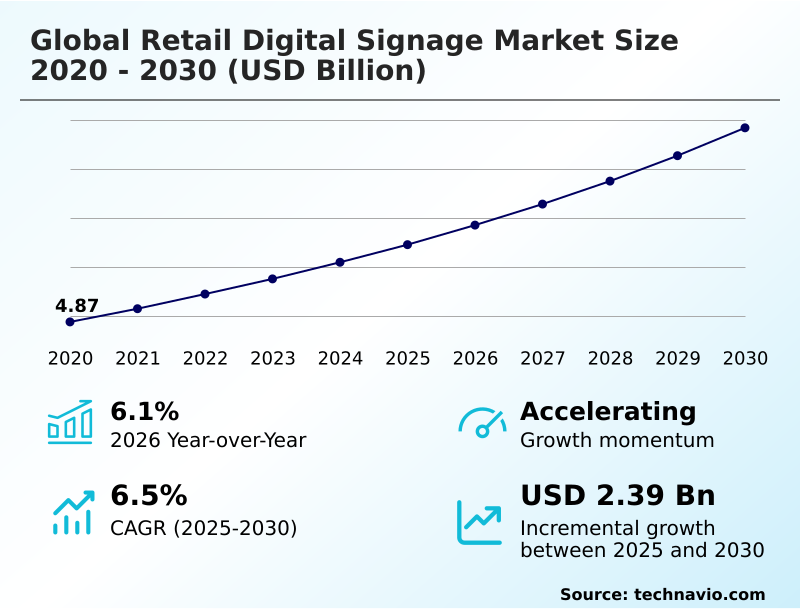
The Retail Digital Signage Market size was valued at USD 6.45 billion in 2025 growing at a CAGR of 6.5% during the forecast period 2026-2030.
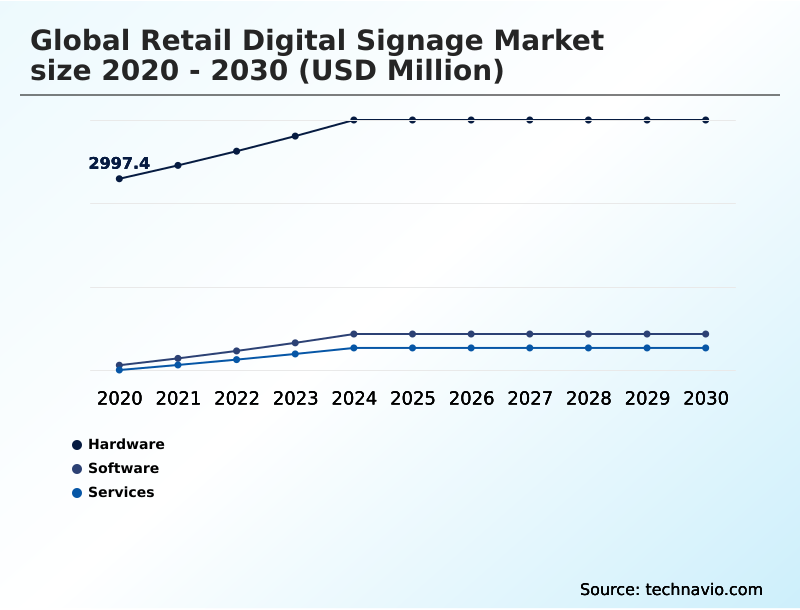
North America accounts for 36.2% of incremental growth during the forecast period. The Hardware segment by Component was valued at USD 3.64 billion in 2024, while the Standalone displays segment holds the largest revenue share by Product Type.
The market is projected to grow by USD 3.98 billion from 2020 to 2030, with USD 2.39 billion of the growth expected during the forecast period of 2025 to 2030.
Get Key Insights on Market Forecast (PDF) Request Free Sample
Retail Digital Signage Market Overview
The retail digital signage market is defined by the strategic deployment of dynamic visual communication systems to merge digital engagement with physical commerce. This evolution is driven by the need for a cohesive omnichannel retail strategy, where advancements in display technology and ai-driven content delivery create immersive environments. For instance, a flagship apparel store can deploy interactive touch overlays and augmented reality integration on fitting room mirrors, allowing shoppers to request different sizes and see virtual accessories. This not only enhances the phygital customer experience but also captures valuable data on item interaction, helping reduce return rates. However, this data collection must navigate stringent regulations like the General Data Protection Regulation (GDPR), pushing the industry toward privacy-conscious edge computing analytics. With North America poised to contribute over 36% of the market's incremental growth, the focus is on scalable, secure, and engaging solutions that provide a measurable return on investment through improved customer satisfaction and operational efficiency.
Drivers, Trends, and Challenges in the Retail Digital Signage Market
The strategic implementation of retail digital signage pivots on achieving a seamless phygital architecture, where hardware and software converge to enhance in-store operations and customer engagement. Key decisions involve integrating cms with pos systems to enable dynamic pricing automation and ensure consistency between online and offline channels.
A critical consideration for procurement teams is the total cost of ownership for video walls, which extends beyond upfront capital to include energy consumption, maintenance, and content creation. The successful deployment of these systems hinges on the ability to measure roi of interactive kiosk deployments, often through metrics like dwell time, interaction rate, and sales uplift.
Best practices for omnichannel content strategy dictate that messaging must be context-aware, leveraging real-time data to remain relevant. For example, a supermarket chain deploying electronic shelf labels (esl) can use them not only for price changes but also to display promotional triggers based on a shopper's loyalty app profile.
However, deploying ai for real-time audience analytics introduces significant compliance hurdles, particularly with regulations like Europe's Digital Signage Privacy Framework. This necessitates investments in edge computing and data anonymization to balance personalization with privacy, a factor that now heavily influences vendor selection and system design, with non-compliance posing a greater financial risk than hardware failure.
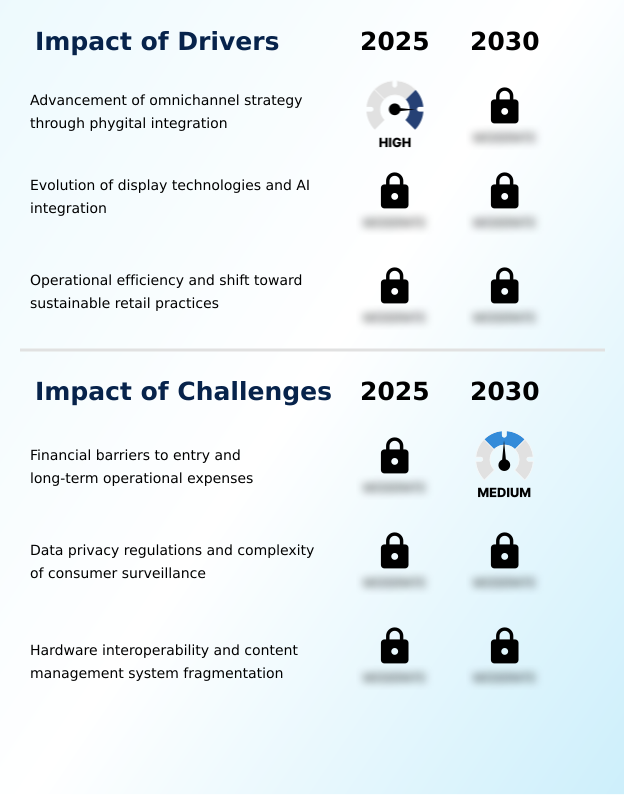
Primary Growth Driver: Advancement of the omnichannel strategy through phygital integration is a primary driver, synchronizing the consumer's digital journey with the physical store experience.
A primary market driver is the imperative for retailers to execute a cohesive omnichannel retail strategy, using digital signage as the crucial link between digital and physical storefronts.
This is most evident in the widespread adoption of electronic shelf labels (esl), which enable dynamic pricing automation and ensure price parity with e-commerce channels.
Furthermore, the evolution of in-store screens into valuable digital real estate facilitates retail media network monetization, creating new revenue streams. These deployments are increasingly built on sustainable display hardware to meet corporate social responsibility goals and reduce long-term operational costs.
The ability to deploy inventory-aware advertising ensures that promotions are always relevant, directly driving sales and improving the efficiency of in-store marketing efforts.
Emerging Market Trend: The proliferation of artificial intelligence and real-time consumer analytics is a dominant trend. It transforms digital displays into intelligent, responsive systems that personalize the retail experience.
The market is undergoing a significant transformation driven by the integration of artificial intelligence, which is redefining the capabilities of in-store displays. The trend is moving from passive broadcasting to active engagement through ai-driven content delivery systems that utilize computer vision sensors for real-time audience measurement.
This enables a personalized advertising network within the physical store, creating a phygital customer experience that mirrors online targeting. The sophistication of these systems allows for automated content generation, where displays can adjust messaging based on viewer demographics, dwell time, and even perceived mood, all while adhering to privacy regulations like GDPR through edge processing.
This shift toward intelligent, data-driven signage is critical for retailers aiming to optimize marketing spend and enhance customer interaction.
Key Industry Challenge: Significant financial barriers to entry and high long-term operational expenses present a key challenge to widespread market adoption, particularly for small and medium-sized enterprises.
A significant challenge restraining market growth is the fragmentation of technology platforms, leading to issues with hardware interoperability and complex content management system (cms) integration. This often results in company lock-in, making it difficult for retailers to switch providers or adopt new technologies without a complete system overhaul.
Ensuring robust data privacy compliance under regulations like GDPR adds another layer of complexity, requiring sophisticated software-defined signage architectures that can manage data ethically. Furthermore, the lack of standardized protocols for proof-of-play verification complicates the process of selling advertising space across disparate networks.
Addressing these technical hurdles through open standards and more flexible software platforms is essential for achieving scalable and efficient deployments across large retail enterprises.
Explore Full Market Dynamics Analysis Request Free Sample
Retail Digital Signage Market Segmentation
The retail digital signage industry research report provides comprehensive data including region-wise segment analysis, with forecasts and analysis for the period 2026-2030, as well as historical data from 2020-2024 for the following segments.
Component Segment Analysis
The hardware segment is estimated to witness significant growth during the forecast period.
The hardware segment forms the physical foundation for visual communication, encompassing equipment from high-definition displays to the underlying connectivity infrastructure.
Development is centered on enhancing visual fidelity and durability, with a shift toward micro-led video walls and ultra-high definition (uhd) panels that offer superior brightness for high-traffic environments.
Integrated system-on-chip (soc) media players are simplifying installations, while modular display construction provides architectural flexibility. This segment includes high-brightness outdoor displays designed to withstand environmental factors.
Hardware is not just a capital expenditure but a long-term asset, with procurement decisions increasingly factoring in energy efficiency and total cost of ownership, reflecting the segment's foundational role in enabling advanced digital engagement strategies in physical retail spaces.
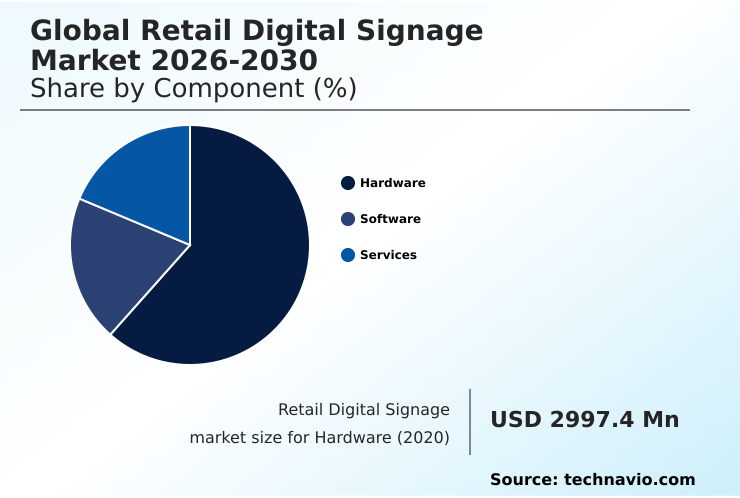
The Hardware segment was valued at USD 3.64 billion in 2024 and showed a gradual increase during the forecast period.
Retail Digital Signage Market by Region: North America Leads with 36.2% Growth Share
North America is estimated to contribute 36.2% to the growth of the global market during the forecast period.
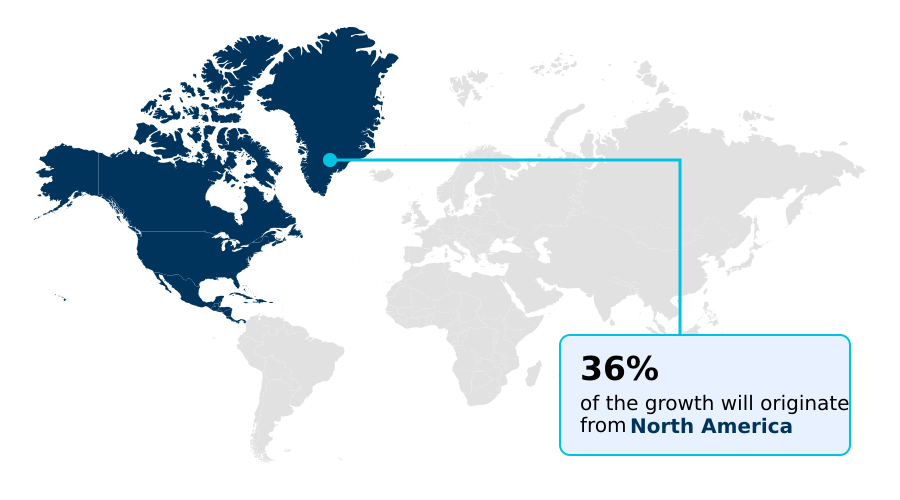
The geographic landscape of the retail digital signage market is characterized by distinct regional priorities and technological adoption rates, with North America accounting for 36.2% of the growth.
This region, along with APAC, is at the forefront of deploying programmatic dooh advertising and smart store integration.
In APAC, particularly China and South Korea, the use of large-scale anamorphic 3d displays and transparent oled displays is common for creating high-impact brand experiences in dense urban centers.
These deployments leverage low-latency video streaming over 5G networks to deliver flawless visual content. In contrast, European adoption is often tempered by historic preservation and stringent regulations, leading to more integrated and bespoke installations.
The global trend, however, points toward interconnected, intelligent display networks that merge data analytics with visual communication to optimize the retail environment.
Customer Landscape Analysis for the Retail Digital Signage Market
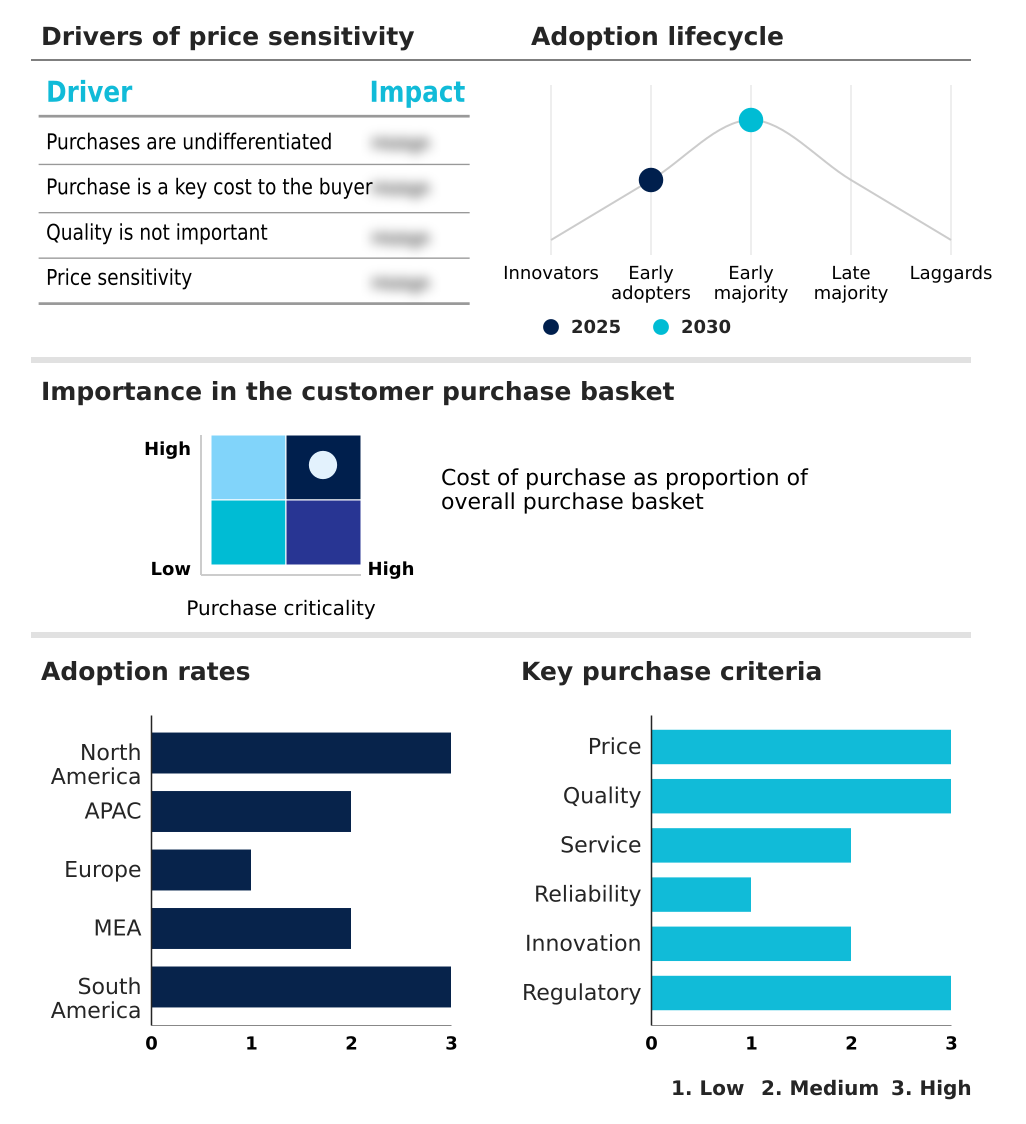
The retail digital signage market forecasting report includes the adoption lifecycle of the market, covering from the innovator’s stage to the laggard’s stage. It focuses on adoption rates in different regions based on penetration. Furthermore, the retail digital signage market report also includes key purchase criteria and drivers of price sensitivity to help companies evaluate and develop their market growth analysis strategies.
Competitive Landscape of the Retail Digital Signage Market
Companies are implementing various strategies, such as strategic alliances, partnerships, mergers and acquisitions, geographical expansion, and product/service launches, to enhance their presence in the retail digital signage market industry.
Acer Inc. - The portfolio includes high-performance displays, interactive touch solutions, and integrated video wall systems engineered for demanding commercial retail environments.
The industry research and growth report includes detailed analyses of the competitive landscape of the market and information about key companies, including:
- Acer Inc.
- ASUSTeK Computer Inc.
- AUO Corp.
- Barco NV
- Christie Digital Systems Inc.
- Dell Technologies Inc.
- Elo Touch Solutions Inc.
- HP Inc.
- Koninklijke Philips NV
- Leyard International.
- LG Electronics Inc.
- Mitsubishi Electric Corp.
- NEC Corp.
- Panasonic Holdings Corp.
- Planar Systems Inc.
- Samsung Electronics Co. Ltd.
- Sharp Corp.
- Sony Group Corp.
- Toshiba Corp.
- ViewSonic Corp.
Qualitative and quantitative analysis of companies has been conducted to help clients understand the wider business environment as well as the strengths and weaknesses of key industry players. Data is qualitatively analyzed to categorize companies as pure play, category-focused, industry-focused, and diversified; it is quantitatively analyzed to categorize companies as dominant, leading, strong, tentative, and weak.
Recent Developments in the Retail Digital Signage Market
- In August 2025, a prominent North American department store chain deployed a system that synchronized mobile shopping carts with in-store interactive kiosks across its flagship locations to streamline the phygital shopping journey.
- In May 2025, a leading global technology firm headquartered in Seoul launched a suite of signage solutions that utilized edge computing to analyze customer demographics in real-time without storing personal images, addressing data privacy concerns.
- In March 2025, Target Corporation implemented a comprehensive network of AI-powered interactive kiosks across three hundred locations in the United States to provide personalized product recommendations based on real-time item recognition.
- In November 2025, the fashion retailer Adidas introduced a proprietary Scan-and-Sync interactive display system in its flagship stores in London and Paris, allowing shoppers to synchronize mobile profiles with large-format wall displays.
Research Analyst Overview: Retail Digital Signage Market
The retail digital signage market's current trajectory is dictated by the dual pressures of technological advancement and operational sustainability. Boardroom-level decisions are increasingly influenced by the total cost of ownership, which now extends beyond initial capital expenditure on micro-led video walls or ultra-high definition (uhd) panels to include the long-term energy and maintenance liabilities.
The integration of ai-driven content delivery with computer vision sensors allows for unprecedented personalization but also places data governance, under frameworks like the EU's GDPR, at the center of strategic planning.
For instance, a global retailer's decision to standardize on a single cloud-based signage software platform is now as much about ensuring compliance with data privacy regulations as it is about streamlining content deployment. The adoption of predictive maintenance algorithms is becoming a key vendor qualification criterion, promising to reduce downtime and protect brand image.
As display hardware like transparent oled displays becomes more accessible, the key differentiator is shifting to the intelligence of the underlying platform, including its capabilities for remote device management and secure edge computing analytics.
Dive into Technavio’s robust research methodology, blending expert interviews, extensive data synthesis, and validated models for unparalleled Retail Digital Signage Market insights. See full methodology.
| Market Scope | |
|---|---|
| Page number | 316 |
| Base year | 2025 |
| Historic period | 2020-2024 |
| Forecast period | 2026-2030 |
| Growth momentum & CAGR | Accelerate at a CAGR of 6.5% |
| Market growth 2026-2030 | USD 2392.1 million |
| Market structure | Fragmented |
| YoY growth 2025-2026(%) | 6.1% |
| Key countries | US, Canada, Mexico, China, India, Japan, South Korea, Australia, Indonesia, UK, Germany, France, Italy, Spain, The Netherlands, Saudi Arabia, UAE, South Africa, Israel, Turkey, Brazil, Argentina and Colombia |
| Competitive landscape | Leading Companies, Market Positioning of Companies, Competitive Strategies, and Industry Risks |
Retail Digital Signage Market: Key Questions Answered in This Report
-
What is the expected growth of the Retail Digital Signage Market between 2026 and 2030?
-
The Retail Digital Signage Market is expected to grow by USD 2.39 billion during 2026-2030, registering a CAGR of 6.5%. Year-over-year growth in 2026 is estimated at 6.1%%. This acceleration is shaped by advancement of omnichannel strategy through phygital integration, which is intensifying demand across multiple end-use verticals covered in the report.
-
-
What segmentation does the market report cover?
-
The report is segmented by Component (Hardware, Software, and Services), Product Type (Standalone displays, Video walls, Digital menu boards, Interactive kiosks, and Others), End-user (Hypermarkets and supermarkets, Specialty stores, Department stores, and Others) and Geography (North America, APAC, Europe, Middle East and Africa, South America). Among these, the Hardware segment is estimated to witness significant growth during the forecast period, driven by rising adoption across key application areas. Each segment includes detailed qualitative and quantitative analysis, along with historical data from 2020-2024 and forecasts through 2030 with year-over-year growth rates.
-
-
Which regions are analyzed in the report?
-
The report covers North America, APAC, Europe, Middle East and Africa and South America. North America is estimated to contribute 36.2% to market growth during the forecast period. Country-level analysis includes US, Canada, Mexico, China, India, Japan, South Korea, Australia, Indonesia, UK, Germany, France, Italy, Spain, The Netherlands, Saudi Arabia, UAE, South Africa, Israel, Turkey, Brazil, Argentina and Colombia, with dedicated market size tables and year-over-year growth for each.
-
-
What are the key growth drivers and market challenges?
-
The primary driver is advancement of omnichannel strategy through phygital integration, which is accelerating investment and industry demand. The main challenge is financial barriers to entry and long-term operational expenses, creating operational barriers for key market participants. The report quantifies the impact of each driver and challenge across 2026 and 2030 with comparative analysis.
-
-
Who are the major players in the Retail Digital Signage Market?
-
Key vendors include Acer Inc., ASUSTeK Computer Inc., AUO Corp., Barco NV, Christie Digital Systems Inc., Dell Technologies Inc., Elo Touch Solutions Inc., HP Inc., Koninklijke Philips NV, Leyard International., LG Electronics Inc., Mitsubishi Electric Corp., NEC Corp., Panasonic Holdings Corp., Planar Systems Inc., Samsung Electronics Co. Ltd., Sharp Corp., Sony Group Corp., Toshiba Corp. and ViewSonic Corp.. The report provides qualitative and quantitative analysis categorizing companies as dominant, leading, strong, tentative, and weak based on their market positioning. Company profiles include business segment analysis, SWOT assessment, key offerings, and recent strategic developments.
-
Retail Digital Signage Market Research Insights
Market dynamics are increasingly shaped by the push for a seamless phygital customer experience and operational efficiency, with a clear divergence in regional priorities. While APAC demonstrates the fastest growth, projected at 7.0%, driven by new infrastructure and smart store integration, Europe's 5.7% growth is heavily moderated by sustainability mandates.
European Union directives on energy use are accelerating the adoption of sustainable display hardware and e-paper technology. This focus on data privacy compliance and environmental impact influences hardware selection, favoring vendors that offer transparent lifecycle assessments.
In contrast, North American retailers prioritize retail media network monetization and contactless interaction points, leveraging advanced content orchestration platforms to manage complex, data-driven advertising campaigns across their physical footprints.
We can help! Our analysts can customize this retail digital signage market research report to meet your requirements.
 RIA -
RIA - 
