
Reverse Logistics Automation Software Market Analysis, Size, and Forecast 2026-2030: North America (US, Canada, and Mexico), Europe (Germany, UK, and France), APAC (China, India, and Japan), South America (Brazil, Argentina, and Colombia), Middle East and Africa (Saudi Arabia, UAE, and South Africa), and Rest of World (ROW)

Reverse Logistics Automation Software Market Analysis, Size, and Forecast 2026-2030:
North America (US, Canada, and Mexico), Europe (Germany, UK, and France), APAC (China, India, and Japan), South America (Brazil, Argentina, and Colombia), Middle East and Africa (Saudi Arabia, UAE, and South Africa), and Rest of World (ROW)

Published: Mar 2026 296 Pages SKU: IRTNTR81267

Market Overview at a Glance

$5.64 B
Market Opportunity
9.5%
CAGR 2025 - 2030
38.9%
North America Growth
$5.50 B
Cloud based segment 2024

Reverse Logistics Automation Software Market Size 2026-2030

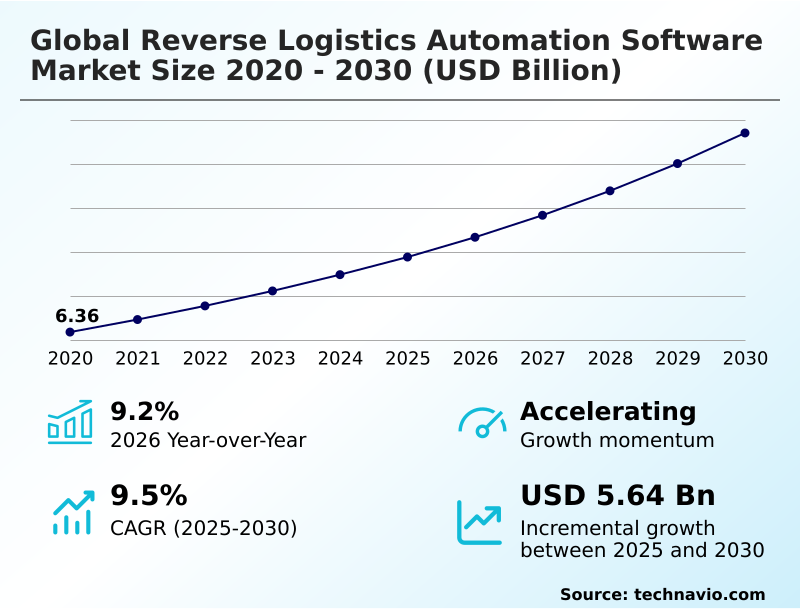
The reverse logistics automation software market size is valued to increase by USD 5.64 billion, at a CAGR of 9.5% from 2025 to 2030. Rising consumer expectations and e-commerce volume growth will drive the reverse logistics automation software market.

Major Market Trends & Insights

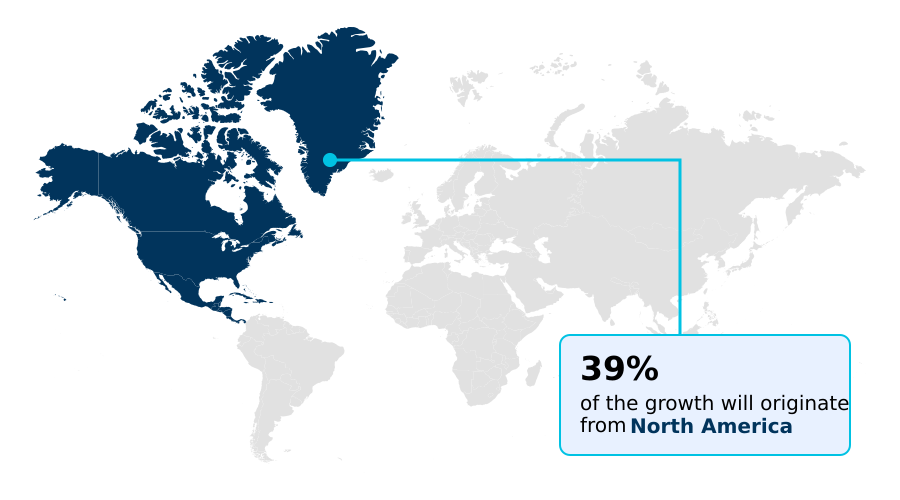
  • North America dominated the market and accounted for a 38.9% growth during the forecast period.
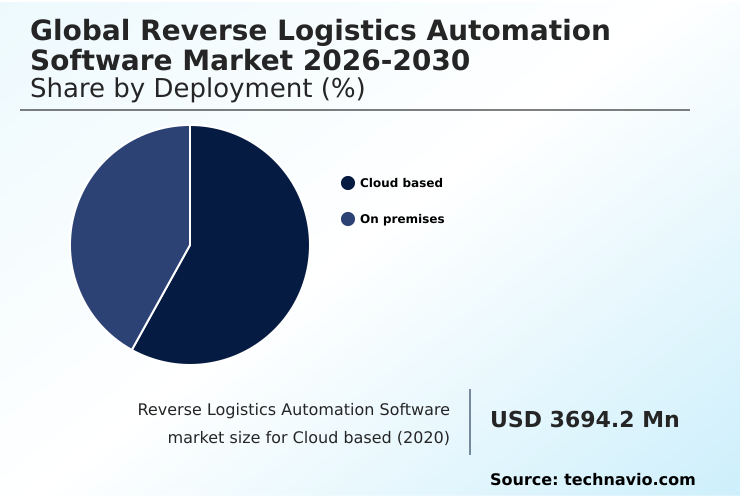
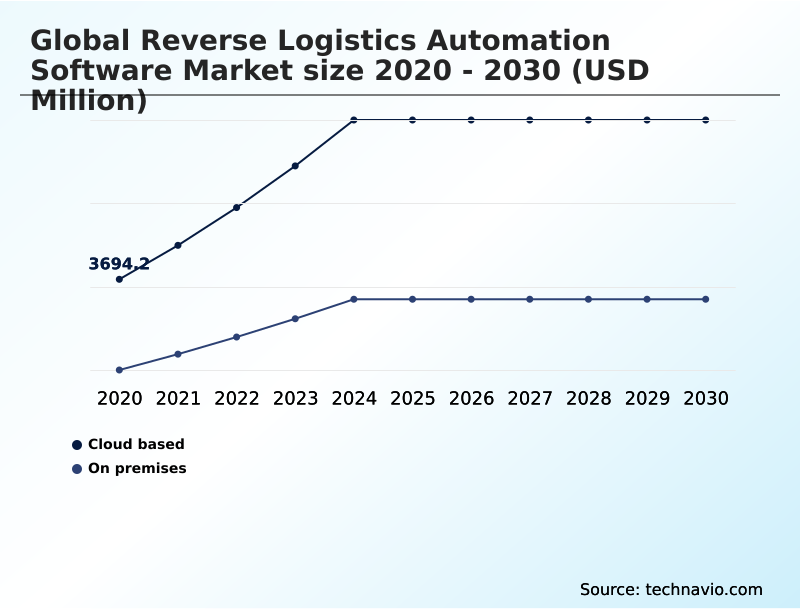
  • By Deployment - Cloud based segment was valued at USD 5.50 billion in 2024
  • By Service - Professional services segment accounted for the largest market revenue share in 2024

Market Size & Forecast

  • Market Opportunities: USD 9.05 billion
  • Market Future Opportunities: USD 5.64 billion
  • CAGR from 2025 to 2030 : 9.5%

Market Summary

  • The Reverse Logistics Automation Software Market is defined by the strategic imperative to manage product returns efficiently and sustainably. Growth is driven by the need to enhance the customer experience in e-commerce and adhere to circular economy principles. Key trends include the integration of AI for predictive returns analysis and dynamic dispositioning, which optimizes the value recovered from returned goods.
  • For instance, a retail enterprise can leverage this technology to automatically route a returned electronic item to the optimal channel—be it restocking, refurbishment, or recycling—based on real-time data, thereby reducing processing costs and minimizing waste. However, the market faces challenges related to the high initial cost of implementation and the complexity of integrating new software with legacy ERP systems.
  • These solutions are becoming critical for managing returns management workflow automation, from initial return merchandise authorization (RMA) to final settlement, ensuring both operational efficiency and customer satisfaction.

What will be the Size of the Reverse Logistics Automation Software Market during the forecast period?

Get Key Insights on Market Forecast (PDF) Request Free Sample

How is the Reverse Logistics Automation Software Market Segmented?

The reverse logistics automation software industry research report provides comprehensive data (region-wise segment analysis), with forecasts and estimates in "USD million" for the period 2026-2030, as well as historical data from 2020-2024 for the following segments.

  • Deployment
    • Cloud based
    • On premises
  • Service
    • Professional services
    • Managed services
  • End-user
    • Retail and e commerce
    • Electronics and electrical
    • Automotive
    • Healthcare
    • Others
  • Geography
    • North America
      • US
      • Canada
      • Mexico
    • Europe
      • Germany
      • UK
      • France
    • APAC
      • China
      • India
      • Japan
    • South America
      • Brazil
      • Argentina
      • Colombia
    • Middle East and Africa
      • Saudi Arabia
      • UAE
      • South Africa
    • Rest of World (ROW)

By Deployment Insights

The cloud based segment is estimated to witness significant growth during the forecast period.

Cloud-based deployment models are central to innovation in the market, offering the scalability and flexibility required to manage fluctuating return volumes.

A modern returns management system (rms) built on a reverse logistics platform provides essential reverse supply chain visibility and enhances the customer returns experience.

Organizations leverage this e-commerce returns software to deploy a customer returns portal and an effective returns analytics dashboard. An automated returns solution enables advanced capabilities like automated dispositioning, omnichannel returns management, and returns exception handling.

This approach reduces latency in processing centers by over 25%, facilitating quicker inventory recovery. By integrating with systems like smart locker integration, companies use returns data analytics to refine operations and provide a seamless, efficient service.

Request Free Sample

The Cloud based segment was valued at USD 5.50 billion in 2024 and showed a gradual increase during the forecast period.
Request Free Sample

Regional Analysis

North America is estimated to contribute 38.9% to the growth of the global market during the forecast period.Technavio’s analysts have elaborately explained the regional trends and drivers that shape the market during the forecast period.

See How Reverse Logistics Automation Software Market Demand is Rising in North America Request Free Sample

The geographic landscape of the market is characterized by varied adoption rates and regional priorities, with North America and Europe representing mature markets focused on returns process optimization.

In contrast, APAC is the fastest-growing region, with its market expansion outpacing North America by approximately 0.3%. This growth is driven by the region's booming e-commerce sector.

North America continues to hold the largest share of incremental growth, accounting for nearly 39% of the market's expansion, underscoring its role in pioneering advanced returns center operations.

Solutions in this region focus on returns value maximization and sophisticated returns reporting and dashboards.

Key functionalities like automated refund processing and automated quality inspection are becoming standard, while companies refine their reverse logistics network design to enhance efficiency and customer satisfaction across all regions.

Market Dynamics

Our researchers analyzed the data with 2025 as the base year, along with the key drivers, trends, and challenges. A holistic analysis of drivers will help companies refine their marketing strategies to gain a competitive advantage.

  • The future of the Reverse Logistics Automation Software Market is shaped by the convergence of technology and sustainability. Understanding the impact of AI on reverse logistics automation is critical, as it directly influences reverse logistics automation software cost reduction.
  • For many businesses, the benefits of cloud-based reverse logistics software, such as scalability and reduced upfront investment, are a primary adoption driver. The growing complexity of managing cross-border e-commerce returns with software necessitates robust, compliant platforms. Furthermore, returns management automation for small business is becoming more accessible, democratizing efficiency gains previously reserved for large enterprises.
  • Specific industry needs are addressed by reverse logistics automation software for retail and the electronics industry, which handle high volumes and complex product lifecycles. Companies now focus on improving customer retention with returns automation, as seamless processes build loyalty. A key technical focus is integrating reverse logistics with warehouse management systems.
  • This is particularly vital for reverse logistics software for 3pl providers who manage diverse client inventories. A crucial step for decision-makers involves measuring ROI of returns automation software, where platforms that enable reverse logistics automation in circular economy models demonstrate returns up to 25% higher than those that do not.
  • Specialized applications for automated returns processing for fashion retail are also proliferating. Despite the challenges of implementing returns automation software, the need for ensuring compliance with reverse logistics automation is non-negotiable.
  • The role of boxless returns in customer experience continues to grow, with a focus on using automation to reduce returns processing time and optimizing disposition decisions with reverse logistics software to define the market's trajectory.

What are the key market drivers leading to the rise in the adoption of Reverse Logistics Automation Software Industry?

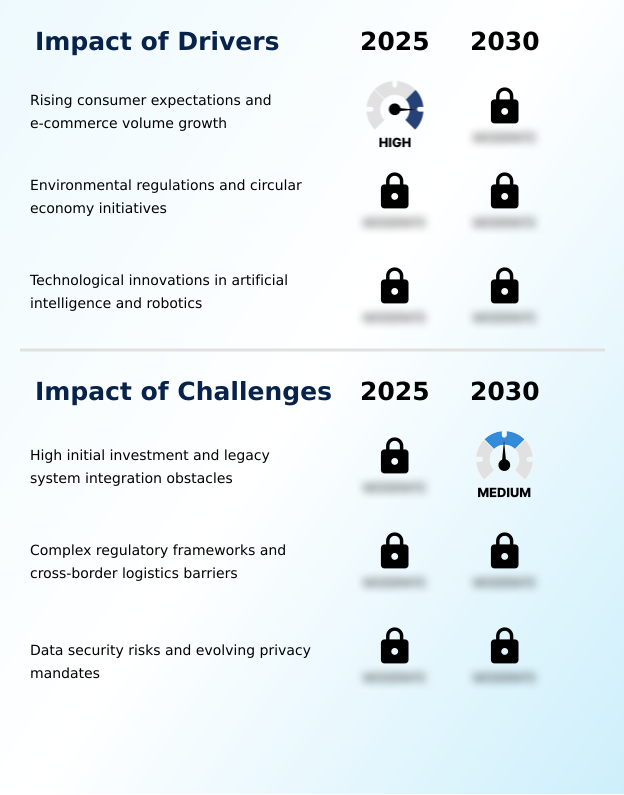
  • Rising consumer expectations for seamless returns, coupled with sustained growth in e-commerce transaction volumes, serves as a primary driver for the market.

  • Market growth is primarily fueled by rising e-commerce volumes and the strategic need for sustainable operations. The implementation of a formal return merchandise authorization (rma) process, managed through a returns management solution, has become essential.
  • Environmental regulations are promoting circular economy logistics and sustainable reverse logistics, driving the adoption of software with robust cross-border returns compliance features. Technological advancements, such as warehouse robotics integration for automated returns sorting, reduce manual labor costs by over 40%.
  • The use of returns fraud detection algorithms within returns and exchanges software further protects revenue.
  • Effective returns process management, supported by supply chain visibility tools and last-mile reverse logistics technology, is now a key differentiator for retail returns management, directly impacting customer satisfaction and operational efficiency.

What are the market trends shaping the Reverse Logistics Automation Software Industry?

  • The integration of generative AI is emerging as a significant market trend for dynamic dispositioning. This technology facilitates real-time, data-driven decisions on the optimal pathway for returned goods.

  • Key market trends revolve around intelligent automation and sustainability, with a significant shift toward predictive returns analysis and AI-driven returns forecasting. The adoption of a digital product passport is gaining traction, enabling comprehensive product lifecycle tracking and enhancing circular economy initiatives. This improves component recovery rates by over 15%.
  • Modern returns management saas platforms are also facilitating boxless returns processing and dynamic returns routing, which can accelerate warehouse processing speeds by 30%. This reverse logistics technology enables sophisticated returns management workflow automation and real-time returns tracking.
  • As part of this trend, returns optimization software and returns processing automation are becoming standard, while intelligent returns management systems provide the data-driven insights necessary for competitive advantage in a rapidly evolving market.

What challenges does the Reverse Logistics Automation Software Industry face during its growth?

  • High initial investment requirements and significant obstacles related to integrating new platforms with legacy enterprise systems present a key challenge affecting industry growth.

  • The market faces significant challenges related to implementation complexity and data security. Integrating modern supply chain execution software with legacy systems often leads to technical hurdles and can increase initial project costs by up to 30%. This complexity drives demand for specialized returns logistics services and returns operations software.
  • The reliance on a returns automation platform also elevates concerns around data privacy, necessitating robust security protocols in any returns tracking software to maintain consumer trust. Managing inventory recovery value requires precise product lifecycle tracking and serialized product returns capabilities.
  • Furthermore, the complexities of warranty management automation and returns accounting automation, especially for hazardous material returns and integrated carrier management within a circular supply chain management framework, demand sophisticated and often expensive customization.

Exclusive Technavio Analysis on Customer Landscape

The reverse logistics automation software market forecasting report includes the adoption lifecycle of the market, covering from the innovator’s stage to the laggard’s stage. It focuses on adoption rates in different regions based on penetration. Furthermore, the reverse logistics automation software market report also includes key purchase criteria and drivers of price sensitivity to help companies evaluate and develop their market growth analysis strategies.
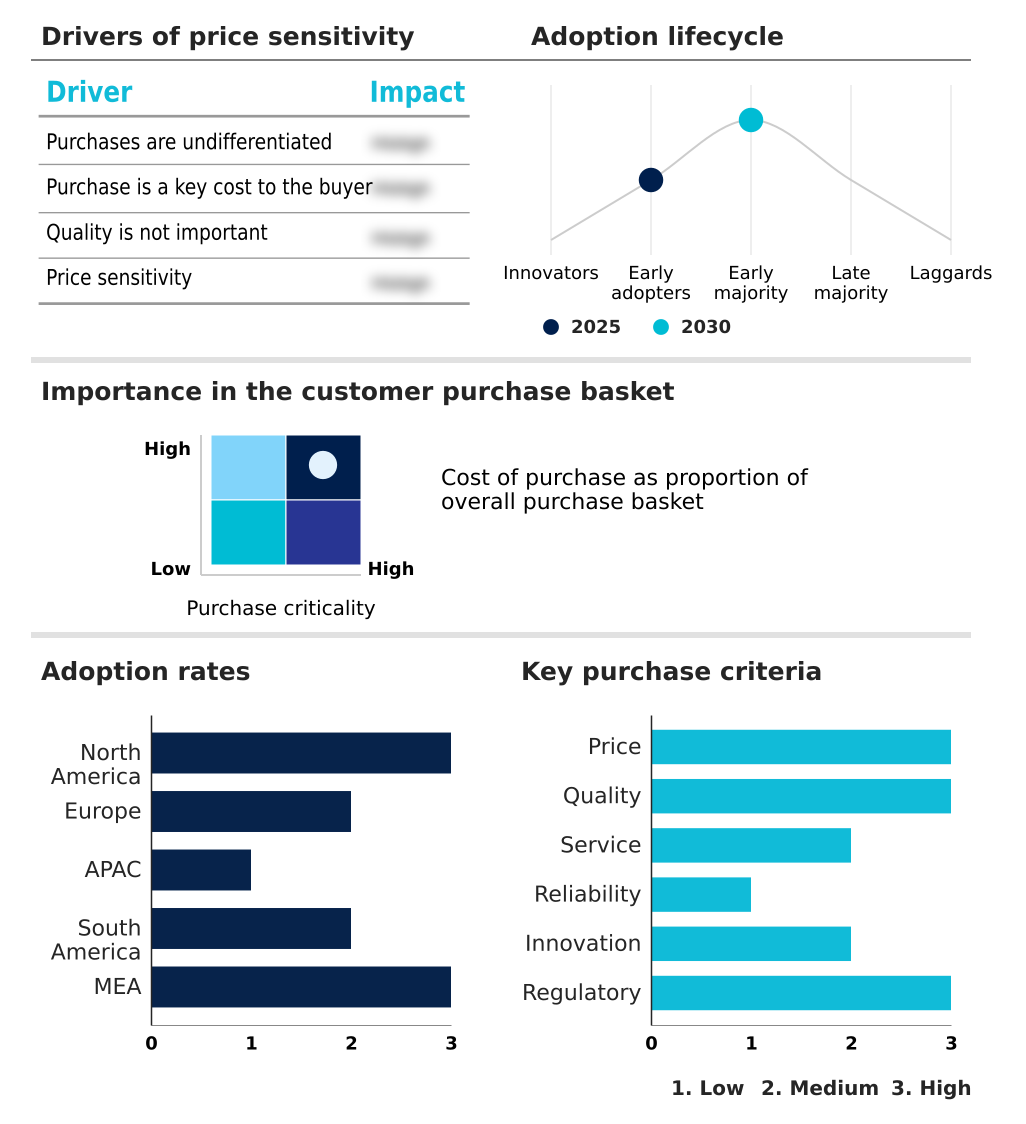
Customer Landscape of Reverse Logistics Automation Software Industry

Competitive Landscape

Companies are implementing various strategies, such as strategic alliances, reverse logistics automation software market forecast, partnerships, mergers and acquisitions, geographical expansion, and product/service launches, to enhance their presence in the industry.

12return - Specialized software for streamlining reverse logistics through automated returns processing, quality validation, and efficient inventory reintegration for e-commerce and retail operations.

The industry research and growth report includes detailed analyses of the competitive landscape of the market and information about key companies, including:

  • 12return
  • AfterShip Group
  • Blue Yonder Group Inc.
  • Descartes Systems Group Inc.
  • FarEye Technologies Inc.
  • Happy Returns
  • Inmar Inc.
  • Korber AG.
  • Loop Returns
  • Manhattan Associates Inc.
  • Mara Labs Inc.
  • Narvar Inc.
  • Oracle Corp.
  • Parcel Perform Pte Ltd.
  • ReBound Returns
  • ReturnLogic.
  • ReverseLogix
  • SAP SE
  • ShipHero LLC Inc.
  • ZigZag Global Ltd.

Qualitative and quantitative analysis of companies has been conducted to help clients understand the wider business environment as well as the strengths and weaknesses of key industry players. Data is qualitatively analyzed to categorize companies as pure play, category-focused, industry-focused, and diversified; it is quantitatively analyzed to categorize companies as dominant, leading, strong, tentative, and weak.

Recent Development and News in Reverse logistics automation software market

  • In August 2024, a major global robotics manufacturer collaborated with a software developer to create an autonomous sorting system fully integrated with reverse logistics automation software, using computer vision to identify and categorize returned items.
  • In November 2024, an international logistics provider initiated a pilot program in its Asian distribution centers using drones synchronized with return software to perform real-time inventory counts of returned goods.
  • In February 2025, a large-scale North American retail association introduced new digital standards aimed at reducing consumer refund processing times, compelling retailers to adopt automated reverse logistics software.
  • In March 2025, the European Commission implemented the Circular Electronics Act, a regulation mandating that manufacturers provide a clear and efficient path for the return and recycling of consumer electronics.

Dive into Technavio’s robust research methodology, blending expert interviews, extensive data synthesis, and validated models for unparalleled Reverse Logistics Automation Software Market insights. See full methodology.

Market Scope
Page number 296
Base year 2025
Historic period 2020-2024
Forecast period 2026-2030
Growth momentum & CAGR Accelerate at a CAGR of 9.5%
Market growth 2026-2030 USD 5636.7 million
Market structure Fragmented
YoY growth 2025-2026(%) 9.2%
Key countries US, Canada, Mexico, Germany, UK, France, Italy, The Netherlands, Spain, China, India, Japan, South Korea, Australia, Indonesia, Brazil, Argentina, Colombia, Saudi Arabia, UAE, South Africa, Israel and Turkey
Competitive landscape Leading Companies, Market Positioning of Companies, Competitive Strategies, and Industry Risks

Request Free Sample

Research Analyst Overview

  • The Reverse Logistics Automation Software Market is evolving from a niche operational tool into a core component of enterprise strategy, driven by the need for efficiency and sustainability. The integration of advanced analytics and automation is enabling businesses to transform returns management from a cost center into a value recovery engine.
  • Platforms now provide end-to-end visibility, allowing for proactive decision-making and improved inventory control. A key trend is the adoption of technologies that support the circular economy, such as digital product passports, which directly influences boardroom-level discussions on ESG reporting and long-term brand equity.
  • This shift toward data-driven reverse logistics is critical for navigating complex global supply chains and meeting heightened consumer expectations for seamless, transparent returns. Companies leveraging these advanced systems have achieved up to a 30% reduction in return processing times, underscoring the tangible benefits of investing in modern automation solutions.

What are the Key Data Covered in this Reverse Logistics Automation Software Market Research and Growth Report?

  • What is the expected growth of the Reverse Logistics Automation Software Market between 2026 and 2030?

    • USD 5.64 billion, at a CAGR of 9.5%

  • What segmentation does the market report cover?

    • The report is segmented by Deployment (Cloud based, and On premises), Service (Professional services, and Managed services), End-user (Retail and e-commerce, Electronics and electrical, Automotive, Healthcare, and Others) and Geography (North America, Europe, APAC, South America, Middle East and Africa)

  • Which regions are analyzed in the report?

    • North America, Europe, APAC, South America and Middle East and Africa

  • What are the key growth drivers and market challenges?

    • Rising consumer expectations and e-commerce volume growth, High initial investment and legacy system integration obstacles

  • Who are the major players in the Reverse Logistics Automation Software Market?

    • 12return, AfterShip Group, Blue Yonder Group Inc., Descartes Systems Group Inc., FarEye Technologies Inc., Happy Returns, Inmar Inc., Korber AG., Loop Returns, Manhattan Associates Inc., Mara Labs Inc., Narvar Inc., Oracle Corp., Parcel Perform Pte Ltd., ReBound Returns, ReturnLogic., ReverseLogix, SAP SE, ShipHero LLC Inc. and ZigZag Global Ltd.

Market Research Insights

  • The market is characterized by a dynamic shift toward intelligent platforms that deliver measurable business outcomes. The adoption of a modern returns management solution drives an average 20% improvement in processing efficiency, while integrated returns logistics services can reduce transportation costs by 15%.
  • As companies move from basic returns tracking software to comprehensive returns automation platforms, they gain deeper insights into their reverse supply chain. The use of a dedicated omnichannel returns solution allows retailers to unify customer experiences across online and physical channels.
  • Effective circular supply chain management, powered by returns operations software and advanced returns disposition software, is no longer an option but a strategic necessity for enhancing brand loyalty and operational resilience in a competitive landscape.

We can help! Our analysts can customize this reverse logistics automation software market research report to meet your requirements.

Get in touch

1. Executive Summary

1.1 Market overview

Executive Summary - Chart on Market Overview
Executive Summary - Data Table on Market Overview
Executive Summary - Chart on Global Market Characteristics
Executive Summary - Chart on Market by Geography
Executive Summary - Chart on Market Segmentation by Deployment
Executive Summary - Chart on Market Segmentation by Service
Executive Summary - Chart on Market Segmentation by End-user
Executive Summary - Chart on Incremental Growth
Executive Summary - Data Table on Incremental Growth
Executive Summary - Chart on Company Market Positioning

2. Technavio Analysis

2.1 Analysis of price sensitivity, lifecycle, customer purchase basket, adoption rates, and purchase criteria

2.2 Criticality of inputs and Factors of differentiation

Chart on Overview on criticality of inputs and factors of differentiation

2.3 Factors of disruption

Chart on Overview on factors of disruption

2.4 Impact of drivers and challenges

Chart on Impact of drivers and challenges in 2025 and 2030

3. Market Landscape

3.1 Market ecosystem

Chart on Parent Market
Data Table on - Parent Market

3.2 Market characteristics

Chart on Market characteristics analysis

3.3 Value chain analysis

Chart on Value chain analysis

4. Market Sizing

4.1 Market definition

Data Table on Offerings of companies included in the market definition

4.2 Market segment analysis

Market segments

4.3 Market size 2025

4.4 Market outlook: Forecast for 2025-2030

Chart on Global - Market size and forecast 2025-2030 ($ million)
Data Table on Global - Market size and forecast 2025-2030 ($ million)
Chart on Global Market: Year-over-year growth 2025-2030 (%)
Data Table on Global Market: Year-over-year growth 2025-2030 (%)

5. Historic Market Size

5.1 Global Reverse Logistics Automation Software Market 2020 - 2024

Historic Market Size - Data Table on Global Reverse Logistics Automation Software Market 2020 - 2024 ($ million)

5.2 Deployment segment analysis 2020 - 2024

Historic Market Size - Deployment Segment 2020 - 2024 ($ million)

5.3 Service segment analysis 2020 - 2024

Historic Market Size - Service Segment 2020 - 2024 ($ million)

5.4 End-user segment analysis 2020 - 2024

Historic Market Size - End-user Segment 2020 - 2024 ($ million)

5.5 Geography segment analysis 2020 - 2024

Historic Market Size - Geography Segment 2020 - 2024 ($ million)

5.6 Country segment analysis 2020 - 2024

Historic Market Size - Country Segment 2020 - 2024 ($ million)

6. Qualitative Analysis

6.1 The AI impact on global reverse logistics automation software market

7. Five Forces Analysis

7.1 Five forces summary

Five forces analysis - Comparison between 2025 and 2030

7.2 Bargaining power of buyers

Bargaining power of buyers - Impact of key factors 2025 and 2030

7.3 Bargaining power of suppliers

Bargaining power of suppliers - Impact of key factors in 2025 and 2030

7.4 Threat of new entrants

Threat of new entrants - Impact of key factors in 2025 and 2030

7.5 Threat of substitutes

Threat of substitutes - Impact of key factors in 2025 and 2030

7.6 Threat of rivalry

Threat of rivalry - Impact of key factors in 2025 and 2030

7.7 Market condition

Chart on Market condition - Five forces 2025 and 2030

8. Market Segmentation by Deployment

8.1 Market segments

Chart on Deployment - Market share 2025-2030 (%)
Data Table on Deployment - Market share 2025-2030 (%)

8.2 Comparison by Deployment

Chart on Comparison by Deployment
Data Table on Comparison by Deployment

8.3 Cloud based - Market size and forecast 2025-2030

Chart on Cloud based - Market size and forecast 2025-2030 ($ million)
Data Table on Cloud based - Market size and forecast 2025-2030 ($ million)
Chart on Cloud based - Year-over-year growth 2025-2030 (%)
Data Table on Cloud based - Year-over-year growth 2025-2030 (%)

8.4 On premises - Market size and forecast 2025-2030

Chart on On premises - Market size and forecast 2025-2030 ($ million)
Data Table on On premises - Market size and forecast 2025-2030 ($ million)
Chart on On premises - Year-over-year growth 2025-2030 (%)
Data Table on On premises - Year-over-year growth 2025-2030 (%)

8.5 Market opportunity by Deployment

Market opportunity by Deployment ($ million)
Data Table on Market opportunity by Deployment ($ million)

9. Market Segmentation by Service

9.1 Market segments

Chart on Service - Market share 2025-2030 (%)
Data Table on Service - Market share 2025-2030 (%)

9.2 Comparison by Service

Chart on Comparison by Service
Data Table on Comparison by Service

9.3 Professional services - Market size and forecast 2025-2030

Chart on Professional services - Market size and forecast 2025-2030 ($ million)
Data Table on Professional services - Market size and forecast 2025-2030 ($ million)
Chart on Professional services - Year-over-year growth 2025-2030 (%)
Data Table on Professional services - Year-over-year growth 2025-2030 (%)

9.4 Managed services - Market size and forecast 2025-2030

Chart on Managed services - Market size and forecast 2025-2030 ($ million)
Data Table on Managed services - Market size and forecast 2025-2030 ($ million)
Chart on Managed services - Year-over-year growth 2025-2030 (%)
Data Table on Managed services - Year-over-year growth 2025-2030 (%)

9.5 Market opportunity by Service

Market opportunity by Service ($ million)
Data Table on Market opportunity by Service ($ million)

10. Market Segmentation by End-user

10.1 Market segments

Chart on End-user - Market share 2025-2030 (%)
Data Table on End-user - Market share 2025-2030 (%)

10.2 Comparison by End-user

Chart on Comparison by End-user
Data Table on Comparison by End-user

10.3 Retail and e commerce - Market size and forecast 2025-2030

Chart on Retail and e commerce - Market size and forecast 2025-2030 ($ million)
Data Table on Retail and e commerce - Market size and forecast 2025-2030 ($ million)
Chart on Retail and e commerce - Year-over-year growth 2025-2030 (%)
Data Table on Retail and e commerce - Year-over-year growth 2025-2030 (%)

10.4 Electronics and electrical - Market size and forecast 2025-2030

Chart on Electronics and electrical - Market size and forecast 2025-2030 ($ million)
Data Table on Electronics and electrical - Market size and forecast 2025-2030 ($ million)
Chart on Electronics and electrical - Year-over-year growth 2025-2030 (%)
Data Table on Electronics and electrical - Year-over-year growth 2025-2030 (%)

10.5 Automotive - Market size and forecast 2025-2030

Chart on Automotive - Market size and forecast 2025-2030 ($ million)
Data Table on Automotive - Market size and forecast 2025-2030 ($ million)
Chart on Automotive - Year-over-year growth 2025-2030 (%)
Data Table on Automotive - Year-over-year growth 2025-2030 (%)

10.6 Healthcare - Market size and forecast 2025-2030

Chart on Healthcare - Market size and forecast 2025-2030 ($ million)
Data Table on Healthcare - Market size and forecast 2025-2030 ($ million)
Chart on Healthcare - Year-over-year growth 2025-2030 (%)
Data Table on Healthcare - Year-over-year growth 2025-2030 (%)

10.7 Others - Market size and forecast 2025-2030

Chart on Others - Market size and forecast 2025-2030 ($ million)
Data Table on Others - Market size and forecast 2025-2030 ($ million)
Chart on Others - Year-over-year growth 2025-2030 (%)
Data Table on Others - Year-over-year growth 2025-2030 (%)

10.8 Market opportunity by End-user

Market opportunity by End-user ($ million)
Data Table on Market opportunity by End-user ($ million)

11. Customer Landscape

11.1 Customer landscape overview

Analysis of price sensitivity, lifecycle, customer purchase basket, adoption rates, and purchase criteria

12. Geographic Landscape

12.1 Geographic segmentation

Chart on Market share by geography 2025-2030 (%)
Data Table on Market share by geography 2025-2030 (%)

12.2 Geographic comparison

Chart on Geographic comparison
Data Table on Geographic comparison

12.3 North America - Market size and forecast 2025-2030

Chart on North America - Market size and forecast 2025-2030 ($ million)
Data Table on North America - Market size and forecast 2025-2030 ($ million)
Chart on North America - Year-over-year growth 2025-2030 (%)
Data Table on North America - Year-over-year growth 2025-2030 (%)
Chart on Regional Comparison - North America
Data Table on Regional Comparison - North America

12.3.1 US - Market size and forecast 2025-2030

Chart on US - Market size and forecast 2025-2030 ($ million)
Data Table on US - Market size and forecast 2025-2030 ($ million)
Chart on US - Year-over-year growth 2025-2030 (%)
Data Table on US - Year-over-year growth 2025-2030 (%)

12.3.2 Canada - Market size and forecast 2025-2030

Chart on Canada - Market size and forecast 2025-2030 ($ million)
Data Table on Canada - Market size and forecast 2025-2030 ($ million)
Chart on Canada - Year-over-year growth 2025-2030 (%)
Data Table on Canada - Year-over-year growth 2025-2030 (%)

12.3.3 Mexico - Market size and forecast 2025-2030

Chart on Mexico - Market size and forecast 2025-2030 ($ million)
Data Table on Mexico - Market size and forecast 2025-2030 ($ million)
Chart on Mexico - Year-over-year growth 2025-2030 (%)
Data Table on Mexico - Year-over-year growth 2025-2030 (%)

12.4 Europe - Market size and forecast 2025-2030

Chart on Europe - Market size and forecast 2025-2030 ($ million)
Data Table on Europe - Market size and forecast 2025-2030 ($ million)
Chart on Europe - Year-over-year growth 2025-2030 (%)
Data Table on Europe - Year-over-year growth 2025-2030 (%)
Chart on Regional Comparison - Europe
Data Table on Regional Comparison - Europe

12.4.1 Germany - Market size and forecast 2025-2030

Chart on Germany - Market size and forecast 2025-2030 ($ million)
Data Table on Germany - Market size and forecast 2025-2030 ($ million)
Chart on Germany - Year-over-year growth 2025-2030 (%)
Data Table on Germany - Year-over-year growth 2025-2030 (%)

12.4.2 UK - Market size and forecast 2025-2030

Chart on UK - Market size and forecast 2025-2030 ($ million)
Data Table on UK - Market size and forecast 2025-2030 ($ million)
Chart on UK - Year-over-year growth 2025-2030 (%)
Data Table on UK - Year-over-year growth 2025-2030 (%)

12.4.3 France - Market size and forecast 2025-2030

Chart on France - Market size and forecast 2025-2030 ($ million)
Data Table on France - Market size and forecast 2025-2030 ($ million)
Chart on France - Year-over-year growth 2025-2030 (%)
Data Table on France - Year-over-year growth 2025-2030 (%)

12.4.4 Italy - Market size and forecast 2025-2030

Chart on Italy - Market size and forecast 2025-2030 ($ million)
Data Table on Italy - Market size and forecast 2025-2030 ($ million)
Chart on Italy - Year-over-year growth 2025-2030 (%)
Data Table on Italy - Year-over-year growth 2025-2030 (%)

12.4.5 The Netherlands - Market size and forecast 2025-2030

Chart on The Netherlands - Market size and forecast 2025-2030 ($ million)
Data Table on The Netherlands - Market size and forecast 2025-2030 ($ million)
Chart on The Netherlands - Year-over-year growth 2025-2030 (%)
Data Table on The Netherlands - Year-over-year growth 2025-2030 (%)

12.4.6 Spain - Market size and forecast 2025-2030

Chart on Spain - Market size and forecast 2025-2030 ($ million)
Data Table on Spain - Market size and forecast 2025-2030 ($ million)
Chart on Spain - Year-over-year growth 2025-2030 (%)
Data Table on Spain - Year-over-year growth 2025-2030 (%)

12.5 APAC - Market size and forecast 2025-2030

Chart on APAC - Market size and forecast 2025-2030 ($ million)
Data Table on APAC - Market size and forecast 2025-2030 ($ million)
Chart on APAC - Year-over-year growth 2025-2030 (%)
Data Table on APAC - Year-over-year growth 2025-2030 (%)
Chart on Regional Comparison - APAC
Data Table on Regional Comparison - APAC

12.5.1 China - Market size and forecast 2025-2030

Chart on China - Market size and forecast 2025-2030 ($ million)
Data Table on China - Market size and forecast 2025-2030 ($ million)
Chart on China - Year-over-year growth 2025-2030 (%)
Data Table on China - Year-over-year growth 2025-2030 (%)

12.5.2 India - Market size and forecast 2025-2030

Chart on India - Market size and forecast 2025-2030 ($ million)
Data Table on India - Market size and forecast 2025-2030 ($ million)
Chart on India - Year-over-year growth 2025-2030 (%)
Data Table on India - Year-over-year growth 2025-2030 (%)

12.5.3 Japan - Market size and forecast 2025-2030

Chart on Japan - Market size and forecast 2025-2030 ($ million)
Data Table on Japan - Market size and forecast 2025-2030 ($ million)
Chart on Japan - Year-over-year growth 2025-2030 (%)
Data Table on Japan - Year-over-year growth 2025-2030 (%)

12.5.4 South Korea - Market size and forecast 2025-2030

Chart on South Korea - Market size and forecast 2025-2030 ($ million)
Data Table on South Korea - Market size and forecast 2025-2030 ($ million)
Chart on South Korea - Year-over-year growth 2025-2030 (%)
Data Table on South Korea - Year-over-year growth 2025-2030 (%)

12.5.5 Australia - Market size and forecast 2025-2030

Chart on Australia - Market size and forecast 2025-2030 ($ million)
Data Table on Australia - Market size and forecast 2025-2030 ($ million)
Chart on Australia - Year-over-year growth 2025-2030 (%)
Data Table on Australia - Year-over-year growth 2025-2030 (%)

12.5.6 Indonesia - Market size and forecast 2025-2030

Chart on Indonesia - Market size and forecast 2025-2030 ($ million)
Data Table on Indonesia - Market size and forecast 2025-2030 ($ million)
Chart on Indonesia - Year-over-year growth 2025-2030 (%)
Data Table on Indonesia - Year-over-year growth 2025-2030 (%)

12.6 South America - Market size and forecast 2025-2030

Chart on South America - Market size and forecast 2025-2030 ($ million)
Data Table on South America - Market size and forecast 2025-2030 ($ million)
Chart on South America - Year-over-year growth 2025-2030 (%)
Data Table on South America - Year-over-year growth 2025-2030 (%)
Chart on Regional Comparison - South America
Data Table on Regional Comparison - South America

12.6.1 Brazil - Market size and forecast 2025-2030

Chart on Brazil - Market size and forecast 2025-2030 ($ million)
Data Table on Brazil - Market size and forecast 2025-2030 ($ million)
Chart on Brazil - Year-over-year growth 2025-2030 (%)
Data Table on Brazil - Year-over-year growth 2025-2030 (%)

12.6.2 Argentina - Market size and forecast 2025-2030

Chart on Argentina - Market size and forecast 2025-2030 ($ million)
Data Table on Argentina - Market size and forecast 2025-2030 ($ million)
Chart on Argentina - Year-over-year growth 2025-2030 (%)
Data Table on Argentina - Year-over-year growth 2025-2030 (%)

12.6.3 Colombia - Market size and forecast 2025-2030

Chart on Colombia - Market size and forecast 2025-2030 ($ million)
Data Table on Colombia - Market size and forecast 2025-2030 ($ million)
Chart on Colombia - Year-over-year growth 2025-2030 (%)
Data Table on Colombia - Year-over-year growth 2025-2030 (%)

12.7 Middle East and Africa - Market size and forecast 2025-2030

Chart on Middle East and Africa - Market size and forecast 2025-2030 ($ million)
Data Table on Middle East and Africa - Market size and forecast 2025-2030 ($ million)
Chart on Middle East and Africa - Year-over-year growth 2025-2030 (%)
Data Table on Middle East and Africa - Year-over-year growth 2025-2030 (%)
Chart on Regional Comparison - Middle East and Africa
Data Table on Regional Comparison - Middle East and Africa

12.7.1 Saudi Arabia - Market size and forecast 2025-2030

Chart on Saudi Arabia - Market size and forecast 2025-2030 ($ million)
Data Table on Saudi Arabia - Market size and forecast 2025-2030 ($ million)
Chart on Saudi Arabia - Year-over-year growth 2025-2030 (%)
Data Table on Saudi Arabia - Year-over-year growth 2025-2030 (%)

12.7.2 UAE - Market size and forecast 2025-2030

Chart on UAE - Market size and forecast 2025-2030 ($ million)
Data Table on UAE - Market size and forecast 2025-2030 ($ million)
Chart on UAE - Year-over-year growth 2025-2030 (%)
Data Table on UAE - Year-over-year growth 2025-2030 (%)

12.7.3 South Africa - Market size and forecast 2025-2030

Chart on South Africa - Market size and forecast 2025-2030 ($ million)
Data Table on South Africa - Market size and forecast 2025-2030 ($ million)
Chart on South Africa - Year-over-year growth 2025-2030 (%)
Data Table on South Africa - Year-over-year growth 2025-2030 (%)

12.7.4 Israel - Market size and forecast 2025-2030

Chart on Israel - Market size and forecast 2025-2030 ($ million)
Data Table on Israel - Market size and forecast 2025-2030 ($ million)
Chart on Israel - Year-over-year growth 2025-2030 (%)
Data Table on Israel - Year-over-year growth 2025-2030 (%)

12.7.5 Turkey - Market size and forecast 2025-2030

Chart on Turkey - Market size and forecast 2025-2030 ($ million)
Data Table on Turkey - Market size and forecast 2025-2030 ($ million)
Chart on Turkey - Year-over-year growth 2025-2030 (%)
Data Table on Turkey - Year-over-year growth 2025-2030 (%)

12.8 Market opportunity by geography

Market opportunity by geography ($ million)
Data Tables on Market opportunity by geography ($ million)

13. Drivers, Challenges, and Opportunity

13.1 Market drivers

Rising consumer expectations and e-commerce volume growth
Environmental regulations and circular economy initiatives
Technological innovations in artificial intelligence and robotics

13.2 Market challenges

High initial investment and legacy system integration obstacles
Complex regulatory frameworks and cross-border logistics barriers
Data security risks and evolving privacy mandates

13.3 Impact of drivers and challenges

Impact of drivers and challenges in 2025 and 2030

13.4 Market opportunities

Integration of generative AI for dynamic dispositioning
Proliferation of digital product passports and circularity tracking
Expansion of decentralized return networks and boxless logistics

14. Competitive Landscape

14.1 Overview

14.2

Overview on criticality of inputs and factors of differentiation

14.3 Landscape disruption

Overview on factors of disruption

14.4 Industry risks

Impact of key risks on business

15. Competitive Analysis

15.1 Companies profiled

Companies covered

15.2 Company ranking index

15.3 Market positioning of companies

Matrix on companies position and classification

15.4 12return

12return - Overview
12return - Product / Service
12return - Key offerings
SWOT

15.5 AfterShip Group

AfterShip Group - Overview
AfterShip Group - Product / Service
AfterShip Group - Key offerings
SWOT

15.6 Blue Yonder Group Inc.

Blue Yonder Group Inc. - Overview
Blue Yonder Group Inc. - Product / Service
Blue Yonder Group Inc. - Key offerings
SWOT

15.7 Descartes Systems Group Inc.

Descartes Systems Group Inc. - Overview
Descartes Systems Group Inc. - Business segments
Descartes Systems Group Inc. - Key offerings
Descartes Systems Group Inc. - Segment focus
SWOT

15.8 Happy Returns

Happy Returns - Overview
Happy Returns - Product / Service
Happy Returns - Key offerings
SWOT

15.9 Inmar Inc.

Inmar Inc. - Overview
Inmar Inc. - Product / Service
Inmar Inc. - Key offerings
SWOT

15.10 Korber AG.

Korber AG. - Overview
Korber AG. - Product / Service
Korber AG. - Key offerings
SWOT

15.11 Loop Returns

Loop Returns - Overview
Loop Returns - Product / Service
Loop Returns - Key offerings
SWOT

15.12 Manhattan Associates Inc.

Manhattan Associates Inc. - Overview
Manhattan Associates Inc. - Business segments
Manhattan Associates Inc. - Key news
Manhattan Associates Inc. - Key offerings
Manhattan Associates Inc. - Segment focus
SWOT

15.13 Narvar Inc.

Narvar Inc. - Overview
Narvar Inc. - Product / Service
Narvar Inc. - Key offerings
SWOT

15.14 Oracle Corp.

Oracle Corp. - Overview
Oracle Corp. - Business segments
Oracle Corp. - Key news
Oracle Corp. - Key offerings
Oracle Corp. - Segment focus
SWOT

15.15 ReturnLogic.

ReturnLogic. - Overview
ReturnLogic. - Product / Service
ReturnLogic. - Key offerings
SWOT

15.16 ReverseLogix

ReverseLogix - Overview
ReverseLogix - Product / Service
ReverseLogix - Key offerings
SWOT

15.17 SAP SE

SAP SE - Overview
SAP SE - Business segments
SAP SE - Key news
SAP SE - Key offerings
SAP SE - Segment focus
SWOT

15.18 ZigZag Global Ltd.

ZigZag Global Ltd. - Overview
ZigZag Global Ltd. - Product / Service
ZigZag Global Ltd. - Key offerings
SWOT

16. Appendix

16.1 Scope of the report

Market definition
Objectives
Notes and caveats

16.2 Inclusions and exclusions checklist

Inclusions checklist
Exclusions checklist

16.3 Currency conversion rates for US$

16.4 Research methodology

16.5 Data procurement

Information sources

16.6 Data validation

16.7 Validation techniques employed for market sizing

16.8 Data synthesis

16.9 360 degree market analysis

16.10 List of abbreviations

Research Methodology

Technavio presents a detailed picture of the market by way of study, synthesis, and summation of data from multiple sources. The analysts have presented the various facets of the market with a particular focus on identifying the key industry influencers. The data thus presented is comprehensive, reliable, and the result of extensive research, both primary and secondary.

INFORMATION SOURCES

Primary sources

  • Manufacturers and suppliers
  • Channel partners
  • Industry experts
  • Strategic decision makers

Secondary sources

  • Industry journals and periodicals
  • Government data
  • Financial reports of key industry players
  • Historical data
  • Press releases

DATA ANALYSIS

Data Synthesis

  • Collation of data
  • Estimation of key figures
  • Analysis of derived insights

Data Validation

  • Triangulation with data models
  • Reference against proprietary databases
  • Corroboration with industry experts

REPORT WRITING

Qualitative

  • Market drivers
  • Market challenges
  • Market trends
  • Five forces analysis

Quantitative

  • Market size and forecast
  • Market segmentation
  • Geographical insights
  • Competitive landscape

Interested in this report?

Get your sample now to see our research methodology and insights!

Download Now

Frequently Asked Questions

Reverse Logistics Automation Software market growth will increase by USD 5636.7 million during 2026-2030.

The Reverse Logistics Automation Software market is expected to grow at a CAGR of 9.5% during 2026-2030.

Reverse Logistics Automation Software market is segmented by Deployment (Cloud based, On premises) Service (Professional services, Managed services) End-user (Retail and e commerce, Electronics and electrical, Automotive, Healthcare, Others)

12return, AfterShip Group, Blue Yonder Group Inc., Descartes Systems Group Inc., FarEye Technologies Inc., Happy Returns, Inmar Inc., Korber AG., Loop Returns, Manhattan Associates Inc., Mara Labs Inc., Narvar Inc., Oracle Corp., Parcel Perform Pte Ltd., ReBound Returns, ReturnLogic., ReverseLogix, SAP SE, ShipHero LLC Inc., ZigZag Global Ltd. are a few of the key vendors in the Reverse Logistics Automation Software market.

North America will register the highest growth rate of 38.9% among the other regions. Therefore, the Reverse Logistics Automation Software market in North America is expected to garner significant business opportunities for the vendors during the forecast period.

US, Canada, Mexico, Germany, UK, France, Italy, The Netherlands, Spain, China, India, Japan, South Korea, Australia, Indonesia, Brazil, Argentina, Colombia, Saudi Arabia, UAE, South Africa, Israel, Turkey

  • Rising consumer expectations and e-commerce volume growth is the driving factor this market.

The Reverse Logistics Automation Software market vendors should focus on grabbing business opportunities from the Deployment segment as it accounted for the largest market share in the base year.
RIA - Research AI Assistant
Ask RIA