



Robo Advisory Services Market Size 2024-2028
The robo advisory services market size is forecast to increase by USD 1306.37 billion, at a CAGR of 9.16% between 2023 and 2028.
- The market is witnessing significant growth, driven by the increasing adoption of artificial intelligence (AI) and machine learning (ML) technologies. These advanced technologies enable robo advisors to offer personalized investment recommendations based on an individual's financial goals, risk tolerance, and investment history. Furthermore, the emergence of hybrid robo advisory models, which combine human financial advisors with AI algorithms, is gaining popularity as it offers the benefits of both human expertise and automated investment management. However, the market faces challenges related to data security and privacy concerns. With the increasing use of digital platforms for managing financial information, ensuring the security and privacy of sensitive customer data is paramount.
- Breaches can lead to significant reputational damage and financial losses for both the robo advisory firms and their clients. As such, companies must invest in robust cybersecurity measures and adhere to stringent data protection regulations to mitigate these risks and build trust with their customers.
What will be the Size of the Robo Advisory Services Market during the forecast period?
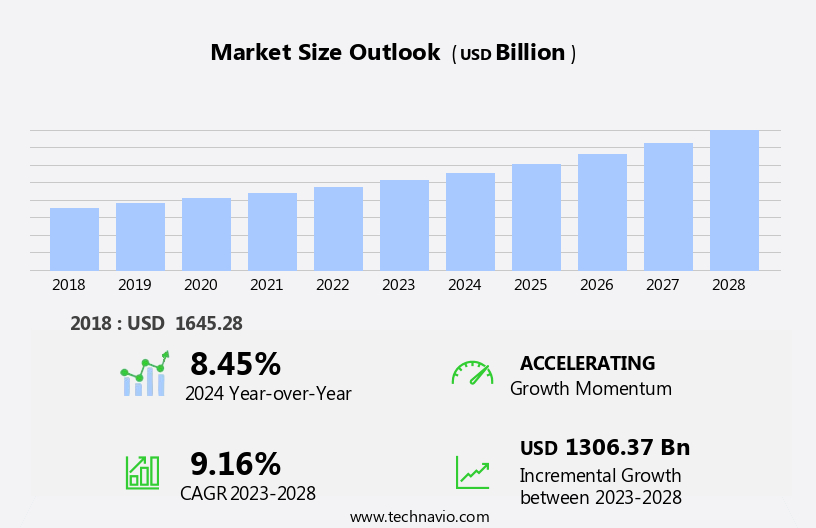
Explore in-depth regional segment analysis with market size data - historical 2018-2022 and forecasts 2024-2028 - in the full report.
Request Free Sample
The robo-advisory services market continues to evolve, integrating advanced financial technologies to cater to diverse client needs. Robo-advisors seamlessly blend financial education, insurance planning, account balances, risk-adjusted return, and robo-advisor platforms to deliver personalized financial advice. These platforms utilize data analytics to understand clients' financial goals, tax-loss harvesting, investment strategies, historical data, and risk tolerance, enabling automated investment and tax optimization. Robo-advisors prioritize user experience (UX) and user interface (UI) design, ensuring seamless account opening and funding. API integration facilitates data exchange with external sources, enhancing investment research and goal setting. Compliance regulations are meticulously addressed, ensuring privacy regulations and security protocols protect clients' data.
Performance tracking, portfolio optimization, and rebalancing are essential components of robo-advisory services. Fees and charges, including transaction fees and machine learning algorithms, are transparently disclosed. Retirement projections, estate planning, and goal setting are integrated into the robo-advisor platform, providing clients with comprehensive financial planning. Robo-advisors employ artificial intelligence (AI) and machine learning to offer investment recommendations and asset allocation, optimizing investment performance and risk management based on clients' investment horizon and reporting capabilities. ETF selection and retirement planning are also available, addressing various investment goals and tax implications. Customer support and financial education are integral to robo-advisory services, ensuring clients are well-informed about their investments and financial planning.
Digital wealth management offers a convenient and accessible solution for managing accounts and tracking investment performance. Overall, the robo-advisory services market is a dynamic and evolving landscape, continually adapting to meet the changing needs of clients.
How is this Robo Advisory Services Industry segmented?
The robo advisory services industry research report provides comprehensive data (region-wise segment analysis), with forecasts and estimates in "USD billion" for the period 2024-2028, as well as historical data from 2018-2022 for the following segments.
- End-user
- High net worth individuals
- Retail investors
- Service Type
- Portfolio management
- Tax optimization
- Retirement planning
- Others
- Geography
- North America
- US
- Europe
- Germany
- UK
- APAC
- India
- Japan
- Rest of World (ROW)
- North America
By End-user Insights
The high net worth individuals segment is estimated to witness significant growth during the forecast period.
High net worth individuals (HNWIs) increasingly turn to robo advisory services for cost-effective, personalized investment management solutions. These platforms offer lower fees than traditional wealth management firms, providing HNWIs with 24/7 access to tools and services. Robo advisors employ user-friendly interfaces and seamless API integrations for account funding, enabling HNWIs to easily open and manage accounts. Financial technology (fintech) and data analytics power these platforms, allowing for customized investment strategies based on individual financial goals, risk tolerance, and preferences. HNWIs value transparency and control, which robo advisors deliver through clear reporting and analytics. Tax optimization, portfolio rebalancing, and automated investment management further appeal to HNWIs, who can monitor their investments closely and make informed decisions.
Robo advisors prioritize security protocols, data security, and regulatory compliance to ensure client privacy and peace of mind. Personalized financial advice, investment research, and goal setting are also available, offering HNWIs a comprehensive digital wealth management experience. Account management, financial education, and insurance planning are additional features that cater to HNWIs' complex financial needs. By leveraging artificial intelligence (AI), machine learning, and algorithmic trading, robo advisors optimize risk-adjusted returns and manage investment performance, asset allocation, mutual fund selection, and ETF selection. Robo advisors also offer tax implications analysis and financial news updates, keeping HNWIs informed and in control of their investments.
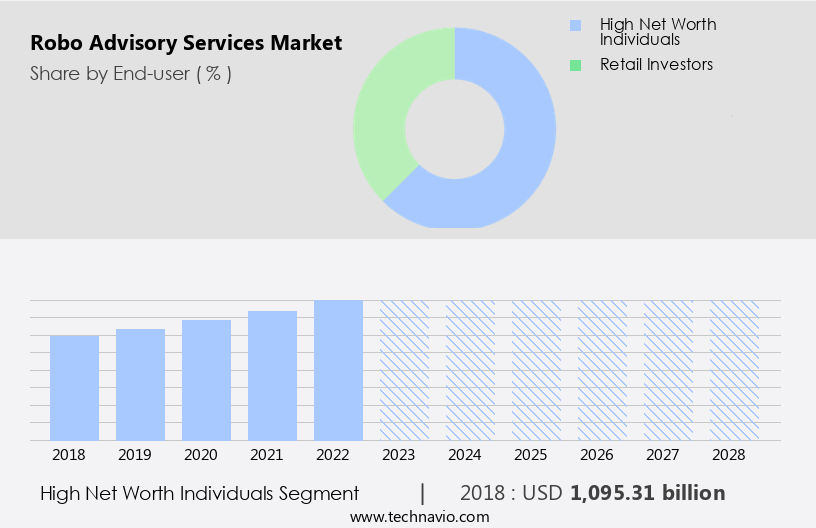
The High net worth individuals segment was valued at USD 1095.31 billion in 2018 and showed a gradual increase during the forecast period.
Regional Analysis
North America is estimated to contribute 37% to the growth of the global market during the forecast period. Technavio’s analysts have elaborately explained the regional trends and drivers that shape the market during the forecast period.

In North America, the demand for digital financial services is on the rise, fueled by tech-savvy consumers seeking convenient and accessible investment solutions. Robo advisory services, with their lower fees compared to traditional financial advisors, are particularly attractive to cost-conscious investors in this region. As fees become an increasingly significant consideration for investors, the affordability of robo advisors is driving their adoption. A significant portion of the North American population, the millennial demographic, is turning to robo advisory services for their investment needs. These digital natives value the convenience, transparency, and low costs offered by robo advisors, making them a major growth factor for the regional market.
The popularity of passive investing strategies, such as index funds and exchange-traded funds (ETFs), is also contributing to the growing adoption of robo advisory services. User experience and interface design play crucial roles in attracting and retaining clients, with API integration and account funding streamlining the onboarding process. Financial technology (fintech) and data analytics enable personalized financial advice, investment recommendations, and automated investment management. Tax optimization, risk tolerance assessment, and algorithmic trading are essential features for many investors, while privacy regulations ensure data security. Compliance regulations, performance analysis, and reporting capabilities are also important considerations for both robo advisors and their clients.
Digital wealth management, portfolio optimization, and risk management are key services offered by robo advisors, with performance tracking and asset allocation crucial for investment success. Transaction fees, machine learning, and artificial intelligence are essential components of robo advisory platforms, providing investors with real-time insights and automated investment strategies. Investment goals, estate planning, goal setting, and financial education are also essential services offered by robo advisors, catering to the diverse needs of their client base. In summary, the North American robo advisory market is experiencing significant growth, driven by the tech-savvy demographic, the affordability of robo advisors, and the popularity of passive investing strategies.
Robo advisors offer a range of services, from investment goals and financial education to portfolio optimization and risk management, making them an attractive alternative to traditional financial advisors.
Market Dynamics
Our researchers analyzed the data with 2023 as the base year, along with the key drivers, trends, and challenges. A holistic analysis of drivers will help companies refine their marketing strategies to gain a competitive advantage.
What are the key market drivers leading to the rise in the adoption of Robo Advisory Services Industry?
- The increasing implementation of Artificial Intelligence (AI) and Machine Learning (ML) technologies in robo-advisory services is the primary catalyst fueling market growth.
- Robo advisory services have gained significant traction in the financial technology (fintech) sector due to the integration of advanced AI and ML algorithms. These technologies enable platforms to analyze vast amounts of financial data, identifying trends, patterns, and correlations for more informed investment decisions. By leveraging historical data and predictive models, robo advisors can anticipate market shifts and optimize portfolio returns, while minimizing risks. Client segmentation is a crucial aspect of robo advisory services, ensuring a user-centric approach. User experience (UX) and user interface (UI) design play a pivotal role in attracting and retaining clients. API integration streamlines account funding and investment strategies, enhancing the overall user experience.
- Data analytics is a key component of robo advisory services, allowing for personalized financial goals and investment recommendations based on individual risk tolerance and preferences. Tax-loss harvesting is another valuable feature, optimizing tax liabilities and maximizing returns. Account opening and investment strategies are automated, making the process efficient and convenient for clients. In conclusion, the robo advisory market continues to evolve, driven by technological advancements and evolving client needs. AI and ML algorithms are at the forefront of this evolution, enabling personalized investment recommendations, improved performance, and enhanced user experience.
What are the market trends shaping the Robo Advisory Services Industry?
- The growing adoption of hybrid robo-advisory models represents a significant market trend in the financial industry. Hybrid models combine the benefits of automated investment management with the personalized advice of human financial professionals.
- Robo advisory services have gained popularity due to their automated investment management and personalized financial recommendations. Hybrid models, in particular, combine the advantages of technology-driven automation and human guidance. These models cater to investors' unique requirements, considering their risk tolerance, investment goals, and preferences. The use of algorithmic trading, artificial intelligence (AI), and machine learning enables efficient portfolio management and tax optimization. However, investors may still need human advisors for complex financial decisions, such as retirement projections and estate planning. Hybrid robo advisory services offer both automated investment and human expertise, ensuring a harmonious balance between technology and personalized guidance.
- Security protocols and privacy regulations are essential considerations, ensuring investors' data remains secure. Transaction fees and charges are also crucial factors, with varying models offering different fee structures. Overall, hybrid robo advisory services provide comprehensive wealth management solutions, addressing investors' multifaceted financial needs while offering access to human advisors for emotional support and complex financial matters.
What challenges does the Robo Advisory Services Industry face during its growth?
- The growth of the robo-advisory industry is significantly impacted by concerns surrounding data security and privacy, which represent a major challenge that must be addressed to maintain client trust and ensure regulatory compliance.
- Robo advisory services have gained popularity in the digital wealth management industry due to their convenience and affordability. These platforms offer personalized financial advice, portfolio optimization, performance tracking, risk-adjusted return, and investment options based on individual financial goals and risk tolerance. However, with the increasing adoption of robo advisory services comes the heightened risk of cybersecurity threats. Robo advisory platforms store vast amounts of sensitive financial information and personal data, making them attractive targets for cybercriminals. Data breaches, hacking attempts, malware attacks, and phishing scams pose significant risks to both robo advisory firms and their clients. Unauthorized access to client information, including account credentials, financial transactions, and personal details, can lead to financial fraud, identity theft, and reputational damage.
- Moreover, robo advisory firms often rely on third-party service providers to support their operations. Ensuring data security and compliance regulations are met by these providers is crucial to mitigate risks and protect client information. Performance analysis and compliance regulations are essential components of robo advisory services, ensuring that clients receive optimal investment returns while adhering to regulatory requirements. In conclusion, while robo advisory services offer numerous benefits, including financial education, insurance planning, account management, and performance analysis, it is essential to prioritize data security and compliance regulations to protect client information and maintain trust in the industry.
Exclusive Customer Landscape
The robo advisory services market forecasting report includes the adoption lifecycle of the market, covering from the innovator’s stage to the laggard’s stage. It focuses on adoption rates in different regions based on penetration. Furthermore, the robo advisory services market report also includes key purchase criteria and drivers of price sensitivity to help companies evaluate and develop their market growth analysis strategies.

Customer Landscape
Key Companies & Market Insights
Companies are implementing various strategies, such as strategic alliances, robo advisory services market forecast, partnerships, mergers and acquisitions, geographical expansion, and product/service launches, to enhance their presence in the industry.
ACORNS ADVISERS LLC - This company specializes in robo-advisory services, utilizing advanced technology to automate investment management.
The industry research and growth report includes detailed analyses of the competitive landscape of the market and information about key companies, including:
- ACORNS ADVISERS LLC
- Axos Financial Inc.
- Betterment LLC
- Fincite GmbH
- FMR LLC
- Ginmon Vermogensverwaltung GmbH
- JPMorgan Chase and Co.
- M1 Holdings Inc.
- MFM Investment Ltd.
- Robinhood Financial LLC
- Scalable Capital GmbH
- SigFig Wealth Management LLC
- SoFi Technologies Inc.
- Stash Financial Inc.
- The Charles Schwab Corp.
- The Vanguard Group Inc.
- Wealthfront Corp.
- Wealthify Ltd.
- Bank of America Corp.
- BlackRock Inc.
Qualitative and quantitative analysis of companies has been conducted to help clients understand the wider business environment as well as the strengths and weaknesses of key industry players. Data is qualitatively analyzed to categorize companies as pure play, category-focused, industry-focused, and diversified; it is quantitatively analyzed to categorize companies as dominant, leading, strong, tentative, and weak.
Recent Development and News in Robo Advisory Services Market
- In January 2024, Betterment, a leading robo-advisory firm, announced the launch of its new socially responsible investing (SRI) portfolio, catering to clients seeking to align their investments with their values (Betterment Press Release). This expansion marked a significant strategic move to cater to the growing demand for socially responsible investment options.
- In March 2024, BlackRock, the world's largest asset manager, entered into a partnership with iShares and Charles Schwab to offer its digital investing platform, Aladdin, to Schwab clients. This collaboration aimed to combine BlackRock's investment expertise with Schwab's digital capabilities, creating a more comprehensive offering for investors (BlackRock Press Release).
- In May 2024, Wealthfront, another major robo-advisor, raised USD 210 million in a Series E funding round, led by Durable Capital Partners. This investment brought Wealthfront's total funding to over USD 700 million, further solidifying its position as a key player in the robo-advisory market (TechCrunch).
- In April 2025, the Securities and Exchange Commission (SEC) approved the first rule change allowing robo-advisors to use target-date funds in their automated investment portfolios. This approval opened the door for robo-advisors to offer more diversified investment options and better risk management tools to their clients (SEC Press Release).
Research Analyst Overview
- The robo-advisory services market is experiencing dynamic growth, driven by the increasing adoption of technology in income investing and alternative investments. Data visualization tools enable investors to make informed decisions based on complex financial data. Financial regulations continue to shape the industry, with compliance audits and anti-money laundering (AML) measures being crucial. Real estate investing, value investing, and private equity are popular investment strategies, while sentiment analysis and predictive analytics offer insights into market trends. Data encryption and blockchain technology ensure secure transactions and transparency. Alternative investments, such as cryptocurrency, are integrated into robo-advisory platforms, expanding investment opportunities.
- Content marketing, customer onboarding, and user engagement strategies are essential for attracting and retaining clients. Mobile app development and email marketing are key channels for reaching investors, while marketing automation enhances customer acquisition and lead generation. Behavioral finance and quantitative analysis inform investment decisions, while ESG investing aligns investments with ethical values. Social media marketing and referral programs boost brand awareness and customer acquisition. Growth investing and customer retention strategies ensure long-term success in the competitive robo-advisory landscape.
Dive into Technavio’s robust research methodology, blending expert interviews, extensive data synthesis, and validated models for unparalleled Robo Advisory Services Market insights. See full methodology.
|
Market Scope |
|
|
Report Coverage |
Details |
|
Page number |
155 |
|
Base year |
2023 |
|
Historic period |
2018-2022 |
|
Forecast period |
2024-2028 |
|
Growth momentum & CAGR |
Accelerate at a CAGR of 9.16% |
|
Market growth 2024-2028 |
USD 1306.37 billion |
|
Market structure |
Fragmented |
|
YoY growth 2023-2024(%) |
8.45 |
|
Key countries |
US, Japan, India, UK, and Germany |
|
Competitive landscape |
Leading Companies, Market Positioning of Companies, Competitive Strategies, and Industry Risks |
What are the Key Data Covered in this Robo Advisory Services Market Research and Growth Report?
- CAGR of the Robo Advisory Services industry during the forecast period
- Detailed information on factors that will drive the growth and forecasting between 2024 and 2028
- Precise estimation of the size of the market and its contribution of the industry in focus to the parent market
- Accurate predictions about upcoming growth and trends and changes in consumer behaviour
- Growth of the market across North America, Europe, APAC, South America, and Middle East and Africa
- Thorough analysis of the market’s competitive landscape and detailed information about companies
- Comprehensive analysis of factors that will challenge the robo advisory services market growth of industry companies
We can help! Our analysts can customize this robo advisory services market research report to meet your requirements.
 RIA -
RIA - 
