


Safety Apparel Market Size 2024-2028
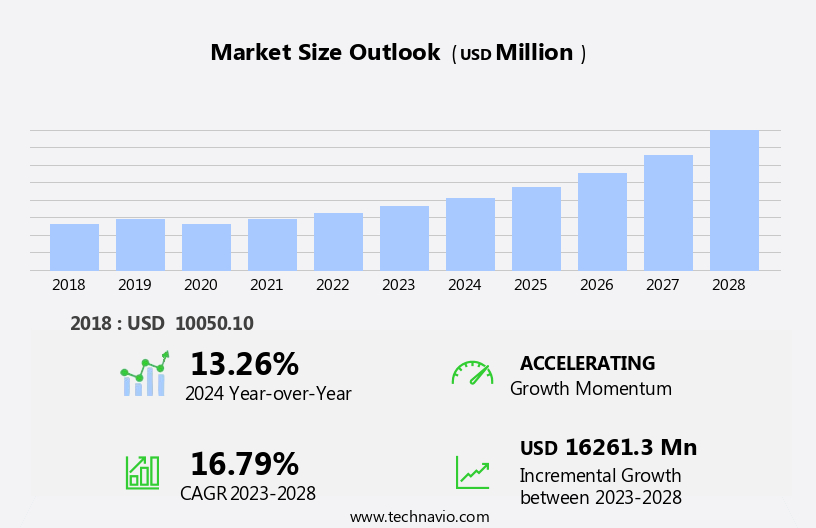
The safety apparel market size is forecast to increase by USD 16.26 billion, at a CAGR of 16.79% between 2023 and 2028.
- The market is driven by the increasing emphasis on customization and quality in personal protective equipment. Companies are focusing on offering tailored solutions to cater to diverse industry requirements and worker preferences. Additionally, the integration of smart and wearable technology in safety apparel is gaining traction, with innovations such as temperature-regulating fabrics, real-time monitoring systems, and self-decontaminating materials enhancing worker safety and productivity. However, the market faces challenges as well. The rising cost of raw materials, particularly oil-based polymers used in the production of protective clothing, is impacting the supply chain and potentially increasing prices for end-users.
- Furthermore, ensuring the effective implementation of advanced technologies in safety apparel, while maintaining affordability and accessibility, poses a significant challenge for market participants. Companies must navigate these obstacles through strategic partnerships, continuous research and development, and effective cost management to capitalize on the market's potential and meet the evolving needs of their customers.
What will be the Size of the Safety Apparel Market during the forecast period?
Explore in-depth regional segment analysis with market size data - historical 2018-2022 and forecasts 2024-2028 - in the full report.
Request Free Sample
The market continues to evolve, driven by the constant need to protect workers across various sectors from occupational hazards. This dynamic market encompasses a range of products, including head protection, safety nets, safety footwear, and high-visibility clothing, among others. The ongoing unfolding of market activities is shaped by numerous factors, such as retail sales trends, product certification requirements, and compliance regulations. In the realm of head protection, hard hats and safety helmets remain essential, with continuous innovation leading to advancements in materials and design. Meanwhile, hearing and eye protection, such as ear plugs and safety glasses, are increasingly prioritized to mitigate long-term health risks.
Price competition intensifies as distribution channels expand, with e-commerce platforms and direct-to-consumer models challenging traditional retailers. Product certification, adherence to ANSI/ISEA standards, and quality control are crucial elements in maintaining brand recognition and customer trust. Environmental impact and social responsibility are gaining importance, with ethical sourcing and manufacturing safety becoming key marketing strategies. Customer segmentation and safety culture also play significant roles in shaping market trends, as organizations prioritize risk management and incident investigation to ensure a safer work environment. Product innovation continues to unfold, with flame-resistant fabrics, reflective materials, and respiratory protection leading the charge. Compliance regulations, such as OSHA standards, evolve to address emerging hazards and ensure the highest level of workplace safety.
In the realm of protective apparel, safety vests, hard hats, and safety glasses are essential components of a comprehensive safety strategy. Hazard assessment and safety audits are crucial in identifying potential risks and implementing appropriate countermeasures. The market's continuous dynamism underscores the importance of effective risk management, adherence to regulations, and ongoing innovation. As the market unfolds, it remains a vital sector in ensuring the well-being of workers and promoting a safer, more responsible business landscape.
How is this Safety Apparel Industry segmented?
The safety apparel industry research report provides comprehensive data (region-wise segment analysis), with forecasts and estimates in "USD million" for the period 2024-2028, as well as historical data from 2018-2022 for the following segments.
- Application
- Chemical defending
- Flame retardant
- Mechanical
- High visibility
- Others
- Geography
- North America
- US
- Canada
- Europe
- Germany
- UK
- APAC
- China
- Japan
- Rest of World (ROW)
- North America
.
By Application Insights
The chemical defending segment is estimated to witness significant growth during the forecast period.
In the realm of occupational safety, the market for safety apparel continues to evolve, integrating various entities to ensure workplace safety and compliance. Head protection, including safety helmets and hard hats, safeguards employees from potential head injuries. Safety nets and harnesses offer fall protection, while safety footwear, made from flame-resistant fabrics and protective gloves, shield against hazardous chemicals and environmental elements. Retail sales of safety apparel, such as hi-vis jackets and safety vests, are driven by ANSI/ISEA standards and customer segmentation. CE marking and product certification are crucial for market entry, while ethical sourcing and social responsibility are essential components of manufacturing safety.
Safety training, a vital aspect of safety culture, emphasizes the importance of hazard assessment, risk management, and incident investigation. Compliance regulations, including OSHA standards, dictate the use of ear plugs, hearing protection, and eye protection. Product innovation, such as advanced respiratory protection and reflective materials, enhances the effectiveness of safety apparel. Quality control and supply chain management ensure consistent production and distribution. Price competition, distribution channels, and brand recognition further shape the dynamic the market.
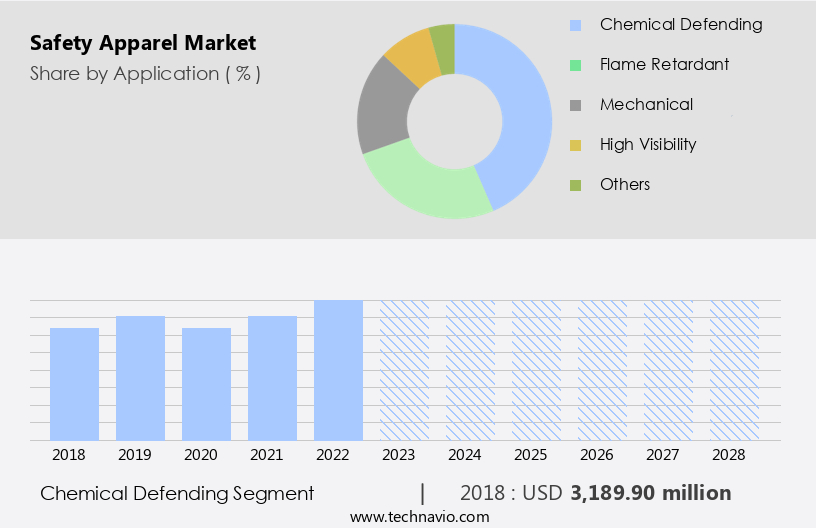
The Chemical defending segment was valued at USD 3.19 billion in 2018 and showed a gradual increase during the forecast period.
Regional Analysis
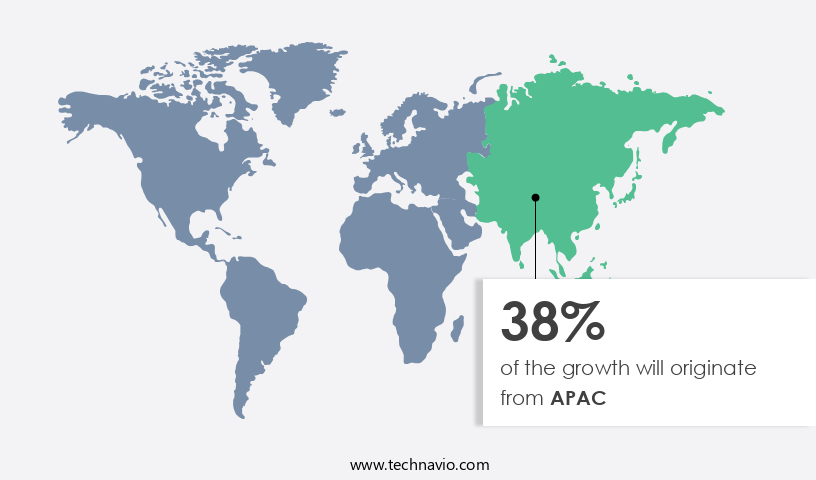
APAC is estimated to contribute 38% to the growth of the global market during the forecast period.Technavio's analysts have elaborately explained the regional trends and drivers that shape the market during the forecast period.
The occupational safety and workplace safety markets in Japan have experienced growth due to improving economic conditions, increased investor spending, and rising consumer confidence. In the construction industry, which is a significant contributor to this trend, the Tokyo Metropolitan Government's investment in projects like waterfront development and preparations for the 2021 Summer Olympics has driven demand for safety apparel. Additionally, the growing urban population's need for new residential areas further boosts the market. Safety training is a crucial aspect of this industry, with head protection, safety footwear, and safety nets being essential components. CE marking, reflective materials, and high-visibility clothing are essential for ensuring compliance with ANSI/ISEA standards and OSHA regulations.
Flame-resistant fabrics, respiratory protection, and protective gloves are vital for construction safety and manufacturing safety. Environmental impact and social responsibility are essential considerations in the supply chain management of safety apparel. Marketing strategies focus on brand recognition and customer segmentation, with product innovation and quality control being essential for maintaining a competitive edge. Safety culture, ethical sourcing, and incident investigation are integral to risk management. Safety audits and hazard assessments ensure compliance with regulations and industry standards. Fall protection, hearing protection, eye protection, and safety vests are essential for various industries. Price competition and distribution channels are critical factors in the market, with safety glasses and product certification being essential for customer trust.
The market for safety apparel in Japan is dynamic and evolving, with a focus on innovation, manufacturing safety, and customer needs. The demand for safety apparel is expected to continue growing as industries expand and prioritize workplace safety.
Market Dynamics
Our researchers analyzed the data with 2023 as the base year, along with the key drivers, trends, and challenges. A holistic analysis of drivers will help companies refine their marketing strategies to gain a competitive advantage.
What are the key market drivers leading to the rise in the adoption of Safety Apparel Industry?
- The market's growth is primarily driven by the significant emphasis on customization and unwavering commitment to quality in the safety apparel industry.
- The industrial the market is witnessing significant growth due to the increasing prioritization of manufacturing safety and a strong safety culture. Product innovation is a key driver, with manufacturers investing heavily in research and development to create multi-functional, industry-specific safety apparel that offers both protection and comfort. These advancements include lightweight, breathable, and chemical-defending materials, as well as features such as ear plugs for noise reduction, fall protection systems, and safety helmets. OSHA standards and incident investigation requirements also contribute to the demand for safety apparel. Ethical sourcing practices are increasingly important to customers, leading companies to invest in raw materials that offer desirable features, such as higher heat resistance and wear and tear resistance.
- The competitive landscape is intensifying as a result, with companies vying to offer the most advanced safety apparel solutions. Overall, the market is expected to continue growing as businesses prioritize the safety and wellbeing of their employees.
What are the market trends shaping the Safety Apparel Industry?
- Smart and wearable technology is gaining significant traction in the market, with implementation becoming increasingly prevalent. This trend reflects the growing demand for advanced, convenient technology solutions.
- In the realm of risk management, the market is witnessing significant advancements with the integration of wearable technology in Personal Protective Equipment (PPE). This technology is gaining traction in various industries such as oil and gas, automotive, fire safety, mining, and manufacturing. By utilizing a subset of the Internet of Things, wearable technology enhances worker productivity and ensures safety through continuous PPE use monitoring. Currently, PPE compliance is manually tracked. However, with the advent of wearable technology, beacons and devices are being employed to monitor PPE usage. Each beacon is uniquely identified and affixed to the wearable device. The beacon's signals are received and recorded by the device, providing real-time data on PPE usage.
- Key safety apparel components, including hearing protection, eye protection, safety vests, hard hats, and safety glasses, are being enhanced with this technology. Price competition remains a crucial factor in the market, with product certification playing a significant role in brand recognition. Wearable technology in safety apparel not only ensures worker safety but also offers potential cost savings through improved efficiency and productivity.
What challenges does the Safety Apparel Industry face during its growth?
- The escalating costs of raw materials poses a significant challenge to the industry, as it negatively impacts supply chain efficiency and hinders overall growth.
- Occupational safety and workplace safety continue to be a top priority for businesses. Safety apparel plays a crucial role in ensuring employee protection against hazards. However, fluctuations in the prices of raw materials, such as fabric and chemicals, can significantly impact the entire supply chain. Manufacturers, who do not have long-term contracts with their suppliers, may experience increased costs. As a result, customers might consider alternative options, including normal or sub-standard apparel, to reduce expenses. Moreover, safety apparel purchases are often custom and rush orders, making it easier for customers to turn to other manufacturers offering lower prices.
- Consequently, manufacturers face the challenge of maintaining their profit margins without passing on the increased costs to their customers. This dynamic underscores the importance of continuous cost management and price competitiveness in the market. Additionally, safety apparel regulations, such as CE marking and compliance with safety standards, further add to the complexity and costs for manufacturers. Reflective materials, high-visibility clothing, safety footwear, head protection, safety nets, and flame-resistant fabrics are essential components of safety apparel. Ensuring the availability and affordability of these products remains a critical concern for businesses committed to providing a safe working environment for their employees.
Exclusive Customer Landscape
The safety apparel market forecasting report includes the adoption lifecycle of the market, covering from the innovator's stage to the laggard's stage. It focuses on adoption rates in different regions based on penetration. Furthermore, the safety apparel market report also includes key purchase criteria and drivers of price sensitivity to help companies evaluate and develop their market growth analysis strategies.
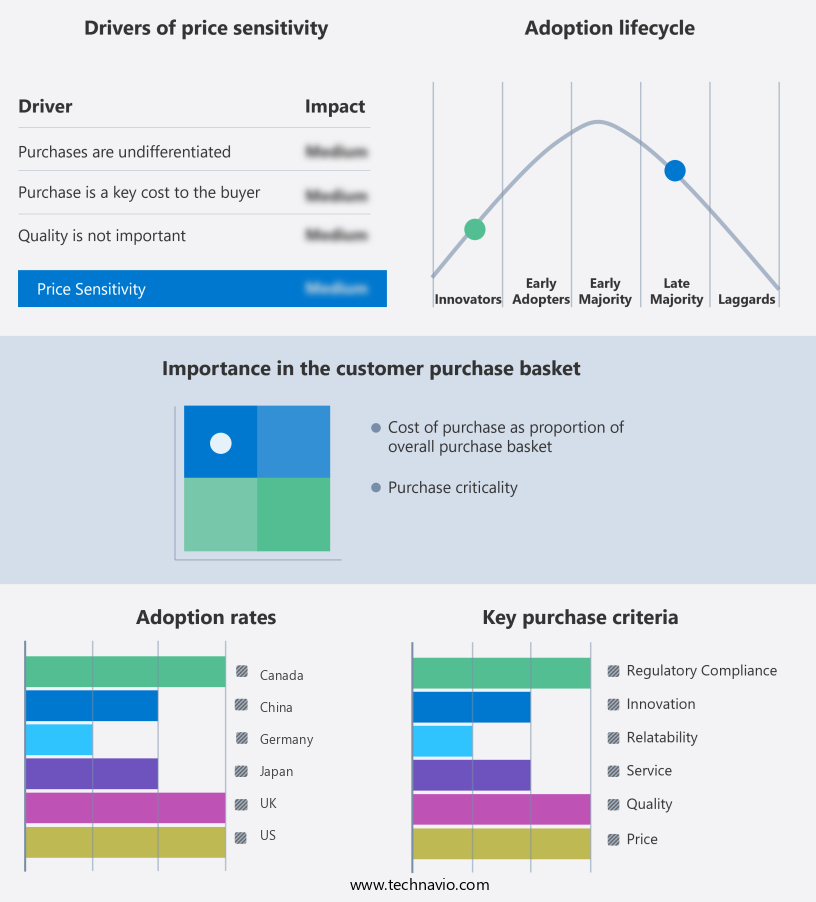
Customer Landscape
Key Companies & Market Insights
Companies are implementing various strategies, such as strategic alliances, safety apparel market forecast, partnerships, mergers and acquisitions, geographical expansion, and product/service launches, to enhance their presence in the industry.
3M Co. - The company specializes in providing a range of safety apparel solutions. Among our offerings are the disposable protective coverall 4540, protective coverall 4520, and protective coverall 4565. These products are designed to ensure the utmost safety and protection for individuals in various industries.
The industry research and growth report includes detailed analyses of the competitive landscape of the market and information about key companies, including:
- 3M Co.
- Anbu Safety Industrial Co. Ltd.
- Ansell Ltd.
- ASATEX AG
- Ballyclare Ltd.
- Delta Plus Group
- DuPont de Nemours Inc.
- Honeywell International Inc.
- Kermel
- Kimberly Clark Corp.
- Lakeland Industries Inc.
- NASCO Industries Inc.
- OccuNomix International LLC
- Sioen Industries NV
- Teijin Ltd.
- UniFirst Corp.
- VF Corp.
- W. L. Gore and Associates Inc.
Qualitative and quantitative analysis of companies has been conducted to help clients understand the wider business environment as well as the strengths and weaknesses of key industry players. Data is qualitatively analyzed to categorize companies as pure play, category-focused, industry-focused, and diversified; it is quantitatively analyzed to categorize companies as dominant, leading, strong, tentative, and weak.
Recent Development and News in Safety Apparel Market
- In March 2024, DuPont announced the launch of its innovative Tyvek 800J protective apparel, offering enhanced breathability and durability for workers in hazardous environments (DuPont Press Release, 2024).
- In August 2024, 3M and Honeywell International signed a strategic collaboration agreement to expand their joint offering of personal protective equipment, aiming to enhance their combined market presence and product portfolio (3M Press Release, 2024).
- In February 2025, MSA Safety, a leading safety equipment provider, completed the acquisition of Scott Safety, significantly expanding its product portfolio and strengthening its position in The market (MSA Safety Press Release, 2025).
- In May 2025, the European Union introduced new regulations on personal protective equipment, requiring enhanced certification standards and increased transparency for consumers, driving growth opportunities for safety apparel manufacturers (European Commission Press Release, 2025).
Research Analyst Overview
- The market encompasses a range of products designed to protect workers from various workplace hazards. Cut-resistant fabrics and abrasion-resistant materials are essential for industries with high risks of injury from sharp objects or friction. UV protection and moisture-wicking fabrics ensure worker comfort and safety under extreme weather conditions. Safety inspections, audits, and training programs are crucial for maintaining a safe work environment. Industrial hygiene, dust management, and biohazard protection address health concerns, while height safety, emergency response, and machine guarding focus on preventing falls and accidents. Risk assessment software and safety committees facilitate proactive risk identification and mitigation. Temperature regulation, noise control, fire safety, and chemical-resistant coatings are essential for maintaining a safe and productive work environment in various industries.
- Safety incentives and emergency lighting promote a culture of safety and preparedness. Ventilation systems and confined space entry procedures ensure proper air quality and safe entry into potentially hazardous areas. Safety management systems integrate all these elements to create a comprehensive approach to workplace safety.
Dive into Technavio's robust research methodology, blending expert interviews, extensive data synthesis, and validated models for unparalleled Safety Apparel Market insights. See full methodology.
|
Market Scope |
|
|
Report Coverage |
Details |
|
Page number |
163 |
|
Base year |
2023 |
|
Historic period |
2018-2022 |
|
Forecast period |
2024-2028 |
|
Growth momentum & CAGR |
Accelerate at a CAGR of 16.79% |
|
Market growth 2024-2028 |
USD 16261.3 million |
|
Market structure |
Fragmented |
|
YoY growth 2023-2024(%) |
13.26 |
|
Key countries |
US, China, Japan, Germany, Canada, and UK |
|
Competitive landscape |
Leading Companies, Market Positioning of Companies, Competitive Strategies, and Industry Risks |
What are the Key Data Covered in this Safety Apparel Market Research and Growth Report?
- CAGR of the Safety Apparel industry during the forecast period
- Detailed information on factors that will drive the growth and forecasting between 2024 and 2028
- Precise estimation of the size of the market and its contribution of the industry in focus to the parent market
- Accurate predictions about upcoming growth and trends and changes in consumer behaviour
- Growth of the market across APAC, North America, Europe, South America, and Middle East and Africa
- Thorough analysis of the market's competitive landscape and detailed information about companies
- Comprehensive analysis of factors that will challenge the safety apparel market growth of industry companies
We can help! Our analysts can customize this safety apparel market research report to meet your requirements.
 RIA -
RIA - 
