



Reflective Materials Market Size 2026-2030
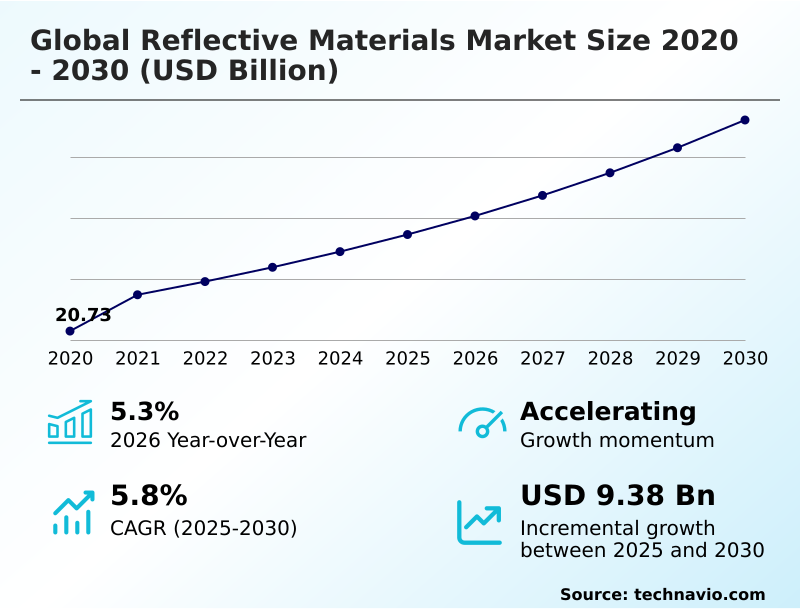
The reflective materials market size is valued to increase by USD 9.38 billion, at a CAGR of 5.8% from 2025 to 2030. Heightened focus on safety applications propels market growth will drive the reflective materials market.
Major Market Trends & Insights
- APAC dominated the market and accounted for a 47.8% growth during the forecast period.
- By Product - Coatings segment was valued at USD 7.84 billion in 2024
- By End-user - Construction segment accounted for the largest market revenue share in 2024
Market Size & Forecast
- Market Opportunities: USD 17.27 billion
- Market Future Opportunities: USD 9.38 billion
- CAGR from 2025 to 2030 : 5.8%
Market Summary
- The reflective materials market is defined by a continuous drive for enhanced safety and visibility, propelled by stringent regulatory frameworks and technological evolution. Key applications such as high-visibility clothing, traffic sign sheeting, and vehicle conspicuity tape are fundamental to accident prevention in low-light conditions.
- A significant industry shift involves the transition from traditional glass bead technology to superior microprismatic technology, which offers greater nighttime visibility and durability. This innovation helps end-users meet demanding performance standards like EN ISO 20471 and ASTM D4956.
- However, manufacturers face persistent challenges from raw material pricing volatility and growing pressure to develop eco-friendly reflective materials in response to plastic pollution regulations. For instance, a major infrastructure development firm must balance the higher initial cost of durable, compliant retroreflective materials against the long-term benefits of reduced liability and maintenance, all while navigating an unpredictable supply chain.
- This dynamic necessitates a strategic approach to sourcing and product selection to ensure both safety compliance and financial viability.
What will be the Size of the Reflective Materials Market during the forecast period?
Get Key Insights on Market Forecast (PDF) Get Free Sample
How is the Reflective Materials Market Segmented?
The reflective materials industry research report provides comprehensive data (region-wise segment analysis), with forecasts and estimates in "USD million" for the period 2026-2030, as well as historical data from 2020-2024 for the following segments.
- Product
- Coatings
- Fabrics
- Sheets
- Paints and inks
- Others
- End-user
- Construction
- Automobiles
- Textiles
- Electronics
- Distribution channel
- Direct sales
- Retail
- Online platforms
- Geography
- APAC
- China
- Japan
- India
- North America
- US
- Canada
- Mexico
- Europe
- Germany
- UK
- France
- Middle East and Africa
- Saudi Arabia
- UAE
- South Africa
- South America
- Brazil
- Argentina
- Rest of World (ROW)
- APAC
By Product Insights
The coatings segment is estimated to witness significant growth during the forecast period.
The coatings segment is a critical component of the reflective materials market, driven by its role in energy efficiency and sustainable infrastructure.
Innovations are centered on high-performance solar-reflective coatings and cool roof coatings, which are instrumental in mitigating the urban heat island effect and advancing sustainable building practices.
These materials utilize passive reflectivity to reduce thermal absorption, with some next-generation cool roof coating formulations demonstrating energy reduction improvements of up to 200% compared to traditional options.
The development of weather-resistant coatings and nanotechnology-based coatings is enhancing durability and performance. As regulations push for more energy-efficient buildings, the demand for these advanced retroreflective materials, including waterborne reflective paint, is expanding across both new construction and retrofitting projects.
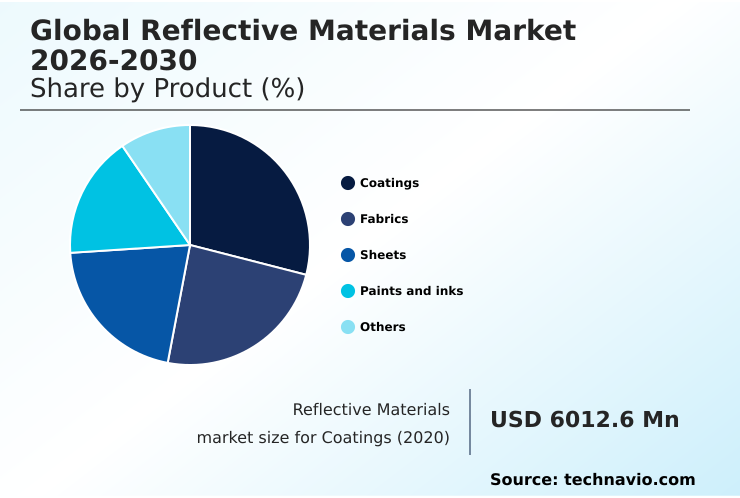
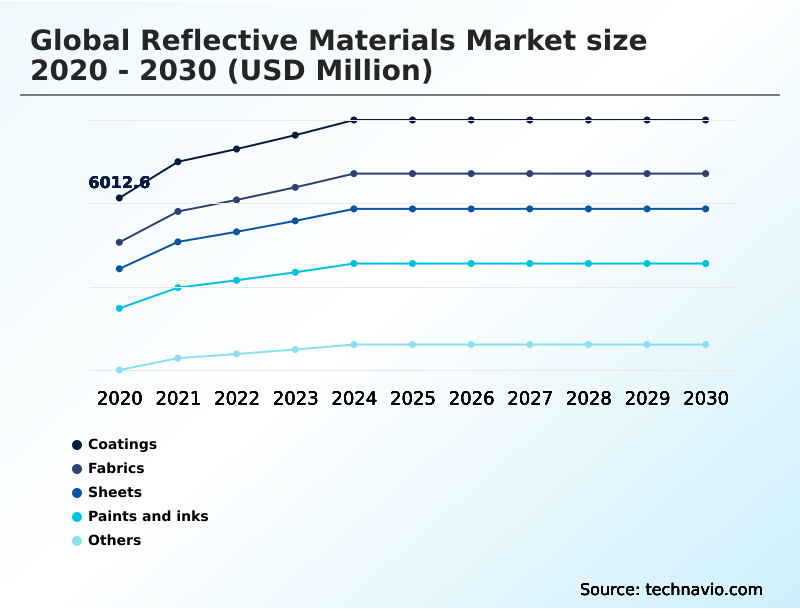
The Coatings segment was valued at USD 7.84 billion in 2024 and showed a gradual increase during the forecast period.
Regional Analysis
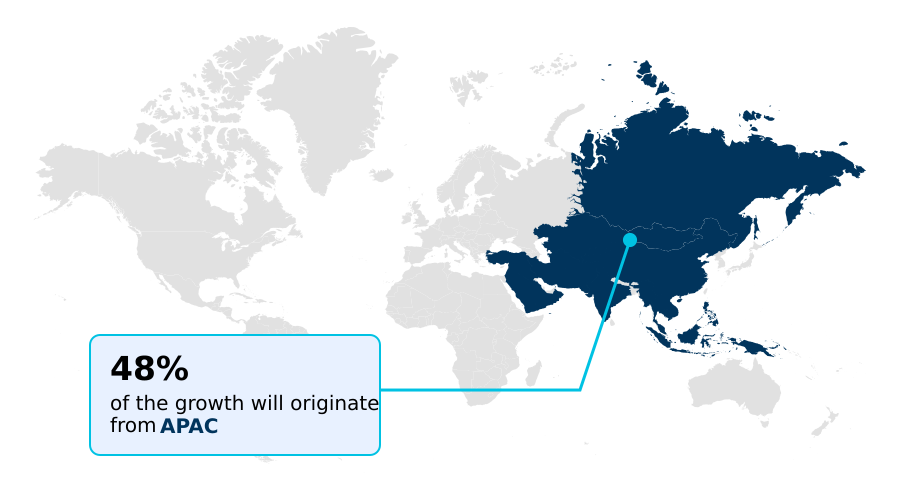
APAC is estimated to contribute 47.8% to the growth of the global market during the forecast period.Technavio’s analysts have elaborately explained the regional trends and drivers that shape the market during the forecast period.
See How Reflective Materials Market Demand is Rising in APAC Get Free Sample
The geographic landscape is dominated by the APAC region, which is projected to contribute nearly 48% of the market's incremental growth. This expansion is fueled by massive infrastructure development and rising occupational safety standards in countries like China and India.
The region's focus on accident prevention and worker visibility drives significant demand for materials compliant with international standards, such as EN ISO 20471 for high-visibility clothing.
For instance, Malaysia's construction sector is expected to grow by more than 6% annually, creating sustained demand for safety products.
This rapid urbanization also accelerates the adoption of smart reflective materials for intelligent transportation systems (ITS), positioning APAC as a central hub for both consumption and innovation in retroreflective materials, including advanced traffic sign sheeting and durable reflective films.
Market Dynamics
Our researchers analyzed the data with 2025 as the base year, along with the key drivers, trends, and challenges. A holistic analysis of drivers will help companies refine their marketing strategies to gain a competitive advantage.
- A strategic analysis of the global reflective materials market 2026-2030 reveals a complex interplay between technological evolution, application-specific demands, and regulatory pressures. The ongoing debate of comparing glass bead and microprismatic technology underscores a broader shift towards higher-performance solutions, particularly in microprismatic sheeting for traffic control and high-visibility fabric for safety apparel.
- These advancements are crucial for improving nighttime road safety with reflective markings and supporting the role of reflective materials in ADAS performance. Concurrently, manufacturers face significant hurdles, including the impact of raw material costs on reflective tape and the persistent challenges of LED substitutes for reflective signs.
- In response, the industry is innovating with advancements in solar-reflective cool roof coatings and promoting the benefits of reflective materials in construction to mitigate the urban heat island effect. A key focus is the development of sustainable alternatives to PVC-based reflective films to meet stringent EPR compliance for reflective material manufacturers.
- This transition is also opening new applications, from thermal management using reflective films in EVs to the integration of reflective yarn in sportswear. Businesses that master the durability standards for thermoplastic road paint and develop eco-friendly waterborne reflective paints see a significant competitive advantage.
- For example, firms that prioritize high-durability materials report up to a 50% longer asset lifespan, showcasing a clear link between material quality and operational cost efficiency.
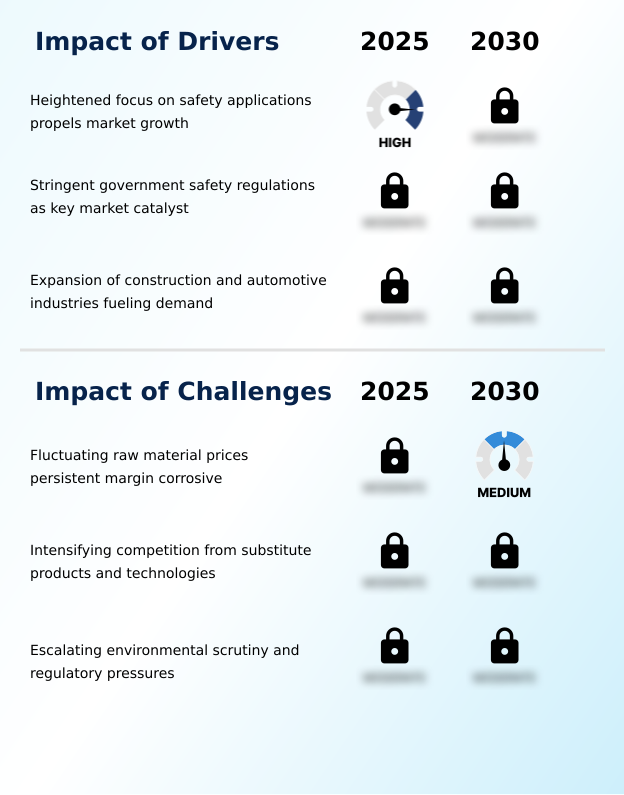
What are the key market drivers leading to the rise in the adoption of Reflective Materials Industry?
- A heightened focus on safety applications across diverse sectors, including construction, automotive, and personal protection, is a primary driver propelling market growth.
- Market growth is primarily propelled by increasingly stringent road safety regulations and occupational safety standards worldwide, which mandate the use of high-performance materials for accident prevention.
- For example, strict enforcement of personal protective equipment (PPE) compliance, including high-visibility clothing that meets the EN ISO 20471 standard, has contributed to a 30% reduction in nighttime industrial accidents in certain regions.
- This focus on worker visibility is a powerful driver. Furthermore, the expansion of the automotive sector is fueling demand for materials that support advanced driver-assistance systems (ADAS), alongside traditional applications like vehicle conspicuity tape.
- The continuous growth in global construction and infrastructure projects ensures sustained demand for durable traffic sign sheeting and retroreflective materials that enhance nighttime visibility.
What are the market trends shaping the Reflective Materials Industry?
- The market is experiencing heightened demand, largely propelled by the implementation and enforcement of stricter global safety regulations and standards across multiple industries.
- Key trends are reshaping the market, driven by sustainability mandates and technological integration. The development of smart reflective materials is a significant trend, where integration with intelligent transportation systems (ITS) has been shown to improve urban traffic flow by over 15%. This creates new possibilities for dynamic signage and infrastructure management.
- Simultaneously, a strong push towards eco-friendly reflective materials is evident, driven by plastic pollution regulations. Innovations in waterborne reflective paint now offer formulations that reduce volatile organic compound (VOC) emissions by up to 80% compared to traditional solvent-based types.
- This shift supports sustainable building practices and is complemented by advancements in nanotechnology-based coatings, which enhance both performance and environmental credentials across applications, from cool roof coatings to athleisure apparel.
What challenges does the Reflective Materials Industry face during its growth?
- The persistent fluctuation in the prices of essential raw materials presents a significant challenge, leading to margin erosion and operational uncertainty for market participants.
- The market faces significant headwinds from operational and competitive pressures. Persistent raw material pricing instability and supply chain volatility can increase production costs for items like reflective tape by 10-15% in a single fiscal quarter, directly impacting profitability.
- Another challenge is the intensifying competition from light-emitting diode (LED) solutions, which offer active illumination as a substitute for traditional passive reflectivity materials, particularly in signage. This technological rivalry reshapes end-user expectations. Furthermore, navigating complex environmental regulations, such as extended producer responsibility (EPR) frameworks, requires substantial investment in developing sustainable alternatives to PVC-based reflective films.
- Achieving regulatory compliance while maintaining cost-competitiveness and performance standards remains a primary operational challenge for manufacturers.
Exclusive Technavio Analysis on Customer Landscape
The reflective materials market forecasting report includes the adoption lifecycle of the market, covering from the innovator’s stage to the laggard’s stage. It focuses on adoption rates in different regions based on penetration. Furthermore, the reflective materials market report also includes key purchase criteria and drivers of price sensitivity to help companies evaluate and develop their market growth analysis strategies.
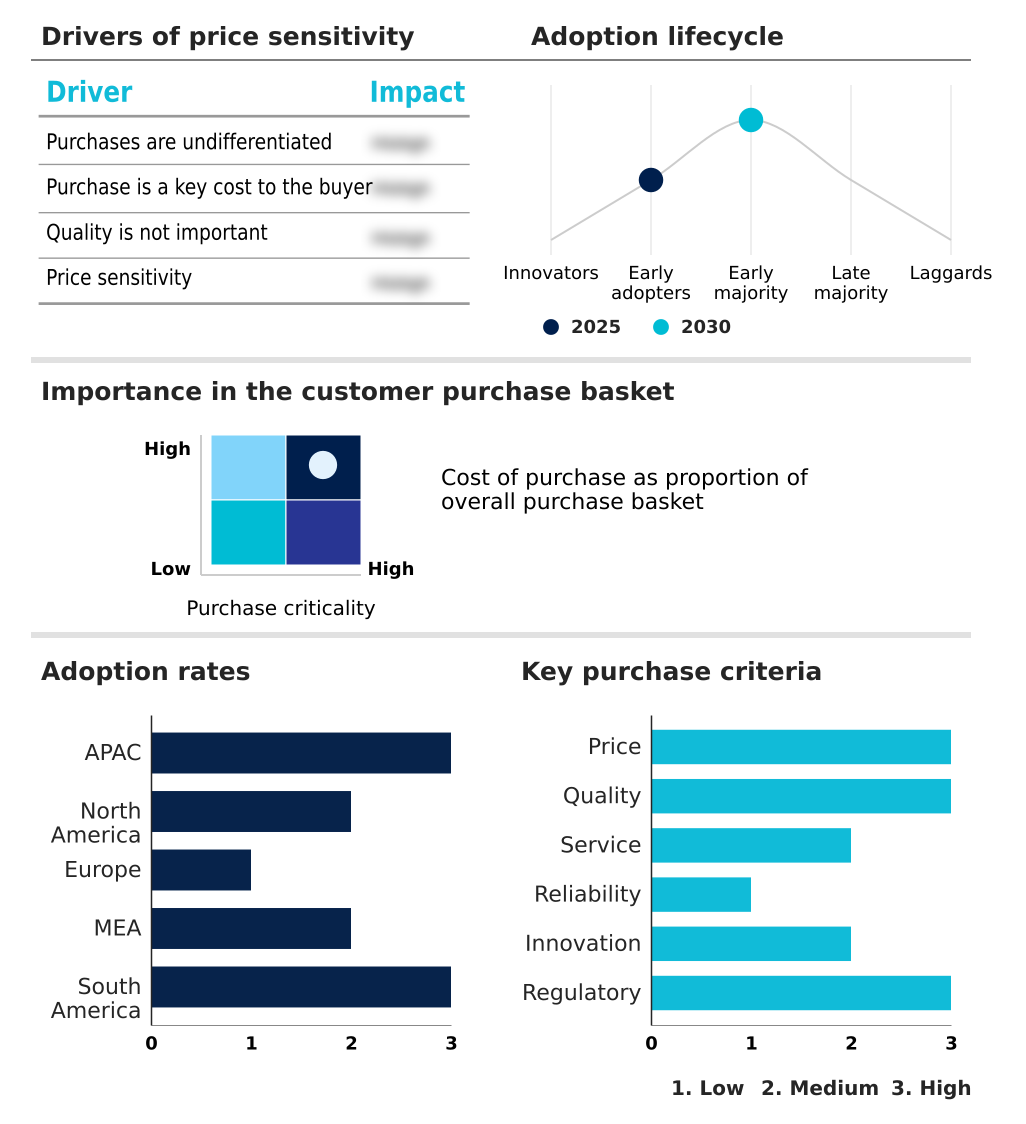
Customer Landscape of Reflective Materials Industry
Competitive Landscape
Companies are implementing various strategies, such as strategic alliances, reflective materials market forecast, partnerships, mergers and acquisitions, geographical expansion, and product/service launches, to enhance their presence in the industry.
3M Co. - Key offerings are centered on specialized retroreflective materials, featuring advanced films and fabrics engineered to enhance visibility and safety across diverse industrial, automotive, and consumer applications.
The industry research and growth report includes detailed analyses of the competitive landscape of the market and information about key companies, including:
- 3M Co.
- Avery Dennison Corp.
- Avient Corp.
- Coats Group PLC
- Daoming Optics and Chemical Co. Ltd.
- Jinsung Co. Ltd.
- JRC REFLEX ITALIA S.r.l.
- Nippon Carbide Industries Co. Ltd.
- ORAFOL Europe GmbH
- Paiho Shih Holdings Corp.
- PPG Industries Inc.
- Reflectionight Inc.
- REFLOMAX Co. Ltd.
- SKC
- S.V.G.I. OPT S.r.l.
- Unitika Ltd.
- Viz Reflectives
- Yeshili Reflective Material Co. Ltd.
Qualitative and quantitative analysis of companies has been conducted to help clients understand the wider business environment as well as the strengths and weaknesses of key industry players. Data is qualitatively analyzed to categorize companies as pure play, category-focused, industry-focused, and diversified; it is quantitatively analyzed to categorize companies as dominant, leading, strong, tentative, and weak.
Recent Development and News in Reflective materials market
- In February, 2025, Avery Dennison is set to launch its Encore Series of automotive window films, which are designed to provide superior heat rejection and UV protection for vehicles.
- In November, 2024, South Korea's transport ministry published a revision to its rules on vehicle performance and standards, which will be enforced from February 2025 and expands the mandatory installation of Event Data Recorders (EDRs).
- In September, 2024, China's Ministry of Industry and Information Technology (MIIT) released three mandatory national standards for intelligent connected vehicles, focusing on information security, software upgrades, and data recording, which will become effective from January 1, 2026.
- In September, 2024, the South Korean transport ministry announced a legislative notice for new regulations concerning the safety of electric vehicles, demonstrating a proactive stance on emerging automotive technologies.
Dive into Technavio’s robust research methodology, blending expert interviews, extensive data synthesis, and validated models for unparalleled Reflective Materials Market insights. See full methodology.
| Market Scope | |
|---|---|
| Page number | 307 |
| Base year | 2025 |
| Historic period | 2020-2024 |
| Forecast period | 2026-2030 |
| Growth momentum & CAGR | Accelerate at a CAGR of 5.8% |
| Market growth 2026-2030 | USD 9379.0 million |
| Market structure | Fragmented |
| YoY growth 2025-2026(%) | 5.3% |
| Key countries | China, Japan, India, South Korea, Australia, Indonesia, US, Canada, Mexico, Germany, UK, France, Italy, Spain, The Netherlands, Saudi Arabia, UAE, South Africa, Israel, Turkey, Brazil, Argentina and Chile |
| Competitive landscape | Leading Companies, Market Positioning of Companies, Competitive Strategies, and Industry Risks |
Research Analyst Overview
- The reflective materials market is fundamentally centered on enhancing safety through advanced retroreflective materials. The technological landscape has matured significantly, moving from traditional glass bead technology toward high-performance microprismatic technology and cutting-edge nanotechnology-based coatings. This evolution enables the production of durable reflective films and traffic sign sheeting that meet stringent regulatory benchmarks like ASTM D4956.
- In the personal safety sector, materials such as breathable reflective textiles are vital for manufacturing high-visibility clothing compliant with EN ISO 20471. A key boardroom consideration involves balancing the upfront investment in premium, weather-resistant coatings against the long-term value of regulatory compliance and risk mitigation.
- For instance, the adoption of smart reflective materials in urban infrastructure has demonstrated a 15% improvement in traffic flow management. The market also grapples with the distinction between passive reflectivity and active illumination offered by light-emitting diode (LED) solutions.
- Demand is also growing for eco-friendly reflective materials, such as waterborne reflective paint and flexible reflective films, to meet sustainability goals, alongside specialized products like vehicle conspicuity tape and reflective polarizing films.
What are the Key Data Covered in this Reflective Materials Market Research and Growth Report?
-
What is the expected growth of the Reflective Materials Market between 2026 and 2030?
-
USD 9.38 billion, at a CAGR of 5.8%
-
-
What segmentation does the market report cover?
-
The report is segmented by Product (Coatings, Fabrics, Sheets, Paints and inks, and Others), End-user (Construction, Automobiles, Textiles, and Electronics), Distribution Channel (Direct sales, Retail, and Online platforms) and Geography (APAC, North America, Europe, Middle East and Africa, South America)
-
-
Which regions are analyzed in the report?
-
APAC, North America, Europe, Middle East and Africa and South America
-
-
What are the key growth drivers and market challenges?
-
Heightened focus on safety applications propels market growth, Fluctuating raw material prices persistent margin corrosive
-
-
Who are the major players in the Reflective Materials Market?
-
3M Co., Avery Dennison Corp., Avient Corp., Coats Group PLC, Daoming Optics and Chemical Co. Ltd., Jinsung Co. Ltd., JRC REFLEX ITALIA S.r.l., Nippon Carbide Industries Co. Ltd., ORAFOL Europe GmbH, Paiho Shih Holdings Corp., PPG Industries Inc., Reflectionight Inc., REFLOMAX Co. Ltd., SKC, S.V.G.I. OPT S.r.l., Unitika Ltd., Viz Reflectives and Yeshili Reflective Material Co. Ltd.
-
Market Research Insights
- The market dynamics are heavily influenced by stringent occupational safety standards and evolving road safety regulations, which mandate the use of high-performance materials to enhance visibility and prevent accidents. The adoption of advanced reflective films has been shown to improve advanced driver-assistance systems (ADAS) sensor detection by up to 25% in low-light conditions, a critical factor for automotive safety.
- In industrial settings, adherence to personal protective equipment (PPE) mandates has reduced workplace incidents by over 30% in some sectors. Furthermore, the push for sustainable building practices is creating new applications in cool roof coatings and thermal management, contributing to the development of net-zero energy buildings.
- These factors, combined with opportunities in intelligent transportation systems (ITS) and athleisure apparel, are shaping a market focused on performance, compliance, and innovation.
We can help! Our analysts can customize this reflective materials market research report to meet your requirements.
 RIA -
RIA - 
