


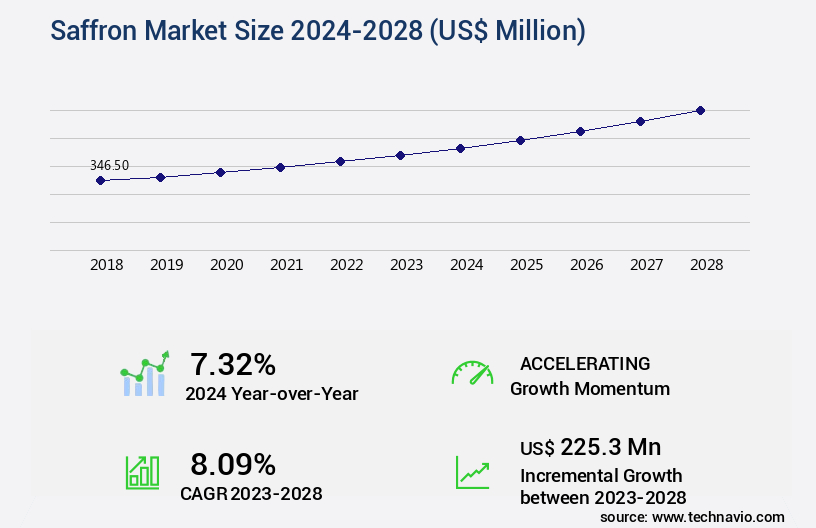
Saffron Market Size 2024-2028
The saffron market size is valued to increase USD 225.3 million, at a CAGR of 8.09% from 2023 to 2028. Growing use in the pharmaceutical and cosmetics industries will drive the saffron market.
Major Market Trends & Insights
- APAC dominated the market and accounted for a 38% growth during the forecast period.
- By Formulation - Thread segment was valued at USD 203.60 million in 2022
- By End-user - Food segment accounted for the largest market revenue share in 2022
Market Size & Forecast
- Market Opportunities: USD 101.85 million
- Market Future Opportunities: USD 225.30 million
- CAGR from 2023 to 2028 : 8.09%
Market Summary
- The market represents a dynamic and continually evolving landscape, characterized by the adoption of advanced technologies and expanding applications in various industries. With a focus on core technologies such as genetic modification and automated harvesting, saffron production is undergoing significant transformations. Saffron's applications span diverse sectors, including the pharmaceutical industry, where it is used for its antidepressant properties, and the cosmetics sector, which leverages its antioxidant and anti-inflammatory benefits. Additionally, saffron's role in ethnic cuisines and perfumes adds to its market value. Despite these opportunities, saffron production faces challenges, including high production costs, which account for approximately 70% of the final price.
- Nevertheless, the market's growth is driven by the increasing demand for saffron in various industries and the ongoing expansion of saffron cultivation, particularly in countries like Iran, India, and Spain. According to recent reports, the market is expected to account for over 30% of the global spice market by value.
What will be the Size of the Saffron Market during the forecast period?
Get Key Insights on Market Forecast (PDF) Request Free Sample
How is the Saffron Market Segmented ?
The saffron industry research report provides comprehensive data (region-wise segment analysis), with forecasts and estimates in "USD million" for the period 2024-2028, as well as historical data from 2018-2022 for the following segments.
- Formulation
- Thread
- Powder
- Liquid
- End-user
- Food
- Medical
- Cosmetics
- Others
- Geography
- North America
- US
- Europe
- Spain
- Middle East and Africa
- Iran
- APAC
- China
- India
- Rest of World (ROW)
- North America
By Formulation Insights
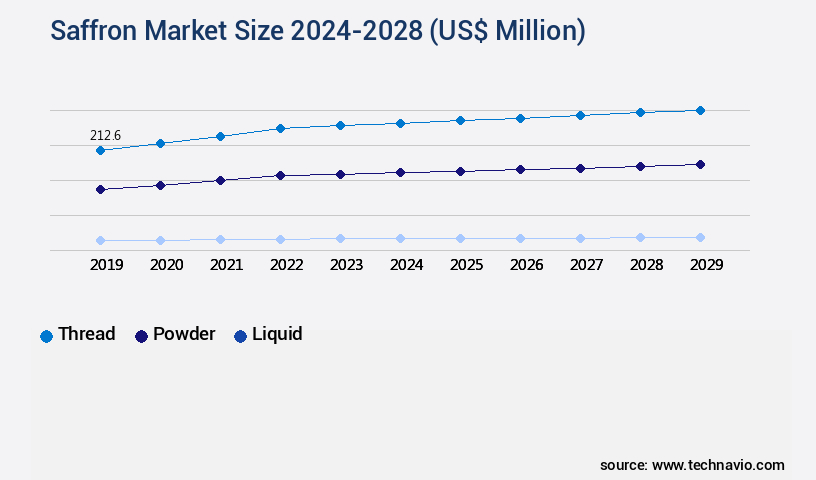
The thread segment is estimated to witness significant growth during the forecast period.
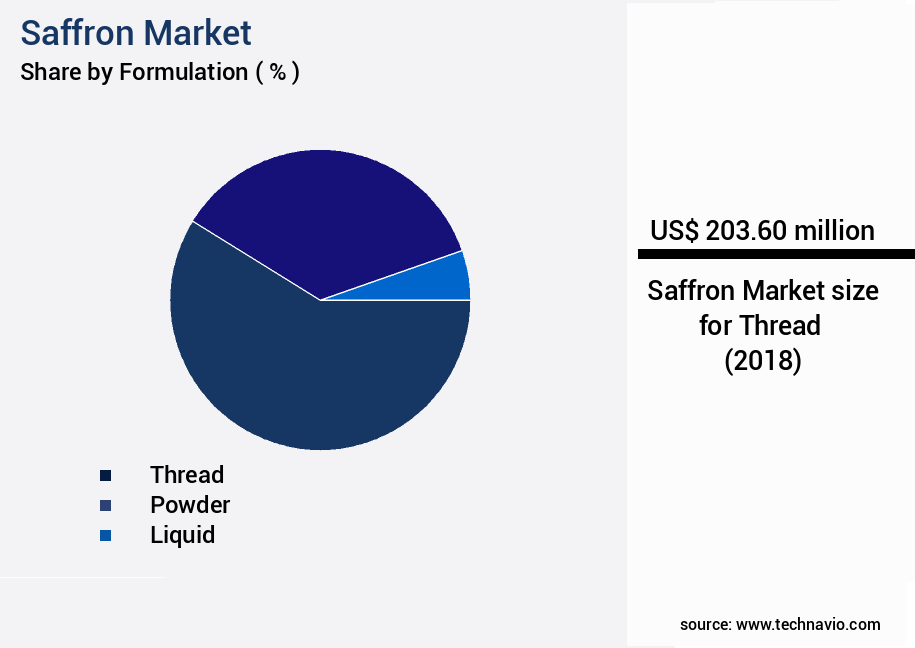
The Thread segment was valued at USD 203.60 million in 2018 and showed a gradual increase during the forecast period.
Regional Analysis
APAC is estimated to contribute 38% to the growth of the global market during the forecast period.Technavio's analysts have elaborately explained the regional trends and drivers that shape the market during the forecast period.
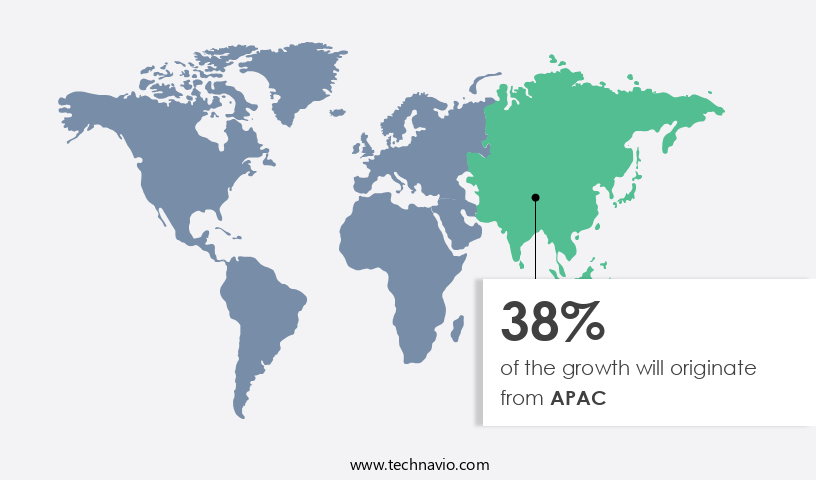
See How Saffron Market Demand is Rising in APAC Request Free Sample
The market in Asia Pacific (APAC) is witnessing substantial expansion due to escalating consumer preference for premium saffron products and the burgeoning food and beverage sector in the region. Saffron, sourced from the dried stigmas of Crocus sativus flowers, is a globally acclaimed spice utilized in various culinary applications and traditional medicines. The market's growth is fueled by several factors, including the region's expanding middle class, heightened health consciousness, and the popularity of ethnic cuisines. Furthermore, the increasing demand for saffron in cosmetics and pharmaceuticals adds to the market's potential.
As of now, the APAC the market exhibits a steady growth trajectory, with an estimated 2.5 million kilograms of saffron consumed annually. This figure is projected to increase by approximately 5% yearly, making it a lucrative business opportunity for industry participants.
Market Dynamics
Our researchers analyzed the data with 2023 as the base year, along with the key drivers, trends, and challenges. A holistic analysis of drivers will help companies refine their marketing strategies to gain a competitive advantage.
The market is a dynamic and intriguing sector driven by the unique characteristics and diverse applications of this prized spice. Saffron, derived from the Crocus sativus flower, undergoes various processes that significantly impact its quality. The choice of drying methods, for instance, can influence saffron's color, aroma, and overall quality. Soil nutrient levels play a crucial role in saffron yield, with optimal conditions enhancing the crop's potential. The correlation between crocin content and saffron color is a critical factor in determining the spice's value. To optimize cultivation practices for higher yields, farmers and researchers investigate innovative techniques, comparing hand-picking and mechanized harvesting methods.
Post-harvest handling also significantly influences saffron quality parameters. Determining the optimal storage conditions for saffron preservation is essential to maintain its sensory characteristics and bioactive compounds. Adulteration detection methods are continually evaluated to ensure authenticity and consumer trust. The assessment of different saffron varieties' sensory characteristics and bioactive compounds, such as antioxidant and anti-inflammatory properties, neuroprotective effects, and anticancer potential, fuels ongoing research. Economic analysis of saffron production and processing, development of sustainable cultivation practices, and strategic planning for value chain enhancement are essential aspects of the market's growth. Consumer preferences and purchasing behavior are significant factors in the market.
A study reveals that more than 60% of consumers prefer organic and sustainably produced saffron. Strategies for enhancing the competitiveness of saffron producers include the development of novel saffron-based products and the investigation of factors affecting saffron prices. In the complex the market landscape, a minority of players account for a substantial share, with less than 20% dominating the high-end market. This competition underscores the importance of continuous innovation and improvement to stay competitive.
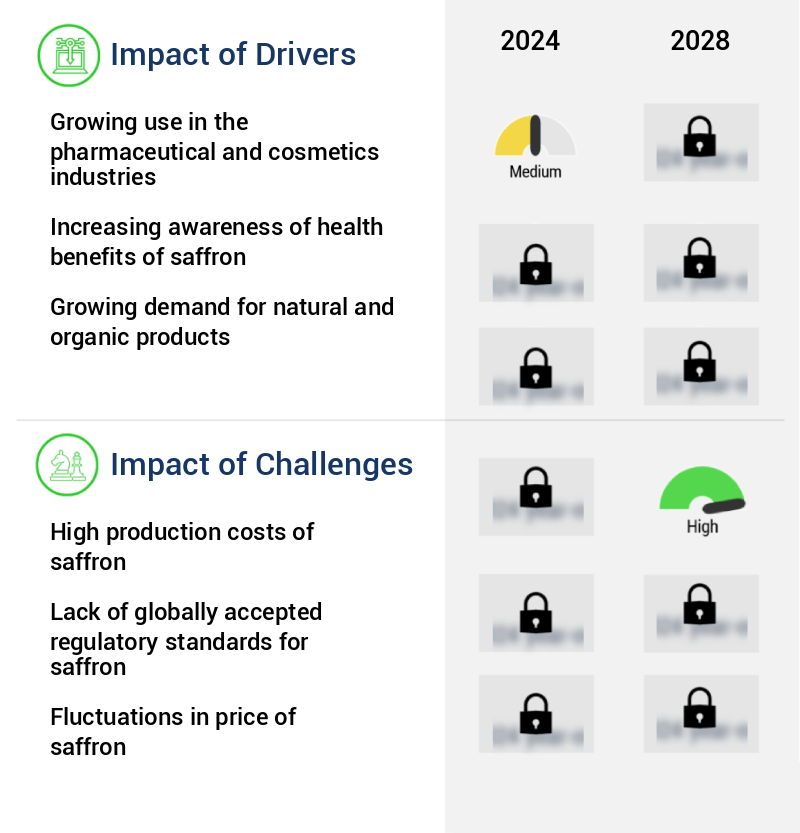
What are the key market drivers leading to the rise in the adoption of Saffron Industry?
- The pharmaceutical and cosmetics industries' increasing reliance on the market is its primary growth driver.
- Saffron, a spice with a rich historical background in culinary and medicinal applications, has recently emerged as a significant player in the pharmaceutical and cosmetics industries. In the pharmaceutical sector, saffron's potential therapeutic benefits include anti-inflammatory, anticancer, and neuroprotective properties. Studies suggest that saffron may positively impact mood, offering potential applications in depression and anxiety treatment. Furthermore, saffron's cardiovascular benefits have been explored, with research indicating its potential role in heart disease risk reduction. In the cosmetics industry, saffron's antioxidant and anti-inflammatory properties have garnered significant attention.
- These attributes contribute to the reduction of fine lines, wrinkles, and dark spots, improving skin tone and texture. By addressing inflammation and oxidative stress, saffron-infused cosmetics offer a promising solution for those seeking effective anti-aging and skin care products.
What are the market trends shaping the Saffron Industry?
- Saffron cultivation expansion is the current market trend. This agricultural sector is experiencing significant growth.
- Saffron, a prized spice known for its distinctive flavor and aroma, has witnessed an expansion in its production beyond traditional regions like Iran, Spain, and India. New cultivation areas have emerged in Greece, Morocco, Afghanistan, and the US, contributing to a diversified global supply. This shift responds to the escalating demand for saffron in the food and beverage industry, driven by consumers' pursuit of unique and exotic tastes.
- The diversification of saffron production ensures a consistent and plentiful supply, mitigating potential supply shortages and price instability.
What challenges does the Saffron Industry face during its growth?
- The high production costs of saffron pose a significant challenge to the growth of the saffron industry. With labor-intensive harvesting processes and limited supply, the cost of producing saffron remains a major obstacle for businesses in this sector.
- Saffron, renowned for its distinct flavor and aroma, is one of the most expensive spices globally. The high production costs of saffron can be attributed to its labor-intensive cultivation process and low yield. Approximately 75,000 saffron flowers are required to produce one pound (lb.) of this prized spice. Harvesting saffron is a meticulous process, as each flower yields only three stigmas, which are carefully handpicked. This labor-intensive method significantly increases production costs. Moreover, saffron is a low-yield crop, necessitating specific growing conditions.
- These conditions include well-drained soil, a dry climate, and ample sunlight. These requirements limit saffron's cultivation to certain regions, further restricting its supply and contributing to its high price. The intricacies of saffron production underscore its value and make it a coveted ingredient in various culinary applications across diverse sectors.
Exclusive Technavio Analysis on Customer Landscape
The saffron market forecasting report includes the adoption lifecycle of the market, covering from the innovator's stage to the laggard's stage. It focuses on adoption rates in different regions based on penetration. Furthermore, the saffron market report also includes key purchase criteria and drivers of price sensitivity to help companies evaluate and develop their market growth analysis strategies.
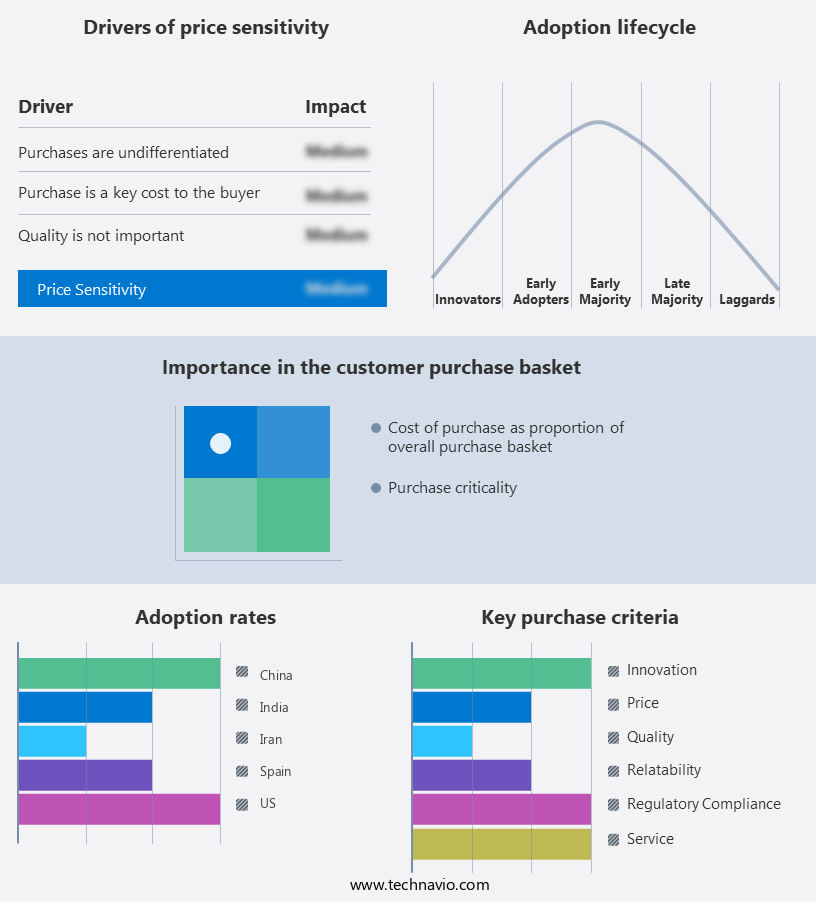
Customer Landscape of Saffron Industry
Competitive Landscape
Companies are implementing various strategies, such as strategic alliances, saffron market forecast, partnerships, mergers and acquisitions, geographical expansion, and product/service launches, to enhance their presence in the industry.
Al Hasad Al Fakher Trading Est. - The company specializes in importing and distributing high-quality Kashmiri saffron, renowned for its distinctive aroma and intense flavor. This premium spice undergoes rigorous quality control, ensuring customers receive authentic, superior saffron strands. The company's commitment to authenticity and excellence sets it apart in the global market.
The industry research and growth report includes detailed analyses of the competitive landscape of the market and information about key companies, including:
- Al Hasad Al Fakher Trading Est.
- AZAFRANES MANCHEGOS SL
- Esfedan Saffron Co.
- Gohar Saffron Co.
- Grandor Co.
- Green Leaves International
- King Kesariya
- La Casa de los Aromas S.L.
- Mehr Saffron
- Norfolk Saffron
- Novin Saffron Co.
- Organic Spices Inc.
- Rowhani Saffron Co.
- Rumi Spice
- Safrante Specialty Foods S.A.
- Societa Agricola Baghini Buonacara Srls
- The Cheshire Saffron Co.
- The Great American Spice Co.
- Trond Saffron Qain Co.
- USMS Saffron Co. Inc.
Qualitative and quantitative analysis of companies has been conducted to help clients understand the wider business environment as well as the strengths and weaknesses of key industry players. Data is qualitatively analyzed to categorize companies as pure play, category-focused, industry-focused, and diversified; it is quantitatively analyzed to categorize companies as dominant, leading, strong, tentative, and weak.
Recent Development and News in Saffron Market
- In January 2024, Saffron Exports Pvt. Ltd., a leading saffron producer, announced the launch of their new organic saffron product line, "Pure Origin," in collaboration with Whole Foods Market, a major US grocery retailer (Source: Saffron Exports Press Release).
- In March 2024, Saffron One, a leading saffron processing company, entered into a strategic partnership with SpiceJet, India's second-largest airline, to transport saffron directly from Kashmir to major global markets, reducing transportation costs and ensuring product freshness (Source: SpiceJet Press Release).
- In May 2024, Saffron Industries, a leading saffron manufacturer, raised USD15 million in a Series B funding round led by Sequoia India and Accel, to expand its production capacity and strengthen its market position (Source: TechCrunch).
- In April 2025, the European Union granted a significant regulatory approval to Saffron Corporation, allowing them to import and sell saffron from Iran, expanding their sourcing base and potentially reducing production costs (Source: European Commission Press Release).
Dive into Technavio's robust research methodology, blending expert interviews, extensive data synthesis, and validated models for unparalleled Saffron Market insights. See full methodology.
|
Market Scope |
|
|
Report Coverage |
Details |
|
Page number |
169 |
|
Base year |
2023 |
|
Historic period |
2018-2022 |
|
Forecast period |
2024-2028 |
|
Growth momentum & CAGR |
Accelerate at a CAGR of 8.09% |
|
Market growth 2024-2028 |
USD 225.3 million |
|
Market structure |
Fragmented |
|
YoY growth 2023-2024(%) |
7.32 |
|
Key countries |
China, Spain, Iran, India, and US |
|
Competitive landscape |
Leading Companies, Market Positioning of Companies, Competitive Strategies, and Industry Risks |
Research Analyst Overview
- In the dynamic and evolving the market, various aspects continue to shape its landscape. Pistil extraction techniques have gained prominence, optimizing the production process and enhancing the extraction of valuable compounds. Simultaneously, supply chain management practices have become increasingly sophisticated, ensuring efficient and secure distribution. GC-MS analysis plays a crucial role in adulteration detection, maintaining the economic viability of saffron by safeguarding its authenticity. Value-added products, such as saffron-infused oils and cosmetics, expand the market's reach and appeal. Quality grading parameters, including colorimetric analysis, crocin content determination, and safranal concentration levels, ensure consistency and meet consumer expectations.
- Post-harvest handling practices, including storage conditions, soil nutrient management, and drying methods, significantly impact saffron's quality and market value. Sustainable saffron farming practices, such as crop rotation strategies, irrigation scheduling, and weed management, promote long-term productivity and environmental stewardship. The market's continuous unfolding is marked by advancements in volatile compound profiling, HPLC analysis, aqueous extraction methods, stigma harvesting methods, and essential oil extraction. Consumer preference for organic saffron production and sensory evaluation methods further shape market trends. Innovations in yield prediction models and picrocrocin quantification continue to drive research and development. In summary, the market is characterized by ongoing advancements in production techniques, quality control, and consumer preferences.
- These evolving patterns underscore the market's complexity and the importance of staying informed.
What are the Key Data Covered in this Saffron Market Research and Growth Report?
-
What is the expected growth of the Saffron Market between 2024 and 2028?
-
USD 225.3 million, at a CAGR of 8.09%
-
-
What segmentation does the market report cover?
-
The report is segmented by Formulation (Thread, Powder, and Liquid), End-user (Food, Medical, Cosmetics, and Others), and Geography (APAC, Europe, North America, Middle East and Africa, and South America)
-
-
Which regions are analyzed in the report?
-
APAC, Europe, North America, Middle East and Africa, and South America
-
-
What are the key growth drivers and market challenges?
-
Growing use in the pharmaceutical and cosmetics industries, High production costs of saffron
-
-
Who are the major players in the Saffron Market?
-
Al Hasad Al Fakher Trading Est., AZAFRANES MANCHEGOS SL, Esfedan Saffron Co., Gohar Saffron Co., Grandor Co., Green Leaves International, King Kesariya, La Casa de los Aromas S.L., Mehr Saffron, Norfolk Saffron, Novin Saffron Co., Organic Spices Inc., Rowhani Saffron Co., Rumi Spice, Safrante Specialty Foods S.A., Societa Agricola Baghini Buonacara Srls, The Cheshire Saffron Co., The Great American Spice Co., Trond Saffron Qain Co., and USMS Saffron Co. Inc.
-
Market Research Insights
- The market encompasses the production and trade of the world's most expensive spice, derived from the Crocus sativus flower. This market exhibits continuous evolution, influenced by various factors. Two significant aspects are the impact of climate change adaptation and genetic improvement strategies. For instance, climate change necessitates adjustments to ensure optimal growing conditions. In 2019, saffron farmers in Iran, the largest producer, reported a 15% decrease in yield due to extreme weather conditions. In contrast, Spain, the second-largest producer, managed to maintain production levels due to advanced irrigation systems and climate control technologies. Genetic improvement strategies, such as disease resistance breeding and nitrogen fertilization, have led to variations in saffron's chemical composition.
- For example, a study revealed that saffron from Iran had a higher concentration of safranal and crocin compared to Spanish saffron. These differences influence market pricing mechanisms, as consumers perceive higher-quality saffron based on its authenticity, antioxidant activity, and neuroprotective effects. Market pricing mechanisms are further influenced by factors like fungal growth prevention, microbial contamination risk, and packaging and labeling. Consumers increasingly demand transparency and traceability, leading to stricter quality control standards. As a result, saffron producers must adapt to these changing market dynamics to remain competitive.
We can help! Our analysts can customize this saffron market research report to meet your requirements.
 RIA -
RIA - 
