



Smart Connected Clothing Market Size 2024-2028
The smart connected clothing market size is forecast to increase by USD 6.56 billion at a CAGR of 26.1% between 2023 and 2028.
- The market is experiencing significant growth driven by technology innovation and product premiumization. Advanced technologies such as wearable sensors, Bluetooth connectivity, and energy harvesting are enabling the development of intelligent garments that offer enhanced functionality and convenience. These garments can monitor vital signs, track workouts, and even provide weather alerts, making them an attractive proposition for consumers. Moreover, growing product promotion through digital marketing and social media channels is expanding the market reach and increasing consumer awareness. Brands are leveraging influencer marketing and targeted social media campaigns to showcase the benefits of smart clothing and build a loyal customer base.
- However, the market is not without challenges. The availability of alternative smart devices, such as smartwatches and fitness bands, is intensifying competition and putting pressure on pricing. To succeed in this dynamic market, companies need to focus on differentiating their offerings through unique features, superior design, and effective marketing strategies. By staying abreast of the latest trends and consumer preferences, companies can capitalize on the growing demand for smart clothing and navigate the challenges effectively.
What will be the Size of the Smart Connected Clothing Market during the forecast period?
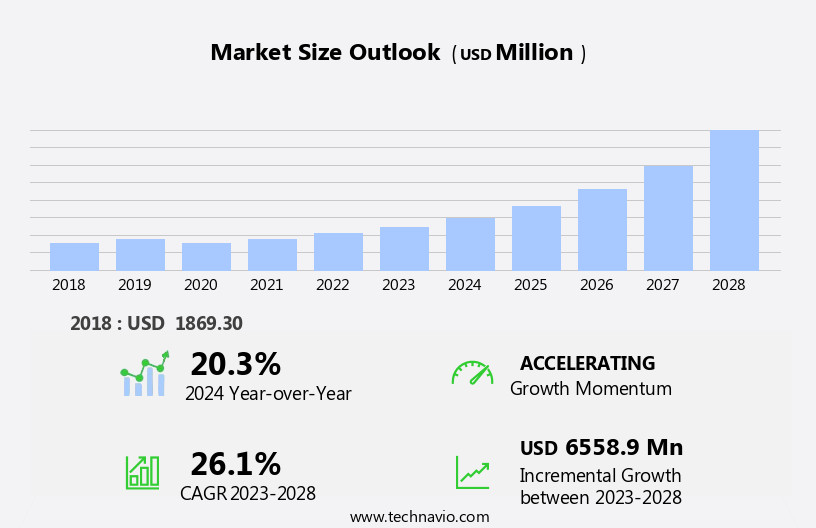
- The smart clothing industry is experiencing significant growth as wearable sensor technology advances and merges with mobile health and fitness coaching solutions. Smart clothing integrates fitness tracking apps, biometric monitoring, and IoT integration to offer personalized fitness plans, remote health monitoring, and lifestyle management. The future of fashion lies in the fusion of comfort and style with performance optimization, body mapping, and temperature control. Athletes and fitness enthusiasts benefit from smart clothing's athletic performance optimization, sleep tracking, and productivity enhancement. Innovations in sports science, such as smart fabric, fitness data insights, and body data, enable real-time performance analysis and adjustments.
- Data security is a crucial consideration, ensuring that sensitive health information remains confidential. Smartwatch connectivity and fitness tracker integration expand the market's reach, offering convenience and accessibility to users. Environmental monitoring, exercise tracking, and fitness data visualization further enhance the user experience. The smart clothing industry continues to evolve, with wearable computing, sensor technology, and wearable design shaping the future of health and wellness.
How is this Smart Connected Clothing Industry segmented?
The smart connected clothing industry research report provides comprehensive data (region-wise segment analysis), with forecasts and estimates in "USD million" for the period 2024-2028, as well as historical data from 2018-2022 for the following segments.
- Distribution Channel
- Offline
- Online
- End-user
- Men
- Women
- Children
- Geography
- North America
- Europe
- France
- APAC
- China
- India
- Japan
- South America
- Middle East and Africa
- North America
By Distribution Channel Insights
The offline segment is estimated to witness significant growth during the forecast period.
The market is expanding its reach through various distribution channels to engage consumers. Direct distribution, with manufacturers selling directly to consumers via e-commerce platforms and brand-owned retail stores, offers greater control over branding and customer experience. Indirect distribution, including wholesalers and retailers, broadens market access. Retailers, such as specialized boutiques and large chain stores, provide consumers with the opportunity to physically interact with smart connected clothing before purchase, facilitating sales. Textile technology, integrated into tank tops, shorts, jackets, and other apparel, enhances personal well-being by tracking fitness metrics, muscle activity, heart rate, sleep quality, and more. User-friendliness, seamless integration with smartwatches and mobile apps, and haptic feedback ensure convenience and comfort.
Energy harvesting, microcontrollers, and AI enable real-time health monitoring, injury risk assessment, and performance enhancement. Smart clothing, including passive options, caters to athletes, fitness enthusiasts, and workers, promoting a healthy lifestyle and continuous health monitoring. The market's evolution reflects a proactive approach to personalized insights, form, and activity levels, making wearable technology an integral part of daily life.

Get a glance at the market report of share of various segments Request Free Sample
The Offline segment was valued at USD 1.76 billion in 2018 and showed a gradual increase during the forecast period.
Regional Analysis
North America is estimated to contribute 37% to the growth of the global market during the forecast period.Technavio’s analysts have elaborately explained the regional trends and drivers that shape the market during the forecast period.

For more insights on the market size of various regions, Request Free Sample
The market is witnessing significant growth due to the integration of textile technology into everyday apparel. This innovation caters to personal well-being and fitness enthusiasts by offering real-time data on health metrics such as heart rate, muscle activity, and sleep quality through embedded sensors. The seamless integration of microcontrollers and energy harvesting technology enables fitness tracking and posture monitoring, enhancing performance and promoting a healthy lifestyle. The market is not limited to sports & fitness; it extends to daily life, with smart clothing offering convenience and continuous health monitoring. Wearable devices like smartwatches and fitness trackers have paved the way for the acceptance of smart apparel, providing personalized insights and injury risk alerts.
The user-friendliness of these garments, including comfort and haptic feedback, has gained popularity among consumers. From a business perspective, the market's growth is driven by the efficient supply chain management, good Internet connectivity infrastructure, and the increasing number of market companies. The demand side is fueled by higher Internet penetration, the widespread adoption of smartphones and other Internet-enabled devices, and the end-user preference for smart clothing. The emergence of passive smart clothing and the integration of AI and machine learning algorithms are expected to further boost the market's growth. Smart clothing, including tank tops, shorts, shirts, jackets, and innerwear, offers form-fitting designs and improved battery performance, making it an essential part of the fitness ecosystem.
The market's expansion is expected to bring about increased competition, with market participants focusing on functionality, lifestyle management, and health goals to attract consumers. The integration of wearable technology into clothing is revolutionizing the way we approach fitness, injury prevention, and overall well-being.
Market Dynamics
Our researchers analyzed the data with 2023 as the base year, along with the key drivers, trends, and challenges. A holistic analysis of drivers will help companies refine their marketing strategies to gain a competitive advantage.
What are the key market drivers leading to the rise in the adoption of Smart Connected Clothing Industry?
- Technology innovation leading to product premiumization is the key driver of the market.
- The market is fueled by technological innovations, particularly in the realm of connectivity technologies. Over the past decade, groundbreaking advancements have emerged, revolutionizing the industry. Notable technologies driving this transformation include wireless technology, Bluetooth motion sensors, thermal sensors, infrared (IR) technology, near frequency communication (NFC), pulse oximetry technology, and electrocardiogram (ECG) technology. These foundational technologies are integrated into various clothing items such as skirts, shirts, jeans, and accessories, giving rise to the concept of smart connected clothing.
- companies in this market are keen on incorporating the latest features into their smart clothing through connectivity technologies. This strategy allows them to command a premium price for their products, resulting in substantial profit margins.
What are the market trends shaping the Smart Connected Clothing Industry?
- Growing product promotion through digital marketing and social media is the upcoming market trend.
- The market has experienced significant shifts in marketing strategies due to advancements in Internet technology and digital applications. Traditional marketing methods, such as print media and radio communication, have been overshadowed by digital marketing campaigns and promotional activities. Leading digital platforms, including YouTube, Facebook, LinkedIn, Instagram, and Pinterest, have become essential tools for product marketing and customer engagement. Social media's ability to reach a vast and diverse audience has made it a preferred platform for companies in the market.
- Key players in the global smart connected clothing industry maintain a strong digital and social media presence to connect with consumers and promote their offerings effectively.
What challenges does the Smart Connected Clothing Industry face during its growth?
- Availability of alternative smart devices is a key challenge affecting the industry growth.
- The market faces a significant challenge from the availability of affordable alternative devices such as fitness bands and smartwatches. The price disparity between these devices and a single piece of smart clothing is substantial. Leading companies in the smartwatch industry, including Apple and Samsung, promote their products as more cost-effective than smart apparel. Additionally, companies like Garmin and Fitbit offer numerous features in their smart devices, making them a more attractive option for consumers.
- Consequently, the affordability of these alternatives discourages potential buyers from investing in expensive smart clothing. As a result, The market encounters a stiff price competition from these devices.
Exclusive Customer Landscape
The smart connected clothing market forecasting report includes the adoption lifecycle of the market, covering from the innovator’s stage to the laggard’s stage. It focuses on adoption rates in different regions based on penetration. Furthermore, the smart connected clothing market report also includes key purchase criteria and drivers of price sensitivity to help companies evaluate and develop their market growth analysis strategies.
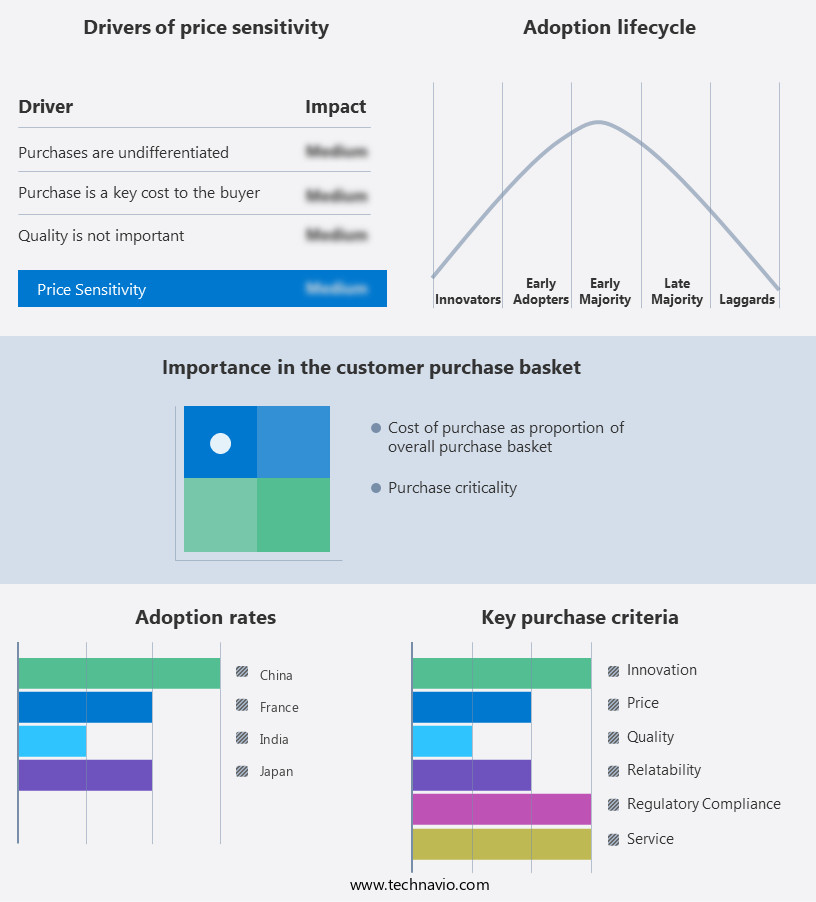
Customer Landscape
Key Companies & Market Insights
Companies are implementing various strategies, such as strategic alliances, smart connected clothing market forecast, partnerships, mergers and acquisitions, geographical expansion, and product/service launches, to enhance their presence in the industry.
AiQ Smart Clothing Inc. - This company specializes in advanced, interconnected apparel, including the Base Upper Body Garment solution, Bioman Plus. Bioman Plus is a versatile foundation for an expansive array of intelligent clothing innovations. By seamlessly integrating technology into fabric, this base garment enhances functionality and comfort for various applications.
The industry research and growth report includes detailed analyses of the competitive landscape of the market and information about key companies, including:
- AiQ Smart Clothing Inc.
- Athos
- DuPont de Nemours Inc.
- Hexoskin
- Interactive Wear AG
- Kolon Industries Inc.
- Myontec Oy
- Myzone Group
- Noble Biomaterials Inc.
- Ohmatex AS
- OTEX Specialty Narrow Fabrics
- Outlast Technologies GmbH
- Owlet Inc.
- Schoeller Textil AG
- Sensoria Inc.
- Toyobo Co. Ltd.
- Vista Medical Ltd.
- Vulpes Electronics GmbH
- Wearable X
Qualitative and quantitative analysis of companies has been conducted to help clients understand the wider business environment as well as the strengths and weaknesses of key industry players. Data is qualitatively analyzed to categorize companies as pure play, category-focused, industry-focused, and diversified; it is quantitatively analyzed to categorize companies as dominant, leading, strong, tentative, and weak.
Research Analyst Overview
The market is experiencing significant growth as textile technology advances and consumers seek innovative ways to enhance their personal well-being. This market encompasses a wide range of products, from tank tops embedded with sensors to jackets and innerwear, all designed to provide users with personalized insights into their physical activity, biometric data, and overall health. The sports and fitness sector has been a major driver of this market, with athletes and fitness enthusiasts embracing the benefits of smart apparel. These garments offer real-time data on fitness metrics such as heart rate, oxygen saturation, and activity levels, enabling users to optimize their workout routines and improve their performance.
The integration of sensors, microcontrollers, and connectivity technologies into clothing has led to the development of seamless, user-friendly smart wear. These garments offer haptic feedback, comfort, and convenience, making them an attractive option for individuals looking to incorporate technology into their daily life. The fitness ecosystem is also evolving, with smartwatches and fitness trackers increasingly being integrated with smart clothing. This integration offers continuous health monitoring, allowing users to take a proactive approach to their health and well-being. Energy harvesting technologies are also gaining traction in the smart clothing market, enabling these garments to operate independently of external power sources.
This feature is particularly important for worker safety, as it ensures that safety sensors and other critical functions remain operational even in remote locations. The use of electronic textiles and biometric data in smart clothing offers significant potential for performance enhancement and injury risk reduction. For example, muscle stretch sensors can help athletes optimize their form during workouts, while real-time health monitoring can alert users to potential injuries before they become serious. The integration of AI and machine learning algorithms into smart clothing is also a key trend, enabling these garments to provide personalized insights and recommendations based on individual user data.
This feature is particularly appealing to fitness enthusiasts, who can use the data to optimize their training regimens and achieve their health goals. The market for smart clothing is expected to continue growing, driven by advancements in textile technology and the increasing demand for wearable devices that offer convenience, functionality, and real-time data. As this market evolves, it is likely that we will see further innovations in areas such as battery performance, user-friendliness, and seamless integration with mobile apps and other wearable technologies. In summary, the smart clothing market is experiencing significant growth as consumers seek innovative ways to enhance their personal well-being and optimize their fitness routines.
The integration of sensors, connectivity technologies, and AI into clothing is driving the development of user-friendly, convenient, and functional smart wear that offers real-time data and personalized insights. The market is expected to continue growing, driven by advancements in textile technology and the increasing demand for wearable devices that offer performance enhancement, injury risk reduction, and convenience.
|
Market Scope |
|
|
Report Coverage |
Details |
|
Page number |
184 |
|
Base year |
2023 |
|
Historic period |
2018-2022 |
|
Forecast period |
2024-2028 |
|
Growth momentum & CAGR |
Accelerate at a CAGR of 26.1% |
|
Market growth 2024-2028 |
USD 6558.9 million |
|
Market structure |
Fragmented |
|
YoY growth 2023-2024(%) |
20.3 |
|
Key countries |
China, Japan, India, and France |
|
Competitive landscape |
Leading Companies, Market Positioning of Companies, Competitive Strategies, and Industry Risks |
What are the Key Data Covered in this Smart Connected Clothing Market Research and Growth Report?
- CAGR of the Smart Connected Clothing industry during the forecast period
- Detailed information on factors that will drive the growth and forecasting between 2024 and 2028
- Precise estimation of the size of the market and its contribution of the industry in focus to the parent market
- Accurate predictions about upcoming growth and trends and changes in consumer behaviour
- Growth of the market across North America, Europe, APAC, South America, and Middle East and Africa
- Thorough analysis of the market’s competitive landscape and detailed information about companies
- Comprehensive analysis of factors that will challenge the smart connected clothing market growth of industry companies
We can help! Our analysts can customize this smart connected clothing market research report to meet your requirements.