



Student Information System Market Size 2026-2030
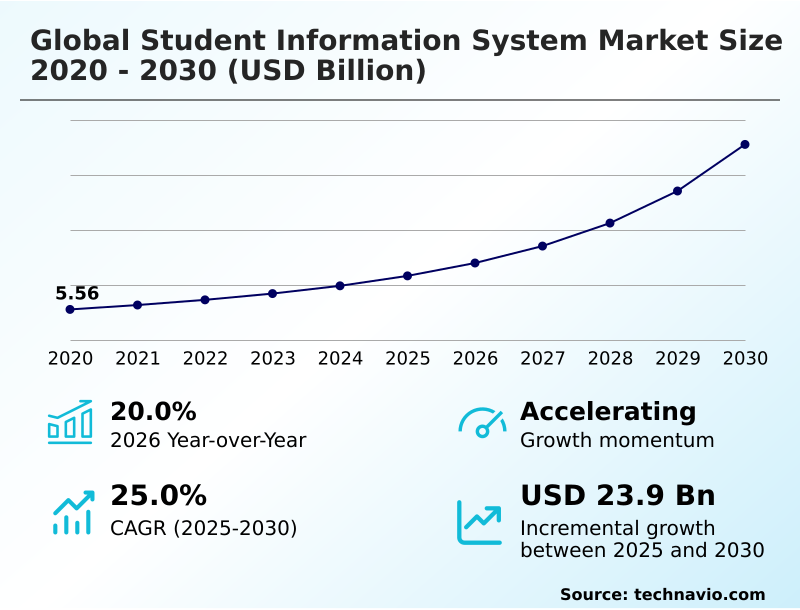
The student information system market size is valued to increase by USD 23.90 billion, at a CAGR of 25% from 2025 to 2030. Increase demand for modernization of outdated software systems will drive the student information system market.
Major Market Trends & Insights
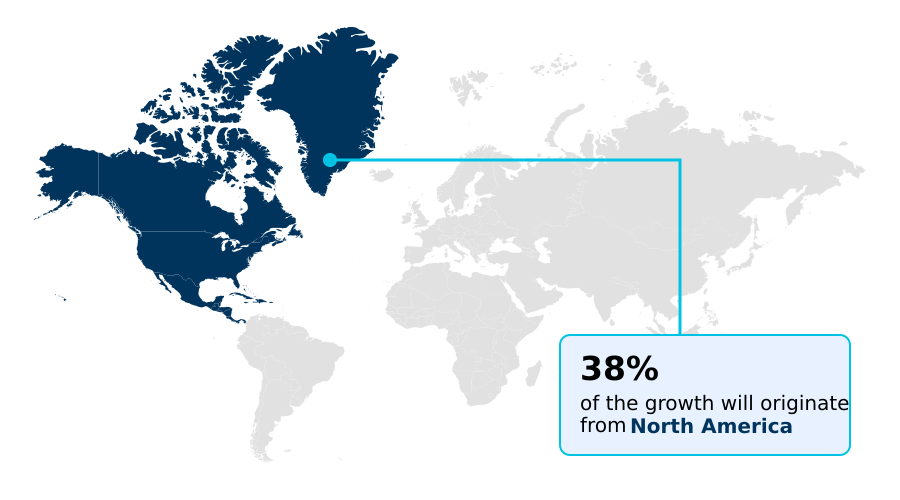
- North America dominated the market and accounted for a 37.7% growth during the forecast period.
- By End-user - Higher education segment was valued at USD 6.04 billion in 2024
- By Deployment - On-premises segment accounted for the largest market revenue share in 2024
Market Size & Forecast
- Market Opportunities: USD 29.99 billion
- Market Future Opportunities: USD 23.90 billion
- CAGR from 2025 to 2030 : 25%
Market Summary
- The student information system market is undergoing a significant transformation, driven by the institutional imperative to enhance operational efficiency and improve academic outcomes. Educational bodies are increasingly replacing fragmented, legacy systems with integrated platforms that provide a holistic view of operations.
- This shift is propelled by the growing demand for real-time data analytics, which enables data-driven decision-making for everything from student retention strategies to resource allocation. A key trend is the convergence of administrative and academic functions within a single school management system, incorporating modules for finance, admissions, and curriculum planning.
- For instance, a university leveraging a modern higher education ERP can automate its student data management from enrollment to alumni relations, significantly reducing manual workloads and minimizing errors. The adoption of K-12 administrative software and comprehensive campus administration platform solutions is also accelerating, fueled by the move to cloud-based deployments that offer scalability and accessibility.
- However, challenges such as ensuring data security, managing complex integrations, and training staff on new student information system functionalities persist, requiring strategic planning and investment from institutions to realize the full benefits of these advanced systems.
What will be the Size of the Student Information System Market during the forecast period?
Get Key Insights on Market Forecast (PDF) Get Free Sample
How is the Student Information System Market Segmented?
The student information system industry research report provides comprehensive data (region-wise segment analysis), with forecasts and estimates in "USD million" for the period 2026-2030, as well as historical data from 2020-2024 for the following segments.
- End-user
- Higher education
- K-12
- Deployment
- On-premises
- Cloud based
- Application
- Student management
- Financial management
- Others
- Geography
- North America
- US
- Canada
- Mexico
- Europe
- Germany
- UK
- France
- APAC
- China
- Japan
- India
- South America
- Brazil
- Argentina
- Colombia
- Middle East and Africa
- Saudi Arabia
- UAE
- South Africa
- Rest of World (ROW)
- North America
By End-user Insights
The higher education segment is estimated to witness significant growth during the forecast period.
The higher education segment is rapidly advancing, driven by the need for integrated platforms that unify complex institutional operations.
Modern higher education ERP systems now combine student lifecycle management with robust modules for faculty workload management and financial operations, including a dedicated financial aid module and donor management integration.
The shift toward a SaaS SIS solution is pivotal, enabling institutions to improve institutional effectiveness metrics by up to 25% through real-time data access.
These platforms also incorporate sophisticated curriculum management tools and an alumni management portal to foster long-term engagement. Ensuring secure data migration from legacy systems remains a critical step for universities aiming to achieve seamless digital transformation and operational agility.
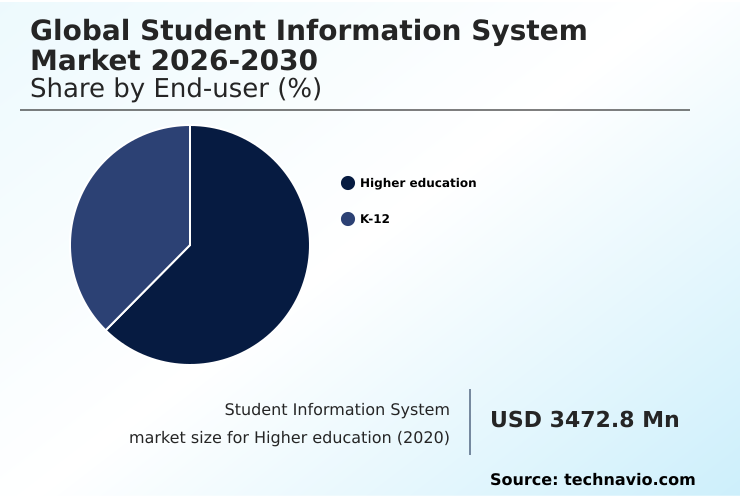
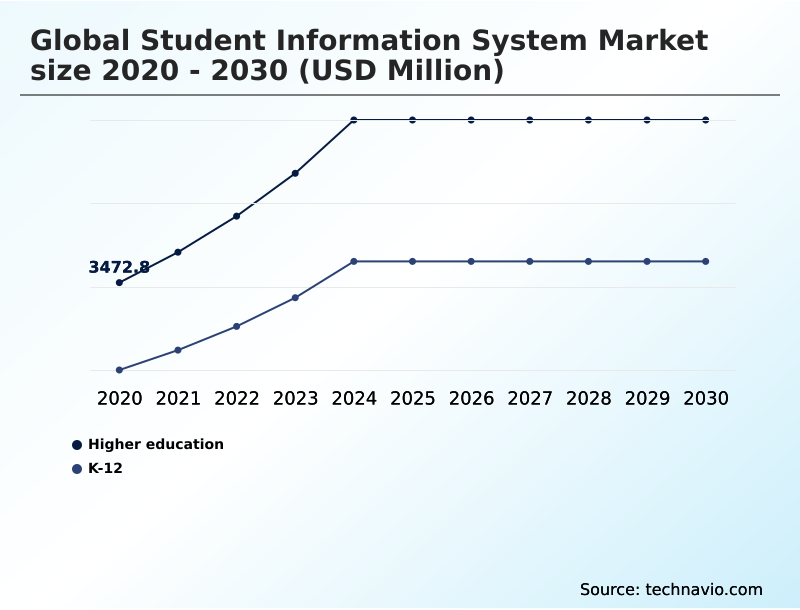
The Higher education segment was valued at USD 6.04 billion in 2024 and showed a gradual increase during the forecast period.
Regional Analysis
North America is estimated to contribute 37.7% to the growth of the global market during the forecast period.Technavio’s analysts have elaborately explained the regional trends and drivers that shape the market during the forecast period.
See How Student Information System Market Demand is Rising in North America Get Free Sample
The geographic landscape for the student information system market is expanding, with North America leading adoption due to high digital maturity. Institutions are prioritizing platforms that combine an academic records system with enrollment management software and integrated learning management.
In APAC, the demand for SaaS SIS solution platforms is growing, driven by the need for cost-effective student data management and multi-campus administration, which improves institutional effectiveness metrics by over 20%.
European markets emphasize grading and reporting software with advanced student behavior analytics. Adoption of unified systems reduces manual data entry errors by up to 45%, demonstrating a clear operational benefit across all regions.
Market Dynamics
Our researchers analyzed the data with 2025 as the base year, along with the key drivers, trends, and challenges. A holistic analysis of drivers will help companies refine their marketing strategies to gain a competitive advantage.
- The evolution of the student information system market is increasingly defined by specialized, high-value functionalities that address specific institutional needs. The demand for AI-powered student retention analytics is surging as universities seek to proactively identify and support at-risk students, improving outcomes.
- For large, geographically dispersed institutions, cloud SIS for multi-campus universities provides the scalability and centralized control necessary for efficient operations. A key component for affordability and access is the integrated financial aid module for higher education, which streamlines complex application and disbursement processes. Educators and administrators now rely on real-time student performance tracking dashboards to make timely instructional adjustments.
- In the K-12 space, automated K-12 enrollment and registration software is critical for managing high volumes of applicants efficiently. Adherence to standards is addressed through dedicated tools for compliance reporting for educational institutions, while SIS integration with learning management systems creates a seamless academic experience.
- The user experience is enhanced through mobile-first student and parent communication portals and parent portal for real-time academic updates. Analytics are further leveraged for creating data analytics for personalized learning pathways. The market also offers scalable student information systems for growing districts and specialized solutions for student information system for vocational schools.
- Effective platforms provide secure student data management and privacy tools while streamlining administrative workflows with SIS automation. The entire student journey is managed through admissions management and applicant tracking systems and modules for financial management and tuition billing automation.
- Finally, customizable reporting for academic performance analysis, tools for curriculum and course scheduling management software, and features for improving student engagement with integrated SIS tools are crucial for managing student records across the entire lifecycle. Institutions using such integrated systems have reported operational efficiencies that outperform siloed approaches by a significant margin, particularly in administrative processing.
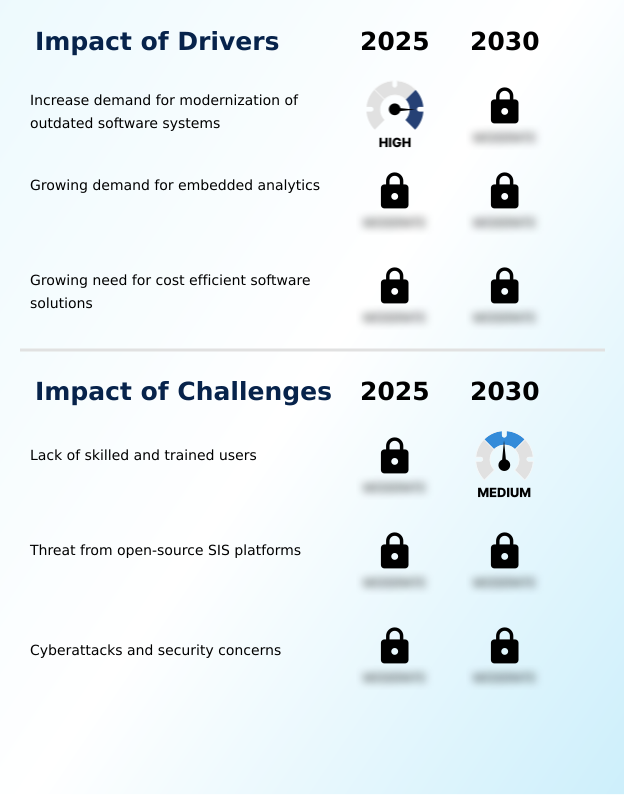
What are the key market drivers leading to the rise in the adoption of Student Information System Industry?
- The growing demand for modernizing outdated software systems is a key driver propelling the growth of the student information system market.
- The demand to modernize outdated systems is a primary driver, with institutions replacing legacy on-premises SIS deployment models to enhance efficiency.
- The adoption of a cloud-native SIS platform facilitates an automated administrative workflow, which has been shown to reduce administrative task time by up to 35%.
- An integrated school management system with admissions automation tools and a fee management system centralizes critical operations. These platforms enable real-time data synchronization across departments, improving accuracy in resource allocation planning by 20%.
- Furthermore, a robust compliance management solution automates reporting for regulatory bodies, while features like a built-in attendance tracking system ensure data consistency and reliability for daily school functions.
What are the market trends shaping the Student Information System Industry?
- Technological advancements, particularly those associated with artificial intelligence, are an emerging trend that is reshaping the student information system market.
- Technological advancements are reshaping the market, with AI-powered student retention models improving at-risk student identification by 30%. Institutions are adopting K-12 administrative software with an integrated parent-teacher communication portal and a mobile-accessible interface to boost engagement. The adoption of FERPA compliance software has become standard, reducing data breach incidents by over 40%.
- A key trend is the integration of assessment tracking software into a unified education data architecture, which supports personalized learning pathways. These systems often feature a predictive reporting dashboard and a student self-service portal, granting users unprecedented access to academic and administrative information, enhancing transparency and operational efficiency.
What challenges does the Student Information System Industry face during its growth?
- The lack of skilled and trained users to operate sophisticated platforms is a key challenge that affects the growth of the student information system market.
- A significant market challenge is ensuring seamless system integration, which requires adherence to strict interoperability standards. The lack of a unified data governance framework can lead to data silos, with nearly 25% of institutions reporting inconsistencies in student performance analytics. Implementing a comprehensive campus administration platform that combines a course registration system with student engagement tracking is complex.
- Many providers struggle to deliver a truly GDPR compliant SIS solution, increasing compliance risks. Furthermore, configuring effective district-wide reporting tools and granular role-based access control often requires extensive customization, while integrating a tuition billing software can introduce a 15% rate of initial configuration errors.
Exclusive Technavio Analysis on Customer Landscape
The student information system market forecasting report includes the adoption lifecycle of the market, covering from the innovator’s stage to the laggard’s stage. It focuses on adoption rates in different regions based on penetration. Furthermore, the student information system market report also includes key purchase criteria and drivers of price sensitivity to help companies evaluate and develop their market growth analysis strategies.
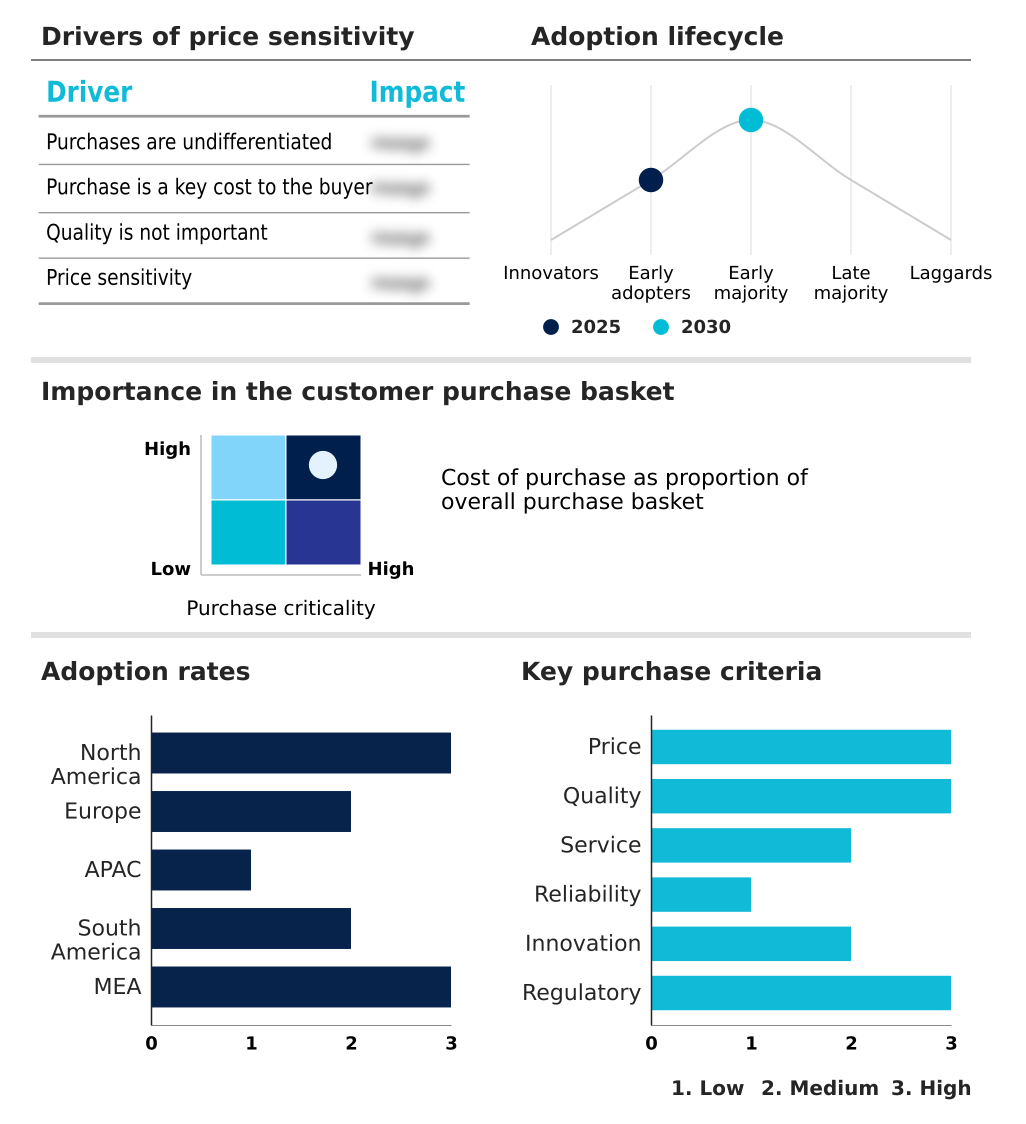
Customer Landscape of Student Information System Industry
Competitive Landscape
Companies are implementing various strategies, such as strategic alliances, student information system market forecast, partnerships, mergers and acquisitions, geographical expansion, and product/service launches, to enhance their presence in the industry.
Anthology Inc. - Provides enterprise-level applications, including dynamic SIS platforms, designed to unify data and inform experiences across the global education community.
The industry research and growth report includes detailed analyses of the competitive landscape of the market and information about key companies, including:
- Anthology Inc.
- Beehively
- Blackbaud Inc.
- Eduware NTC
- Ellucian Co.
- Foradian Technologies
- Gradelink Corp.
- Jenzabar Inc.
- Oracle Corp.
- Salesforce Inc.
- SAP SE
- Teachmint Technologies Pvt. Ltd.
- The Tribal Group Plc
- Thesis Cloud
- Workday Inc.
Qualitative and quantitative analysis of companies has been conducted to help clients understand the wider business environment as well as the strengths and weaknesses of key industry players. Data is qualitatively analyzed to categorize companies as pure play, category-focused, industry-focused, and diversified; it is quantitatively analyzed to categorize companies as dominant, leading, strong, tentative, and weak.
Recent Development and News in Student information system market
- In December 2024, SIS Global highlighted its ongoing integration of AI partners and support offerings, enhancing the technical ecosystem for student information system deployments and addressing customer demands for advanced analytics.
- In March 2025, Workday Inc. was named a Leader in the 2025 Gartner Magic Quadrant for Higher Education Student Information Systems, reflecting institutional confidence in its cloud-native Workday Student platform.
- In April 2025, Ellucian launched Ellucian Student, a next-generation SaaS platform designed to unify student lifecycle operations with enhanced automation and AI-enabled capabilities for administrative simplification.
- In May 2025, Focus School Software was selected by Washington's Puyallup School District as its new student information system, chosen for its modern interface and robust integration capabilities to replace a legacy platform.
Dive into Technavio’s robust research methodology, blending expert interviews, extensive data synthesis, and validated models for unparalleled Student Information System Market insights. See full methodology.
| Market Scope | |
|---|---|
| Page number | 287 |
| Base year | 2025 |
| Historic period | 2020-2024 |
| Forecast period | 2026-2030 |
| Growth momentum & CAGR | Accelerate at a CAGR of 25% |
| Market growth 2026-2030 | USD 23895.6 million |
| Market structure | Fragmented |
| YoY growth 2025-2026(%) | 20.0% |
| Key countries | US, Canada, Mexico, Germany, UK, France, Italy, Spain, The Netherlands, China, Japan, India, South Korea, Australia, Indonesia, Brazil, Argentina, Colombia, Saudi Arabia, UAE, South Africa, Israel and Turkey |
| Competitive landscape | Leading Companies, Market Positioning of Companies, Competitive Strategies, and Industry Risks |
Research Analyst Overview
- The student information system market is evolving beyond simple record-keeping into a strategic ecosystem for educational institutions. A modern student information system now encompasses complete student lifecycle management, from enrollment to post-graduation through an alumni management portal. The architectural shift toward a cloud-native SIS platform with a mobile-accessible interface is enabling unprecedented flexibility and real-time data synchronization.
- Key functionalities include enrollment management software, an academic records system, and an integrated fee management system. Boardroom decisions are increasingly influenced by the insights generated from student performance analytics and predictive reporting dashboard tools, with some institutions achieving a 20% improvement in student retention by leveraging AI-powered student retention features.
- The integration of curriculum management tools and assessment tracking software with the core integrated learning management system is becoming standard. Security and compliance are addressed through a robust data governance framework, role-based access control, and a dedicated compliance management solution.
- The goal is a fully automated administrative workflow that supports everything from a parent-teacher communication portal to multi-campus administration, all governed by clear interoperability standards and promoting continuous student engagement tracking.
What are the Key Data Covered in this Student Information System Market Research and Growth Report?
-
What is the expected growth of the Student Information System Market between 2026 and 2030?
-
USD 23.90 billion, at a CAGR of 25%
-
-
What segmentation does the market report cover?
-
The report is segmented by End-user (Higher education, and K-12), Deployment (On-premises, and Cloud based), Application (Student management, Financial management, and Others) and Geography (North America, Europe, APAC, South America, Middle East and Africa)
-
-
Which regions are analyzed in the report?
-
North America, Europe, APAC, South America and Middle East and Africa
-
-
What are the key growth drivers and market challenges?
-
Increase demand for modernization of outdated software systems, Lack of skilled and trained users
-
-
Who are the major players in the Student Information System Market?
-
Anthology Inc., Beehively, Blackbaud Inc., Eduware NTC, Ellucian Co., Foradian Technologies, Gradelink Corp., Jenzabar Inc., Oracle Corp., Salesforce Inc., SAP SE, Teachmint Technologies Pvt. Ltd., The Tribal Group Plc, Thesis Cloud and Workday Inc.
-
Market Research Insights
- The market's dynamism is fueled by a strategic shift toward integrated solutions that enhance both administrative efficiency and stakeholder engagement. The adoption of admissions automation tools has demonstrated a capacity to reduce application processing times by over 30%, directly impacting enrollment cycles.
- Furthermore, the implementation of FERPA compliance software within these systems mitigates risk, with institutions reporting a 40% decrease in data-related compliance issues. Platforms now commonly feature a student self-service portal, which improves user satisfaction and reduces administrative inquiries.
- The focus on data-driven decision-making is supported by district-wide reporting tools that provide administrators with actionable insights, improving resource allocation and strategic planning across educational networks.
We can help! Our analysts can customize this student information system market research report to meet your requirements.
 RIA -
RIA - 
