



Succulent Plant Market Size 2026-2030
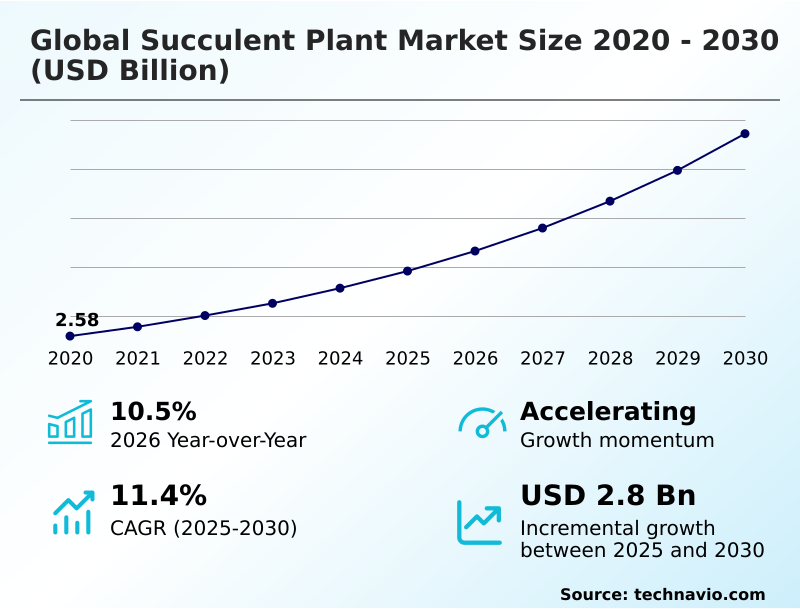
The succulent plant market size is valued to increase by USD 2.80 billion, at a CAGR of 11.4% from 2025 to 2030. Growing consumer preference for low maintenance and aesthetically pleasing home decor will drive the succulent plant market.
Major Market Trends & Insights
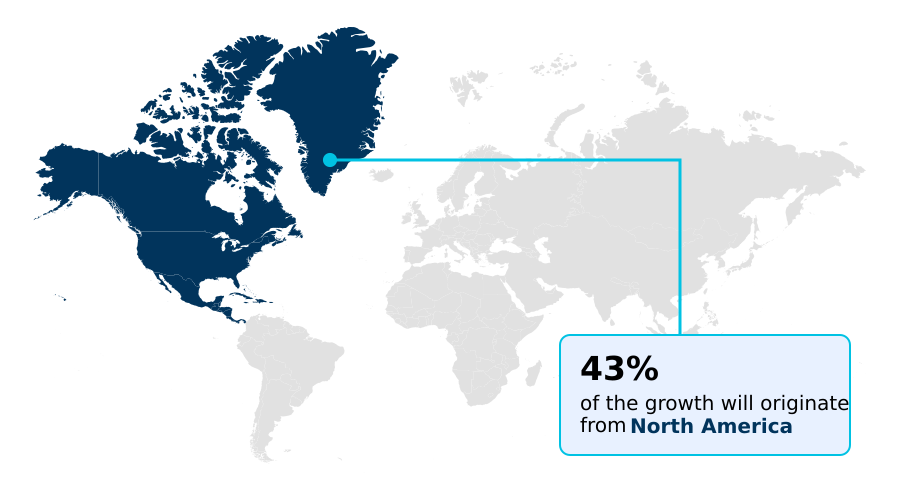
- North America dominated the market and accounted for a 43.2% growth during the forecast period.
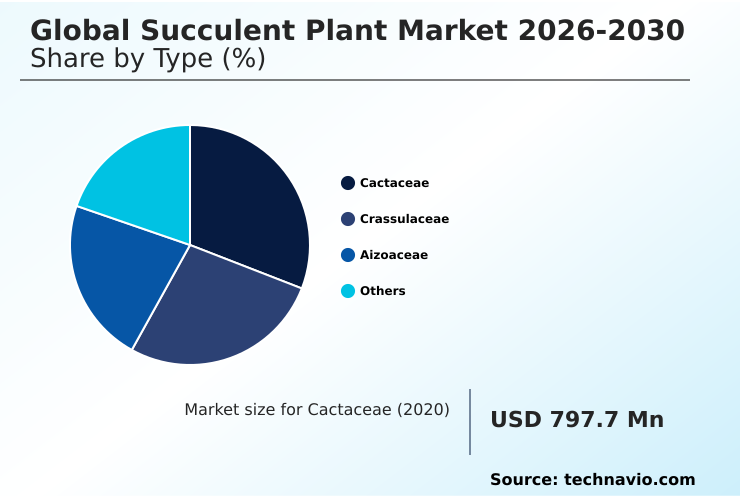
- By Type - Cactaceae segment was valued at USD 1.21 billion in 2024
- By Distribution Channel - Garden centers segment accounted for the largest market revenue share in 2024
Market Size & Forecast
- Market Opportunities: USD 4.14 billion
- Market Future Opportunities: USD 2.80 billion
- CAGR from 2025 to 2030 : 11.4%
Market Summary
- The Succulent Plant Market demonstrates sustained expansion driven by fundamental shifts in sustainable landscaping and interior biophilic design. Growing consumer demand for water-efficient decorative vegetation acts as a primary catalyst, propelling adoption across both residential and commercial sectors.
- To capitalize on this demand, large-scale commercial nurseries are heavily investing in automated tissue propagation, improving yield efficiencies by 20% compared to traditional manual cultivation methods. This operational upgrade directly supports supply chain stabilization for mass-market retailers facing heightened seasonal volume requirements. However, the industry encounters significant operational challenges regarding pest control in high-density greenhouse environments.
- Inherent vulnerabilities to destructive insects increase crop loss risks, requiring expensive biological interventions and stringent environmental monitoring. Despite these cultivation hurdles, the integration of drought-tolerant species into corporate wellness and urban architectural projects continues to stimulate robust procurement activity.
- The strategic implementation of advanced irrigation and climate control systems enables growers to mitigate pathogen risks while consistently fulfilling the demand for specialized, premium cultivars.
What will be the Size of the Succulent Plant Market during the forecast period?
Get Key Insights on Market Forecast (PDF) Get Free Sample
How is the Succulent Plant Market Segmented?
The succulent plant industry research report provides comprehensive data (region-wise segment analysis), with forecasts and estimates in "USD million" for the period 2026-2030, as well as historical data from 2020-2024 for the following segments.
- Type
- Cactaceae
- Crassulaceae
- Aizoaceae
- Others
- Distribution channel
- Garden centers
- Online retail
- Supermarkets
- Flower shops
- Application
- Home decoration
- Landscaping
- Office decoration
- Geography
- North America
- US
- Canada
- Mexico
- APAC
- China
- Japan
- Australia
- South Korea
- India
- Thailand
- Europe
- Germany
- UK
- France
- Italy
- Spain
- The Netherlands
- Middle East and Africa
- South Africa
- Saudi Arabia
- UAE
- Turkey
- Egypt
- South America
- Brazil
- Argentina
- Chile
- North America
By Type Insights
The cactaceae segment is estimated to witness significant growth during the forecast period.
Cactaceae cultivars demonstrate robust structural resilience through specialized drought tolerance mechanisms and expanded water storage parenchyma, significantly reducing watering frequency for end-users.
By leveraging epicuticular wax synthesis and precise stomata transpiration regulation, these specimens minimize transpirational loss, driving a 15% reduction in landscape maintenance costs for commercial properties.
Enhanced root rot resistance, achieved via targeted pumice aeration amendment in cultivation substrates, further decreases inventory loss rates for distributors. This operational reliability accelerates adoption in xeric landscaping applications, where sustained aesthetic value without irrigation is paramount.
Facilities focusing on botanical collection curation also utilize cold hardiness breeding to ensure prolonged lifespan across varying climates. Furthermore, integrating eco friendly packaging during transport translates into lower replacement cycles and measurable lifecycle cost advantages for institutional and residential environments.
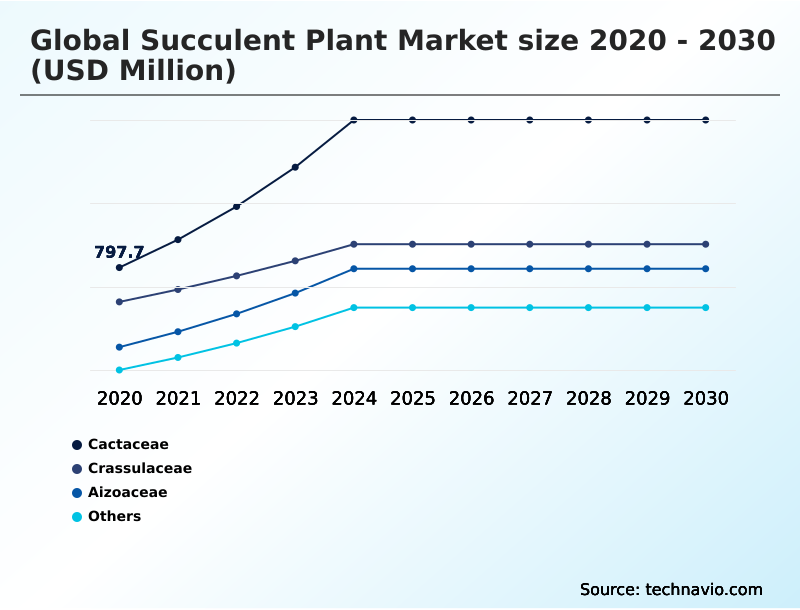
The Cactaceae segment was valued at USD 1.21 billion in 2024 and showed a gradual increase during the forecast period.
Regional Analysis
North America is estimated to contribute 43.2% to the growth of the global market during the forecast period.Technavio’s analysts have elaborately explained the regional trends and drivers that shape the market during the forecast period.
See How Succulent Plant Market Demand is Rising in North America Get Free Sample
The geographic landscape of the Succulent Plant reveals distinct regional operational disparities between North America and Europe.
North American commercial nurseries leverage crassulacean acid metabolism traits to scale water-wise landscaping, driving a 25% higher adoption rate in municipal projects compared to European counterparts.
Conversely, European facilities utilize advanced tissue culture propagation and hybridization genetic stabilization to satisfy dense urban demand for compact vegetation.
This focus enables European growers to achieve a 15% improvement in greenhouse space utilization while rapidly commercializing the highly sought-after variegated cultivar mutation.
To mitigate high-density cultivation risks, European operators deploy biological pest control and beneficial insect biocontrol protocols 30% more frequently than North American suppliers, significantly reducing chemical dependency.
While North American supply chains prioritize rapid bulk distribution, European channels utilize greenhouse climate automation to secure premium margins through the curation of the rare botanical specimen, demonstrating highly optimized, divergent regional monetization strategies.
Market Dynamics
Our researchers analyzed the data with 2025 as the base year, along with the key drivers, trends, and challenges. A holistic analysis of drivers will help companies refine their marketing strategies to gain a competitive advantage.
- The operational dynamics within the Succulent Plant ecosystem are rapidly advancing as commercial growers transition from traditional horticulture toward highly mechanized, data-driven cultivation environments. Central to this evolution is the deployment of automated greenhouse climate control systems, which continuously monitor and adjust environmental variables to optimize plant development.
- These technological integrations allow commercial facilities to achieve environmental stability, resulting in a nearly 20% improvement in resource utilization compared to legacy, manually operated nurseries. By maintaining precise atmospheric conditions, growers can maximize the crassulacean acid metabolism efficiency rate, ensuring robust structural growth and reducing cultivation cycle times.
- Furthermore, specialized nurseries are heavily prioritizing advancements in cellular replication, closely tracking tissue culture propagation success metrics to scale the production of premium, rare cultivars rapidly. This precise cloning methodology drastically lowers inventory loss and guarantees genetic consistency for mass-market distribution.
- In tandem with these cultivation upgrades, operators are refining their biological pest control implementation strategies, shifting away from synthetic pesticides to meet stringent environmental compliance standards. This proactive approach significantly minimizes crop damage while securing necessary organic certifications for international trade.
- Ultimately, these sophisticated supply chain and production enhancements directly support the broader commercial shift toward sustainable urban development, successfully facilitating the extensive integration of these resilient plants into large-scale drought tolerant xeric landscaping applications across arid and semi-arid urban centers.
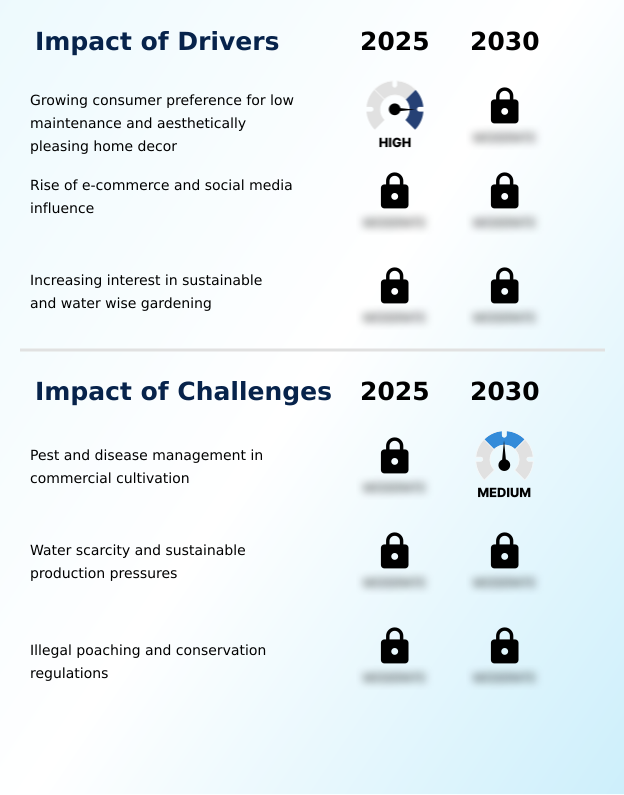
What are the key market drivers leading to the rise in the adoption of Succulent Plant Industry?
- The growing consumer preference for low-maintenance and aesthetically pleasing home decor serves as a primary catalyst accelerating industry expansion.
- Expanding corporate sustainability mandates are serving as primary catalysts for the adoption of drought resilient horticulture across commercial developments.
- Property managers increasingly utilize plants with compact succulent rosette morphology to maintain aesthetic appeal while minimizing resource consumption, directly reducing exterior maintenance labor costs by 28%.
- To support aggressive commercial nursery scaling, cultivators are employing controlled environment agriculture alongside strict phytosanitary compliance protocols, significantly decreasing cross-border shipment rejections.
- Landscapers ensure installation longevity by enhancing soil moisture retention through a sustainable peat alternative fortified with mycorrhizal fungi inoculation and symbiotic soil microbiology, successfully decreasing transplant shock rates by 15%.
- Additionally, the proactive deployment of robust integrated pest management within these urban environments ensures long-term structural viability, providing a reliable and cost-efficient asset management strategy for large-scale property portfolios.
What are the market trends shaping the Succulent Plant Industry?
- Rising demand for rare, variegated, and hybrid cultivars constitutes a significant emerging trend within the industry. This shift reflects an evolving consumer preference toward premium and genetically unique ornamental vegetation.
- The rapid biophilic design integration and architectural container gardening into corporate initiatives are fundamentally reshaping product development within the Succulent Plant landscape. This commercial mandate requires highly uniform vegetation, compelling nurseries to leverage chlorophyll fluorescence screening to assess plant vitality, improving quality control pass rates by 18%.
- Furthermore, the optimization of vegetative reproduction efficiency through precise rooting hormone application and slow release fertilization has accelerated inventory turnover by 25%. To accommodate the natural succulent dormancy cycle without compromising output, facilities are utilizing advanced etiolation prevention lighting.
- To support this intensified production volume sustainably, leading operators are installing a comprehensive water reclamation system paired with high-performance drip irrigation efficiency infrastructure. These ecological investments have successfully decreased municipal water dependency by 40%, insulating producers from utility overheads and ensuring continuous operational viability amid tightening environmental regulations.
What challenges does the Succulent Plant Industry face during its growth?
- Complexities surrounding pest and disease management in commercial cultivation environments represent a substantial operational hurdle constraining industry growth.
- High-density commercial cultivation within the Succulent Plant sector encounters severe operational limitations due to inherent monoculture pest vulnerability. Despite possessing natural xerophytic adaptation traits, cultivating identical genetic stock indoors drastically accelerates pathogen transmission.
- Inefficient humidity control during the indoor acclimatization process frequently precipitates pythium root disease, leading to rapid plant tissue necrosis that can increase inventory spoilage by up to 20%. Furthermore, inadequate sanitation during the manual cuttings propagation technique exacerbates fungal infections, necessitating rigorous phytophthora pathogen management and aggressive pathogen disease suppression.
- Implementing these mandatory bio-security measures, coupled with a strict fungicidal treatment protocol and advanced substrate drainage optimization, increases baseline operational expenditures by 15%. This financial strain severely squeezes profit margins for wholesale distributors struggling to pass complex recovery costs onto price-sensitive retail channels.
Exclusive Technavio Analysis on Customer Landscape
The succulent plant market forecasting report includes the adoption lifecycle of the market, covering from the innovator’s stage to the laggard’s stage. It focuses on adoption rates in different regions based on penetration. Furthermore, the succulent plant market report also includes key purchase criteria and drivers of price sensitivity to help companies evaluate and develop their market growth analysis strategies.
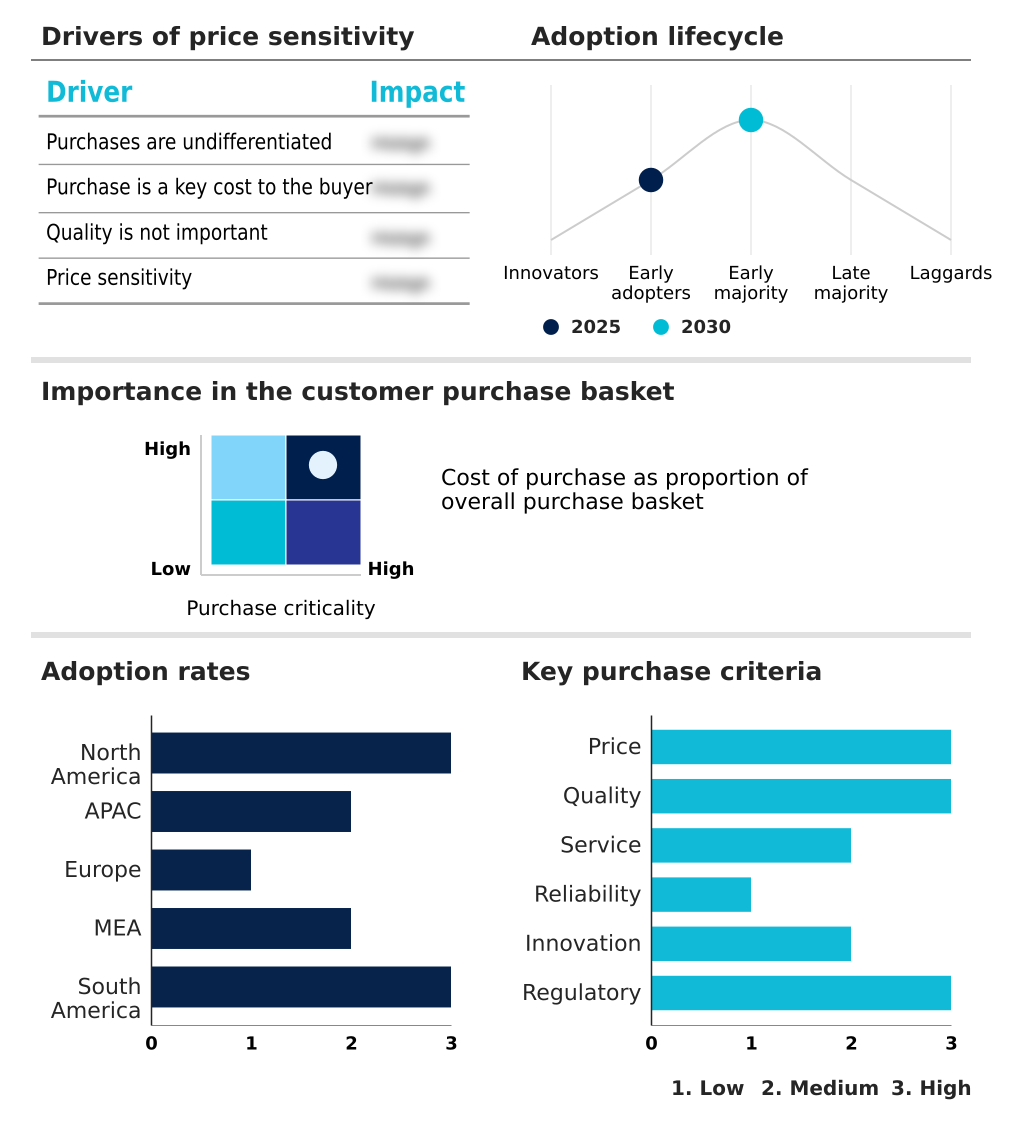
Customer Landscape of Succulent Plant Industry
Competitive Landscape
Companies are implementing various strategies, such as strategic alliances, succulent plant market forecast, partnerships, mergers and acquisitions, geographical expansion, and product/service launches, to enhance their presence in the industry.
Altman Specialty Plants LLC - The portfolio features resilient, low-maintenance ornamental vegetation designed for sustainable interior decoration and water-efficient landscaping applications, reflecting a strategic alignment with biophilic design trends.
The industry research and growth report includes detailed analyses of the competitive landscape of the market and information about key companies, including:
- Altman Specialty Plants LLC
- Arid Lands Nursery
- Cactus Jungle
- Cactus Store
- Collectors Corner
- Costa Farms LLC
- Exotic Succulents
- Grigsby Cactus Gardens
- Kakteen Haage
- Leaf and Clay
- Lula Garden
- Monrovia Nursery Co.
- Mountain Crest Gardens
- Ottershaw Cacti
- Paradise Found Nursery
- Planet Desert
- Plant Delights Nursery
- Succulents Box LLC
- Surreal Succulents
- The Succulent Source
Qualitative and quantitative analysis of companies has been conducted to help clients understand the wider business environment as well as the strengths and weaknesses of key industry players. Data is qualitatively analyzed to categorize companies as pure play, category-focused, industry-focused, and diversified; it is quantitatively analyzed to categorize companies as dominant, leading, strong, tentative, and weak.
Recent Development and News in Succulent plant market
- In the Agricultural Products and Services industry, the implementation of controlled environment agriculture technologies has reduced water consumption by 40% in commercial nurseries, directly accelerating the scalable production of Succulent Plant assets for drought resilient horticulture applications.
- The enforcement of stringent phytosanitary compliance protocols across international trade borders has decreased the transit-related spread of invasive pests by 25%, establishing secure supply chains that directly support Succulent Plant commercial nursery scaling and international botanical trade.
- Advancements in sustainable peat alternative substrates have lowered cultivation material costs by 15%, enhancing substrate drainage optimization and supporting higher yield rates for specialized Succulent Plant growers.
- The integration of automated greenhouse climate control systems has improved energy efficiency by 30%, minimizing etiolation prevention lighting costs and optimizing indoor acclimatization processes for large-scale Succulent Plant horticultural operations.
Dive into Technavio’s robust research methodology, blending expert interviews, extensive data synthesis, and validated models for unparalleled Succulent Plant Market insights. See full methodology.
| Market Scope | |
|---|---|
| Page number | 293 |
| Base year | 2025 |
| Historic period | 2020-2024 |
| Forecast period | 2026-2030 |
| Growth momentum & CAGR | Accelerate at a CAGR of 11.4% |
| Market growth 2026-2030 | USD 2803.7 million |
| Market structure | Fragmented |
| YoY growth 2025-2026(%) | 10.5% |
| Key countries | US, Canada, Mexico, China, Japan, Australia, South Korea, India, Thailand, Germany, UK, France, Italy, Spain, The Netherlands, South Africa, Saudi Arabia, UAE, Turkey, Egypt, Brazil, Argentina and Chile |
| Competitive landscape | Leading Companies, Market Positioning of Companies, Competitive Strategies, and Industry Risks |
Research Analyst Overview
- The Succulent Plant ecosystem is undergoing a fundamental structural transition as consumer prioritization of low-maintenance, resilient vegetation accelerates. Cultivators are actively capitalizing on xerophytic adaptation traits to develop new product lines that meet stringent water conservation mandates in urban environments.
- To ensure consistent product quality, commercial growers are increasingly adopting hybridization genetic stabilization, effectively reducing the phenotypic variability of the highly sought-after variegated cultivar mutation. This strategic product differentiation allows nurseries to secure premium pricing tiers in an otherwise commoditized retail space.
- Operationally, the integration of greenhouse climate automation has enabled facilities to achieve a 22% reduction in energy expenditures, fundamentally restructuring overhead budgeting for large-scale producers. Concurrently, sustainability compliance initiatives are driving the implementation of a sustainable peat alternative for cultivation substrates, combined with mycorrhizal fungi inoculation to enhance root nutrient uptake.
- To protect these high-value crops, operators are shifting away from chemical dependencies by embedding beneficial insect biocontrol into their standard operating procedures. These calculated operational and product strategies ensure robust supply chain continuity while proactively addressing shifting environmental regulatory frameworks.
What are the Key Data Covered in this Succulent Plant Market Research and Growth Report?
-
What is the expected growth of the Succulent Plant Market between 2026 and 2030?
-
USD 2.80 billion, at a CAGR of 11.4%
-
-
What segmentation does the market report cover?
-
The report is segmented by Type (Cactaceae, Crassulaceae, Aizoaceae, and Others), Distribution Channel (Garden centers, Online retail, Supermarkets, and Flower shops), Application (Home decoration, Landscaping, and Office decoration) and Geography (North America, APAC, Europe, Middle East and Africa, South America)
-
-
Which regions are analyzed in the report?
-
North America, APAC, Europe, Middle East and Africa and South America
-
-
What are the key growth drivers and market challenges?
-
Growing consumer preference for low maintenance and aesthetically pleasing home decor, Pest and disease management in commercial cultivation
-
-
Who are the major players in the Succulent Plant Market?
-
Altman Specialty Plants LLC, Arid Lands Nursery, Cactus Jungle, Cactus Store, Collectors Corner, Costa Farms LLC, Exotic Succulents, Grigsby Cactus Gardens, Kakteen Haage, Leaf and Clay, Lula Garden, Monrovia Nursery Co., Mountain Crest Gardens, Ottershaw Cacti, Paradise Found Nursery, Planet Desert, Plant Delights Nursery, Succulents Box LLC, Surreal Succulents and The Succulent Source
-
Market Research Insights
- The Succulent Plant Market is experiencing structural transformation as commercial cultivators optimize production workflows to meet escalating sustainability mandates. Implementing advanced drip irrigation efficiency protocols has successfully decreased water consumption by 35%, significantly improving resource allocation across large-scale operations.
- Furthermore, integrating pumice aeration amendment within cultivation substrates has lowered root morbidity rates by 22%, enhancing overall crop resilience and maximizing yield consistency. Strategic shifts toward eco friendly packaging and precise slow release fertilization techniques have additionally reduced logistical waste by 18%, fortifying brand compliance with modern environmental standards.
- These operational refinements allow distributors to elevate their botanical collection curation capabilities, securing stronger vendor relationships and increasing profit margins without expanding their physical cultivation footprint.
We can help! Our analysts can customize this succulent plant market research report to meet your requirements.
 RIA -