
Synthetic Data Generation For AI Training Market Analysis, Size, and Forecast 2026-2030: North America (US, Canada, and Mexico), Europe (Germany, UK, and France), APAC (China, India, and Japan), Middle East and Africa (Saudi Arabia, UAE, and South Africa), South America (Brazil, Argentina, and Colombia), and Rest of World (ROW)

Synthetic Data Generation For AI Training Market Analysis, Size, and Forecast 2026-2030:
North America (US, Canada, and Mexico), Europe (Germany, UK, and France), APAC (China, India, and Japan), Middle East and Africa (Saudi Arabia, UAE, and South Africa), South America (Brazil, Argentina, and Colombia), and Rest of World (ROW)

Published: Mar 2026 313 Pages SKU: IRTNTR81366

Market Overview at a Glance

$704.88 Mn
Market Opportunity
37.3%
CAGR 2025 - 2030
37.6%
North America Growth
$55.56 Mn
Tabular data segment 2024

Synthetic Data Generation For AI Training Market Size 2026-2030

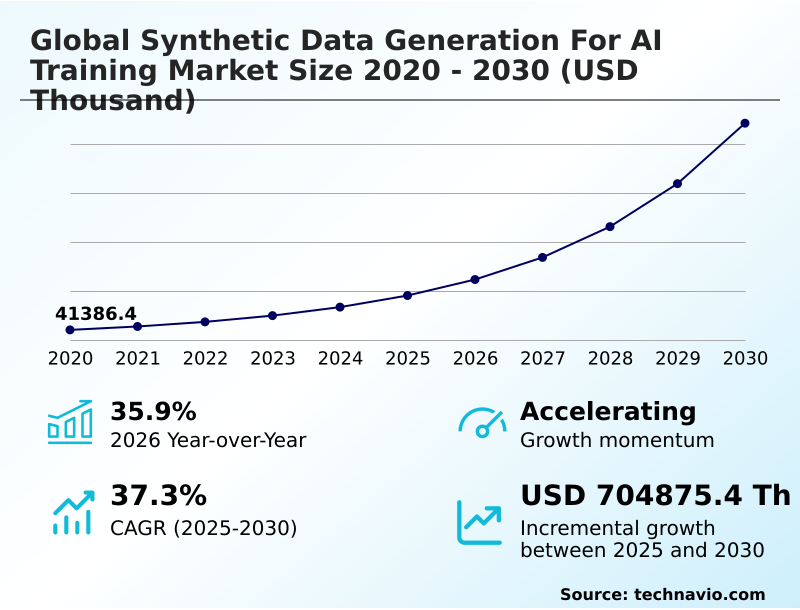
The synthetic data generation for ai training market size is valued to increase by USD 704.88 million, at a CAGR of 37.3% from 2025 to 2030. Escalating regulatory pressures and global data privacy mandates will drive the synthetic data generation for ai training market.

Major Market Trends & Insights

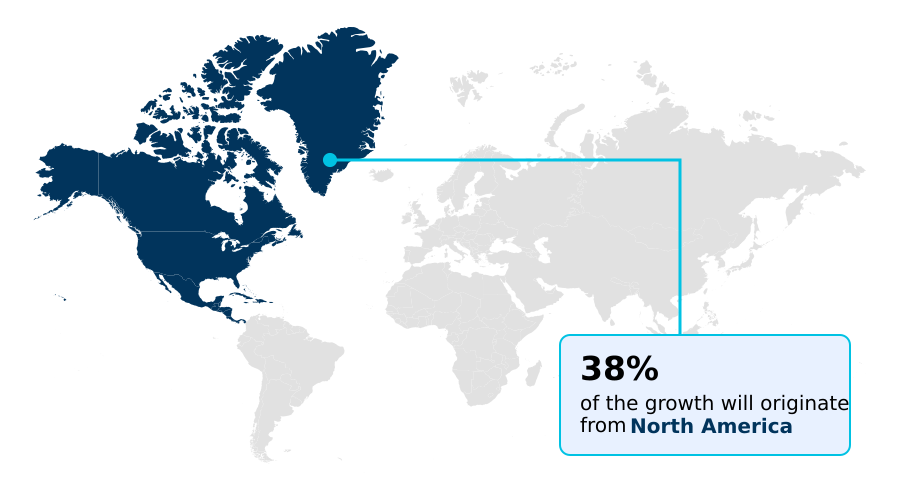
  • North America dominated the market and accounted for a 37.6% growth during the forecast period.
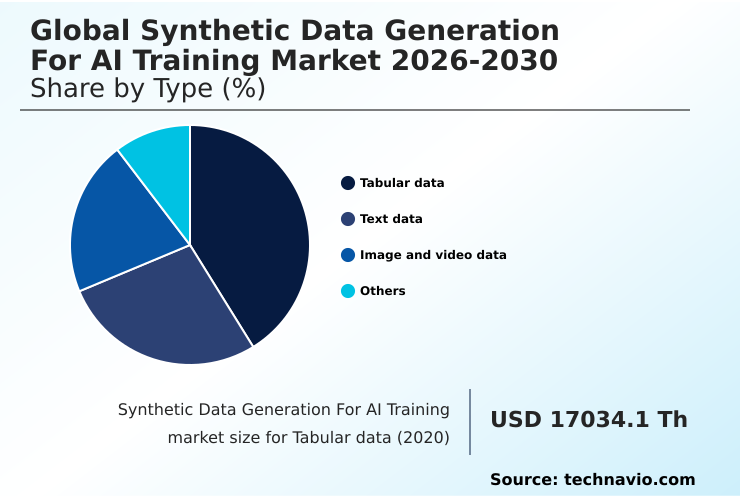
  • By Type - Tabular data segment was valued at USD 55.56 million in 2024
  • By End-user - BFSI segment accounted for the largest market revenue share in 2024

Market Size & Forecast

  • Market Opportunities:
  • Market Future Opportunities: USD 704.88 million
  • CAGR from 2025 to 2030 : 37.3%

Market Summary

  • The synthetic data generation for AI training market is fundamentally reshaping how organizations develop and deploy intelligent systems. This technology addresses the critical challenges of data scarcity and privacy by enabling the programmatic creation of artificial datasets that mirror the statistical properties of real-world information without exposing sensitive identifiers.
  • Key drivers include stringent data protection regulations and the high cost of manual data acquisition and labeling. For instance, in the automotive sector, manufacturers utilize synthetic environments to generate billions of miles of driving data, covering rare and hazardous edge cases that are impractical to collect physically, thereby accelerating safety validation.
  • Concurrently, trends are shifting toward high-fidelity, multi-modal data and the integration of federated learning to enhance privacy. However, the market is not without its challenges. Ensuring data fidelity to prevent model collapse, where AI systems lose their nuance after being trained on self-generated data, remains a significant technical hurdle.
  • Furthermore, the absence of universal validation standards and the dual-use nature of generative technologies pose ongoing risks that require robust governance frameworks. As the industry matures, the focus is on creating automated, self-correcting data pipelines that ensure both quality and security, making synthetic data a cornerstone of modern AI development.

What will be the Size of the Synthetic Data Generation For AI Training Market during the forecast period?

Get Key Insights on Market Forecast (PDF) Request Free Sample

How is the Synthetic Data Generation For AI Training Market Segmented?

The synthetic data generation for ai training industry research report provides comprehensive data (region-wise segment analysis), with forecasts and estimates in "USD thousand" for the period 2026-2030, as well as historical data from 2020-2024 for the following segments.

  • Type
    • Tabular data
    • Text data
    • Image and video data
    • Others
  • End-user
    • BFSI
    • Healthcare
    • Automotive
    • IT and telecom
    • Others
  • Product
    • Fully synthetic data
    • Partially synthetic data
  • Geography
    • North America
      • US
      • Canada
      • Mexico
    • Europe
      • Germany
      • UK
      • France
    • APAC
      • China
      • India
      • Japan
    • Middle East and Africa
      • Saudi Arabia
      • UAE
      • South Africa
    • South America
      • Brazil
      • Argentina
      • Colombia
    • Rest of World (ROW)

By Type Insights

The tabular data segment is estimated to witness significant growth during the forecast period.

The synthetic data generation for AI training market is segmented by data type, including tabular, text, and image/video, and by end-user industries like BFSI, healthcare, and automotive.

Demand for structured data synthesis in finance is driving adoption of privacy-compliant datasets, while the need for high-quality unstructured data generation is critical for machine learning model training in autonomous systems.

AI development acceleration is achieved using varied AI training data solutions, with organizations leveraging synthetic data platforms for cost-effective data acquisition.

Advanced techniques such as generative adversarial networks and variational autoencoders are essential for AI model validation and ensuring data sovereignty compliance.

This strategic shift has enabled some firms to reduce data procurement costs by up to 60%, highlighting the technology's impact on operational efficiency.

Request Free Sample

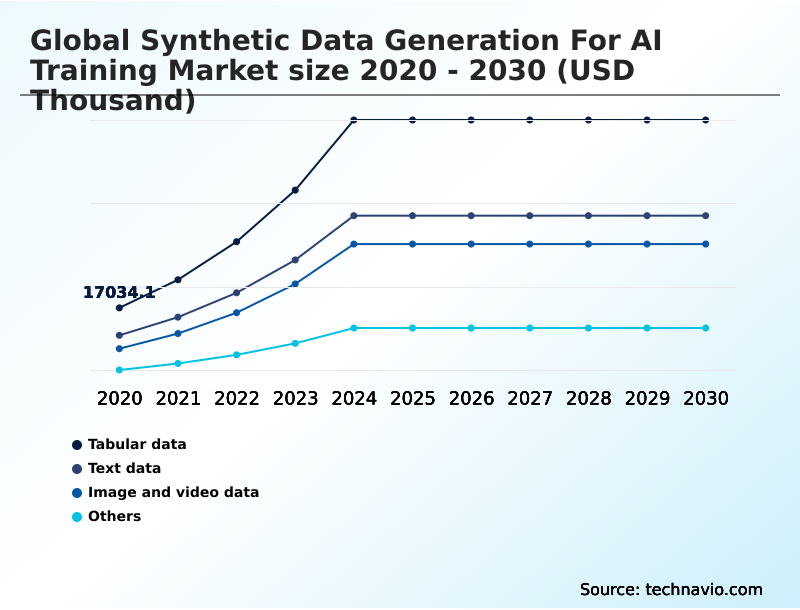
The Tabular data segment was valued at USD 55.56 million in 2024 and showed a gradual increase during the forecast period.
Request Free Sample

Regional Analysis

North America is estimated to contribute 37.6% to the growth of the global market during the forecast period.Technavio’s analysts have elaborately explained the regional trends and drivers that shape the market during the forecast period.

See How Synthetic Data Generation For AI Training Market Demand is Rising in North America Request Free Sample

The geographic landscape of the synthetic data generation for AI training market is led by North America, which accounts for over 37% of the market's incremental growth, driven by advanced applications in autonomous systems and healthcare.

The region's demand for synthetic sensor data and computer vision training sets is unparalleled. Meanwhile, APAC is the fastest-growing region, with its manufacturing and electronics sectors leveraging synthetic data generation tools for quality control.

This region focuses on creating natural language processing datasets for diverse linguistic populations.

In Europe, strict privacy-enhancing technologies and data protection laws make synthetic data as a service a critical enabler for industries like finance, which utilize it for creating synthetic data for financial services.

This has led to a 30% increase in test data management efficiency. Across all regions, the goal is consistent: using procedural content generation and statistical property replication for simulation for AI safety and algorithmic bias mitigation.

Market Dynamics

Our researchers analyzed the data with 2025 as the base year, along with the key drivers, trends, and challenges. A holistic analysis of drivers will help companies refine their marketing strategies to gain a competitive advantage.

  • The strategic implementation of synthetic data is transforming AI development across key sectors, with specific long-tail applications delivering significant competitive advantages. For example, using synthetic data for autonomous vehicle training allows manufacturers to simulate millions of miles in virtual environments, accelerating safety validation at a pace over 50% faster than physical road testing.
  • In parallel, the creation of privacy-preserving synthetic financial data enables banks to innovate on anti-fraud models while adhering to strict regulatory compliance in finance. The core technology, often involving generative adversarial networks for image synthesis, is crucial for creating high-fidelity synthetic data for medical imaging, which helps in training diagnostic AI without compromising patient confidentiality.
  • Addressing technical hurdles is also a key focus, such as developing methods for mitigating model collapse with synthetic data and using it to reduce algorithmic bias in fairness-critical applications. When comparing synthetic data vs real data for AI training, the former offers unparalleled scalability.
  • This is evident in generating synthetic data for NLP models and training robotics systems, where creating balanced datasets with synthetic data is essential. Furthermore, the technology excels at synthetic data for rare event simulation and smart city simulations.
  • The ongoing challenge remains validating the quality of synthetic datasets and understanding the cost of synthetic data generation vs real data, but its benefits in healthcare research and for testing cybersecurity models are increasingly clear. Knowing how to generate synthetic tabular data is becoming a foundational skill for data scientists.

What are the key market drivers leading to the rise in the adoption of Synthetic Data Generation For AI Training Industry?

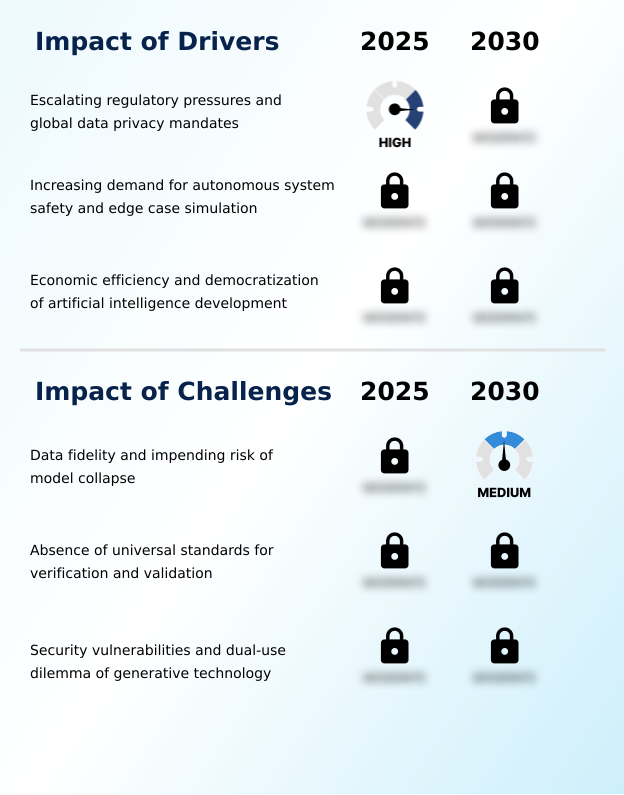
  • Escalating regulatory pressures and global data privacy mandates are key drivers of the market.

  • Market growth is primarily driven by the increasing need for privacy-preserving data and scalable data scarcity solutions.
  • Escalating data privacy regulations worldwide have made secure AI development a top priority, fueling demand for synthetic data for healthcare AI and financial services.
  • This allows organizations to innovate while maintaining regulatory compliance in AI, reducing legal risks by over 90% in some cases.
  • Another key driver is the high cost and logistical complexity of manual data acquisition, which is addressed through automated data annotation and time-series data modeling, lowering data preparation costs by up to 60%.
  • The advancement of autonomous systems training also propels the market, as edge case simulation is critical for ensuring safety.
  • Using synthetic data for automotive AI, developers can validate systems against millions of rare scenarios, which has been shown to improve model robustness by 40%.
  • The focus on synthetic data quality and AI ethics and fairness further solidifies its role in creating responsible and reliable AI.

What are the market trends shaping the Synthetic Data Generation For AI Training Industry?

  • A key market trend is the emergence of high-fidelity, multi-modal synthetic environments. These are crucial for advancing spatial computing applications.

  • Key trends are reshaping the synthetic data generation for AI training market, with a significant shift toward creating sophisticated, realistic training environments. The emergence of multi-modal data generation is enabling the development of complex digital reality simulation platforms, particularly for training systems in spatial computing.
  • This approach, which integrates photorealistic data rendering and digital twin simulation, has been shown to shorten development lifecycles by up to 35%. Another major trend is the convergence of federated learning integration with generative AI pipelines, which enhances privacy in decentralized AI model training. This is especially critical for creating large language model training data and synthetic data for nlp.
  • Furthermore, the industry is advancing toward data curation automation, where AI systems autonomously identify performance gaps and trigger the generation of new data. This self-correcting mechanism improves model accuracy by over 15% through targeted real-world data augmentation, ensuring computer vision data generation is both efficient and effective.

What challenges does the Synthetic Data Generation For AI Training Industry face during its growth?

  • Maintaining data fidelity and mitigating the impending risk of model collapse is a key challenge affecting industry growth.

  • The market for synthetic data generation faces critical challenges centered on data integrity and security, which impacts AI risk management. A primary hurdle is ensuring high-fidelity synthetic data to prevent the model collapse phenomenon, where AI model accuracy improvement stalls or reverses.
  • Studies show that recursive model degradation can reduce a model's predictive power by up to 25% after several training cycles on purely synthetic inputs. This necessitates advanced data utility metrics and model robustness testing frameworks. Another challenge is the absence of universal AI governance frameworks for validating synthetic data, creating uncertainty for adopters.
  • The dual-use nature of generative technology also poses a security risk, as tools for biometric data synthesis can be repurposed for malicious activities, prompting a need for sophisticated deepfake detection watermarking. Effective synthetic data governance and data-centric AI development practices are essential to overcome these issues, especially for synthetic data for edge AI applications where security is paramount.

Exclusive Technavio Analysis on Customer Landscape

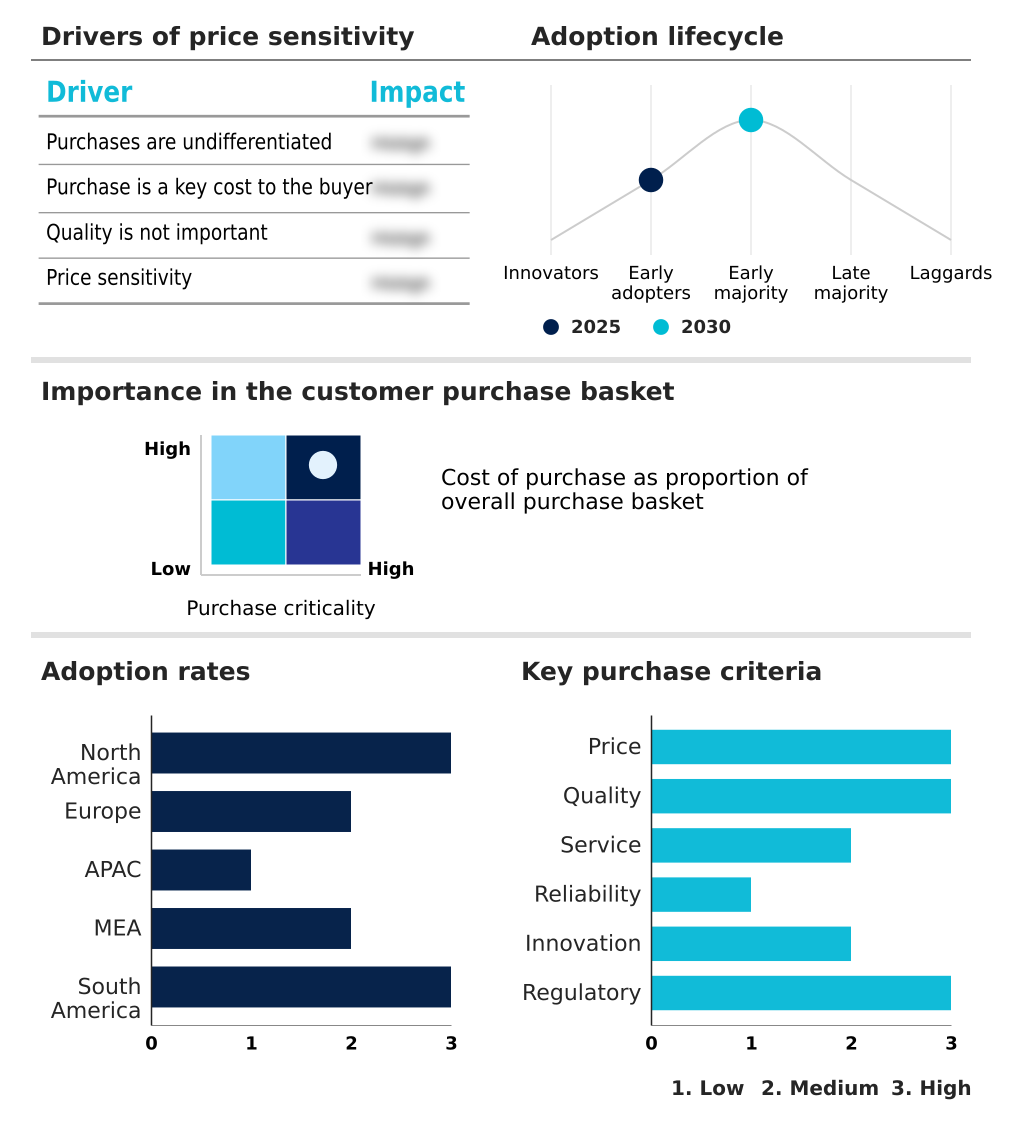
The synthetic data generation for ai training market forecasting report includes the adoption lifecycle of the market, covering from the innovator’s stage to the laggard’s stage. It focuses on adoption rates in different regions based on penetration. Furthermore, the synthetic data generation for ai training market report also includes key purchase criteria and drivers of price sensitivity to help companies evaluate and develop their market growth analysis strategies.
Customer Landscape of Synthetic Data Generation For AI Training Industry

Competitive Landscape

Companies are implementing various strategies, such as strategic alliances, synthetic data generation for ai training market forecast, partnerships, mergers and acquisitions, geographical expansion, and product/service launches, to enhance their presence in the industry.

Anonos. - Offerings center on programmatic creation of artificial datasets, leveraging advanced models to simulate real-world information for secure AI training without exposing sensitive identifiers.

The industry research and growth report includes detailed analyses of the competitive landscape of the market and information about key companies, including:

  • Anonos.
  • BetterData Pte Ltd.
  • Broadcom Inc.
  • Capgemini SE
  • DataGen
  • Facteus Inc
  • GenRocket Inc.
  • Gretel AI
  • IBM Corp.
  • Informatica Inc.
  • K2view Ltd.
  • MDClone Ltd.
  • MOSTLY AI
  • NVIDIA Corp.
  • Parallel Domain
  • Rendered.ai
  • Synthesise AI.
  • Syntho
  • Tonic AI Inc.
  • YData Labs Inc

Qualitative and quantitative analysis of companies has been conducted to help clients understand the wider business environment as well as the strengths and weaknesses of key industry players. Data is qualitatively analyzed to categorize companies as pure play, category-focused, industry-focused, and diversified; it is quantitatively analyzed to categorize companies as dominant, leading, strong, tentative, and weak.

Recent Development and News in Synthetic data generation for ai training market

  • In August 2024, a leading automotive manufacturer in North America announced the completion of its largest virtual simulation project to date, which utilized over five billion miles of synthetically generated sensor data to refine the emergency braking systems of its upcoming autonomous fleet.
  • In November 2024, a group of cybersecurity regulators across the Asia-Pacific region issued a joint strategic directive aimed at mitigating the risks of synthetic media in financial services, prompted by sophisticated phishing attempts using programmatically generated voice and facial data.
  • In February 2025, a prominent collaborative research group based in Europe released a technical report detailing the phenomenon of recursive model degradation, observing that when generative models are trained repeatedly on their own outputs, the statistical diversity of the generated information narrows significantly.
  • In May 2025, an international environmental agency utilized synthetic time-series sensor data to model air quality fluctuations in high-density urban areas, allowing the agency to simulate the impact of various city planning scenarios on pollution levels without extensive physical sensor networks.

Dive into Technavio’s robust research methodology, blending expert interviews, extensive data synthesis, and validated models for unparalleled Synthetic Data Generation For AI Training Market insights. See full methodology.

Market Scope
Page number 313
Base year 2025
Historic period 2020-2024
Forecast period 2026-2030
Growth momentum & CAGR Accelerate at a CAGR of 37.3%
Market growth 2026-2030 USD 704875.4 thousand
Market structure Fragmented
YoY growth 2025-2026(%) 35.9%
Key countries US, Canada, Mexico, Germany, UK, France, Italy, Spain, The Netherlands, China, India, Japan, South Korea, Australia, Singapore, Saudi Arabia, UAE, South Africa, Israel, Turkey, Brazil, Argentina and Colombia
Competitive landscape Leading Companies, Market Positioning of Companies, Competitive Strategies, and Industry Risks

Request Free Sample

Research Analyst Overview

  • The synthetic data generation for AI training market represents a fundamental shift in AI development, moving from costly real-world data acquisition to efficient, privacy-centric data synthesis. This transition is powered by generative adversarial networks and variational autoencoders, which enable the creation of high-fidelity synthetic data.
  • Key applications include autonomous systems training and developing natural language processing datasets, where techniques like real-world data augmentation and procedural content generation are essential. A primary boardroom consideration is leveraging privacy-preserving data for data sovereignty compliance, with some organizations achieving a reduction in data preparation time by over 50%.
  • The market is also defined by its response to technical challenges such as model collapse phenomenon and recursive model degradation, which are mitigated through rigorous AI model validation and data fidelity validation. Innovations in multi-modal data generation, digital twin simulation, and photorealistic data rendering are expanding use cases in computer vision training sets.
  • Governance is paramount, with a focus on synthetic data governance, data utility metrics, and deepfake detection watermarking to manage risks associated with biometric data synthesis and other privacy-enhancing technologies.
  • The adoption of generative AI pipelines that support data curation automation and algorithmic bias mitigation is critical for maintaining synthetic data quality and ensuring statistical property replication for structured data synthesis and unstructured data generation.

What are the Key Data Covered in this Synthetic Data Generation For AI Training Market Research and Growth Report?

  • What is the expected growth of the Synthetic Data Generation For AI Training Market between 2026 and 2030?

    • USD 704.88 million, at a CAGR of 37.3%

  • What segmentation does the market report cover?

    • The report is segmented by Type (Tabular data, Text data, Image and video data, and Others), End-user (BFSI, Healthcare, Automotive, IT and telecom, and Others), Product (Fully synthetic data, and Partially synthetic data) and Geography (North America, Europe, APAC, Middle East and Africa, South America)

  • Which regions are analyzed in the report?

    • North America, Europe, APAC, Middle East and Africa and South America

  • What are the key growth drivers and market challenges?

    • Escalating regulatory pressures and global data privacy mandates, Data fidelity and impending risk of model collapse

  • Who are the major players in the Synthetic Data Generation For AI Training Market?

    • Anonos., BetterData Pte Ltd., Broadcom Inc., Capgemini SE, DataGen, Facteus Inc, GenRocket Inc., Gretel AI, IBM Corp., Informatica Inc., K2view Ltd., MDClone Ltd., MOSTLY AI, NVIDIA Corp., Parallel Domain, Rendered.ai, Synthesise AI., Syntho, Tonic AI Inc. and YData Labs Inc

Market Research Insights

  • The market dynamics of synthetic data generation for AI training are increasingly influenced by a focus on measurable business outcomes. The adoption of privacy-compliant datasets and other AI training data solutions enables organizations to achieve regulatory compliance in AI, with some firms reporting a 95% reduction in privacy-related risks.
  • As generative modeling platforms become more sophisticated, they provide realistic training environments that accelerate AI development, leading to project completion times that are up to 40% faster than traditional methods. This efficiency is critical for machine learning model training, where cost-effective data acquisition is a key determinant of project viability.
  • The ability of synthetic data platforms to provide high-quality training data on demand is fundamentally altering AI development cycles.

We can help! Our analysts can customize this synthetic data generation for ai training market research report to meet your requirements.

Get in touch

1. Executive Summary

1.1 Market overview

Executive Summary - Chart on Market Overview
Executive Summary - Data Table on Market Overview
Executive Summary - Chart on Global Market Characteristics
Executive Summary - Chart on Market by Geography
Executive Summary - Chart on Market Segmentation by Type
Executive Summary - Chart on Market Segmentation by End-user
Executive Summary - Chart on Market Segmentation by Product
Executive Summary - Chart on Incremental Growth
Executive Summary - Data Table on Incremental Growth
Executive Summary - Chart on Company Market Positioning

2. Technavio Analysis

2.1 Analysis of price sensitivity, lifecycle, customer purchase basket, adoption rates, and purchase criteria

2.2 Criticality of inputs and Factors of differentiation

Chart on Overview on criticality of inputs and factors of differentiation

2.3 Factors of disruption

Chart on Overview on factors of disruption

2.4 Impact of drivers and challenges

Chart on Impact of drivers and challenges in 2025 and 2030

3. Market Landscape

3.1 Market ecosystem

Chart on Parent Market
Data Table on - Parent Market

3.2 Market characteristics

Chart on Market characteristics analysis

3.3 Value chain analysis

Chart on Value chain analysis

4. Market Sizing

4.1 Market definition

Data Table on Offerings of companies included in the market definition

4.2 Market segment analysis

Market segments

4.3 Market size 2025

4.4 Market outlook: Forecast for 2025-2030

Chart on Global - Market size and forecast 2025-2030 ($ thousand)
Data Table on Global - Market size and forecast 2025-2030 ($ thousand)
Chart on Global Market: Year-over-year growth 2025-2030 (%)
Data Table on Global Market: Year-over-year growth 2025-2030 (%)

5. Historic Market Size

5.1 Global Synthetic Data Generation For AI Training Market 2020 - 2024

Historic Market Size - Data Table on Global Synthetic Data Generation For AI Training Market 2020 - 2024 ($ thousand)

5.2 Type segment analysis 2020 - 2024

Historic Market Size - Type Segment 2020 - 2024 ($ thousand)

5.3 End-user segment analysis 2020 - 2024

Historic Market Size - End-user Segment 2020 - 2024 ($ thousand)

5.4 Product segment analysis 2020 - 2024

Historic Market Size - Product Segment 2020 - 2024 ($ thousand)

5.5 Geography segment analysis 2020 - 2024

Historic Market Size - Geography Segment 2020 - 2024 ($ thousand)

5.6 Country segment analysis 2020 - 2024

Historic Market Size - Country Segment 2020 - 2024 ($ thousand)

6. Qualitative Analysis

6.1 The AI impact on Global Synthetic Data Generation for AI Training Market

6.2 Impact of geopolitical conflicts on Global Synthetic Data Generation for AI Training Market

7. Five Forces Analysis

7.1 Five forces summary

Five forces analysis - Comparison between 2025 and 2030

7.2 Bargaining power of buyers

Bargaining power of buyers - Impact of key factors 2025 and 2030

7.3 Bargaining power of suppliers

Bargaining power of suppliers - Impact of key factors in 2025 and 2030

7.4 Threat of new entrants

Threat of new entrants - Impact of key factors in 2025 and 2030

7.5 Threat of substitutes

Threat of substitutes - Impact of key factors in 2025 and 2030

7.6 Threat of rivalry

Threat of rivalry - Impact of key factors in 2025 and 2030

7.7 Market condition

Chart on Market condition - Five forces 2025 and 2030

8. Market Segmentation by Type

8.1 Market segments

Chart on Type - Market share 2025-2030 (%)
Data Table on Type - Market share 2025-2030 (%)

8.2 Comparison by Type

Chart on Comparison by Type
Data Table on Comparison by Type

8.3 Tabular data - Market size and forecast 2025-2030

Chart on Tabular data - Market size and forecast 2025-2030 ($ thousand)
Data Table on Tabular data - Market size and forecast 2025-2030 ($ thousand)
Chart on Tabular data - Year-over-year growth 2025-2030 (%)
Data Table on Tabular data - Year-over-year growth 2025-2030 (%)

8.4 Text data - Market size and forecast 2025-2030

Chart on Text data - Market size and forecast 2025-2030 ($ thousand)
Data Table on Text data - Market size and forecast 2025-2030 ($ thousand)
Chart on Text data - Year-over-year growth 2025-2030 (%)
Data Table on Text data - Year-over-year growth 2025-2030 (%)

8.5 Image and video data - Market size and forecast 2025-2030

Chart on Image and video data - Market size and forecast 2025-2030 ($ thousand)
Data Table on Image and video data - Market size and forecast 2025-2030 ($ thousand)
Chart on Image and video data - Year-over-year growth 2025-2030 (%)
Data Table on Image and video data - Year-over-year growth 2025-2030 (%)

8.6 Others - Market size and forecast 2025-2030

Chart on Others - Market size and forecast 2025-2030 ($ thousand)
Data Table on Others - Market size and forecast 2025-2030 ($ thousand)
Chart on Others - Year-over-year growth 2025-2030 (%)
Data Table on Others - Year-over-year growth 2025-2030 (%)

8.7 Market opportunity by Type

Market opportunity by Type ($ thousand)
Data Table on Market opportunity by Type ($ thousand)

9. Market Segmentation by End-user

9.1 Market segments

Chart on End-user - Market share 2025-2030 (%)
Data Table on End-user - Market share 2025-2030 (%)

9.2 Comparison by End-user

Chart on Comparison by End-user
Data Table on Comparison by End-user

9.3 BFSI - Market size and forecast 2025-2030

Chart on BFSI - Market size and forecast 2025-2030 ($ thousand)
Data Table on BFSI - Market size and forecast 2025-2030 ($ thousand)
Chart on BFSI - Year-over-year growth 2025-2030 (%)
Data Table on BFSI - Year-over-year growth 2025-2030 (%)

9.4 Healthcare - Market size and forecast 2025-2030

Chart on Healthcare - Market size and forecast 2025-2030 ($ thousand)
Data Table on Healthcare - Market size and forecast 2025-2030 ($ thousand)
Chart on Healthcare - Year-over-year growth 2025-2030 (%)
Data Table on Healthcare - Year-over-year growth 2025-2030 (%)

9.5 Automotive - Market size and forecast 2025-2030

Chart on Automotive - Market size and forecast 2025-2030 ($ thousand)
Data Table on Automotive - Market size and forecast 2025-2030 ($ thousand)
Chart on Automotive - Year-over-year growth 2025-2030 (%)
Data Table on Automotive - Year-over-year growth 2025-2030 (%)

9.6 IT and telecom - Market size and forecast 2025-2030

Chart on IT and telecom - Market size and forecast 2025-2030 ($ thousand)
Data Table on IT and telecom - Market size and forecast 2025-2030 ($ thousand)
Chart on IT and telecom - Year-over-year growth 2025-2030 (%)
Data Table on IT and telecom - Year-over-year growth 2025-2030 (%)

9.7 Others - Market size and forecast 2025-2030

Chart on Others - Market size and forecast 2025-2030 ($ thousand)
Data Table on Others - Market size and forecast 2025-2030 ($ thousand)
Chart on Others - Year-over-year growth 2025-2030 (%)
Data Table on Others - Year-over-year growth 2025-2030 (%)

9.8 Market opportunity by End-user

Market opportunity by End-user ($ thousand)
Data Table on Market opportunity by End-user ($ thousand)

10. Market Segmentation by Product

10.1 Market segments

Chart on Product - Market share 2025-2030 (%)
Data Table on Product - Market share 2025-2030 (%)

10.2 Comparison by Product

Chart on Comparison by Product
Data Table on Comparison by Product

10.3 Fully synthetic data - Market size and forecast 2025-2030

Chart on Fully synthetic data - Market size and forecast 2025-2030 ($ thousand)
Data Table on Fully synthetic data - Market size and forecast 2025-2030 ($ thousand)
Chart on Fully synthetic data - Year-over-year growth 2025-2030 (%)
Data Table on Fully synthetic data - Year-over-year growth 2025-2030 (%)

10.4 Partially synthetic data - Market size and forecast 2025-2030

Chart on Partially synthetic data - Market size and forecast 2025-2030 ($ thousand)
Data Table on Partially synthetic data - Market size and forecast 2025-2030 ($ thousand)
Chart on Partially synthetic data - Year-over-year growth 2025-2030 (%)
Data Table on Partially synthetic data - Year-over-year growth 2025-2030 (%)

10.5 Market opportunity by Product

Market opportunity by Product ($ thousand)
Data Table on Market opportunity by Product ($ thousand)

11. Customer Landscape

11.1 Customer landscape overview

Analysis of price sensitivity, lifecycle, customer purchase basket, adoption rates, and purchase criteria

12. Geographic Landscape

12.1 Geographic segmentation

Chart on Market share by geography 2025-2030 (%)
Data Table on Market share by geography 2025-2030 (%)

12.2 Geographic comparison

Chart on Geographic comparison
Data Table on Geographic comparison

12.3 North America - Market size and forecast 2025-2030

Chart on North America - Market size and forecast 2025-2030 ($ thousand)
Data Table on North America - Market size and forecast 2025-2030 ($ thousand)
Chart on North America - Year-over-year growth 2025-2030 (%)
Data Table on North America - Year-over-year growth 2025-2030 (%)
Chart on Regional Comparison - North America
Data Table on Regional Comparison - North America

12.3.1 US - Market size and forecast 2025-2030

Chart on US - Market size and forecast 2025-2030 ($ thousand)
Data Table on US - Market size and forecast 2025-2030 ($ thousand)
Chart on US - Year-over-year growth 2025-2030 (%)
Data Table on US - Year-over-year growth 2025-2030 (%)

12.3.2 Canada - Market size and forecast 2025-2030

Chart on Canada - Market size and forecast 2025-2030 ($ thousand)
Data Table on Canada - Market size and forecast 2025-2030 ($ thousand)
Chart on Canada - Year-over-year growth 2025-2030 (%)
Data Table on Canada - Year-over-year growth 2025-2030 (%)

12.3.3 Mexico - Market size and forecast 2025-2030

Chart on Mexico - Market size and forecast 2025-2030 ($ thousand)
Data Table on Mexico - Market size and forecast 2025-2030 ($ thousand)
Chart on Mexico - Year-over-year growth 2025-2030 (%)
Data Table on Mexico - Year-over-year growth 2025-2030 (%)

12.4 Europe - Market size and forecast 2025-2030

Chart on Europe - Market size and forecast 2025-2030 ($ thousand)
Data Table on Europe - Market size and forecast 2025-2030 ($ thousand)
Chart on Europe - Year-over-year growth 2025-2030 (%)
Data Table on Europe - Year-over-year growth 2025-2030 (%)
Chart on Regional Comparison - Europe
Data Table on Regional Comparison - Europe

12.4.1 Germany - Market size and forecast 2025-2030

Chart on Germany - Market size and forecast 2025-2030 ($ thousand)
Data Table on Germany - Market size and forecast 2025-2030 ($ thousand)
Chart on Germany - Year-over-year growth 2025-2030 (%)
Data Table on Germany - Year-over-year growth 2025-2030 (%)

12.4.2 UK - Market size and forecast 2025-2030

Chart on UK - Market size and forecast 2025-2030 ($ thousand)
Data Table on UK - Market size and forecast 2025-2030 ($ thousand)
Chart on UK - Year-over-year growth 2025-2030 (%)
Data Table on UK - Year-over-year growth 2025-2030 (%)

12.4.3 France - Market size and forecast 2025-2030

Chart on France - Market size and forecast 2025-2030 ($ thousand)
Data Table on France - Market size and forecast 2025-2030 ($ thousand)
Chart on France - Year-over-year growth 2025-2030 (%)
Data Table on France - Year-over-year growth 2025-2030 (%)

12.4.4 Italy - Market size and forecast 2025-2030

Chart on Italy - Market size and forecast 2025-2030 ($ thousand)
Data Table on Italy - Market size and forecast 2025-2030 ($ thousand)
Chart on Italy - Year-over-year growth 2025-2030 (%)
Data Table on Italy - Year-over-year growth 2025-2030 (%)

12.4.5 Spain - Market size and forecast 2025-2030

Chart on Spain - Market size and forecast 2025-2030 ($ thousand)
Data Table on Spain - Market size and forecast 2025-2030 ($ thousand)
Chart on Spain - Year-over-year growth 2025-2030 (%)
Data Table on Spain - Year-over-year growth 2025-2030 (%)

12.4.6 The Netherlands - Market size and forecast 2025-2030

Chart on The Netherlands - Market size and forecast 2025-2030 ($ thousand)
Data Table on The Netherlands - Market size and forecast 2025-2030 ($ thousand)
Chart on The Netherlands - Year-over-year growth 2025-2030 (%)
Data Table on The Netherlands - Year-over-year growth 2025-2030 (%)

12.5 APAC - Market size and forecast 2025-2030

Chart on APAC - Market size and forecast 2025-2030 ($ thousand)
Data Table on APAC - Market size and forecast 2025-2030 ($ thousand)
Chart on APAC - Year-over-year growth 2025-2030 (%)
Data Table on APAC - Year-over-year growth 2025-2030 (%)
Chart on Regional Comparison - APAC
Data Table on Regional Comparison - APAC

12.5.1 China - Market size and forecast 2025-2030

Chart on China - Market size and forecast 2025-2030 ($ thousand)
Data Table on China - Market size and forecast 2025-2030 ($ thousand)
Chart on China - Year-over-year growth 2025-2030 (%)
Data Table on China - Year-over-year growth 2025-2030 (%)

12.5.2 India - Market size and forecast 2025-2030

Chart on India - Market size and forecast 2025-2030 ($ thousand)
Data Table on India - Market size and forecast 2025-2030 ($ thousand)
Chart on India - Year-over-year growth 2025-2030 (%)
Data Table on India - Year-over-year growth 2025-2030 (%)

12.5.3 Japan - Market size and forecast 2025-2030

Chart on Japan - Market size and forecast 2025-2030 ($ thousand)
Data Table on Japan - Market size and forecast 2025-2030 ($ thousand)
Chart on Japan - Year-over-year growth 2025-2030 (%)
Data Table on Japan - Year-over-year growth 2025-2030 (%)

12.5.4 South Korea - Market size and forecast 2025-2030

Chart on South Korea - Market size and forecast 2025-2030 ($ thousand)
Data Table on South Korea - Market size and forecast 2025-2030 ($ thousand)
Chart on South Korea - Year-over-year growth 2025-2030 (%)
Data Table on South Korea - Year-over-year growth 2025-2030 (%)

12.5.5 Australia - Market size and forecast 2025-2030

Chart on Australia - Market size and forecast 2025-2030 ($ thousand)
Data Table on Australia - Market size and forecast 2025-2030 ($ thousand)
Chart on Australia - Year-over-year growth 2025-2030 (%)
Data Table on Australia - Year-over-year growth 2025-2030 (%)

12.5.6 Singapore - Market size and forecast 2025-2030

Chart on Singapore - Market size and forecast 2025-2030 ($ thousand)
Data Table on Singapore - Market size and forecast 2025-2030 ($ thousand)
Chart on Singapore - Year-over-year growth 2025-2030 (%)
Data Table on Singapore - Year-over-year growth 2025-2030 (%)

12.6 Middle East and Africa - Market size and forecast 2025-2030

Chart on Middle East and Africa - Market size and forecast 2025-2030 ($ thousand)
Data Table on Middle East and Africa - Market size and forecast 2025-2030 ($ thousand)
Chart on Middle East and Africa - Year-over-year growth 2025-2030 (%)
Data Table on Middle East and Africa - Year-over-year growth 2025-2030 (%)
Chart on Regional Comparison - Middle East and Africa
Data Table on Regional Comparison - Middle East and Africa

12.6.1 Saudi Arabia - Market size and forecast 2025-2030

Chart on Saudi Arabia - Market size and forecast 2025-2030 ($ thousand)
Data Table on Saudi Arabia - Market size and forecast 2025-2030 ($ thousand)
Chart on Saudi Arabia - Year-over-year growth 2025-2030 (%)
Data Table on Saudi Arabia - Year-over-year growth 2025-2030 (%)

12.6.2 UAE - Market size and forecast 2025-2030

Chart on UAE - Market size and forecast 2025-2030 ($ thousand)
Data Table on UAE - Market size and forecast 2025-2030 ($ thousand)
Chart on UAE - Year-over-year growth 2025-2030 (%)
Data Table on UAE - Year-over-year growth 2025-2030 (%)

12.6.3 South Africa - Market size and forecast 2025-2030

Chart on South Africa - Market size and forecast 2025-2030 ($ thousand)
Data Table on South Africa - Market size and forecast 2025-2030 ($ thousand)
Chart on South Africa - Year-over-year growth 2025-2030 (%)
Data Table on South Africa - Year-over-year growth 2025-2030 (%)

12.6.4 Israel - Market size and forecast 2025-2030

Chart on Israel - Market size and forecast 2025-2030 ($ thousand)
Data Table on Israel - Market size and forecast 2025-2030 ($ thousand)
Chart on Israel - Year-over-year growth 2025-2030 (%)
Data Table on Israel - Year-over-year growth 2025-2030 (%)

12.6.5 Turkey - Market size and forecast 2025-2030

Chart on Turkey - Market size and forecast 2025-2030 ($ thousand)
Data Table on Turkey - Market size and forecast 2025-2030 ($ thousand)
Chart on Turkey - Year-over-year growth 2025-2030 (%)
Data Table on Turkey - Year-over-year growth 2025-2030 (%)

12.7 South America - Market size and forecast 2025-2030

Chart on South America - Market size and forecast 2025-2030 ($ thousand)
Data Table on South America - Market size and forecast 2025-2030 ($ thousand)
Chart on South America - Year-over-year growth 2025-2030 (%)
Data Table on South America - Year-over-year growth 2025-2030 (%)
Chart on Regional Comparison - South America
Data Table on Regional Comparison - South America

12.7.1 Brazil - Market size and forecast 2025-2030

Chart on Brazil - Market size and forecast 2025-2030 ($ thousand)
Data Table on Brazil - Market size and forecast 2025-2030 ($ thousand)
Chart on Brazil - Year-over-year growth 2025-2030 (%)
Data Table on Brazil - Year-over-year growth 2025-2030 (%)

12.7.2 Argentina - Market size and forecast 2025-2030

Chart on Argentina - Market size and forecast 2025-2030 ($ thousand)
Data Table on Argentina - Market size and forecast 2025-2030 ($ thousand)
Chart on Argentina - Year-over-year growth 2025-2030 (%)
Data Table on Argentina - Year-over-year growth 2025-2030 (%)

12.7.3 Colombia - Market size and forecast 2025-2030

Chart on Colombia - Market size and forecast 2025-2030 ($ thousand)
Data Table on Colombia - Market size and forecast 2025-2030 ($ thousand)
Chart on Colombia - Year-over-year growth 2025-2030 (%)
Data Table on Colombia - Year-over-year growth 2025-2030 (%)

12.8 Market opportunity by geography

Market opportunity by geography ($ thousand)
Data Tables on Market opportunity by geography ($ thousand)

13. Drivers, Challenges, and Opportunity

13.1 Market drivers

Escalating regulatory pressures and global data privacy mandates
Increasing demand for autonomous system safety and edge case simulation
Economic efficiency and democratization of artificial intelligence development

13.2 Market challenges

Data fidelity and impending risk of model collapse
Absence of universal standards for verification and validation
Security vulnerabilities and dual-use dilemma of generative technology

13.3 Impact of drivers and challenges

Impact of drivers and challenges in 2025 and 2030

13.4 Market opportunities

Emergence of high-fidelity multi-modal synthetic environments for spatial computing
Convergence of synthetic data with federated learning for decentralized privacy
Development of autonomous data curation and self-correcting generative loops

14. Competitive Landscape

14.1 Overview

14.2

Overview on criticality of inputs and factors of differentiation

14.3 Landscape disruption

Overview on factors of disruption

14.4 Industry risks

Impact of key risks on business

15. Competitive Analysis

15.1 Companies profiled

Companies covered

15.2 Company ranking index

15.3 Market positioning of companies

Matrix on companies position and classification

15.4 Anonos.

Anonos. - Overview
Anonos. - Product / Service
Anonos. - Key offerings
SWOT

15.5 BetterData Pte Ltd.

BetterData Pte Ltd. - Overview
BetterData Pte Ltd. - Product / Service
BetterData Pte Ltd. - Key offerings
SWOT

15.6 Broadcom Inc.

Broadcom Inc. - Overview
Broadcom Inc. - Business segments
Broadcom Inc. - Key news
Broadcom Inc. - Key offerings
Broadcom Inc. - Segment focus
SWOT

15.7 Capgemini SE

Capgemini SE - Overview
Capgemini SE - Business segments
Capgemini SE - Key offerings
Capgemini SE - Segment focus
SWOT

15.8 DataGen

DataGen - Overview
DataGen - Product / Service
DataGen - Key offerings
SWOT

15.9 Facteus Inc

Facteus Inc - Overview
Facteus Inc - Product / Service
Facteus Inc - Key offerings
SWOT

15.10 GenRocket Inc.

GenRocket Inc. - Overview
GenRocket Inc. - Product / Service
GenRocket Inc. - Key offerings
SWOT

15.11 Gretel AI

Gretel AI - Overview
Gretel AI - Product / Service
Gretel AI - Key offerings
SWOT

15.12 IBM Corp.

IBM Corp. - Overview
IBM Corp. - Business segments
IBM Corp. - Key offerings
IBM Corp. - Segment focus
SWOT

15.13 Informatica Inc.

Informatica Inc. - Overview
Informatica Inc. - Business segments
Informatica Inc. - Key news
Informatica Inc. - Key offerings
Informatica Inc. - Segment focus
SWOT

15.14 K2view Ltd.

K2view Ltd. - Overview
K2view Ltd. - Product / Service
K2view Ltd. - Key offerings
SWOT

15.15 MDClone Ltd.

MDClone Ltd. - Overview
MDClone Ltd. - Product / Service
MDClone Ltd. - Key offerings
SWOT

15.16 MOSTLY AI

MOSTLY AI - Overview
MOSTLY AI - Product / Service
MOSTLY AI - Key offerings
SWOT

15.17 NVIDIA Corp.

NVIDIA Corp. - Overview
NVIDIA Corp. - Business segments
NVIDIA Corp. - Key news
NVIDIA Corp. - Key offerings
NVIDIA Corp. - Segment focus
SWOT

15.18 Parallel Domain

Parallel Domain - Overview
Parallel Domain - Product / Service
Parallel Domain - Key offerings
SWOT

16. Appendix

16.1 Scope of the report

Market definition
Objectives
Notes and caveats

16.2 Inclusions and exclusions checklist

Inclusions checklist
Exclusions checklist

16.3 Currency conversion rates for US$

16.4 Research methodology

16.5 Data procurement

Information sources

16.6 Data validation

16.7 Validation techniques employed for market sizing

16.8 Data synthesis

16.9 360 degree market analysis

16.10 List of abbreviations

Research Methodology

Technavio presents a detailed picture of the market by way of study, synthesis, and summation of data from multiple sources. The analysts have presented the various facets of the market with a particular focus on identifying the key industry influencers. The data thus presented is comprehensive, reliable, and the result of extensive research, both primary and secondary.

INFORMATION SOURCES

Primary sources

  • Manufacturers and suppliers
  • Channel partners
  • Industry experts
  • Strategic decision makers

Secondary sources

  • Industry journals and periodicals
  • Government data
  • Financial reports of key industry players
  • Historical data
  • Press releases

DATA ANALYSIS

Data Synthesis

  • Collation of data
  • Estimation of key figures
  • Analysis of derived insights

Data Validation

  • Triangulation with data models
  • Reference against proprietary databases
  • Corroboration with industry experts

REPORT WRITING

Qualitative

  • Market drivers
  • Market challenges
  • Market trends
  • Five forces analysis

Quantitative

  • Market size and forecast
  • Market segmentation
  • Geographical insights
  • Competitive landscape

Interested in this report?

Get your sample now to see our research methodology and insights!

Download Now

Frequently Asked Questions

Synthetic Data Generation For AI Training market growth will increase by USD 704875.4 thousand thousand during 2026-2030.

The Synthetic Data Generation For AI Training market is expected to grow at a CAGR of 37.3% during 2026-2030.

Synthetic Data Generation For AI Training market is segmented by Type (Tabular data, Text data, Image and video data, Others) End-user (BFSI, Healthcare, Automotive, IT and telecom, Others) Product (Fully synthetic data, Partially synthetic data)

Anonos., BetterData Pte Ltd., Broadcom Inc., Capgemini SE, DataGen, Facteus Inc, GenRocket Inc., Gretel AI, IBM Corp., Informatica Inc., K2view Ltd., MDClone Ltd., MOSTLY AI, NVIDIA Corp., Parallel Domain, Rendered.ai, Synthesise AI., Syntho, Tonic AI Inc., YData Labs Inc are a few of the key vendors in the Synthetic Data Generation For AI Training market.

North America will register the highest growth rate of 37.6% among the other regions. Therefore, the Synthetic Data Generation For AI Training market in North America is expected to garner significant business opportunities for the vendors during the forecast period.

US, Canada, Mexico, Germany, UK, France, Italy, Spain, The Netherlands, China, India, Japan, South Korea, Australia, Singapore, Saudi Arabia, UAE, South Africa, Israel, Turkey, Brazil, Argentina, Colombia

  • Escalating regulatory pressures and global data privacy mandates is the driving factor this market.

The Synthetic Data Generation For AI Training market vendors should focus on grabbing business opportunities from the Type segment as it accounted for the largest market share in the base year.
RIA - Research AI Assistant
Ask RIA