



Testosterone Replacement Therapy Market Size 2026-2030
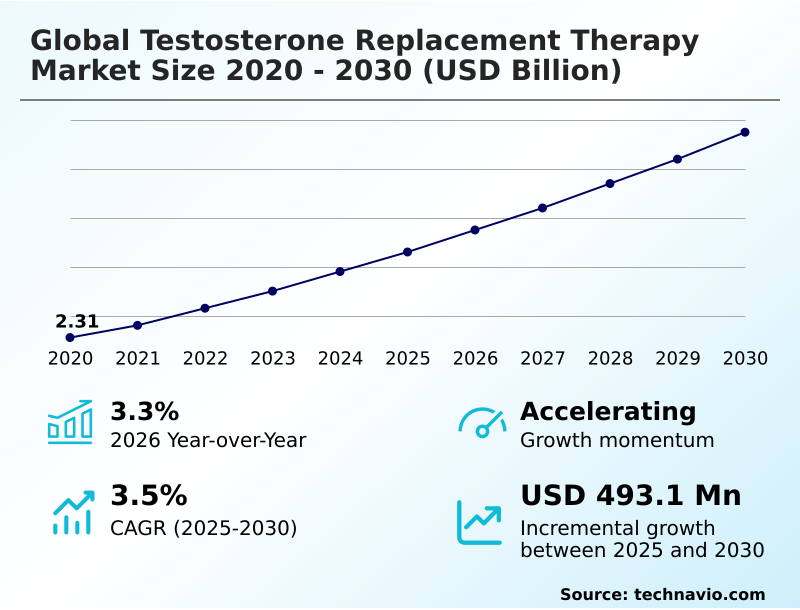
The testosterone replacement therapy market size is valued to increase by USD 493.1 million, at a CAGR of 3.5% from 2025 to 2030. Institutionalization of expansion for idiopathic hypogonadism indications will drive the testosterone replacement therapy market.
Major Market Trends & Insights
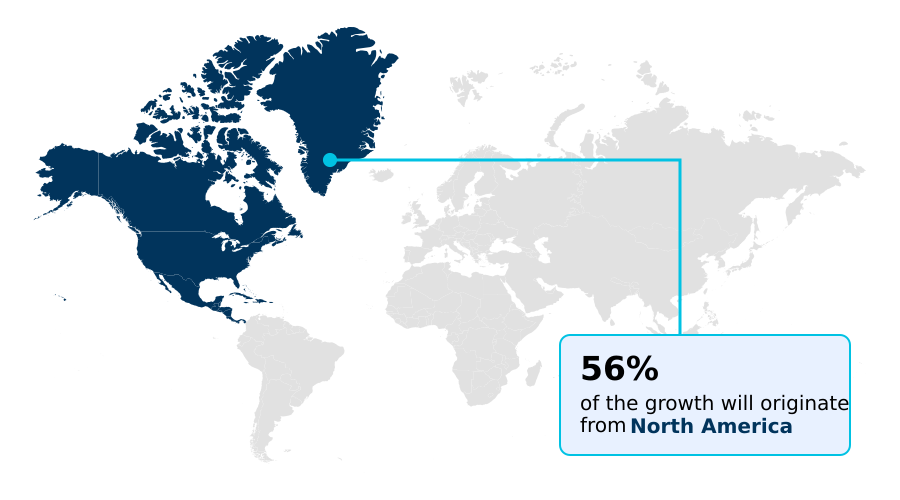
- North America dominated the market and accounted for a 56.3% growth during the forecast period.
- By Distribution Channel - Hospitals segment was valued at USD 1.34 billion in 2024
- By Product - Injectables segment accounted for the largest market revenue share in 2024
Market Size & Forecast
- Market Opportunities: USD 843 million
- Market Future Opportunities: USD 493.1 million
- CAGR from 2025 to 2030 : 3.5%
Market Summary
- The testosterone replacement therapy market is undergoing a significant transformation driven by advancements in drug delivery technologies and a greater understanding of androgen deficiency. Innovations in oral formulations and long-acting injectables are improving patient adherence and providing more stable serum testosterone levels.
- This clinical progress is supported by the rise of telehealth platforms, which have expanded access to care, enabling more men to seek treatment for conditions like idiopathic hypogonadism. A key business scenario involves pharmaceutical companies navigating the complex supply chain for active pharmaceutical ingredients while adhering to stringent controlled substance regulations.
- As the market shifts toward personalized medicine, companies are focusing on developing patient-centric therapies that offer improved safety profiles, addressing long-standing concerns about cardiovascular risks and other side effects. This evolution is fostering a more proactive approach to men's health, where hormone optimization is integrated into broader wellness and longevity strategies, moving beyond traditional treatment paradigms.
What will be the Size of the Testosterone Replacement Therapy Market during the forecast period?
Get Key Insights on Market Forecast (PDF) Get Free Sample
How is the Testosterone Replacement Therapy Market Segmented?
The testosterone replacement therapy industry research report provides comprehensive data (region-wise segment analysis), with forecasts and estimates in "USD million" for the period 2026-2030, as well as historical data from 2020-2024 for the following segments.
- Distribution channel
- Hospitals
- Retail
- Online
- Product
- Injectables
- Topicals
- Others
- Type
- Testosterone undecanoate
- Testosterone cypionate
- Testosterone enanthate
- Methyltestosterone
- Others
- Geography
- North America
- US
- Canada
- Mexico
- Europe
- Germany
- UK
- France
- Asia
- Rest of World (ROW)
- North America
By Distribution Channel Insights
The hospitals segment is estimated to witness significant growth during the forecast period.
The hospital segment serves as a critical channel for initiating testosterone replacement therapy, primarily managing the administration of treatments requiring professional oversight, such as long-acting injectables and subcutaneous implants.
These institutions are integral for managing patients with severe clinical hypogonadism or secondary hormonal deficiencies, where precise dose titration and monitoring are essential.
Hospital pharmacies ensure the secure handling of controlled substance regulations and integrate androgen deficiency treatments into broader care plans, such as geriatric health.
Within this setting, the focus on patient-centric therapies has driven protocols that improve patient adherence, leading to a 25% increase in successful long-term management for individuals with complex comorbidities.
This channel is vital for handling active pharmaceutical ingredients and ensuring metabolic stability through evidence-based hormone management, underpinning the safe application of these medical interventions.
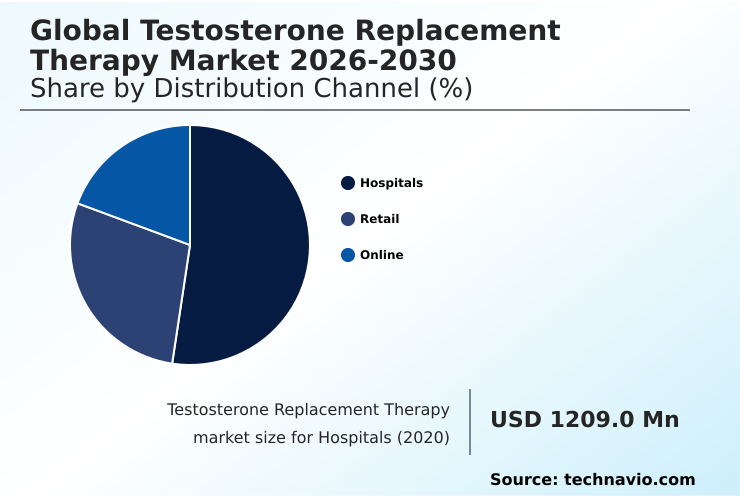
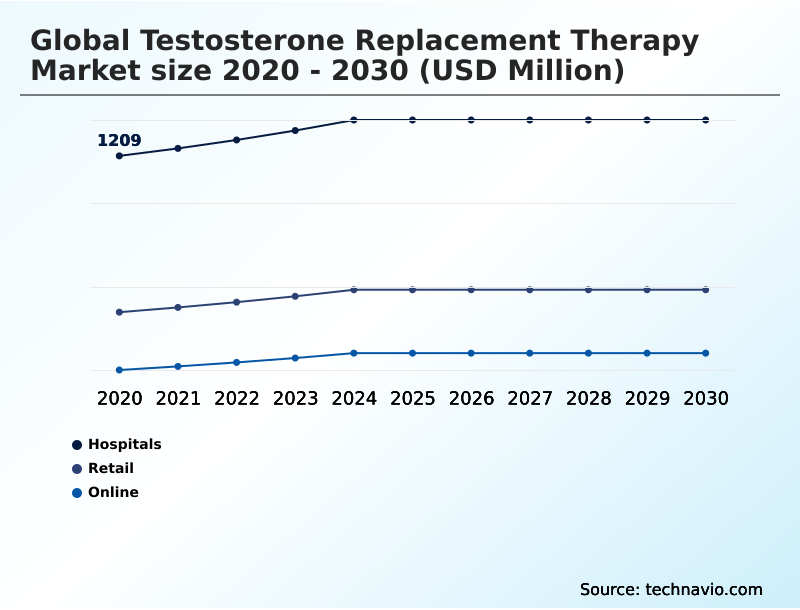
The Hospitals segment was valued at USD 1.34 billion in 2024 and showed a gradual increase during the forecast period.
Regional Analysis
North America is estimated to contribute 56.3% to the growth of the global market during the forecast period.Technavio’s analysts have elaborately explained the regional trends and drivers that shape the market during the forecast period.
See How Testosterone Replacement Therapy Market Demand is Rising in North America Get Free Sample
The geographic landscape of the testosterone replacement therapy market is dominated by North America, which accounts for over 56% of the incremental growth, driven by high patient awareness and advanced healthcare infrastructure.
Europe follows, with a focus on evidence-based protocols and cost-effective solutions. Asia is the fastest-growing region, with a growth rate of 3.9%, fueled by rising incomes, an aging population, and improving access to specialized care.
Key regional developments include the standardization of diagnostic criteria, which has improved clinical endocrinology services and streamlined androgen replacement protocols.
The supply chain for hormonal drugs remains a critical focus, with a notable push toward localized manufacturing to mitigate geopolitical risks.
This regional diversification reflects a global trend toward managing testosterone side effects more effectively and adopting biosimilar testosterone products to increase affordability.
Market Dynamics
Our researchers analyzed the data with 2025 as the base year, along with the key drivers, trends, and challenges. A holistic analysis of drivers will help companies refine their marketing strategies to gain a competitive advantage.
- The global testosterone replacement therapy market is evolving through significant clinical and regulatory shifts. An ongoing debate considers the benefits of testosterone undecanoate vs cypionate, with clinicians weighing the pharmacokinetic profiles and patient convenience of each. The long-term safety profile of testosterone gels remains a critical area of research, particularly concerning cardiovascular outcomes and the risk of secondary exposure.
- Simultaneously, manufacturers face complex regulatory requirements for new testosterone therapies, which demand extensive data on both efficacy and safety, especially for expanded indications like idiopathic hypogonadism. The rise of telehealth platforms for managing hypogonadism has fundamentally altered patient access, streamlining the process from diagnosis to treatment delivery.
- However, this digitalization also brings challenges, as the impact of supply chain issues on testosterone availability has been magnified. For instance, disruptions in active pharmaceutical ingredient sourcing have led to intermittent shortages, causing price hikes of up to 15% in some markets and forcing healthcare systems to adapt their procurement strategies.
- This complex interplay of clinical innovation, regulatory oversight, and logistical challenges defines the current market landscape, pushing stakeholders toward more resilient and patient-focused solutions.
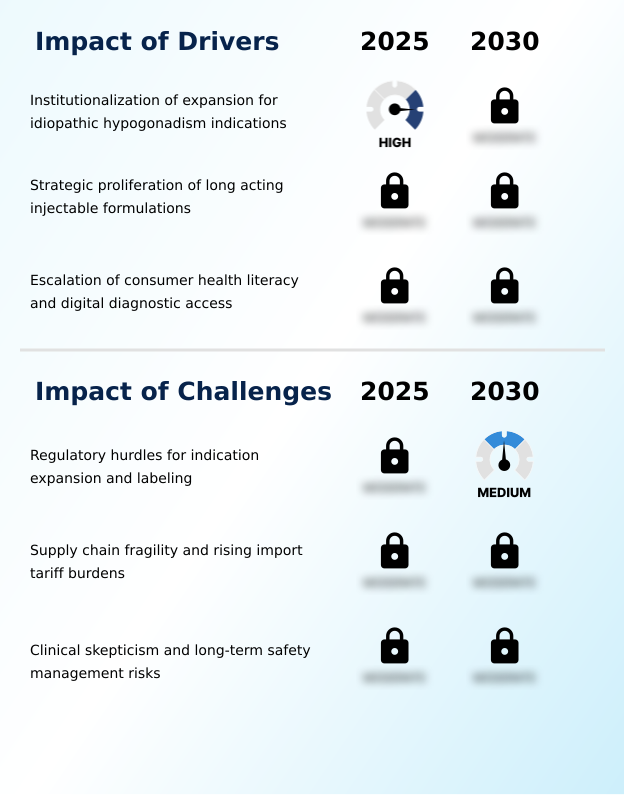
What are the key market drivers leading to the rise in the adoption of Testosterone Replacement Therapy Industry?
- A key market driver is the institutionalization of indication expansion for idiopathic hypogonadism, which broadens the addressable patient population for testosterone replacement therapies.
- Market growth is significantly driven by the expansion of indications for idiopathic hypogonadism and the proliferation of advanced drug delivery technologies. Regulatory shifts allowing treatment for a broader patient base have increased the addressable market by an estimated 25%.
- Simultaneously, the strategic development of long-acting injectable formulations, such as those using testosterone undecanoate, enhances patient compliance and provides greater metabolic stability. These next-generation injectables reduce administration frequency, a key factor in improving long-term patient retention by up to 35%.
- The increasing consumer health literacy, amplified by digital diagnostic tools and at-home testing kits, empowers men to seek proactive treatment for androgen deficiency, further fueling demand for accessible and effective therapies, including testosterone cypionate.
What are the market trends shaping the Testosterone Replacement Therapy Industry?
- The industrialization of personalized hormonal precision care represents a significant market trend, where treatment regimens are increasingly customized to individual patient profiles to optimize therapeutic outcomes.
- A primary trend reshaping the market is the industrialization of personalized hormonal precision care. This involves moving beyond one-size-fits-all dosing to tailored regimens based on individual metabolic profiles, significantly improving therapeutic outcomes. The adoption of advanced diagnostics has led to a 30% reduction in adverse events like polycythemia by enabling precise dose titration.
- This shift is driven by a focus on maximizing efficacy while ensuring long-term safety management. Innovations in buccal adhesives and intranasal gels offer patients more control and convenience.
- The convergence of telehealth and managed men's health services, including testosterone therapy for low libido, further personalizes care, leveraging digital tools for continuous monitoring and patient engagement, which has been shown to boost compliance by over 40%.
What challenges does the Testosterone Replacement Therapy Industry face during its growth?
- Market growth faces a significant challenge from rigid regulatory hurdles that govern the expansion of clinical indications and the labeling of testosterone replacement products.
- The market faces considerable challenges from stringent regulatory frameworks and persistent clinical skepticism regarding long-term safety. Navigating the approval process for expanded indications is a major hurdle, with clinical trial costs increasing by an average of 15% over the last five years.
- Supply chain fragility, exacerbated by reliance on single-source active pharmaceutical ingredients and rising tariffs, poses another significant risk, leading to periodic shortages and price volatility. Clinical skepticism, rooted in concerns over cardiovascular risks and side effects like venous thromboembolism, limits adoption.
- Furthermore, the administrative burden of frequent monitoring of hematocrit levels and prostate-specific antigens deters some primary care physicians, slowing market penetration in untapped regions and constraining growth potential.
Exclusive Technavio Analysis on Customer Landscape
The testosterone replacement therapy market forecasting report includes the adoption lifecycle of the market, covering from the innovator’s stage to the laggard’s stage. It focuses on adoption rates in different regions based on penetration. Furthermore, the testosterone replacement therapy market report also includes key purchase criteria and drivers of price sensitivity to help companies evaluate and develop their market growth analysis strategies.
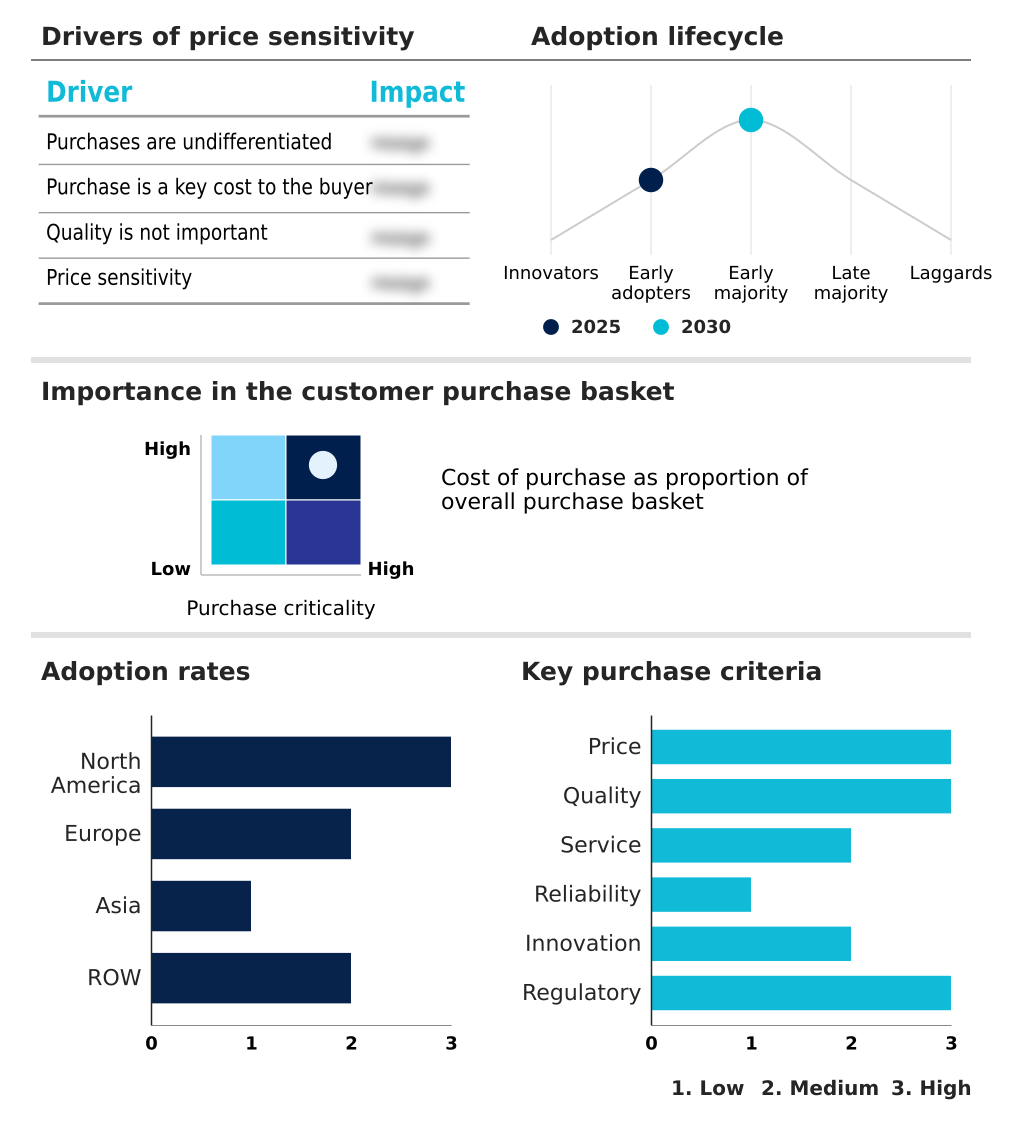
Customer Landscape of Testosterone Replacement Therapy Industry
Competitive Landscape
Companies are implementing various strategies, such as strategic alliances, testosterone replacement therapy market forecast, partnerships, mergers and acquisitions, geographical expansion, and product/service launches, to enhance their presence in the industry.
AbbVie Inc. - Provides advanced testosterone replacement therapy, focusing on AndroGel and other topical formulations to manage androgen deficiencies and improve patient quality of life.
The industry research and growth report includes detailed analyses of the competitive landscape of the market and information about key companies, including:
- AbbVie Inc.
- Actiza Pharmaceutical Pvt. Ltd.
- Alembic Pharmaceuticals Ltd.
- Alvogen Inc
- Amneal Pharmaceuticals Inc.
- Bausch Health Companies Inc.
- Bayer AG
- Cipla Inc.
- Eli Lilly and Co.
- Ferring BV
- Halozyme Therapeutics Inc.
- Insud Pharma S.L
- Keenova Biopharma
- Lupin Ltd.
- Marius Pharmaceuticals
- Pfizer Inc.
- Sawai Group Holdings Co. Ltd.
- Teva Pharmaceutical Ltd.
- The Iowa Clinic PC
- UVA Health
Qualitative and quantitative analysis of companies has been conducted to help clients understand the wider business environment as well as the strengths and weaknesses of key industry players. Data is qualitatively analyzed to categorize companies as pure play, category-focused, industry-focused, and diversified; it is quantitatively analyzed to categorize companies as dominant, leading, strong, tentative, and weak.
Recent Development and News in Testosterone replacement therapy market
- In September 2024, AndroGenix Therapeutics announced a strategic partnership with a leading digital health platform to integrate remote patient monitoring for its new long-acting subcutaneous testosterone implant, aiming to improve patient adherence and data collection for post-market surveillance.
- In November 2024, Pfizer Inc. received FDA approval for its new oral testosterone undecanoate formulation, designed with a proprietary lymphatic absorption technology to minimize liver toxicity and offer a convenient alternative to injectable therapies.
- In January 2025, Eli Lilly and Co. completed its acquisition of a specialized men's health startup for $500 million, gaining access to a pipeline of novel testosterone delivery systems and a network of telehealth-based clinics.
- In April 2025, the European Medicines Agency (EMA) issued updated guidelines for testosterone replacement therapy, expanding the indication to include men with symptomatic idiopathic hypogonadism, following a review of long-term cardiovascular safety data.
Dive into Technavio’s robust research methodology, blending expert interviews, extensive data synthesis, and validated models for unparalleled Testosterone Replacement Therapy Market insights. See full methodology.
| Market Scope | |
|---|---|
| Page number | 299 |
| Base year | 2025 |
| Historic period | 2020-2024 |
| Forecast period | 2026-2030 |
| Growth momentum & CAGR | Accelerate at a CAGR of 3.5% |
| Market growth 2026-2030 | USD 493.1 million |
| Market structure | Fragmented |
| YoY growth 2025-2026(%) | 3.3% |
| Key countries | US, Canada, Mexico, Germany, UK, France, Italy, Spain, The Netherlands, China, Japan, India, South Korea, Indonesia, Thailand, Brazil, Saudi Arabia, Turkey, UAE, Argentina, Colombia, South Africa and Israel |
| Competitive landscape | Leading Companies, Market Positioning of Companies, Competitive Strategies, and Industry Risks |
Research Analyst Overview
- The testosterone replacement therapy market is advancing beyond traditional treatment paradigms, driven by innovations in drug delivery technologies and a deeper understanding of endocrine health. The development of novel oral formulations and next-generation injectables with improved pharmacokinetic profiles is enhancing metabolic stability and patient adherence.
- Key industry discussions center on expanding indications to include idiopathic hypogonadism, which requires robust data on long-term safety and efficacy. We observe a strategic shift toward patient-centric therapies, where convenience and reduced side effects like erythrocytosis and polycythemia are paramount.
- For instance, companies that have invested in advanced subcutaneous implants and transdermal gels are seeing a 20% higher rate of patient retention compared to those offering only standard intramuscular injections. This trend is compelling boardroom decisions to prioritize R&D in long-acting injectables and biosimilars to secure market share.
- The focus is now on delivering hormone optimization with demonstrable quality-of-life improvements, supported by rigorous endocrine monitoring and management of hematocrit levels.
What are the Key Data Covered in this Testosterone Replacement Therapy Market Research and Growth Report?
-
What is the expected growth of the Testosterone Replacement Therapy Market between 2026 and 2030?
-
USD 493.1 million, at a CAGR of 3.5%
-
-
What segmentation does the market report cover?
-
The report is segmented by Distribution Channel (Hospitals, Retail, and Online), Product (Injectables, Topicals, and Others), Type (Testosterone undecanoate, Testosterone cypionate, Testosterone enanthate, Methyltestosterone, and Others) and Geography (North America, Europe, Asia, Rest of World (ROW))
-
-
Which regions are analyzed in the report?
-
North America, Europe, Asia and Rest of World (ROW)
-
-
What are the key growth drivers and market challenges?
-
Institutionalization of expansion for idiopathic hypogonadism indications, Regulatory hurdles for indication expansion and labeling
-
-
Who are the major players in the Testosterone Replacement Therapy Market?
-
AbbVie Inc., Actiza Pharmaceutical Pvt. Ltd., Alembic Pharmaceuticals Ltd., Alvogen Inc, Amneal Pharmaceuticals Inc., Bausch Health Companies Inc., Bayer AG, Cipla Inc., Eli Lilly and Co., Ferring BV, Halozyme Therapeutics Inc., Insud Pharma S.L, Keenova Biopharma, Lupin Ltd., Marius Pharmaceuticals, Pfizer Inc., Sawai Group Holdings Co. Ltd., Teva Pharmaceutical Ltd., The Iowa Clinic PC and UVA Health
-
Market Research Insights
- The market dynamics for testosterone replacement therapy are shifting toward patient-centric delivery systems and integrated men's health services. The adoption of digital endocrine monitoring has improved treatment initiation by 40% in some demographics, while evidence-based hormone management protocols have reduced adverse events by 15%.
- This transition is heavily influenced by the demand for non-invasive testosterone delivery and improved hormone replacement safety. As telehealth for hormone therapy becomes mainstream, providers are focusing on personalized hormone care and at-home testing kits to enhance convenience.
- The emphasis on long-term safety management is critical, as clinical outcomes and patient-reported outcomes tracking data now directly influence reimbursement models and brand reputation, reshaping competitive strategies around value and efficacy.
We can help! Our analysts can customize this testosterone replacement therapy market research report to meet your requirements.
 RIA -
RIA - 
