



What is the Size of Tire Cord Fabrics Market?
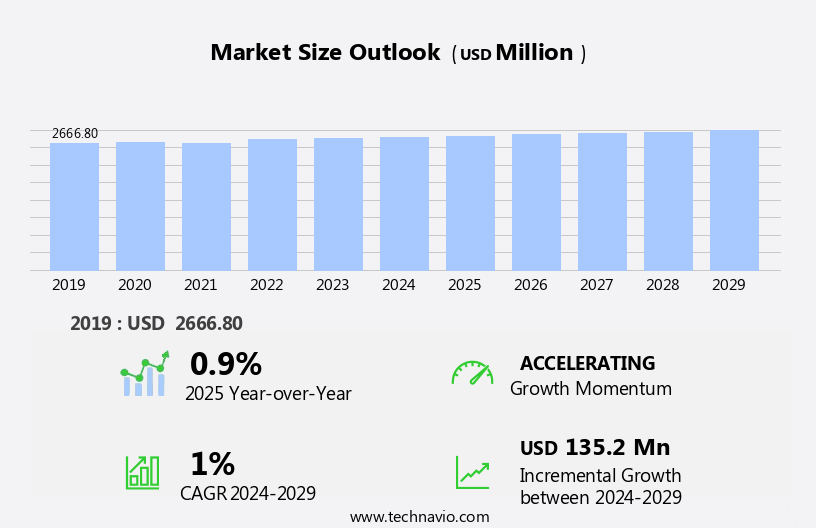
The tire cord fabrics market size is forecast to increase by USD 135.2 million and a CAGR of 1% between 2024 and 2029. The market is experiencing significant growth due to the rising number of automobile buyers and the increasing demand for and sales of electric vehicles globally. This trend is driven by the shift towards sustainable transportation and the growing preference for fuel-efficient vehicles. However, the market is also faced with challenges such as the volatility of raw material prices, particularly for natural rubber, which can impact the cost structure of tire manufacturers. To mitigate these challenges, market players are focusing on innovation and research and development to produce tire cord fabrics using alternative materials, such as synthetic rubber and aramid fibers. Additionally, strategic collaborations and partnerships are helping companies to improve their supply chain efficiency and reduce costs. Overall, the market is expected to grow steadily in the coming years, driven by the increasing demand for tires in the automotive industry and the ongoing efforts to improve tire performance and sustainability.
Market Segmentation
The market research report provides comprehensive data (region-wise segment analysis), with forecasts and estimates in "USD million" for the period 2025-2029, as well as historical data from 2019 - 2023 for the following segments.
- Application
- Replacement
- OEM
- Geography
- APAC
- China
- Japan
- Thailand
- Europe
- Germany
- UK
- France
- North America
- Canada
- US
- South America
- Brazil
- Middle East and Africa
- APAC
Which is the largest segment driving market growth?
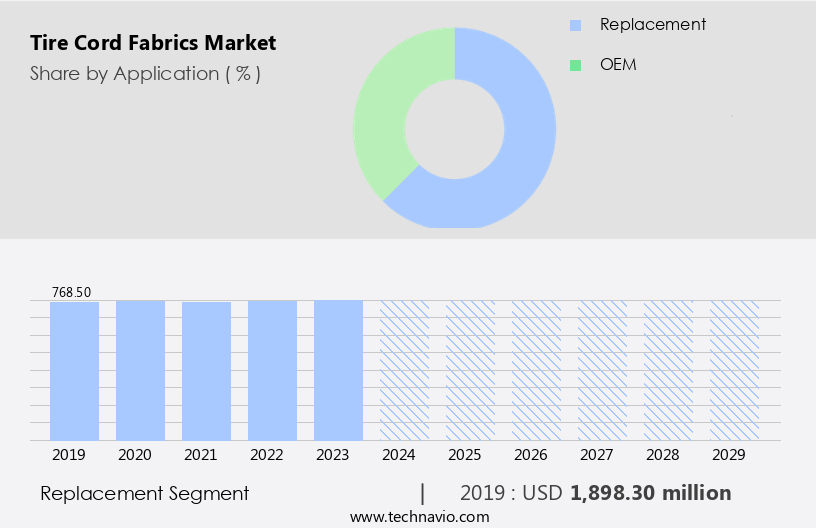
The replacement segment is estimated to witness significant growth during the forecast period. The market is experiencing significant growth due to the rising number of automobile buyers and the increasing demand for and sales of electric vehicles globally. This trend is driven by the shift towards sustainable transportation and the growing preference for fuel-efficient vehicles. However, the market is also faced with challenges such as the volatility of raw material prices, particularly for natural rubber, which can impact the cost structure of tire manufacturers.
Get a glance at the market share of various regions. Download the PDF Sample
The replacement segment was the largest segment and was valued at USD 1.89 billion in 2019. To mitigate these challenges, market players are focusing on innovation and research and development to produce tire cord fabrics using alternative materials, such as synthetic rubber and aramid fibers. Additionally, strategic collaborations and partnerships are helping companies to improve their supply chain efficiency and reduce costs. Overall, the market is expected to grow steadily in the coming years, driven by the increasing demand for tires in the automotive industry and the ongoing efforts to improve tire performance and sustainability. Hence, such factors are fuelling the growth of this segment during the forecast period.
Which region is leading the market?
For more insights on the market share of various regions, Request Free Sample
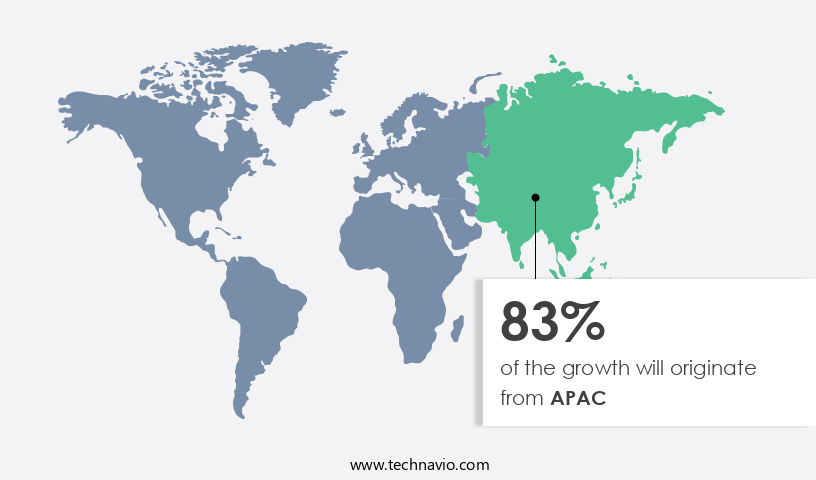
APAC is estimated to contribute 83% to the growth of the global market during the forecast period. Technavio's analysts have elaborately explained the regional trends and drivers that shape the market during the forecast period. The market is experiencing significant growth, particularly in the Asia-Pacific (APAC) region. Countries such as India and China are driving market expansion due to their developing economies. Additionally, Japan and South Korea, with established automotive industries, contribute substantially to the market's growth. The increasing sales of hybrid passenger vehicles in these countries are a primary factor. APAC houses some of the world's fastest-growing automotive economies, including China, India, and ASEAN members. Economic development in these emerging markets has led to increased per-capita income, enhancing consumer purchasing power and automobile sales. In the global market, tire cord fabrics are utilized extensively in various applications, including aircraft tires and racing tires. Synthetic materials, such as nylon and polyester, are increasingly replacing natural rubber in tire cord fabrics due to their superior durability and resistance to heat and cold temperatures. Commercial vehicles also rely on tire cord fabrics for their strength and longevity. Emission norms and environmental regulations are influencing the market, as tire manufacturers focus on producing eco-friendly products.
How do company ranking index and market positioning come to your aid?
Companies are implementing various strategies, such as strategic alliances, partnerships, mergers and acquisitions, geographical expansion, and product/service launches, to enhance their presence in the market.
Century Enka Ltd: The company offers tire cord fabric products in nylon with its sub-products as yarn, greige, and dipped fabrics.
Technavio provides the ranking index for the top 20 companies along with insights on the market positioning of:
- Asahi Kasei Corp.
- Benninger AG
- COLMANT COATED FABRICS
- Cordenka GmbH and Co. KG
- Hyosung Corp.
- Indorama Ventures Public Co. Ltd.
- Junma Tyre Cord Co. Ltd.
- Kolon Industries Inc.
- Kordsa Teknik Tekstil AS
- Madura Industrial Textiles Ltd.
- Milliken and Co.
- NV Bekaert SA
- Sohrab Group
- SRF Ltd.
- Teijin Ltd.
- Toray Industries Inc.
Explore our company rankings and market positioning. Request Free Sample
How can Technavio assist you in making critical decisions?

What is the market structure and year-over-year growth of the Market?
|
Market structure |
Fragmented |
|
YoY growth 2024-2025 |
0.9 |
Market Dynamics
The market is a critical segment of the global automotive industry, playing a pivotal role in the production of high-performance tires. Tire cord fabrics serve as the backbone of radial tires, providing the necessary strength, durability, and flexibility to withstand the rigors of vehicular usage. The market is driven by several factors, including the increasing demand for fuel-efficient and high-performance tires. The automotive industry's relentless pursuit of enhancing vehicle performance and safety standards has led to a surge in the adoption of advanced tire technologies. Tire cord fabrics, with their superior tensile strength and elasticity, are at the forefront of this technological evolution. Moreover, the market is witnessing significant growth due to the burgeoning automotive industry in emerging economies. The increasing disposable income and rising consumer preferences for personal mobility solutions have fueled the demand for automobiles in these regions. Consequently, the demand for high-quality tire cord fabrics to cater to the production of superior tires is on the rise. The market is also influenced by the ongoing research and development activities aimed at enhancing the performance and durability of tire cord fabrics. The use of advanced materials and manufacturing techniques is a key trend in the market, as manufacturers strive to create tire cord fabrics that offer superior strength, flexibility, and resistance to wear and tear. Furthermore, the market is expected to witness significant growth due to the increasing adoption of electric and hybrid vehicles. Our researchers analyzed the data with 2024 as the base year, along with the key drivers, trends, and challenges. A holistic analysis of drivers will help companies refine their marketing strategies to gain a competitive advantage.
What are the primary factors driving the market growth?
Rising number of automobile buyers drives the market. The automotive industry's recovery from the COVID-19 pandemic has led to a significant increase in vehicle production and sales, particularly in emerging markets. This trend is driving the demand for advanced tire cord fabrics, as consumers seek high-quality tires for their new vehicles. Tire manufacturers are responding by increasing production volumes to meet this demand, relying on tire cord fabrics to enhance the structural integrity of their tires.
Moreover, the shift towards electric vehicles (EVs) and the growing concern for reducing vehicle emissions and carbon footprints are also influencing the market. Tire manufacturers are focusing on producing eco-friendly tires using recycled nylon and other synthetic materials. The radial tire segment, which dominates the market, is expected to continue its growth due to its superior tire performance and lower rolling resistance. The industrial sector, including heavy-duty vehicles, commercial vehicles, and aircraft tires, is another significant market for tire cord fabrics. Hence, such factors are driving the market during the forecast period.
What are the significant trends being witnessed in the market?
Increasing demand for and sales of electric vehicles globally is a major trend in the market. The market is experiencing significant growth due to the increasing demand for electric vehicles (EVs). In 2023, the sales of EVs reached an all-time high of over seven million units worldwide, with China leading the way in terms of units delivered. Europe and the US followed closely behind. The shift towards EVs is driven by various factors, including increasing disposable incomes, stricter emission norms, and the need to reduce vehicle emissions.
Moreover, tire cord fabrics, which include nylon and aramid, play a crucial role in tire design. These materials provide reinforcement and enhance tire performance, contributing to reduced rolling resistance and improved fuel efficiency. Tire manufacturers are increasingly focusing on using eco-friendly tires made from recycled nylon and other synthetic materials to reduce carbon footprints and logistics costs. The automotive industry's shift towards electric vehicles is also impacting the tire industry, with a growing focus on producing tires for heavy-duty vehicles, SUVs, and commercial vehicles. The replacement segment is also witnessing significant growth due to the increasing demand for tire upgrades and tire replacement. Hence, such factors are driving the market during the forecast period.
What are the major market challenges?
Volatility of raw material prices is hindering the market. The market experiences significant challenges due to the volatility of raw material prices, particularly for nylon and aramid fibers, which are commonly used in tire production. These materials are derived from petrochemicals and crude oil, making their prices sensitive to market fluctuations. Additionally, supply chain disruptions caused by natural disasters, political instability, or global pandemics can further increase prices and production costs for tire cord fabric manufacturers. In the automotive industry, the shift towards electric vehicles (EVs) and the increasing demand for eco-friendly tires are driving the market for tire cord fabrics.
Moreover, tire designers are focusing on reducing rolling resistance to improve vehicle fuel efficiency and reduce carbon footprints. Recycled nylon and other synthetic materials are gaining popularity as sustainable alternatives to traditional tire cord fabrics. The radial tire segment dominates the market due to its superior performance and longer lifespan. However, the replacement market for bias tires in heavy-duty vehicles and commercial vehicles also presents significant opportunities for growth. Hence, such factors are hindering the market during the forecast period.
Exclusive Customer Landscape
The market forecasting report includes the adoption lifecycle of the market, covering from the innovator's stage to the laggard's stage. It focuses on adoption rates in different regions based on penetration. Furthermore, the report also includes key purchase criteria and drivers of price sensitivity to help companies evaluate and develop their market growth analysis strategies.

Customer Landscape
Market Analyst Overview
The market is evolving with significant advancements in tire cord fabric technology and innovations. Key tire cord fabric materials include high-strength fibers that improve the durability of tires. Tire cord fabric types such as steel, nylon, and polyester play a crucial role in automotive tire cord fabrics. As demand for sustainability rises, tire cord fabric recycling and sustainability efforts are gaining momentum. Innovations in tire cord fabric design and composites are opening new applications, including in tire cord fabric production and automotive tire cord fabrics. With tire cord fabric suppliers offering competitive solutions, the market is seeing the development of tire cord fabric breakthroughs and alternatives. As cost and competition continue to influence the market, tire cord fabric benefits and standards remain essential in shaping future trends and tire cord fabric advancements. The market is experiencing growth due to ongoing innovation and increasing demand for high-performance materials. Tire cord fabric trends show a shift towards more sustainable options, with a strong emphasis on tire cord fabric sustainability. Key tire cord fabric applications include reinforcing tires for enhanced durability and performance. As the market evolves, tire cord fabric development focuses on creating advanced composites and exploring tire cord fabric alternatives to reduce costs and improve efficiency. Tire cord fabric solutions are designed to meet rigorous tire cord fabric standards, ensuring quality and safety. With rising competition among manufacturers, companies are investing in tire cord fabric innovations to offer better tire cord fabric uses while keeping an eye on tire cord fabric cost and long-term market
The market is witnessing significant growth due to the increasing demand for electric vehicles (EVs) and the need for eco-friendly tires. Tire cord fabrics play a crucial role in enhancing tire performance, durability, and safety. These fabrics are essential components of radial and bias tires used in various vehicle segments, including passenger cars, SUVs, commercial vehicles, and heavy-duty vehicles. Nylon and aramid are the most commonly used materials for tire cord fabrics due to their high tensile strength, durability, and flexibility. The automotive industry's shift towards electric vehicles has led to an increased focus on reducing vehicle weight and improving rolling resistance to minimize carbon footprints. Tire manufacturers are investing in research and development to produce lightweight, high-performance tires using recycled nylon and other synthetic materials. Logistics and vehicle production are significant factors driving the market. The tire industry's production volume is influenced by the industrial sector's growth, disposable income levels, and emission norms. The radial segment dominates the market due to its superior performance and fuel efficiency compared to bias tires. The tire replacement market is another critical growth area for tire cord fabrics. With the increasing number of vehicles on the road, tire replacement is a recurring expense for vehicle owners. Tire manufacturers are focusing on producing eco-friendly tires to cater to the growing demand for sustainable products. Carbon footprints and vehicular emissions are major concerns for consumers, and tire manufacturers are addressing these issues by using recycled materials and optimizing production processes. The market is not limited to the automotive industry.
|
Market Scope |
|
|
Report Coverage |
Details |
|
Page number |
161 |
|
Base year |
2024 |
|
Historic period |
2019 - 2023 |
|
Forecast period |
2025-2029 |
|
Growth momentum & CAGR |
Accelerate at a CAGR of 1% |
|
Market growth 2025-2029 |
USD 135.2 million |
|
Regional analysis |
APAC, Europe, North America, South America, and Middle East and Africa |
|
Performing market contribution |
APAC at 83% |
|
Key countries |
China, Thailand, US, Japan, Germany, UK, France, Canada, Brazil, and UAE |
|
Competitive landscape |
Leading Companies, market research, market report, market forecast, market trends ,market research and growth, Market Positioning of Companies, Competitive Strategies, and Industry Risks |
|
Key companies profiled |
Asahi Kasei Corp., Benninger AG, Century Enka Ltd., COLMANT COATED FABRICS, Cordenka GmbH and Co. KG, Hyosung Corp., Indorama Ventures Public Co. Ltd., Junma Tyre Cord Co. Ltd., Kolon Industries Inc., Kordsa Teknik Tekstil AS, Madura Industrial Textiles Ltd., Milliken and Co., NV Bekaert SA, Sohrab Group, SRF Ltd., Teijin Ltd., and Toray Industries Inc. |
|
Market Segmentation |
Application (Replacement and OEM) and Geography (APAC, Europe, North America, South America, and Middle East and Africa) |
|
Customization purview |
If our report has not included the data that you are looking for, you can reach out to our analysts and get segments customized. |
What are the Key Data Covered in this Market Research Report?
- CAGR of the market during the forecast period
- Detailed information on factors that will drive the market growth and forecasting between 2025 and 2029
- Precise estimation of the size of the market and its contribution of the market in focus to the parent market
- Accurate predictions about upcoming market growth and trends and changes in consumer behavior
- Growth of the market across APAC, Europe, North America, South America, and Middle East and Africa
- Thorough analysis of the market's competitive landscape and detailed information about companies
- Comprehensive analysis of factors that will challenge the growth of market companies
 RIA -
RIA - 
